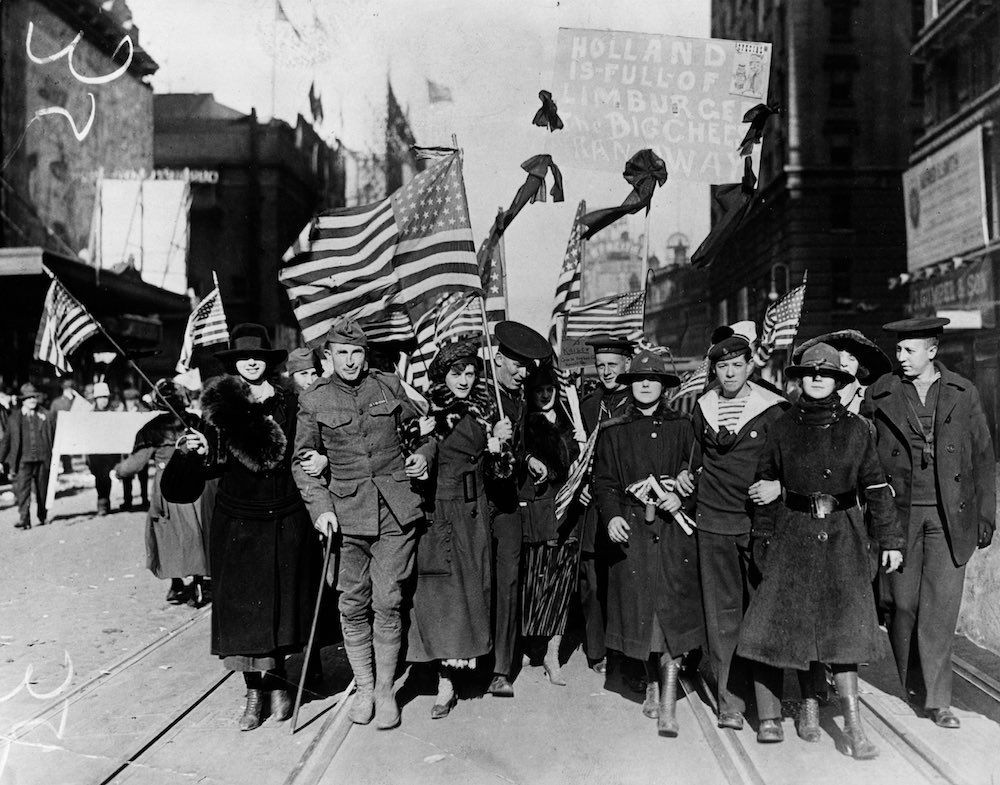
Crowds in New York celebrate the signing of the armistice which ended World War I
At this hour, a century ago, the First World War ended. They called it “The War to End All Wars.” But sadly, a generation later, the world would be embroiled in an even bigger, even more deadly, even more catastrophic war.
But at the time of World War I, it was something the likes of which the world had never seen.
The loss of life was catastrophic, with an estimated 37 million military and civilians dying in World War I. One of the striking features of World War I to me has always been the enormous losses of life in such short periods of time. In the First Battle of the Somme, there were over a half million casualties in a battle which lasted just 16 days. The First Battle of the Marne was an early battle in 1914. In less than a week, there were a half million casualties and over 150,000 troops killed.
World War I is fascinating to me.
I think for most Americans who are history buffs, our interests tend to go to one of three periods: the American Revolution, the Civil War, and World War II.
With World War I, America was certainly a major contributor in helping the Allies win the war but we also got involved relatively late (April 6, 1917), after the war had been raging for over 2 and a half years.
But our year and a half long contribution to the conclusion of World War I was hard fought, with over 116,000 soldiers dying (more than we lost in Vietnam and Korea combined).
Much of the past century has been shaped by the First World War. Three dynasties came to an end in World War I: The Romanovs in Russia were overthrown by the Bolsheviks in 1917. The Habsburgs were overthrown in Austria-Hungary. And WWI would lead to the downfall of the Ottoman Empire, which had held influence since the 13th century.
It led to an even bigger and deadlier war a generation later. One of the especially interesting things to me about World War I are the origins of the war. How the assassination of an unpopular prince in Serbia escalated to an international crisis. The alliance system pulled in several nations on both sides. The alliance system was a major factor that led to World War I, that perhaps the war was always inevitable and just waiting for a spark. World War II seems much more inevitable and unavoidable because of World War I.
The national boundaries in much of the Middle East came in the aftermath of World War I, and were established by the victorious Allied nations.
World War I was a modern war fought with modern weapons, but the scale of the war and the advancement of technology were beyond what the military philosophy of the day had developed. Most people thought it would be a quick war, but as countries who had large populations and who were relatively evenly equipped, it led to massive stalemates between armies. For much of human history, the populations would not have supported this style of warfare. Tragically, in World War I, armies could keep sending men into the trenches.
The world changed. At the beginning of the war, the French were still wearing blue coats, similar to what they wore in the Napoleonic Wars. This made them stand out. Officers were still wearing white gloves and caps with horsehair plumes. Entering a modern war with relics of the past. One of the earliest battles in World War I was the battle of the Frontiers. In just over a month of fighting, France alone suffered more than 300,000 casualties. But while the war began with elements of bygone eras, by the end of World War I, armies were using planes (still a pretty new invention at the time) in warfare and shooting guns from them.
Thanks for reading! I’d love to hear what you think, and don’t forget to subscribe!
Josh Benner is the associate pastor at Cornerstone Evangelical Free Church in Fergus Falls, Minnesota and has a Master of Divinity from Trinity Evangelical Divinity School. He enjoys writing about faith and culture. His hobbies include working out, watching sports, and photography. Josh and his wife Kari live in Minnesota.
Throughout Germany and Austria, riots broke out on this night 80 years ago in a night which is infamously referred to as Kristallnacht, the Night of Broken Glass, after the destruction done to Jewish businesses and properties.
At least 91 Jewish people were killed; 30,000 men were arrested; hundreds of businesses were damaged or destroyed. Nearly every synagogue in Germany or Austria was damaged or destroyed. (more…)
Update: there have been chances in vote leaders in certain elections since the writing of this article. Martha McSally and Young Kim would go on to lose their elections.
I’ve seen a lot of posts and Tweets about the diverse candidates who were elected on Tuesday. Van Jones of CNN said the election didn’t turn out to be a blue wave but it was a rainbow wave.
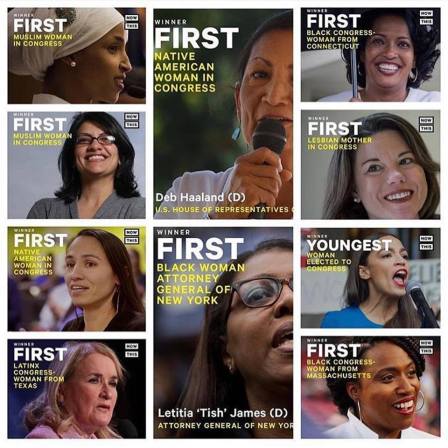
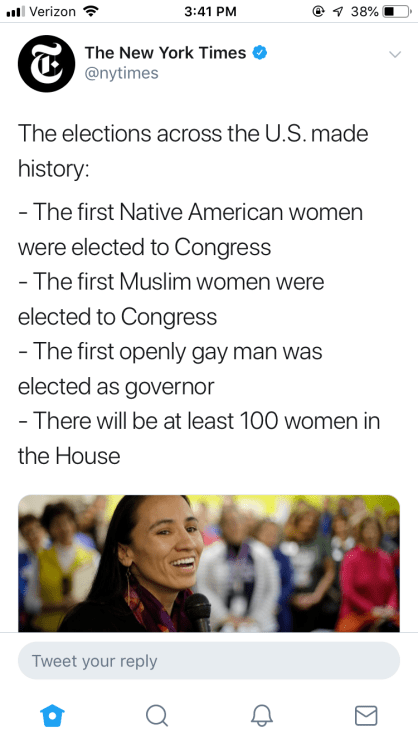
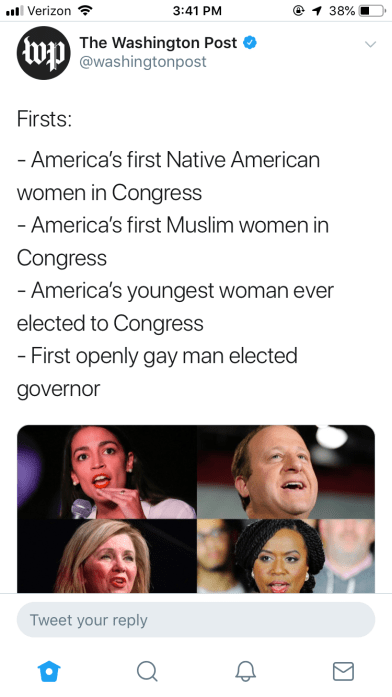
Many are celebrating that the first female Muslims were elected to congress, the first openly gay governor was elected, the first two Native American women were elected to congress, the youngest woman ever was elected to congress.
Young Kim was narrowly elected to California’s 39th congressional district. I don’t see her on the list. But she’s the first Korean American elected to the US congress. She’s a republican so that doesn’t get celebrated with the others. I did a search on Twitter for these lists that also happen to mention the first Korean American woman. I found five. TOTAL. On all of Twitter.
But that makes the celebration seem disingenuous to me. Diversity gets celebrated but only if it’s the right people, otherwise it gets ignored. Martha McSally was elected to the senate in Arizona. She was a pilot in the air force and the first female to fly as a fighter pilot. When she retired from her 22 year military career, McSally was a colonel and one of the highest ranking female pilots in Air Force history. A remarkable woman. But she’s a republican so she gets largely ignored.
Essentially it doesn’t matter to people who celebrate it. It’s not about any of these diverse candidates who won. If it were, Young Kim would also be celebrated. What matters is people who adhere to a certain political ideology. And if they happen to check intersectional boxes, that’s great. If they check those boxes and aren’t progressive, they’re ignored.
Also, why the need to front load things with a person’s race, gender, or orientation instead of their plans to govern?
Thanks for reading! I’d love to hear what you think, and don’t forget to subscribe!
Josh Benner is the associate pastor at Cornerstone Evangelical Free Church in Fergus Falls, Minnesota and has a Master of Divinity from Trinity Evangelical Divinity School. He enjoys writing about faith and culture. He lives with his wife Kari in Minnesota.
All three states had state ballot issues related to abortion. The ballot issue narrowly passed in West Virginia, soundly passed in Alabama and was soundly defeated in Oregon.
The Alabama and West Virginia amendments both included the phrase: “Nothing in this Constitution secures or protects a right to abortion or requires the funding of an abortion.”
Based on the new state constitutional amendments, if Roe v Wade were overturned by the Supreme Court, there would not be a right within those states to have an abortion. The new law also potentially enables state legislatures more freedom in passing laws that help preserve the life and rights of the unborn.
These two amendments are based off of another pro life amendment that Tennessee passed in 2014. Writing for the Huffington Post, Marina Fang argues that these laws “would likely face legal action and would be unenforceable because Roe v. Wade ensures a woman’s right to an abortion.” She goes on to mention that it’s possible that Roe would be overturned.
But even if it’s not overturned, it’s also not a foregone conclusion that these laws would be judged as unconstitutional. Last month, the Supreme Court declined to hear a challenge to the Tennessee amendment.
The West Virginia and Alabama laws also are set to eliminate funding for abortions.
In recent years, several states have been active in proposing legislation and constitutional amendments that protect the rights of the unborn.
These are big wins for the pro life movement and for the rights of the unborn. Many lives will be saved as a result of these new laws. It is important that other states pick up the baton and keep fighting for the rights of the unborn. When states fill to pass amendments, as was the case with Oregon, people need to keep fighting.
Thanks for reading! I’d love to hear what you think, and don’t forget to subscribe!
Josh Benner is the associate pastor at Cornerstone Evangelical Free Church in Fergus Falls, Minnesota and has a Master of Divinity from Trinity Evangelical Divinity School. He enjoys writing about faith and culture. He lives with his wife Kari in Minnesota.
A day when millions of Americans will breathe a sigh of relief and think “Ok, maybe it’ll be ok,” and where millions of other Americans will be despondent and thinking “It’s over. This was our last chance.”
It’s utter nonsense.
Certainly, this stuff matters.
But it’s not all that matters.
Political ads play to our fears, not to our hopes. They try to scare us. The media does the same thing. We hear how this is the most important election in history. (more…)