Josh Benner

Author: the Josh Benner Blog

  • Sermon: Studying the Exodus plagues – locusts. Exodus 10:1-20

    Sermon: Studying the Exodus plagues – locusts. Exodus 10:1-20

    Sermon manuscript:

    12 Then the Lord said to Moses, “Stretch out your hand over the land of Egypt for the locusts, so that they may come upon the land of Egypt and eat every plant in the land, all that the hail has left.” 13 So Moses stretched out his staff over the land of Egypt, and the Lord brought an east wind upon the land all that day and all that night. When it was morning, the east wind had brought the locusts. 

    14 The locusts came up over all the land of Egypt and settled on the whole country of Egypt, such a dense swarm of locusts as had never been before, nor ever will be again. 15 They covered the face of the whole land, so that the land was darkened, and they ate all the plants in the land and all the fruit of the trees that the hail had left. Not a green thing remained, neither tree nor plant of the field, through all the land of Egypt. 16 Then Pharaoh hastily called Moses and Aaron and said, “I have sinned against the Lord your God, and against you. 17 Now therefore, forgive my sin, please, only this once, and plead with the Lord your God only to remove this death from me.” 

    18 So he went out from Pharaoh and pleaded with the Lord. 19 And the Lord turned the wind into a very strong west wind, which lifted the locusts and drove them into the Red Sea. Not a single locust was left in all the country of Egypt. 20 But the Lord hardened Pharaoh’s heart, and he did not let the people of Israel go.

    Prayer

    14 Let the words of my mouth and the meditation of my heart 

    be acceptable in your sight, 

    O Lord, my rock and my redeemer. 

    Introduction

    In the summer of 1874, trillions of locusts wrought havoc on the great planes. From Montana to the Dakota and Minnesota, they would make their way to Texas. 

    There was little that farmers could do to stop them. Word of the coming invasion spread faster than the locusts, but even with advanced warning, there was little to stop swarms of locusts. Some farmers set fires around the perimetrs of their fields, but with so many locusts, there are also accounts of them smothering out fires. 

    That same summer, Laura, Mary, and Carrie Ingalls along with Ma and Pa moved to Plum Creek in Minnesota. In “On the Banks of Plum Creek,” Laura Ingalls Wilder describes the invasion: 

    “Plunk! Something hit Laura’s head and fell to the ground. She looked down and saw the largest grasshopper she had ever seen. Then huge brown grasshoppers were hitting the ground all around her, hitting her head and her face and her arms. They came thudding down like hail.

    The cloud was hailing grasshoppers. The cloud was grasshoppers. Their bodies hid the sun and made darkness. Their thin, large wings gleamed and glittered. The rasping whirring of their wings filled the whole air and they hit the ground and the house with the noise of a hailstorm…

    Grasshoppers covered the ground, there was not one bare bit to step on. Laura had to step on grasshoppers and they smashed squirming and slimy under her feet.…

    (she continues)

    Then Laura heard another sound, one big sound made of tiny nips and snips and gnawings.… The grasshoppers were eating.… You could hear the millions of jaws biting and chewing.… Day after day the grasshoppers kept on eating. They ate all the wheat and the oats. They ate every green thing—all the garden and all the prairie grass.… The whole prairie was bare and brown. Millions of brown grasshoppers whirred low over it. Not a green thing was in sight anywhere.”

    Today, we’re continuing our series in Exodus and looking at the Ten Plagues. 

    After suffering through a series of plagues, having the ecosystem turned upside down, the deaths of livestock, painful boils, historical hail storms, we see a plague of locusts. 

    And like the Great Plains invasion of locusts in 1874, we will read of the incredible destruction brought forth by locusts in Exodus.

    And so we’ll jump right into the passage this morning. We will be shorter than normal. 

    And our three points will be the scenes of the passage. 

    We’ll see the plague warned, we’ll see a failed negotiation attempt, we’ll see the plague brought to fruition, and we’ll see Pharaoh’s efforts to see the plague stopped. 

    With that, we’ll jump into our passage this morning and look at the plague warned. 

    1. The plague warned 

    Beginning in verses 1-2:

    Then the Lord said to Moses, “Go in to Pharaoh, for I have hardened his heart and the heart of his servants, that I may show these signs of mine among them, 2 and that you may tell in the hearing of your son and of your grandson how I have dealt harshly with the Egyptians and what signs I have done among them, that you may know that I am the Lord.” 

    Verse 2 gets at the generational nature of the work which the Lord is doing in this plague and in all of the plagues. 

    The Exodus is meant to be a generational event. For the Israelites, it was something meant for their children, and grandchildren, and for future generatyions, up to today as we are given this story as an example of the glorious miracles that the Lord did to free his people from slavery in Egypt. 

    The Exodus is the gospel of the Old Testament. 

    It is constantly pointed back to. 

    Dozens of references to this are made throughout the rest of the Old Testament, while we are constantly pointed to the importance of remembering these events. 

    It’s mentioned in Exodus 20 when God gives the Ten commandments. During their desert wanderings, the Israelties are pointed back to God’s redeeming work in bringing them out of Egypt. In later generations, the prophets point back to this in contrast with Israel’s failure to follow God’s covenant. 

    For the Israelites, they had a story that pointed them back to God’s great act of redemption in freeing them from slavery in Egypt. 

    And for Christians, we have a story that points us back to God’s great act of redemption in freeing us from the slavery of sin through the grace of Christ. 

    As the Israelites were to tell their children and their grandchildren about what God had done for them, we are called to tell the next generation about what God has done for us through Jesus Christ. 

    Stories are powerful in communicating lessons, values, teaching us about where we came from and who we are. 

    And the gospel does all of that. 

    In his commentary of Exodus, Philip Ryken says: “It explains who we are: the people of God. It explains where we came from: a life of sin and misery. It explains where we are going: to live with Christ in mansions of glory. It explains who God is: the Father of mercy and love. And it explains why we are here: to glorify God by living for Christ.” 

    Stories are powerful. 

    A great movie can be enjoyed over and over again. 

    A great family story can be told and retold and even though you know what happened, it still makes you laugh. 

    And God’s story matters. In both the Exodus, and the gospel, and throughout the Bible, we see God’s story of redeeming and restoring a sinful humanity to himself. 

    In verse 2, God says that in telling this story to future generations, you may know that I am God. 

    The stories of God’s work are powerful. 

    And it matters that we tell that story. 

    If I saved your life, you’d tell people about it. 

    We honor those who do great things to save, preserve, and protect others. 

    Yet we often don’t tell people about the God who saved our soul. 

    Why is that? 

    We’re called to share that story both with our children but also with the world. 

    Again, through the story of what God has done and is doing in the world, that stirs the human heart. That points people to God. That points people to goodness.

    And that points people to true life.  

    That we were sinful people and we were dead in our sins. But Jesus, the Son of God, came into the world. He lived a life without sin. He lived the life we could not live and died the death that we deserved so that we could have eternal life with him in heaven. 

    And that’s the truest thing there is. And that’s the greatest reality there is. 

    And that’s the gospel. 

    We don’t have to get it all figured out. We don’t have to get everything right. We have to come to Jesus. 

    Romans 10:13 says that all who call upon the name of the Lord will be saved. When we believe and trust in Jesus, there is forgiveness and life. 

    In Exodus, Moses and Aaron go to Pharaoh with the warning of this plague of locusts. 

    Exodus 10:3-6:

    3 So Moses and Aaron went in to Pharaoh and said to him, “Thus says the Lord, the God of the Hebrews, ‘How long will you refuse to humble yourself before me? Let my people go, that they may serve me. 4 For if you refuse to let my people go, behold, tomorrow I will bring locusts into your country, 5 and they shall cover the face of the land, so that no one can see the land. And they shall eat what is left to you after the hail, and they shall eat every tree of yours that grows in the field, 6 and they shall fill your houses and the houses of all your servants and of all the Egyptians, as neither your fathers nor your grandfathers have seen, from the day they came on earth to this day.’ 

    There we have the official warning of the plague of locusts which will come if he continues to refuse allowing the Israelites to go. 

    Moses says that they will cover the face of the land so that no one can see the land. 

    And when he’s had seven other plagues and he’s told a plague of locusts will come, Pharaoh still does not relent. The passage says that the Lord had hardened Pharaoh’s heart. 

    While Pharaoh doesn’t want to allow the Israelites to leave, some of his advisors are starting to have a change of heart. 


    Verse 7: 

    7 Then Pharaoh’s servants said to him, “How long shall this man be a snare to us? Let the men go, that they may serve the Lord their God. Do you not yet understand that Egypt is ruined?” 

    Pharaoh’s servants look at all of the destruction and feel like their society is ruined and are saying “just let them go. What’s it all for?” 

    1. A failed negotiation 

    Verse 8, we see a brief scene where Pharaoh tries to negotiate. This is something else that we’ve seen in other plagues. Attempts at bargaining with the Lord. 

    We don’t have any leverage with an all powerful Lord. 

    Pharaoh will fain willingness to release some of the Israelites. 

    8 So Moses and Aaron were brought back to Pharaoh. And he said to them, “Go, serve the Lord your God. But which ones are to go?

    So Pharaoh says that they can go, but then he asks “which ones are to go?”

    He doesn’t want all of the Israelites to go. If some stay back, that will increase the likelihood they’ll return. 

    But Moses has been directed by the Lord and is not in a position to negotiate. 

    ” 9 Moses said, “We will go with our young and our old. We will go with our sons and daughters and with our flocks and herds, for we must hold a feast to the Lord.”

    In other words, everyone will go. 

    In verse 11, Pharaoh will say: 

    11 No! Go, the men among you, and serve the Lord, for that is what you are asking.”

    So Pharaoh was only willing to allow the men to go for this religious pilgrimage. Again, he’s counting on them coming back to Egypt if their wives and children are left behind. 

    But that will not do. 

    This worship and God’s plan is not just meant for the Israelite men. It’s men for the entire Israelite people. 

    And since Pharaoh has again refused to listen to the Lord, he will now have to bear the full force of the Lord’s judgment. 

    1. The eighth plague: locusts

    Verses 13-15:

    13 So Moses stretched out his staff over the land of Egypt, and the Lord brought an east wind upon the land all that day and all that night. When it was morning, the east wind had brought the locusts. 14 The locusts came up over all the land of Egypt and settled on the whole country of Egypt, such a dense swarm of locusts as had never been before, nor ever will be again. 

    15 They covered the face of the whole land, so that the land was darkened, and they ate all the plants in the land and all the fruit of the trees that the hail had left. Not a green thing remained, neither tree nor plant of the field, through all the land of Egypt.

    And the destruction is unleashed. 

    When the text says that the locusts covered the ground, that’s probably not much of an exaggeration. I think about Laura Ingalls Wilder’s memoir. 

    I have a couple of clips of locusts that we’ll look at in a moment. 

    But here are a few facts about locusts.

    The desert locust is the most destructive pest on earth. 

    In many parts of the world, they’re a common nuisance. 

    But when the conditions are right, when there are heavy rains and wet soil, a physical change happens in locusts which gives the conditions for them forming massive swarms where they begin to reproduce rapidly. 

    While one locust is insignificant, a massive swarms of locusts can cause almost unimaginable damage. 

    Some good news for us. The Rocky Mountain locust which plagued the Great Plains in the 1870s actually went extinct in 1902 and North America has no native locust species. 

    A locust swarm can have over 100 million locusts in a square mile, and a swarm can be the size of a city. Large swarms can have tens of billions of locusts. 

    Locusts eat nearly their body weight in a day. They will eat crops, flowers, leaves, grains, and tree bark. And if they run out of food, locusts will cannibalize each other. From 2003-2005, swarms did more than $2.5 billion dollars in crop losses in West Africa. 

    According to the United Nations Food and Agriculture Organization, the number of locusts in a square mile can consume the same amount of food in a day as 35,000 people. 

    And they’re mobile. A locust can cover 120 miles in a day. In 1988, swarms from Africa made it to England. 

    Last year, and continuing this year, due to heavy rains, several countries in Africa, the Middle East, and Asia had plagues of locusts which have impacted the food supplies for millions of people. 

    In our passage, verse 15 gets at the impact of the locusts.

    Not a green thing remained, neither tree nor plant of the field, through all the land of Egypt.

    And something to keep in mind. We live in a time and place where there are lots of resources. If we don’t have enough food, there are things that can be done. It might cost more. But we are able to get food. 

    The Egyptians losing crops to hail in the last plauge and then to locusts in this plague would be incredibly perilous and difficult. 

    But as we’ve seen with other plagues, the Lord uses something natural to the world as an instrument of judgment. 

    Sin is serious. And the sin of Pharaoh was serious as he continued to refuse to release the Israelites. 

    Earlier in the chapter, Pharaoh had arrogantly dealt with Moses and Aaron, but amid the destruction of the locusts, he must again come to them with his tail between his legs. 

    And that brings us to our fourth and final scene. 

    1. Pharaoh’s effort to stop the plague

    And as he’s done before, he’ll talk the talk when he says in verse 16:

    16 Then Pharaoh hastily called Moses and Aaron and said, “I have sinned against the Lord your God, and against you. 17 Now therefore, forgive my sin, please, only this once, and plead with the Lord your God only to remove this death from me.” 

    We’ve seen this pattern in some of the other plagues where Pharaoh asks for intervention, he asks for Moses to intercede and go to the Lord on his behalf. 

    Pharaoh uses a lot of the right language. He talks of his sin and asks for forgiveness. 

    We’ve seen it before. 

    And Moses takes this apology before the Lord in verse 18. 

    Verse 19:

    19 And the Lord turned the wind into a very strong west wind, which lifted the locusts and drove them into the Red Sea. Not a single locust was left in all the country of Egypt. 20 But the Lord hardened Pharaoh’s heart, and he did not let the people of Israel go.

    The Lord answers the prayer. 

    The Lord wipes out the locusts in the Red Sea. It’s foreshadowing what will happen to Pharaoh himself in chapter 14. 

    But how does Pharaoh respond to this prayer being answered? 

    The section ends by saying that he did not let the people of Israel go. 

    Once again, Pharaoh reneges. 

    Here’s what’s so amazing about the whole story. 

    Pharaoh keeps seeing the Lord answer his prayers, and yet never listens to God, never worships God, never turns to God in faith. Instead, Pharaoh continues to be spared and whatever repentance he just spoke of, we see what is ultimately insincere as we see time and again that he has not been changed. 

    Pharaoh might say he’s sorry and use the right language in talking about his sin when he’s suffering. That is interesting in itself. He knows the language to use. He has some concept of what he ought to say or why he’s wrong. But whenever things return to normal, he continues in direct rebellion against God. 

    Empty and faithless words. Wanting God’s blessing but not wanting God. Wanting God’s grace but not wanting to live for God. 

    There’s nothing new under the sun. People still play these games today. People want cheap grace. People want easy grace. They want God to do what they want him to do so that they can go back to doing what they want to do. 

    God is patient. He’s slow to anger and abounding in steadfast love. But he is also righteous and just. God continues to give chances. Pharaoh has again and again made promises to free the Israelites and then refused. God knows all of this.

    But there will be a time when our time runs out. 

    And there will ultimately be a day of reckoning. 

    And while God is gracious and merciful, he does not compromise on insincere faith. He doesn’t tolerate phony moralism. And he will not accept disingenuous confessions and repentance. God is all knowing. He knows who we are. He knows our hearts. He knows where our faith is. 

    Let us not go through life playing games. Let our plan not be a death bed confession. 

    But let us live for God today. Why? Because that’s the truest way to live, it’s the best way to live, and it’s the blessed way to live. 

    Thanks for visiting! If you liked this post, please share and subscribe.

  • Charlie Kirk dead at 31

    Charlie Kirk dead at 31

    A few thoughts as I’ve reflected today. Few things shock me. Charlie Kirk being assassinated in public today shocked me.

    -I saw the infamous video. I wish I hadn’t. It’s disturbing. To my untrained eye, I thought “I know doctors can do amazing things but I don’t think that’s survivable.” He never had a chance.

    -Many have said truly wicked things about him and showed a lack of compassion and concern about his death. To borrow an idea from a friend, that says a lot more about those people than it says about Charlie Kirk. We have a lot of Bolsheviks in our society.

    -You can disagree with 100% of the things he said and believed and that’s fine. Charlie Kirk was also willing to take his message to the people and to engage with those who vehemently disagreed. There’s not enough of that in our society. He was willing to have honest conversations and an assassin decided to silence him.

    -I’m most saddened for his daughters. It’s a tragedy for anyone to lose a parent. It would have been sad if Charlie Kirk had died in a car accident today. But he didn’t. He was publicly executed and that’s now part of their story. -Tomorrow is never promised.

    Last night when Charlie Kirk went to sleep, he had no idea that today would be his last day of life. 24 years ago tonight, thousands of Americans went to bed with the same concern being the furthest thing from their minds.

    Photo credit. Photo courtesy of Flickr Creative Commons. Photo taken by Gage Skidmore.

  • Where I was on 9/11

    Where I was on 9/11

    Adapted from an essay of the same title, originally published September 11, 2011

    I thought it was an accident. When my high school principal announced over the PA system that the World Trade Center had been hit by a plane. I distinctly remember hearing someone in the back of the class mutter, “terrorism.”

    It’s an interesting juxtaposition 24 years later. In some ways, it seems like a lifetime ago. While at the same time, I remember it like it was yesterday. Almost every year on September 11, I watch different documentaries about that day. And it’s never any less shocking that that happened.

    I was struck by the thought today of how many holidays I don’t pay special attention to. I don’t care about Halloween, St. Patrick’s Day, Valentine’s Day, or New Year’s Day. I don’t do anything special for Veterans Day or Memorial Day. I don’t always even celebrate the Fourth of July. But 9/11 is a day every year that stands out to me.

    Whenever there’s a spectacularly gorgeous late summer day, September 11 often comes to my mind. And I feel like most years since that day, wherever I’ve lived, the weather has been just as spectacular as it was in 2001.

    I was afraid on that day. I remember seeing images of people in some Middle Eastern countries passing out candy and celebrating. I was horrified. It seemed like nothing would ever be normal again. The day was like a movie, but it seemed as if the bad guys had won.

    Ordinary people, thousands of them: boarding flights for work and vacations, sitting in their offices, responding to the first tower after it had been hit, oblivious to the horrors which were to come, and thousands of them were gone.

    Just. Gone.

    America rebounded. People who can’t agree on much of anything banded together and life went on. But my fear that life would never be the same has come true in many ways. America is not and will not ever be the same as she was before 9/11. 8:46 AM that morning split time for this country. Everything we speak of happened before or after the attack.

    I was taking a quiz in my third period geometry class 24 years ago. I was 15 years old, and a sophomore in high school.

    I’ve changed a lot over these last 24 years. We’ve all changed a lot over these last 24 years. Later during that third period math class, the principal again announced a second plane had hit a second tower, erasing any doubt that this was accidental. And I still remember what I did the rest of that day.

    I hadn’t seen a television on 9/11 when I found out that the towers had fallen. When I heard about it, it didn’t seem possible, at least not to me.

    Fourth period: chemistry, where we found out that the towers had collapsed. Our teacher turned on a television and we could see the horrors unfolding. It was beyond my comprehension. The chaos of that morning, for younger people, I think is hard to appreciate. We know the results of that day. In hearing the towers had been hit and that there were still other planes, it was something we had never seen before.

    Fifth period was my lunch. Other information had trickled in. Rumors and speculation ran strong. Sixth period was journalism. Along with several other classes, our teachers led us to the school library where we continued to watch the news coverage. By this point, both towers had collapsed and we saw the chaos in Manhattan as the debris cloud enveloped the Trade Center Plaza. If the world were ending, I assume it would look a bit like that scene from New York.

    We still had football practice that day. I still remember it was for a game against Worthington Kilbourne. After football practice, we heard planes in the distance. They were military.

    In my tenth grade geometry class, as the principal announced that the World Trade Center had been struck, a young man in my math class first heard of the attack at the same time as me. I would later find out that September 11 was a seminal event in his decision to join the army. Shortly before Christmas in 2006, that fine young man lost his life for the cause of defending America and freedom. It would be impossible for me to think back to 9/11 without thinking of him. As I think of him in my recollections, it is difficult for me not to be fatalistic.

    I think of kids who learn about that day now, maybe they’ve seen the same documentaries. But it’s just not the same when you know what happens from the beginning. It’s hard to appreciate the chaos. It’s hard to appreciate that when the towers were hit, people generally had no idea they were going to collapse.

    jrb

    Credits

    Photo: Julian Menichini. It was taken on September 5, 2001. This photo is not the property of joshbenner.org, and the owner of the copyright on this photo does not endorse this blog. For more information, please click on the photograph.

    Orignial source: https://www.flickr.com/photos/jul/104836691/in/photostream/

  • Feels like yesterday: 9/11 through the years

    Feels like yesterday: 9/11 through the years

    There aren’t very many days in your life where you know at the time that life is never going to be the same. Everyone knew that on 9/11.

    I’ve thought a lot lately about this day and what the younger generation will understand about 9/11. I remember it like it was yesterday, and so it’s crazy for me to consider that kids in school weren’t even born when this event happened. This monumental day that was a paradigm shift in American history is just that to kids, history. They learn about that day from what people tell them and from the same documentaries I watch.

    If you weren’t alive that day, and watch documentaries about 9/11, I think it’s hard to appreciate the chaos of September 11th. There’s a sense of fatalism in the documentaries. They almost always begin by contrasting the beauty of that morning against the pandemonium that was soon to burst forth.In the weeks and months after the attacks, it impacted every aspect of our society: sports were a rallying ground for patriotism. Many popular songs were written about that day and playing on the radio. New laws were enacted. Entirely new federal agencies were created. There was an ever present thought of if and when another attack would happen. The whole country was on high alert, arguably for the next 2-3 years.

    As I watch documenaries, the quality of the videos seems a little more dated, the outfits people are wearing seem a little more 90s.When the North Tower was struck, no Americans knew that the South Tower was going to be hit 17 minutes later. No one had any idea that other planes were in the process of being highjacked and that other sites were also being targeted. 

    As the towers had smoke pouring out, the average person had no idea that they were going to collapse. From the time the North Tower was struck, three other planes crashed and both towers fell in 102 minutes.

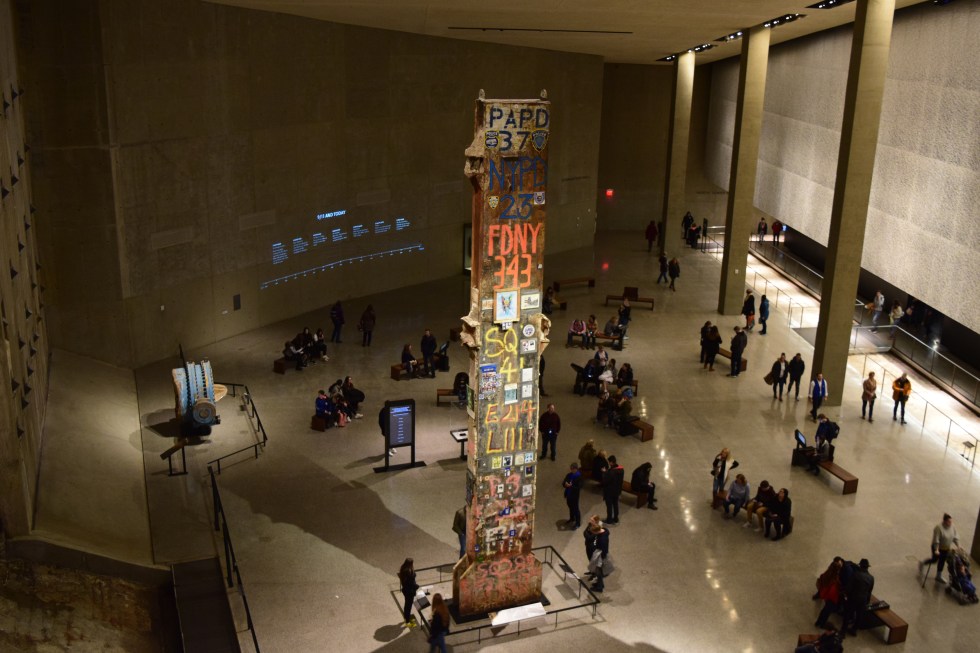
    A couple years ago, I had the opportunity to visit the National September 11 Memorial and Museum. It’s a special place. One of the rooms (and one of the few parts of the museum where they ask people not to take photos) features photographs of all of the victims of the attacks. Just a huge room with thousands of photos of people. It’s crazy to think that each of those photos is a person who meant something to a lot of people. They were people’s spouses, people’s parents, siblings, children, grandchildren, best friends. 

    All of them taken away because of evil and hatred. For many of the victims, the memorial also serves as their final resting place. From the intense fire, and from the incredible weight of the towers collapsing, and given the high numbers of casualties, remains could be hard to positively identify in the aftermath. Roughly 40 percent of victims have never been identified. The museum has a morgue where the unidentified remains are housed.

    DSC_6884.jpg

    It’s still unfathomable to me. Thousands of people just living their lives, having no idea that they were about to become casualties on the front lines of a war in which they had no idea they were enlisted. The horror that people experienced above impact zones on the towers and on our airplanes. The first responders who risked their lives (and the many who gave their lives) on that day to help others.. For those people, I never forget.

    It’s still unbelievable to me. There’s nothing else like it.

    I think of the people in conference rooms and riding elevators who were dead without ever knowing there was even an attack. I think of the people who jumped from the towers. They were in such a horrible situation that jumping was the lesser of two evils. That still shocks me.

    Originally published September 11, 2018

  • Sermon: Studying the Exodus plagues – Hail. Exodus 9:13-35

    Sermon: Studying the Exodus plagues – Hail. Exodus 9:13-35

    Manuscript

    Sometimes we ignore warning signs. 

    Pharaoh was given several. 

    A person ignores the check engine light, ignores something a doctor tells them. 

    CEO’s ignore warning signs of issues in their companies. 

    Cyber security experts warned Equifax that their data was vulnerable and could be easily breached. They didn’t listen and they were hacked. The data breach compromised the data of 145 million Americans. 

    Companies like General Motors and Toyota have been warned about safety issues in cars and ignored whistleblowers. 

    Pharaoh has seen his kingdom turned upside down by a series of plagues and yet continues to resist the one thing that has brought the promise of relief. 

    Sending the Israelites into the wilderness. 

    We’re continuing in the plagues of Exodus. This morning, we look at the seventh. Hail. 

    In many ways, a tremendous hailing thunderstorm SEEMS like the stereotype for a good plague. The heavens opening up and unleashing destruction. 

    And with that, we’ll jump right into our passage this morning. 

    1.  Pharaoh warned

    Beginning in verse 13:

    13 Then the Lord said to Moses, “Rise up early in the morning and present yourself before Pharaoh and say to him, ‘Thus says the Lord, the God of the Hebrews, “Let my people go, that they may serve me. 

    So as we saw in the first and the fourth plagues, Moses is instructed to confront Pharaoh in the morning. 

    There’s actually a pattern to the plagues where they go in three cycles, each consisting of three plagues. 

    And across the plague cycles, there are similar patterns to the first plague in each of the three cycles. There are similarities to the second plague in each of the three cycles. And there are similarities to the third plague in each of the three cycles. 

    So the first nine plagues are in these cycles of three. The tenth and final plague is totally separate from what comes before it. 

    As we’ve talked about various creation themes in the Exodus, I also think it’s interesting how much order there is to the plagues. Genesis gives an orderly creation. Exodus gives an orderly uncreation. 

    Before we continue in our text, I have a question. 

    Why? 

    Who has this all happened? 

    What’s this all been for? 

    This is the seventh plague. 

    There will still be three to come. 

    Ten divine judgments from the Lord upon Egypt. 

    Why? 

    Why didn’t God just free the Israelites? 

    Why didn’t he just teleport them from Egypt to the promised land? 

    Why didn’t he just strike Pharaoh dead and have a new Pharaoh who would be more sympathetic? 

    Why didn’t he just start with the last plague first and have Israel freed then? 

    So often, I hear people ask why God does the things he does. 

    A person praises God for being healed of a disease. 

    Someone else asks “why’d God give it to you in the first place?’

    A person talks about God’s protection in being rescued from a natural disaster. 

    Someone else asks why God allowed that to happen in the first place. 

    So often, we want to ask why God allows any bad things, but we never question why a God gives sinful people in a fallen world any good things. 

    Whenever we look to why God does something for his people, a person can always ask why God didn’t do things differently. 

    But verse 15 says something very important. 

    15 For by now I could have put out my hand and struck you and your people with pestilence, and you would have been cut off from the earth. 16 But for this purpose I have raised you up, to show you my power, so that my name may be proclaimed in all the earth. 

    Let’s not overlook this. 

    I want to read it again. This is what the Lord had said to Pharaoh. 

    I could have put out my hand and struck you and your people with pestilence, and you would have been cut off from the earth. 

    God is saying “I could have wiped all of you out.” 

    Verse 16 begins: But for this purpose…

    But for this purpose all of this is happening. 

    But for this purpose I haven’t wiped you out. 

    But for this purpose I’ve brought these plagues. 

    The Lord says: But for this purpose, I have raised you up, to show you my power, so that my name may be proclaimed in all the earth. 

    God is doing all of this to show his power and for the glory of his own name. 

    Is that vain to do? 

    The gods of our age

    The Egyptians had their pantheon. They had their gods for various areas of life. 

    They had gods for the things that they valued. The river was central to their lives, so they had gods of the Nile. Family was important, so they had fertility gods. They cared about the afterlife too so they had gods of life and death. Their agriculture mattered to them so they had gods of the crops, gods of the livestock. 

    Our world makes up gods too. 

    We think we’re so different from ancient peoples. 

    Everyone, regardless of if you’re the most devout person of faith or the most ardent atheist, everyone has something that they value above all other things. 

    And whatever that thing is is your god. 

    In our day, we can worship family, money, success, accomplishments, pleasure, leisure, possessions, security, health, politicians, celebrities, and sports. Just to name a few.  

    Those are the areas where we can put our hope, where we can try to get our meaning, and the things and people that we can glorify. 

    None of those things are bad in themselves. 

    But they all make bad gods.  

    And so God has kept the Egyptians alive, he’s kept Pharaoh alive for the purpose of his own glory. 

    Because in the Exodus, God is glorified both in his redemption of the Israelites, in his signs, in his sparing of the Israelites, in parting the waters of the Red Sea, in leading the Isrealites in their wanderings, in being faithful to his covenant promises. 

    God is glorified in all of that. 

    But he is also glorified in his judgment against Pharaoh. 

    God’s name is proclaimed throughout the whole earth because of these plagues. 

    Why ten? 

    Ten is pretty hard to ignore. 

    One could be ignored. 

    Two might be thought of as a coincidence. 

    But God brings ten blows upon Egypt and upon Pharaoh leaving no doubt that he is the Lord. 

    We’ve talked a lot about how the plagues confront the Egyptian pantheon of gods. In doing ten plages, that gave God even more opportunities to show his power over the false gods of Egypt. 

    So in both his redemption of the Israelites and in his judgement upon Egypt, God’s name is being proclaimed, God is being glorified.

    All men will bring God glory in the end. You will bring him glory through being an example of his grace or you will bring him glory through being an example of his righteous and holy judgement. 

    And so yes, God could have crushed Pharaoh right from the start but he has not because he is concerned about his glory. 

    God’s concern for his glory is something that some people don’t like. 

    If God is infinite, why does he care about his name going out in the world? 

    Isn’t that insecure? 

    C.S. Lewis gives some helpful insight in his book “Reflections on the Psalms.” 

    This is a long excerpt, but I think it’s incredibly powerful and helpful. 

    C.S. Lewis

    Lewis says:

    “The miserable idea that God should in any sense need, or crave for, our worship like a vain woman wanting compliments, or a vain author presenting his new books to people who never met or heard of him…”

    Lewis goes on to say: 

    “Even if such an absurd Deity could be conceived, He would hardly come to us, the lowest of rational creatures, to gratify His appetite. I don’t want my dog to bark in approval of my books….”

    “But the most obvious fact about praise – whether of God or anything – strangely escapes me. I thought of it in terms of a compliment, approval, or the giving of honour. I had never noticed that all enjoyment spontaneously overflows into praise unless (sometimes even if) shyness or the fear of boring others is deliberately brought in to check it.”

    “The world rings with praise – lovers praising their mistresses, readers their favorite poet, walkers praising the countryside, players praising their favourite game – praise of weather, wines, dishes, actors, motors, horses, college, countries, historical personages, children, flowers, mountains, rare stamps, rare beetles, even sometimes politicians or scholars. I had not noticed how the humbles, and at the same time most balanced and capacious minds, minds, praised most, while the cranks, misfits and malcontents praised least…”

    I’ll pause from the quote for a moment. 

    So what Lewis is saying is that he used to think of God like a woman needing to be complimented, but he realized that truly enjoying anything ultimately results in praise. 

    We praise what we love. 

    Lewis says: 

    “I think we delight to praise what we enjoy because the praise not merely expresses but completed the enjoyment; it is its appointed consummation. It is not out of compliment that lovers keep on telling one another how beautiful they are; the delight is incomplete till it is expressed. It is frustrating to have discovered a new author and not to be able to tell anyone how good he is; to come suddenly, at the turn of the road, upon some mountain valley of unexpected grandeur and then to have to keep silent because the people with you care for it no more than for a tin can in the ditch; to hear a good joke and find no one to share it with.”

    Lewis says that “the worthier the object, the more intense the delight.” 

    And one final quote from a few paragraphs later, Lewis says “The Scotch catechism says that man’s chief end is ‘to glorify God and enjoy him forever.’ But we shall then know that these are the same thing. Fully to enjoy is to glorify. In commanding us to glorify Him, God is inviting us to enjoy him.” 

    The byproduct of knowing and loving an infinite, almighty, eternal, holy, and righteous God is that we glorify him. 

    Because to glorify anything else is to glorify something less than God. That is first of all sin, but it is also aiming short of what is greater. ,


    Verse 17, the Lord says to Pharaoh: 

    17 You are still exalting yourself against my people and will not let them go. 18 Behold, about this time tomorrow I will cause very heavy hail to fall, such as never has been in Egypt from the day it was founded until now.

    Once again, we see God’s power that he can predict the timing of this plague. 

    But even in this warning, the Lord tries to give some gracious advice. 

    1.  The Egyptians warned 

    19 Now therefore send, get your livestock and all that you have in the field into safe shelter, for every man and beast that is in the field and is not brought home will die when the hail falls on them.” ’ ” 

    So they’re warned about the great hailstorm that’s coming and also warned to bring the livestock into some sort of shelter. 

    It’s also ironic that the passage tells them to “send” their livestock into shelter. 

    We saw in a previous plague that Pharaoh sent people to investigate the effects of one of the plagues in Egypt yet he wouldn’t send the Israelites into the wilderness. 

    Here, he’s told to send his livestock into shelter. 

    But still he won’t send the Israelites into the wilderness. 

    They’re all continuing to use the same Hebrew word for send.

    Verse 20:

    20 Then whoever feared the word of the Lord among the servants of Pharaoh hurried his slaves and his livestock into the houses, 21 but whoever did not pay attention to the word of the Lord left his slaves and his livestock in the field. 

    It’s interesting that among Pharaoh’s servants, some do believe in the Word of the Lord here. Some take the advice and do bring in the animals. 

    Now the phrase that they feared the word of the Lord is found only here in the entire Old Testament. 

    The Bible talks a lot about a fear of the Lord. 

    But here, it talks of a fear of the Word of the Lord. 

    Does that mean that they had faith? 

    I don’t know if the text gives us enough to say that definitively, but as I’ve pointed out before, Exodus tells us that there were at least some Egyptians who did become followers of the Lord. 

    When the Israelites prepare to leave Egypt in Exodus 12, the passage refers to a mixed multitude. 

    Exodus 12:37 mentions the Israelites:

    37 And the people of Israel journeyed from Rameses to Succoth, about six hundred thousand men on foot, besides women and children. 

    But then the following verse says: 

    38 A mixed multitude also went up with them, and very much livestock, both flocks and herds.

    The point is that there are people who are not ethnically Jewish who are part of the Exodus. 

    And there will be other references to non-Israelites. 


    Exodus 12:48: 

    If a stranger shall sojourn with you and would keep the Passover to the Lord, let all his males be circumcised. Then he may come near and keep it; he shall be as a native of the land. But no uncircumcised person shall eat of it

    So what that’s saying is that if a non-Israelite male wants to become Jewish, once he’s circumcised, he will be treated just like any other Israelite. 

    And then there are people who are not Israelites that we see elsewhere in the Bible. 

    Melchizedek, Caleb, Rahab, Ruth, the Queen of Sheeba, the Samaritans, among others. 

    Even in the Old Testament, when you have a defined people of God in Israel, there is still a message for the world that God can redeem them. 

    The New Testament has much less emphasis on a specific land, but instead focuses on a gospel that is for the whole world. 

    And it’s possible that we get one of the earliest glimpses of this in Exodus 9 as some of Pharaoh’s people begin to take seriously the Word of the Lord. 

    In following his instruction, it does show a certain deference to God. 

    So some Egyptians take the word seriously. Their livestock is protected. 

    Others disregard the warning of a storm. 

    Keep in mind that the threat of a thundering hail storm would seem just about as probable in the middle of Egypt as we would feel about being told a volcano was going to erupt and cover us all in ashes. 

    That might be a slight exaggeration, but not by much. 

    The part of Egypt that the Exodus events are taking place in receives on average far less than an inch of rain per year, and sometimes no rain. 

    So our idea of a big summertime thunderstorm is pretty rare there. 

    But with seeing the other plagues, even as improbable as a hailstorm might have seemed, some took it seriously. 

    We come to our third scene. 

    The plague.

    Seventh plague: hail

    Verses 23-26: 

    23 Then Moses stretched out his staff toward heaven, and the Lord sent thunder and hail, and fire ran down to the earth. And the Lord rained hail upon the land of Egypt. 24 There was hail and fire flashing continually in the midst of the hail, very heavy hail, such as had never been in all the land of Egypt since it became a nation. 

    25 The hail struck down everything that was in the field in all the land of Egypt, both man and beast. And the hail struck down every plant of the field and broke every tree of the field. 26 Only in the land of Goshen, where the people of Israel were, was there no hail. 

    Incredible destruction. 

    Thunder. 

    The passage says lightning ran down from heaven. I take that to mean lightning. 

    And hail. 

    I once saw a hailstorm when I was at Trinity basically cover the ground in a couple minutes. 

    It was unlike anything I’d ever seen before. 

    A few things to note about this seventh plague. Hail is often seen in the Bible as a sign of divine judgment. We see that in books ranging from such as Joshua, Psalms, Isaiah, and Ezekiel. 

    The passage says that the hail destroyed crops, but it’s actually the same Hebrew word for vegetation that’s used in creation, once again showing the uncreation that is happening in the plagues. 

    And as we again have seen in other plagues, this is an attack on various Egyptian deities over the sky and over weather. 

    The Lord is showing his power over all of them. 

    Pharaoh wants to talk to moses. 

    Verse 27: 

    27 Then Pharaoh sent and called Moses and Aaron and said to them, “This time I have sinned; the Lord is in the right, and I and my people are in the wrong.

    Now that’s very significant. Pharaoh acknowledges sin.

    Now we will see that this is short-lived, but it’s interesting that he even begins to acknowledge that his own actions are wrong. 

    Repentance matters. 

    But just saying sorry or saying you’re wrong is not repentance. 

    Repentance also involves a change. 

    Pharaoh asks Moses to plead with the Lord to stop the storm. He says I will let you go, and you shall stay no longer. 

    In verse 29, Moses says that he will plead with the Lord. 

     “As soon as I have gone out of the city, I will stretch out my hands to the Lord. The thunder will cease, and there will be no more hail, so that you may know that the earth is the Lord’s. 

    Moses does this. 

    And the chapter ends in verse 34-35:

    34 But when Pharaoh saw that the rain and the hail and the thunder had ceased, he sinned yet again and hardened his heart, he and his servants. 35 So the heart of Pharaoh was hardened, and he did not let the people of Israel go, just as the Lord had spoken through Moses. 

    Pharaoh had indicated that he was repentant but when it came to putting that repentance into action, we see that he again reneges on the deal. 

    Conclusion 

    The Lord does not desire empty words or meaningless repentance. 

    He doesn’t want empty acknowledgement while we’re still totally going to do what we want and continue in sin. 

    He desires followers who will come before him in worship and reverence. 

    He desires faith. 

    God wants us to recognize our sin and our need for his grace. 

    As David said in Psalm 51:17: 

    17 The sacrifices of God are a broken spirit; 

    a broken and contrite heart, O God, you will not despise. 

    And the good news of the gospel is that Jesus welcomes us to come to him. 

    Though we have hard hearts, he promises to remove the heart of stone and give us a heart of flesh. 

    Jesus welcomes us to find grace, and life, and forgiveness in him when we come to him.

    Thanks for listening. I hope this sermon was a blessing. If you liked it, please share and subscribe!