Josh Benner

Author: the Josh Benner Blog

  • The American gospel and the meaning of Easter

    The American gospel and the meaning of Easter

    Statistically, we know that the vast majority of Americans believe in some form of a higher power. There are relatively few who are atheists. Since people do believe that there is something, and since it’s so easy to think of the majority of Americans as Christians, many simply attach themselves to Christianity.

    But what does it mean? Christianity?

    For so many, we call ourselves Christians but then never pray, or read the Bible, or go to church, or experience fellowship with other believers, or show any actual desire to have a relationship with Jesus. Without these, how can a person be Christian?

    We live in a culture where it is accepted to be a “Christian” so long as we have a faith that is extremely passive, watered down, and without conviction. In the eyes of the world, when we have a faith that actually impacts the way in which we live our lives, we’re labeled as extreme, strange, ignorant, or bigoted. For people who actually have faith, they’re thought of as being “really religious.”

    I argue that to be religious but not really religious is to be religious, not really.

    Contrary to popular opinion, the gospel isn’t that we just need to be a “good person.” To say that this was the basis of the message of Christ is a complete misunderstanding of the New Testament because He never says nor implies that our moral goodness is the thing which will save us. In fact, the point of the gospel is that our own actions cannot save us.

    All of us sin, and our sin separates us from God. But we are saved because of God’s grace alone through faith alone in Christ alone. That is the heart of the gospel. That we need Christ. Some might not like that because it’s exclusive. But the gospel is meant to be inclusive. Jesus died for all who will accept His gift of grace.

    Throughout the history of the church, there have been those who have unfortunately distorted the gospel or misused it. We can point to events like the church’s Crusades or her Spanish Inquisition. In modern times, we hear of abuses within the Catholic Church, and radicals like the Westboro Baptist Church who protest funerals. It’s easy to look to these things and to become disgusted with Christianity.

    But if Christ really died and really rose from the dead, the fact that people distort the message doesn’t change the reality that He came to forgive you of your sins. It’s not the message of the gospel that is the problem. The problem is man’s selfish usage of the gospel.

    But why should we be Christians? In our daily lives, we see people who claim to know God but who are hypocrites…

    That’s the point!

    Man is sinful! We are immoral. We were incapable of morally cleaning ourselves up.

    We needed a savior.

    And a savior came, and died, and rose, and lives.

    Some may argue, if there is a God, why does He allow people to tarnish His message?

    It’s because people aren’t spiritual robots. We are willing, moral beings. And there are people who choose to do morally egregious things in the name of the gospel. But that isn’t a shortcoming of the gospel. Like a shinning light, it clarifies the darkness of our hearts and shows our desperate need for grace.

    Some may want to live as Christians, but feel that they can do a better job on their own, instead of through organized religion. But the idea that you can be a Christian apart from church contradicts the teachings of Christ. Certainly, there are bad churches. But there are also a lot of very good, Christ-centered churches. One bad experience, or years of bad experiences are no excuse for someone whose trying to live as a Christian to ignore church.

    In discussions about religion, I’ve often times said that the gospel is either the most important thing in the universe, or it is completely irrelevant. Jesus was the God who died for our sins, or He wasn’t. If He was, we should worship Him. If not, then He is useless to us. The idea that Jesus might have just been a great moral teacher contradicts Jesus’ own teachings. His message revolved around Him being the savior of the world. If He lied about that, He cannot be a great moral teacher.

    So what do you believe? Where do you stand with Jesus? Was He God or was he just some guy?

    Jesus said “Come to me, all who labor and are heavy laden, and I will give you rest. Take my yoke upon you, and learn from me, for I am gentle and lowly in heart, and you will find rest for you souls.”

    No matter what you’ve done, no matter who you’ve hurt, no matter what addiction is suffocating your life, no matter what dark thoughts you have, it’s nothing so great that the risen Lord cannot forgive you.

    But where to start?

    As I’ve already said, I think it comes down to prayer, studying His word, getting involved in a good church, fellowship with Christians. Jesus said that we are to “Love the Lord your God with all your heart and with all your soul and with all your mind.” If you do that, I believe that God will lead you to truth.

    It’s not a self help message. Belief in the gospel isn’t a promise that you won’t have financial problems, or illnesses, or family issues, or countless other stresses and frustrations. The gospel is that you get God, and no matter what else is happening in this life, His truth will strengthen, and give purpose, and sanctify you.

    Maybe you’ve lived your entire life and said you were a Christian, but you’ve never really had faith. The gift of grace and the offer of salvation is just as real for you today as it is for a person whose never thought about the gospel.

    It’s easy to associate Christianity with a bunch of rules and a list of things that you can’t do anymore. If you truly accept the gift of grace by faith, no sin can separate you from God’s love or from the forgiveness that you have. A true faith in the gospel will also result in a transformed life. Certain things will become less appealing. But acting a certain way and following a particular list of rules is not what makes you a Christian. If it were, you would be earning your salvation which would have made Christ’s rising from the dead pointless!

    However, a person who is a Christian who has faith will have a life that is changed and will naturally live differently. This transformation is what shows that the faith is genuine.

    On the first Good Friday, when Jesus suffered that horrendous death for our sins, the Bible says that two other condemned criminals were also crucified with the Lord:

    39 One of the criminals who were hanged railed at him, saying, “Are you not the Christ? Save yourself and us!” 40 But the other rebuked him, saying, “Do you not fear God, since you are under the same sentence of condemnation? 41 And we indeed justly, for we are receiving the due reward of our deeds; but this man has done nothing wrong.” 42 And he said, “Jesus, remember me when you come into your kingdom.” 43 And he said to him, “Truly, I say to you, today you will be with me in paradise.” 
    -Luke 23:39-42

    Two condemned thieves found themselves condemned with Jesus. Both were guilty. One wanted Christ to work on his terms, the other recognized his guilt, and through faith sought forgiveness.

    All of us our guilty.

    Which thief will you be this Easter weekend?

    Thanks for reading! If you liked this post, please share and subscribe!

    Originally posted April 6, 2012

    Photo credit information: https://creativecommons.org/licenses/by-sa/2.0/deed.en

    Other scriptures in this essay from:
    Matthew 11:28-29
    Matthew 22:37
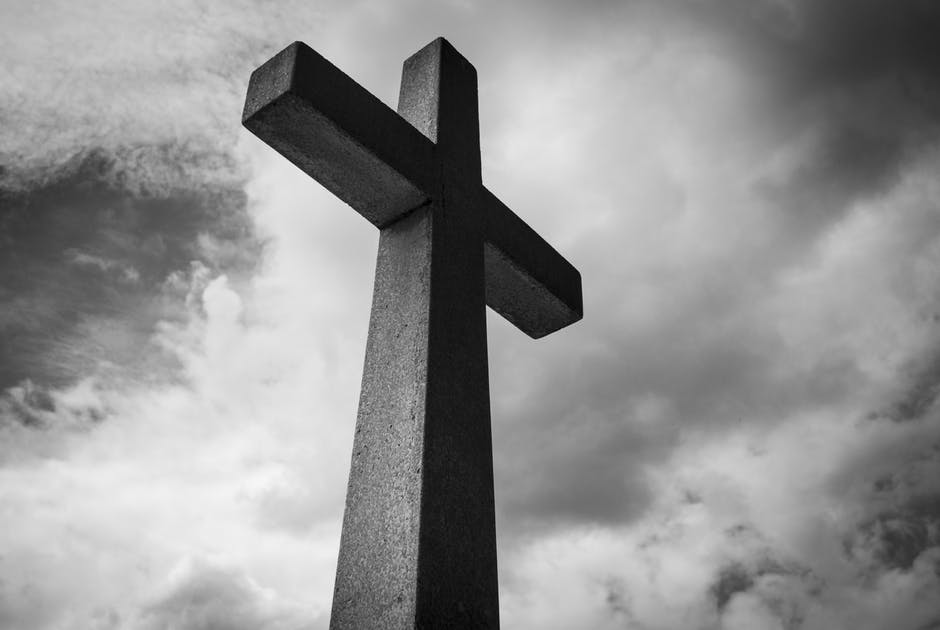
  • The cross of Christ shows us the cost of sin

    The cross of Christ shows us the cost of sin

    We have a sinfully low view of sin. We cannot overestimate the weight of sin when we see the cost of sin on the cross. 

    None of us lives up even to our own moral standards. Do you ever get mad and you regret it? Ever yell at someone and wish you hadn’t? Ever look at something and feel shame for it? Ever tell a lie or bend the truth and wish you could have it back? Ever manipulate people to get your own way? Ever do something where you know deep down it’s not what you should have done? Of course you have. We don’t live up to our own standards. And if we can’t do that, how on earth do we live up to the standards of a holy God? We don’t and we can’t. 

    We have nothing to go to God with on our own and say “you have to accept me. You have to love me. You have to let me into heaven.” On what grounds? 

    We sin. And it’s not just “well nobody is perfect.” But that we sin. We rebel against God. In our thoughts, in our hearts, in our actions, in our inactions. Our view of sin is so low that we think we can master it on our own. Our view of sin is so low that we think we can do enough good to outweigh our sin. 

    Then why the cross at all? Why did Jesus die? The world likes to judge God. Likes to say what he should do if he really were loving. That he’d just wipe the slate clean. That that would be love. We like to tell God what love is. Because we have a sinfully low view of sin. Because the reality is that God SHOWS US what love is. On the cross. That’s what love is. Greater love has no one than this, that someone lay down his life for his friend (John 15:13). 

    Jesus shows us what love is when he lays down his life for you. When he endures the penalty of your sin for you. When he bears the wrath of God for you. And again that’s a message that many find offensive. That many hate. But that again shows our sinfulness when we try to judge God. We try to tell the God who made us what really would be just or holy or good. We can’t earn God but he freely gives himself. On the cross. 

    We might debate sin. Just how big of a deal it really is. Just how much it really matters. But Jesus shows us how big of a deal sin is on the cross. He shows us how imperfect we are on the cross, how sinful we are on the cross. Because he bears the weight of our sins. 

    We have a sinfully low view of sin. We cannot overestimate the weight of sin when we look at the price Jesus paid for sin. Jesus didn’t die for you because your sins weren’t that bad. He did it because of the holiness of God and our inability to live up to that. But rather than to just have us languish with no hope, he gave us hope. On the cross. 

    Jesus is God. And because he’s God, he was a worthy sacrifice for our sins. For all of eternity, Jesus is God. God came into the world. The word became flesh and dwelled among us (John 1:14). Born of a virgin at his incarnation, Jesus is fully man. And because he’s fully man, he is like us in our human nature. He lived the holy life we could not. The sinless life we could not. And he died for you. 

    Jesus goes to the cross and in going to the cross, he doesn’t simply die for us. He’s tortured for us. It’s not like our day and age where methods of execution are designed to be relatively painless. Crucifixion was designed to humiliate and maximize the torture and pain. It was designed to prolong suffering. After being flogged to within an inch of your life, a person would have to carry the top part of the cross beam, which weighed upwards of 125 pounds to the place of his or her death. Nails would have been driven through the wrists and feet. Just imagine the agony of that. And the cross beam would be hoisted up with the condemned person attached. Struggling to breathe, their body sagging down on the weight of their legs. Then pushing up somewhat to get more oxygen. And repeating this horrid cycle until a person died from asphyxiation or exposure to the elements. 

    But there we have God on earth. Dying in the most agonizing way. The most humiliating way. In a public way. But it was for the sins of the world. It was so we could be forgiven. Because as he was nailed to the cross, so was our sin.  We have a sinfully low view of sin. That that was the price to be paid for it. God on earth dying for it. But he did it willingly. Not because he had to. But because of his love for you. That’s what love is. 

    Jesus never leaves us, he never forsakes us. His disciples let him down. Three times they fell asleep in the garden. Three times Peter denies Jesus. Judas leads the party who arrests Jesus. Judas walked with the Lord for three years. And betrayed him. Jesus is brought before the Jewish ruling council. They’re not out for the truth, they’re trying to find any charges that will stick. They take his words out of context and bring him before Pilate, saying he should be crucified.  Pilate is an earthly authority, the governor. Pilate knows he can find no fault in Jesus. He sees the innocence of Jesus. Pilate symbolically tries to cleanse himself: he took water and washed his hands before the crowd, saying, “I am innocent of this man’s blood; see to it yourselves.” 

    In the face of intense pressure, Pilate can’t bring himself to do the right thing. He offers up an option. Pilate has a custom of annually releasing one prisoner. There is Barabbas who is a killer and an instigator of insurrection. Or they can have Jesus who is totally innocent. And they select Barabbas. The Roman guards later mock Jesus. They make a crown of thorns, they hand him a reed as a makeshift scepter, they put a robe on him. They bow down and say “Hail, king of the Jews.” But again they play into the irony. Because Jesus IS the king. He’s the king of kings. While he’s on the cross, the mocking continues. Jesus is crucified with two men who are guilty. And they too join in the mocking. The guilty mocking an innocent man. Dying people mocking the Lord. Crucified men who can’t even show humility for another man who is dying the same gruesome death. 

    The priests, scribes, and elders continue mocking Jesus, beginning in 27:42, “he saved others; he cannot save himself. He is the King of Israel; let him come down now from the cross, and we will believe in him.” 

    It’s because Jesus didn’t come down from the cross that we CAN believe in him. Because Jesus died on that cross that day. The mocking continues in 27:43 “he trusts in God, let God deliver him now, if he desires him.” Again they miss the point. God did not spare his son so that he could spare you. The followers of Jesus, the betrayer of Jesus, the ruling Jewish authorities, the ruling Roman authorities. All contributing in various ways to Jesus’ death. 

    This isn’t the isolated failing of one person. It’s not a lone wolf assassin who takes out Jesus. If that had been the case, maybe we could chalk it up to one bad egg. But in the passion narrative, it’s everyone. Everyone’s failures and sins lead to the cross. But even in spite of that, God is working it for his own glory. In spite of that, God had planned throughout all eternity to actually use that evil and wickedness for our salvation. Because even though it was sin and evil that brought Jesus to the cross, it’s because Jesus went to the cross that he was able to die to sin for all who believe in him.  

    We see the sinfulness of humanity in Christ’s passion. We can’t downplay the sinfulness of humanity when Jesus came into our world and we killed him. The righteous and holy God who made the world came into the world and we crucified him. We can’t downplay the severity of our sinfulness with that one. The most atrocious way that humanity has ever conceived of to end a person’s life, crucifixion is what is used against the righteous savior of the world. But in spite of all of that, we again see the grace of the Lord on the cross. Because Jesus bore infinite wrath for sin. 

    There is infinite grace when we turn to him. There is no sin he is unable to forgive. It’s not that he died and can forgive every sin, but he can’t forgive that one, or this one, or what you did, or what you’re struggling with. Infinite wrath because of our sin. But infinite mercy on the cross because of his grace.

    Thanks for reading! If you liked this post, please share and subscribe.

    Originally published May 1, 2018

  • Jesus and the Last Supper – more than just a meal

    Jesus and the Last Supper – more than just a meal

    As part of Holy Week, Maundy Thursday is recognized this evening. It was the night in which Jesus ate the Last Supper with his disciples. The time in which Jesus died corresponded with the Jewish holiday of Passover. And the Last Supper was the first night of Passover. An annual dinner for Passover is held, called a Seder, which is the Hebrew word for “order.” In 3,500 years, rabbinical tradition and teaching helped to form the ceremony of the Seder.

    Some of these pieces were traced back to the original Passover. Others came in Jewish history from rabbinical traditions.

    Also, once the Israelites were in the land, and after the temple was built, this impacted Passover traditions. When you had the temple, the lambs were sacrificed at the temple. But what didn’t change was that people could only sacrifice lambs that were perfect.

    I think it’s worth spending so much time in talking about Passover because I think it can help give us a greater context and understanding for the events surrounding the death of Jesus.

    In the gospels, the time of the death of Christ revolves around the Passover. That’s not a coincidence! Jesus would be sacrificed at the time that was associated with sacrifice. Jesus had gone to Jerusalem for Passover. In Jerusalem, the city within the Roman Empire that was the epicenter of Jewish culture, thousands of lambs would have been slaughtered annually. Jewish people would have been coming in from all over the empire.

    We see many traditions of the Seder at the last Supper.

    Some of them are small things. In the gospel accounts, it talks about Jesus reclining at the table (Luke 22:14).

    Jesus wasn’t sitting in a la-z-boy. He was on a couch that he was lying on, that was a Seder tradition. They had been enslaved in Egypt but being able to lie down showed the freedom and security.

    Or when Jesus is alluding to his betrayer, he says in John 13:26, “It is he to whom I will give this morsel of bread when I have dipped it.” So when he had dipped the morsel, he gave it to Judas, the son of Simon Iscariot.

    Again, I know the mental image that most of you probably have when you read this. It’s hard to know precisely where in the Seder this is, but it seems that it’s probably referring to when you take Haroset which is made from apple, nuts, cinnamon. They weren’t eating the Last Supper at an Italian restaurant. They didn’t have a bowl of olive oil in the middle of the table. But all of the elements we see at the Last Supper are part of what you’d see in a traditional Seder.

    As part of the Seder, you’d take the unleavened bread…looks like a cracker. And you’d break the bread.

    Luke 22:19, “And he took bread, and when he had given thanks, he broke it and gave it to them, saying, “This is my body, which is given for you. Do this in remembrance of me.”

    For over a thousand years of Seder dinners, bread had been broken. Unleavened bread, just like the Israelite forefathers had eaten before fleeing from Egypt.

    The body of Jesus, given for you, given for your sins. Given for your forgiveness. And he says “do this in remembrance of me.”

    What more fitting words could you say at a Seder? A meal revolving around remembrance, about retelling the story of God saving his people by the blood of the lamb.

    Remembering what God has done. Remembering what Jesus has done. Remembering the sins that he’s redeemed you from. Remembering his body that he gave for you. Remembering his death that he died for you. Remembering the grace that he offers to you. Remembering his gospel.

    Luke 22:20 says, “And likewise the cup after they had eaten, saying, “This cup that is poured out for you is the new covenant in my blood.”

    The Seder dinner involves four glasses of wine. This seems to have been the second or third glass of wine in the meal, although there’s scholarly debate.

    But how profound it is. Wine drank in remembrance of the Passover. Jesus takes the wine, he blesses it, he says it is the new covenant in his blood, at the Seder dinner.

    It clearly points backwards to the blood of the Passover lamb, the blood that was put on the door posts. And it also points forward to the blood of Christ, shed for the forgiveness of sins. The blood of the true lamb.

    At the beginning of the gospel of John, when John the Baptist sees Jesus he says “Behold, the lamb of God who takes away the sin of the world.” Jesus is the true lamb of God. The lamb who took the penalty for sins. The one who was scarified for the salvation of God’s people.

    And by trusting in him and having faith in him, that puts the blood on the doorpost of your heart. On the first Passover, there would not have been a pardon for a person who didn’t put blood on the doorpost. It wasn’t that the blood saved them, God saved them. But to not put the blood on the door was to show that a person didn’t have faith in the Lord, didn’t trust in the Lord.

    When we take the Lord’s Supper, it’s not arbitrary. It’s not just using the random items that were around. It’s all symbolic. It takes symbols important to the first Passover, the first time God had delivered Israel, and it reminds of the new Passover, from the perfect sacrifice for sins.

    The Passover passage in Exodus 12:5 says that the lamb that was used had to be without blemish. Jesus is the ultimate lamb without blemish, a life lived in perfection.

    1 Corinthians 5:7 says “Cleanse out the old leaven that you may be a new lump, as you really are unleavened. For Christ, our Passover Lamb.”

    Thanks for reading! I’d love to hear what you think, and don’t forget to subscribe! 

    Originally published April 13, 2017

    Photo credit information

  • Sunday to Friday – “Save us” to “Crucify.” Passion week

    Sunday to Friday – “Save us” to “Crucify.” Passion week

    Now when they drew near to Jerusalem and came to Bethphage, to the Mount of Olives, then Jesus sent two disciples, 2 saying to them, “Go into the village in front of you, and immediately you will find a donkey tied, and a colt with her. Untie them and bring them to me. 3 If anyone says anything to you, you shall say, ‘The Lord needs them,’ and he will send them at once.” 4 This took place to fulfill what was spoken by the prophet, saying, 

    5 “Say to the daughter of Zion, ‘Behold, your king is coming to you, 

    humble, and mounted on a donkey, on a colt, the foal of a beast of burden.’ ” 

    6 The disciples went and did as Jesus had directed them. 7 They brought the donkey and the colt and put on them their cloaks, and he sat on them. 8 Most of the crowd spread their cloaks on the road, and others cut branches from the trees and spread them on the road. 9 And the crowds that went before him and that followed him were shouting, “Hosanna to the Son of David! Blessed is he who comes in the name of the Lord! Hosanna in the highest!” 10 And when he entered Jerusalem, the whole city was stirred up, saying, “Who is this?” 11 And the crowds said, “This is the prophet Jesus, from Nazareth of Galilee.” 
    -Matthew 21:1-11

    Jesus enters Jerusalem riding on a donkey. It’s a festive scene. Passover week, one of the most significant holidays in the Jewish calendar. Jesus has been preaching throughout the region of Galilee. He has built up quite the following: teaching on the kingdom of heaven and performing miracles.

    And here he enters the holy city, the crowds shouting “Hosanna to the Son of David! Blessed is he who comes in the name of the Lord! Hosanna in the highest!” (Matthew 21:9). Palm branches had become a Jewish symbol of victory and the crowds bring these branches out as they chant. The processional they created was somewhat makeshift, but it had kingly overtones. They’re treating him like someone who was returning to Jerusalem after having conquered an enemy. Ironically, he was coming into Jerusalem to conquer sin.

    Hosanna in the highest! They shouted. Probably saying it over and over again, “Hosanna in the highest! Hosanna in the highest! Hosanna in the highest!”

    The word Hosanna in Aramaic essentially means “Save now!” It’s a plea.

    In Jesus’ day, there were a lot of expectations as to how the Messiah would act. Some thought of him as a great king. In reality, he was a king. But not the king the people wanted. He didn’t come to conquer others from the outside, but to save souls from the inside. Others expected a great religious teacher. He was a great teacher, but he also challenged the religious teachers of his day and they hated him for it. While many prominent religious teachers had separated themselves from overtly sinful people, Jesus immersed himself with these groups. Others expected two Messiahs. The Essenes expected a Messiah who would usher in the end of the world. Jesus ushered in a New Covenant.

    Hosanna in the highest!

    Many of us today have part of Jesus that we like. Maybe we accept part of who he is.

    I can be freely forgiven? Hosanna! Save me now. But then we reject any idea of knowing Jesus better or acknowledging the sin which made us need a savior.

    Jesus talked about feeding the poor? Hosanna! Save me now, I’ll accept that Jesus. But then we treat things Jesus said with how we’re to interact with society as if that’s all the gospel is.

    Jesus emphasized loving people? Hosanna! Hosanna in the highest! But then we want to discount everything he said about sin.

    Jesus talked about accepting people regardless of their past sins? Hosanna! But then we hear that he also said “I am the way and the truth and the life, no one comes to the father except through me.”

    Jesus said we could be with him? Hosanna! But then we reject his bride, the Church.

    Today, as on that first Palm Sunday, we live in a world where people expect many different things related to the Christ. The crowd shouted Hosanna. They thought it was their Jesus.

    “Hosanna!” on Sunday. “Crucify!” on Friday. Jesus came in perfect fulfillment of the Old Testament. He came in perfect righteousness and holiness. God on earth. But God on earth didn’t bend to the whim of what every person thought he should be. It is not the people who judge Jesus. We don’t pick and choose what to accept with Jesus. We don’t just hear that he forgives and ignore all the rest. We don’t like a loving Jesus and discount Jesus the moral teacher.

    Jesus takes us as we are, and we must believe in him as he is. At the beginning of Holy Week, if you are someone who considers yourself a follower of Jesus, do you really believe his message and who he is?

    Thanks for reading! If you liked this post, please share and subscribe!

    Originally published March 20, 2016

    Sources: Carson, D. A. New Bible Commentary: 21st Century Edition. Leicester, England: Inter-Varsity, 1994. Print.

  • Sermon: The cross and the crown – John 18:38-19:16

    Sermon: The cross and the crown – John 18:38-19:16

    In this passage, Pontius Pilate goes through a range of emotions and opinions as he questions Jesus. He goes from mocking Jesus, to trying to pardon Jesus, to having Jesus flogged, to fearing Jesus, to proclaiming Jesus’ innocence, to ultimately having Jesus crucified. This passage also returns to the theme of kingship where we see that Jesus is the king who suffers. 

    Sermon manuscript