Josh Benner

Author: the Josh Benner Blog

  • A sinner’s guide to repentance

    A sinner’s guide to repentance

    Originally published March 22, 2017

    Repentance is sincere remorse or regret for an action. Theologically, repentance is associated with the idea of turning away from sin and turning to God.

    James 4:7-10 gives what’s almost like a “how to” guide for repentance. It’s not exhaustive, but he says five things that are important to repentance.

    1. Repentance involve submission to God

    Repentance isn’t just about moralism. It’s about an actual desire for God.

    It’s not “well I’ll just drink less” or “get control my temper better.” It’s not just “don’t do that,” but it’s a turning to God. It’s recognizing that God is greater than your sin, that he is better. That his ways are better. That turning from sin is turning to a better way.James 4:7 says, Submit yourselves therefore to God.

    Romans 8:7 says For the mind that is set on the flesh is hostile to God, for it does not submit to God’s law; indeed, it cannot.

    If what drives us is our own desires, if we’re coveting things, wanting things at the cost of relationships, wanting things more than God, that is a mind that is hostile to God, as the text says.

    A disregard for the will of God is at the root of sin. We don’t submit to God. You may surely eat of every tree of the garden, but of the tree of the knowledge of good and evil you shall not eat, for in the day that you eat of it you shall surely die (Genesis 3:4).

    But we want to do things our own way. And in our own lives, we don’t submit to God.

    Do you ever do something that you KNOW is sinful?

    Yes! We do it all the time. Maybe you lose your temper, maybe you get short with someone, maybe you find a reason to justify why you don’t really have to love a certain person in your life or a certain group of people.

    Ultimately, it’s a failure to submit to God.

    The point isn’t about grudging submission. God isn’t some tyrant, and we just have to get with his program or bad things are going to happen. Rather it’s that God’s ways are better, that it’s a better life. It’s a more joy filled and purpose filled life to live for God than to decide our own ways. Because by the logic of an all knowing and all perfect God, there can be nothing outside of that which brings joy and fulfillment.

    But we don’t always have that outlook? One of joy. Do we? If we’re being honest?

    If you struggle with anger, then it feels good to get angry. If you have a certain group of people who you don’t feel like you have to love, or who’s somehow an exception, than you feel justified and comfortable of not loving that group.

    So it is not always a joy to submit to God.

    But in submitting to God, even when you might not like something, even if your natural inclination is to disagree with the will of God, to have the humility to say “your kingdom come, your will be done.” To have the humility, to put the will of God above your own. To have the humility to trust that God’s ways are higher than your ways.

    So we submit to God and his will.

    James 4:10 says humble yourselves before the Lord and he will exalt you.

    We can’t exalt ourselves before the Lord! Because we don’t stand up before an almighty God.

    But we submit to God and his will, we humble ourselves that his ways are true and good, that he his righteous, that he is our hope.

    2. Repentance involves resisting evil.

    Verse 7 continues that we are to resist the devil and he will flee from you.

    And when James calls us to resisting the devil but it is also about resisting evil, turning away from evil, not putting ourselves in venerable positions to sin. Being on guard about sin and thoughts and actions that can lead to sin patters in our lives.

    Especially when it’s a specific sin we’re turning away from. Resisting sin. And it isn’t about conquering sin on our own. By the nature of the gospel, we can’t do that. But through Jesus, there can be victory. Through the transformation that comes through faith, there is hope.

    3. Repentance involves drawing near to God

    A third step in repentance, is in James 4:8: Draw near to God and he will draw near to you.

    We repent by submitting to God, by resisting evil, and by drawing near to God. And the difference between submitting to God and drawing near to God is that in submitting to God, it’s submitting to the will of God. Drawing near to God, is getting at our relationship with God.

    So we submit to the moral perfection and righteousness of God, we resist evil and sin, and we draw near to God.

    It’s not that God leaves us when we sin. It’s that we leave him, we take ourselves away from his presence by our sin. God is easy to find!

    But we aren’t always looking. We aren’t always wanting to approach him.

    Such a wonderful promise that God’s word makes. Draw near to God, and he will draw near to you. We draw near to God by loving God. Specifically by loving him in our heart, and mind, and soul, and strength. By turning our focus to God. By turning to him in prayer.

    4. Repentance involves holiness

    James 4:8 continues, cleanse your hands, you sinners, and purify your hearts, you double-minded.

    In saying to “cleanse your hands,” James is referring to the Old Testament. The priests had to wash their hands before entering the Temple. There were purification rituals because the Temple represented the presence of God. And you don’t approach a Holy God anyway you want to.

    James makes a twist on the Old Testament, and really gets at the heart of those priestly rituals. It wasn’t just about washing your hands, but that washing your hands was to be a symbol for moral cleanliness. And so here James says that we are to cleanse our hands and purify our hearts as we approach God.

    And again, the point isn’t just teaching a bunch of rules. It’s not just about: do this, don’t do that. But rather, as we approach God, that act requires holiness.

    And if you’re thinking, “I can’t do that…”

    You’re right.

    You can’t do that. You can’t be holy on your own. It is through the grace of Christ that we can be made holy. It is Jesus who is the greater High Priest who goes into the temple. It is Jesus who is the presence of God with us. It is Jesus who is morally pure and clean and allows us to stand before God. It is Jesus who allows us access to God.

    And we can accept Jesus by faith, and trust in him, and know that he is the Lord, and trust in him as our savior. And for you, or for people you know, that any person is able to accept that gift.

    And that no matter how low a person is, how far off a person is, they can accept that grace.

    But to go the step beyond that, to actually return to God, then it does become about submitting to God. The grace of Christ isn’t meant to be taken so we can continue doing things our own way.

    And in returning to God, it requires purity and holiness. It requires a focus on God, and humility before him. The text says that we can’t be double-minded. That’s a word that James used in chapter 1. That we aren’t to be wavering between worldliness and Godliness, but God’s desire is for us to be single-minded in our focus on him.

    And when you’re not, when you lose that focus, when you struggle with sin, that we can turn from that sin as well, and repent, and turn to God.

    5. Repentance involves turning from sin

    Repentance involves remorse for sin.

    It’s not just a matter of wanting a change. It’s recognizing that something is a sin against God and wanting to change.

    But that also does involve remorse for sin. It’s not that we’re called to live in shame. But in the process of turning away from sin, there is a season for remorse.

    Verse 9 says be wretched and mourn and weep. Let your laughter be turned to mourning and your joy to gloom.

    Once again, this type of language is similar to what we see in the prophetic books of the Old Testament.

    Images of the prophets wailing, mourning, weeping over sin. Grieving the sins of God’s people, their failure to repent.

    This actually makes me also think of the Beatitudes. “Blessed are those who mourn, for they shall be comforted.”

    This is the reason why the gospel isn’t just about following a list of do’s and don’ts. Because in your inner being, in your heart and mind, you can’t cause yourself to hate sin without actually hating it.

    You can control certain behaviors. You can force yourself to come to church.

    You can’t force yourself to hate sin. It comes from looking to a Holy God. It can only come from comparing the holiness of God to our failure to live up to that. Because if we just compare ourselves to what’s around, well most of us are probably pretty good compared to that (and even if we’re not, we look at things selectively and justify!)

    When he says to let laughter be turned to mourning and joy to gloom, the point isn’t that there is never a time for joy and laughter! It’s that when we’re in the process of repenting and mourning a sin, that we not take the sin lightly.

    Do you ever do that? Do you take sin seriously? Or is it like a little league team losing a game “oh just try harder next time.”

    The good news is that we have a gracious God. That when we mess up, or fall into sin, he forgives, because he is good. It’s not that we deserve it. It’s not that he owes us. It’s because he’s good. He is also Holy.

    And truly walking with God, that life, we grow.

    So if you’re in the middle of something right now, know there is grace. If you’re looking at your life right now, and doubting “do I even believe?” Even if you don’t, today can be that day. This moment can be that moment to place trust in God. To turn away from sin.

    Thanks for reading! For more posts, don’t forget to like, share, and subscribe!
    Let’s connect
    Facebook
    Twitter
    Instagram
    Parler

  • Pixar’s Soul gives a perspective on life that would make C.s. Lewis proud

    Pixar’s Soul gives a perspective on life that would make C.s. Lewis proud

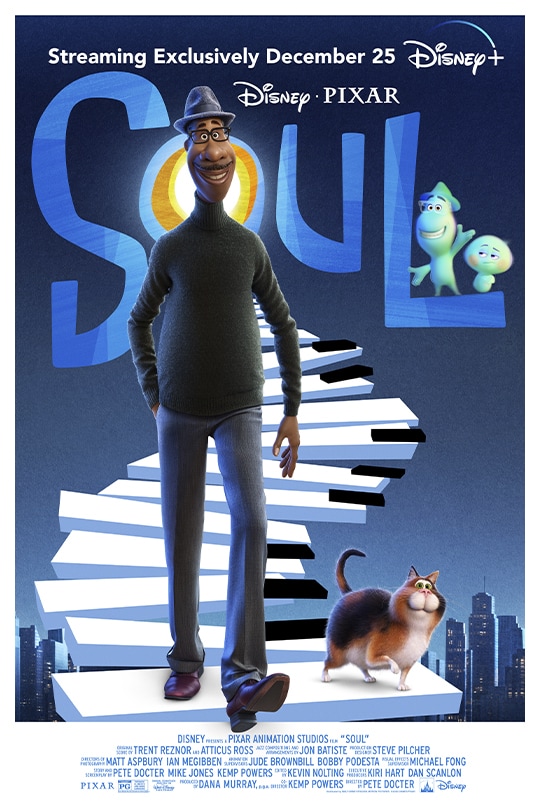
    Disney Pixar’s latest animated feature Soul released on Disney+ on Christmas Day. Jamie Foxx voices Joe, a music teacher whose true passion is jazz. Just after getting his big break, Joe dies and passes to a spiritual realm where he’s determined to get back to his life but must first help a spirit (voiced by Tina Fey) find her passion.

    From a Spiritual perspective, Soul is a very interesting film. It deals with the afterlife and the human spirit. Soul made me think of some of the great fiction works of C.S. Lewis such as “The Screwtape Letters” and “The Great Divorce.” In those books, Lewis deals with subjects of what heaven is like and how demons work. Those books are thoughtful and interesting, but they’re not theology books. I view Soul somewhat similarly. It’s thoughtful and interesting, but it’s not a Bible lesson.

    What Soul does is makes us think about purpose, life, and the things we value. It’s also a story about sacrifices.

    Spoilers

    If you haven’t watched the movie, you might not want to spoil the ending.

    As I’ve already said, the movie begins with Joe’s character finally catching a break in a frustrated music career when a famous jazz musician invites him to play with her quartet. You’re happy for his character, but as he’s walking home, he suffers a fall and is headed towards the afterlife. Not wanting to miss his break, Joe’s soul flees the afterlife (called the Great Beyond) and ends up in another realm called the Great Before, which is where souls of those not yet born dwell.

    I’ll pause for a moment and note the interesting idea that the film suggests that a person has a soul even before they’re born. That idea is not Biblical, but what the Bible does teach is that God knows and cares for his people while they’re in the womb, before they’re even born. But what was interesting to me is that it’s a major motion picture which is making a values statement about human life.

    The Spark

    Back to the movie. The unborn souls are coached by counselors who’s job it is to help them prepare for life. They need to find their “spark” in life. The unborn souls have badges that fill up as the spirit becomes prepared for life. Joe gets paired with 22 (voiced by Tina Fey), who’s warn down many previous counselors and has never found her own spark. 22 doesn’t have any interest in living in the real world as a person. But she does decide to try to help Joe.

    Through other spirits, Joe is able to see himself in the hospital and he rushes to get back to his body. In his haste, things gets switched and 22 ends up embodying Joe while Joe’s Spirit embodies a cat. These actions are all against the rules of the Great Before, and so Joe is trying not to get caught. He has a singular focus on getting back into his own body, and pursuing his musical dreams. But it is through these scenes that 22 actually starts to like the world (and pizza). She has great conversations with people, she experiences life. All of this makes 22 want to try to find her own spark in life.

    She tries to run away from Joe, just as the two are discovered and taken back to the Great Before. They discover that 22’s badge is finally filled out and that she’s ready to live, but in anger at Joe (who’s taken all of the credit for her finding her spark), she tosses him her badge.

    For a family movie. That’s pretty deep.

    Our purpose

    Joe returns to his body and after performing with his new jazz quartet, he feels guilty about what has happened. This brings up another interesting aspect of the film. Throughout the whole movie, Joe has assumed that his “spark” is music. It’s what he loves. Earlier in the movie, he had tried to help 22 find her own “spark,” which he also assumed meant helping someone find what they love.

    But what we find out in the movie is that a person’s spark isn’t a specific activity or passion. Your spark is living life itself. In that sense, Joe does help 22 find her spark because he introduces her to the world and she realizes that life is a beautiful thing.

    Joe has spent his whole life wanting a break in music, and when he finally gets it, he’s unfilled. We sometimes put so much hope into one thing that we can lose sight of everything else, of experiences, of connection.

    I think people often think that they have some sort of unknown purpose in life that’ll bring this ultimate fulfillment. Many people feel like they were made for something great, but don’t know what it is. Especially for the younger generations in our society, we’re in an existential crisis for purpose and meaning. We put too much pressure on ourselves and lose sight of the basic joys of life.

    The movie soul does have elements that talk about the afterlife, but the movie is actually about living in the real world.

    It’s a great movie. Interesting, thought-provoking. It’ll make you laugh, and it might even make you cry.

    Again. I’m not saying that Soul is a lesson in theology. I do want to make that clear. I think that the movie touches on lots of themes about the human soul, human worth, and our purpose for living which I think can lead to interesting discussions and conversations.

    Thanks for reading! For more posts, don’t forget to like, share, and subscribe!

    Let’s connect
    Facebook
    Twitter
    Instagram
    Parler

  • Best of 2020 #1 The virtue signal of all virtue signals: liberals compare themselves to heroes of all past generations

    Best of 2020 #1 The virtue signal of all virtue signals: liberals compare themselves to heroes of all past generations

    As 2020 comes to a close, I am sharing some of my top posts from this year. This post was originally shared on July 6.

    Last week, legal scholar and philosopher Robert George had a thought-provoking series of Tweets on how people today would have responded to historical events had they lived through them.  

    George says: 

    “I sometimes ask students what their position on slavery would have been had they been white and living in the South before abolition. Guess what? They all would have been abolitionists! They all would have bravely spoken out against slavery, and worked tirelessly against it. Of course, this is nonsense. Only the tiniest fraction of them, or of any of us, would have spoken up against slavery or lifted a finger to free the slaves. Most of them—and us—would have gone along. Many would have supported the slave system and happily benefited from it.”

    It’s easy to look back at history and assume we would have been righteous. There’s a meme I’ve seen on online that says “If you’ve ever wondered what you’d do during slavery, the Holocaust, or civil rights movement, you’re doing it right now.” 

    Here’s a key difference for the social justice warriors of today. The popular culture supports you. There’s no pressure, or risk, or persecution to protest or be a social media activist. The media supports you, Hollywood supports you, athletes support you, academia supports you, and big corporations support you.  

    People want to compare this to the Civil Rights movement. Many of the protests and sit-ins were unpopular in public opinion from that era. The movement came at a cost. Where’s the cost in sharing a meme?

    To quote again from George, he gives a good ethical test for how we would have truly responded in previous eras: 

    I respond by saying that I will credit their claims if they can show evidence of the following: that in leading their lives today they have stood up for the rights of unpopular victims of injustice whose very humanity is denied, and where they have done so knowing: 

    (1) that it would make them unpopular with their peers, (2) that they would be loathed and ridiculed by powerful, influential individuals and institutions in our society; (3) that they would be abandoned by many of their friends, (4) that they would be called nasty names, and (5) that they would risk being denied valuable professional opportunities as a result of their moral witness. In short, my challenge is to show where they have at risk to themselves and their futures stood up for a cause that is unpopular in elite sectors of our culture today.

    This is an important distinction. When we act like we would have been leading the charge in previous eras, when we want to say that we would have been virtuous in previous eras, we need to consider the context of that time and the cost of our beliefs. Because there’s little real cost in the current climate. For instance, when people want to talk about this as being similar to how they would have responded to the Holocaust consider that during the Holocaust and the Third Reich, almost 80,000 Germans were executed for being part of the resistance. People paid the ultimate price to stand up against Hitler. Where’s the cost in a hashtag?  

    People want to compare this to how they would have responded in the Civil War. 360,000 soldiers died for the Union. That was roughly one percent of the entire U.S. population at the time. Men paid the ultimate price to preserve our nation and end slavery. Where’s the cost in telling people a bunch of books they should read or in watching a documentary?  

    People want to compare this to the Civil Rights movement. Many of the protests and sit-ins were unpopular in public opinion from that era. The movement came at a cost. Where’s the cost in sharing a meme?  

    In the civil rights movement, they protested against actual systemic racism. Today social justice warriors fight against inequality which they say is the result of current systematic racism, and there are people who want to compare the two eras as being moral equivalents. 

    When people want to compare their efforts today to past social movements, it’s showing an ignorance of history and it’s also showing delusions of grandeur. Progressives like to believe that everyone is immoral except for them and that they would have been righteous at all times.  

    We judge people form the past because they don’t adhere to our current standards. And when I say current, I mean that literally. Current as in today because the standards of progressivism are an ever-moving target. There weren’t serious efforts to defund, or dismantle, or destroy the police a year ago. There weren’t major popular efforts to tear down monuments five years ago. There was not a major war on our history ten years ago. But progressives continue to shift their values and they fight a culture war where there is no grace or redemption given to past people who did not perfectly adhere to these standards of today while progressives allow themselves to continue changing what matters and what’s right.

    Thanks for reading! For more posts, don’t forget to like, share, and subscribe!

    Let’s connect
    Facebook
    Twitter
    Instagram
    Parler

  • The only resolution that matters for 2021


    Originally published December 31, 2014

    At the beginning of each year, millions of Americans make new year’s resolutions. Common resolutions include eating healthier, saving more money, quitting smoking, or learning a new skill. All of those are great things.

    But the reason why we create new year’s resolutions is because there are areas in our life where we know we should be doing something and where we aren’t. Maybe it’s something we’ve tried and failed at before, but new year’s gives a sense of optimism. I think before we focus on anything else in 2021, our resolution should be to start (or continue) living each day for God.

    We can feel like we want to get all of our ducks in a row before we can make time for faith. There are always reasons to not pursue God. There are always things that come up, difficulties we have. If we wait until everything is perfect before we do something, it never happens.

    We might want to wait until things settle down at work, or we might have an area of our life where we know we’re falling short and we don’t feel like we can be as serious about faith. We might think “I can’t do it now. I drink way too much.” Or “I can’t do it right now, I have too many anger issues, I have this area that is out of control.”

    But it’s not about taking care of ourselves first and then developing faith. God meets you where you are. No matter what struggles you’re in, no matter what imperfections of your life or places of darkness you have, God wants you to pursue him. this. moment.

    I think a lot of people get it backwards.

    Someone might know that he or she wants to get more involved in church or to get more committed to faith and it doesn’t happen. Or you’re coming to church but you know that you’re just going through the motions. For some of us, we haven’t picked up the Bible in weeks. For others, we haven’t really prayed to God on our own in months.

    For many of us, we do have faith. We do believe that Jesus is God and that he died for our sins. But the hustle and bustle of life makes us complacent. When we have the time to focus on faith, a million other distractions compete for our time. And it’s always going to be easier to turn on the tv or the computer than to pick up a Bible.

    The Greatest commandment is to love the Lord your God with all of your heart, soul, strength, and mind and to love your neighbor as yourself. To love God with everything you have. It was never meant to be a passive thing that we do on the side.

    Maybe there’s a part of your soul that knows that you’re not pursuing God like you should. You know that you have the gifts to grow with God and to love and serve others and to build up God’s Church, but you just can’t seem to get started. You look to that future you and know you’d be happier, you know it’s what God wants.

    But you’re never going to get to that point if you don’t start making God your priority. If faith isn’t something that’s developed, and we’re not pursuing God, then our relationship with him will never possibly be what it could be.

    As I said, any number of resolutions can be beneficial for us, but there’s no better use of our time than continually making God our first priority. If you know in your heart you haven’t been doing that, then make 2021 the year you take your relationship with God to a new level. Let us all make that our first priority this year.

    For all of you, I hope that it can be a year where we start that new career, or where we see healing in that broken relationship. I pray that those of us who are healthy can see that continue in 2017 and that those of us who have health issues can see healing and God working in their lives. But most importantly, the hope is that from this moment, the last day of 2017 to this same time next year, that 2017 can be a time of getting to know God better, of loving him more, of giving more of ourselves to him, to serving more, and loving more.

    Thanks for reading! I’d love to hear what you think, and don’t forget to subscribe! 

    Let’s connect
    Facebook
    Twitter
    Instagram
    Parler

  • Best of 2020 #2 If Lincoln isn’t safe, no one is safe

    Best of 2020 #2 If Lincoln isn’t safe, no one is safe

    As 2020 comes to a close, I am sharing some of my top posts from this year. This post was originally shared on July 2.

    I’ve seen a meme on Facebook that says “If you ever wondered what you would have done during slavery, or the holocaust, or the Civil Rights Movement, you’re doing that right now.” 


    I’m going to make my own meme that says “if you’ve ever wanted what you did during the Russian Revolution, you’re doing that now.” There’s a small but vocal radical group who is undermining and working against our history, institutions, ideals, and culture. 

    The Boston Arts commission unanimously voted to remove a statue of Abraham Lincoln.  Boston’s Emancipation Memorial is a repeal of another Lincoln statue in Washington D.C. which was erected in 1876 and funded by freed slaves. The statue depicts Abraham Lincoln and a freed slave who is kneeling in front of Lincoln, his shackles have been broken. 

    Student groups at the University of Wisconsin have also set their sites on a Lincoln statue on their campus. The Lincoln Memorial was vandalized. 

    There’s been renewed public debate in recent weeks about statues of confederate generals. I can appreciate that debate. I could even go along with tearing down every statue or monument that we have a confederate soldier. 

    But Lincoln? If he’s not safe, no historical figure in American history is safe. 

    A statue of Ulysses S. Grant, who was the general of the Union Army, was defaced in Philadelphia. Statues of outspoken abolitionists have been defaced in Philadelphia and Wisconsin. 

    This has quickly devolved to a point where it’s not about removing confederate statues. It’s an attack on history. It’s an attack on great people who made a positive impact on our history. They too must be erased. Because the fanatical progressive cult is zealous for their beliefs and their core doctrine is that America is – and always been – a racist place. There are no redeeming qualities. The only hope for goodness is for America to be remade in accordance with their idea of utopia. 

    And so great people like Lincoln don’t fit their narrative and they too must be torn down. 

    Arguments I’ve seen for taking down the monument are that it offends some people. I thought great art was sometimes offensive? I’ve seen arguments that it portrays Lincoln as a “white savior.” And its original design in Washington was funded by freed slaves. Who are we to say that their idea of a memorial is unacceptable and needs to be erased? 


    You have people who are not radicals but who go along with the purge because it’s easier to go with the current,

    When is censorship good? When is tearing down history beneficial to a society? 
    Who’s life is this making better? 

    Thanks for reading! Make sure to like, comment, and subscribe!

    Let’s connect
    Facebook
    Twitter
    Instagram
    Parler