Josh Benner

Category: Bible

  • Sermon: Frogs, gnats, and flies. Studying the Exodus plagues. Exodus 7:25-8:32

    Sermon: Frogs, gnats, and flies. Studying the Exodus plagues. Exodus 7:25-8:32

    25 Seven full days passed after the Lord had struck the Nile. 

     Then the Lord said to Moses, “Go in to Pharaoh and say to him, ‘Thus says the Lord, “Let my people go, that they may serve me. 2 But if you refuse to let them go, behold, I will plague all your country with frogs. 3 The Nile shall swarm with frogs that shall come up into your house and into your bedroom and on your bed and into the houses of your servants and your people, and into your ovens and your kneading bowls. 4 The frogs shall come up on you and on your people and on all your servants.” ’ ” 

    5  And the Lord said to Moses, “Say to Aaron, ‘Stretch out your hand with your staff over the rivers, over the canals and over the pools, and make frogs come up on the land of Egypt!’ ” 6 So Aaron stretched out his hand over the waters of Egypt, and the frogs came up and covered the land of Egypt. 7 But the magicians did the same by their secret arts and made frogs come up on the land of Egypt. 

    8 Then Pharaoh called Moses and Aaron and said, “Plead with the Lord to take away the frogs from me and from my people, and I will let the people go to sacrifice to the Lord.” 9 Moses said to Pharaoh, “Be pleased to command me when I am to plead for you and for your servants and for your people, that the frogs be cut off from you and your houses and be left only in the Nile.” 10 And he said, “Tomorrow.” Moses said, “Be it as you say, so that you may know that there is no one like the Lord our God. 11 The frogs shall go away from you and your houses and your servants and your people. They shall be left only in the Nile.” 

    12 So Moses and Aaron went out from Pharaoh, and Moses cried to the Lord about the frogs, as he had agreed with Pharaoh. 13 And the Lord did according to the word of Moses. The frogs died out in the houses, the courtyards, and the fields. 14 And they gathered them together in heaps, and the land stank. 15 But when Pharaoh saw that there was a respite, he hardened his heart and would not listen to them, as the Lord had said. 

    Prayer 

    14 Let the words of my mouth and the meditation of my heart 

    be acceptable in your sight, 

    O Lord, my rock and my redeemer. 

    Introduction 

    We’re continuing in Exodus this morning. 

    In the Book of Exodus, God has chosen to redeem the Israelites from Egyptian slavery but when the king of Egypt refuses to let his people go, the Lord brings a series of judgments on Egypt. 

    Last week, we looked at the first of those ten plagues. 

    Today as we cover chapter 8, we look at the next three plagues. 

    And for most of the month of October, Lord willing, we’ll be looking at these sections in Exodus. 

    And with that brief introduction, we’re going to jump right back into the text this morning. 

    We will be looking at the second, third, and fourth plagues which are all found in Exodus 8. 

    Second plague: frogs 

    Chapter 7 ends with the first plague where the Lord turns the waters of the Nile River red. The last verse of chapter 7 says: 

    25 Seven full days passed after the Lord had struck the Nile. 

    So it gives us a little indication of time. 

    Now we don’t have those notes with all of the plagues. 

    Someone asked me a very good question: “how long did these plagues last?” 

    We don’t know for certain. 

    Jewish tradition holds that the ten plagues lasted about a year. Some scholars believed they lasted for a few months. 

    But ultimately, we don’t know for sure. 

    But even if it was a few months, considering how these were wreaking havoc, it probably felt like a much longer period of time. 

    So examining this second plague. 

    Chapter 8, verses 1-2, the Lord sends Moses to warn Pharaoh: 

     Then the Lord said to Moses, “Go in to Pharaoh and say to him, ‘Thus says the Lord, “Let my people go, that they may serve me. 2 But if you refuse to let them go, behold, I will plague all your country with frogs.

    Next, the conditions of this plague are noted. 

    Verses 3-4: 

    3 The Nile shall swarm with frogs that shall come up into your house and into your bedroom and on your bed and into the houses of your servants and your people, and into your ovens and your kneading bowls. 4 The frogs shall come up on you and on your people and on all your servants.” ’ ”

    So in the first plague, we saw the Nile itself as the source of where the plague would strike. 

    Here the plague will be something that comes from the Nile River. 

    And as a reminder, the Nile was really the lifeblood of Egyptian life. They depended on it for their drinking water. It was the source of water that they used for agriculture. Egypt gets very little rainfall. The main source of river water for the Nile comes from further south in Africa during the monsoon season and then flows up into Egypt. 

    And so the first two plagues are both plagues of water. 

    And Pharaoh is told that these frogs are going to be everywhere. 

    A swarm of frogs. And that word “swarm” in the Hebrew is the same word that is used in Genesis 1 in creation. 

    Example, Genesis 1:20:

    20 And God said, “Let the waters swarm with swarms of living creatures, and let birds fly above the earth across the expanse of the heavens.”

    In the plagues, there is actually a lot of language that refers back to creation. Because for the Egyptians in their rebellion, the plagues are an uncreation. 

    That passage says that they’ll be in Pharaoh’s bedroom, on his bed, and into the homes of his people, even their ovens and kneading bowls will have frogs hopping out of them. 

    It’s almost comical. It probably wasn’t for the Egyptians and the Israelites, but everywhere you look, there’s just frogs hopping out. 

    And ribetting!

    It’s also significant that the text mentions frogs will be in Pharaoh’s bedroom. 

    The two Hebrew words used there which the ESV translates bedroom are found together only five times in the Old Testament. 

    In four of the five instances – including our passage this morning – it’s a passage which is talking about the vulnerability of a king, even in his own bedroom, a place you would think would be as secure and protected as any in his kingdom. But even the place where the king sleeps can be under threat. 

    Pharaoh might be the king. He might have a lot of political powers, societal powers. 

    But at the end of the day, he’s just a man. 

    What’s the thing that makes you feel most secure? 

    It’s really amazing how quickly the facades of the things that give us security can be gone. 

    Meditation – losing everything 

    I was reading this week about female judges in Afghanistan. The danger that they’re in. How quickly, in just a few weeks, their lives have been totally turned upside down. On the run, in hiding, in danger. Bank accounts frozen. Totally dependent upon others right now. 

    Security can be taken away. 

    Some of us can rely on our money. That can be taken away. 

    I had a relative who was the CFO of a company. The CEO had embezzled money which was supposed to go for things like payroll taxes. The CEO ended up going to prison. While my family member hadn’t done anything illegal, CFO’s do have certain legal liabilities and he was financially held accountable. 

    A person who had exercised integrity for a lifetime and worked hard for a lifetime paid dearly for someone else’s crime and had almost all of his assets liquidated when he died. 

    For some, that’s where our hope is. And it can be taken away. 

    For some, we can want to rely on our health. 

    I remember starting off at a restaurant job a few years back. In our new employee orientation, they had us fill out a questionnaire. One of the questions was something like “what’s the most important thing to you?” 

    I said faith. 

    Our manager also answered the questions. And though he had a wife and kids, said that the most important thing to him was nutrition. 

    Priorities. 

    Well you can be the healthiest person in the world. You can do it all right. 

    And still get cancer. 

    The person who popularized jogging as a fitness activity in the 1980s died of a heart attack while jogging. 

    I think of powerful people. I’ve always been struck that much of Ronald Reagan’s post-presidency, he was dealing with the effects of Alzheimer’s disease. I’ve always thought of what that must have been like for his family and secret service agents. You’re interacting with a man who had been the most powerful man in the world but who was ailing, aging, and undoubtedly came to a point where he couldn’t even remember the substantial and historical life that he had led. 

    No matter how powerful a person is, they still die. 

    Life is fleeting. 

    And whatever we want to put our security in, if it’s not the Lord, we will lose it. It will not sustain us. It will not protect us. 

    It’s interesting. We live in a time when there’s so much we can seem to control. 

    So much of human history was and is a battle against the elements. But in the comfort of our own homes, we get to decide the temperature. 

    Our basic needs are met. 

    We have modern medicine. We aren’t starving. 

    We have options over entertainment. 

    We have mobility and freedom about where we choose to live. Something else that has been the exception throughout much of human history. 

    We have options about what we do for employment. We aren’t surfs. We aren’t bound to be somewhere or do something we don’t want to do. 

    We have so many options and choices in our society. 

    And so it’s easy to feel like we have so much control of our own lives. It’s easy to look at all of our forms of security we surround ourselves with. 

    Yet life is so fragile that all of us can have our world’s turned upside down at any moment by a phone call about someone we love, or our own health. Or an accident can happen and totally change everything.

    And the one constant, the one thing you are guaranteed to have is a faithful God. 

    And so let us as Christians not forget that God is all we ultimately need. 

    In Psalm 46, the Psalmist says: 

    ​​1 God is our refuge and strength, 

    a very present help in trouble. 

    2 Therefore we will not fear though the earth gives way, 

    though the mountains be moved into the heart of the sea, 

    3 though its waters roar and foam, 

    though the mountains tremble at its swelling. Selah 

    6 The nations rage, the kingdoms totter; 

    he utters his voice, the earth melts. 

    10 “Be still, and know that I am God. 

    I will be exalted among the nations, 

    I will be exalted in the earth!”

    Everything can be collapsing. 

    But nothing is ultimately meant to sustain us but God. 

    And so Pharaoh is warned that even in his own room, in his sanctuary, the frogs will be there. 

    They will be everywhere.

    In verse 5, Moses is told by the Lord to tell Aaron to stretch his staff over the waters and the frogs inundate the land. 

    Something that perhaps added insult to injury is that the Egyptians believed in a fertility goddess named Heket.

    Heket is depicted as having the body of a woman but the head of a frog. 

    It’s ironic when you remember that in Exodus 1, Pharaoh had ordered midwives to kill the newborn Israelite males. 

    And here it’s almost a mockery of Egypt’s own fertility goddess as the lands are overwhelmed by frogs. 

    Verses 6-7: 

     6 So Aaron stretched out his hand over the waters of Egypt, and the frogs came up and covered the land of Egypt. 7 But the magicians did the same by their secret arts and made frogs come up on the land of Egypt. 

    We’ve previously seen this a couple other times. 

    Pharaoh’s magicians have been able to recreate the signs. 

    We don’t know how.

    For the first plague, when the Nile River was turned to blood and the magicians also did the same thing to water, Pharaoh seemed to use that as a justification to not believe in the miracle he had just witnessed. 

    But in verse 8, Pharaoh’s response is striking. 

    8 Then Pharaoh called Moses and Aaron and said, “Plead with the Lord to take away the frogs from me and from my people, and I will let the people go to sacrifice to the Lord.”

    Even though his magicians could do the same thing, he realizes that there is divine power at work. 

    He tells Moses to plead with God to take the frogs away and says that he will allow the Egyptians to leave to make sacrifices. 

    Just as a reminder, at the beginning of Exodus 5, when Pharaoh is first given the command to release the Israelites, Pharaoh says: 

    Who is the Lord, that I should obey his voice and let Israel go? I do not know the Lord, and moreover, I will not let Israel go.”

    But here Pharaoh is finally forced to acknowledge the power of God. 

    Even after his magicians had done the same miracle. 

    Because the fact that the magicians can copy the miracle is not as important as the fact that they cannot undo the miracle. 

    God shows his power in the Exodus just as much from his ability to stop the plagues as he does to start them. 

    9 Moses said to Pharaoh, “Be pleased to command me when I am to plead for you and for your servants and for your people, that the frogs be cut off from you and your houses and be left only in the Nile.”

    So Pharaoh has just told Moses to ask God to make it stop. 

    And Moses is like “just tell me when.” 

    God is that powerful. 

    Moses and Aaron bring this before the Lord. The plague ceases. 

    Yet Pharaoh does not uphold his end of the bargain. 

    Verse 15:

    15 But when Pharaoh saw that there was a respite, he hardened his heart and would not listen to them, as the Lord had said. 

    Pharaoh reneges on the deal. 

    It’s the first time he does this in the plagues, but it won’t be the last. 

    Third plague: gnats 

    16 Then the Lord said to Moses, “Say to Aaron, ‘Stretch out your staff and strike the dust of the earth, so that it may become gnats in all the land of Egypt.’ ”

    No warning on this plague. 

    In the first two plagues, Pharaoh had been warned. But after he reneges on his promise to free the Isratelites, they are immediately stricken with this third plague. 

    Couple notes on this third plague. 

    The least amount of Biblical space is given to this third plague. 

    It’s the first plague that does not involve water. Instead, Aaron is instructed to take his staff and strike the dust of the earth, so that it may become gnats in all the land of Egypt

    We again see creation language here. In creaton, God makes man from the dust of the earth. When he makes his covenant promise with Abrham, he promises in Genesis 13:16 that his offspring will be so numerous that they will be like the dust of the earth. 

    But in the plagues, God makes gnats from the dust of the earth. 

    In this plague, we also see a difference of ecosystem. No longer does the plague come from the water but from the dust of the earth. 

    Something else to consider. The ESV and most English translations use the word gnats. It’s also the word that the earliest Greek translations of the Old Testament used, which predate Jesus, so those go back a ways. 

    King James uses the word lice. 

    In the Hebrew, there can be different meanings here. It’s some sort of small winged creature that causes a nuisance. 

    And bugs can be a nuisance. 

    And whatever bugs these are, it probably doesn’t help that the frogs and fish are all dead, who would normally help to somewhat control insect populations. 

    Mosquitoes  

    I think of when I used to live in Minnesota. There’s a joke in Minnesota that the mosquito is the state bird. Minnesota is known as the land of 10,000 lakes. The county that we lived in by itself had over 1,000 lakes. Water everywhere. Which meant in the summertime that there were misquotes everywhere. 

    They could be unbearable. Minnesota is the only place I’ve ever been that I’ve had a mosquito land on top of clothing and bite me through it. You get to late summer and you start hoping for a couple of cold nights just to kill them off. 

    The bug game

    There’s a famous baseball game from 2007. It was game 2 of the American League Division Series and featured the Cleveland Indians hosting the New York Yankees. In the 8th inning, leading 1-0, a swarm of midges – which are tiny mosquito like insects – flew off of Lake Erie and onto the field. They also swarmed the pitcher’s mound. 

    Play had to be stopped while players could be sprayed down with bug spray. But with a 1-0 lead, the midges got to Yankee relief pitcher Joba Chamberlain. The infestation seemed to clearly impact Chamberlain’s accuracy as he threw two wild pitches, walked two and blew the save.

    The Indains would go on to win the game and the series. 

    Infestations of bugs can be disruptive. 

    And in Exodus, from the dust of the earth, we see this miraculous sign of the infestation of gnats. 

    Verse 17:

     17 And they did so. Aaron stretched out his hand with his staff and struck the dust of the earth, and there were gnats on man and beast. All the dust of the earth became gnats in all the land of Egypt.

    So the plagues are affecting both people and animals. 

    Something else that’s important to keep in mind. 

    These first three plagues are also impacting the Israelites. 

    They’re a judgment against Egypt, but the Israelites are dealing with these plagues as well. 

    In the Sermon on the Mount, Jesus says in Matthew 5:45:

    he makes his sun rise on the evil and on the good, and sends rain on the just and on the unjust. 

    It rains on the saint and the sinner. 

    Now in later plagues, God will start to spare Israel. 

    But there’s no promise in life that as Christians we will be insulated from the same difficulties as the rest of the world. 

    Christians also live in places that suffer from natural disasters. We aren’t in a bubble and protected from them. 

    Christians get the same diseases that the rest of the world gets. Christians face layoffs. 

    Christians suffer injustice, abuse, assault, and death. 

    Because even though we’re God’s people and we are righteous in Christ and redeemed because of the gospel, the world is still fallen. 

    Romans 8:22-23 says: 

    ​​22 For we know that the whole creation has been groaning together in the pains of childbirth until now. 23 And not only the creation, but we ourselves, who have the firstfruits of the Spirit, groan inwardly as we wait eagerly for adoption as sons, the redemption of our bodies.

    The impacts of sin are cosmic and global. 

    But as we said in our first point, the bedrock of our lives is meant to be God. 

    The cynic looks at the faithful person who suffers and calls them a fool for their faith. Asks why they believe in a God who wouldn’t spare them from various sufferings. 

    The person of true faith knows that the greatest thing that God can give is himself. 

    And that though we live on in a fallen world, that we have God. We have his promises.. We have the means of communication with him through prayer. We have the means of experiencing and growing with him through the Holy Spirit. We have the opportunity to serve him through his church. We have the opportunity to worship him, to enjoy fellowship. 

    We have the opportunity to live abundantly in him. 

    So yes, because the world is fallen, we are still affected by that. But because we have God, we can overcome that. God is greater than our circumstances. He’s greater than our challenges.

    I touched on this in the last plague, but we feel like we have so much control over our lives, and my concern is that it can make us feel like our circumstances are king.

    But one of the things that truly befuddles the world is that sometimes the times of greatest struggle, greatest suffering, greatest pain, greatest need can be the times where we have the greatest experience of God and knowing him. 

    And so through these first three plagues, the Israelites are exposed to the same difficult circumstances of the Egyptians. 

     18 The magicians tried by their secret arts to produce gnats, but they could not. So there were gnats on man and beast. 19 Then the magicians said to Pharaoh, “This is the finger of God.” But Pharaoh’s heart was hardened, and he would not listen to them, as the Lord had said. 

    This is the first of the plagues that the magicians are not able to recreate. 

    As Pharaoh came to the edges of acknowledging God, so too must the magicians. 

    But that doesn’t mean that they become believers. 

    We can know something about God but that doesn’t mean we’re a follower of him. 

    God doesn’t want vague acknowledgement. 

    He wants committed followers who believe and trust in Jesus. 

    These passages don’t give us any “you believe what you want, and I’ll believe what I want.” This passage doesn’t give us “all roads lead to God.” 

    There is truth and falsity.

    Fourth plague. Flies.

    Something that’s noteworthy is that when you look back to the second plague, ultimately it says that the frogs died. 

    The text never tells us that the third plague ended, so it’s possible that it persisted and while future plagues are happening, the Egyptians are still dealing with gnats. 

    Fourth plague: flies

    So for the third plague, the Lord brought it without warning. 

    Fourth plague, Pharaoh is warned again. Similar to the first plague, Moses is told to get up early in the morning and go to Pharaoh and warn him. 

    The end of verse 20 into verse 23 says:

    Thus says the Lord, “Let my people go, that they may serve me. 21 Or else, if you will not let my people go, behold, I will send swarms of flies on you and your servants and your people, and into your houses. And the houses of the Egyptians shall be filled with swarms of flies, and also the ground on which they stand. 22 But on that day I will set apart the land of Goshen, where my people dwell, so that no swarms of flies shall be there, that you may know that I am the Lord in the midst of the earth. 23 Thus I will put a division between my people and your people. Tomorrow this sign shall happen.”

    Again Pharaoh is told to let the people go so that they can serve the Lord. 

    Swarms of flies is the threatened plague. 

    Similar to the previous plague, the word “flies” in the Hebrew can mean more than one type of winged insect. 

    I think when we hear of flies, we immediately think of the house fly. 

    That’s possible. And a plague of house flies would be miserable. One fly in a room is enough to put even the nicest person on a mission to kill. 

    Others have suggested various types of beetles might have been in mind. 

    The Greek translation associated this fly with dog flies, which are a type of fly found in Egypt which bite and suck blood. 

    Ultimately it’s another incredible nuisance. 

    Unique features of this fourth plague. 

    It’s noteworthy that the first two plagues come from the water. The third plague takes the dust of the earth to create gnats. And the fourth plague is flies. 

    So water, earth, and now air. God has used all of these classical elements to exact judgement and show his divine power. 

    It’s also noteworthy that the Lord is working through smaller means. We saw it in the last plague with gnats and here we again see it with flies. The Lord can use the big things such as weather and nature. But he is also powerful over the small things. 

    He’s God on the macro and the micro level. 

    This plague highlights the power of God in that he can localize the plagues. 

    It’s also the first of the plagues where the Israelites are spared. I talked in the last plague about how God’s people suffer as the rest of the world suffers. And to this point, the Israelites had as well. 

    But God shows his favor for the Isreaelites by sparing their lands from this plague and all subsequent plagues. 

    It shows God’s  grace.  And it shows that God has a distinct people. It’s a theme throughout the Bible. There is a people of God. In the Old Testament, we rightly associate that with Israel. Although if you read in the Exodus, there are clearly people with the Israelites who are not ethnically Jewish. So there were those who were joining the Israelites. 

    In the New Testament, we have a savior who has grace that is less focused on one nation, and is extended through his followers to advance his gospel to people of every tribe, and tongue, and nation. 

    So the Israelites are spared from the wrath in the plagues going forward. 

    For this plague, it doesn’t even make reference to Pharaoh’s magicians attempting to replicate it. 

    Pharaoh is ready to make a deal with Moses. 

    Verse 25:

    25 Then Pharaoh called Moses and Aaron and said, “Go, sacrifice to your God within the land.”

    Now if you’re not paying close attention, that can seem like Pharaoh is making a significant concession. 

    But he isn’t. 

    Pharaoh was called to surrender and to allow the Israelites into the wilderness to worship the Lord. He tries to negotiate. Tries to bargain. Says that they can worship within the land of Egypt. 

    Sometimes we try to hold back from God. 

    Sometimes when God is asking us to give up something, when God is asking us to do something, we try to play games and negotiate. 

    What do we do when we feel that the Lord is calling us to something difficult? When we’re challenged? 

    Do you have an area in your life right now where you’re holding back from God? 

    It might be different things for different people. 

    It  might be something with how you use your time. But you’d have to have less time for another activity or hobby you enjoy. 

    It might be with investing in a relationship with someone, but justifying why you don’t because you don’t have the time, or assuming they probably already know the gospel, or they might think you’re weird, or they’d never want to talk about that. 

    It can be something you’ve felt God calling you to for awhile and you keep holding back. 

    Pharaoh was very far from God. He couldn’t bring himself to surrender to God. 

    But so often, even as Chrsitians, we struggle to do that too. 

    Pharaoh offers that they make sacrifices in the land. 

    Verses 26 and 27, Moses explains why that wouldn’t be right. They’re in Egypt. They need to ultimately be obedient to what the Lord has commanded, and it would also be an offense to the Egyptians to do their religious practices in Egypt. 

    The final five verses of this chapter. 

     28 So Pharaoh said, “I will let you go to sacrifice to the Lord your God in the wilderness; only you must not go very far away. Plead for me.” 29 Then Moses said, “Behold, I am going out from you and I will plead with the Lord that the swarms of flies may depart from Pharaoh, from his servants, and from his people, tomorrow. Only let not Pharaoh cheat again by not letting the people go to sacrifice to the Lord.” 30 So Moses went out from Pharaoh and prayed to the Lord. 31 And the Lord did as Moses asked, and removed the swarms of flies from Pharaoh, from his servants, and from his people; not one remained. 32 But Pharaoh hardened his heart this time also, and did not let the people go. 

    Once again, as we saw in the second plague, Pharaoh permits the Egyptians to leave but when the plague is lifted, he reneges on the deal. 

    And so the cycles continue. 

    He has paid dearly and suffered greatly, but there will be much more pain to come as Pharaoh continues to resist the will of the Lord. 

    A plague of frogs, a plague of gnats, a plague of flies. 

    As I close, I have this simple thought in looking over the plagues of Exodus. 

    It’s amazing to consider the love that the Lord has for his people and the great lengths that he goes to in order to redeem his people from slavery in Egypt. 

    God turned the world upside down to free his people. 

    And on the cross, Jesus turned heaven upside down to redeem us. 

    In Exodus, we see the lengths God went to in order to free Israel. 

    At the cross, we see God’s only son dying so that we could be redeemed. 

    We see Jesus himself, the eternal Son of God, the second person of the Trinity giving up his life so that we could have life. 

    So as we study these passages, I hope that these are edifying, I hope that these events are interesting, I hope that these messages are informing. 

    But more than anything else, I pray that they be pointing us to the tremendous love that God has always had for his people. 

  • Not the Christ, not Elijah, not the Prophet. Who is John the Baptist? Studying John 1:19-23

    Not the Christ, not Elijah, not the Prophet. Who is John the Baptist? Studying John 1:19-23

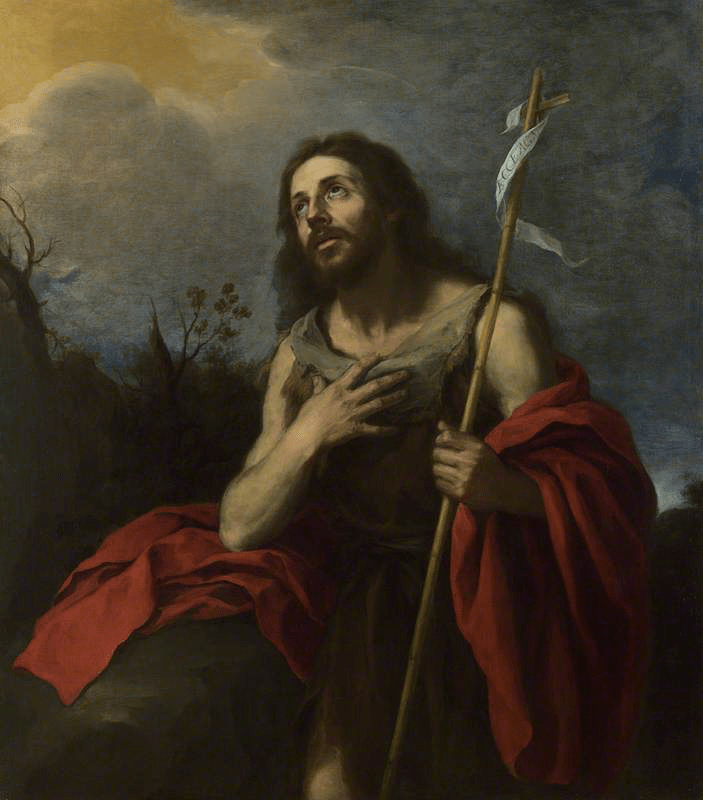
    John the Baptist is one of the most intriguing people we meet in the gospels. He has a unique role in history as being the forerunner to Christ. In John 1, John the Baptist is being questioned about his identity. He helps clarify who he is by clarifying who he isn’t. 

    Verse 19: And this is the testimony of John, when the Jews sent priests and Levites from Jerusalem to ask him, “Who are you?”

    It’s reasonable that they would want to find out who he is. I think it’s important to understand the time in which they lived. For centuries, the Old Testament had pointed forward to one sent from the Lord. 

    People had all sorts of expectations for the type of ministry that this sent one would have. 

    This was fulfilled in Jesus but people didn’t yet know Jesus. So all they had were their expectations and assumptions. What Jesus actually did was not quite what anyone expected. 

    A lot of people expected a great religious teacher. Jesus certainly was that but he was ore than that. But his purpose was to bring freedom not law. 

    A lot of people expected a great king. Jesus is that too, he’s the king of kings. But he did not have the mighty earthly kingdom that people expected. 

    Others expected a great general who would lead Israel to victory and back to a restoration of their land in the face of Roman oppression. Jesus is the one who leads his people to battle evil and leads us to Spiritual victory. 

    And people believed various ideas from those categories. 

    So you suddenly have this man who’s calling people to repent, who’s baptizing. In the other gospels, we see John calling out religious authorities.

    And so people are curious. 

    Maybe he’s connected to the promised savior. Maybe he IS the promised savior. Others might have been skeptical and thought it would lead nowhere. 

    Before Jesus, there had been people who claimed to be the promised savior of the world. 

    Who are you? 

    They ask. 

    The Christ

    John’s first response to the Jewish leaders is given in verse 20: He confessed, and did not deny, but confessed, “I am not the Christ.”

    First thing John confirms. He is not the savior. 

    One thing that’s important to understand. The word “Christ” is not Jesus’ last name. It’s his title. Jesus’ parents were not Joseph and Mary Christ. Jesus is The Christ. 

    Christ comes from the Greek word “Christus” which means “anointed.” It’s the Greek word for the Hebrew word “Messiah.” They both mean the same thing: anointed. 

    The significance of that is that in the Old Testament, various divinely assigned offices such as the king and the high priest would be anointed with oil at the beginning of their term. Some of the Old Testament prophets were also anointed. 

    There are also passages in the Old Testament which were understood as pointing forward to a future deliverer who was anointed. 

    John the Baptist had an important ministry. But he was not the Lord’s anointed, he was not the Lord’s Christ, and so he’s quick to point that out. He’s not the anointed savior. 

    Elijah

    Verse 21: And they asked him, “What then? Are you Elijah?” He said, “I am not.”

    Elijah was a prophet in the Old Testament. Much of his ministry revolved around calling people to faith and proper worship of the Lord. He was obedient to the Lord in his life and ministry. 

    There are several miracles that God does during the time of Elijah’s ministry. Two more things that are noteworthy about Elijah. The Old Testament tells us that God brought Elijah directly to heaven without dying. 

    2 Kings 2:11 

    And as they still went on and talked, behold, chariots of fire and horses of fire separated the two of them. And Elijah went up by a whirlwind into heaven

    Secondly, the book of Malachi, which is the last book found in our Old Testament concludes with these verses from Malachi 4:5:

    5 “Behold, I will send you Elijah the prophet before the great and awesome day of the Lord comes. 6 And he will turn the hearts of fathers to their children and the hearts of children to their fathers, lest I come and strike the land with a decree of utter destruction.”

    So God says that he will send Elijah before the great and awesome day of the Lord. 

    So some expected a literal second coming of Elijah. For those reasons, it’s a pretty reasonable question for the leaders to have asked this of John. But he tells them no. 

    John is not Elijah however it should be noted that John’s ministry is really fulfilling this prophecy about Elijah. John is not a reincarnated version of Elijah or a second coming of Elijah, but he is the one who is sent from the Lord with a divinely given ministry to call people to repentance. 

    But John confirms that he is not Elijah. So they try again: 

    The Prophet

    Are you the Prophet?” And he answered, “No.”

    When they ask John if he’s THE prophet, they’re actually referring to a specific passage. Deuteronomy 18:15 tells Israel about a successor to Moses. This passage also came to be understood as pointing to a grater prophet. 

    Verse 15: “The Lord your God will raise up for you a prophet like me from among you, from your brothers—it is to him you shall listen—

    They wonder if John is this person. In reality, that passage is ultimately pointing forward to Jesus. But once again, John answers the question in the negative. He is not the prophet. 

     So they said to him, “Who are you? We need to give an answer to those who sent us. What do you say about yourself?”

    John isn’t the Christ, he’s not Elijah, he’s not the prophet. 

    So then who is he? 

    He answers that in the following section.

    Who is John?

    Verse 23: He said, “I am the voice of one crying out in the wilderness, ‘Make straight the way of the Lord,’ as the prophet Isaiah said

    They’ve seen who John isn’t. This is who he is. He quotes the text from Isaiah 40. That passage is applied to John in all four gospels. 

    Isaiah 40 is a passage talking of a future time of deliverance for the people of God. It’s an incredibly hopeful passage. It talks of God’s faithfulness to his people in spite of their sin. It talks of God’s restoration. 

    The heart of what this is getting at for John is that his purpose is to call people to repentance and preparation for the coming Messiah. And it was John’s job to point us to that messiah.

    Thanks for reading! If you like this post, please share and subscribe!

  • Who is John the Baptist? Exploring John 1:22-27

    Who is John the Baptist? Exploring John 1:22-27

    One of the most intriguing people we meet in the Gospel of John is a man named John the Baptist. 

    Who is he? 

    He is not the same John who wrote the Gospel of John. They’re two different men. 

    He’s often called John the Baptist. That title is referring to what John did rather than a denominational affiliation. It’s not that we had John the Baptist, Peter the Presbyterian, and Paul the Methodist. 

    John the Baptist is mentioned in all four gospels, and in all of the gospels, he’s introduced prior to the ministry of Jesus. So he’s pretty important. 

    Between the gospels, they give us accounts of both John’s birth and his death. I can’t think of any other New Testament figure besides Jesus where that could be said. 

    We find out in the Gospel of Luke that John’s mom, Elizabeth, is a relative of Mary which means that John the Baptist is related to Jesus. 

    John is a few months older than the Lord. After John the Baptist is born, his father gives a prophecy to his son’s life. 

    Luke 1:76-77:

    76 And you, child, will be called the prophet of the Most High; for you will go before the Lord to prepare his ways, 77 to give knowledge of salvation to his people in the forgiveness of their sins,

    Luke chapter 1 ends with an interesting note about John: 

    Verse 80:

    80 And the child grew and became strong in spirit, and he was in the wilderness until the day of his public appearance to Israel.

    He was in the wilderness until the day of his publican appearance in Israel.

    There’s not a whole lot of elaboration on that. 

    We know nothing about his formative years. He was in the wilderness. Some scholars suggest the possibility that John may have actually be raised within a small community within the wilderness. That’s speculation, but it would make historical sense. 

    John is related to Jesus, but the gospels tell us nothing about how well they may have known each other. It doesn’t seem like they grew up going to a family dinner every week.  When his ministry began, it quickly grew in popularity: 

    Matthew 3:5-6 says: Then Jerusalem and all Judea and all the region about the Jordan were going out to him, 6 and they were baptized by him in the river Jordan, confessing their sins.

    Several years after John’s death, the Apostle Paul is ministering in Ephesus in Acts 19. Ephesus is several hundred miles away from Judea but people talk of the baptism which John practiced, showing that his name and reputation were known throughout the region. 

    John also faced persecution during his life. 

    He was arrested and later executed under the Romans in Matthew 14. John the Baptist is mentioned throughout the first chapter of the Gospel of John. 

    John 1:6-8: There was a man sent from God, whose name was John. 7He came as a witness, to bear witness about the light, that all might believe through him. 8 He was not the light, but came to bear witness about the light.

    That’s the first thing the author tells us about John. He was sent from God. His ministry was not arbitrary. It was not on a whim. It was not something he just chose to do. He was chosen by God. 

    Second thing we find out about him: his purpose. Verse 7 says that he came as a witness to bear witness about the light that all might believe through him. 

    John came into the world to point people to the light of the world. 

    John 1:19-34 talks more about John and his unique ministry as a forerunner to Christ.

    In John 1:22, John the Baptist is being questioned about who he is. In the preceding section, he’s given a series of denials of who he is not. He is not Elijah, he is not the Christ, he is not the prophet. 

     So they said to him, “Who are you? We need to give an answer to those who sent us. What do you say about yourself?”

    So then who is he? 

    While John isn’t answering in the affirmative to any of his questions, that does not mean he’s insignificant. 

    Verse 23: He said, “I am the voice of one crying out in the wilderness, ‘Make straight the way of the Lord,’ as the prophet Isaiah said

    They’ve seen who John isn’t. This is who he is. He quotes the text from Isaiah 40. That passage is applied to John in all four gospels. 

    Isaiah 40 is a passage talking of a future time of deliverance for the people of God. It’s an incredibly hopeful passage. It talks of God’s faithfulness to his people in spite of their sin. It talks of God’s restoration. 

    The heart of what this is getting at for John is that his purpose is to call people to repentance and preparation for the coming Messiah. 

    They ask John about his baptism. 

    25 They asked him, “Then why are you baptizing, if you are neither the Christ, nor Elijah, nor the Prophet?”

    Baptism was instituted in the New Testament for followers of Jesus. But baptism was not a foreign idea prior to that time. 

    In the first century, when non-Jews would convert to Judaism, they would sometimes do something similar to baptism which was meant to be a cleansing ritual to symbolically wash away impurity and sin. 

    A difference with John was that he administered baptism. The leaders question his authority. 

    And he responds by turning the question right back to his purpose in the world. 

    John 1:26-27: 26 John answered them, “I baptize with water, but among you stands one you do not know, 27 even he who comes after me, the strap of whose sandal I am not worthy to untie.”

    John says that it points to someone who’s shoes he’s not worthy to untie. In other words, he’s unworthy of even doing the most menial and humiliating task. John would need a promotion in order to be worthy of untying Jesus’ sandals. 

    John has authority to baptize because it’s been given to him by God but that baptism is meant to point to something greater. 

    Thanks for reading! If you liked this post, please share and subscribe. 

    This post is part of a larger study through the Gospel of John. This specific post is part of a 3 part series on John the Baptist from John 1:19-34

  • Sermon: The 10 plagues: water into blood

    In this passage, we see a clash of world views as Pharaoh is commanded to release the Israelites. When he refuses, the first of the ten plagues befalls Egypt. Pharaoh was viewed as a quasi-divine person in Egypt, but we see he’s no match for the Lord, nor are the Egyptian pantheon a match for the Lord’s plagues which shows his dominion over nature and over life and death.

    Sermon manuscript

    And the Lord said to Moses, “See, I have made you like God to Pharaoh, and your brother Aaron shall be your prophet. 2 You shall speak all that I command you, and your brother Aaron shall tell Pharaoh to let the people of Israel go out of his land. 3 But I will harden Pharaoh’s heart, and though I multiply my signs and wonders in the land of Egypt, 4 Pharaoh will not listen to you. Then I will lay my hand on Egypt and bring my hosts, my people the children of Israel, out of the land of Egypt by great acts of judgment. 

    5 The Egyptians shall know that I am the Lord, when I stretch out my hand against Egypt and bring out the people of Israel from among them.” 6 Moses and Aaron did so; they did just as the Lord commanded them. 7 Now Moses was eighty years old, and Aaron eighty-three years old, when they spoke to Pharaoh. 

    8 Then the Lord said to Moses and Aaron, 9 “When Pharaoh says to you, ‘Prove yourselves by working a miracle,’ then you shall say to Aaron, ‘Take your staff and cast it down before Pharaoh, that it may become a serpent.’ ” 10 So Moses and Aaron went to Pharaoh and did just as the Lord commanded. Aaron cast down his staff before Pharaoh and his servants, and it became a serpent. 

    11 Then Pharaoh summoned the wise men and the sorcerers, and they, the magicians of Egypt, also did the same by their secret arts. 12 For each man cast down his staff, and they became serpents. But Aaron’s staff swallowed up their staffs. 13 Still Pharaoh’s heart was hardened, and he would not listen to them, as the Lord had said. 

    14 Then the Lord said to Moses, “Pharaoh’s heart is hardened; he refuses to let the people go. 15 Go to Pharaoh in the morning, as he is going out to the water. Stand on the bank of the Nile to meet him, and take in your hand the staff that turned into a serpent. 16 And you shall say to him, ‘The Lord, the God of the Hebrews, sent me to you, saying, “Let my people go, that they may serve me in the wilderness.” But so far, you have not obeyed. 17 Thus says the Lord, “By this you shall know that I am the Lord: behold, with the staff that is in my hand I will strike the water that is in the Nile, and it shall turn into blood. 

    18 The fish in the Nile shall die, and the Nile will stink, and the Egyptians will grow weary of drinking water from the Nile.” ’ ” 19 And the Lord said to Moses, “Say to Aaron, ‘Take your staff and stretch out your hand over the waters of Egypt, over their rivers, their canals, and their ponds, and all their pools of water, so that they may become blood, and there shall be blood throughout all the land of Egypt, even in vessels of wood and in vessels of stone.’ ” 

    20 Moses and Aaron did as the Lord commanded. In the sight of Pharaoh and in the sight of his servants he lifted up the staff and struck the water in the Nile, and all the water in the Nile turned into blood. 21 And the fish in the Nile died, and the Nile stank, so that the Egyptians could not drink water from the Nile. There was blood throughout all the land of Egypt. 22 But the magicians of Egypt did the same by their secret arts. So Pharaoh’s heart remained hardened, and he would not listen to them, as the Lord had said. 23 Pharaoh turned and went into his house, and he did not take even this to heart. 24 And all the Egyptians dug along the Nile for water to drink, for they could not drink the water of the Nile. 

    Prayer 

    14 Let the words of my mouth and the meditation of my heart 

    be acceptable in your sight, 

    O Lord, my rock and my redeemer. 

    Introduction – series context 

    We’re continuing in Exodus this morning. Once again, taking a break from the Gospel of John for a few weeks. 

    Last week, we began our study and talked about the opening chapters of Exodus. That the Israelites were enslaved in Egypt but with a rapidly growing population, the Egyptians had made attempts to kill off the Israelite males. 

    He had attempted this through genocice and killing of males. Then Pharaoh had ordered males to be thrown into the river and drowned. 

    Barbaric. 

    We see the birth of Moses and his eventual calling to lead the Israelites out of Egypt. 

    I give all of that background just as a reminder of where we’ve been. 

    Today we come to some of the best known events in the Bible. 

    The plagues of Exodus when Pharaoh is repeatedly told to release the Israelites. 

    And when he refuses, God brings divine judgment. 

    The Nile river turned to blood. 

    A plague of frogs. 

    A plague of gnats.

    A plague of flies. 

    The death of livestock.

    A plague of boils. 

    A plague of hail. 

    A plague of locusts. 

    Darkness. 

    Death. 

    It’s interesting to consider the plagues of Exodus. 

    Because I look back at the last year and a half, and I can’t be the only one who at times looked at everything going on in our nation and around the world and felt like we were actually LIVING through the Biblical plagues. 

    Plagues of 2020

    Starting last year, in March, we had Covid turn our whole society upside down. 

    Then we ran out of toilet paper. 

    None of us probably ever thought that would be an issue we’d have to deal with, but deal with it we did. 

    Then in May, there were stories about murder hornets in the Pacific Northwest. 

    Murder hornets!

    Throughout the summer, there were riots and civil unrest. 

    More shortages. Everything from coins, to cleaning supplies, to bicycles. 

    Shipping delays. Total disruption of supply chains. 

    Wildfires. 

    I read that last year was the worst year for wildfires in recorded U.S. history. Five of the six worst wildfires to hit California since 1932 happened last year. 

    Disease, murder hornets, civil unrest, wildfires, no toilet paper. 

    Last summer, there was a plague of locusts in Africa. Did you know that? 

    Billions of locusts. Tremendous destruction to crops. 

    That’s something about the Biblical plagues to understand. When it talks of things like plagues of locusts or infestations of frogs, those are real things. Those are things that cause issues in parts of the world.

    More shortages. 

    Now we have labor shortages. 

    Economic fallout. 

    Inflation. 

    More product shortages. Building materials, microchips, and beef are all through the roof. 

    And on, and on, and on. 

    We’re surviving. But it’s amazing how these changes can so drastically impact life for so many. 

    Bridge

    So with that, we return to Exodus this morning and we’re going to look at three scenes. 

    Pharaoh’s opposition to God. 

    God’s warning to Pharaoh. 

    God’s judgment on Egypt. 

    The main idea of this passage is that opposition to God will never work. 

    1. Pharaoh’s opposition to God

    In Exodus 4, after God had called upon Moses to lead the Israelites out of Egypt, the Lord shows Moses two miracles. 

    He turns the shepherd’s staff of Moses into a serpent and he gives Moses leprosy and then heals him. 

    The Lord tells Moses to show these signs to Pharaoh, but in Exodus 4:21, the Lord says: 

    “When you go back to Egypt, see that you do before Pharaoh all the miracles that I have put in your power. But I will harden his heart, so that he will not let the people go. 

    I point this out because this will become a common idea throughout the Exodus plagues, and it’s found for the first time here. 

    The hardening of Pharaoh’s heart. 

    Between Exodus 4 and Exodus 14, the idea of Pharaoh’s heart being hardened is mentioned 19 times. 

    Most of those instances are God as the active agent who is hardening the heart of Pharaoh, such as what we see here in this current verse. 

    What does that mean? 

    To harden one’s heart? 

    Does that mean that God is causing Pharaoh to resist him? Is God causing him to sin?

    No. 

    God never causes us to sin. 

    Something that’s important to understand from the outset is throughout these passages, there is a clash of world views and a clash of religions in Exodus. 

    The Egyptians believed in a pantheon of gods. Gods of the river, the weather, livestock, the sun, the sky. And in the plagues, you have the Lord God showing that their false gods are all powerless against the Lord. 

    In these passages, you’ll have a clash between Pharaoh, who was thought to be a quasi-divine person vs the Lord. Spoiler alert: the Lord wins. 

    And you also have a conflict of the religious views of the Israelites and the Egyptians. 

    In Egyptian religion, they believed that when a person died, the heart was weighed. Sin added weight to the heart. There are hieroglyphics which show the heart being weighed compared to the weight of a feather. 

    A person’s admittance to the Egyptian idea of heaven depended on their own goodness. That’s what most religions ultimately believe. 

    Old Testament scholar Douglas Stuart is very helpful on this point. 

    Since the Pharaoh was such a revered figure in Egypt, they viewed him as being a morally pure. And that’s something that is very different from how we view our leaders. 

    Look at most presidents throughout our history. We generally don’t look to them as our exemplars of morality. 

    But with the Pharaoh who was a king and also a religious figure, they did. 

    And so the hardening of Pharaoh’s heart is a judgment. 

    Again, the Egyptians thought that the gods weighed the heart, judged the heart. 

    The fact that the Lord can harden the heart shows his power over Pharaoh. 

    This also showed – quoting Douglas Stuart now – “​​that Yahweh had done what the Egyptians thought the “gods” would usually do—weigh the heart and decide whether its owner was worthy of eternal life or not.”

    The weighing of Pharaoh’s heart is a matter of showing the sin and rebellion of Pharaoh. 

    Ultimately the choice to refuse God is one that Pharaoh continually makes in these passages. 

    And as a result of that, his heart is hardened. Weight is added to his heart as he continues to sin. 

    We’re still building up to the first plague. 

    At the beginning of chapter 5, Moses asks Pharaoh to allow the Israelites to go into the wilderness for a religious pilgrimage. . 

    Moses and Aaron went and said to Pharaoh, “Thus says the Lord, the God of Israel, ‘Let my people go, that they may hold a feast to me in the wilderness.’ ” 2 But Pharaoh said, “Who is the Lord, that I should obey his voice and let Israel go? I do not know the Lord, and moreover, I will not let Israel go.”

    We see Pharaoh’s hubris before the Lord. 

    And as I mentioned a moment ago, we’ll see him trying to go toe to toe with the Lord. 

    Who is the Lord? 

    Last week, we pointed out that the book of Exodus never tells us which Pharaoh this is. 

    So he asks Who is the Lord? 

    But the Bible leaves us questioning who is Pharaoh? 

    He doesn’t listen. He continues to make life miserable for the Israelites. In chapter 6, Moses is again told to confront Pharaoh. 

    Exodus 6:10 into verse 12:

    ​​So the Lord said to Moses, 11 “Go in, tell Pharaoh king of Egypt to let the people of Israel go out of his land.” 12 But Moses said to the Lord, “Behold, the people of Israel have not listened to me. How then shall Pharaoh listen to me

    As we saw last week, Moses continues to explain why he’s not the man for the job. 

    At the beginning of chapter 7, the Lord gives Moses and his brother Aaron their marching orders. 


    Exodus 7:2-4:

    2 You shall speak all that I command you, and your brother Aaron shall tell Pharaoh to let the people of Israel go out of his land. 3 But I will harden Pharaoh’s heart, and though I multiply my signs and wonders in the land of Egypt, 4 Pharaoh will not listen to you. Then I will lay my hand on Egypt and bring my hosts, my people the children of Israel, out of the land of Egypt by great acts of judgment.  5 The Egyptians shall know that I am the Lord, when I stretch out my hand against Egypt and bring out the people of Israel from among them.

    In summary: 

    The Lord says he will give the words to speak. 

    Pharaoh’s heart will be hardened. 

    The Lord will show greater signs and wonders. 

    Pharaoh will not listen. 

    God will bring judgement

    God will bring his people out of Egypt. 

    With that, we come to our second scene for today. 

    2. God’s warning to Pharaoh 

    Verses 8-9:

    8 Then the Lord said to Moses and Aaron, 9 “When Pharaoh says to you, ‘Prove yourselves by working a miracle,’ then you shall say to Aaron, ‘Take your staff and cast it down before Pharaoh, that it may become a serpent.’ ”

    As a reminder, this was a miracle that the Lord had shown Moses in chapter 4. 

    A shepherd’s staff was a common possession in ancient times. They were used to aid in walking, they could be used for protection, they could be used for helping to tend to livestock. 

    So a pretty ordinary object for the time period. 

    But the Lord will work through this ordinary object for an extraordinary purpose. 

    Verse 10: 

    ​​10 So Moses and Aaron went to Pharaoh and did just as the Lord commanded. Aaron cast down his staff before Pharaoh and his servants, and it became a serpent.

    So Moses does this sign to display the power of the God whom he serves. 

    But then verse 11 tells us: 

    Then Pharaoh summoned the wise men and the sorcerers, and they, the magicians of Egypt, also did the same by their secret arts.

    Pharaoh’s people do the same thing. 

    The verse calls them wise men and sorcerers. 

    They seem to be people who may have had some sort of priestly function. 

    So when the word magician is used, it’s not like Penn and Teller are doing this. 

    The passage does not tell us how they replicate turning their staffs into serpents. 

    Perhaps it’s simple trickery. 

    Perhaps it’s demonic. 

    The text doesn’t tell us. 

    But if there’s any confusion about the Pharaoh’s wise men one-upping this miracle, verse 12 says: 

     12 For each man cast down his staff, and they became serpents. But Aaron’s staff swallowed up their staffs.

    So when they threw their staffs to the ground, and those staffs also became serpents, Aaron’s serpent ate there’s. 

    And so Pharaoh is unmoved. 

    Verse 13:

     Still Pharaoh’s heart was hardened, and he would not listen to them, as the Lord had said. 

    A sinful heart can always find reasons to ignore the Lord. 

    He’d been warned by God’s word. He’d been shown a divine sign. 

    And he said “No.” 

    Pharaoh had seen evidence for God working but refused to listen because he chose instead to trust in his wise men. 

    When we don’t want to trust in the Lord, we can always find a reason. 

    I think of all of the evidence we have for God, evidence for the resurrection, reasons to believe in God, and still so many say no. 

    Why? 

    Not because there is a lack of evidence, but people don’t believe in God because they don’t want to. 

    Validation – going our own way 

    Romans 1:18-20 says: 

    the wrath of God is revealed from heaven against all ungodliness and unrighteousness of men, who by their unrighteousness suppress the truth. 19 For what can be known about God is plain to them, because God has shown it to them. 20 For his invisible attributes, namely, his eternal power and divine nature, have been clearly perceived, ever since the creation of the world, in the things that have been made. So they are without excuse.

    There’s evidence for God. 

    God reveals himself to the world. 

    Psalm 19:1: 

    1 The heavens declare the glory of God, 

    and the sky above proclaims his handiwork. 

    For Pharaoh, he looks at what his wise men had just done and uses that as a justification to ignore the Lord. 

    Today, I fear that this is what science has become. 

    I’m not anti-science. And there are many scientists who are strong believers. 

    But there are also many people in our society who look to science and since they feel they can’t observe or measure God, scientifically, then they shouldn’t believe in him. And what that’s doing is quite literally putting faith in science and its putting your eternal hope in science. 

    Which as someone who studied philosophy in college, I’ve always found this mentality to be self destructive. Because the idea that all truth is scientific is itself not a scientific idea. It’s a philosophical idea. 

    The methodology by which things are judged as being scientifically verified is also philosophical. Science cannot create its own scientific method. 

    And so for science to stand, it needs something outside of itself to give it its structure. 

    I get that there are people who are very scientifically minded. I appreciate that.  

    And again, I’m not anti-science. Scientific discoveries have helped revolutionize the modern world. 

    But we shouldn’t blindly place our faith in it.


    Romans 1:24-25 says: 

    God gave them up in the lusts of their hearts to impurity, to the dishonoring of their bodies among themselves, 25 because they exchanged the truth about God for a lie and worshiped and served the creature rather than the Creator, who is blessed forever! Amen. 

    Pharaoh was called upon to release the Israelites. He refused. 

    God will not compromise. 

    So you have Pharaoh, the anti-God who tries to stand down the Lord God. 

    In Jesus, we see the one who truly is fully man and fully God. We see the one who truly does have a pure heart. We see the one who truly is righteous.

    And he invites us to believe in him. He invites sinful people to be forgiven in him. 

    And for that, he will also not compromise. 

    God’s judgment – the first plague

    Starting in verse 14:

    14 Then the Lord said to Moses, “Pharaoh’s heart is hardened; he refuses to let the people go. 15 Go to Pharaoh in the morning, as he is going out to the water. Stand on the bank of the Nile to meet him, and take in your hand the staff that turned into a serpent. 

    Moses is called to given Pharaoh a forewarning of this judgment. 

    That will not happen with all ten of the plagues. 

    Where verse 15 tells Moses to go to Pharaoh in the morning as he is going into the water, either Pharaoh had a habit of swimming in the river, or bathing in the river. Either way, that’s the palace where Moses is told to meet him. Pharaoh will be a first hand witness to this judgment. 

    Moses is to take the same staff that had been turned into a serpent and to use that staff to touch the water. Now it’s not that the staff had power in itself. It was the Lord who was powerful and who will work this miracle. 


    Verse 17: 

    Thus says the Lord, “By this you shall know that I am the Lord: behold, with the staff that is in my hand I will strike the water that is in the Nile, and it shall turn into blood.

    This is what the first plague will be. 

    The NIle will be turned into blood.

    A few things to note about the Nile river. 

    It’s the longest river in the world. 

    Unlike rivers in this part of America which flow from north to south, the Nile flows from south to north. 

    In this period of history, the river would flood annually, usually in September and October as waters from further down the river in Africa and would flow down the river and cause floods in Egypt. Now we usually think of flooding as a bad thing, but it was essential to the Egyptians in a desert that sees very low rainfall. 

    Now it’s a fitting place for the first plague because hitting the Nile was hitting the lifeblood – no pun intended – of Egyptian society. It was necessary for their drinking water, necessary for their agriculture. 

    It’s also fitting to the story that the Nile is the site of the first plague. Earlier in Exodus, we’d seen Pharaoh attempt to punish the Egyptians by ordering that their male babies be placed into the river, as a horrific act of genocide. 

    But here that river will be what God uses to bring judgment on Egypt. 

    Something else to consider. I alluded to this earlier, but there were also Egyptian gods associated with the Nile. 

    Hapi was the Egyptian god of the flood. There were annual floods of the Nile which helped bring essential water to the soil. 

    Another mythological Egyptian deity associated with the Nile was Osiris, the god of the afterlife. The Egyptians also associated him with the river and the annual flood of the river became associated with life and death. The flooding of the river was associated with the resurrection of Osiris. 

    Something that I find interesting is that some scholars believe that this first plague occurred during the flood period. 

    We don’t know that for a fact, but if that was when this water into blood happened, at a time associated with the resurrection of Osiris, it would certainly be a very striking and unsettling sight for the Egyptians to see the Nile running red at a time associated with the deity whom they believed had power over life and death. 

    Pharaoh continues to be warned about what will happen to this river. Verse 18:

    18 The fish in the Nile shall die, and the Nile will stink, and the Egyptians will grow weary of drinking water from the Nile.” ’ ”

    Dead fish, rotting dead fish, and undrinkable water. 

    Again, there are legitimate questions about what exactly happens to the water. 

    There are many places where Exodus doesn’t always give us all of the details we would like. 

    But the main point is that this is something that the Lord miraculously causes to happen. With all of the plagues, that’s the most important thing. That the Lord is almighty and he is the cause. 

    Something else to note. While the Nile is really an important symbol of Egyptian life and livelihood. This first plague is ultimately going to be a nuisance for the Egyptians. Future plagues will be far more severe. 

    Continuing with the narrative. 

    19 And the Lord said to Moses, “Say to Aaron, ‘Take your staff and stretch out your hand over the waters of Egypt, over their rivers, their canals, and their ponds, and all their pools of water, so that they may become blood, and there shall be blood throughout all the land of Egypt, even in vessels of wood and in vessels of stone.’ ” 

    The verse says: their rivers, their canals, and their ponds, and all their pools of water

    The point that seems to be making is that it’s not just the Nile’s waters which are impacted. It has a far reaching ecological impact. The river and where it flows. 

     there shall be blood throughout all the land of Egypt, even in vessels of wood and in vessels of stone.’ ” 

    That verse has more than one plausible interpretation. The major interpretations all get at the idea that this is talking of the far reaching consequences of the blood. 

    Verse 20, after all of the warnings and what has been foretold, we finally see the first plague set into motion: 

    20 Moses and Aaron did as the Lord commanded. In the sight of Pharaoh and in the sight of his servants he lifted up the staff and struck the water in the Nile, and all the water in the Nile turned into blood. 21 And the fish in the Nile died, and the Nile stank, so that the Egyptians could not drink water from the Nile. There was blood throughout all the land of Egypt.

    The river has been turned to blood. 

    Now there is question about if it’s literal blood. And if so, what type of blood? Human blood? Animal blood? 

    Could it be some sort of microorganism which turns the water red? 

    There can be algae blooms which turn water red. 

    Could it be turned red from some sort of rocky sediment? 

    Again, we don’t get all of the details. 

    Does it teach Pharaoh a lesson? 

    In verse 22, we see another twist in the story though. 

     22 But the magicians of Egypt did the same by their secret arts. So Pharaoh’s heart remained hardened, and he would not listen to them, as the Lord had said. 23 Pharaoh turned and went into his house, and he did not take even this to heart.

    As we’d seen with the serpent, the Pharaoh’s wise men are also able to turn water to blood some how. By their secret arts. And again, we don’t know exactly how. 

    It is interesting that they too could do the same thing, yet what they could not do was fix it.

    And while they may have been able to turn some of the water to blood, it was certainly not as far reaching as what the Lord did. 

    Pharaoh had witnessed this miracle. He’d seen the destruction that had come from it. 

    But he still would not relent. 

    24 And all the Egyptians dug along the Nile for water to drink, for they could not drink the water of the Nile.

    The Egyptian people couldn’t use the Nile for drinking water so they had to dig for ground water. 

    So there was some potable drinking water. 

    So again, it is dramatic, it is significant, but it is ultimately a major inconvenience to the people. 

    It should have caught Pharaoh’s attention. 

    It should have caused Pharaoh to change and to listen to God, but it didn’t. 

    A lot more pain and misery will await him in the coming events of Exodus. 

    And there is a lot of misery in life when we avoid God.

    No, he might not reign down plagues on us. 

    Conclusion

    But he is truth. He is our creator. He is our Lord. 

    And the only way to live a life of true fulfillment, of true joy, of true peace is in him. 

    Does that mean all of those things will come easily when we say a prayer or get baptized? No. 

    Because there’s still sin in our life and in the world. 

    But without God, we can not have those things. 

    Does that mean that life will suddenly become easy at the snap of your fingers? No. There are challenges and difficulties. But you won’t be alone. You’ll have God. 

    Does that mean that everything you want God will give you? No. But God gives us what we need. And he gives us himself. Jesus literally gave himself on the cross. He literally gave up his life so that we could have life. 

    God calls us to trust, he calls us to believe. 

    And still so many turn their backs on him, find reasons why they can’t believe in him. It doesn’t work because it’s not living in accordance of what we were made for and who we were made for. 

    Quoting C.S. Lewis: 

    God made us: invented us as a man invents an engine. A car is made to run on petrol, and it would not run properly on anything else. Now God designed the human machine to run on Himself. He Himself is the fuel our spirits were designed to burn, or the food our spirits were designed to feed on. There is no other. That is why it is just no good asking God to make us happy in our own way without bothering about religion. God cannot give us a happiness and peace apart from Himself, because it is not there.”

    True fulfillment cannot come apart from God, because to find fulfillment in anything else would be to find it in something that is less than God. When we aim for less than God, there is discontent because there is something bigger, something greater that we need. 

    Something that God has made cannot be the source of where we find fulfillment, where we find true joy, where we find true peace. 

    True life cannot come apart from the true source of life. 

    And so we’re called upon to trust in the Lord. And to trust in his son, Jesus Christ

  • Jesus as God’s dwelling place among us. Exploring John 1:14

    Jesus as God’s dwelling place among us. Exploring John 1:14

    I used to enjoy a show called Undercover Boss. 

    It was a reality show that would feature leaders within companies, such as founders, CEO’s, vice presidents, or other executives going undercover within their own companies. 

    The show featured leaders for companies like Subway, True Value, Build-a-Bear, and even the Chicago Cubs. 

    Throughout a week, they would spend a day in various entry level positions within the company. They would work alongside typical employees. They would get a sense of the work they were doing. 

    But for the employees, they would be working with the most powerful person in the company and they had no idea. 

    It’s not that the undercover boss was their boss, he was everyone’s boss. He was their boss’s boss’ boss’s boss. 

    And they had no idea. 

    Sometimes they’d complain about corporate policies or explain ways to work around the rules, not knowing who they were talking to. 

    They were with the head of the company and didn’t even know it. 

    I think of Jesus coming into the world and I’m reminded of a similar irony in that people were interacting with the God of the universe and were mostly oblivious to that fact. 

    The Gospel of John says: He was in the world, and the world was made through him, yet the world did not know him. He came to his own, and his own people did not receive him (John 1:10).

    Then verse 14 takes it to a more relational and personal level. 

    And the Word became flesh and dwelt among us. 

    That may be one of my top ten favorite verses in all of the Bible.

    The God who created the world came into the world to save the world. The eternal God of creation became flesh and blood, skin and bone. Jesus’ divinity matters but so does his humanity. 

    It is because of his divine nature that he has the power to withstand and to bear the weight of sin. Our sin is an affront to God and no mere mortal is capable of redeeming himself before a Holy God, let alone redeeming humanity. 

    But it also matters that Jesus is human because it is humanity that has sinned. And in being fully man, Jesus is like us in our humanity. Jesus entered sinful humanity, though he himself is without sin. 

    His sinlessness matters because it took a sinless, perfect, and righteous sacrifice to pay for sins. 

    His humanity and divinity make Jesus a worthy sacrifice and atonement for sinful people. 

    The Word became flesh. God became man. 

    Colossians 1:19 says: For in him all the fullness of God was pleased to dwell

    God dwelling with us

    The glory of God came to earth through the Lord Jesus. There’s one word in particular in this verse that brings it to a climactic point in this passage. 

    Dwelt. 

    The English doesn’t truly convey the meaning of what’s being said here. 

    Let’s take a step back. 

     In the Old Testament, people originally exist in perfect fellowship with God. That’s what Eden was. It was a holy place. A perfect place. A sinless place. 

    Because of sin, fellowship with God was tarnished. The unencumbered closeness to God was lost due to sin. 

    We were no longer holy. 

    But the story doesn’t end there. Throughout the Old Testament, we see God bringing redemption to his people. 

    God makes a covenant with Abraham. We see God’s continued faithfulness to his covenant. 

    Fast forward. The Israelites were held in captivity in Egypt. After God had miraculously freed them, and while the Israelites were wandering in the desert, God gave them instructions for a structure called the tabernacle. The tabernacle was a tent that the Israelites were to travel with and it was a symbol for God’s presence with his people. 

    Sometimes it’s called the tabernacle. Sometimes it’s called the tent of meeting. 

    Exodus 40:34-35: Then the cloud covered the tent of meeting, and the glory of the Lord filled the tabernacle. 35 And Moses was not able to enter the tent of meeting because the cloud settled on it, and the glory of the Lord filled the tabernacle.

    Exodus spells out very specific instructions on how the tabernacle was to be built, what types of items would be placed inside the tabernacle, etc. 

    The instructions are so specific because it is a sacred and holy place. Again, it represented the very presence of God in the world.  But this was pointing forward to something greater. 

    The temple. 

    When the Israelites entered the land, part of their purpose was in constructing the temple. As the tabernacle had been portable, the temple was meant to be permanent.

    The overarching purposes were still the same. Most notably, it was where God met his people in the word. It was his presence in the world.  

     The temple was the place where sacrifices were made. For the priests, there were specific instructions on what they had to do to prepare to enter into the Temple It was a sacred place. 

    As with the tabernacle, not just anyone could go into the temple. The priest couldn’t just go into the temple any arbitrary way they wanted. 

    It was a holy place. The temple was completed during the reign of Solomon 

    1 Kings 8:10-11 says: And when the priests came out of the Holy Place, a cloud filled the house of the Lord, so that the priests could not stand to minister because of the cloud, for the glory of the Lord filled the house of the Lord.

    In both places, when the presence of the Lord comes into the temple, people can’t even stand in it because the presence is so glorious. 

    The temple is hugely important in the Old Testament. Building the temple is important. The specific instructions for the temple are important. But this points forward to an even greater temple. To an even greater example of God’s presence with his people. 

    The word became flesh

    And that is the significance of John 1:14. 

    “The Word became flesh and dwelt among us, and we have seen his glory.”

    The word translated as “dwelt” more literally means that Jesus tabernacled among us, that Jesus pitched a tent among us. It’s the same word for tabernacle that was used centuries before Christ when the Old Testament was translated from Hebrew to Greek. 

    Jesus is the tabernacle. He is the greater temple. He is the presence of God with his people because Jesus IS God with his people. 

    So it’s not simply saying that Jesus dwelt among us. But rather: in Jesus, we see God became flesh and tabernacled with his people.  

    Instead of a tent or a building, we have a person, we have God himself. 

    The greater tabernacle, the greater temple. And he’s greater because he’s everything these places were meant to represent. It was only the priests who could go into the tabernacle and the temple. 

    A priest serves as a mediator between man and God. Jesus is the greater priest. It is he who restores our relationship with God. These man made structures were where sacrifices were offered. 

    Jesus himself is the sacrifice. 

    And as I’ve said, the tabernacle and the temple represent the presence of God with his people. Jesus is God himself who has come to his people. The word became flesh and dwelt among us. 

    The Word made his dwelling among us. He pitched a tent among us. He tabernacled among us. 

    The God who created the world came into the world to save the world. 

    There was no other way for a sinful people to be reconciled to the Lord than through God himself coming into the world. But because of his love for us. Because of his goodness. Because of his grace…

    The Word became flesh and dwelt among us. The creator entered creation. 

    In his commentary on John, the late New Testament Grant Osborne says of this verse “In my opinion, this is the single greatest sentence ever written in the history of human language, the deepest theological statement ever written. No finite human being could ever enter the realm of God and join his family. It could only come to pass if God himself were to enter the realm of humanity.”

    The Word became flesh. God became one of us so we could be with him. 

    He is a personal God. It doesn’t get more personal than Jesus entering his creation. 

    Sometimes it can be tempting to doubt if God really knows what we’re going through when we’re struggling. It can be tempting to wonder if God really cares.  

    He knows. He knows what it’s like to live in a sinful world. He knows what it’s like to have people oppose him and not like him. He knows what it’s like to be hated for no reason. He knows what it’s like to be slandered. He knows what it’s like to cry. He knows what it’s like to be let down. He knows what it’s like to be betrayed. He knows what it’s like to suffer and feel pain. He knows what it’s like to face injustice. 

    He knows.  

    It can be be easy to focus on Christ’s glory and divinity to the point where we forget his humanity. 

    But we see his humanity in this passage. The Word became flesh and dwelt among us. 

    Thanks for reading! If you liked this post, please like and subscribe!