Josh Benner

Category: Church

  • Is online church an adequate replacement for meeting in person? Spoiler alert: It’s not

    man wearing blue dress
    Photo by Luis Quintero on Pexels.com

    Relevant wrote an article last week where they interviewed Judah and Chelsea Smith about online church. In 2018, the Smith’s launched Churchome, as an online form of church which Relevant describes as “a new kind of virtual experience that would offer church to a new generation more comfortable with digital relationships.”

    From the article:

    The announcement was met with no small degree of skepticism at the time but that was then. Now Churchome’s style of Sunday service has become the norm for almost every church in the country.

    -Relevant magazine

    This article misses the obvious. Online services have become the norm for almost every church in the country…for now.

    It’s become the norm, grudgingly. It’s become the norm because of the outbreak. It’s become the norm because many states aren’t allowing churches to meet. It hasn’t become the norm because hundreds of thousands of churches simultaneously decided that online church is better.

    It isn’t.

    It hasn’t become the norm because churches are suddenly jumping on the bandwagon and think it’s better.

    The church meeting together and having fellowship together is better. People using the gifts God has given them to build up and serve their church is better (1 Cor. 12). A pastor who has a relationship with his people is better. A church where there is accountability from people who know each other and know their struggles, their past, their victories, is better. Partaking of communion together as a church is better. Elders tending to the spiritual welfare of people they actually know is better. Having a church that has a presence in a community is better.

    In every way, meeting together for church is superior to meeting online for church. Yes, it’s a blessing that over these last few weeks, churches have had the capability to broadcast online. But there’s no substitute for the real thing.

    Just because more things are done online in our culture, and we’re more technologically connected does not mean that this is the route churches should go.

    For instance, with fellowship, there is no substitute for actual human interaction. Sure, I’ve made friends online. I met my wife on eHarmony! But when you’re celebrating Christmas, if a family member is away and all you have is facetime, it’s not the same as having them with you. If a friend or relative has moved far away, yes, it’s nice you can Skype with them, but it’s still not the same as seeing them.

    Our society relies more on online interactions and our society is also increasingly miserable. Depression, loneliness, anxiety pervade the culture. The idea of online church panders to the culture while giving the culture while giving them something which is an unbiblical facade for church.

    From the Relevant article, Judah Smith says: “we believe that actually people can connect on a level, that frankly could very well be deeper and richer and fuller.” I don’t see much evidence to back that claim up and there’s lot of research that says just the opposite.

    I like social media and the internet as much as the next guy. All I’m saying is that it’s not an effective replacement for authentic relationships, and it’s certainly not a replacement for church.

    Humanity was created for relationship. We’re created for fellowship with God and with other people. Just because more business, commerce, and entertainment has moved to the internet, that does not mean the church should follow suit.

    Christianity is counter-cultural.

    Thanks for reading! I’d love to hear what you think, and don’t forget to subscribe! 
  • Advice to anyone considering seminary

    13240631_10103459013196830_6669337147853210272_n

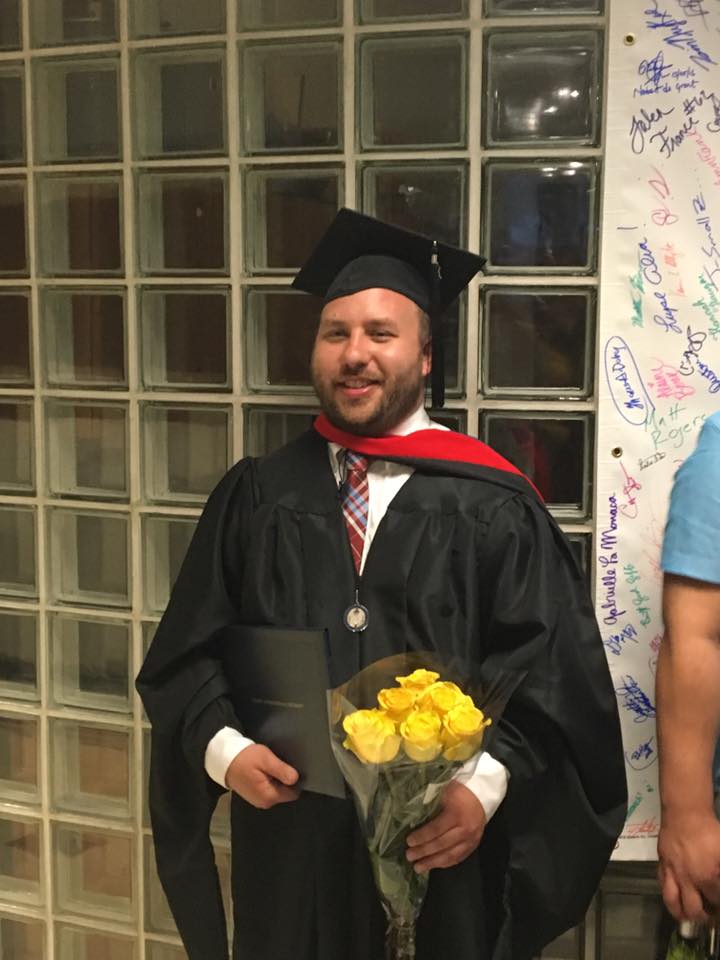
    Four years ago today, I graduated seminary with my Master of Divinity degree. I picked a highly academic seminary where I was blessed to study under world class professors. But as I reflect this year, I’m struck by the thought of how an intensive masters degree from seminary still only scratches the surface of studying the Bible.

    I feel like the more time that goes by since graduating from seminary, and the more I continue to study the Bible and theology, the more I realize how much I still have to learn. Sure, I have a pretty well rounded knowledge of the subject. But there are plenty of secondary and tertiary theological issues that I haven’t studied as thoroughly as I would like.

    Theology and Biblical studies are a vast ocean. Theologians and Biblical scholars write volumes on these subjects. Martyn Lloyd-Jones who was a British preacher in the last century wrote a 14 volume commentary on the Book of Romans. Just that one book of the Bible. It’s over 5,000 pages long. Francis Turretin’s systematic theology is over 2,300 pages. And I could go on and on. The depths of the Bible can never be fully plumbed.

    I’ve thought a lot about seminary today. I think it’s valuable for anyone who is serious about pastoral ministry (as well as other areas of ministry). But if I were to speak to someone who’s considering seminary, I would want to encourage them that an MDiv can help give a good theological foundation but that the training and knowledge must be cultivated over a lifetime. I think it’s important to not expect more than what the MDiv can give you. You’ll get some answers, but it’s not the place to get all the answers. You’ll learn skills that will help you in ministry but the MDiv alone won’t make you a good minister. You’ll learn more about the Bible but seminary alone won’t transform you and make you someone who lives Biblically.

    Don’t get me wrong. I think seminaries care about their students growing in all of these areas and helping to equip them as much as they possibly can. But it can’t do everything. What it does best is trains people in the languages, theology, and Biblical studies.

    Four years after graduation, I feel like I’m much more aware of all of the things I don’t know about theology today than I was when I started. I feel like I’ve learned almost as much in the last four years as I did in my four years of seminary. But it was seminary that helped give the foundation and the Biblical and theological lenses through which I’ve continued to learn.
    Thanks for reading! I’d love to hear what you think, and don’t forget to subscribe!

  • Fruit of the Spirit – something we can’t produce

    photo-1545135933-53630a9f3537.jpeg

    BUT THE FRUIT OF THE SPIRIT IS LOVE, JOY, PEACE, PATIENCE, KINDNESS, GOODNESS, FAITHFULNESS,23 GENTLENESS, SELF-CONTROL; AGAINST SUCH THINGS THERE IS NO LAW.

    -GALATIANS 5:22-23

    In the Book of Galatians, the Apostle Paul talks about the fruit of the Spirit.

    It’s a section that fascinates me. Because the fruit is produced by the Holy Spirit in the life of a believer.

    There are certain areas in our lives we can control.

    Think about it.

    Honesty. You can force yourself to be honest. I’ll just choose to not lie. You can decide

    that for yourself. Honesty isn’t a fruit of the Spirit.

    Generosity isn’t a fruit of the spirit. You can choose to give more or to serve more to others.

    Those are things you can control.

    But the fruit of the spirit: love, joy, peace, patience, kindness, goodness, faithfulness, gentleness, self-control.

    These are things we don’t control in ourselves.

    They’re…the fruit of the Spirit. Not the fruit of our effort.

    Nine graces that God produces in believers.

    Love is a fruit of the Spirit.

    So what this passage is saying is that if you’re wain gin the Spirit, it will manifest itself in love.

    Now there are commands to love given in many places throughout the Bible. We should love people. We should demonstrate love towards others by actions.

    And that we can control.

    But it’s not just external actions, but in the depths of our soul, are we doing things out of love out of obligation or because we actually love people?

    Some people say that love is a choice, that it’s not about a feeling…

    That would be wrong. That’s JV love.

    Of course love is a feeling too. We are supposed to actually love people, to have affection in our hearts for people. To actually have a desire for what’s best for them and their own salvation and joy and grace.

    And there are people in our lives who are hard to love.

    And so to love those people is not something we have in ourselves. It must come from God.

    Another example: joy. You can’t create joy in your own heart. You can’t make yourself joyful.

    You can’t say “I didn’t have enough joy yesterday, but today, I’m going to make myself joyful.”

    You can’t do it.

    No matter how glad half full you try to look at things, no matter how much you try to force yourself to ignore the little inconveniences, you cannot make your own joy.

    You can pretend. You can bury emotions. You can try whatever the self-help gurus are saying to do. Just like love you can outwardly convey joy. But what about internally?

    True joy is something that you can’t produce. Joy comes from the Spirit.

    Joy is a supernatural delight in God brought about  by the Spirit. It’s because joy is supernatural that joy can exist even in difficult circumstances. We have joy from seeing the glory and goodness of Christ.

    The Spirit illuminates us to the good things of God. Jesus talks of this in John 16:14: “He will glorify me, for he will take what is mine and declare it to you.”

    Let’s look at another piece of fruit.

    Peace.

    Peace is not merely the absence of war. But peace is safety, harmony, wholeness and unity.

    The peace that Jesus brings is a restoration of a relationship that had been lost due to sin.

    You cannot give yourself internal peace. You cannot make yourself feel peace with God.

    It’s a fruit of the Spirit.

    Romans 14:17 says: “For the kingdom of God is not a matter of eating and drinking but of righteousness and peace and joy in the Holy Spirit.”

    The fruit of the Spirit is supernatural.

    It’s fruit.

    You don’t cause fruit to grow.

    Quoting Tim Keller: “A gardener doesn’t make the things grow. The gardener just creates the conditions through which the power of the seed is released.”

    Another idea Keller brings up. What doe she contact the fruit of the Spirit with?

    It’s not the weeds of the flesh. It’s the works of the flesh. We commit our own sins. We choose to sin. We are responsible for our own sins.

    And again, there’s both an internal and an external aspect to the fruit of the Spirit in our lives. So with something like kindness or patience, yes you can behave at work and act nice to someone.

    But are you thinking nasty things about them while you’re doing it?

    Then you’re not really kind are you? True kindness is because you desire to be kind not because you feel you have to be. And you can’t make yourself kind.

    We should know the fruit of the Spirit.

    We should desire to grow in all of these areas.

    And yes, there are times where our outward actions might outpace our inward desires.

    We should be loving, or kind, or good to people, because we know it’s what God desires. But as we walk in step with the Spirit, as we walk with the Lord, more and more, we will do these things because it’s what we also want.

    It’s the new life God produces in believers.

    Originally published January 8, 2019

    Thanks for reading! I’d love to hear what you think, and don’t forget to subscribe! 

     

  • When we want the savior but not the Lord: the great disciple mistake

    casey-horner-4rDCa5hBlCs-unsplash.jpg

    Our society likes to emphasize God’s love and forget that he is also just and that he has wrath towards sin. We like the easy message. We like the easy gospel of “yeah you’re not perfect but neither is anyone else and God is a God of love and he forgives you.” 

    We make faith about a vague ascent with Christ, a loose agreement, hearing “you can be forgiven,” and then saying “sure, I’ll have that,” like it’s someone asking if you want to share an order of mozzarella sticks at a restaurant. 

    But the danger of an easy gospel is losing sight of Jesus and his call to discipleship, his call to live life in the light of what he has done.  (more…)

  • James MacDonald starting home church network less than a year after being fired from mega church

    JMacDonald_-_Walk_in_the_Word.jpg
    James MacDonald. Photo courtesy of Wikimedia Commons.

    A year ago, James MacDonald was fired from Harvest Bible Chapel, a megachurch located primarily around Chicago, which he had founded more than 30 years ago.

    MacDonald’s dismissal came after Chicago radio host Mancow Muller played explosive clips of MacDonald criticizing investigative reporter Julie Roys, Christianity Today editor Mark Galli (and making implications about an inappropriate relationship between them). He makes reference to putting illegal materials on the computer of the former Christianity Today editor (not suggesting that this event actually happened).

    At the time of his dismissal, MacDonald had faced years of criticism for domineering leadership towards staff and church members as well as abuse and mismanagement of church finances.

    This week, MacDonald has announced that he is starting his own home church network.

    In a statement on his website, MacDonald said:

    “I am not disillusioned with traditional local church, but large churches present complicating logistics and often negatively affect Christian relationships. For that reason, we feel led by the Lord to offer an alternative for those who need it – something different and refreshing that we are calling the Home Church Network – with all the impact of a large church but none of the drama.”

    -James MaDonald

    Commentary
    I’m sorry for being such a cynic but this is all very rich.

    A pastor who was rightfully fired because of his own sin says that he’s not disillusioned with traditional local church.

    Why would he be? The local church wasn’t the problem. The irony is that many of the things that drive people away from churches are the very things MacDonald perpetuated in his ministry: enriching himself off of people’s generosity, unchecked power, cult of personality, etc.

    And he has the audacity to clear the air that he doesn’t have any animosity against the local church?

    Second thing about this story that catches my attention.  MacDonald says: large churches present complicating logistics and often negatively affect Christian relationships.

    Once again, I find this interesting. A man who was fired from a large church is going to throw the large church movement under the bus because it’s the logistics which can negatively impact

    Christian relationships? He will also talk of the drama that exists in large churches.

    From reading his website, it seems like home groups will meet and watch videos of his teaching and utilize worship music that is put together through the ministry.

    This alternative already exists. He didn’t invent the idea of house church. It goes back to the New Testament era. In recent years, it has seen growing popularity in America. It’s also a common church style for Christians in many parts of the world where they face the risk of persecution for being Christians. And for MacDonald, it’s his newest avenue of ministry. In his statements, he again throws large churches under the bus for their “drama.”

    It’s the pot calling the kettle black.

    I know I’m being harsh. But it’s because I love the local church. And I hate seeing people abusing the local church. I think it’s shameful that time and again, megachurch pastors get caught up in areas of major sin and are disqualified from leading in their churches. When this happens, with few exceptions, they almost never stay away. MacDonald is starting a home church network.

    Same old story
    Mark Driscoll was removed for abusive leadership. He’s now leading a new church. Tulian Tchividjian was removed for having an affair, then hired by Willow Creek. Then he was fired again when another previously undisclosed affair became known. Then he started a new church. Perry Noble was fired from the megachurch he started in South Carolina for alcoholism and familial neglect, then divorced, and about a year and a half later, started another church.

    And there are many other examples. Ted Haggard using drugs and hiring a male prostitute, Jim Bakker with his affairs and fraud (he went to prison), Jimmy Swaggart and his prostitution scandal.

    And all of them are back in churches or ministries.

    That isn’t the way it’s supposed to be.

    The good news of the gospel is that no matter what a person has done, no matter how great the sin, that for the person who has trusted in Jesus, there is grace and forgiveness.

    But that’s not the debate. The issue is when you have pastors who are disqualified from leading on legitimate Biblical grounds, and who sit on the bench for a few months and proclaim themselves fit to lead.

    MacDonald didn’t even wait a year. And the pattern seems to often be that after a little time away, the pastor declares himself as ready to lead again within the church.

    Can a pastor ever be restored? It’s difficult because part of the qualification is that he be above reproach. But the restoration should never be as simple as a person deciding that they’re all better and ready to pastor again. None of these people are so valuable that the church can’t function without them. Ministry is a sacred privilege, not a right.

    Thanks for reading! I’d love to hear what you think, and don’t forget to subscribe!