Josh Benner

Category: Church

  • The American Gospel and the meaning of Easter

    Photo Courtesy of Flickr Creative Commons

    Originally posted April 6, 2012

    Statistically, we know that the vast majority of Americans believe in some form of a higher power. There are relatively few who are atheists. Since people do believe that there is something, and since it’s so easy to think of the majority of Americans as Christians, many simply attach themselves to Christianity.

    But what does it mean? Christianity?

    For so many, we call ourselves Christians but then never pray, or read the Bible, or go to church, or experience fellowship with other believers, or show any actual desire to have a relationship with Jesus. Without these, how can a person be Christian?

    (more…)

  • Jesus and the Last Supper – more than just a meal

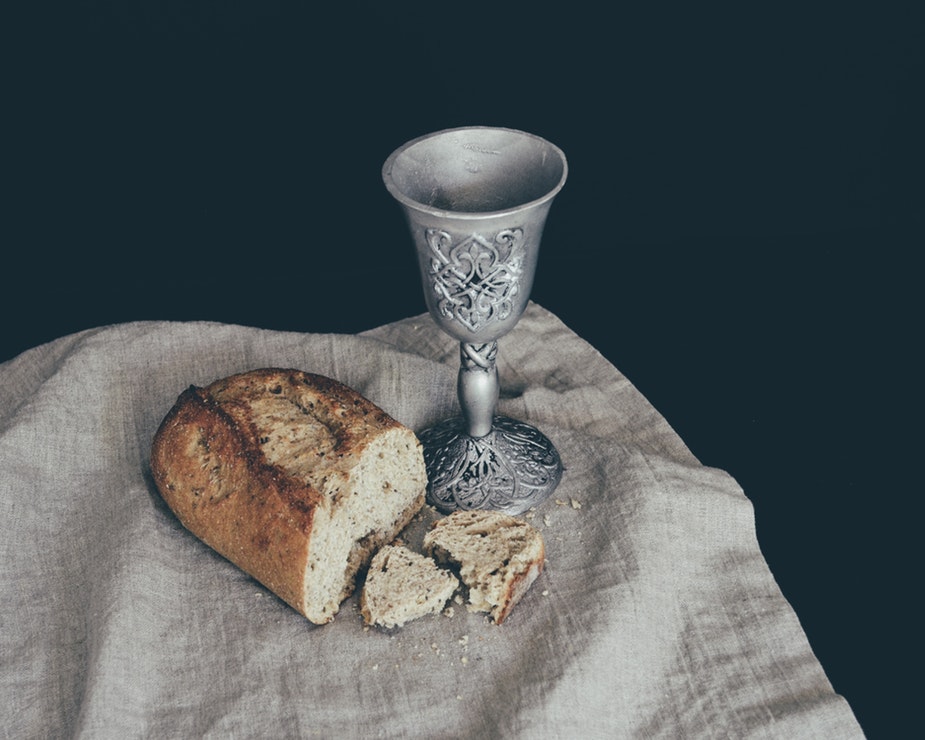
    photo-1520629716099-d147346eb224.jpeg

    Originally published April 13, 2017

    As part of Holy Week, Maundy Thursday is recognized this evening. It was the night in which Jesus ate the Last Supper with his disciples. The time in which Jesus died corresponded with the Jewish holiday of Passover. And the Last Supper was the first night of Passover. An annual dinner for Passover is held, called a Seder, which is the Hebrew word for “order.” In 3,500 years, rabbinical tradition and teaching helped to form the ceremony of the Seder.

    Some of these pieces were traced back to the original Passover. Others came in Jewish history from rabbinical traditions.

    Also, once the Israelites were in the land, and after the temple was built, this impacted Passover traditions. When you had the temple, the lambs were sacrificed at the temple. But what didn’t change was that people could only sacrifice lambs that were perfect.

    I think it’s worth spending so much time in talking about Passover because I think it can help give us a greater context and understanding for the events surrounding the death of Jesus.

    In the gospels, the time of the death of Christ revolves around the Passover. That’s not a coincidence! Jesus would be sacrificed at the time that was associated with sacrifice. Jesus had gone to Jerusalem for Passover. In Jerusalem, the city within the Roman Empire that was the epicenter of Jewish culture, thousands of lambs would have been slaughtered annually. Jewish people would have been coming in from all over the empire.

    We see many traditions of the Seder at the last Supper.

    Some of them are small things. In the gospel accounts, it talks about Jesus reclining at the table (Luke 22:14).

    Jesus wasn’t sitting in a la-z-boy. He was on a couch that he was lying on, that was a Seder tradition. They had been enslaved in Egypt but being able to lie down showed the freedom and security.

    Or when Jesus is alluding to his betrayer, he says in John 13:26, “It is he to whom I will give this morsel of bread when I have dipped it.” So when he had dipped the morsel, he gave it to Judas, the son of Simon Iscariot.

    Again, I know the mental image that most of you probably have when you read this. It’s hard to know precisely where in the Seder this is, but it seems that it’s probably referring to when you take Haroset which is made from apple, nuts, cinnamon. They weren’t eating the Last Supper at an Italian restaurant. They didn’t have a bowl of olive oil in the middle of the table. But all of the elements we see at the Last Supper are part of what you’d see in a traditional Seder.

    As part of the Seder, you’d take the unleavened bread…looks like a cracker. And you’d break the bread.

    Luke 22:19, “And he took bread, and when he had given thanks, he broke it and gave it to them, saying, “This is my body, which is given for you. Do this in remembrance of me.”

    For over a thousand years of Seder dinners, bread had been broken. Unleavened bread, just like the Israelite forefathers had eaten before fleeing from Egypt.

    The body of Jesus, given for you, given for your sins. Given for your forgiveness. And he says “do this in remembrance of me.”

    What more fitting words could you say at a Seder? A meal revolving around remembrance, about retelling the story of God saving his people by the blood of the lamb.

    Remembering what God has done. Remembering what Jesus has done. Remembering the sins that he’s redeemed you from. Remembering his body that he gave for you. Remembering his death that he died for you. Remembering the grace that he offers to you. Remembering his gospel.

    Luke 22:20 says, “And likewise the cup after they had eaten, saying, “This cup that is poured out for you is the new covenant in my blood.”

    The Seder dinner involves four glasses of wine. This seems to have been the second or third glass of wine in the meal, although there’s scholarly debate.

    But how profound it is. Wine drank in remembrance of the Passover. Jesus takes the wine, he blesses it, he says it is the new covenant in his blood, at the Seder dinner.

    It clearly points backwards to the blood of the Passover lamb, the blood that was put on the door posts. And it also points forward to the blood of Christ, shed for the forgiveness of sins. The blood of the true lamb.

    At the beginning of the gospel of John, when John the Baptist sees Jesus he says “Behold, the lamb of God who takes away the sin of the world.” Jesus is the true lamb of God. The lamb who took the penalty for sins. The one who was scarified for the salvation of God’s people.

    And by trusting in him and having faith in him, that puts the blood on the doorpost of your heart. On the first Passover, there would not have been a pardon for a person who didn’t put blood on the doorpost. It wasn’t that the blood saved them, God saved them. But to not put the blood on the door was to show that a person didn’t have faith in the Lord, didn’t trust in the Lord.

    When we take the Lord’s Supper, it’s not arbitrary. It’s not just using the random items that were around. It’s all symbolic. It takes symbols important to the first Passover, the first time God had delivered Israel, and it reminds of the new Passover, from the perfect sacrifice for sins.

    The Passover passage in Exodus 12:5 says that the lamb that was used had to be without blemish. Jesus is the ultimate lamb without blemish, a life lived in perfection.

    1 Corinthians 5:7 says “Cleanse out the old leaven that you may be a new lump, as you really are unleavened. For Christ, our Passover Lamb.”

    Josh Benner is the associate pastor at Cornerstone Evangelical Free Church in Fergus Falls, Minnesota and has a Master of Divinity from Trinity Evangelical Divinity School. He enjoys writing about faith and culture. He lives with his wife Kari in Minnesota.


  • Sunday to Friday: “Save us!” to “Crucify!”

    2929336358_1f97bc7308_z
    Photo courtesy of Flickr Creative Commons – Ben Stassen

    Originally published March 20, 2016

    Jesus enters Jerusalem riding on a donkey. It’s a festive scene. Passover week, one of the most significant holidays in the Jewish calendar. Jesus has been preaching throughout the region of Galilee. He has built up quite the following: teaching on the kingdom of heaven and performing miracles.

    And here he enters the holy city, the crowds shouting “Hosanna to the Son of David! Blessed is he who comes in the name of the Lord! Hosanna in the highest!” (Matthew 21:9). Palm branches had become a Jewish symbol of victory and the crowds bring these branches out as they chant. The processional they created was somewhat makeshift, but it had kingly overtones. They’re treating him like someone who was returning to Jerusalem after having conquered an enemy. Ironically, he was coming into Jerusalem to conquer sin. (more…)

  • Megachurch pastor accused of sexual misconduct

    DSC_1268.jpg

    A long investigative story from the Chicago Tribune reports on several allegations of moral filings from Bill Hybels, the founding pastor of Willow Creek, a suburban Chicago church which is one of the largest churches in America.

    The article says:

    The alleged behavior included suggestive comments, extended hugs, an unwanted kiss, and invitations to hotel rooms. It also included an allegation of a prolonged consensual affair with a married woman who later said her claim about the affair was not true, the Tribune found.

    –Chicago Tribune

    I visited Willow a few times when I was in seminary. I like the church. I truly hope that these allegations are not true. But the most important thing is the truth. Unfortunately, it seems that these types of sins are often swept under the rug. Some of these allegations go as far back as the 90s. Willow Creek did an internal investigation through an outside party who cleared Hybels of any wrongdoing after conducting 29 interviews and reading through hundreds of emails.

    I hope it’s not true.

    But where there’s smoke, there’s usually fire. The Tribune article includes on the record statements of several people who allegedly misconduct. The group also included former pastors and staffers at the church, notably former Willow Creek teaching pastor John Ortberg who’s now pastoring a church in the Bay Area.

    I’m sometimes skeptical of church internal investigations. In megachurches, a founding pastor, especially one as dynamic as Hybels, is crucial to the health of the organization. It can be crippling to the entire congregation’s longterm viability to lose the pastor, especially amid scandal.

    I guess I don’t understand why other respected leaders would say that there’s truth to these allegations if they didn’t think that. I don’t think there’s a massive conspiracy from within the Christian community against Bill Hybels or Willow Creek for no reason.

    In society, it’s become something of a punchline: well known Christian leaders having and/or pursuing affairs. It’s tragic. Just a couple days ago, a megachurch pastor in Tennessee (rightfully) stepped down/was pushed out after revealing a sexual assault perpetrated by him in 1998.

    Stories like these should be a reminder to all church leaders (and to all Christians) to continue to walk in integrity daily, to live out what we believe, and to fight temptation and compromise. The truth matters. Victims of assault deserve the truth to be brought to light.

    I pray for the people of Willow Creek, and for the victims.

    Josh Benner is the associate pastor at Cornerstone Evangelical Free Church in Fergus Falls, Minnesota and has a Master of Divinity from Trinity Evangelical Divinity School. He enjoys writing about faith and culture. He lives with his wife Kari in Minnesota.

     

  • If you want to be a runner, run. If you want to be a Christian, run to God.

    spot-runs-start-la.jpg

    Let’s say you say you’re going to start running. And so you buy running shoes, you subscribe to runner’s magazines, you start wearing spandex, like all the time. And then six months goes by, and you still haven’t taken your shoes out of the box…
    You’re not a runner.
    Having all of the things a runner has doesn’t make you a runner. RUNNING makes you a runner!
    Just because you’re in church, or know all of the right Bible answers, or listen to Christian music doesn’t mean that you’re walking in faith.
    Just knowing a lot about the Bible and following all the rules doesn’t mean you have faith. In the Bible, Jesus constantly has run-ins with the Pharisees. They were experts in the Old Testament Law. The Pharisees knew the scriptures like the back of their hand but were ultimately clueless about God.
    They might have been good at following the rules, but the key to acceptance with God is faith. True faith, results in obedience. Faithless obedience is worthless because at the heart of the gospel is Jesus dying for those who have faith in him. Earning salvation through obedience makes Christ’s death meaningless.
    Josh Benner is the associate pastor at Cornerstone Evangelical Free Church in Fergus Falls, Minnesota and has a Master of Divinity from Trinity Evangelical Divinity School. He enjoys writing about faith and culture. He lives with his wife Kari in Minnesota.