Josh Benner

Category: Commentary

  • Jesus the Son of David. Studying Matthew 1:1

    Jesus the Son of David. Studying Matthew 1:1

    The book of the genealogy of Jesus Christ, the son of David, the son of Abraham. 

    -Matthew 1:1 

    In my last post, I talked about how Jesus is a prophet and priest. In this post, I will talk about how Jesus is also a king. 

    In the Gospel of Matthew, Jesus is referred to as the Son of David eight times. 

    The idea is important because the coming Christ was said to be from the line of David, the king who’s dynasty ruled Israel’s southern kingdom from Jerusalem before the fall of Jerusalem in 586 B.C. 

    In the Old Testament, we see prophecies of one who would come from David’s line. 

    Messianic prophecies 

    In 2 Samuel 7, it was promised that one of David’s descendants would establish an unending kingdom. 

    2 Samuel 7:12-14: I will raise up your offspring after you, who shall come from your body, and I will establish his kingdom. 13 He shall build a house for my name, and I will establish the throne of his kingdom forever. 14 I will be to him a father, and he shall be to me a son. 

    We also see this thinking in Psalm 89:3-4: 

    3 You have said, “I have made a covenant with my chosen one; I have sworn to David my servant: 

    4 ‘I will establish your offspring forever, and build your throne for all generations.’ 

    One more, and perhaps the most well known comes from Isaiah 9. 

    A popular Christmas time passage, it says: 

    Verse 6: 

    6 For to us a child is born, to us a son is given; and the government shall be upon his shoulder, and his name shall be called Wonderful Counselor, Mighty God, Everlasting Father, Prince of Peace. 

    So it’s describing a child who will be born and it’s giving descriptions of him, and the next verse says: 

    7 Of the increase of his government and of peace 

    there will be no end, 

    on the throne of David and over his kingdom, 

    to establish it and to uphold it 

    with justice and with righteousness 

    from this time forth and forevermore. 

    And so it’s pointing to the Christ as the Son of David and Matthew 1 is saying that  Jesus is the promised one from the Davidic line to establish an everlasting kingdom. 

    Kingdom of heaven

    Jesus is the prophesied Messiah who has come from the line of David. But he didn’t quite do things in the way people would have expected. 

    In Jesus’ time, there were various expectations for what the Son of David would be like. Some expected a great military leader or a great king who would liberate Israel from Roman tyranny. 

    Jesus is a great king. He’s the king of kings!

    But the biggest problem with the Messianic expectations of the first century was that their ideas about Jesus were too small. 

    He’s the king of the universe, who sits on the throne, at the right hand of God and rules and reigns in heaven.

    He was the the liberator who would liberate people from the tyranny of sin. 

    He did have a kingdom, but it was not just about a kingdom in Israel. Jesus came to preach the good news of the Kingdom of Heaven. His rule and reign in the world would extend beyond Israel to every corner of the earth, to people of every tribe, and tongue, and nation. 

    And the kingdom of heaven idea in Matthew is that Jesus came from heaven to preach the good news of the kingdom of heaven to a fallen world. We will one day be in his presence in the literal kingdom of heaven.

    As people from days of old longed for the day of seeing the coming Messiah in the world, our hope and promise is for the final and ultimate realization and consummation of his kingdom. 

    They waited for a savior to come into the world. Our hope and promise today is for that same savior to come again. To set all things right. To bring forth his kingdom. 

    But while we wait,  as the people of Christ in the fallen world, we have an opportunity to live today for the kingdom.

    On earth as it is heaven 

    To live as kingdom people. 

    Jesus preached “repent, for the kingdom of heaven is at hand” (Matthew 4:17). 

    Jesus begins and ends the beatitudes by talking about the ethics of the kingdom of heaven. He taught the values of heaven in a sinful world. 

    In the Lord’s prayer, he teaches us to pray to God “your kingdom come, your will be done.” 

    Jesus tells us not to worry, but to instead seek first the kingdom of God. 

    Jesus will compare the Kingdom of Heaven to the pearl of great price, worth everything a man has. This kingdom is compared to a mustard seed that starts small but grows, like a net that’s cast into the sea and catches fish of every kind. 

    And as followers of Jesus, he calls us to live on earth as it is in heaven. 

    To love the Lord our God with all of our heart, soul, mind, and strength. To love our neighbor as ourself. To make disciples of all nations, to be salt and to live as light in a dark world. Jesus calls us to treat others as we wish to be treated and to store up treasures in heaven. 

    Jesus is the king who ushered in this kingdom. 

    Descendant of the line of David. The Christ had to be. And that is why Matthew’s gospel will immediately go into a genealogy which will link Jesus to David and also to Abrhaam.

    Thanks for reading! For more articles, make sure to subscribe. If you liked, please share or comment! 

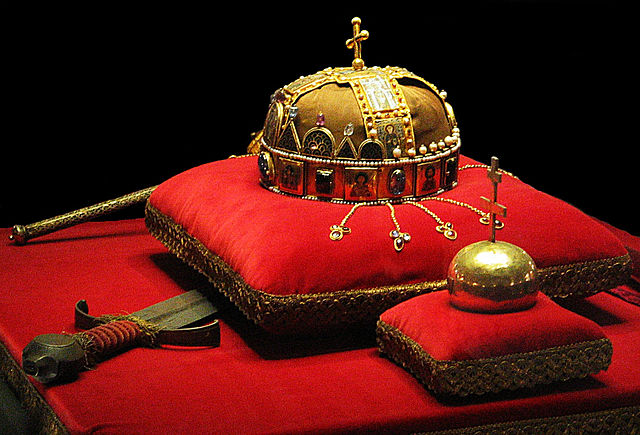
    The photo is used courtesy of Wikimedia Creative Commons. For more information on the photo, click here.

  • What does Christ mean? Studying Matthew 1:1

    Photo by Emily Hopper on Pexels.com

    The book of the genealogy of Jesus Christ, the son of David, the son of Abraham. 
    -Matthew 1:1 

     At first glance, it might not catch our attention that Matthew says Jesus Christ. After all, those are both very common words we see in the Bible. 

    Jesus is his name. We’ll actually see him given that name at the end of this chapter in connection to his birth. Verse 21, the angel tells Joseph to name the child Jesus. It’s a name that means savior, or the Lord’s salvation. 

    Jesus is his name. 

    Christ – a title

    And Christ is his…

    Officially, Christ is a title. 

    Jesus is the Christ. Christ comes from the Greek Christos which means anointed. 

    Now in our day, Jesus and Christ are often said together, almost like a first and last name. 

    But something that’s interesting is the names Jesus and Christ together are actually very rare in the gospels. The gospel writers use Jesus. They use Christ. 

    But Jesus Christ? 

    For his entire gospel, Matthew does it only twice. This first verse and again in 1:18. We see Jesus Christ twice in John. Once in Mark, and never in Luke. 

    But then it becomes common in Acts – written by Luke, and we see it throughout Paul’s letters. Part of this seems to be a simple evolution that happened in the early years of the church where Jesus Christ increasingly became used of as the full name for Jesus. 

    And I point this out because one of the potential consequences of this is to lose sight of the significance of Christ as a title for Jesus. 

    As I said, Christ comes from the Greek word Christos which means anointed. The Latin word for anointed is where we get our word “Messiah.” So Christ and Messiah are saying the same thing. 

    And anointing refers to when people would be anointed with oil in the Old Testament. We would see this treatment for kings and priests, and sometimes prophets. Sometimes objects were even anointed with oil. The anointing was meant to symbolize purity, consecration to God, and the Holy Spirit. 

    So when Jesus is called the Christ, at heart, that’s pointing to his status as the anointed one. 

    And we see times in the gospels where Christ is clearly being used with as a title. 

    Examples of Jesus called the Christ

    To briefly give a couple of texts which illustrate this idea. 

    In Luke 2, when Jesus is brought to the temple as a baby and a man name Simeon sees him. He’s an old man who’s waited years for this moment. 

    Luke 2:26: And it had been revealed to him by the Holy Spirit that he would not see death before he had seen the Lord’s Christ.

    Matthew 16:16, Peter confesses his belief that Jesus is the Christ, the Son of the living God. 

    And the idea of a Christ coming into the world was something that the Israelites were anticipating in the first century. 

    There had been others who had claimed to even be the Christ. 

    Before Jesus came into the world, there were various expectations of an anointed one and what he would be like. There were views of an anointed one, of a Christ who would come from the Davidic line to save the Jews. 

    Messianic expectations

    To give a present day illustration. 

    It’s kind of like different views of end times theology today. There are all sorts of differing views for the second coming of Christ and what that will be like, when that will happen. 

    Well in the first century, there were lots of different ideas for what the first coming of the Christ would look like. 

    Some thought that the Christ would be a great king, others thought he would be a great general who would lead Israel in a military victory over Rome. Some thought of the Christ as a great moral figure of keeping and interpreting the law of Moses. 

    There’s some truth to all of those, but perhaps not in the ways people expected. 

    Some thought that there would actually be two anointed ones, that is to say, two Christs. Texts from Qumran, which is where the Dead Sea Scrolls were found indicate a belief in a Davidc Christ who would be a king of the Jews and a Priestly Christ from the line of Aaron. 

    And given the long-awaited for, long hoped for, Christ who was to come, Matthew opens his gospel by saying that this man Jesus is the Christ. 

    He’s the Messiah, he’s the anointed one. 

    And we’ll see in his ministry that Jesus will embody all of the offices who were anointed in the Old Testament. Prophet, priest, and king. 

    And so it’s fitting that Matthew begins his gospel by pointing to Jesus as the Christ. He is the long-awaited Messiah for whom Israel had hoped. 

    Jesus is a prophet in that he speaks the word of God. 

    He’s also a priest. Priests in the Old Testament were the ones who performed the sacrifices and served as the intermediaries between man and God. They had extensive moral requirements and religious rituals to be able to do this. 

    But Jesus is the perfect high priest, he’s the greater priest because by the nature of his moral righteousness and divine nature, he is able to serve as the true intermediary between us and God. 

    Jesus is a prophet, a priest, and as we’ll see in another post, he’s also a king.

  • Sermon: the history of Salvation – Matthew 1:1

    The first verse of the Gospel of Matthew can be easy to skim right over. “The book of the genealogy of Jesus Christ, the son of David, the son of Abraham.” But this packed verse grounds Jesus in the Old Testament and begins the New Testament by pointing us to the history of God’s redemptive work.

    brown book page
    Photo by Wendy van Zyl on Pexels.com
  • Reformation Day – the day that changed the future of the Church

    504 years ago today, the history of the Church, of Europe, and of the western world were forever changed in the town of Wittenberg Germany. Martin Luther wrote his 95 theses, a list of grievances against corrupt and unbiblical practices within the Catholic Church. The impact of this event continues to ripple throughout the Christian world.

    Luther was not the first person to call for reform in the church.

    Other movements perhaps had followings but didn’t have political support. Luther had that. Which afforded him a certain level of personal safety, though his martyrdom seemed inevitable at times. Another key difference between Luther and influential reformers who preceded him was the invention of the printing press. This allowed a mass volume of pamphlets to be produced. Luther was also likely helped by the fact that other reformation movements spread elsewhere in Europe during this time. Amid church abuses, Europe was at a tipping point. And while Luther was not the first to call for reform, it was his ministry that most significantly tipped the Reformation movement over the edge.

    Less than 20 years later in England, Henry VIII broke away from the Catholic Church and started he Church of England in 1534. Reforms were also happening in Switzerland, most notably, the city of Geneva, eventually under the leadership of John Calvin. The Anabaptist movement sprung up who favorited believer’s baptism over infant baptism. These groups were not always in agreement, and some of them had severe conflicts with each other, but they were all in agreement that all was not well within the Church, and that there were changes which were necessary.

    Against Church traditions that had become entrenched in Europe, the reformers did not think that they were doing something new, but rather were taking the Church back to its Biblical foundations.

    By the sale of indulgences, it was believed that people could pay a price to have sins removed from themselves or for people for whom they had purchased the indulgences. But the issue with this was that the Catholic Church was overstepping its bounds on what saved a person. The Church was not the arbiter of what brings salvation, it is God’s grace alone received through faith alone in Christ alone. The gospel is not man’s gospel (Galatians 1:11).

    The Catholic Church believes and believed that the seven sacraments impart grace by nature of being sacraments. While the Mass was in Latin and could not be understood by all people, the justification for this was that the sacraments still inherently imparted grace to a person, regardless of if they could understand. But this undermined faith. That’s not to say that Catholics (then and now) never value faith. But it can be easy to focus on sacraments and works apart from faith.

    Interestingly the sacrament of confession was one which caused great angst for Martin Luther. Beginning as a devout Catholic and constantly aware of his own sinfulness, Luther lived in an ever-present awareness the this life did not live up to God’s standards of holiness. He had no assurance of salvation and lived in an exhausting cycle of constant confession. Luther would confess multiple times a day, sometimes for hours at a time, as he tried to remember every sin he committed, every hint of pridefulness, everything he should have done but hadn’t.

    One verse that Luther had despised in the scriptures was “the righteous shall live by faith” which is found multiple times in the Bible (Romans 1:17; Galatians 3:11; Habakuk 2:4).

    But Luther knew he wasn’t righteous.

    In his confession story, Luther said: 
    “For I hated that word “righteousness of God,” which, according to the use and custom of all the teachers…though I lived as a monk without reproach, I feel that I was a sinner before God with an extremely disturbed conscience. I could not believe that he was placated by my satisfaction. I did not love, yes, I hated the righteous God who punishes sinners, and secretly, if not blasphemously, certainly murmuring greatly, I was angry with God.” 

    But Luther would eventually be struck by the verse which had brought him such distress. The gospel was not about living up to the righteousness of God. It was about living for God in faith. And for Luther, that changed everything.

    “At last, by the mercy of God, meditating day and night, I gave heed to the context of the words, namely, “In it the righteousness of God is revealed, as it is written, ‘He who through faith is righteous shall live.’” There I began to understand that the righteousness of God is that by which the righteous lives by a gift of God, namely by faith. And this is the meaning: the righteousness of God is revealed by the gospel, namely, the passive righteousness with which merciful God justifies us by faith, as it is written, “He who through faith isrighteous shall live.” Here I felt that I was altogether born again and hadentered paradise itself through open gates.”

    Faith is a gift from God and that people are declared righteous by God as a result of faith in the gospel.

    We are justified by faith. This became a hallmark of Luther’s theology. And it became invaluable to Protestantism. We are justified by faith, not by faith and works. Not through faith and Church. Not by faith and any of the sacraments (though baptism and the Lord’s Supper are things which all Christians ought to do and are commanded to do).

    A critique of this view and an unfortunate consequence is that many take the “faith alone” view to mean that disingenuous faith is enough, just giving some vague assent to a gospel a person doesn’t really believe in. That wasn’t what Luther believed.

    At the beginning of his 95 Theses, the first theses talks about how all of life is repentance. Faith is an all-encompassing reality and driving force of life. Living by faith in the Gospel of Jesus Christ. That we cannot earn salvation of our own merit but that it is entirely by grace alone through faith alone in Christ alone.

    Happy Reformation Day!

    This post was originally published October 31, 2017 as “500 years of reformation.” 

    Thanks for reading! If you liked it, please share!

  • Feels like yesterday: 9/11 through the years

    There aren’t very many days in your life where you know at the time that life is never going to be the same. Everyone knew that on 9/11.

    I’ve thought a lot lately about this day and what the younger generation will understand about 9/11. I remember it like it was yesterday, and so it’s crazy for me to consider that kids in school weren’t even born when this event happened. This monumental day that was a paradigm shift in American history is just that to kids, history. They learn about that day from what people tell them and from the same documentaries I watch.

    If you weren’t alive that day, and watch documentaries about 9/11, I think it’s hard to appreciate the chaos of September 11th. There’s a sense of fatalism in the documentaries. They almost always begin by contrasting the beauty of that morning against the pandemonium that was soon to burst forth.In the weeks and months after the attacks, it impacted every aspect of our society: sports were a rallying ground for patriotism. Many popular songs were written about that day and playing on the radio. New laws were enacted. Entirely new federal agencies were created. There was an ever present thought of if and when another attack would happen. The whole country was on high alert, arguably for the next 2-3 years.

    As I watch documenaries, the quality of the videos seems a little more dated, the outfits people are wearing seem a little more 90s.When the North Tower was struck, no Americans knew that the South Tower was going to be hit 17 minutes later. No one had any idea that other planes were in the process of being highjacked and that other sites were also being targeted. 

    As the towers had smoke pouring out, the average person had no idea that they were going to collapse. From the time the North Tower was struck, three other planes crashed and both towers fell in 102 minutes.

    A couple years ago, I had the opportunity to visit the National September 11 Memorial and Museum. It’s a special place. One of the rooms (and one of the few parts of the museum where they ask people not to take photos) features photographs of all of the victims of the attacks. Just a huge room with thousands of photos of people. It’s crazy to think that each of those photos is a person who meant something to a lot of people. They were people’s spouses, people’s parents, siblings, children, grandchildren, best friends. 

    All of them taken away because of evil and hatred. For many of the victims, the memorial also serves as their final resting place. From the intense fire, and from the incredible weight of the towers collapsing, and given the high numbers of casualties, remains could be hard to positively identify in the aftermath. Roughly 40 percent of victims have never been identified. The museum has a morgue where the unidentified remains are housed.

    DSC_6884.jpg

    It’s still unfathomable to me. Thousands of people just living their lives, having no idea that they were about to become casualties on the front lines of a war in which they had no idea they were enlisted. The horror that people experienced above impact zones on the towers and on our airplanes. The first responders who risked their lives (and the many who gave their lives) on that day to help others.. For those people, I never forget.

    It’s still unbelievable to me. There’s nothing else like it.

    I think of the people in conference rooms and riding elevators who were dead without ever knowing there was even an attack. I think of the people who jumped from the towers. They were in such a horrible situation that jumping was the lesser of two evils. That still shocks me.

    Originallly published September 11, 2018