Josh Benner

Category: Commentary

  • The virtue signal of all virtue signals: liberals compare themselves to heroes of all past generations

    Last week, legal scholar and philosopher Robert George had a thought-provoking series of Tweets on how people today would have responded to historical events had they lived through them.  

    George says: 

    “I sometimes ask students what their position on slavery would have been had they been white and living in the South before abolition. Guess what? They all would have been abolitionists! They all would have bravely spoken out against slavery, and worked tirelessly against it. Of course, this is nonsense. Only the tiniest fraction of them, or of any of us, would have spoken up against slavery or lifted a finger to free the slaves. Most of them—and us—would have gone along. Many would have supported the slave system and happily benefited from it.”

    It’s easy to look back at history and assume we would have been righteous. There’s a meme I’ve seen on online that says “If you’ve ever wondered what you’d do during slavery, the Holocaust, or civil rights movement, you’re doing it right now.” 

    Here’s a key difference for the social justice warriors of today. The popular culture supports you. There’s no pressure, or risk, or persecution to protest or be a social media activist. The media supports you, Hollywood supports you, athletes support you, academia supports you, and big corporations support you.  

    People want to compare this to the Civil Rights movement. Many of the protests and sit-ins were unpopular in public opinion from that era. The movement came at a cost. Where’s the cost in sharing a meme?

    To quote again from George, he gives a good ethical test for how we would have truly responded in previous eras: 

    I respond by saying that I will credit their claims if they can show evidence of the following: that in leading their lives today they have stood up for the rights of unpopular victims of injustice whose very humanity is denied, and where they have done so knowing: 

    (1) that it would make them unpopular with their peers, (2) that they would be loathed and ridiculed by powerful, influential individuals and institutions in our society; (3) that they would be abandoned by many of their friends, (4) that they would be called nasty names, and (5) that they would risk being denied valuable professional opportunities as a result of their moral witness. In short, my challenge is to show where they have at risk to themselves and their futures stood up for a cause that is unpopular in elite sectors of our culture today.

    This is an important distinction. When we act like we would have been leading the charge in previous eras, when we want to say that we would have been virtuous in previous eras, we need to consider the context of that time and the cost of our beliefs. Because there’s little real cost in the current climate. For instance, when people want to talk about this as being similar to how they would have responded to the Holocaust consider that during the Holocaust and the Third Reich, almost 80,000 Germans were executed for being part of the resistance. People paid the ultimate price to stand up against Hitler. Where’s the cost in a hashtag?  

    People want to compare this to how they would have responded in the Civil War. 360,000 soldiers died for the Union. That was roughly one percent of the entire U.S. population at the time. Men paid the ultimate price to preserve our nation and end slavery. Where’s the cost in telling people a bunch of books they should read or in watching a documentary?  

    People want to compare this to the Civil Rights movement. Many of the protests and sit-ins were unpopular in public opinion from that era. The movement came at a cost. Where’s the cost in sharing a meme?  

    In the civil rights movement, they protested against actual systemic racism. Today social justice warriors fight against inequality which they say is the result of current systematic racism, and there are people who want to compare the two eras as being moral equivalents. 

    When people want to compare their efforts today to past social movements, it’s showing an ignorance of history and it’s also showing delusions of grandeur. Progressives like to believe that everyone is immoral except for them and that they would have been righteous at all times.  

    We judge people form the past because they don’t adhere to our current standards. And when I say current, I mean that literally. Current as in today because the standards of progressivism are an ever-moving target. There weren’t serious efforts to defund, or dismantle, or destroy the police a year ago. There weren’t major popular efforts to tear down monuments five years ago. There was not a major war on our history ten years ago. But progressives continue to shift their values and they fight a culture war where there is no grace or redemption given to past people who did not perfectly adhere to these standards of today while progressives allow themselves to continue changing what matters and what’s right.

    Thanks for reading! For more posts, don’t forget to like, share, and subscribe!

  • THE LEGACY OF AMERICA’S FIGHT FOR INDEPENDENCE

    July 4 2
    Independence Hall

    A couple years ago, my wife and I had the opportunity to visit Philadelphia. Neither of us had ever been there before. I loved it. Thought it was an amazing city. As someone who loves history, there are some incredible sights to see in Philadelphia. It’s surreal that you’ll be in the middle of a major city and you’ll also be walking between buildings that housed some of the most important events in our nation’s history, and that were here over 200 years ago.

    My favorite sight to see was Independence Hall, where the Declaration of Independence and the Constitution were debated and adopted. It was surreal to be in a room, and to think, “George Washington, Thomas Jefferson, Benjamin Franklin, and Alexander Hamilton have all been in this room.” It felt as though I was standing on hallowed ground.

    Much gets said about our founding fathers and our history. They were imperfect men. But imperfect as they were, they also did something great.

    Revisionist historians like to argue that the only reason the Founding Fathers declared independence from Britain was out of a desire to not pay taxes. This overlooks the fact that the founders committed an act of treason against the Crown when they declared independence. Had the United States lost the war, they would have all been hanged. And it wasn’t a guarantee that the United States would win. The Continental Army had the daunting task of synthesizing an army together from colonies (who had largely been independent of one another) into a cohesive army.

    img_0738
    Assembly Room at Independence Hall

    The last line of the Declaration of Independence says:

    For the support of this Declaration, with a firm reliance on the protection of divine Providence, we mutually pledge to each other our Lives, our Fortunes and our sacred Honor.

    Many of our Founding Fathers paid dearly in the cause of liberty and freedom.

    Robert Morris of Pennsylvania had amassed great wealth and gave it all away to support the army and navy. He also had loaned money to the Continental Congress in 1776. Morris was never paid back and died in poverty.

    Thomas Nelson of Virginia had his home overtaken and used as a headquarters by General Cornwallis. Nelson ordered his own home to be burned down. He spent $2 million of his own money (an incredible sum in the 18th century), to help fund the war. Nelson was also never paid back and died impoverished.

    Phillip Livingston of New York was one of the richest men in America but also lost all of his fortune and didn’t survive to see the end of the war, dying less than two years after he signed the Declaration of Independence.

    Richard Stockton of New Jersey was arrested by the British in 1776 and spent three years as a prisoner. When he was released, his health was failing, and he died two years later in financial ruin.

    When Charleston, South Carolina was overtaken by the British in 1780, three of the four signers of the Declaration of Independence were taken as prisoners of war. When they were released, their property had been pillaged.

    And there are many other examples. They cost of starting a nation. A nation that is imperfect, but which has also spread more freedom to the world than any other nation in history.

    I think our founding fathers, and the subsequent millions of soldiers, sailors, airmen, and Marines who have fought to defend that freedom. Most especially, I’m thankful for the freedom of religion that we have in this nation. That we are free to worship as we desire. So many tyrants throughout the world have attacked the freedom of religion at the alter of imposing religions or eliminating religions. But the beauty of America is that we can worship as we choose.

    Originally published July 4, 2018

    Thanks for reading! I’d love to hear what you think, and don’t forget to subscribe!

  • If Lincoln isn’t safe, history isn’t safe: Boston statue to be removed

    I’ve seen a meme on Facebook that says “If you ever wondered what you would have done during slavery, or the holocaust, or the Civil Rights Movement, you’re doing that right now.” 


    I’m going to make my own meme that says “if you’ve ever wanted what you did during the Russian Revolution, you’re doing that now.” There’s a small but vocal radical group who is undermining and working against our history, institutions, ideals, and culture. 

    The Boston Arts commission unanimously voted to remove a statue of Abraham Lincoln.  Boston’s Emancipation Memorial is a repeal of another Lincoln statue in Washington D.C. which was erected in 1876 and funded by freed slaves. The statue depicts Abraham Lincoln and a freed slave who is kneeling in front of Lincoln, his shackles have been broken. 

    Student groups at the University of Wisconsin have also set their sites on a Lincoln statue on their campus. The Lincoln Memorial was vandalized. 

    There’s been renewed public debate in recent weeks about statues of confederate generals. I can appreciate that debate. I could even go along with tearing down every statue or monument that we have a confederate soldier. 

    But Lincoln? If he’s not safe, no historical figure in American history is safe. 

    A statue of Ulysses S. Grant, who was the general of the Union Army, was defaced in Philadelphia. Statues of outspoken abolitionists have been defaced in Philadelphia and Wisconsin. 

    This has quickly devolved to a point where it’s not about removing confederate statues. It’s an attack on history. It’s an attack on great people who made a positive impact on our history. They too must be erased. Because the fanatical progressive cult is zealous for their beliefs and their core doctrine is that America is – and always been – a racist place. There are no redeeming qualities. The only hope for goodness is for America to be remade in accordance with their idea of utopia. 

    And so great people like Lincoln don’t fit their narrative and they too must be torn down. 

    Arguments I’ve seen for taking down the monument are that it offends some people. I thought great art was sometimes offensive? I’ve seen arguments that it portrays Lincoln as a “white savior.” And its original design in Washington was funded by freed slaves. Who are we to say that their idea of a memorial is unacceptable and needs to be erased? 
    You have people who are not radicals but who go along with the purge because it’s easier to go with the current,

    When is censorship good? When is tearing down history beneficial to a society? 
    Who’s life is this making better? 

  • The Gospel in Les Miserables

    Caught.

    Jean Valjean had stolen silver from the Bishop and the local authorities had caught him red handed. On his own merits, there was nothing Valjean could do to rectify the situation. He didn’t have the money to pay for it. He was guilty. But then something amazing happened. The Bishop tells the officers that the silver was a gift. He reminds Valjean that the ex-convict had even forgotten to take two silver candlesticks with him. The sacrifice for Valjean was not made by himself but by the Bishop .

    He let him go.

    Once the officers leave, it would be completely reasonable for the Bishop to say, “Ok, I got you off the hook. Now give me my stuff back.” But he doesn’t. He gives it to Valjean but with the expectation that he use those stolen items to restart his life as an honest man.

    This is a life changing event for Valjean. And it’s a great metaphor for grace. Merely canceling the debt of the condemned man would have been mercy. But the bishop rewards him. That is grace.

    In the book, over 70 pages are spent developing the Bishop’s character and describing his devotion and piety. In film and musical adaptations, he is always portrayed as a minor character but he profoundly impacts the life of the book’s protagonist. For Valjean, there is his life before encountgering the and everything changes after he experiences true love and grace. In the musical, with limited time, I feel that they do the best job they can to show the Bishop’s grace but it is tough to truly capture the full weight of the transformation that the encounter has on Valjean.

    There are so many great themes in Les Miserables which have led to the popularity of this story over the past 150 years. And the Bishop’s grace to Valjean is not the only example of sacrificial love we see in this story. It’s seen in how Fantine desperately tries to do everything she can to support Cosette. It’s seen in how Eponine helps Marius find Cosette despite the fact that Eponine is in love with Marius and she’s sacrificing her own joy (it’s not exactly the same in the book).

    But the most moving example of sacrifice is seen in the Bishop. I feel that part of the appeal to this story is the way in which it depicts the gospel. Becasuse we are all condemned with a debt that we cannot possibly pay. While we deserve exile and punishment, a priest has personally sacrificed and taken are debt for us. And for people who know this truth, just as it is with the Bishop and Valjean, this grace is meant to transform our lives. It’s not the end in itself. There is a reason behind it.

    BUT REMEMBER THIS, MY BROTHER
    SEE IN THIS SOME HIGHER PLAN
    YOU MUST USE THIS PRECIOUS SILVER
    TO BECOME AN HONEST MAN
    BY THE WITNESS OF THE MARTYRS
    BY THE PASSION AND THE BLOOD
    GOD HAS RAISED YOU OUT OF DARKNESS
    I HAVE BOUGHT YOUR SOUL FOR GOD!

    Originally published December 24, 2012

    Thanks for reading! Don’t forget to like and subscribe!

  • Supreme Court strikes down abortion restrictions

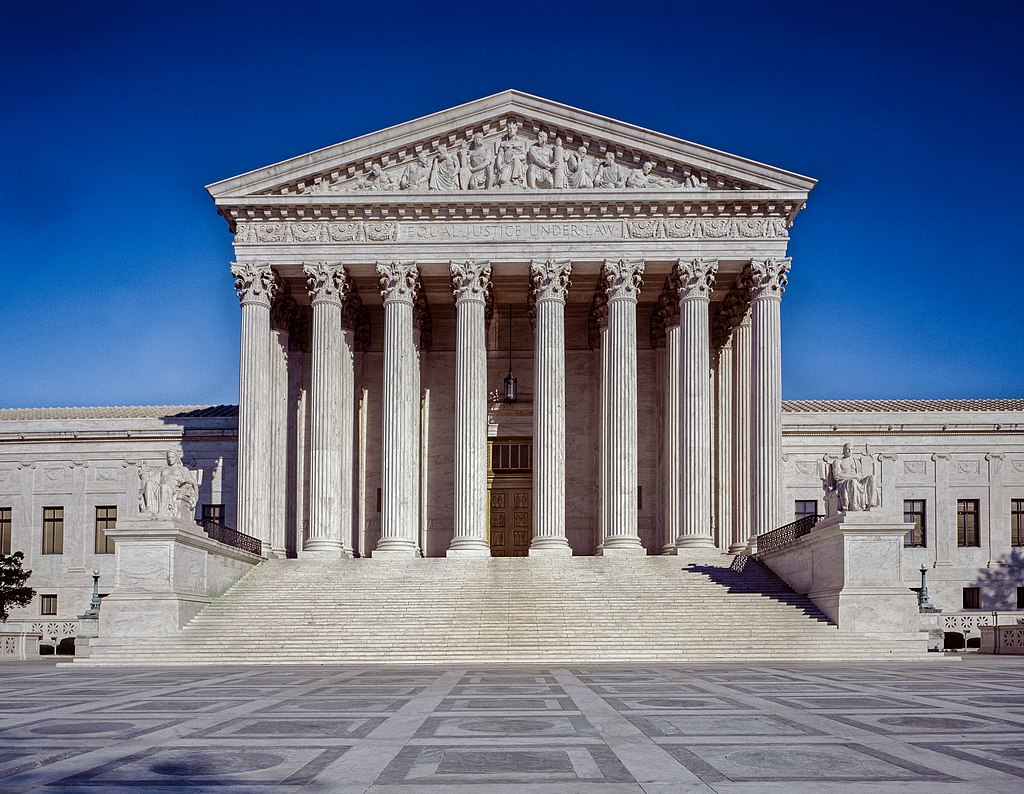
    United States Supreme Court Building

    In a 5-4 decision, the Supreme Court has struck down June Medical Services v Russo, a Louisiana law which required doctors who provide abortions to have admitting privileges at a nearby hospital. Chief Justice John Roberts sided with the court’s four liberal justices. Roberts said he disagreed with the ruling but voted with the majority because of a legal doctrine of stare decisis which calls for following establish precedents.

    Opponents of the law argue that admitting privileges are unnecessary and that it adds an extra layer of difficulty for abortion providers and reduces wren’s ability to pursue abortions.

    In 2016, the Supreme Court overturned a nearly identical Texas law. For that decision, Roberts had ruled against the majority but overturned his prior ruling to go along with precedent. While the laws of the two states were similar, it has been argued that the situation of the states was different as Louisiana hospitals do not have the same admittance standards as Texas.

    Roberts wrote:
    “The legal doctrine of stare decisis requires us, absent special circumstances, to treat like cases alike. The Louisiana law imposes a burden on access to abortion just as severe as that imposed by the Texas law, for the same reasons. Therefore Louisiana’s law cannot stand under our precedents.”

    I’m not a lawyer or a jurist. I understand that precedents matter. But it’s a bad precedent. States don’t have a right to decide minimum healthcare standards for doctors who perform abortions?

    Daniel Horowitz of Conservative Review points out: states regulate the standards for licensed professionals all the time – everything from lemonade stands to mowing grass – even when “an objective assessment might suggest that those same tasks could be performed by others.” But when it comes to the sacred ideals of abortion, the state is somehow powerless to regulate.

    He says that a precedent can’t be changed without special circumstances.

    We can’t overturn a bad decision from four years ago for a ruling which favors life, and safety, and state’s rights? Precedent matters but it’s not the end all be all.

    Thanks for reading! Don’t forget to share and subscribe.