Josh Benner

Category: Culture

  • Remembering Ravi Zacharias: 1946-2020

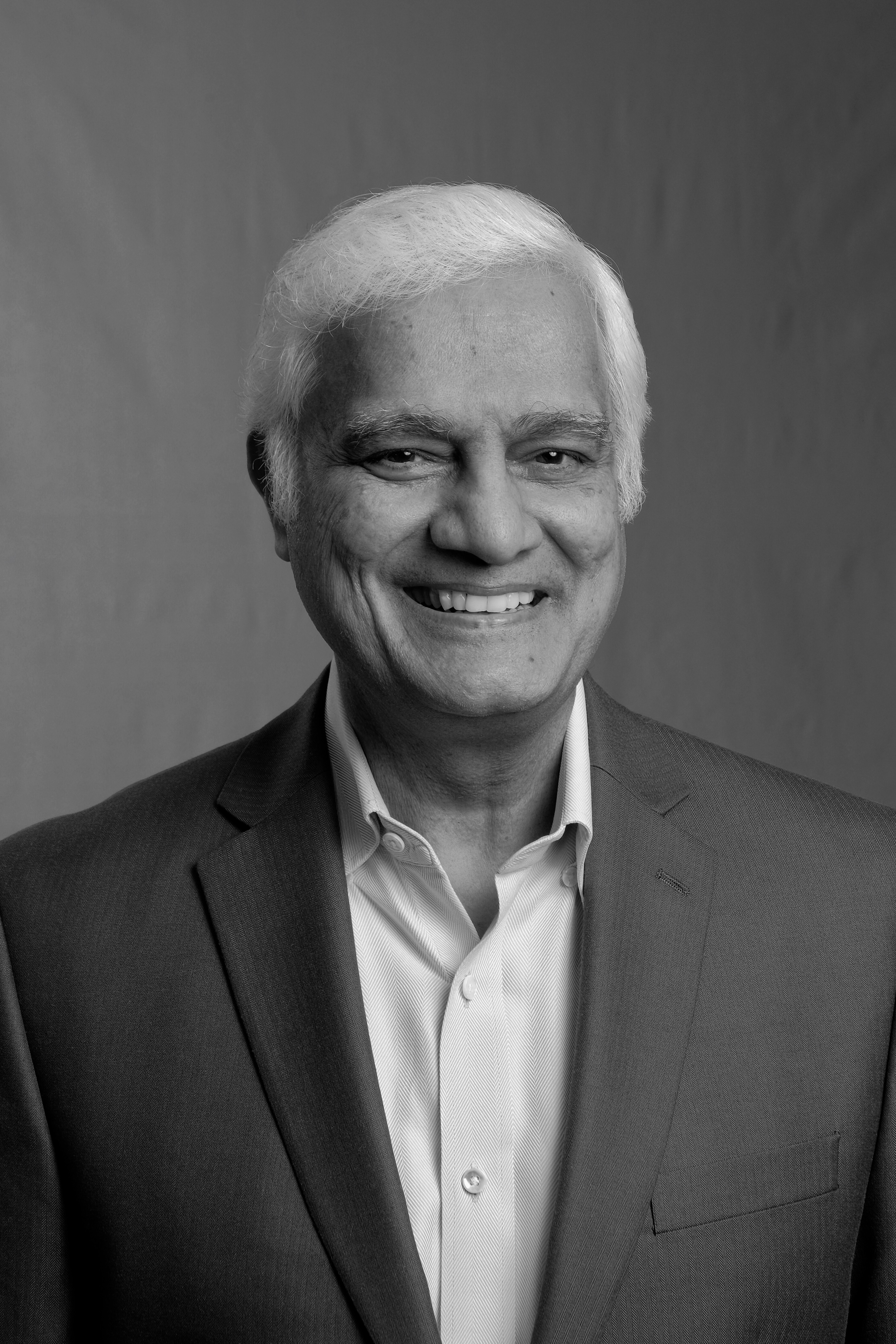
    2015 Ravi Zacharias_PortraitThe renowned Christian apologist Ravi Zacharias died today at the age of 74, after being diagnosed with a rare form of spinal cancer in March.

    To me, Ravi was a giant within contemporary Christianity. Many looked at Ravi as this generation’s C.S. Lewis. In one memorial, I heard Ravi described as a person who could help thinkers believe and believers think. I first stumbled upon his radio program as an 18 year old kid and I spent many, many hours listening to him over the years. When I chose a seminary to attend, the fact that Ravi had gone to Trinity Evangelical Divinity School was one of the things which influenced me.

    Ravi presented the Christian faith and responded to the questions of skeptics all over the globe. He presented on university campuses in America; he regularly had events in his native India; he preached in Moscow shortly after the fall of the Berlin Wall. He lectured in the Middle East. He was articulate and thoughtful. He was a cultural commentator who thought like a philosopher. But there was always a gentleness with how he approached complex and divisive subjects. He respected people with whom he disagreed and invited people in to see the Jesus whom Ravi loved.

    “Truth cannot be sacrificed at the altar of pretended tolerance. Real tolerance is deference to all ideas, not indifference to the truth.”

    -Ravi Zacharias

    Ravi presented Jesus as the only satisfactory and coherent explanation for the deepest longings of the human soul: our need for an explanation for our origin, destiny, meaning, and morality.

    Born in India, Ravi spoke many times about his struggles as a child. He grew up under intense pressure to succeed. As a child, he talks of his father’s explosive temper. At 17, he tried to take his own life by swallowing poison. While he was in the hospital, a Bible was brought to him and his mother was told to read to him from John 14.

    I had the opportunity to meet Ravi once, at an event when he came back to speak at Trinity. It was one of the highlights of my time in seminary. Former football player Tim Tebow recently talked about Ravi Zacharias on a viral Facebook post. He called Ravi one of his heroes. I agree with the sentiment. The heroes of our faith are people who are still fallen and fallible but who influence us, who touch our hearts, who point us to God, who influence how we think.

    Rest in peace Ravi. Well done, good and faithful servant.

    In the 1950s kids lost their innocence.
    They were liberated from their parents by well-paying jobs, cars, and lyrics in music that gave rise to a new term —the generation gap.

    In the 1960s, kids lost their authority.
    It was a decade of protest—church, state, and parents were all called into question and found wanting. Their authority was rejected, yet nothing ever replaced it.

    In the 1970s, kids lost their love. It was the decade of me-ism dominated by hyphenated words beginning with self.
    Self-image, Self-esteem, Self-assertion….It made for a lonely world. Kids learned everything there was to know about sex and forgot everything there was to know about love, and no one had the nerve to tell them there was a difference.

    In the 1980s, kids lost their hope.
    Stripped of innocence, authority and love and plagued by the horror of a nuclear nightmare, large and growing numbers of this generation stopped believing in the future.

    In the 1990s kids lost their power to reason. Less and less were they taught the very basics of language, truth, and logic and they grew up with the irrationality of a postmodern world.

    In the new millennium, kids woke up and found out that somewhere in the midst of all this change, they had lost their imagination. Violence and perversion entertained them till none could talk of killing innocents since none was innocent anymore.

    -Ravi Zacharias

  • Is online church an adequate replacement for meeting in person? Spoiler alert: It’s not

    man wearing blue dress
    Photo by Luis Quintero on Pexels.com

    Relevant wrote an article last week where they interviewed Judah and Chelsea Smith about online church. In 2018, the Smith’s launched Churchome, as an online form of church which Relevant describes as “a new kind of virtual experience that would offer church to a new generation more comfortable with digital relationships.”

    From the article:

    The announcement was met with no small degree of skepticism at the time but that was then. Now Churchome’s style of Sunday service has become the norm for almost every church in the country.

    -Relevant magazine

    This article misses the obvious. Online services have become the norm for almost every church in the country…for now.

    It’s become the norm, grudgingly. It’s become the norm because of the outbreak. It’s become the norm because many states aren’t allowing churches to meet. It hasn’t become the norm because hundreds of thousands of churches simultaneously decided that online church is better.

    It isn’t.

    It hasn’t become the norm because churches are suddenly jumping on the bandwagon and think it’s better.

    The church meeting together and having fellowship together is better. People using the gifts God has given them to build up and serve their church is better (1 Cor. 12). A pastor who has a relationship with his people is better. A church where there is accountability from people who know each other and know their struggles, their past, their victories, is better. Partaking of communion together as a church is better. Elders tending to the spiritual welfare of people they actually know is better. Having a church that has a presence in a community is better.

    In every way, meeting together for church is superior to meeting online for church. Yes, it’s a blessing that over these last few weeks, churches have had the capability to broadcast online. But there’s no substitute for the real thing.

    Just because more things are done online in our culture, and we’re more technologically connected does not mean that this is the route churches should go.

    For instance, with fellowship, there is no substitute for actual human interaction. Sure, I’ve made friends online. I met my wife on eHarmony! But when you’re celebrating Christmas, if a family member is away and all you have is facetime, it’s not the same as having them with you. If a friend or relative has moved far away, yes, it’s nice you can Skype with them, but it’s still not the same as seeing them.

    Our society relies more on online interactions and our society is also increasingly miserable. Depression, loneliness, anxiety pervade the culture. The idea of online church panders to the culture while giving the culture while giving them something which is an unbiblical facade for church.

    From the Relevant article, Judah Smith says: “we believe that actually people can connect on a level, that frankly could very well be deeper and richer and fuller.” I don’t see much evidence to back that claim up and there’s lot of research that says just the opposite.

    I like social media and the internet as much as the next guy. All I’m saying is that it’s not an effective replacement for authentic relationships, and it’s certainly not a replacement for church.

    Humanity was created for relationship. We’re created for fellowship with God and with other people. Just because more business, commerce, and entertainment has moved to the internet, that does not mean the church should follow suit.

    Christianity is counter-cultural.

    Thanks for reading! I’d love to hear what you think, and don’t forget to subscribe! 

  • Advice to anyone considering seminary

    13240631_10103459013196830_6669337147853210272_n

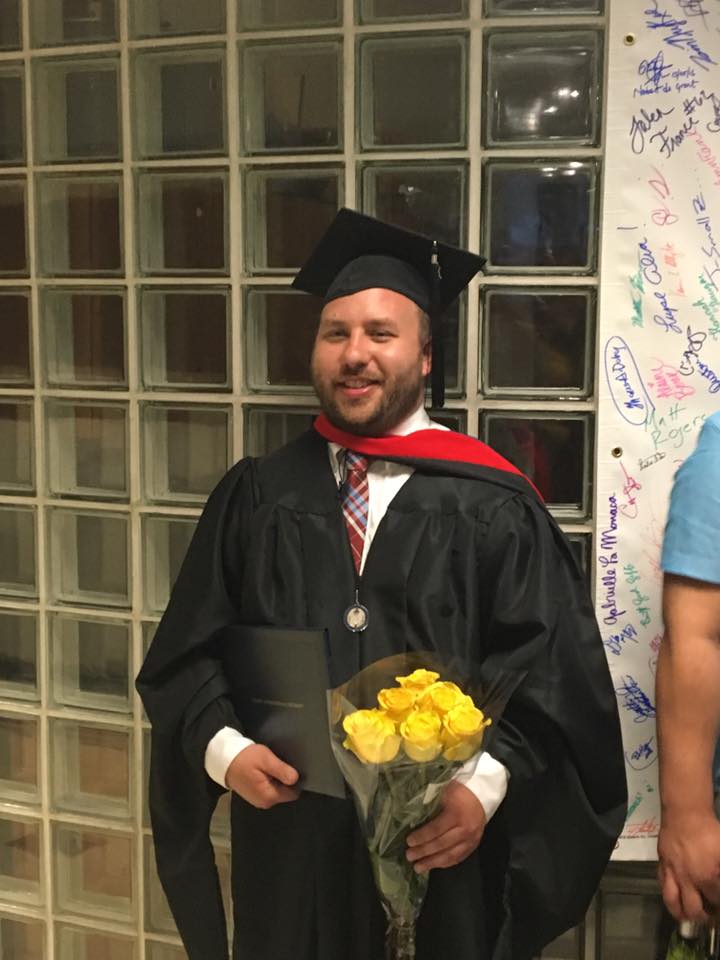
    Four years ago today, I graduated seminary with my Master of Divinity degree. I picked a highly academic seminary where I was blessed to study under world class professors. But as I reflect this year, I’m struck by the thought of how an intensive masters degree from seminary still only scratches the surface of studying the Bible.

    I feel like the more time that goes by since graduating from seminary, and the more I continue to study the Bible and theology, the more I realize how much I still have to learn. Sure, I have a pretty well rounded knowledge of the subject. But there are plenty of secondary and tertiary theological issues that I haven’t studied as thoroughly as I would like.

    Theology and Biblical studies are a vast ocean. Theologians and Biblical scholars write volumes on these subjects. Martyn Lloyd-Jones who was a British preacher in the last century wrote a 14 volume commentary on the Book of Romans. Just that one book of the Bible. It’s over 5,000 pages long. Francis Turretin’s systematic theology is over 2,300 pages. And I could go on and on. The depths of the Bible can never be fully plumbed.

    I’ve thought a lot about seminary today. I think it’s valuable for anyone who is serious about pastoral ministry (as well as other areas of ministry). But if I were to speak to someone who’s considering seminary, I would want to encourage them that an MDiv can help give a good theological foundation but that the training and knowledge must be cultivated over a lifetime. I think it’s important to not expect more than what the MDiv can give you. You’ll get some answers, but it’s not the place to get all the answers. You’ll learn skills that will help you in ministry but the MDiv alone won’t make you a good minister. You’ll learn more about the Bible but seminary alone won’t transform you and make you someone who lives Biblically.

    Don’t get me wrong. I think seminaries care about their students growing in all of these areas and helping to equip them as much as they possibly can. But it can’t do everything. What it does best is trains people in the languages, theology, and Biblical studies.

    Four years after graduation, I feel like I’m much more aware of all of the things I don’t know about theology today than I was when I started. I feel like I’ve learned almost as much in the last four years as I did in my four years of seminary. But it was seminary that helped give the foundation and the Biblical and theological lenses through which I’ve continued to learn.
    Thanks for reading! I’d love to hear what you think, and don’t forget to subscribe!

  • When we want the savior but not the Lord: the great disciple mistake

    casey-horner-4rDCa5hBlCs-unsplash.jpg

    Our society likes to emphasize God’s love and forget that he is also just and that he has wrath towards sin. We like the easy message. We like the easy gospel of “yeah you’re not perfect but neither is anyone else and God is a God of love and he forgives you.” 

    We make faith about a vague ascent with Christ, a loose agreement, hearing “you can be forgiven,” and then saying “sure, I’ll have that,” like it’s someone asking if you want to share an order of mozzarella sticks at a restaurant. 

    But the danger of an easy gospel is losing sight of Jesus and his call to discipleship, his call to live life in the light of what he has done.  (more…)

  • Couldn’t God just forgive us? Why was the cross necessary?

    photo-1414018895695-96fe3f0d0765.jpeg

    A person might look at the crucifixion, look at what the Lord did on the cross, and wonder “Why was that the only way? Why was that necessary? Couldn’t God simply forgive us?”
    No.
    This is an idea I’ve heard from Tim Keller before, and it’s an important idea on having a theology of forgiveness.

    (more…)