Josh Benner

Category: Culture

  • The Church: being part of something bigger than yourself

    photo-1519491050282-cf00c82424b4.jpeg
    An astounding 16 million soldiers, sailors and Marines served America in the Second World War.
    And while most of our focus on World War II is on the military and combat, within the United States, there was an effort to support the war unlike anything our nation had seen or has seen since.
    With millions going overseas, Americans at home took up new jobs.
    Coming out of the Great Depression, unemployment dried up, reaching an all time low in 1944.
    The war effort affected virtually every facet of American life. Companies shifted their manufacturing efforts to supporting the war and supplying the military. Maytag went from making washing machines to making parts for airplanes. Firestone Tires made artillery shells and aluminum containers for food transport.
    Products like sugar, butter, bacon, and cheese were rationed. As were penicillin and other medicines, along with rubber and certain types of metals. Materials for clothing such as silk and nylon were needed for uniforms. Everything went to supporting a cause that was so much bigger than any one person.
    And everyone’s contributions mattered.
    To help pay for the war, the government sold war bonds. Over 85 million Americans purchased war bonds to help fund the effort. To put that in perspective, that was more than half of the entire United States population at the time.
    An incredible effort.
    The church has a mission 
    As Christians, we too are called to be part of a cause that is far bigger than any of us, but where everyone has a role, where everyone has a job to do, where everyone has a way to serve.
    The mission of God on earth.
    And that mission is to spread the gospel. To make disciples. To build up the church. To love one another.
    It’s not a passive request in scripture, nor is it a good suggestion, but something which God commands from all of his people.
    If you’re a person who has placed faith in Jesus, this applies to you.
    As the Apostle Paul said in Galatians 2:20:
    I have been crucified with Christ. It is no longer I who live, but Christ who lives in me. And the life I now live in the flesh I live by faith in the Son of God, who loved me and gave himself for me.
    You belong to Jesus when you place your faith in him.
    And part of the purpose of the Christian life is one that is lived in service of God for the mission of God in the world.
    You were made to have an impact 
    Do you ever feel like you were made for something great?
    Do you ever feel like you were meant to have an impact?
     You are made for more, you are made to do great things, you are born to have an impact in the world.
    An impact for Jesus.
    We can try to build our own kingdoms, we can try to collect our own toys, we can try to control and manipulate the circumstances in our lives to make us feel secure.
    We can do those things.
    But we were made to serve the mission of Christ in the world.
    And that includes sharing the gospel, making disciples, making Jesus known, growing together as His Church, and serving God.
    As a church, every person in the church is called to use the ways God has gifted and equipped them for the purpose of serving God and building up the church.
    That’s why we’re here.
    Writing to the Church in Corinth, the Apostle Paul said:
    Now there are varieties of gifts, but the same Spirit; and there are varieties of service, but the same Lord; and there are varieties of activities, but it is the same God who empowers them all in everyone. To each is given the manifestation of the Spirit for the common good.
    Maybe you’ve never really thought about that.
    But all Christians are given Spiritual gifts.
    Doesn’t matter how well you know the Bible.
    It doesn’t matter how long you’ve been a Christian. There’s no probationary period before you can God.
    It doesn’t matter how smart you are, or how outgoing you are, or how many people you know.
    It doesn’t matter how talented you think you are.
    If you’re a Christian, God has given you gifts to serve him and build up his church.
    Don’t fall into the trap of thinking you have nothing to offer.
    I think that’s the reason why some people don’t serve.
    It’s nonsense.
    Because everyone here has much to offer. Much to contribute.
    It can be easy to see a really talented pastor, a really gifted musician, someone who’s really outgoing, and to feel insecure about what you have to offer.
    But the unsung heroes are the backbone of congregations, people faithfully and humbly serving. Books get written about generals, but the real work is done by soldiers.
    Josh Benner is the associate pastor at Cornerstone Evangelical Free Church in Fergus Falls, Minnesota and has a Master of Divinity from Trinity Evangelical Divinity School. He enjoys writing about faith and culture. He lives with his wife Kari in Minnesota.
  • Politics in the religious arena: VP at Baptist meeting

    800px-Mike_Pence_official_portrait.jpg

    Vice President Mike Pence spoke at the annual meeting of the Southern Baptist Convention this morning.

    The speech hit on some political themes. Newly elected SBC president J.D. Grear later took to Twitter and said: “I know that sent a terribly mixed signal. We are grateful for civic leaders who want to speak to our Convention—but make no mistake about it, our identity is in the gospel and our unity is in the Great Commission. Commissioned missionaries, not political platforms, are what we do.”

    Some attempted to raise motions to block the speech. A Virginia pastor suggested cancelling the speech in favor of a prayer time. The SBC is the largest Protestant denomination in America. Over the last generation, Southern Baptists have overwhelmingly voted republican.

    But it’s also a time of some turmoil within the denomination. One of the most influential Baptist leaders of the past generation, Paige Patterson, was recently removed from his role as the president of Southwestern Baptist Theological Seminary. This was related to improperly handling rape allegations from a student when Patterson was president at Southeastern Baptist Theological Seminary. Patterson had also made various other statements about women which were extremely controversial, such as insensitive comments about a woman who remained in an abusive marriage, after counseling the woman to stay in the marriage, Patterson saw her with two black eyes:

    “She said: ‘I hope you’re happy.’ And I said ‘Yes … I’m very happy,’ ” because her husband had heard her prayers and come to church for the first time the next day.

    These comments were met by an open letter from Baptist women, but Patterson did not issue any sort of apology until a similar letter by men within the SBC was sent. The treatment of women, how things like abuse and sexual assault are talked about and handled within the SBC have also been hot button issues at the meeting.

    There’s a lot going on within the SBC.

    It seems that another significant question among Baptists is the role of politics within the church.

    Christian historian Thomas Kidd traces politicians addressing the meeting. There was a resurgence of American Protestants to the GOP in 1979. Richard Nixon addressed the Southern Baptists in 1956 when he was vice president. In 1976, Gerald Ford was the first sitting president to speak at the meeting. Jimmy Carter in 1978. Ronald Reagan while he was running for president in 1980. George H.W. Bush in 1991. His vice president Dan Quayle in 1992. George W. Bush in 2002.

    There’s a history to it.

    So it isn’t shocking that vice president Pence would address the meeting this year. And the fact that his speech delved into both faith and politics should not be a surprise. That’s always going to be the case with any politician.

    I guess a question that I have would be, “what’s the purpose of a politician addressing the meeting?” It’s always going to be something that gets used for political purposes by the speaker. There are enough things that churches divide over. It seems unnecessary to add political viewpoints into that mix, especially in the current polarized climate. There are a lot of important gospel issues that the SBC is addressing. Having a political at this time seems like an unnecessary spectacle with respect to more pressing issues.

    The fact that there was some opposition to Pence speaking, some look at as a political shift among some in the SBC. Perhaps, to a small extent. However, with he size of the denomination, given what we’ve seen in other American Protestant denominations, I think it’s more likely that some (relatively small number with respect to the size of the denomination) churches would start walking away from the SBC before there be a major political divide within the denomination.

    I love the SBC, and I do hope and pray for what’s best for the denomination.

    Josh Benner is the associate pastor at Cornerstone Evangelical Free Church in Fergus Falls, Minnesota and has a Master of Divinity from Trinity Evangelical Divinity School. He enjoys writing about faith and culture. He lives with his wife Kari in Minnesota.


  • Law and grace in Les Miserables

    LesMisLogoOriginally published October 8, 2015

    I am a huge fan of the musical Les Miserables. I saw it on Broadway when I was 11, and I thought it was just about the most amazing thing ever.  (more…)

  • The meaning of life and the suicide rate in America

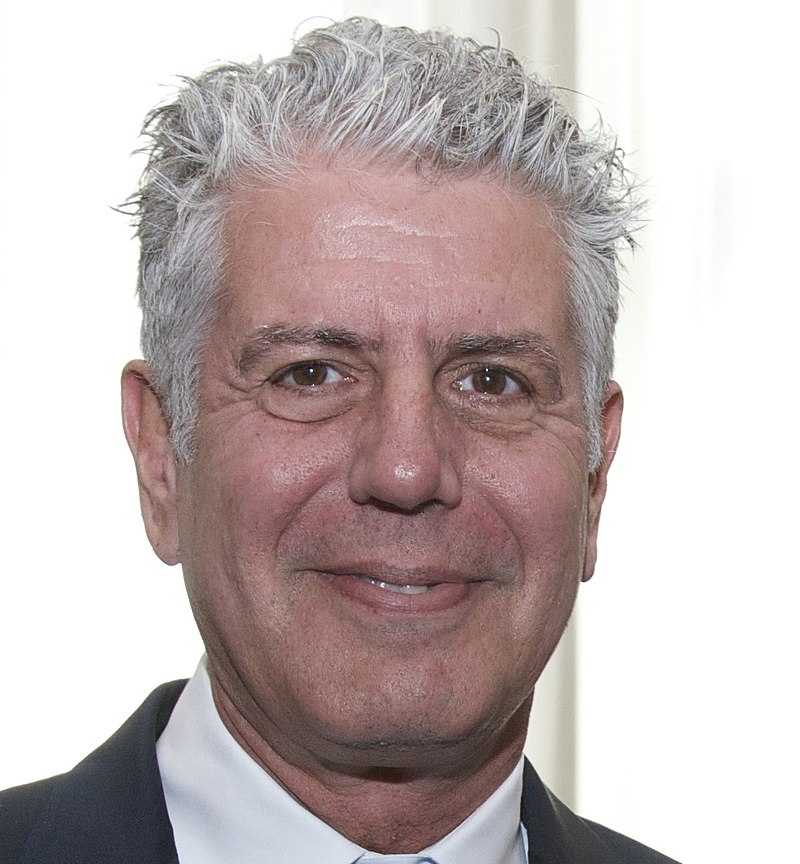
    800px-Anthony_Bourdain_2014_(cropped).jpg
    Photo courtesy of Wikimedia Commons

    This week, two celebrities committed suicide. Designer Kate Speed took her life on Tuesday. This morning, we learned that celebrity chef Anthony Bourdain took his life in France.

    It’s a tragic thing when a person is in despair to the point where that is seen as the only resort. If you happen to be reading this and you’re currently dealing with suicidal thoughts, call the National Suicide Prevention Lifeline at 1800-273-8255 or visit their website at suicidepreventionlifeline.org.

    Suicide has many complicated factors. Mental illness and depression often times play a role. There has been a lot of discussion about mental illness in this country in recent years. As well there should be.

    Suicide is a sensitive issue. There were over 44,000 suicides in America in 2016. Tens of thousands more each year, impacting hundreds of thousands of families, spouses, children, and friends.

    Whenever there’s a high profile suicide, I read articles. And I see the comments that people make. People will talk about mental illness and depression (again, both very real and significant issues). But I feel that some people can be overly fatalistic about suicide. Like there was no other way that things could have turned out. Like there was nothing that could have been done. Like a person was so imprisoned to mental illness that they were beyond helping.

    I reject that idea.

    There is always hope. There are always people who care. There is always a reason to live.

    It’s a mental illness and it can impact judgment.  But the complex factors of suicide are deeper than only mental illness and depression. It’s also cultural. Suicide rates are not equal from one society to another. Rates fluctuate over time.

    There’s often a copycat element to these tragedies. Where one person commits suicide and another also makes that choice. Suicide doesn’t equally impact every group within society (another reason why I reject that it’s only about mental illness and a person has no mental faculties in getting help). In America, caucasians commit suicide at more than twice the rate of African Americans (despite having lower rates of depression).

    It’s a complicated issue.

    When people look at it purely as a result of mental illness, I think that undermines the morality of the issue. It is a moral issue because it impacts families and society. It’s immoral. And I feel like many in our society are afraid to acknowledge that.

    Rates have unfortunately increased in the United States. Rates are also going up in many other industrialized countries. It is a concern that as societies get more secular, they lose objective meaning in life. Some existentialists look at meaning as something someone can decide for themselves. But other philosophers took this to the opposite end of the spectrum and looked at life as futile.

    The only true source of meaning in life is found in God. He has created the world and made humanity and he’s made us with the purpose of knowing him and worshipping him.

    No matter what you’re going through, what you’re struggling with, God has a purpose for you and wants you to trust in him and to know him. Your life has meaning and Jesus showed that at the cross when he died to save sinful people. He died so that we could live.

    Viktor Frankl, who survived the Holocaust wrote: “Those who have a ‘why’ to live, can bear with almost any ‘how’.”

    Josh Benner is the associate pastor at Cornerstone Evangelical Free Church in Fergus Falls, Minnesota and has a Master of Divinity from Trinity Evangelical Divinity School. He enjoys writing about faith and culture. He lives with his wife Kari in Minnesota.
  • Supreme Court rules in favor of Christian baker

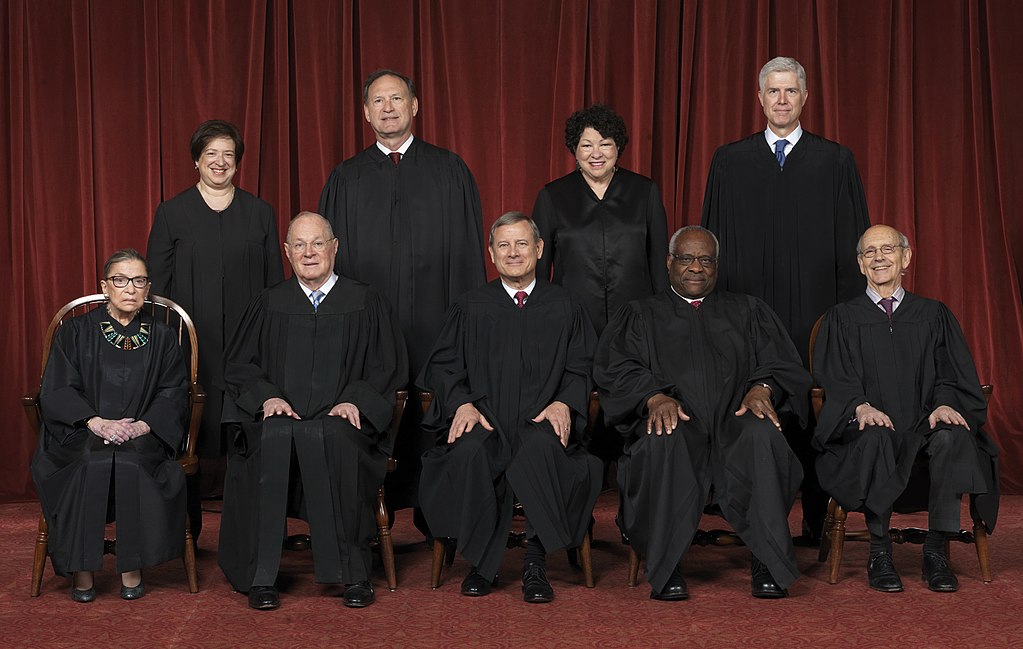
    1024px-Supreme_Court_of_the_United_States_-_Roberts_Court_2017.jpg
    Today the Supreme Court ruled in favor of Jack Phillips, a Colorado baker who refused to bake a cake for a same-sex couple who was getting married.

    This decision only scratches the surface of the issue. It does not give every Christian who works in a creative field (baking, photography, etc) permission to refuse services for a same-sex wedding.

    I’m not a lawyer or a constitutional scholar but it appears to be on an inevitable crash course for another Supreme court decision. Is it a matter of individual liberty? Whereby a person reserves the right to refuse service? Or is it discrimination and the violation of law?

    People on both sides of this issue are very polarized. If private business owners do have the legal right to refuse service, some draw analogies to people refusing services to African Americans before passage of Civil Rights legislation in the 1960s.

    Persecution takes a variety of forms. There are absolutely people who seek to persecute Christians for their beliefs under the tyranny of law. With Jack Phillips, a couple attempted to force this man to comply. There have been numerous legal victories for the gay rights movement over the last few years. But some seek to crush any dissenters. There have been other businesses who have faced threats, backlash, and thousands of dollars in legal fees for standing by convictions.

    Today’s decision does not further enshrine religious liberty. It has more to do with the Colorado Civil Rights Commission and their hostility towards Phillips than if Christians have a general liberty to refuse services in situations which conflict with their faith.

    Josh Benner is the associate pastor at Cornerstone Evangelical Free Church in Fergus Falls, Minnesota and has a Master of Divinity from Trinity Evangelical Divinity School. He enjoys writing about faith and culture. He lives with his wife Kari in Minnesota.