Josh Benner

Category: Faith

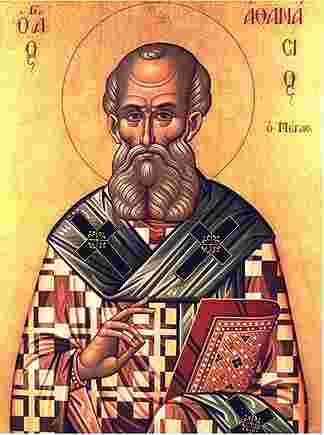
  • 4th century theology of Athanasius still fresh today.

    athanasius

    Originally published March 18, 2016

    Why did Jesus have to die? For years, this puzzled me. I could get on board with the idea that I fell short of God’s perfect standard. But why did Jesus need to die? Couldn’t God have just forgiven me? Like some sort of Spiritual write off?

    One of the best explanations I have ever read for this comes from a fourth century bishop named Athanasius in a work he produced entitled “On the Incarnation.”

    From the beginning, Athanasius provides a treatise on Jesus’ presence in creation, his incarnation as a man, and his necessary death for the reconciliation of humanity.

    Athanasius establishes that Jesus, who created all things, is the same being who renewed the world. In arguing against the Epicureans, the Gnostics, and Plato, Athanasius uses some of his counterarguments in an attempt to further solidify his Christology. For instance, Plato’s idea of God fashioning things from pre-existent matter is used by Athanasius to argue that such a view demotes God from Creator to mere craftsman and that the matter itself was necessarily created by God. From that creation, man was created in a sinless state but had the volition to sin. When mankind fell, it forever tarnished the relationship between man and God. And the sin of man spread throughout all of creation. People began to turn their attention to other things which God had created instead of on the Creator Himself.

    In the second chapter, Athanasius gets into a salvific dilemma about how God can reconcile His glory with man’s sin. “It was impossible; therefore, that God should leave man to be carried off by corruption, because it would be unfitting and unworthy of Himself.” It is not because of any intrinsic value of man, but God’s own nature called for a means of restoration. It will later be argued that to not provide this means would have led to a superfluity of the creation of man in the first place. For man to be created solely for damnation with no hope of salvation would mean that God was ultimately not creating man for Himself. But God could not simply forgive man arbitrarily because this would again have contradicted his perfection as the Lord had already established a prelapsarian injunction which humanity had willingly disobeyed.

    Possible options are speculated as to what God might have done. Mere repentance could not go quite far enough because it wasn’t about merely avoiding a particular sin. It was about being sinful in itself. In doing away with death and corruption, Jesus became a man to conquer those enemies. It couldn’t have been a man who did this because even the most pious men were ultimately sinful. As a result, Jesus was the only means of redemption. The God who had already been intimately involved with creation and the sustenance of the world was also the only means of salvation. While creation itself provided evidence for God’s existence, Athanasius argues that if teleological observations could have had a perfecting quality, that man would not have fallen in the first place. Instead of men recognizing the glory of God through creation itself, in sin, man instead made idols of other elements of creation.

    It could not have been merely Christ coming to earth. He needed to die. To give people reason to believe in Christ’s dominion over creation, and in order to give a reason for a faith that would end the death which was caused by sin, Jesus needed to personally rise from the dead. It couldn’t have been natural. Jesus needed to be witnessed dying, so that his risen state could bring men to faith in God.

    Among his conclusions, Athanasius argues that the transformation which Jesus has had on so many lives is a testimony to the truth of his resurrection. “Does a dead man prick the consciences of men, so that they throw all the traditions of their fathers to the wind?”

    The concluding chapters focus on more in depth refutations of common worldviews. To Judaism, he argues that the Old Testament called for a Messiah, and it called for that Messiah to be martyred. Athanasius next turns his attention to making various apologetic arguments for non-Jewish readers, opposed to believing the gospel.

    At times his Christological claims sound as if written by Paul. At other instances, his matter of fact, street smart logic and gripping analogies seem more modern, perhaps as if they could have been written by C.S. Lewis. I felt like the modern elements seemed most vivid in the apologetic arguments about the transformations in the lives’ of the people who knew Jesus and their willingness to risk everything in proclaiming the truth of his resurrection. At certain points, I found this volume to be laborious. But once the flow of his argument was established, I thought this book seemed much more approachable. Even though the writing presents a long argument, I also felt that Athanasius did a good job, at points, of summarizing the main points that he had made.

    For the time in which it was written, I appreciate the systematized approach to some extremely complicated (but also important) issues. While Athanasius will not convince everyone to his line of thought, I felt that this was a great book in terms of answering the “why” Jesus needed to come. Therein lays the significance of this book. I feel that the “why” question  is so easily taken for granted.

    It’s easy to acknowledge people sin and to say that Jesus needed to die for our sins. But as if in an infantile mentality, I feel it’s so easy to keep reducing the question with “but why?” Why did things have to be as they were? Why couldn’t God simply forgive man? It’s one thing to explain why the incarnation Jesus was an option. With Athanasius, the undertaking was a more structured argument as to why it needed to happen and why it was the only way for reconciliation. In trudging through the difficulties of making the incarnation of Jesus tangible, Athanasius gave the world a true work of brilliance.

    Josh Benner is the associate pastor at Cornerstone Evangelical Free Church in Fergus Falls, Minnesota and has a Master of Divinity from Trinity Evangelical Divinity School. He enjoys writing about faith and culture. He lives with his wife Kari in Minnesota.
  • Beth Moore letter addresses misogyny in evangelicalism

    Over the last generation, Beth Moore has been one of the most prominent female leaders and speakers in American Evangelical circles. Her Bible studies are hugely popular among women. She’s the founder of Living Proof Ministries, a ministry for women based out of Houston.

    She’s not a pastor. She’s an author and speaker.

    Although she’s popular in Evangelical circles, she’s not universally supported. Some of the criticisms of her theology include that it’s a prosperity gospel or that it’s intellectually light theology.

    My purpose in writing today is not to argue for or against the merits of her theology. Agree or disagree with her, she’s hugely influential. And today, Moore posted an open letter on the blog for Living Proof Ministries “A letter to my brothers” where she discusses some of her experiences as a prominent speaker in circles that are generally dominated by men.

    The subject of women in ministry is one that is debated within Christian circles. Can a woman be a pastor? Can a women ever preach a sermon? Can a woman teach men in the church? People have different opinions on these issues. Some would say yes to all three, some would say no to all three. Others are in the middle.

    It’s complicated.

    In writing, Moore talks about some of the misogynistic treatment she’s received over the years. Considering the divergent opinions within Christian circles on women in leadership, Moore’s letter talks about how she had chalked up some of her treatment as being a byproduct of deeply rooted Biblical convictions among sincere Christians with whom she simply disagreed.

    From the letter:

    I accepted the peculiarities accompanying female leadership in a conservative Christian world because I chose to believe that, whether or not some of the actions and attitudes seemed godly to me, they were rooted in deep convictions based on passages from 1 Timothy 2 and 1 Corinthians 14.

    As Moore continues to elaborate, she talks of coming to a realization that it wasn’t simply about differences in opinion.

    I came face to face with one of the most demoralizing realizations of my adult life: Scripture was not the reason for the colossal disregard and disrespect of women among many of these men. It was only the excuse. Sin was the reason. Ungodliness.

    Our culture largely disrespects women. The #metoo movement showed the rampant sexual harassment and assault in Hollywood. As the movement spread, more and more areas of life came to light that were stained by the mistreatment of women. The #churchtoo movement showed further examples of assault and harassment from within the church. Obviously we knew that there were issues but these movements have created a national dialogue.

    While Moore’s post dealt more with misogyny than sexual assault, both are a reflection of a culture which far too often devalues women.

    The church is meant to be a light in a dark world. But we also live in society and the world is sinful. For too many Christians, misogyny and sexism are overlooked blindspots.

    I hold to a complementarian theology where I believe that preaching and teaching is reserved for men. Theologically, it’s how I see God having designed his created order. I think that’s the best way to interpret the applicable Biblical passages. I think that complementarianism can (and should) be honoring to women. Women are created in the image of God and are precious. But with a theological belief that there are certain things that men can do within the church and that women can’t do; with beliefs on submissiveness (without also understanding the self-sacrifice to which men are called), it can be easy for an Evangelical Christian male to develop a misogynistic view of women. Please don’t misunderstand. I’m not saying that the Bible is misogynistic. I’m saying that sinful men can distort the Bible and become sexist within our culture that often accepts sexism and misogyny. The default is just to do what the rest of the world is doing unless proactively living out a different set of values.

    Again, we can agree or disagree with what Beth Moore believes and teaches. But we shouldn’t dismiss her points. The church needs to be a leader in our society in showing honor and respect to all women.

    At the end of her letter, Moore makes a simple request:

    I’m asking that you would simply have no tolerance for misogyny and dismissiveness toward women in your spheres of influence. I’m asking for your deliberate and clearly conveyed influence toward the imitation of Christ in His attitude and actions toward women.

    Josh Benner is the associate pastor at Cornerstone Evangelical Free Church in Fergus Falls, Minnesota and has a Master of Divinity from Trinity Evangelical Divinity School. He enjoys writing about faith and culture. He lives with his wife Kari in Minnesota.

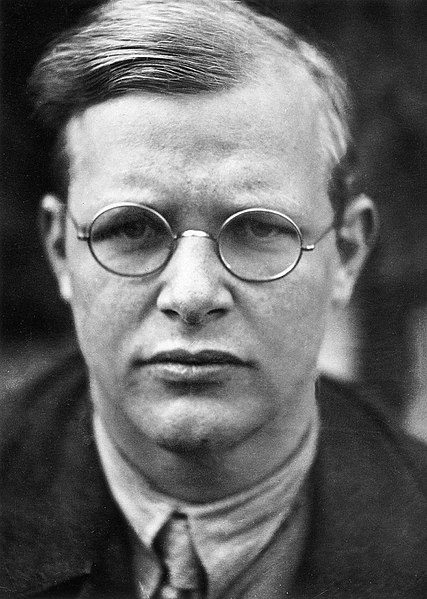
  • Dietrich Bonhoeffer: cheap grace vs. costly grace

    427px-Dietrich-B.jpg

    Dietrich Bonhoeffer was a German pastor and theologian. He was staunchly opposed to the Nazis. Arrested in 1943, he was later implicated in being a conspirator in an assassination plot against Hitler. Bonhoffer was executed in 1945.

    His writings have been influential in the 73 years since his death. Bonhoffer’s “The Cost of Discipleship” is a book that examined what it means to truly be a follower of Christ.

    One of the ideas I really love from this book is what Bonhoffer calls “cheap grace” compared to “costly grace.” Cheap grace essentially takes sin lightly. If sin is taken lightly, then the salvation which Jesus purchased is also cheap. Costly grace comes from a realization of how great our sin was, and how great the gospel is.

    I consider this idea to be Bonhoffer’s greatest contribution to Christian thought.

    Here’s an excerpt from the book:

    “Cheap grace is the preaching of forgiveness without requiring repentance, baptism without church discipline, Communion without confession, absolution without personal confession. Cheap grace is grace without discipleship, grace without the cross, grace without Jesus Christ, living and incarnate.

    Costly grace is the treasure hidden in the field; for the sake of it a man will go and sell all that he has. It is the pearl of great price to buy which the merchant will sell all his goods. It is the kingly rule of Christ, for whose sake a man will pluck out the eye which causes him to stumble; it is the call of Jesus Christ at which the disciple leaves his nets and follows him.

    Costly grace is the gospel which must be sought again and again, the gift which must be asked for, the door at which a man must knock.

    Such grace is costly because it calls us to follow, and it is grace because it calls us to follow Jesus Christ. It is costly because it costs a man his life, and it is grace because it gives a man the only true life. It is costly because it condemns sin, and grace because it justifies the sinner. Above all, it is costly because it cost God the life of his Son: “ye were bought at a price,” and what has cost God much cannot be cheap for us. Above all, it is grace because God did not reckon his Son too dear a price to pay for our life, but delivered him up for us. Costly grace is the Incarnation of God.”

    The gospel makes much of sin. Because Jesus died to redeem us from our sins, to pay the penalty for our sins. And the more we can appreciate sin, the more we can appreciate grace. The more we can appreciate the gospel and what Jesus died. Because he didn’t die a horrific death on the cross to show us that sin didn’t matter. We see the cost of sin at the cross.”


    Thanks for reading! I’d love to hear what you think, and don’t forget to subscribe, share, and comment! 

    Josh Benner is the pastor of Christian Bible Church in Cissna Park, Illinois. He has a Master of Divinity from Trinity Evangelical Divinity School. He enjoys writing about faith and culture. He has an awesome wife named Kari.

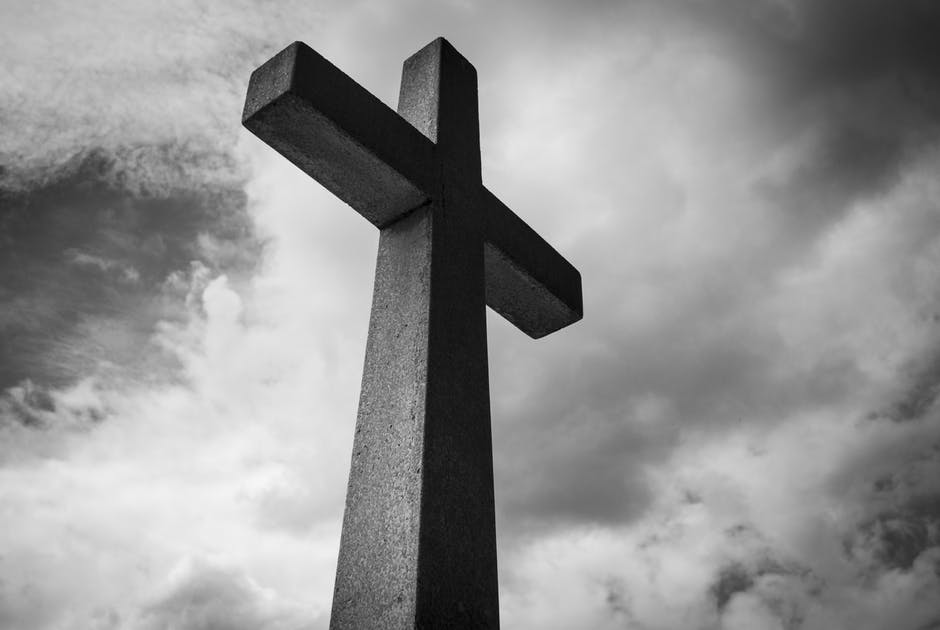
  • The cross of Christ shows us the cost of sin

    pexels-photo-208315.jpeg
    We have a sinfully low view of sin.
    We cannot overestimate the weight of sin when we see the cost of sin on the cross.
    None of us lives up even to our own moral standards. Do you ever get mad and you regret it? Ever yell at someone and wish you hadn’t? Ever look at something and feel shame for it? Ever tell a lie or bend the truth and wish you could have it back? Ever manipulate people to get your own way? Ever do something where you know deep down it’s not what you should have done?
    Of course you have.
    We don’t live up to our own standards.
    And if we can’t do that, how on earth do we live up to the standards of a holy God? We don’t and we can’t. We have nothing to go to God with on our own and say “you have to accept me. You have to love me. You have to let me into heaven.” On what grounds? We sin.
    And it’s not just “well nobody is perfect.” But that we sin. We rebel against God. In our thoughts, in our hearts, in our actions, in our inactions.
    Our view of sin is so low that we think we can master it on our own. Our view of sin is so low that we think we can do enough good to outweigh our sin.
    Then why the cross at all? Why did Jesus die?
    The world likes to judge God. Likes to say what he should do if he really were loving. That he’d just wipe the slate clean. That that would be love.
    We like to tell God what love is. Because we have a sinfully low view of sin.
    Because the reality is that God SHOWS US what love is. On the cross. That’s what love is. Greater love has no one than this, that someone lay down his life for his friend (John 15:13). Jesus shows us what love is when he lays down his life for you. When he endures the penalty of your sin for you. When he bears the wrath of God for you.
    And again that’s a message that many find offensive. That many hate. But that again shows our sinfulness when we try to judge God. We try to tell the God who made us what really would be just or holy or good.
    We can’t earn God but he freely gives himself. On the cross. We might debate sin. Just how big of a deal it really is. Just how much it really matters. But Jesus shows us how big of a deal sin is on the cross. He shows us how imperfect we are on the cross, how sinful we are on the cross. Because he bears the weight of our sins.
    We have a sinfully low view of sin.
    We cannot overestimate the weight of sin when we look at the price Jesus paid for sin. Jesus didn’t die for you because your sins weren’t that bad. He did it because of the holiness of God and our inability to live up to that. But rather than to just have us languish with no hope, he gave us hope. On the cross.
    Jesus is God. And because he’s God, he was a worthy sacrifice for our sins. For all of eternity, Jesus is God.
    God came into the world. The word became flesh and dwelled among us (John 1:14). Born of a virgin at his incarnation, Jesus is fully man. And because he’s fully man, he is like us in our human nature. He lived the holy life we could not. The sinless life we could not. And he died for you.
    Jesus goes to the cross and in going to the cross, he doesn’t simply die for us. He’s tortured for us. It’s not like our day and age where methods of execution are designed to be relatively painless. Crucifixion was designed to humiliate and maximize the torture and pain.
    It was designed to prolong suffering. After being flogged to within an inch of your life, a person would have to carry the top part of the cross beam, which weighed upwards of 125 pounds to the place of his or her death.
    Nails would have been driven through the wrists and feet. Just imagine the agony of that. And the cross beam would be hoisted up with the condemned person attached.
    Struggling to breath, their body sagging down on the weight of their legs. Then pushing up somewhat to get more oxygen. And repeating this horrid cycle until a person died from asphyxiation or exposure to the elements.
    But there we have God on earth. Dying in the most agonizing way. The most humiliating way. In a public way. But it was for the sins of the world. It was so we could be forgiven. Because as he was nailed to the cross, so was our sin.
     We have a sinfully low view of sin.
    That that was the price to be paid for it. God on earth dying for it. But he did it willingly. Not because he had to. But because of his love for you. That’s what love is.
    Jesus never leaves us, he never forsakes us. His disciples let him down. Three times they fell asleep in the garden. Three times Peter denies Jesus. Judas leads the party who arrests Jesus. Judas walked with the Lord for three years. And betrayed him.
    Jesus is brought before the Jewish ruling council. They’re not out for the truth, they’re trying to find any charges that will stick. They take his words out of context and bring him before Pilate, saying he should be crucified. 
    Pilate is an earthly authority, the governor. Pilate knows he can find no fault in Jesus. He sees the innocence of Jesus.
    Pilate symbolically tries to cleanse himself: he took water and washed his hands before the crowd, saying, “I am innocent of this man’s blood; see to it yourselves.”
    In the face of intense pressure, Pilate can’t bring himself to do the right thing.
    He offers up an option. Pilate has a custom of annually releasing one prisoner. There is Barabbas who is a killer and an instigator of insurrection. Or they can have Jesus who is totally innocent. And they select Barabbas.
    The Roman guards later mock Jesus. They make a crown of thorns, they hand him a reed as a makeshift scepter, they put a robe on him. They bow down and say “Hail, king of the Jews.” But again they play into the irony. Because Jesus IS the king. He’s the king of kings.
    While he’s on the cross, the mocking continues. Jesus is crucified with two men who are guilty. And they too join in the mocking. The guilty mocking an innocent man. Dying people mocking the Lord. Crucified men who can’t even show humility for another man who is dying the same gruesome death.
    The priests, scribes, and elders continue mocking Jesus, beginning in 27:42, “he saved others; he cannot save himself. He is the King of Israel; let him come down now from the cross, and we will believe in him.”
    It’s because Jesus didn’t come down from the cross that we CAN believe in him. Because Jesus died on that cross that day.
    The mocking continues in 27:43 “he trusts in God, let God deliver him now, if he desires him.” Again they miss the point. God did not spare his son so that he could spare you.
    The followers of Jesus, the betrayer of Jesus, the ruling Jewish authorities, the ruling Roman authorities. All contributing in various ways to Jesus’ death.
    This isn’t the isolated failing of one person. It’s not a lone wolf assassin who takes out Jesus. If that had been the case, maybe we could chalk it up to one bad egg.
    But in the passion narrative, it’s everyone. Everyone’s failures and sins lead to the cross. But even in spite of that, God is working it for his own glory.
    In spite of that, God had planned throughout all eternity to actually use that evil and wickedness for our salvation. Because even though it was sin and evil that brought Jesus to the cross, it’s because Jesus went to the cross that he was able to die to sin for all who believe in him. 
    We see the sinfulness of humanity in Christ’s passion. We can’t downplay the sinfulness of humanity when Jesus came into our world and we killed him. The righteous and holy God who made the world came into the world and we crucified him. We can’t downplay the severity of our sinfulness with that one.
    The most atrocious way that humanity has ever conceived of to end a person’s life, crucifixion is what is used against the righteous savior of the world.
    But in spite of all of that, we again see the grace of the Lord on the cross.
    Because Jesus bore infinite wrath for sin. There is infinite grace when we turn to him. There is no sin he is unable to forgive. It’s not that he died and can forgive every sin, but he can’t forgive that one, or this one, or what you did, or what you’re struggling with.
    Infinite wrath because of our sin. But infinite mercy on the cross because of his grace.

    Thanks for reading! I’d love to hear what you think, and don’t forget to subscribe! 

    Josh Benner  has a Master of Divinity from Trinity Evangelical Divinity School. He has served churches in Minnesota and Illinois. He enjoys writing about faith and culture. He lives with his wife Kari in St. Louis.

  • Courts continue to rule against British baby: Alfie Evans fights for life.

    photo-1464021025634-49b81a77a858.jpeg

    Alfie Evans is a 23 month old British baby who has a rare neurological condition. He is in a semi-vegetative state. Machines have been keeping the baby alive. Courts have ruled that the treatment must be discontinued, even though there is an Italian hospital which has offered to attempt treatments for him. Alfie has been granted Italian citizenship.

    There has been a long legal battle. Yesterday, Alfie was taken off of life support.

    His parents are continuing to appeal.

    They are actually giving the child mouth-to-mouth, literally breathing life into him in shifts to keep him alive in hopes of getting a new appeal.

    What a tragedy.

    What love from his parents. They’re fighting tooth and nail to keep him alive.

    How sickening it is that the British government and courts have this type of power. Alfie is not the court’s son. A court should have nothing to do with this case. His parents want to take their son to Italy for treatment. Let them go.

    Unfortunately, this is not the first such case we have seen from the United Kingdom.

    Last summer, another British baby, Charlie Gard died in a similarly tyrannical case. Gard has an extremely rare mitochondrial DNA disease. There was an experimental treatment tat Gard could have received in the United States. Funds were raised. But the British courts would not allow the family to take their own son to the US.

    Courts should not be able to judge if a baby lives or dies. In both cases, foreign governments were allowing these two babies to receive treatment on their soil, so it’s not like either would have been taking resources from the United Kingdom.

    Certainly, in both situations, the odds of successful treatment were and are highly uncertain and unlikely. But it’s still worth trying.

    Unfortunately, this story seems to be very underplayed in the States. I’ve done searches on some popular news sites like CNN and MSNBC and there is no mention of Alfie Evans on either site.

    But we’re not all that different from the British. We have similar sensibilities. And it’s chilling that the courts are ruling against the life of a child for the second time this year.

    We must have a value in the sanctity of human life.

    Josh Benner is the associate pastor at Cornerstone Evangelical Free Church in Fergus Falls, Minnesota and has a Master of Divinity from Trinity Evangelical Divinity School. He enjoys writing about faith and culture. He lives with his wife Kari in Minnesota.