Josh Benner

Category: Gospel

  • Meaning of the bronze serpent in the Bible

    maxresdefault-11.jpg

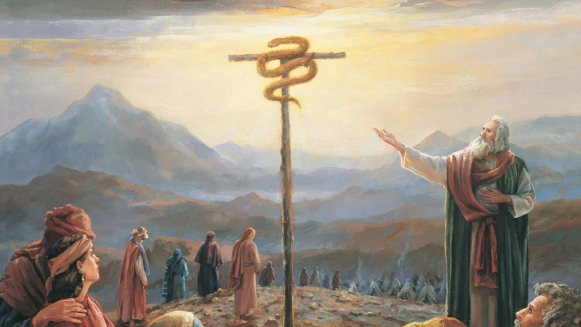
    In Numbers 21, the Israelites experience victory over the Canaanites but soon fall back into grumbling and complaining. God brings a plague of snakes upon the people. It’s a divine judgment. Their grumbling against God was to their downfall. But the people beg for mercy.

    And the Lord said to Moses, “Make a fiery serpent and set it on a pole, and everyone who is bitten, when he sees it, shall live.” 9 So Moses made a bronze serpent and set it on a pole. And if a serpent bit anyone, he would look at the bronze serpent and live. 
    -Numbers 21:8-9

    Moses prays. God tells Moses to make a fiery serpent and set it on a pole. So God doesn’t simply take the snakes away. He also doesn’t prevent people from continuing to get bitten by the snakes. But once bitten, a person could respond by faith in the Lord by looking to the serpent on the pole.It’s an odd story. A number of questions might come to mind. Isn’t that idolatry? Making this bronze serpent?

    In the Golden Calf episode of Exodus 32, Moses is on the mountain receiving instruction from the Lord. He’s there for 40 days and the Israelites get restless. They take their gold and melt it into the image of a cow. Why is it ok with the bronze serpent? It’s a totally different situation. Most importantly, because God told them to do it this time. Secondly, this wasn’t idol worship because they weren’t worshiping the serpent. The serpent didn’t represent God to the people.

    There are many wonderful gospel themes in this scene. The Israelites sin against the Lord. And so God brings a plague of snakes upon the people as divine judgment. And yet, once the people repent and the bronze snake is made, it is in looking to that by which people are healed.

    A symbol of death becomes a symbol of life 

    Snakes were bringing death, but looking to this particular snake brought the promise of healing. A symbol of judgment the Lord then uses as a symbol of victory. The cross was the greatest symbol of judgment and condemnation in the Roman world. A brutal punishment. And yet, it is to the cross that we see Christ’s victory over sin. Perhaps you look at the story and think “but why a snake? Aren’t snakes bad in the Bible?” Yeah, so are people, but it is through a man that we are saved. The Lord Jesus, both God and man.

    The gospel 

    In a person being healed because of looking to the snake, it took what they were doing out of their hands. It was entirely the work of God. So too we see this in the gospel. It is not based on us, or how good we are. We are totally helpless to heal ourselves from the disease of sin. It is looking to the cross, to looking at what Jesus has done, to trusting Jesus by faith that we can have salvation.

    It’s foolishness 

    The serpent doesn’t make sense. The world is confounded by the gospel and the message of grace, the idea that we can be freely forgiven based on what someone else has done. The world is offended by the message of salvation by grace. Paul says in 1 Corinthians that the cross is folly to those who are perishing, but to those who are being saved, it is the power of God (1 Corinthians 1:18).

    We want to save ourselves. We want to see how we measure up and to feel good about how good we are. The gospel is that you cannot earn it. You look to what Jesus has done.

    Salvation for the undeserving 

    The Israelites were grumbling and complaining and blaspheming against God, and yet God saves them. Jesus came into a world where people condemned him, polluted against him, betrayed him, and killed him. While we were yet sinners, Christ died for us (Romans 5:8). In both looking to the serpent and the death and resurrection of Jesus, what people needed was faith.

    In the Gospel of John, Jesus will make specific reference to this event in Numbers. John chapter 3, Jesus is talking to Nicodemus, the Pharisee.Jesus says “as Moses lifted up the serpent in the wilderness, so must the Son of Man be lifted up.” (John 3:14) Moses literally lifted up the bronze serpent on a pole. And Jesus was literally lifted up on the cross. There, Jesus compares himself being lifted up to the bronze serpent. For the Israelites who were afflicted by the serpent’s bite, life was found by looking to the bronze serpent. For us today, eternal life is found by looking to Jesus.

    The main idea of our passage this evening is that: Opposing God brings death but true life is fond by faith. Are you trusting in Jesus? We’re infected with the venom of sin. And it’s a killer. There is nothing we can do on our own to take out that poison. The only antidote is found in looking to Jesus.Look to him. Love him. Live for him.

    Originally published August 1, 2018.

    Thanks for reading! If you liked, please comment and share :)

    Let’s connect
    Facebook
    Parler
    Twitter
    Instagram

  • Whoever wins this election is not a savior

    The political division is incredible. The name calling. The condescension. The assumptions we make about the people who support the other candidate. It’s unfortunate.

    We have so many news sources, websites, social media platforms, and “fact” checking websites, all to backup one’s adopted views. For many, more and more time is invested, which raises the level of interest (because you have to psychologically justify the amount of time spent following politics). It becomes a vicious cycle and fosters an environment of perpetual debate. It’s the most popular reality show in the world.

    Because we are more constantly needing to defend our views, in arguments, we dig our heels in and we make these things out to be much bigger issues than they oftentimes are. We tie our happiness and joy to whether or not our person wins. We tie our hope for the future prosperity and potential of our society into whether or not our person wins.

    And because people get so invested, it means million are going to become obnoxious and have a false sense of hope in the Messianic figure they’ve made their candidate to be. And millions more will think we’re doomed as a society, that our last hope is gone, that we’ve elected a dictator-to-be.


    I think far too many people, on both sides of the political aisle, look at our politicians as saviors. We place too much hope in imperfect people. If your life is going great, it’s not because of the president. And if your life is terrible, it’s not because of the president.

    I also see this within Christianity. Too many people of faith fall into the same traps that many in our society do. Of putting too much stock into politics. Of focusing too much on things that are far away and distant than things that are right within our own communities and neighborhoods. Christians need to understand that, regardless of which candidate you support – and I know many who support both major candidates – that if your candidate loses, there’s no reason to lose hope, because there’s no reason to place hope in any person.

    That’s not to say we should be apathetic or oblivious to what’s going on in our world. But to remember that God is God, he is good, he is sovereign. Regardless of what happens in Washington, that everyday is an opportunity to know God and serve him. That regardless of if a politician we don’t like is in power, that this doesn’t hinder our knowledge of God. I’m not saying we should lie down and give up our rights, but to keep perspective.

    I see stories of the oppression of people throughout the history of the world, and the oppression that many still face. Even in those times, God’s Church has grown. We put our comfort on a pedestal. The Bible continually talks of tests and trials. They’re part of life. It’s not that these things are good in themselves but that they don’t hinder our opportunity to know God and have faith in him. Again, that’s not to say anyone should have the desire to be oppressed, but I also feel like the things that Christians face in America pale in comparison to the things that God’s people face in other places and at other times.

    There are many things that influence our lives. And Christians have a daily opportunity to live lives of faith, to model the love of Christ, and to tell people a message that transforms a soul for eternity (rather than a country for 4 years). There might be issues where we think a president will have great influence (and sometimes they undoubtedly do), but even when our candidate isn’t in power, it’s not a reason to give up. It’s a reason to get involved.

    An updated version of “the next president is not a savior” from November 7, 2016.

    Thanks for reading. If you liked, please share :)

  • Sermon – Still: Psalm 46

    2020 has been a year of tumultuous situations. Psalm 46 calls us to trust in God, regardless of what we face. God is depicted as a refuge and a warrior going before his people into battle, before reminding us of God’s greatest promise: the he will be with us.

  • Prayer day reminds us of persecution Christians face around the world

    Photo Courtesy of Unsplash.

    Today is the International Day of Prayer for the Persecuted Church. We’ve seen crackdowns on Christianity (and other religions) in China. A recent report detailed testimonies of the atrocities against Christians in North Korea. Nigeria, which is fairly evenly split between Christians and Muslims has seen increasing hostility towards Christian in certain regions of that country. And in recent weeks in France, we’ve seen attacks against Christians. In the city of Nice, three people were stabbed to death this week.

    According to Open Doors:

    • Over 260 million Christians living in places where they experience high levels of persecution
    • 2,983 Christians killed for their faith
    • 9,488 churches and other Christian buildings attacked
    • 3,711 believers detained without trial, arrested, sentenced or imprisoned

    The reality of persecution should not surprise Christians. The New Testament repeatedly talks of the inevitable opposition for those who follow Christ. In 2 Timothy 3:12, the Apostle Paul says: Indeed, all who desire to live a godly life in Christ Jesus will be persecuted.

    In the Sermon on the Mount, Jesus said: Blessed are those who are persecuted for righteousness’ sake, for theirs is the kingdom of heaven (Matthew 5:10).

    And there are numerous other scriptures that could be referenced. The gospel is offensive to the world because it confronts people with their sin. It’s offensive to the world because it points to one way to heaven. It’s offensive because it takes man’s own goodness out of the equation for what justifies a person before God.

    In America, we’re blessed to enjoy a rich history of faith and constitutional protections. But we should regularly pray for those who are persecuted for their faith.

    I also think it’s important in America to appreciate the religious freedoms that we have. As we’re in the final days before the presidential election, I do see fears from some Evangelical Christians about persecution or limitations on churches if Joe Biden is elected president. While I appreciate that there are things Joe Biden supports which are totally against Christianity, I think doomsday fears of the purge on American Christianity are also an overreach.

    Yes, Christians should always be attentive of what’s happening and vigilant to preserve and protect our rights. But I also think it’s important to remember the people who truly suffer for their faith, and who’s lives are truly endangered for following the Lord Jesus.

    Prayer
    Lord, on this international day of prayer for the persecuted church, we pray for those who are persecuted for the cause of Christ. Just this week, there were attacks on churches in France. Persecution is on the rise in many parts of the world. Lord, we pray for those who worship you at a great cost to themselves, their families, their livelihoods, and their lives. Lord, may you be near to them. Lord may those people never been far from our hearts and minds. Lord, in spite of man’s attempts to thwart your gospel, we pray for the work of pastors and evangelists in these hostile places. May the word go forth. May the truth be preached. May the message of Christ crucified be proclaimed and believed. In Jesus’ name, amen.

  • Reformation Day – the day that changed the future of the church

    Reformation Day – the day that changed the future of the church

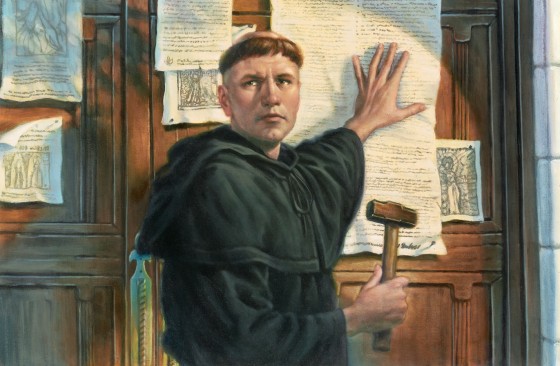
    503 years ago today, the history of the Church, of Europe, and of the western world were forever changed in the town of Wittenberg Germany. Martin Luther wrote his 95 theses, a list of grievances against corrupt and unbiblical practices within the Catholic Church. The impact of this event continues to ripple throughout the Christian world.

    Luther was not the first person to call for reform in the church.

    Other movements perhaps had followings but didn’t have political support. Luther had that. Which afforded him a certain level of personal safety, though his martyrdom seemed inevitable at times. Another key difference between Luther and influential reformers who preceded him was the invention of the printing press. This allowed a mass volume of pamphlets to be produced. Luther was also likely helped by the fact that other reformation movements spread elsewhere in Europe during this time. Amid church abuses, Europe was at a tipping point. And while Luther was not the first to call for reform, it was his ministry that most significantly tipped the Reformation movement over the edge.

    Less than 20 years later in England, Henry VIII broke away from the Catholic Church and started he Church of England in 1534. Reforms were also happening in Switzerland, most notably, the city of Geneva, eventually under the leadership of John Calvin. The Anabaptist movement sprung up who favorited believer’s baptism over infant baptism. These groups were not always in agreement, and some of them had severe conflicts with each other, but they were all in agreement that all was not well within the Church, and that there were changes which were necessary.

    Against Church traditions that had become entrenched in Europe, the reformers did not think that they were doing something new, but rather were taking the Church back to its Biblical foundations.

    By the sale of indulgences, it was believed that people could pay a price to have sins removed from themselves or for people for whom they had purchased the indulgences. But the issue with this was that the Catholic Church was overstepping its bounds on what saved a person. The Church was not the arbiter of what brings salvation, it is God’s grace alone received through faith alone in Christ alone. The gospel is not man’s gospel (Galatians 1:11).

    The Catholic Church believes and believed that the seven sacraments impart grace by nature of being sacraments. While the Mass was in Latin and could not be understood by all people, the justification for this was that the sacraments still inherently imparted grace to a person, regardless of if they could understand. But this undermined faith. That’s not to say that Catholics (then and now) never value faith. But it can be easy to focus on sacraments and works apart from faith.

    Interestingly the sacrament of confession was one which caused great angst for Martin Luther. Beginning as a devout Catholic and constantly aware of his own sinfulness, Luther lived in an ever-present awareness the this life did not live up to God’s standards of holiness. He had no assurance of salvation and lived in an exhausting cycle of constant confession. Luther would confess multiple times a day, sometimes for hours at a time, as he tried to remember every sin he committed, every hint of pridefulness, everything he should have done but hadn’t.

    One verse that Luther had despised in the scriptures was “the righteous shall live by faith” which is found multiple times in the Bible (Romans 1:17; Galatians 3:11; Habakuk 2:4).

    But Luther knew he wasn’t righteous.

    In his confession story, Luther said:
    “For I hated that word “righteousness of God,” which, according to the use and custom of all the teachers…though I lived as a monk without reproach, I feel that I was a sinner before God with an extremely disturbed conscience. I could not believe that he was placated by my satisfaction. I did not love, yes, I hated the righteous God who punishes sinners, and secretly, if not blasphemously, certainly murmuring greatly, I was angry with God.”

    But Luther would eventually be struck by the verse which had brought him such distress. The gospel was not about living up to the righteousness of God. It was about living for God in faith. And for Luther, that changed everything.

    “At last, by the mercy of God, meditating day and night, I gave heed to the context of the words, namely, “In it the righteousness of God is revealed, as it is written, ‘He who through faith is righteous shall live.’” There I began to understand that the righteousness of God is that by which the righteous lives by a gift of God, namely by faith. And this is the meaning: the righteousness of God is revealed by the gospel, namely, the passive righteousness with which merciful God justifies us by faith, as it is written, “He who through faith isrighteous shall live.” Here I felt that I was altogether born again and hadentered paradise itself through open gates.”

    Faith is a gift from God and that people are declared righteous by God as a result of faith in the gospel.

    We are justified by faith. This became a hallmark of Luther’s theology. And it became invaluable to Protestantism. We are justified by faith, not by faith and works. Not through faith and Church. Not by faith and any of the sacraments (though baptism and the Lord’s Supper are things which all Christians ought to do and are commanded to do).

    A critique of this view and an unfortunate consequence is that many take the “faith alone” view to mean that disingenuous faith is enough, just giving some vague assent to a gospel a person doesn’t really believe in. That wasn’t what Luther believed.

    At the beginning of his 95 Theses, the first theses talks about how all of life is repentance. Faith is an all-encompassing reality and driving force of life. Living by faith in the Gospel of Jesus Christ. That we cannot earn salvation of our own merit but that it is entirely by grace alone through faith alone in Christ alone.

    Happy Reformation Day!

    This post was originally published October 31, 2017 as “500 years of reformation.” 

    Thanks for reading! If you liked it, please share!