Josh Benner

Category: Memoriam

  • remembering Tim Keller: 1950-2023

    remembering Tim Keller: 1950-2023

    “The Gospel is that Jesus Christ came to earth, lived the life we should have lived and died the death we should have died.”
    -Tim Keller

    As a pastor, few people have influenced my thought and ministry more than Tim Keller. He passed away today from pancreatic cancer at the age of 72.

    I don’t remember the first time I listened to a Tim Keller sermon. I first remember being introduced to his preaching when I was in seminary. If you had asked the average Trinity MDiv student “what preachers do you listen to,” Keller was often on people’s short lists.

    There are several ways in which Keller has influenced my preaching. More than anyone else, Keller taught me that preaching could be intellectual. It could be smart. It could engage with tough questions. A sermon could challenge people intellectually and Spiritually but still be delivered in a spirit of gentleness. That good sermons takes time (Keller generally spent about 20-25 hours writing his sermons).

    Keller was a master of taking a Biblical text but preaching it with the whole story of scripture in mind. That no Biblical passage exists in isolation. They all fit into a larger redemptive story.

    Since graduating from seminary seven years ago, I don’t listen to as many sermons as I used to. But I still listened to Keller often. And I will continue to do that.

    There are some Keller sermons I’ve listened to over the years, and thought “there’s no other way I’ll ever be able to read this passage the same way again.” I think that’s what a great Bible teacher does.

    Keller often quoted C.S. Lewis in his sermons. In many ways, I think that he was the closest this generation came to another Lewis figure. Several of books that Keller wrote were so monumental in my Spiritual formation. “The Reason for God” is a modern masterpiece. “The Prodigal God” explained the parable of the prodigal son in a way unlike anything I had ever heard.

    I can’t help but think that part of the reason I’ve loved C.S. Lewis and the late British preacher Martyn Lloyd-Jones is that Keller loved them and referenced them often.

    My wife and I met online, and one of the first ares where we found common ground was a mutual love for Tim Keller’s preaching.

    One of the hallmarks of Keller’s preaching was always cultural engagement. In a time that is highly divided and polarized, Keller continued to tackle the hot button issues of our day without fear. I didn’t have to agree with 100% of the things Keller said, but I always respected the wisdom of Keller and the heart behind what he was saying.

    In 2005, Keller and D.A. Carson (the other biggest intellectual influence in my life) co-founded the Gospel Coalition. In an era, where there are many “celebrity pastors,” and in spite of his renown, Keller seemed to be the anti-celebrity pastor. In 1989, he founded Redeemer Presbyterian Church in New York. It became a megachurch. Unlike many megachurches that revolve around one charismatic pastor, Keller stayed mobile and would preach at different campuses to avoid ministerial groupies participating in the church just to see him.

    I know that many were influenced and enriched by Keller all over the world, and that many join in grieving his loss. I’m thankful that Keller’s writing and teaching will live on, and for the impact that he’s had on my life. Thanks Tim.

    “The gospel is this: We are more sinful and flawed in ourselves than we ever dared believe, yet at the very same time we are more loved and accepted in Jesus Christ than we ever dared hope.”
    -Tim Keller
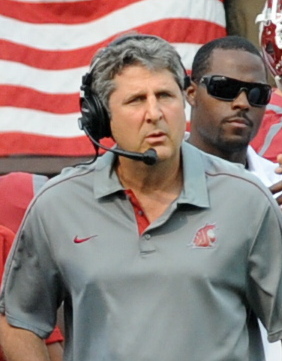
  • Mike Leach, unique sports personality, dies at 61

    Mike Leach, unique sports personality, dies at 61

    Mike Leach, the head football coach at Mississippi State died today at the age of 61. Leach’s passing has sent ripples throughout the college football world.

    It’s obviously always sad when a person passes away. But I’ve tried to reflect today on what it was that made Leach so beloved among football fans. I think it was Leach’s authenticity. In some ways, Leach reminds me of the comedian Norm MacDonald (who also passed away this year).

    Both MacDonald and Leach were famous for not caring to speak their minds. In a society that can be so performative, I think that there’s something refreshing about people who are comfortable in their own skin and who are authentic and genuine.

    Leach was an innovative football mind. He was successful as head coach of three different schools: Texas Tech, Washington State, and Mississippi State. That in itself is noteworthy because those are three programs who do not have long histories of winning. But Leach was also legendary for his comments to media.

    Leach was a highly-intelligent Renaissance man who could comment thoughtfully (and humorously) on a range of subjects. Before becoming a football coach, Leach had gone to law school and earned his Juris Doctor. He’d later add a second masters degree in sports science. He enjoyed reading up on subjects such as pirate, vikings, grizzly bears, and Daniel Boone.

    For me, the life lesson I’m trying to remember today is to look to his example as far as being a real and authentic person. It’s a rarity today, but something to be appreciated.

    Thanks for reading! If you liked this post, please share and subscribe.

  • Leading theologian J.I. Pakcer dies at 93

    James Innell (J.I.) Packer passed on into glory last Friday, less than a week shy of his 94th birthday. Packer was a workhorse who wrote over 300 books, articles, and reviews in his lifetime. Packer was a British born Anglican and an expert in the theology of the Puritans.

    He attended Oxford and heard lectures from C.S. Lewis. While at Oxford, Packer attended the church of one of the 20th centuries greatest preachers, Martyn Lloyd-Jones. He was in league with some of the great Christian thinkers of the last century and himself became one of the giants of Evangelical theology for over half a century.

    I appreciate theologians and Biblical scholars who can present their ideas with humility and gentleness. While he was a seminary professor and imminent theologian, Packer also wrote books for popular audiences, most famously, his 1973 classic “Knowing God,” which sold over 1 million copies. It’s intellectual but approachable. It’s theologically deep but personally applicable. Knowing God is a great introduction to the Christian faith.

    Writing in straightforward language is a quality that alludes many of our great theologians but Packer had that gift. His work was not just about great intellectual knowledge of God, but about pointing us to greater relationship with the Lord.

    As Justin Taylor of the Gospel Coalition remembers Packer, he says:
    He called for the church to take holiness and repentance seriously by walking in the Spirit and fighting against indwelling sin. He defended biblical authority and championed the cause of disciple-making catechesis.

    In seminary, I remember reading another of (what I consider) his classics “Evangelism and the sovereignty of God” which explored the complexities of God’s sovereignty over creation and his call on the world to share the gospel.

    Writing for Christianity Today, scholar and Packer biographer Leyland Ryken calls to mind Packer’s words to the church: “Glorify Christ every way.”

    Well done, good and faithful servant. You have been faithful over a little; I will set you over much. Enter into the joy of your master.’
    -Matthew 25:23

    Thanks for reading! Don’t forget to comment and subscribe.

  • Remembering Ravi Zacharias: 1946-2020

    2015 Ravi Zacharias_PortraitThe renowned Christian apologist Ravi Zacharias died today at the age of 74, after being diagnosed with a rare form of spinal cancer in March.

    To me, Ravi was a giant within contemporary Christianity. Many looked at Ravi as this generation’s C.S. Lewis. In one memorial, I heard Ravi described as a person who could help thinkers believe and believers think. I first stumbled upon his radio program as an 18 year old kid and I spent many, many hours listening to him over the years. When I chose a seminary to attend, the fact that Ravi had gone to Trinity Evangelical Divinity School was one of the things which influenced me.

    Ravi presented the Christian faith and responded to the questions of skeptics all over the globe. He presented on university campuses in America; he regularly had events in his native India; he preached in Moscow shortly after the fall of the Berlin Wall. He lectured in the Middle East. He was articulate and thoughtful. He was a cultural commentator who thought like a philosopher. But there was always a gentleness with how he approached complex and divisive subjects. He respected people with whom he disagreed and invited people in to see the Jesus whom Ravi loved.

    “Truth cannot be sacrificed at the altar of pretended tolerance. Real tolerance is deference to all ideas, not indifference to the truth.”

    -Ravi Zacharias

    Ravi presented Jesus as the only satisfactory and coherent explanation for the deepest longings of the human soul: our need for an explanation for our origin, destiny, meaning, and morality.

    Born in India, Ravi spoke many times about his struggles as a child. He grew up under intense pressure to succeed. As a child, he talks of his father’s explosive temper. At 17, he tried to take his own life by swallowing poison. While he was in the hospital, a Bible was brought to him and his mother was told to read to him from John 14.

    I had the opportunity to meet Ravi once, at an event when he came back to speak at Trinity. It was one of the highlights of my time in seminary. Former football player Tim Tebow recently talked about Ravi Zacharias on a viral Facebook post. He called Ravi one of his heroes. I agree with the sentiment. The heroes of our faith are people who are still fallen and fallible but who influence us, who touch our hearts, who point us to God, who influence how we think.

    Rest in peace Ravi. Well done, good and faithful servant.

    In the 1950s kids lost their innocence.
    They were liberated from their parents by well-paying jobs, cars, and lyrics in music that gave rise to a new term —the generation gap.

    In the 1960s, kids lost their authority.
    It was a decade of protest—church, state, and parents were all called into question and found wanting. Their authority was rejected, yet nothing ever replaced it.

    In the 1970s, kids lost their love. It was the decade of me-ism dominated by hyphenated words beginning with self.
    Self-image, Self-esteem, Self-assertion….It made for a lonely world. Kids learned everything there was to know about sex and forgot everything there was to know about love, and no one had the nerve to tell them there was a difference.

    In the 1980s, kids lost their hope.
    Stripped of innocence, authority and love and plagued by the horror of a nuclear nightmare, large and growing numbers of this generation stopped believing in the future.

    In the 1990s kids lost their power to reason. Less and less were they taught the very basics of language, truth, and logic and they grew up with the irrationality of a postmodern world.

    In the new millennium, kids woke up and found out that somewhere in the midst of all this change, they had lost their imagination. Violence and perversion entertained them till none could talk of killing innocents since none was innocent anymore.

    -Ravi Zacharias

  • Kobe Bryant dies at 41: the life lessons we remember in tragedy

    Lakers at Wizards 12/2/15
    Photo courtesy of Wikimedia Commons @Keith Allison

    NBA legend Kobe Bryant, his 13 year old daughter Giana, and seven others died in a helicopter crash in Calabasas, California today.

    I’ve been struck by the widespread response online.

    Undoubtedly, it’s a tragedy that nine people died. But Bryant’s death has seemed to strike a cord with our society, even from people who aren’t basketball fans (or sports fans). (more…)