Josh Benner

Category: News

  • Erika Kirk offers amazing grace

    Erika Kirk offers amazing grace

    Erika Kirk, the widow of Charlie Kirk spoke at his memorial service yesterday in Arizona. Erika Kirk said “On the cross, our savior said “Father forgive them, for they not know what they do. That man, that young man, I forgive him.” She also said “I forgive him because it was what Christ did, and is what Charlie would do.”

    It was an incredible moment and an incredible offer of forgiveness.

    One illustration of grace that’s always struck me comes from the late Tim Keller. It’s the idea that all forgiveness is costly.

    If I go to your house, and I break your TV, someone has to pay for it.

    You might say “You have to pay for that.” Then I’m bearing the cost.

    You might say “It’s ok, don’t worry about it. I’ll take care of it.” Then you’re bearing the cost.

    Maybe you say, “I bought insurance. That’ll replace it.” Then insurance is bearing the cost. And the homeowner paid for the insurance.

    Maybe we come to an agreement where we both pay for part of it. Then we’re sharing the cost.

    Maybe you say “I was actually going to stop watching TV.” It’s still bearing the cost of not having the thing that was yours.

    In any circumstance, someone must pay. Because all forgiveness is costly. It’s easy to picture with tangible things that have a monetary cost. But it’s also true with forgiveness.

    Forgiving a wrong is costly. And the greater the wrong, the higher the cost. If someone is 20 minutes late for a meeting, that’s annoying, but a pretty small cost. If someone hurts you or someone you love, that forgiveness comes at a much greater cost.

    There’s nothing the man who killed Charlie Kirk can ever do to undo what he has done. There’s nothing he can do to earn her forgiveness, there’s no way he can pay her back or make it right.

    The only way he could be forgiven by Erika Kirk was for her to freely give it. Because of hate, she senselessly lost her husband less than two weeks ago. Her children lost their father.

    It’s easy to understand why she would hate that man. To many, that feeling would be totally justified. But she responds with forgiveness.

    Forgiveness is striking.

    The Bible says that all sin and fall short of the glory of God (Romans 3:23). We all sin against God in the things that we do that we shouldn’t do. We sin in the things that we should do but don’t do. It’s not just occasional. We sin as a habit, as a way of life, as a matter of course. We could never earn forgiveness from a holy God.

    The gospel is that Jesus paid the price for our sin on the cross. That there was no way for us to earn our forgiveness, or to pay for it. And so he bore the cost himself by absorbing the penalty that we deserved.

    To some, the cross is foolishness (1 Corinthians 1:18). To others, it is the power of God for salvation (Romans 1:16-17).

    Hatred for that man might have been understandable. Forgiveness for him is glorious.

    In the Gospel of Luke, as Jesus is being crucified, he asks God to forgive his killers when he says “Father forgive them, for they know not what they do.”

    Thanks for reading! If you liked this post, please share and subscribe.

  • Charlie Kirk dead at 31

    Charlie Kirk dead at 31

    A few thoughts as I’ve reflected today. Few things shock me. Charlie Kirk being assassinated in public today shocked me.

    -I saw the infamous video. I wish I hadn’t. It’s disturbing. To my untrained eye, I thought “I know doctors can do amazing things but I don’t think that’s survivable.” He never had a chance.

    -Many have said truly wicked things about him and showed a lack of compassion and concern about his death. To borrow an idea from a friend, that says a lot more about those people than it says about Charlie Kirk. We have a lot of Bolsheviks in our society.

    -You can disagree with 100% of the things he said and believed and that’s fine. Charlie Kirk was also willing to take his message to the people and to engage with those who vehemently disagreed. There’s not enough of that in our society. He was willing to have honest conversations and an assassin decided to silence him.

    -I’m most saddened for his daughters. It’s a tragedy for anyone to lose a parent. It would have been sad if Charlie Kirk had died in a car accident today. But he didn’t. He was publicly executed and that’s now part of their story. -Tomorrow is never promised.

    Last night when Charlie Kirk went to sleep, he had no idea that today would be his last day of life. 24 years ago tonight, thousands of Americans went to bed with the same concern being the furthest thing from their minds.

    Photo credit. Photo courtesy of Flickr Creative Commons. Photo taken by Gage Skidmore.

  • The decline of Christianity in America, and why I’m hopeful

    The decline of Christianity in America, and why I’m hopeful

    Christianity is declining in America. 

    New research from the Pew Research Center looks at the data and paints a picture of an even less Christianized future for America. 

    In looking at religious trends and various demographics, Pew shows a downward of trajectory which could have Christians representing less than half of the US population in the year 2070. 

    In 1972, Pew’s research says that 90% of Americans identified as Christians. That number was down to 64% in 2020. Pew’s research factors in people who have identified as Christians who have switched away from Christianity. Pew gives different estimates, and predicting future demographics is admittedly an inexact science. 

    But the overall point remains the same that there has been a downward trend in Americans who identify as Chritians and there are not many signs that this trend is going to reverse course. 

    Yes, that’s unfortunate and lamentable. I think there are negative societal ramifications which stem from that fact. But there are some reasons why I’m still hopeful and optimistic. 

    From grassroots to grand cathedrals

    I’ve been reading David Gustafson’s latest book “Gospel witness through the ages: a history of evangelism.” And I’m struck by how the early church in Rome had the opposite problem. In the early generations of Christianity (for instance, the third century), there was harsh persecution upon the church. Christians often had to meet in secret. By the end of the third century, it’s estimated that just 10 percent of Rome’s population was Christian. 

    In 313, the western and eastern emperors (Constantine and Licinius) issued the Edict of Milan which gave Christianity legal status within Rome. 

    Constantine’s personal religious convictions are a subject of debate. But what’s not debatable is that he was very friendly to Christianity. He made Sunday a day of rest throughout the empire. He exempted pastors and bishops from property taxes and worked to free Christian slaves. 

    In 391, Emperor Theodisius made Christianity the religion of Rome, outlawed paganism, and closed temples to pagan gods. 

    In less than a century, Christianity Rome went from being a small and persecuted minority to the state religion of Rome. 

    I won’t get into another history lesson, but the same thing would happen in Europe for over a thousand years. Everyone was “Christian.”

    But that’s the problem. You cannot force the gospel. You can force behavior. But you can’t force faith and belief. 

    In America, we’ve had generations of cultural Christianity. Most people are not atheists. Most people believe in God. America has Judeo-Christian roots, and so it’s easy to attach to that and say you’re a Christian even though you might not believe that Jesus died and rose, that it is Jesus who is the Lord, and that it is Jesus who alone forgives sins (things which are essential aspects of the gospel). 

    When Christianity dominates a culture, it becomes easy to be a Christian in Name Only. it becomes easy for people to be moral people without being born again believers. It’s easy to go to church (or at least be listed as a member of a church), without actually serving and ministering within the church. It’s easy to check the box. 

    And so again, while I think it’s unfortunate that there’s been a decline in the church in America, I’m hopeful for a more authentic future of the church. I’m hopeful that American churches can have greater spiritual depth with more committed members. 

    As it becomes easier for a person to acknowledge that they’re not a Christian, I’m hopeful it’ll become easier to know where people really are, Spiritually. There won’t be the same pressures to go through the motions or put up a front. If someone doesn’t believe in the gospel, as a pastor, I’d rather know that and go from there than have them feel like they need to pretend to be more religious than they actually are. 

    It’s a season which will also have its challenges. The American church has gotten too lax on personal evangelism. Perhaps it was easier to write that off as not being important when it was thought that most people were Christians. But Christians are becoming the cultural minority and there’s work to be done. 

    Thanks for reading! If you liked this post, please share and subscribe.

  • Megachurch pastor takes leave of absence for inappropriate online relationship

    Influential megachurch pastor Matt Chandler announced yesterday that he was being placed on leave as a result of an online social media relationship.

    We shouldn’t jump to conclusions. And the more facts we get about this situation, the better. But I am a believer that when popular ministry figures acknowledge (as Chandler does) or are credibly accused of potentially disqualifying sins, that people should be investigated. We have created a culture where it is appealing to become an influential pastor. It brings money, fame, and power. The character of these individuals does matter. 

    Chandler’s story

    One of the peculiarities of the revelation of Chandler’s leave of absence is that he was allowed to announce it to the church. This also allowed him to get out ahead of the controversy and give his own narrative. 

    Chandler begins with his series of events, “Several months ago, a woman approached me outside here in the foyer. She had some concerns for how I was DM’ing on Instagram with a friend of hers. I didn’t think I had done anything wrong in that. My wife knew that, her husband knew that. And yet, there were a couple of things that she said that were disorienting to me.” 

    Chandler says he immediately contacted the church’s lead pastor, Josh Patterson as well as the chairman of their elder board. He said he went home and told his wife about the exchange and that the elder board looked into it. Chandler says “We cannot be a church where anyone is above the Scriptures and above the high heavenly call into Christ Jesus.” 

    He says that the elder board had some concerns but that the conversations were not romantic or sexual but that the conversations were “unguarded and unwise” and that the concerns were “really about frequency and familiarity” and language Chandler had used which was “coarse and foolish.” 

    Because of Chandler’s inability to see what he was in was probably revealing some “unhealth” in him, but that he agreed with the board’s decision to put him on a leave of absence. 

    Chandler again thanks the elders for holding him accountable saying “do you know how easy it would have been to make it nothing and just let me not address whatever this is?”  

    Commentary

    I think this is part of the problem with Chandler being able to speak in this situation. Even if I take his statement at face value. He starts off by talking about how his wife and the other lady’s husband knew about the conversations (minimizing the issue). He didn’t think they were doing anything inappropriate. 

    Plus the wording of his statement is vague. It was unguarded and unwise but it wasn’t romantic. It was coarse and foolish but it wasn’t sexual. 

    So what was it?! What did he say that was so bad that he got put on leave? The really striking phrase to me is “do you know how easy it would have been to make it nothing and just let me not address whatever this is?” I feel like that could almost have a double meaning, but perhaps that’s me being cynical.. 

    So you have Chandler speaking and saying he hadn’t thought it was a big deal but he is also totally respecting the decision of the board (to suspend him for something that is totally undefined and unclear). 

    It makes it look like the Village has the highest elder standards of any church in America! Their standards are so high that they would even suspend a rockstar pastor without it even being an overtly, obviously, disqualifying sin. 

    Do they have the highest standards? Time will tell. 

    The church’s story

    According to a statement from the church who had commissioned an investigation in to Chandler’s texting, emails, and social media, they said that the messages were not “romantic or sexual in nature” but that “the frequency and familiarity of the messages crossed a line. They revealed that Matt did not use language appropriate for a pastor” 

    The church’s statement agrees with Chandler that “the messages were not romantic or sexual in nature, the frequency and familiarity of the messages crossed a line.”

    The best possible light

    I think that the best possible light, and what I hope is the reality is that Chandler made some mistakes and that the church is holding him accountable. That’s how it’s being framed. The church has crafted a narrative of how they want things to appear. 

    If it’s all true, then yes, the Village could be looked at as a model of pastoral standards, ministerial integrity, and Biblically restorative discipline. Again, I hope that’s the case. But for now, all we have is their side of the story. 

    The worst possible light 

    There are no shortage of skeptics out there who want to assume the worst, to assume that there’s much more under the surface, that this is just the tip of the iceberg. Sadly, that is something we’ve seen before with ministry scandals. 

    If it’s the worst case scenario, it would be another fall from grace from another popular pastor. And it would be a sad day for me, someone who’s always really appreciated Chandler’s ministry. In my early 20s, Chandler’s sermons were a major influence on my faith. I had never heard anyone preach like him before. He was engaging and matter of fact. He was funny. I found his sermons smart without being pretentious. I felt like he wasn’t afraid to address the gritty and difficult parts of life, while painting a beautiful picture of what living life for Jesus could be like. For all of those reasons, I again say with sincerity, that I hope that everything he and his church have said is true. If it’s true, I hope they also have a healthy process for restoration and that he can eventually be restored to ministry and to continue to do the work he’s done for nearly two decades at the Village which has blessed so many across the world. 

    Thanks for reading! If you liked this post, please share and subscribe!

  • Roe overturned

    Roe overturned

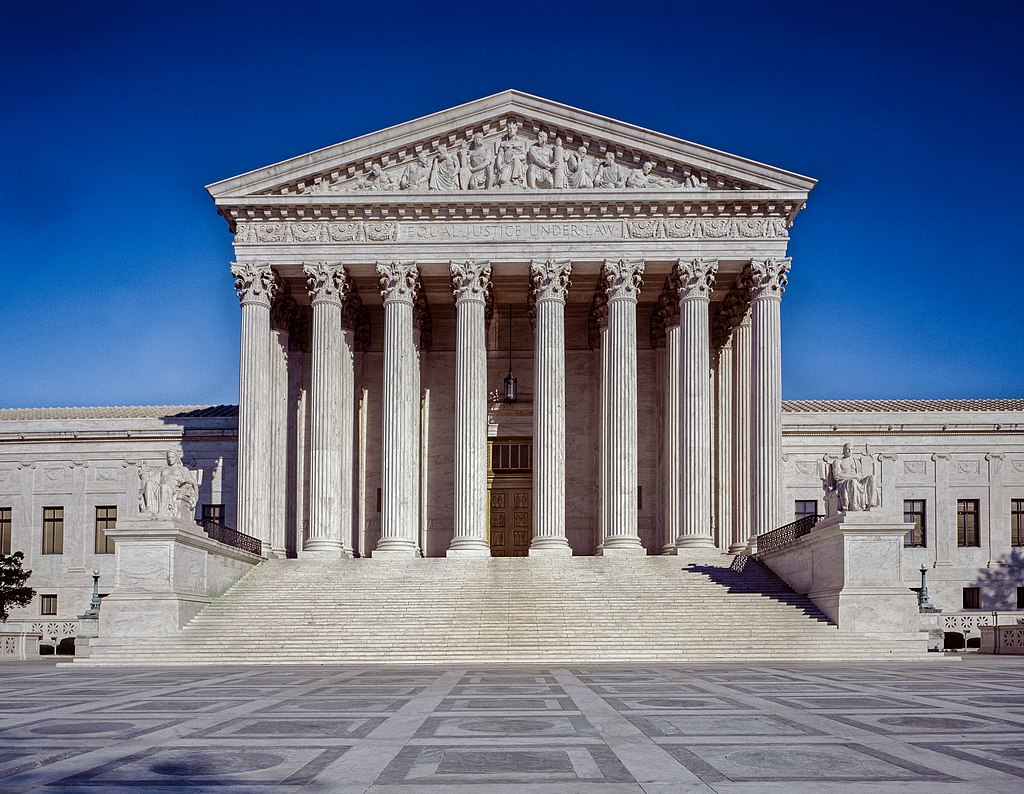
    I still remember the moment when my wife got an update on her phone about a leaked Supreme Court document that SCOTUS was going to overturn the historic Roe v Wade decision from 1973.

    Before that, I never thought I’d see the day. Today, it became official as the court overturns a constitutional right to abortion.

    The aftermath of this decision will lead to intense debate. From the most ardent supporters of abortion, there will be sackcloth and ashes. Over the past several weeks, we’ve heard the various talking points about how necessary abortion is, and about how women will just do them illegally.

    Overturning Roe doesn’t make abortion illegal. But it does give states broader authority to limit abortion. Numerous states already had laws to limit abortion already in place in case Roe was overturned.

    Sadly, all abortions will not yet be stopped and there is still more work to do. But lives will be saved.

    Before Roe v. Wade was decided by the Supreme Court in 1973, 30 states had made abortion illegal and it was only allowed under certain circumstances in 16 more. We hear a lot about democracy and “threats to democracy.” Roe was a threat to our humanity. Roe went against the will of the people and in the process, led to horrendous casualties. 

    We’ve made termination the easy way out over choosing life. We’ve undermined the value of life of those conceived in cases of rape and incest and made them political pawns as if their lives are expendable. We’ve talked about people being raised in less stable families as if they’d be better not being able to live at all. Millions of people who have lived through similarly challenging upbringings would beg to differ. 

    In the 50 years since Roe, I think of the sixty millions of babies who have been aborted and I don’t understand how all people aren’t heartbroken by that number. Tens of millions of lives have been created and terminated. Tens of millions of lives have been created yet never got to be lived. We’ve devalued life. We’ve taken something precious and made it a problem to be dealt with. We’ve taken something as tragic as abortion and turned it into a big business, both for abortion providers and those who work to lobby on its behalf. 

    Fifty years of this barbarity. I think of the millions of lives lost but also the kids and grandkids those people would have had. At the end of the movie Schindler’s List, they give Liam Neeson (who plays Oskar Schindler) a ring with an inscription from the Talmud which says “whoever saves one life, saves the world entire.” 

    Thanks for reading!