Josh Benner

Category: Review

  • The gospel in Home Alone

    The gospel in Home Alone

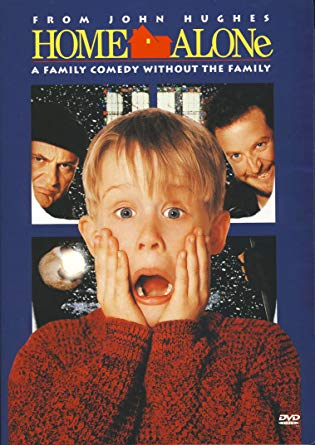
    Like many Americans, one of the ways I celebrate the Christmas season is watching Christmas movies. Some of my favorites include A Muppett Christmas Carol, The Santa Claus, and Elf. But my all time favorite Christmas movie, by far, is Home Alone.

    Many classic Christmas movies have wonderful redemption themes (Christmas Carol is a great example of this). But Home Alone revolves around redemption. A couple of years ago, Les Lanpere of the Reforemd Pubcast made a video outlining redemption themes and asking if Kevin’s character finds faith in the film?

    It’s a fascinating argument that Lanpere presents (and as much as I enjoy Home Alone, he’s clearly put much more thought into it than I have). Now, it’s impossible for me to not watch Home Alone through the redemptive lens that Les gave to it.Spoiler alerts (although who hasn’t seen Home Alone?!) 

    Early in the movie, Kevin is having conflicts with several family members, his older brother, his cousins, his parents, his uncle. And he wishes that they’d all disappear. This represents sin. It’s the eve of a special family trip to Paris over Christmas.

    The following morning, Kevin gets his wish! The family is running late to the airport for their Paris trip. Through a headcount mishap, they leave, thinking that Kevin is in one of their shuttle vans. With the family off to Paris, Kevin awakens to discover that he is Home Alone. At first, he has a blast, basically doing whatever he wants but he will eventually begin to miss his family. He finds a department store Santa and expresses his wish to have them back, but he sees his powerless this figure is to bring restoration. This represents the false hope that idols can bring.

    There is a second conflict in the movie: the Wet Bandits, two burglars who have been prowling in their neighborhood and robbing houses when families are traveling. They know that the McCallister’s are going to Paris. The Wet Bandits essentially represent evil in this movie (though comically).

    Kevin finds out about their plot to strike his home. Since he knows that Santa can’t help him, on the night of their attack, he goes to church. A choir is singing hymns. Old Man Marley walks up to Kevin. He was introduced in the movie when Kevin’s brother Buzz told Kevin an urban legend about Marley being a killer. But when he introduces himself to Kevin, Marley is kind. Marley is a Messianic figure in this movie. He asks Kevin if he’s been good, Kevin admits that he has not. Marley tells Kevin he’s come to the right place. Marley also tells Kevin about a strained relationship with his son (prodigal son).

    Back at the house, Kevin works on his plans to protect his home. We all see him pray before his evening meal. The dinner scene has essentially no relevance to the movie, aside from the fact that it shows him praying. Something that the family had not previously done. The robbers are stopped time and again, but eventually catch up to Kevin. In one of the most striking theological symbols of the movie, Harry is about to “devour” Kevin (bite his fingers) when Old Man Marley comes in at the last moment to intervene and save Kevin.

    On Christmas morning, Kevin’s mother (who had been trying to get back to him throughout the film) returns home. The rest of the family follows soon after. We see restored relationships. We see the bad guys defeated.

    The movie is a masterpiece.

    Most importantly, it is a picture of the gospel. We have sinned against God, but we have a savior who has come to rescue us. Jesus was born on the first Christmas. He came to do what we could not: to reconcile us to God, to fix the relationship that had been broken. We could not do it on our own efforts (I actually take the scene of Kevin’s plan of stopping the Wet Bandits as being symbolic of this). He was eventually caught by them and needed a savior.

    That savior is Jesus. He delivers us from sin. He restores us to God. He brings us life. He came to do that for all who accept his grace and trust in him.

    Let us not trust in ourselves, let us not trust in our own pursuits, let us not trust in our own efforts or plans. Like the Santa who Kevin goes to visit, anything aside from God will fail us. We must go to the Lord himself.

    Originally published December 19, 2018

  • The Gospel According to Spider Man

    The Gospel According to Spider Man

    Over the Christmas holiday, I saw the new Spider Man movie “No Way Home.” The movie stars Tom Holland. I’m not the biggest fan of the super hero genre but I absolutely loved this new movie. I thought it was the best superhero movie I’ve seen since the Dark Knight.

    Part of what I loved so much about the movie were its rich gospel themes.

    Spoilers, spoilers, spoilers

    If you haven’t seen the movie, I will talk at length about the plot. I never want to spoil a film for anyone, so if you care about seeing the new movie, I’d stop reading here until you’ve viewed the movie.

    Reviled by the world

    At the end of the most recent Spider Man movie “Far from home,” Spider Man’s true identity of Peter Parker has been revealed and he’s been framed for murder. At the beginning of No Way Home, there is intense media scrutiny and a public outcry. The only people who are loyal to Spider Man are his girlfriend, best friend, his aunt, and Harold “Happy” Hogan. These people are the loyal disciples of Spider Man.

    Peter Parker is less concerned about himself but feels terrible that the lives of those closest to him have been turned upside down. He asks Dr. Strange to cast a spell which will erase his identity from everyone’s memories. At first this sounds great to Peter Parker/Spider Man, but it will also erase the knowledge from his loved ones. Parker keeps asking Dr. Strange to alter the spell. In the process, alternate universes are opened up and the villains of previous Spider Man movies are released into the present day.

    A fallen world

    Spider Man quickly contains all of the villains and Dr. Strange creates a way to send all of them back to their original universes. This will result in all of the villains dying.

    Spider Man rejects this idea. He wants the bad guys to get a second chance. He believes that if they could take away their powers, they could reprogram them and they wouldn’t be evil. What’s interesting is that none of the bad guys have the desire to change.

    It makes no sense.

    These people are evil. Watching the movie, you’re thinking “just send them back. These guys are the bad guys.”

    But that’s the gospel. It’s not just that we make a couple of mistakes here and there. We are sinful and live in rebellion against a holy God.

    Given new life

    The bad guys don’t want to change. It actually comes from Spider Man’s work in taking away their power and reprogramming them. That too is a theological point where sinful men do not decide they want to become holy. Even that must come as a gracious act of God.

    The first person whom Spider Man works on is Doc Ock. At first, you wonder “has he really changed?” But before you can see if he has or not, the Green Goblin (who has pretend to be interested in changing for the good) betrays Spider Man. Spider Man’s friends have been holding onto Dr. Strange’s ring and are able to open up portals into alternate universes. They summon two different Spider Man’s from other universes (and former Spider Man stars Toby Maguire and Andrew Garfield).

    The Super Trinity

    While the Holy Trinity is mysterious and nothing in our world can adequately compare, it is interesting that you suddenly have three Spider Man’s who are all distinct from each other and who are all Spider Man. In the movie, they jokingly address themselves as Spider Man “1, 2, and 3.” Spider Man’s 1, 2, and 3 are all Spider Man but 1 is not 2, 2 is not 3, and 3 is not 1.

    With any superhero character, you have this Christian theme of two natures. Spider Man is fully man and fully superhero.

    The Triune Spider Men join forces to work redemption for the villains.

    Born again

    In the Spider Man movie, once he has worked in the villain, there is a supernatural transformation that takes place. They are totally changed. Those who are evil and hateful become humbled and good. Spider Man has a way to cure them of their evil and it’s a cure that can only come from Spider Man.

    Discipleship

    Doc Ock was the first person whom Spider Man had cured. Later in the movie, you see him work to help save Spider Man when he’s in a perilous situation. The transformation that’s happened in him is genuine.

    Sacrifice

    The three Spider Men are ultimately successful in transforming all of the villains. But before the Green Goblin had been restored, he had opened up the multiverse which would bring in any more villains. There is only one option. Spider Man must “die.” He doesn’t actually die in the movie, but his memory must be erased from everyone, even from those who know and love him. And in that sense, he must sacrifice himself and die to the world in order to save the world.

    The gospel

    I know it’s just a movie. But it has powerful gospel themes. Because the world is fallen and sinful. And Jesus bring salvation and a new heart and a new life to all who believe in him and who are redeemed by Christ. And the only way for Jesus to redeem the world was for him to die. Not a symbolic or metaphorical death but to literally die. He lived the life we could not live and died the dead that we deserved so that all who believe in him can have eternal life.

    Thanks for reading! If you liked, please comment, share, and subscribe.

  • Best selling “Caste” another social justice screed that sells misery

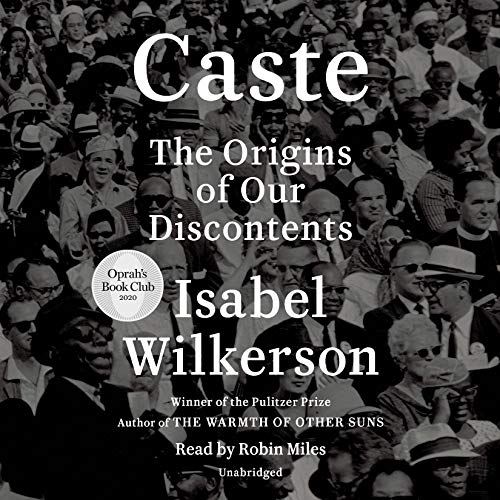
    Isabel Wilkerson’s new book “Caste: the origins of Our Discontents” is currently number two on the New York Times Best Seller list. I have no doubt that this book will join other works like White Fragility in the Social Justice canon.

    The basic premise of the book is that America is (and always has been) a racially discriminatory caste system.

    There are varying opinions on this notion. I would argue that, more than anything, America is a meritocracy where anyone can use their talents and work ethic and achieve goals for bettering their lives and those for their family. But my point with writing isn’t primarily arguing against Wilkerson’s suggestion that America is a caste system.

    My biggest concern from the book is the toxic and hopeless ideology Wilkerson spreads. The book offers very little in the way of suggestions to make a better world. It’s 447 pages of beating the drum of how unfair the American system is. She’s profiting greatly off of selling victimhood.

    But what’s even worse is that she’s giving people limitations. There are two opposing views. One of them is that this is a country where people can use their talent and work ethic and accomplish goals build the life they desire for themselves and their families. People of all races and backgrounds overcome humble beginnings and circumstances everyday.

    Wilkerson’s idea is that a racist system irrevocably locks a person into a caste. The world is setup against you. If you’re from a “lower caste” and succeed, it’s in spite of the caste system (which will be angry that you’ve succeeded because you’ve failed to fall in line with where you’re supposed to be).

    There’s a fatalism and existential despair in going through life thinking that the world is setup against you. There’s nothing that is more disempowering that that.

    In the opening chapters of the book, Wilkerson compares America to a house with cracks in its foundation. While people living today didn’t build the house, we have to live with it and the faulty foundation. We need to address the structural flaws in the home. But then Wilkerson all but ignores steps which have been taken for more than a century and a half such as the Civil War, the Civil Rights Movement, constitutional amendments, and other federal laws.

    And while she begins the book by saying that we didn’t create the problems that we have today, she later focuses on how Americans from the “upper caste” intentionally enforce this caste system. Wilkerson says: “Like the cast on a broken arm, like the cast in a play, a caste system holds everyone in a fixed place. For this reason, many people – including those we might see as good and kind people – could be casteist, meaning invested in keeping the hierarchy as it is or content to do nothing to change it, but not racist in the classical sense, not active and openly hateful of this or that group.”

    In the prologue, the epilogue, and throughout the book, Wilkerson compares the American caste system to Nazi Germany. She mentions Hitler more frequently in the book than she mentions Abraham Lincoln, Martin Luther King, Jr, and Frederick Douglas combined.

    One of the most troubling quotes in the book was found on page 268 where she argues that white people – no matter how bad their lives are – can take solace that they’re not minorities: “Those accustomed to being the measure of all that is human come to depend on the reassurance that, while they may have troubles in their lives, at least they are not at the bottom. As long as the designated bottom dwellers remain in their designated place, their own identities and futures are secure.” Wilkerson quotes sociologist Andrew Hacker saying, “No matter how degraded their lives, white people are still allowed to believe that they posses the blood, the genes, the patrimony of superiority. No matter what happens, they can never become ‘black.”

    Seriously? Who thinks that way?

    She looks at everything in her life, throughout history, and in contemporary American culture through a racial lens. For instance, she has a chapter on Barack Obama and talks of how most white people did not vote for him, and then proceeds to give numerous examples of times when people opposed Obama and chalks them up to racism. There’s never any nuance. There’s no consideration that people might politically disagree with his progressive policies. Throughout the book, she acts like conservatives works to maintain the caste system against liberalism. I’d argue that liberalism is what keeps people in poverty by working against invaluable social structures while major cities are essentially one-party rule and they’re rife with crime and poverty and have criminally bad school systems. No, there’s not a caste, but it’s those policies which keep people poor.

    She gives examples from her own life (such as a bad dining experience at a restaurant) as obvious examples of racism. But that’s what much of the book is. Anecdotes and stories rather than hard data to back up her audacious claims.

    As I have said, it’s a book that has no message of hope and says very little about reconciliation. The closest the book came to hope was Wilkerson looking forward to 2042 when demographers predict that minorities in America will outnumber caucasians (although she then quickly suggest that the caste will be expanded to include some of these groups in order to maintain the caste system).

    Thanks for reading! Don’t forget to comment, like, and subscribe

  • The gospel in Endgame

    Avengers_Endgame_poster.jpg
    Avengers Endgame has been in theaters for a week and it’s already the sixth highest grossing film of all time. It was 11 years ago today that Ironman was released. Over the last 11 years (and 22 movies), they’ve all built up to Avengers Endgame. (more…)

  • New movie looks into Kermit Gosnell and his house of horrors abortion clinic

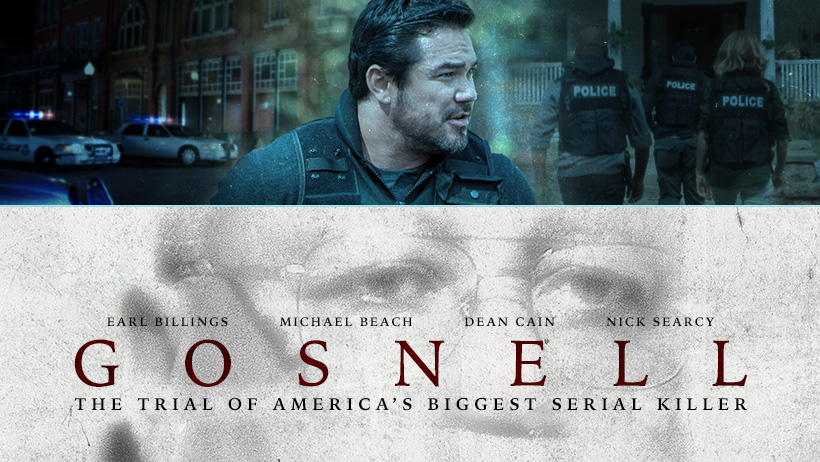
    Gonsell_Facebook_Banner_820x462.jpg
    I saw the new movie “Gosnell: The Trial of America’s Biggest Serial Killer” about former Philadelphia abortion doctor Kermit Gosnell who was sentenced to three life sentences for delivering live babies and then murdering them.

    For starters, I think it’s a movie that a pro-life person (such as myself) will like. And I think pro-choice people will sit this one out. I don’t know if I really see minds getting changed as a result of this movie.

    Given Gosnell’s low budget, I thought it was very well done. And while it’ll undoubtedly cater to a largely Christian audience, it’s not a family film (it’s rated PG-13). And the subject matter is difficult as it talks about abortion and Gosnell’s lack of regard for the lives of the babies he murdered.

    You have a man arrested for running an abortion clinic despite the fact that he wasn’t board certified, he had staff doing medical procedures who hadn’t been properly trained. He was working in squalid conditions. The end credits show a picture from the initial law enforcement raid with a stray cat inside the clinic. One of the first scenes of the movie features the investigators going through the clinic and finding body parts of babies discarded in various places, such as refrigerators.

    The man was a butcher. Late term abortions. Doing procedures in an unsanitary environment. Inducing labor and then murdering babies who were born.

    One of the things the movie tries to do is capture the inattention from the media regarding the story at the time. Ironically, that is also true of the movie. It’s not like Gosnell was operating 90 years ago. His clinic was raided in 2011 and he was convicted in 2013.

    Writing for the DailyWire, Matt Walsh points out that Rotten Tomatoes has just six reviews of Gosnell. Walsh offers a key reason as to the lack of attention to Gosnell’s story:

    Any case of illegal abortion will inevitably lead to difficult questions about legal abortion. After all, what is the substantive difference between killing a baby moments after it leaves the birth canal and killing it moments before? How can an advocate of unrestricted abortion become an opponent of infanticide? Any argument offered to justify late-term abortion must also apply to post-term abortion.

    -Matt Walsh, DailyWire

    I think Walsh is right on this point.

    How do we view what Gosnell was doing?

    Was he a crusader who was trying to help women in a poor community? That was part of his defense.

    Or was he a murderer?

    Was what he did technically illegal? Delivering baby and using scissors to snap their necks. Was it technically illegal but not really that different from aborting a baby a few inches further into the birth canal?

    Or is it murder?

    I believe that answer is clear.

    It’s a difficult issue within our larger society. When does one have a right to life? It’s a pretty fundamental question.

    I understand that many people are pro-choice but don’t support late term abortion (although it is legal in some states). But I think the distinctions people try to make are arbitrary. That a baby has a right to life once there’s a heartbeat or once the baby is viable and could survive outside the womb.

    What is it about those stages that inherently confers a right to life?

    From the moment of conception, a baby is distinct from both of the parents and a separate life.

    Gosnell did a little over a million dollars in this opening weekend. I would think the audience was overwhelmingly people who are pro-life. As the Los Angles Times movie review said “The film never loses sight of the choir to which it is plainly preaching.”

    Will this movie be a turning point in the national conversation on abortion? I doubt it.

    But it is a movie that shows these abortions for what they were: murder.

    Thanks for reading! I’d love to hear what you think, and don’t forget to subscribe! 

    Josh Benner is the associate pastor at Cornerstone Evangelical Free Church in Fergus Falls, Minnesota and has a Master of Divinity from Trinity Evangelical Divinity School. He enjoys writing about faith and culture. He lives with his wife Kari in Minnesota.

    Let’s connect!
    Facebook
    Twitter
    Instagram