Josh Benner

Category: Theology

  • New movie looks into Kermit Gosnell and his house of horrors abortion clinic

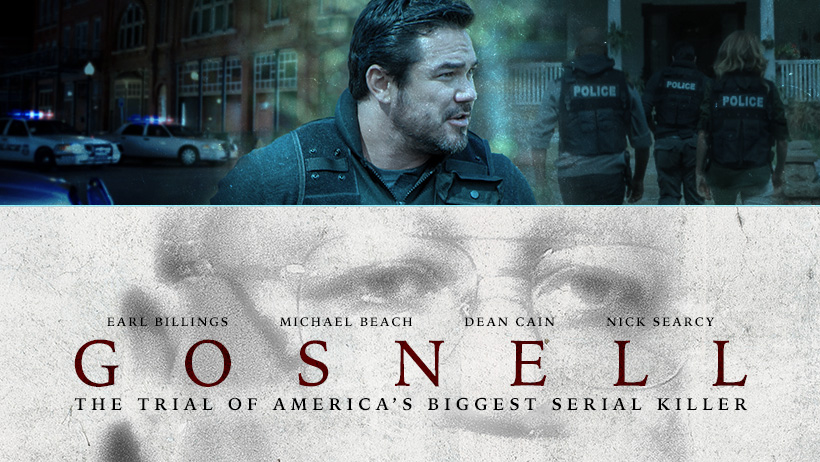
    Gonsell_Facebook_Banner_820x462.jpg
    I saw the new movie “Gosnell: The Trial of America’s Biggest Serial Killer” about former Philadelphia abortion doctor Kermit Gosnell who was sentenced to three life sentences for delivering live babies and then murdering them.

    For starters, I think it’s a movie that a pro-life person (such as myself) will like. And I think pro-choice people will sit this one out. I don’t know if I really see minds getting changed as a result of this movie.

    Given Gosnell’s low budget, I thought it was very well done. And while it’ll undoubtedly cater to a largely Christian audience, it’s not a family film (it’s rated PG-13). And the subject matter is difficult as it talks about abortion and Gosnell’s lack of regard for the lives of the babies he murdered.

    You have a man arrested for running an abortion clinic despite the fact that he wasn’t board certified, he had staff doing medical procedures who hadn’t been properly trained. He was working in squalid conditions. The end credits show a picture from the initial law enforcement raid with a stray cat inside the clinic. One of the first scenes of the movie features the investigators going through the clinic and finding body parts of babies discarded in various places, such as refrigerators.

    The man was a butcher. Late term abortions. Doing procedures in an unsanitary environment. Inducing labor and then murdering babies who were born.

    One of the things the movie tries to do is capture the inattention from the media regarding the story at the time. Ironically, that is also true of the movie. It’s not like Gosnell was operating 90 years ago. His clinic was raided in 2011 and he was convicted in 2013.

    Writing for the DailyWire, Matt Walsh points out that Rotten Tomatoes has just six reviews of Gosnell. Walsh offers a key reason as to the lack of attention to Gosnell’s story:

    Any case of illegal abortion will inevitably lead to difficult questions about legal abortion. After all, what is the substantive difference between killing a baby moments after it leaves the birth canal and killing it moments before? How can an advocate of unrestricted abortion become an opponent of infanticide? Any argument offered to justify late-term abortion must also apply to post-term abortion.

    -Matt Walsh, DailyWire

    I think Walsh is right on this point.

    How do we view what Gosnell was doing?

    Was he a crusader who was trying to help women in a poor community? That was part of his defense.

    Or was he a murderer?

    Was what he did technically illegal? Delivering baby and using scissors to snap their necks. Was it technically illegal but not really that different from aborting a baby a few inches further into the birth canal?

    Or is it murder?

    I believe that answer is clear.

    It’s a difficult issue within our larger society. When does one have a right to life? It’s a pretty fundamental question.

    I understand that many people are pro-choice but don’t support late term abortion (although it is legal in some states). But I think the distinctions people try to make are arbitrary. That a baby has a right to life once there’s a heartbeat or once the baby is viable and could survive outside the womb.

    What is it about those stages that inherently confers a right to life?

    From the moment of conception, a baby is distinct from both of the parents and a separate life.

    Gosnell did a little over a million dollars in this opening weekend. I would think the audience was overwhelmingly people who are pro-life. As the Los Angles Times movie review said “The film never loses sight of the choir to which it is plainly preaching.”

    Will this movie be a turning point in the national conversation on abortion? I doubt it.

    But it is a movie that shows these abortions for what they were: murder.

    Thanks for reading! I’d love to hear what you think, and don’t forget to subscribe! 

    Josh Benner is the associate pastor at Cornerstone Evangelical Free Church in Fergus Falls, Minnesota and has a Master of Divinity from Trinity Evangelical Divinity School. He enjoys writing about faith and culture. He lives with his wife Kari in Minnesota.

    Let’s connect!
    Facebook
    Twitter
    Instagram

  • Young Sheldon episode tackles struggles in faith

    Young_Sheldon_title_card.png

    While it’s a comedy about a boy-genius, CBS’s “Young Sheldon” took up some heavy theological topics in last weeks episodes titled “A crisis of faith and octopus aliens.”

    The show is a spin off of the Big Bang Theory where Iian Armitage plays Big Bang Theory character Sheldon Cooper as a child. It’s a comedy featuring this boy who’s incredibly brilliant in a family that’s pretty ordinary. His mother Mary (played by Zoe Perry) is an Evangelical Christian.

    In this episode,  a family friend passes away and Mary’s character is thrown into a Spiritual crisis.

    Her pastor tries to help by saying what works for him (serving others). Serving others is great. Serving others is healthy and it can be helpful to some people in a time of depression, because it shifts your focus onto others and their needs. In the episode, Mary attempts to throw her into service, church activity, Bible studies, plants a new garden. Yet she still can’t get over her sadness.

    She turns to drinking and withdrawing from faith, stops saying grace and doesn’t go to church one weekend. Sheldon notices the changes in her behavior and reaches out in his concern.

    “Faith means believing in something you can’t know for sure is real, and right now I am struggling with that,” Mary says.

    Sheldon doesn’t believe in God, but throws in an apologetic for his struggling mother:

    “Did you know that if gravity was slightly more powerful the universe would collapse into a ball? Also if gravity was slightly less powerful the universe would fly apart and there’s be no star or planets,”

    “Gravity is precisely as strong as it needs to be and if the ratio of the electromagnetic force to the strong force wasn’t one percent, life wouldn’t exist, what are the odds that would happen all by itself?”

    -Young Sheldon

    When his mom question points out that Sheldon doesn’t even believe in God, he says he doesn’t, “but the precision of the universe at least makes it logical to conclude there’s a creator.”

    I really thought it was a great episode. I appreciate how it dealt with the subject of a person hitting a Spiritual wall. Because a significant part of Mary’s character both on Young Sheldon (and the same character on Big Bang Theory) is that she’s an Evangelical Christian. I didn’t think the episode was making fun of faith, rather I thought it was a sincere look into real struggles.

    The road of faith is not without its twists and turns, not without its bumps. It’s not without construction and slow downs.

    The temptation can be to want to make ourselves busy. That’s what Mary’s character initially does. But in the face of tragedy, in a world where people sin and where death is a result of that sin and where death is a consequence of the fallen world that all will face, to take that to God, and to lament the death that is in the world. It was not the original creation for the world, and it goes against our natural inclinations. Lament is a common practice in the Bible. It’s a practice that I think the modern American church (especially WASPs often overlook).

    Lament is an expression of grief and sorrow. Lament is based in the reality of who God is. Lament is based in a high view of the goodness of God in a fallen world.

    I think it’s important to be humble and to recognize that God is God and we are not. That God is sovereign.

    I think it’s important for Christians to remember the promises of God. And to remember them for what they are, not as caricatures or distortions. God doesn’t promise that life will be without pain (he promises the opposite). God doesn’t promise life will be without loss (he promises the opposite). God doesn’t promise that we’ll always be happy with our situations, or that things should be easy, or that we’ll be free of suffering. He promises the opposite.

    Sometimes our major misgivings with God come from a faulty understanding of who God is or what he has promised. Life is hard. The Bible doesn’t hide from that reality. Some churches can create this pressure that everything should always be ok, or that if you have enough faith, you should always be happy. Those aren’t Biblical views.

    The promises that God does make are that those who mourn can be blessed, for they shall be comforted (Matthew 5:4). That everyone who calls upon the name of the Lord shall be saved (Romans 10:13). That nothing can separate us from the Lord of God (Romans 8:38). That there is grace and redemption for sin and that God has given us every Spiritual blessing (Ephesians 1:3). That God hears the prayers of his people (1 Peter 3:12). And so many more promises the Bible makes.

    Sadly, many people turn away in times of despair.

    Where is your hope?

    People put hope in a lot of different things. For some, they put hope not in God but in the Church. The Church is great, but that is not our hope. For some, people put their hope in their efforts, their pursuits, their activities. That too will inevitably fail you. Our hope must be in the good, loving, and eternal God of the universe.

    Spiritual depression is common in the Christian life. Some of the greatest leaders in the history of the Church struggled with it. Because, as Mary said in the show, faith is believing in something you can’t know for sure. And when that is coupled with our sin, with our unfulfilled hopes, and with the sin that is in the world, sometimes there are struggles. There can hopefully be solace in knowing that. You’re not alone.

    And while we change, God is unchanging. And God continues to invite us into life through his son Jesus.

    Thanks for reading! I’d love to hear what you think, and don’t forget to subscribe! 

    Josh Benner is the associate pastor at Cornerstone Evangelical Free Church in Fergus Falls, Minnesota and has a Master of Divinity from Trinity Evangelical Divinity School. He enjoys writing about faith and culture. He lives with his wife Kari in Minnesota.

    Let’s connect!
    Facebook
    Twitter
    Instagram

  • Being “born again” and why it’s so important

    photo-1529023026701-2c07a59666f4.jpeg
    In John 3, a Pharisee named Nicodemus has seen the ministry of Jesus and he’s intrigued by this man. He approaches the Lord and Jesus tells this respected Jewish leader, who had dedicated his life to knowing the Bible and following God’s laws, that he must be “born again.”
    Being born again is also called regeneration and it is new life given by God through the Holy Spirit.
    In John 3, Jesus says that a person cannot see the kingdom of God without being born again (John 3:3).
    Jesus words on the subject matter. He is the authority.
    He’s telling Nicodemus, but he’s also telling all of us what must be done.
    The one who died and rose and lives today died that death so we could have life.
    There’s nothing else that counts. You can’t be good enough. You must have faith. The Spirit isn’t given to everyone, only to those who are born again. And you can have that if you believe in Jesus by faith.
    People like to believe in false gospels, because they hate the idea that Jesus is the only way.
    But Jesus was lifted up so that everyone who believes can have eternal life.
    Without that, you don’t have eternal life.
    Jesus died once so those who are born twice only have to die once.
    Everyone else will die twice. There will be their physical, earthly death, and also the eternal death and torment apart from God.
    Unless one is born again, he cannot see the Kingdom of God.
    It’s not up for debate in the same way that the laws of gravity aren’t up for a debate. They’re what they are regardless of if you like them.
    Born once, die twice. Born twice, die once.
    Have you been born again? Have you come to faith in Jesus?
    We don’t get to walk into heaven on our terms.
    Jesus is the way.
    Because a Christian is born again, they are given this spiritual life, they are justified, which means they are in right legal standing with God. They are declared holy and righteous. A person is adopted into the family of God and is promised a heavenly inheritance. A person is sanctified which is the continual process of being made Holy and is equipped with Spiritual gifts.
    All of these things happen to a person who has been born again and has faith.
    Without being born again, a person doesn’t have the Spirit which means they’re not born again.
    If a person doesn’t have the Spirit, they’re not justified. Jesus’ grace does not apply to them if they haven’t responded in faith to the gospel.
    You must be born again.
    It all goes together.
    You don’t have an inheritance if you’re not born again because you haven’t been adopted if you haven’t been born again.
    They have nothing to do with how nice we are, how moral you are. This entire system flies in the face of a person’s ability to earn salvation.

    Thanks for reading! I’d love to hear what you think, and don’t forget to subscribe! 

    Josh Benner is the associate pastor at Cornerstone Evangelical Free Church in Fergus Falls, Minnesota and has a Master of Divinity from Trinity Evangelical Divinity School. He enjoys writing about faith and culture. He lives with his wife Kari in Minnesota.

    Let’s connect!
    Facebook
    Twitter
    Instagram

  • Proverbs: A wise way and a foolish way

    photo-1500488071311-1ecc17c0fb2e.jpeg

    There is a way that seems right to a man,
    but its end is the way to death.

    -Proverbs 14:12

    The Book of Proverbs is one of the most beloved books of the Bible. Hundreds of Proverbs covering topics ranging from finance, to time management, to interpersonal relationships, to raising children, the words we use, and the importance of hard work.

    I think it’s easy to take Proverbs as pithy statements. They are that but they’re also so much more. Proverbs are profound statements that point us to the wisdom of God and the reality of the world he has made and the best way to live is in accordance with God’s creation. Proverbs are meant to be internalized.

    Trying to view the world with Godly wisdom should be the pursuit of our lives. There is a way that seems right to man, but its end is the way to death.

    There are two ways to go. There is a way that is in accordance with the wisdom of men, there’s a way that’s what we want to do, there’s a way that’s enticing. In the end, that way leads to death, to destruction, to ruin, to sin.

    Which way are you going?

    Thanks for reading! I’d love to hear what you think, and don’t forget to subscribe! 
    Josh Benner is the associate pastor at Cornerstone Evangelical Free Church in Fergus Falls, Minnesota and has a Master of Divinity from Trinity Evangelical Divinity School. He enjoys writing about faith and culture. He lives with his wife Kari in Minnesota.

    Let’s connect!
    Facebook
    Twitter
    Instagram


  • Supreme court hearings: the search for truth

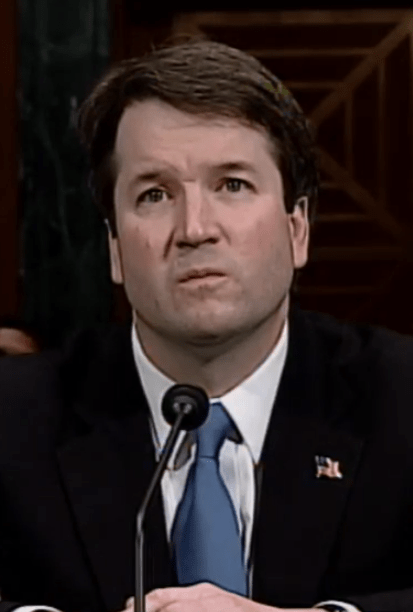
    Brett_Michael_Kavanaugh_(2004).png
    I spent a few hours watching testimonies from Brett Kavanaugh and Christine Blasey Ford. Many will have conclusions that align with what they believed going into today’s hearing.

    It was a lot of political grandstanding. The vote is still tomorrow. Half the country will be happy that Kavanaugh made it through. Half the country will be disgusted. And Saturday will be a new day to debate and argue and tear ourselves apart politically.

    I don’t know what really did or didn’t happen. It doesn’t bother me to acknowledge that. I wasn’t there. I don’t personally know these people. I think some people make the mistakes of inherently dismissing the allegations. I think others make the mistake of taking the allegations as if they’re absolute facts.

    I don’t know. I think we get so committed to wanting to be right that we don’t care about the truth. Truth is inherently good and worth knowing. And the goal of justice should always be to do the absolute best we can to evaluate things based on truth. Because these are real people who have real families and lives.

    I do think that one of the great strengths of our criminal justice system is that people are innocent until proven guilty (I realize the hearing was not a criminal trial). I do think there needed to be some proof of the allegations before potentially destroying a man.

    In the Bible, God is a God of truth. The world spreads a lot of lies and often finds reasons to put an agenda ahead of truth. We often look for confirmation rather than reality.

    Jesus came full of grace and truth (John 1:17). The Word of God is truth (John 17:17). Jesus is called THE truth (John 14:6).

    Truth is true regardless of if we want it to be. Truth is true regardless of if it’s hard. Truth is true regardless of if we don’t want it to be. For the sake of our society, truth needs to be a virtue that we never stop pursuing.

    For all of us, I think that’s important to keep in mind. Not just in this case, but whenever we have an opinion, think critically, have a disagreement. Our love of truth needs to matter more than a desire to “win.”

    Thanks for reading! I’d love to hear what you think, and don’t forget to subscribe! 

    Josh Benner is the associate pastor at Cornerstone Evangelical Free Church in Fergus Falls, Minnesota and has a Master of Divinity from Trinity Evangelical Divinity School. He enjoys writing about faith and culture. He lives with his wife Kari in Minnesota.

    Let’s connect!
    Facebook
    Twitter
    Instagram