Josh Benner

Tag: 1st amendment

  • Legal victory for Christian organization at the University of Iowa

    800px-University_of_Iowa_seal.svg.png
    A Christian organization at the University of Iowa had a legal win this week.

    The University of Iowa has a human rights policy to which it holds registered student organizations. In this policy, it disallows students organizations from treating people different based on: “race, creed, color, religion, national origin, age, sex, pregnancy, disability, genetic information, status as a U.S. veteran, service in the U.S. military, sexual orientation, gender identity, associational preferences, or any other classification that deprives the person of consideration as an individual.”

    But several student organizations require that leaders and members adhere to traditional Christian values, which includes abstaining from sex outside of marriage as well as not engaging in same-sex relationships.

    This week, a U.S. District Court ruled that the university cannot revoke the recognized status of registered student organizations who uphold Christian principles. This specific suit was brought by Business Leaders in Christ. In 2017, an openly gay student was denied a leadership position in BLinC.

    Recognition of the university matters for several reasons: it allows an organization to participate in various university functions, it allows the organization to use campus space for meetings, it makes an organization eligible to apply for various types of university funding, among other benefits.

    This is a win for all of the Christian organizations on campus. The university was selectively discriminating against faith-based organizations. All sorts of registered student organizations violate the Iowa policy, and are still allowed to exist. You have fraternities which only allow men, sororities which only allow women. Iowa has a registered Chinese student organization, which is only open to Chinese students. There’s a women’s a cappella group that only allows women.

    But many people in our society hate the moral beliefs of Christianity, and so Christian groups are an easy target.

    Gong forward, I fear that this is something we will continue to see: trying to overrule Christian values and Christians trying to live out those values by attempting to supersede Christian organizations and institutions with discrimination laws.

    Thanks for reading! I’d love to hear what you think, and don’t forget to subscribe! 

    Josh Benner  has a Master of Divinity from Trinity Evangelical Divinity School. He has served churches in Minnesota and Illinois. He enjoys writing about faith and culture. He lives with his wife Kari in St. Louis.

    Let’s connect!
    Facebook
    Twitter
    Instagram

  • Roseanne, the NFL and hypocrisy

    Roseanne_Logo.svg

    Roseanne Barr made an offensive comment about former Obama Administration official Valerie Jarrett. Shortly after, ABC announced they have cancelled the show Roseanne.

    That the show was canceled is not shocking. People don’t like offensive and racially charged comments (nor should we).

    It’s interesting reading Tweets and comments about the cancellation. Many draw a parallel between Barr’s comments and how some will defend her and say the show shouldn’t be canceled. But some of those same people are fine with the NFL banning players kneeling during the National Anthem. This is pointed to as being hypocritical.

    The irony is that the hypocrisy can run on both sides. To think that the players should be able to kneel without consequences yet to think Roseanne should be cancelled is also somewhat hypocritical.

    Because in both instances, it shows us that we cannot always say or do whatever we want without that having ramifications on our professional lives.

    As a society, there are things we don’t like. We don’t like racist comments. We don’t generally like unpatriotic behaviors. People can say whatever they want. People can take whatever political stance they want to make. But that doesn’t mean that there aren’t ever consequences.

    Neither ABC nor the NFL owes it to Roseanne Barr or the players to promote ideals that go against what they stand for.

    Some will disagree with that. “It’s not the same. Players are making a reasonable protest and Roseanne make a comment that can’t be defended.” While we should all be able to agree that what Roseanne said was wrong, millions of people find kneeling during the national anthem just as offensive (if not more offensive) than one woman’s comment.

    Roseanne already had a target on her for various other political comments and comments seen as being racially insensitive. It was wrong to make the comment that she made about Jarrett. It’s not shocking that ABC cancelled the show.

    But it is an unfortunate situation. It’s unfortunate that in a politically charged country where division is high, we had a throwback sitcom that people of various views enjoyed from a time when there were not such heightened political sensitivities. The new Roseanne had the goal of a show where a family who was divided politically and who was navigating the 21st century could still come together in love. That’s a message that we don’t often hear in the media. Because of an unnecessary comment, it’s a voice that will now go silent.

    And the political divide widens.

    But I want to take our attention back to the double standards we so often have. If we are ok with either Roseanne being cancelled or with NFL players being forbidden from kneeling, than we must also accept the other can happen too. Because both are examples that freedom of speech is not freedom from consequences of that speech.

    We must all remember the power of our words and actions. The Apostle James said: “The tongue is a small member, yet it boasts of great things. How great a forest is set ablaze by such a small fire!” (James 3:5). We’re blessed to live in a nation with the First Amendment. It’s a wonderful thing. But let us not assume that words are free of consequences, or that they don’t matter greatly. 

    Josh Benner is the associate pastor at Cornerstone Evangelical Free Church in Fergus Falls, Minnesota and has a Master of Divinity from Trinity Evangelical Divinity School. He enjoys writing about faith and culture. He lives with his wife Kari in Minnesota.

  • California is NOT banning Bible sales

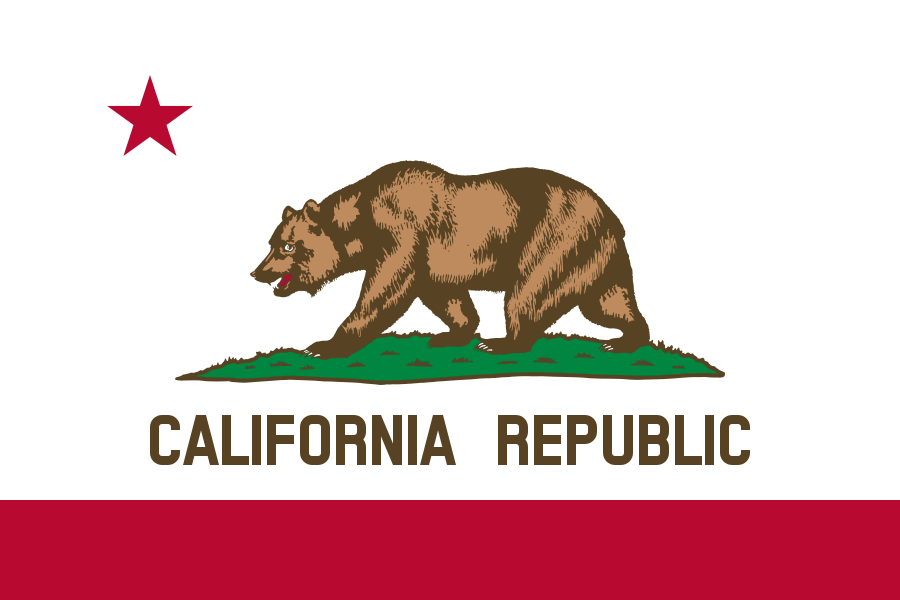
    900px-Flag_of_California.svg.png

    I’ve seen stories circulating about California banning the Bible. I’m also seeing some people sharing links from various websites (none of them are major news sites) talking about this ban.

    All of this is in relation to California Assembly Bill 2943, a bill which is related to “sexual orientation change efforts” also known as “conversion therapy,” which are therapeutic methods aimed at changing a person’s sexual orientation or gender based on psychological and/or spiritual interventions.

    Among the headlines I’m seeing:

    “Liberty counsel warning: California about to ban Bible sales”

    “One step closer to law: could a California bill ultimately lead to the banning of Bibles?”

    “Just in: liberal California lawmakers propose bill to ban sale of Bibles”

    “Developing: California pushes bill that appears to ban sale of Bibles.”

    There are cries of censorship, violating the first amendment. I’ve seen tweets that show the Nazis burning books.

    Since these therapies can be done as commercial business, consumer protection laws would therefore apply.

    From the bill:

    Courts, including in California, have recognized the practice of sexual orientation change efforts as a commercial service, andservice. Therefore, claims that sexual orientation change efforts are effective in changing an individual’s sexual orientation, may constitute unlawful, unfair, or fraudulent business practices under state consumer protection laws. This bill intends to make clear that sexual orientation change efforts are an unlawful practice under California’s Consumer Legal Remedies Act.

    To say that this law is a ban on the Bible in the Great State of California is a falsehood. To anyone who disagrees with that, show me where it says that?

    It doesn’t.

    I feel like there are websites that are writing headlines which misrepresent the facts of this law, for the sake of people clicking on their links. One of the people who’s addressed the law is a man in California who’s running for governor. He’s furthering the myth about what this law does. That seems to be fear mongering.

    We need to be intellectually honest. California is not working on passing a law that bans sales of the Bible.

    I’ve already said the bill doesn’t explicitly set forth a ban. Where in the bill does it implicitly give the right to make a ban on Bible sales?

    I realize that there are some people in this country who are very hostile to Christianity and the Bible. But that doesn’t mean that they’re tyrannical to the point of wanting a ban. And even if a small fringe did want that, it wouldn’t work. This country is 75% Christian.

    Also, let’s say that this did happen. How do you ban the sale of Bibles in a state? People have smart phones where they can DOWNLOAD a Bible. People have Amazon where they can order the Bible from another state. There are independent book stores that sell used books. Even closed off countries with totalitarian rulers who try to actually ban Bibles struggle to do that.

    But that’s not what is happening.

    There are plenty of issues in this country related to religious liberty. California banning the Bible is not one of them.

    I do believe there can be people who really do seek counsel for SOCE. I do think that this bill could infringe upon what therapists and counselors are able to do in working with those clients. From that perspective, I do see how there could be an infringement of religious liberties. And that’s an issue. However that’s a different issue than banning Bible sales.

    Josh Benner is the associate pastor at Cornerstone Evangelical Free Church in Fergus Falls, Minnesota and has a Master of Divinity from Trinity Evangelical Divinity School. He enjoys writing about faith and culture. He lives with his wife Kari in Minnesota.