Josh Benner

Tag: Atonement

  • Why was the cross necessary? Couldn’t God just forgive?

    Why was the cross necessary? Couldn’t God just forgive?

    A person might look at the crucifixion, look at what the Lord did on the cross, and wonder “Why was that the only way? Why was that necessary? Couldn’t God simply forgive us?”

    No.

    This is an idea I’ve heard from Tim Keller before, and it’s an important idea on having a theology of forgiveness.

    In any meaningful way a person has ever wronged you and you’ve forgiven them, when you forgive, you then bear a burden. You bear a burden for the way they originally sinned against you, and whatever you lost in the process: opportunity, time, happiness, money. Whatever it was. You were wronged and lost something. And when you forgive, you bear a cost a second time because you are relinquishing an opportunity to get even, to inflict vengeance upon them.

    And the worse the wrong is, the harder it is to forgive. The more costly the forgiveness, because it’s a greater debt that you’re forgiving. Not to say that people shouldn’t have consequences when they’ve committed crimes or acted violently. But even in those situations, we are called to be forgiving.

    But forgiveness is not as simple as just ignoring a wrong done.

    If someone destroys something you own, you can make them pay for it. That’s often what happens. Or perhaps you and the person can both pay for part of what was destroyed. Or you can personally pay for it. You can bear that cost yourself.

    My point is that in either event, someone has to pay. Forgiveness is not a write-off that where the wrong disappears and is forgotten about. Someone has to pay the price for what was broken.

    So with our sin against God, how does God approach forgiveness? All of the wrongs and injustices in the world. All of the wrongs and sins in our own lives, in our hearts, our actions.

    We could have never paid that price. We could never have done enough to earn our forgiveness. There was no hope.

    But on the cross, we see that Jesus himself bore the cost for us.

    That was the cost of forgiveness. The horrible death he died, the injustice that he faced. All of that shows us the cost of our sin.

    At the cross, we see the love of God.

    God shows his love for us in that while we were still sinners, Christ died for us. 9 Since, therefore, we have now been justified by his blood, much more shall we be saved by him from the wrath of God. 10 For if while we were enemies we were reconciled to God by the death of his Son, much more, now that we are reconciled, shall we be saved by his life.
    -Romans 5:8-10

    Because Jesus bore infinite wrath for sin. There is infinite grace when we turn to him. There is no sin he is unable to forgive. It’s not that he died and can forgive every sin, but he can’t forgive that one, or this one, or what you did, or what you’re struggling with.

    Infinite wrath because of our sin. But infinite mercy on the cross because of his grace.

    If you’re not a Christian, you need to know that Jesus paid for sins on the cross. Jesus showed that he is the way to God. Jesus died so that we could have a relationships with him. He promises eternal life for everyone who comes to him.

    All you have to do is believe in that. The Bible says that faith is credited to you as righteousness.

    “Everyone who calls on the name of the Lord will be saved.” (Romans 10:13)

    The Bible teaches that “there is salvation in no one else, for there is no other name under heaven given among men by which we must be saved.” (Acts 4:12).

    And the proof of that is on the cross. Many other places where people look for salvation, where people look for life.  None of those things will give you life. On the cross, Jesus died so that you could have life.

    You can’t earn God. The cross shows us that. If we could earn it, we wouldn’t have needed Jesus to die.

    1Timothy 2:5-6 says:
    5 For there is one God, and there is one mediator between God and men, the man Christ Jesus, 6 who gave himself as a ransom for all, which is the testimony given at the proper time.

    Jesus said “I am the way and the truth, and the life, no one comes to the father except through me (John 14:6).

    The validation for these things, what testifies to the salvation and ope that is found in Jesus…is the cross.

    Because he died on the first Good Friday. But he rose on Sunday. God has authority over life and death. God has authority over how to be made right with him.

    And while we didn’t deserve it, the good news of the gospel is that he made a way.

    Thanks for reading! If you liked this post, please share and subscribe!

    Originally published April 2, 2018

  • Atonement after The Fall. Studying Genesis 3:21-24

    Atonement after The Fall. Studying Genesis 3:21-24

    The first sacrifice 

    After the fall of Adam and Eve, God had made them new garments from animal skins. 

    Genesis 3:21: 

    ​​21 And the Lord God made for Adam and for his wife garments of skins and clothed them. 

    These are both an act of God’s grace and also a reminder of man’s guilt. Our innocence has been lost because of the fall. 

    This is the Bible’s first sacrifice as God covers Adam and Eve in animal skins. Sacrifices in the Bible point to the final and ultimate sacrifice when Jesus gave his life, and gave up his flesh so that all who believe in him could be forgiven. 

    Exiled from Eden

    In one final act of divine judgment, Adam and Eve are cast out of Eden because of their sin. 

    22 Then the Lord God said, “Behold, the man has become like one of us in knowing good and evil. Now, lest he reach out his hand and take also of the tree of life and eat, and live forever—” 23 therefore the Lord God sent him out from the garden of Eden to work the ground from which he was taken. 24 He drove out the man, and at the east of the garden of Eden he placed the cherubim and a flaming sword that turned every way to guard the way to the tree of life. 

    This penalty is not arbitrary nor is it unfair. 

    The passage has God saying that man has become like one of us. 

    Trinity

    There’s another hint to the Trinity in this verse. 

    Man was told that he’d be like God if he ate of the fruit of the tree. Here God says that man has become like one of us. 

    Who is us? 

    Some might take it similarly to Genesis 1 and suggest God is referring to himself in the plural. This overlooks the theology which develops in the Bible. Man has made himself like the Father, the Son, and the Holy Spirit. 

    And while Adam is now like them, in a sense, he will not be with them as he is removed from Eden. 

    Eden is the place where the tree of life is. God promised death for eating of the forbidden fruit. And so many  must be expelled from the place where there is the tree of life and be placed outside the garden. 

    Returning to Eden

    The rest of the Bible is the story of man getting back to Eden. 

    In the Bible’s closing chapter, an Edenic heaven is depicted in the new heaven, the new earth and the new Jerusalem. In both places, there is the presence of God where there is flowing water, the tree of life, angelic guards, that faces to the east. 

    Thanks for reading! If you liked this post, please share and subscribe. 

  • Understanding the gospel in Yom Kippur

    Understanding the gospel in Yom Kippur

    Originally published September 29, 2017 under the title “A priest, two goats, and salvation”

    Yom Kippur is this weekend.

    For observant Jews all over the world, this evening, the Day of Atonement (Yom Kippur in Hebrew) is celebrated. The Day of Atonement is the most holy of days in the Jewish calendar. It’s an annual picture of forgiveness that people could have. While Christians don’t celebrate this day, it’s one worth studying because everything about it points to Christ and the gospel.

    Atonement refers to God’s work of dealing with our sin. Because of sin, the relationship between man and God has been broken.

    Three significant elements of this day are the high priest, who would make the sacrifices, the goat that he would sacrifice, and a second goat who was set free.

    1. Cleansing of the priest

    When these commands were given, the Israelites are in their desert wanderings. So where do you worship while you’re on this long journey in the desert?

    Well you bring the place to worship with you!

    And so the Israelites traveled with the Tabernacle, which was a tent.

    Now only a priest could go inside the Tabernacle. It was a holy place. And as we’ve said, the holiness of God demands reverence.

    Within the Tabernacle, there was an inner sanctum called the Holy of Holies or the Most Holy Place, and only the High Priest could go in there. And he did it once a year, on behalf of the Israelites. The Day of Atonement.

    Before entering, he had to offer a bull for a sin offering and a ram for a burnt offering to atone for his sins and those of his family. Because the priest was sinful too

    As part of the priest’s preparation for entering the Most Holy Place, the presence of God, was that he had to put on special linen garments. Everything about entering into God’s presence was meant to be holy, set apart, different from everyday life.

    Like we’ve already said, everything in this passage points us to Christ.

    You have the high priest who had to cleanse himself before entering the temple.

    But in the gospels, we see that Jesus is the true High Priest.

    And Jesus doesn’t need to purify himself, or atone for his own sin to enter the presence of the Lord because he is the perfect High Priest.

    Hebrew 7:26 says, “it was indeed fitting that we should have such a high priest, holy, innocent, unstained, separated from sinners, and exalted above the heavens.”

    Keep in mind the purification rituals needed for the priest. The Holiness that was required to enter the presence of the Lord.

    While the Day of Atonement was just one day out of the year, there were animal sacrifices. But because Jesus is holy and righteous, he doesn’t need to purify himself to enter the presence of God. He’s God on earth.

    Hebrews 7:26 says, “it was indeed fitting that we should have such a high priest, holy, innocent, unstained, separated from sinners, and exalted above the heavens.”

    Hebrews 7:27 offers another comment on the priestly system.  “He has no need, like those high priests, to offer sacrifices daily, first for his own sins and then for those of the people, since he did this once for all when he offered up himself.”

    The perfect High Priest and it is only because of Christ’s perfection that we are enabled to enter into the presence of God. He is the one who is our representative before God.

    And on the Day of Atonement, one of the last things the high priest would do before going into the holy of holies was that he would take two goats.

    2. The atonement by the goat 

    The sacrifices the priest has thus far made is for himself.

    Leviticus 16:15 says, “Then he shall kill the goat of the sin offering that is for the people and bring its blood inside the veil and do with its blood as he did with the blood of the bull, sprinkling it over the mercy seat and in front of the mercy seat.”

    Blood is sprinkled in the Most Holy Place and this is what the sacrifice is meant to do to atone for sins, to cover up our sins. The sacrifice of the goat was meant to symbolically bear the sins of the people.

    Leviticus 16:16 says, “Thus he shall make atonement for the Holy Place, because of the uncleannesses of the people of Israel and because of their transgressions, all their sins.”

    All of their transgressions and sins. All of their intentional defiance to God.

    Because of the sacrifice of this goat, it was a powerfully symbolic way for atonement, for a restored relationship with the Lord. For sins being covered by the blood of the goat.

    Today, we have the gospel. We have Jesus. But before Christ, this would have been an incredibly powerful symbol for the sins of the people being atoned for.

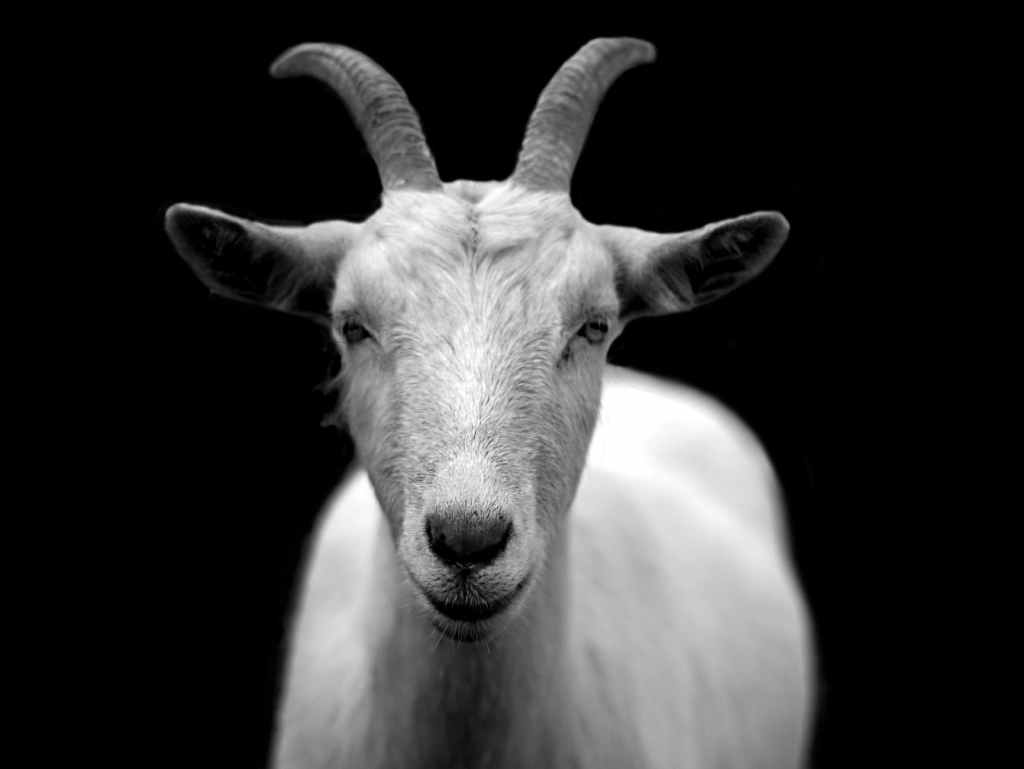
    We see that the sacrifices then point us to the greater sacrifice today. That Jesus is the priest but he is also the sacrifice. Because while a goat could not atone for our sins, and while a goat’s blood could not cover up our sins, Christ’s could. He was the worthy sacrifice.

    I know to the world, the idea of an animal sacrifice to atone for our sins seems arctic, seems backwards.

    But it was merely a shadow. Because our forgiveness could never have been truly paid for by the life of some animal.

    It’s not that the sacrifice of that goat actually was the reason why God forgave the people. It was a heart that came to God in faith and recognized the cost of sin that mattered. Just like today.

    Hebrews 10:4 says, “it is impossible for the blood of bulls and goats to take away sins.”

    They were never intended to take away sins. It is only the blood of Christ which can do that.

    And atones for our sins. He covers up our sins. His blood washes away our sins.

    The first goat on the Day of Atonement was sacrificed for sins.

    But the second goat wasn’t slaughtered.

    And the attention turns to that goat in verse 20.

    3. The other goat 

    20 “AND WHEN HE HAS MADE AN END OF ATONING FOR THE HOLY PLACE AND THE TENT OF MEETING AND THE ALTAR, HE SHALL PRESENT THE LIVE GOAT.

    21 AND AARON SHALL LAY BOTH HIS HANDS ON THE HEAD OF THE LIVE GOAT, AND CONFESS OVER IT ALL THE INIQUITIES OF THE PEOPLE OF ISRAEL, AND ALL THEIR TRANSGRESSIONS, ALL THEIR SINS. AND HE SHALL PUT THEM ON THE HEAD OF THE GOAT AND SEND IT AWAY INTO THE WILDERNESS BY THE HAND OF A MAN WHO IS IN READINESS. 22 THE GOAT SHALL BEAR ALL THEIR INIQUITIES ON ITSELF TO A REMOTE AREA, AND HE SHALL LET THE GOAT GO FREE IN THE WILDERNESS.

    -LEVITICUS 16:20-22

    So our sin is associated with the second goat too. Both hands placed on this goat. It was symbolically transferring sin to that goat. The first goat died and his blood was a symbol of our sins being covered. The second goat is the result of our atonement. It was a symbol for sin being taken away.

    Sin totally removed when you trust in God.

    What a reminder as that goat is set free. That we are set free from sin because of God’s grace.

    If you’re someone who ever struggles to believe that God could forgive you. If you’ve done something really bad in your past, or if you have an area that you’re struggling with today and you feel like God wouldn’t love you, couldn’t forgive you. If there’s ever any lingering worry about that, our sins are taken away because of Christ.

    They are totally removed, like the second goat, sent away, never to be heard from again.

    We don’t deserve it but that’s how God atones for our sins. He forgives us of our sins. He removes our sins and our relationship with him can be restored.

    Because of the work of Christ, because of the grace that God offers to all who accept him, you don’t have to feel that way. Your sins are forgiven. But not only are they forgiven, they’re totally removed, they’re taken away.

    Not because we’re so good but because Christ is that good.

    Both in the Old Testament and today, what mattered was faith. Trusting in the Lord. Recognizing that we don’t live up on our own. That we aren’t holy. We aren’t worthy.

    But when we trust in Christ, he makes us worthy, he makes us holy.

    The forgiveness of our sins has a cost we cannot pay.

    It’s fascinating as I think of all of the ceremonialism in the Old Testament Law. Everything was done for reasons. All of the exact and meticulous detail under which the tabernacle was built. All of the specific instructions given to the priests, the very specific laws regarding sacrifice, the specific ways in which to approach God. The cleansing that needed to be done, the atonement for sin.

    It’s teaching us the holiness of God. A holiness we don’t have, that we can’t live up to. But we are welcomed into the presence of the Lord because of Christ.

    For God to forgive us, the Lord paid the price. And he does that for anyone who comes to him by faith. Let this passage be a reminder that there is a cost for sin. A tremendous cost for sin.

    Thanks for reading! I’d love to hear what you think, and don’t forget to subscribe! 

  • Why Jesus? Couldn’t there be another way?

    pexels-photo-302187“Atonement” is a theological word that gets mentioned. In short, atonement refers to the work that Christ has done for those who have faith in Him to earn their salvation.

    I think people sometimes approach the gospel with skepticism. Jesus died for the sins of all who believe in him.

    I know I used to ask was “why do we need this? Why do we have to believe in Jesus? Is sin such a big deal? Why is he the only way?” (more…)

  • The cross of Christ shows us the cost of sin

    pexels-photo-208315.jpeg
    Originally published May 1, 2018
    We have a sinfully low view of sin.
    We cannot overestimate the weight of sin when we see the cost of sin on the cross.
    None of us lives up even to our own moral standards. Do you ever get mad and you regret it? Ever yell at someone and wish you hadn’t? Ever look at something and feel shame for it? Ever tell a lie or bend the truth and wish you could have it back? Ever manipulate people to get your own way? Ever do something where you know deep down it’s not what you should have done?
    Of course you have.

    (more…)