Josh Benner

Tag: bible study

  • Why John the Baptist’s purpose is our purpose too. Exploring John 1:29-34

    Why John the Baptist’s purpose is our purpose too. Exploring John 1:29-34

    John the Baptist came to point to Christ, to witness to Christ, to be the bridge between BC and AD. 

    In John 1:29, John the Baptist sees Jesus. 

    The next day he saw Jesus coming toward him, and said, “Behold, the Lamb of God, who takes away the sin of the world!

    It’s very possible that John himself did not realize the full magnitude of what he was even saying when he uttered those words. 

    But it’s impossible for a Christian to miss the meaning. Behold, John commands. Look to Jesus. Look upon the lamb who takes away the sins of the world. A profound theological statement about Jesus and what he did.

    Sacrifice and the lamb

    Jesus is the perfect and spotless lamb who is sacrificed for sins. It’s a theme that we will see throughout John’s Gospel. 

    Many of the Old Testament sacrifices call for a lamb. Isaiah 53 has a passage of the suffering servant and talks of a perfect lamb being led to slaughter. There’s the Passover sacrifice where the Israelites scarified lambs before the Exodus and where it was an annual holy day. 

    And here Jesus is called the Lamb of God. 

    The ultimate and greater sacrifice. He’s the lamb who takes away the sins of the world. It’s not that sin is just written off or no longer matters. Just the opposite. Sin matters a great deal but it is Jesus who takes away sin, takes away the penalty for our sins. 

    He takes away the sins of the world. That’s not saying that he takes away the sins of every individual person. John talks about “the world” several times in his gospel and other writings. It is Jesus who bears the penalty for a fallen humanity and for everyone who believes in him. 

    John the Baptist continues speaking in verse 30: This is he of whom I said, ‘After me comes a man who ranks before me, because he was before me.

    This is similar to verse 15. There John said: ‘He who comes after me ranks before me, because he was before me.’ 

    And what John is doing is looking back at his early prophesy, as pointing to one who was greater than him and he sees Jesus, and he says “this is that man.” John gets at his specific purpose. 

    Verse 31: I myself did not know him, but for this purpose I came baptizing with water, that he might be revealed to Israel.”

    Where John says he did not know Jesus, don’t get too caught up in that. The point isn’t that John the Baptist literally did not know Jesus but that he did not previously know Jesus for who he was: the promised messiah. John was called to baptize so that the savior of the world would be revealed. That’s not primarily about John, it’s about the Lord and the divine plan. 

    John’s call to repentance, John as the voice of one in the wilderness, John as a witness to Jesus, all of this was part of the divine plan for John’s ministry and purpose in the world as the forerunner to Jesus. 

    Verse 32: And John bore witness: “I saw the Spirit descend from heaven like a dove, and it remained on him. 33 I myself did not know him, but he who sent me to baptize with water said to me, ‘He on whom you see the Spirit descend and remain, this is he who baptizes with the Holy Spirit.’ 34 And I have seen and have borne witness that this is the Son of God.”

    This is referring to when Jesus was baptized. 

    All four gospels agree that John was a witness to the Holy Spirit descending on Jesus. The Holy Spirit is another significant theme of the Gospel of John. Jesus promises to give the Holy Spirit to his believers in John chapters 14, 15, and 16. 

    In the Old Testament, there were passages that talked of the Spirit being with God’s anointed one. 

    Isaiah 42:1:

    Behold my servant, whom I uphold,

    my chosen, in whom my soul delights;

    I have put my Spirit upon him;

    he will bring forth justice to the nations.

    There are others, but just to give a sense of it. John sees that moment.  We see Jesus: fully God and fully man having the Spirit descend on him. I used to think “why would Jesus need the Holy Spirit when he’s God? 

    But I was asking the wrong question. “Why wouldn’t Jesus need the Holy Spirit?”

    All three persons of the Trinity are God. All three of them work in perfect unity. They are all equal in eternity, holiness, glory, and power.Again, Jesus is both fully God and fully man, but it is because he is fully man that he needs the Spirit. 

    And just as he enjoyed fellowship with God during this ministry, because Jesus is also fully God, it makes sense that Jesus would likewise enjoy the fellowship of the Spirit during his ministry. 

    John sees this moment. He’s a witness to the Spirit descending upon Jesus. And John says in the text that He on whom you see the Spirit descend and remain, this is he who baptizes with the Holy Spirit.’

    The same Spirit who filled Jesus during his ministry is given to all people because of Jesus’ ministry. The Spirit equips us with gifts, convicts us of sin, sanctifies us to God. 

    Romans 8:16 says that the Spirit bears witness that we are children of God. 

    The Spirit bears witness to those who believe. The one who is least in the kingdom of God is greater than John the Baptist. Because we’re blessed to have more of the story. 

    We have the risen lamb.

    Believe in the lamb. Turn away from sin. Point others to him. 

    Final thought  

    John the Baptist had a ministry to do for a time in history. 

    He was not perfect. He was just a man. He lived a shorter life than Jesus. Much of his life was spent in seclusion.But he was faithful. 

    Yes, we don’t have the ministry that John the Baptist had. 

    He had a once in history ministry. He was the forerunner to Jesus. 

    But just because someone has a different ministry or a different way to serve, that doesn’t mean that the ways you can serve the Lord are insignificant. No one would know who John the Baptist was without Jesus. Jesus is the thing that gives relevance and meaning to his life. 

    But for anyone who’s a follower of Jesus, that’s the case. It’s Jesus who gives meaning. John’s ministry was to point people to Jesus. But that’s the ministry in which every follower of Jesus still shares in. 

    Pointing people to Jesus in word and deed. Following where the Lord leads. Walking in faith. Standing up for the truth of God. 

    Those things are a call which all Christians share. 

    In the Gospel of Luke, Jesus talks of John the Baptist and says: 

    I tell you, among those born of women none is greater than John. Yet the one who is least in the kingdom of God is greater than he” (Luke 7:28).

    No one before John was greater than he. 

    Yet Jesus says that for those who come after, the one who is least in the Kingdom of God is greater. The reason isn’t because we have anything great in ourselves. 

    It’s because we have a fuller picture of who Jesus is and a fuller picture of God’s revelation to the world. 

    John did have a once in history ministry to fulfill but he didn’t live long enough to see the fruition of Jesus’ ministry. He never heard about the resurrection or saw the risen Christ. 

    What are you doing to serve the Lord today? It can be tempting to think that we don’t have what it takes to serve God.It’s not about your own abilities and your own power. John the Baptist was an effective minister without a lot of resources. 

    You don’t have to have a lot of money to serve God faithfully. John the Baptist certainly did not have that. He came from the wilderness. Other gospels tell us that John wore a garment made of camel’s hair. 

    You don’t have to have all of the degrees and credentials. John the Baptist didn’t have that….he came. from. the wilderness. 

    You might think you’re too old. John the Baptist had a ministry that was shorter than Jesus’s. His public ministry was incredibly short lived. You don’t have to have decades of ministry to have a ministry that matters. 

    You just have to follow the Lord, to love the Lord, to serve the Lord. 

    What are you doing to serve the Lord? What are you living for? 

    Thanks for reading! If you liked this piece, please share and subscribe.

  • Jesus as God’s dwelling place among us. Exploring John 1:14

    Jesus as God’s dwelling place among us. Exploring John 1:14

    I used to enjoy a show called Undercover Boss. 

    It was a reality show that would feature leaders within companies, such as founders, CEO’s, vice presidents, or other executives going undercover within their own companies. 

    The show featured leaders for companies like Subway, True Value, Build-a-Bear, and even the Chicago Cubs. 

    Throughout a week, they would spend a day in various entry level positions within the company. They would work alongside typical employees. They would get a sense of the work they were doing. 

    But for the employees, they would be working with the most powerful person in the company and they had no idea. 

    It’s not that the undercover boss was their boss, he was everyone’s boss. He was their boss’s boss’ boss’s boss. 

    And they had no idea. 

    Sometimes they’d complain about corporate policies or explain ways to work around the rules, not knowing who they were talking to. 

    They were with the head of the company and didn’t even know it. 

    I think of Jesus coming into the world and I’m reminded of a similar irony in that people were interacting with the God of the universe and were mostly oblivious to that fact. 

    The Gospel of John says: He was in the world, and the world was made through him, yet the world did not know him. He came to his own, and his own people did not receive him (John 1:10).

    Then verse 14 takes it to a more relational and personal level. 

    And the Word became flesh and dwelt among us. 

    That may be one of my top ten favorite verses in all of the Bible.

    The God who created the world came into the world to save the world. The eternal God of creation became flesh and blood, skin and bone. Jesus’ divinity matters but so does his humanity. 

    It is because of his divine nature that he has the power to withstand and to bear the weight of sin. Our sin is an affront to God and no mere mortal is capable of redeeming himself before a Holy God, let alone redeeming humanity. 

    But it also matters that Jesus is human because it is humanity that has sinned. And in being fully man, Jesus is like us in our humanity. Jesus entered sinful humanity, though he himself is without sin. 

    His sinlessness matters because it took a sinless, perfect, and righteous sacrifice to pay for sins. 

    His humanity and divinity make Jesus a worthy sacrifice and atonement for sinful people. 

    The Word became flesh. God became man. 

    Colossians 1:19 says: For in him all the fullness of God was pleased to dwell

    God dwelling with us

    The glory of God came to earth through the Lord Jesus. There’s one word in particular in this verse that brings it to a climactic point in this passage. 

    Dwelt. 

    The English doesn’t truly convey the meaning of what’s being said here. 

    Let’s take a step back. 

     In the Old Testament, people originally exist in perfect fellowship with God. That’s what Eden was. It was a holy place. A perfect place. A sinless place. 

    Because of sin, fellowship with God was tarnished. The unencumbered closeness to God was lost due to sin. 

    We were no longer holy. 

    But the story doesn’t end there. Throughout the Old Testament, we see God bringing redemption to his people. 

    God makes a covenant with Abraham. We see God’s continued faithfulness to his covenant. 

    Fast forward. The Israelites were held in captivity in Egypt. After God had miraculously freed them, and while the Israelites were wandering in the desert, God gave them instructions for a structure called the tabernacle. The tabernacle was a tent that the Israelites were to travel with and it was a symbol for God’s presence with his people. 

    Sometimes it’s called the tabernacle. Sometimes it’s called the tent of meeting. 

    Exodus 40:34-35: Then the cloud covered the tent of meeting, and the glory of the Lord filled the tabernacle. 35 And Moses was not able to enter the tent of meeting because the cloud settled on it, and the glory of the Lord filled the tabernacle.

    Exodus spells out very specific instructions on how the tabernacle was to be built, what types of items would be placed inside the tabernacle, etc. 

    The instructions are so specific because it is a sacred and holy place. Again, it represented the very presence of God in the world.  But this was pointing forward to something greater. 

    The temple. 

    When the Israelites entered the land, part of their purpose was in constructing the temple. As the tabernacle had been portable, the temple was meant to be permanent.

    The overarching purposes were still the same. Most notably, it was where God met his people in the word. It was his presence in the world.  

     The temple was the place where sacrifices were made. For the priests, there were specific instructions on what they had to do to prepare to enter into the Temple It was a sacred place. 

    As with the tabernacle, not just anyone could go into the temple. The priest couldn’t just go into the temple any arbitrary way they wanted. 

    It was a holy place. The temple was completed during the reign of Solomon 

    1 Kings 8:10-11 says: And when the priests came out of the Holy Place, a cloud filled the house of the Lord, so that the priests could not stand to minister because of the cloud, for the glory of the Lord filled the house of the Lord.

    In both places, when the presence of the Lord comes into the temple, people can’t even stand in it because the presence is so glorious. 

    The temple is hugely important in the Old Testament. Building the temple is important. The specific instructions for the temple are important. But this points forward to an even greater temple. To an even greater example of God’s presence with his people. 

    The word became flesh

    And that is the significance of John 1:14. 

    “The Word became flesh and dwelt among us, and we have seen his glory.”

    The word translated as “dwelt” more literally means that Jesus tabernacled among us, that Jesus pitched a tent among us. It’s the same word for tabernacle that was used centuries before Christ when the Old Testament was translated from Hebrew to Greek. 

    Jesus is the tabernacle. He is the greater temple. He is the presence of God with his people because Jesus IS God with his people. 

    So it’s not simply saying that Jesus dwelt among us. But rather: in Jesus, we see God became flesh and tabernacled with his people.  

    Instead of a tent or a building, we have a person, we have God himself. 

    The greater tabernacle, the greater temple. And he’s greater because he’s everything these places were meant to represent. It was only the priests who could go into the tabernacle and the temple. 

    A priest serves as a mediator between man and God. Jesus is the greater priest. It is he who restores our relationship with God. These man made structures were where sacrifices were offered. 

    Jesus himself is the sacrifice. 

    And as I’ve said, the tabernacle and the temple represent the presence of God with his people. Jesus is God himself who has come to his people. The word became flesh and dwelt among us. 

    The Word made his dwelling among us. He pitched a tent among us. He tabernacled among us. 

    The God who created the world came into the world to save the world. 

    There was no other way for a sinful people to be reconciled to the Lord than through God himself coming into the world. But because of his love for us. Because of his goodness. Because of his grace…

    The Word became flesh and dwelt among us. The creator entered creation. 

    In his commentary on John, the late New Testament Grant Osborne says of this verse “In my opinion, this is the single greatest sentence ever written in the history of human language, the deepest theological statement ever written. No finite human being could ever enter the realm of God and join his family. It could only come to pass if God himself were to enter the realm of humanity.”

    The Word became flesh. God became one of us so we could be with him. 

    He is a personal God. It doesn’t get more personal than Jesus entering his creation. 

    Sometimes it can be tempting to doubt if God really knows what we’re going through when we’re struggling. It can be tempting to wonder if God really cares.  

    He knows. He knows what it’s like to live in a sinful world. He knows what it’s like to have people oppose him and not like him. He knows what it’s like to be hated for no reason. He knows what it’s like to be slandered. He knows what it’s like to cry. He knows what it’s like to be let down. He knows what it’s like to be betrayed. He knows what it’s like to suffer and feel pain. He knows what it’s like to face injustice. 

    He knows.  

    It can be be easy to focus on Christ’s glory and divinity to the point where we forget his humanity. 

    But we see his humanity in this passage. The Word became flesh and dwelt among us. 

    Thanks for reading! If you liked this post, please like and subscribe!

  • The covenant with Abram. Studying Genesis 12

    The covenant with Abram. Studying Genesis 12

    In Genesis, we see three acts of divine judgment each followed by acts of divine grace. 

    We see the curse of the original sin which brings forth death but the Lord also makes a promise of ultimate victory to come from an offspring of the woman (Genesis 3:15). 

    The next major divine judgment is the flood where God wipes out the earth and all of its inhabitants, save for Noah, his family, and the animals on the ark. But then we also see this event followed by another divine blessing as the Lord makes his covenant with Noah. In this sense, Noah becomes like another Adam figure in a reconstituted world. 

    In Genesis 11, we see another major sin event: the Tower of Babel as a prideful world tries to build a monument to their own glory. The Lord brings confusion to the people in Genesis 11. But we are also introduced to Abram in that same chapter and it would be Aram through whom the Lord would make a great covenant. 

    In this sense, Abram too will be another Adam figure who is the father of a new humanity, a people of God and through whom the Lord will ensure divine blessings to the world and through whom he will bring the ultimate blessing of the Lord Jesus (Galatains 3:16). 

    In Genesis 11, Abram is introduced as a son of Terah. We’re also told that he has a wife named Sarai and that she is barren. This introduces a theme of barrenness that will also come up in numerous future Bible stories including with Rachel and Rebekah as well as with Hannah in First Samuel and with Elizabeth in the Gospel of Luke. 

    Genesis 11 ends by saying that Abram and his family had settled in Haran. 

    Genesis 11:31-32: 

    ​​31 Terah took Abram his son and Lot the son of Haran, his grandson, and Sarai his daughter-in-law, his son Abram’s wife, and they went forth together from Ur of the Chaldeans to go into the land of Canaan, but when they came to Haran, they settled there. 32 The days of Terah were 205 years, and Terah died in Haran. 

    Genesis 12 hits the ground running with the Lord calling Abram away from the land where they had settled. 

    Genesis 12:1-3: 

    Now the Lord said to Abram, “Go from your country and your kindred and your father’s house to the land that I will show you. 2 And I will make of you a great nation, and I will bless you and make your name great, so that you will be a blessing. 3 I will bless those who bless you, and him who dishonors you I will curse, and in you all the families of the earth shall be blessed.” 

    The Lord makes three promises to Abram. 

    A great nation

    As Adam was the first man in the world, as Noah was the leader of a new world and the one chosen by God to be spared (along with his family), Abram is also uniquely positioned as the one man through whom the Lord makes this covenant. As Thomas Schreiner notes in the Short Studies of Biblical Theology of Covenant, the rest of the world was still opposed to God when he made his covenant promise with Abram. 

    As with all covenants in the Bible, it is totally at the initiative of God that the covenant is made. The Hebrew word translate for “covenant” is not found in Genesis 12 but it is found in chapters 15 and 17 in similar contexts of talking about the same promises. For that reason, it is appropriate to view chapter 12 as the beginning section of this covenant. 

    In verse 2, the Lord promises to make Abram a great nation. This promises will also be elaborated upon in Genesis chapters 15 and 17. The promise of being a great nation will imply two things. 

    In chapter 11, a kingdom had just fallen at Babel. But here, the Lord tells Abram that he will be a great nation. It’s because the Lord was establishing a nation that would be dedicated to him and set apart for the purposes of God. As Schreiner notes, “the word nation also implies offspring, for Abraham couldn’t be a great nation without offspring” (Covenant and God’s Purpose for the World, Page 43). 

    In chapters 15 and 17, the Lord would also promise that his offspring would be as numerous as the stars (15:5) and that Abram would be a father of many nations (17:4) and that kings will come from him (17:6). 

    Abram would also later be gold that his offspring would possess the gates of their enemies (22:17). This victory links the offspring of Abram ot the seed of the woman in Genesis 3:15 who would defeat the serpent. 

    In the New Testament, we see that this promise is fulfilled in Christ. 

    Galatians 3:16: 

    the promises were made to Abraham and to his offspring. It does not say, “And to offsprings,” referring to many, but referring to one, “And to your offspring,” who is Christ

    We see a further elaboration of the political natures of God’s promise to Abraham. 

    Genesis 28:14: 

    Your offspring shall be like the dust of the earth, and you shall spread abroad to the west and to the east and to the north and to the south, and in you and your offspring shall all the families of the earth be blessed.

    And again in Genesis 35:11 where we see a furthering of the promise: 

    God said to him, “I am God Almighty: be fruitful and multiply. A nation and a company of nations shall come from you, and kings shall come from your own body. 

    And all of this happens through a man and a woman who are barren and have no children when we’re first introduced to them! 

    Land

    God had also promised land to Abram. 

    Schreiner notes that if Abram is like a new Adam, then the Promised Land is like a New Eden. 

    In Genesis 15:18, we’re told of the parameters of the Promised Land: 

    18 On that day the Lord made a covenant with Abram, saying, “To your offspring I give this land, from the river of Egypt to the great river, the river Euphrates,

    They arrive in the land under the leadership of Joshua.  

    We seem to see a realization of these promises during the reign of King Solomon. 1 Kings 4:20-21: 

    20 Judah and Israel were as many as the sand by the sea. They ate and drank and were happy. 21  Solomon ruled over all the kingdoms from the Euphrates to the land of the Philistines and to the border of Egypt. They brought tribute and served Solomon all the days of his life. 

    We saw a picture of what God’s promises were supposed to look like but the people sinned and lost it. God was still faithful to his people. 

    Blessing

    Abram was told that he would be a blessing. Schreiner points out that the covenant was always intended to be a blessing for all of the nations, not just Israel. God would bless his people but also bring blessings to the world through his people. 

    In the New Covenant age, we see the blessings to the world through the gospel and as a result of the cross of Christ. 

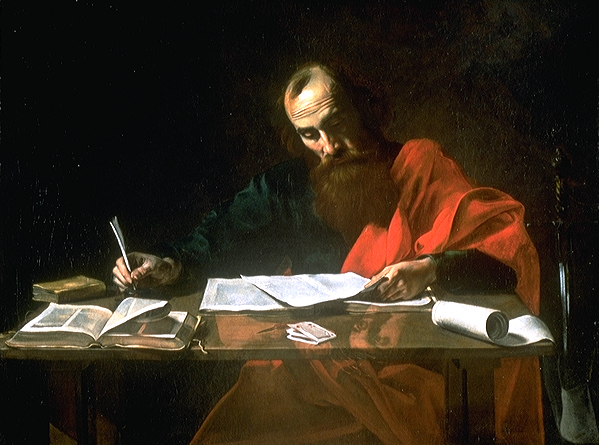
  • Who is Paul? And why it matters. Studying Galatians 1:1

    Who is Paul? And why it matters. Studying Galatians 1:1

    The defense of the gospel

    I begin this post by asking you to consider two questions. 

    First question: who is Jesus? 

    Second question: who is Paul? 

    That’s the most important question that anyone can answer. Is he a good teacher? Is he a good philosopher? Is he a good idea? Is he a good role model? Is he a good man? Or is he the Lord who died for your sins? And the Son of God? And the king of kings? 

    But who is Paul? 

    While not as important to know Paul as it is to know Jesus, how you view Paul matters, and here’s why. Because how you understand Paul actually points to how you will understand Jesus. 

    A history of Pauline heresy

    When Paul wrote his letter to the Galatians, we don’t know every single detail of background information but one thing seems pretty clear. 

    There were people undermining Paul to the churches in Galatia.

    Who is Paul? 

    He is an Apostle of Jesus Christ.

    Apostles were people who had personally seen the risen Lord in the early church and who were commissioned to lead the church. 

    1 Corinthians 12 lists offices in the early church:: 

    God has appointed in the church first apostles, second prophets, third teachers, then miracles, then gifts of healing, helping, administrating, and various kinds of tongues. 

    The apostles are listed first in that list for a reason. They were the authority. 

    We also see this in Ephesians 4:11-12: 

    he gave the apostles, the prophets, the evangelists, the shepherds and teachers, 12 to equip the saints for the work of ministry, for building up the body of Christ

    In the Book of Acts, after the ascension of the risen Jesus, and with Judas out of the picture, the first thing the apostles do is appoint another apostle: Matthias. 

    The Apostle Stephen dies in Acts 7 and we see Paul later become an apostle. After that, we never see apostles being replaced. And again, as people who had witnessed the risen Jesus, and given the unique role of the apostles in the early church, I would argue that the office of Apostle died out in the age of the original apostles. 

    So as I said a moment ago, there were people who were undermining Paul and his apostolic authority. 

    People still do that to Paul. 

    Many liberal Christians undermine Paul’s writings as just his opinion and not scripture and therefore not authoritative. 

    Paul was one Christian giving his views on the scriptures and that’s no more inherently significant than any other Christian. 

    But that’s why the answer to my second question matters so much. Who is Paul? 

    Is he just some guy who has some thoughts about Jesus? Or is he a man who personally saw the risen Lord Jesus and was personally called by Jesus to be an apostle? 

    Two radically different views of who Paul is. 

    What you think about Paul matters to what you think about the rest of the New Testament. 

    So again, I ask you: who is he? 

    I believe that he’s called to be an apostle and that this was affirmed by the confirmation of the other apostles, by the history of the church, by the fact that the early church viewed his writings to have had apostolic authority, by the account of him having been a witness to the risen Jesus and the radical conversion he had from a persecutor of the church to a man who became a martyr for the church, and because of the signs and wonders the Lord enabled him to perform during his ministry. 

    And I think that’ll hopefully give some more background and meaning to these first verse of chapter 1. 

    Paul, an apostle—not from men nor through man, but through Jesus Christ and God the Father, who raised him from the dead— 

    Paul wrote 13 letters in the New Testament. All of them begin with his first name. That was a standard letter writing practice at the time. In these ancient letters, you would start by naming the sender. It’s the first thing the reader sees. 

    As I’ve already discussed, Paul will affirm his apostolic authority. In nine of his 13 letters, Paul mentions his apostolic office in his opening. 

    But there are a couple of unique things about Galatians. 

    First, Paul doesn’t defend his apostolic authority in his other letters as fervently as in Galatians. He usually takes it as a given that the readers will accept that fact. 

    In Galatians, he says he’s an apostle: not from men nor through man, but through Jesus Christ and God the Father, who raised him from the dead

    Paul is an apostle because of a divine calling. It’s not because he says so, it’s not ultimately because the other apostles say so. 

    In the second half of chapter 1, Paul will again give an extended version of his early actions after coming to faith and a long defense of his apostolic ministry. There is no section in Paul’s letters where he goes into such great detail to explain why he is authentically an apostle. 

    And here’s why it matters so much in this letter. 

    When people are downplaying Paul’s authority, his writing, his teaching, then it makes it easy to also downplay his message. 

    Paul talks so much about being an apostle, not because he’s insecure. 

    Paul isn’t being vain. 

    It matters that they know, and that we know he’s an apostle of Jesus Christ because Paul has the message of the truth about Jesus Christ, that he is the Lord who has died for us and that God reconciles sinful people to Jesus because of Christ and Christ alone. 

    And so Paul so fervently defends his apostolic authority because he needs to defend the gospel itself. 

    And he will be pointing to the gospel even from this first verse. not from men nor through man, but through Jesus Christ and God the Father, who raised him from the dead— 

    Jesus has been raised from the dead and he has led to a paradigm shift in human history and in salvation history. Everything changes because of the cross and because we have a risen Lord.  

    And Paul will point to that gospel. Because that’s what this letter is truly about.

    In verse 2, Paul says: 

    2 and all the brothers who are with me, 

    To the churches of Galatia: 

    All the brothers. 

    Paul includes his associates in the opening salutation. We don’t know exactly who was with him when he wrote Galatians. But notice that he does not call them apostles. He calls them brothers, while Paul is an apostle. 

    And then he addresses his letter to the churches in Galatia. As we’ve discussed the last couple of weeks, this was the region to which Paul had traveled during his first missionary journey. He shared the gospel, many people came to faith, but there were also very many who were hostile to the gospel. In writing to the Galatians, there were people who sought to dilute or distort the true gospel and so Paul writes as a defense of the gospel. 

    Thanks for reading! If you liked this post, please share and subscribe.

  • Noah and the flood. Studying Genesis 6:1-12

    Noah and the flood. Studying Genesis 6:1-12

    Noah’s Ark is one of the most well known stories in the entire Bible. In modern times, it’s a controversial story where skeptics deny that it ever actually happened. Many Christians doubt this story and instead treat it as mythology. 

    I can certainly appreciate that the story seems fantastical and hard to believe. But so does the story about Jesus dying and being resurrected. So does the idea of a virgin woman becoming pregnant. Those stories are essential elements of the Christian faith. What’s more, for people who do believe that it’s a true story, there are still many questions which remain. Was the flood global or was the flood “the world” as people would have known it in ancient times? If the flood was not worldwide, were there still people alive in the world? Would a loving God truly flood his own planet? 

    These are thoughtful questions. In this post, I want to acknowledge that there are many different views of this story, but it is my goal to write about Noah and the Ark in a way which is faithful to how it is represented in the Bible. 

    By the time we come to Genesis 6, the world is already fallen and we’ve seen an increase in sin within the world. 

    Chapter 6 begins by describing the grim circumstances of the world. 

    Genesis 6:5-6 says: 

    5 The Lord saw that the wickedness of man was great in the earth, and that every intention of the thoughts of his heart was only evil continually. 6 And the Lord regretted that he had made man on the earth, and it grieved him to his heart.

    I’ve heard Genesis 6:6 described as the saddest verse in the Bible. God regretted the creation of man and was grieved. This points us to the personal nature of God and how sin is an offense to a holy God. That God had made a good world and that humanity has corrupted that due to sin. 

    But before God had created man, he knew this would happen. God is all knowing. It didn’t surprise God what had happened. Nevertheless, it grieved the Lord. And so the Lord will bring a judgment on the world. 

    Genesis 6:7: 

     7 So the Lord said, “I will blot out man whom I have created from the face of the land, man and animals and creeping things and birds of the heavens, for I am sorry that I have made them.”

    Undoing creation

    This is not God flying into a rage or being arbitrary. It is a just judgment from a morally perfect God towards a sinful world. We also see these verses as an undoing of creation. In creation, God makes a world that’s good. In this passage, we see a world that is corrupted. In creation, God creates and sees that it is good. Before the flood, God sees the wickedness of the world. In creation, God makes dry land. In the flood, God takes it away. In creation, God hovers over the waters. With the flood, God will unleash the power of the rains. 

    But in the face of so much sin, there’s one hopeful note through a man named Noah: 

    But Noah found favor in the eyes of the Lord (Genesis 6:8). 

    The Lord will be gracious to Noah and to his family, in spite of the sinfulness that is in the world. 

    Genesis 6:9 further describes Noah: 

    9 These are the generations of Noah. Noah was a righteous man, blameless in his generation. Noah walked with God. 

    When the passage says that Noah was “righteous” and “blameless,” that does not mean that Noah was without sin. But it does point to Noah having a faith in the Lord. In Genesis 15:6, we will learn that Abraham believed in the Lord and it was counted to him as righteousness. Is it reading too much into things to think that this isn’t at the heart of the righteousness of Noah? 

    It’s something that could be debated but that’s how I take this verse. It is pointing to the grace of God. Noah doesn’t deserve this favor in the eyes of the Lord, but because he has faith and is walking with God, the Lord is gracious to him. 

    Genesis 6:10 reminds us of the three sons of Noah. They are important to the story because they will join Noah in this new humanity after the flood. 

    A corrupt world

    While Genesis 6:8-10 is hopeful and optimistic, beginning in verse 11, the passage takes us back to the harsh reality of a sinful world. 

    Genesis 6:11-12 says: 

    11 Now the earth was corrupt in God’s sight, and the earth was filled with violence. 12 And God saw the earth, and behold, it was corrupt, for all flesh had corrupted their way on the earth. 

    Once again, this language reminds us of creation. 

    Genesis 6 says now the earth was corrupt. 

    Genesis 1:2 says: 2 The earth was without form and void

    Genesis 6 says that God saw the earth and, and behold, it was corrupt.

    Genesis 1:4 says: God saw that the light was good

    In his commentary of Genesis, John Sailhamer describes the following section and says “It seems clear from the way the author begins the account that the main purpose of the story of the Flood is not to show why God sent a flood but rather to show why God saved Noah.” 

    It’s easy to look around the world today and to be frustrated and disheartened by the sin that is all around us. Wars, human trafficking, exploitation, murder, crime, societal breakdowns. It’s appropriate to be grieved by these realities. But we should not be surprised by them. Because these issues are not new. Sin is not new. 

    Sometimes we like to look back on past generations as if they were this golden age of superior morals. But people are people and sin is sin and the world is fallen. It can so often be so easy to look back on past times with rose colored glasses. As our world has gotten more technological, it can also be easy to have more awareness of specific types of sin happening in the world. Before the flood, God sees the incredible sinfulness of the world. 

    The fact that God judges sin is something that humanity doesn’t like. We like to lift ourselves up, we like to think we’re good. We like to think that people can be good enough on their own. But the Bible teaches that all sin and fall short of the glory of God (Romans 3:23). The penalty for sin is death (Romans 6:23). And a righteous God is justified for bringing judgment. 

    But God is also gracious and merciful. In this passage, we see both. We see judgment and mercy.

    Thanks for reading! 

    If you liked this post, please share and subscribe! 

    For further reading: 

     John H. Sailhamer, “Genesis,” in The Expositor’s Bible Commentary: Genesis, Exodus, Leviticus, Numbers, ed. Frank E. Gaebelein, vol. 2 (Grand Rapids, MI: Zondervan Publishing House, 1990).