Josh Benner

Tag: Catholic

  • The Father, the Son, and a thousand year old debate on the Holy Spirit. Studying John 15:26

    The Father, the Son, and a thousand year old debate on the Holy Spirit. Studying John 15:26

    Throughout the gospel of John, Jesus refers to having been sent by the Father. 

    But who sends the Holy Spirit? 

    In John 15:26, Jesus says: “But when the Helper comes, whom I will send to you from the Father, the Spirit of truth, who proceeds from the Father, he will bear witness about me.

    Helper comes from the Greek word “paraclete.” That word gets translated in different ways in different Bibles. Helper, advocate, counselor, comforter. 

    And really what that shows is that it’s such a broad idea that it’s hard to condense down into one simple word. Because indeed the Holy Spirit does all of those things. 

    Jesus says that the helper will bear witness about him. Jesus is highlighting that the Holy Spirit teaches about Jesus, bears witness to Jesus, testifies to the truth of Jesus. 

    Jesus says: whom I will send to you from the Father, the Spirit of truth, who proceeds from the Father, he will bear witness about me. 

    Theology – helper 

    That is quite the theological statement. 

    Jesus says in this verse whom I will send to you, but then he adds from the Father. 

    That leads to an important theological question. Who sends the Spirit? 

    Perhaps you’ve never even thought about that. To approach that question, I need to take a moment and give a brief history lesson, because the answer to that question was part of a major theological debate almost 1,000 years ago. 

    The Great Schism

    In 1054, there were no independent churches or Bible churches. You didn’t have the Apostolic church. Protestantism was nearly 500 years away. 

    Virtually all of Christendom fell into one of two camps. East and west. You had the Eastern Orthodox Church in the east and you had the Roman Catholic Church in the west. 

    There were some outliers, but those two movements were definitely the biggest. They were coke and pepsi. The east and west churches had open communion with each other, but that all changed in 1054 when they split in a rift that has never been fully repaired. 

    There were several reasons, but one of the major issues and one that is related to our passage today was the question of who sent the Spirit. The Eastern Orthodox Church believed that God sends the Son and that God also sends the Spirit. 

    The Catholic view – which is also essentially the universal view within Protestantism is that God sends the Son but that the Father and the Son send the Spirit. 

    Another key verse in the discussion is in the following chapter. John 16:7, when Jesus says: 

    I tell you the truth: it is to your advantage that I go away, for if I do not go away, the Helper will not come to you. But if I go, I will send him to you. 

    I affirm the view that the Spirit proceeds from the Father and the Son. 

    You might ask “why does that matter?” Most importantly, it matters because we’re talking about what the Bible teaches. These complicated theological issues might seem boring or abstract but they matter. The Trinity is a significant part of what makes Christianity different from any other religion. 

    And the reason why this particular issue matters: the reason why it matters that the Spirit comes from the Father and the Son and not just from the Father is that if the Spirit is from God, then it would seem that the Father can be accessed via the Spirit apart from the Son. 

    If the Spirit is only from God alone, then, why do you need Jesus? 

    I’m not saying Eastern Orthodox people believe that but it is a danger of a theology where the Spirit does not proceed from Christ. 

    Also if Christ in heaven, ruling and reigning with God, and the Spirit is empowering and edifying the church, how are Jesus and the Spirit relating to each other? 

    The Father and the Spirit are both active in the ministry of Jesus. The Father sends the Son. And the Spirit was with Jesus during his earthly ministry. 

    Mark 1:10-11: when he came up out of the water, immediately he saw the heavens being torn open and the Spirit descending on him like a dove. 11 And a voice came from heaven, “You are my beloved Son; with you I am well pleased.” 

    All three persons of the Trinity are working in the ministry of Jesus. And all three persons of the Trinity are working in the church. The Spirit comes from the Father and from the Son. 

    Thanks for reading! If you enjoyed this post, please share and subscribe.

  • Catholic priest uses wrong word for 26 years. Baptisms invalidated

    Catholic priest uses wrong word for 26 years. Baptisms invalidated

    A Catholic priest in Arizona used the wrong word when performing baptisms for over a quarter of a century. Now his diocese is saying that the baptisms are invalid. 

    The issue is that the priest, the Revered Andres Arango was saying “we baptize you” when he was supposed to say “I baptize you.” The Catholic teaching is strict to their exact wording and because he say “we” instead of “I,” they are viewing these baptisms are invalid. 

    Baptism is a subject where there is a vast array of beliefs across Christendom. There are opinions on what baptism accomplishes, when a person can be baptized, who can do the baptizing, how a person is baptized, what is said when a person is baptized, the necessity of baptism. And then there are procedural questions. Are they sprinkled or dunked? If they’re dunked is it once, or is it three times (Father, Son, Holy Spirit)?  And there are many other questions. 

    Because baptism is such an important part of the Christian faith, there have been many views over the centuries. 

    For the record, my view is that baptism is an outward action that is a public display of an inward faith. True baptism is done by the Holy Spirit for a person who is regenerated. That is the actual cleansing of the human soul, and this cleansing is symbolized with water through baptism. And so in my view, I don’t take the rigidity that Catholics have on baptism where it can be nullified by a person unwittingly saying one wrong word. It’s based in places such as Ezekiel 36 and John 3. 

    Why does one little word matter so much? 

    On the website for his local diocese, they say: 
    “It is not the community that baptizes a person and incorporates them into the Church of Christ; rather, it is Christ, and Christ alone, who presides at all sacraments; therefore, it is Christ who baptizes. The Baptismal Formula (the words used in the Rite) has always been guarded for this reason: so it is clear that we receive our baptism through Jesus and not the community.”

    I find that argument interesting (I also find it to be a bad argument, but still interesting). I find it interesting that you can’t say “we” because it’s not the church who is doing the baptizing but that you must say “I” because it is Christ who baptizes…

    But in practice, it is the priest who’s doing the baptizing. And I find it interesting that if the priest says “I,” that it’s tantamount to Jesus himself saying “I.” 

    So the baptism is contingent upon the grace of Christ and (in the Catholic view) a human priest serving as a mediator. Yet, if the priest says the wrong word, then the grace of Christ can’t be conferred to the person who has made a good faith attempt to be baptized? So Jesus is gracious, but the priest can make a mistake where the sacramental benefit of baptism is withheld? Sincere question. Doesn’t that imply that the priest is more powerful than Jesus? (I’m sure no Catholic would agree with that statement). 

    This certainly goes to part of the heart of the disagreement between Catholics and Protestants. Scripture and tradition. The Catholic Church gives essentially equal weight to tradition as scripture. And so their tradition and teaching is a certain wording. And even though that wording is found nowhere in the Bible, they view their interpretation as being absolutely binding. 

    There is also the issue of human priest as mediators. The role of a priest is that they serve as a mediator between man and God. Jesus is the great high priest who mediates between us and God (Hebrews 4:14-16). This is why most Protestants don’t believe in a priestly office today. Because we don’t have fallible priests who can say the wrong thing and mess us up with God. We believe in a great high priest who is perfect, Christ the Lord. 

    Thanks for reading! If you liked this post, please share and subscribe.
  • Reformation Day – the day that changed the future of the Church

    nbcM9a9TyrfWdcpD9mEKqirF

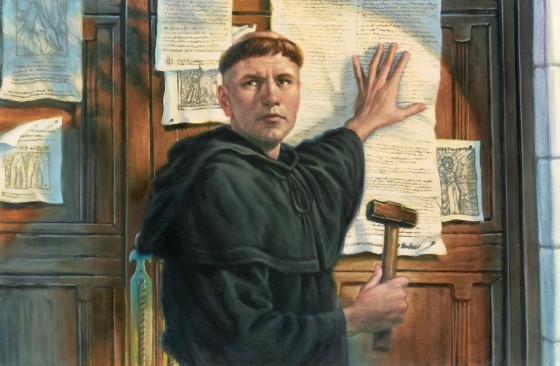
    502 years ago today, the history of the church, of Europe, and of the western world were forever changed in the town of Wittenberg Germany. Martin Luther wrote his 95 theses, a list of grievances against corrupt and unbiblical practices within the Catholic Church. The impact of this event continues to ripple throughout the Christian world.

    Luther was not the first person to call for reform in the church. (more…)

  • Illinois Bishop forbids pro-abortion lawmakers from taking communion

    Bishop Thomas Paprocki, of the Springfield, Illinois diocese has forbidden priests within his dioceses from serving communion to Illinois lawmakers who voted in favor of loosening abortion laws within the state. The bill is still awaiting the governor J.B. Pritzker’s signature. (more…)

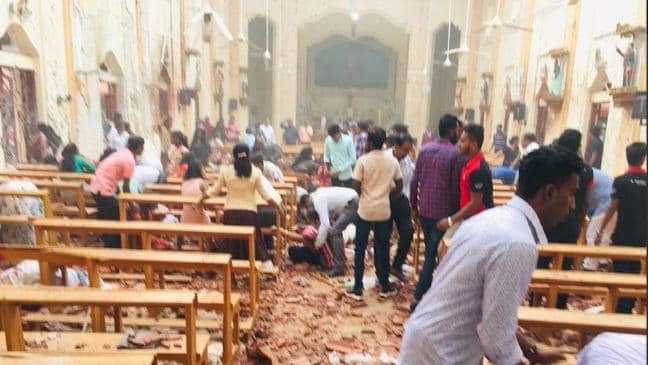
  • Easter terrorist attacks hit Christians in Sri Lanka

    f08e24d14ae25935843da43a94b4670a.jpeg
    Sri Lankan citizens in the aftermath of Easter terrorist attack: Twitter

    If the world hates you, know that it has hated me before it hated you.
    -John 15:18

    A series of coordinated terrorist attacks rocked Sri Lanka on Easter morning. More than 290 people lost their lives in the attacks, with hundreds more wounded. The attacks were carried out against churches during Easter services while other bombings targeted hotels.

    Many of the details are still being sorted out. According to the BBC, at least 24 arrests have been made but the Sri Lankan government has not yet identified suspects or a group that they are representing. Extreme measures such as a governmental shutdown of social media sites and an imposed curfew were enforced in an attempt to regain control of the situation.

    Sri Lanka is an island nation located to the south east of India. It’s a country with a population of 21 million. Christians make up about 7% of the population.

    Thanks for reading! I’d love to hear what you think, and don’t forget to subscribe! 

    Josh Benner  has a Master of Divinity from Trinity Evangelical Divinity School. He has served churches in Minnesota and Illinois. He enjoys writing about faith and culture. He lives with his wife Kari in St. Louis.