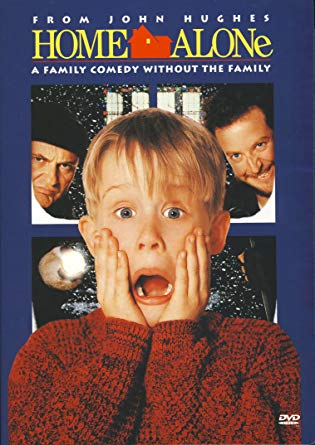
Like many Americans, one of the ways I celebrate the Christmas season is watching Christmas movies. Some of my favorites include A Muppett Christmas Carol, The Santa Claus, and Elf. But my all time favorite Christmas movie, by far, is Home Alone.
Many classic Christmas movies have wonderful redemption themes (Christmas Carol is a great example of this). But Home Alone revolves around redemption. A couple of years ago, Les Lanpere of the Reforemd Pubcast made a video outlining redemption themes and asking if Kevin’s character finds faith in the film?
It’s a fascinating argument that Lanpere presents (and as much as I enjoy Home Alone, he’s clearly put much more thought into it than I have). Now, it’s impossible for me to not watch Home Alone through the redemptive lens that Les gave to it.Spoiler alerts (although who hasn’t seen Home Alone?!)
Early in the movie, Kevin is having conflicts with several family members, his older brother, his cousins, his parents, his uncle. And he wishes that they’d all disappear. This represents sin. It’s the eve of a special family trip to Paris over Christmas.
The following morning, Kevin gets his wish! The family is running late to the airport for their Paris trip. Through a headcount mishap, they leave, thinking that Kevin is in one of their shuttle vans. With the family off to Paris, Kevin awakens to discover that he is Home Alone. At first, he has a blast, basically doing whatever he wants but he will eventually begin to miss his family. He finds a department store Santa and expresses his wish to have them back, but he sees his powerless this figure is to bring restoration. This represents the false hope that idols can bring.
There is a second conflict in the movie: the Wet Bandits, two burglars who have been prowling in their neighborhood and robbing houses when families are traveling. They know that the McCallister’s are going to Paris. The Wet Bandits essentially represent evil in this movie (though comically).
Kevin finds out about their plot to strike his home. Since he knows that Santa can’t help him, on the night of their attack, he goes to church. A choir is singing hymns. Old Man Marley walks up to Kevin. He was introduced in the movie when Kevin’s brother Buzz told Kevin an urban legend about Marley being a killer. But when he introduces himself to Kevin, Marley is kind. Marley is a Messianic figure in this movie. He asks Kevin if he’s been good, Kevin admits that he has not. Marley tells Kevin he’s come to the right place. Marley also tells Kevin about a strained relationship with his son (prodigal son).
Back at the house, Kevin works on his plans to protect his home. We all see him pray before his evening meal. The dinner scene has essentially no relevance to the movie, aside from the fact that it shows him praying. Something that the family had not previously done. The robbers are stopped time and again, but eventually catch up to Kevin. In one of the most striking theological symbols of the movie, Harry is about to “devour” Kevin (bite his fingers) when Old Man Marley comes in at the last moment to intervene and save Kevin.
On Christmas morning, Kevin’s mother (who had been trying to get back to him throughout the film) returns home. The rest of the family follows soon after. We see restored relationships. We see the bad guys defeated.
The movie is a masterpiece.
Most importantly, it is a picture of the gospel. We have sinned against God, but we have a savior who has come to rescue us. Jesus was born on the first Christmas. He came to do what we could not: to reconcile us to God, to fix the relationship that had been broken. We could not do it on our own efforts (I actually take the scene of Kevin’s plan of stopping the Wet Bandits as being symbolic of this). He was eventually caught by them and needed a savior.
That savior is Jesus. He delivers us from sin. He restores us to God. He brings us life. He came to do that for all who accept his grace and trust in him.
Let us not trust in ourselves, let us not trust in our own pursuits, let us not trust in our own efforts or plans. Like the Santa who Kevin goes to visit, anything aside from God will fail us. We must go to the Lord himself.
Originally published December 19, 2018