Josh Benner

Tag: Christ

  • The God who calls us friends. John 15:12-17

    The God who calls us friends. John 15:12-17

     We all have acquaintances. People we know, people we’re pleasant with. People we can have small talk with, talk about the weather, talk about sports. 

    That’s fine. 

    But it can be easy to keep people at arm’s length, control what we reveal to someone.

    Friendships are a struggle for many in our society. 

    When comparing surveys that Gallup did in 1990 and a 2021 survey from the American Enterprise Institute, when asked how many close friends people had (not including family members), for people who said they had zero close friends, the 1990 number had quadrupled from 3 percent to 12 percent in 2021. 

    People who said to have fewer than two close friendships doubled from 16 percent to 32 percent. 

    And the number of people who said that they had 10 or more close friends fell from 33 percent in 1990 down to 13 percent in 2021. 

    How many people know you? 

    Not people to whom you can give a passing prayer request, but who actually know your fears, know your dreams, know your struggles, your heart? 

    There is something that is so incredibly life giving about meaningful friendships. Being known. Being known in your weaknesses and imperfections but still being loved in spite of those things. It’s a powerful thing. 

    True friendship can be difficult, it can be challenging, yet it is absolutely essential. It’s essential to our wellbeing. 

    In a 2010 review of 148 studies which – across the board – had included more than 300,000 participants, stronger friendships were linked to increased lifespan and decreases in things such as high blood pressure and diabetes. 

    Studies also found that close friendships had similar impacts on health to quitting smoking, and that in terms of lifespan, strong friendships were a bigger indicator than strong family connections. 

    That’s not to say that family connections aren’t important, of course. But it is to point out how much true friendship matters. Friends, not acquaintances. People who know you well enough to love you in spite of yourself. 

    It matters to our health, it matters to our happiness, and it matters to our ministering to the world as Christians. 

    No matter how quiet, or introverted, or shy a person is, we need friends. It’s part of our human nature. Our need for friendship and connection. It’s part of how we’re created and what we’re created for. 

    In John 15:12-17, on the even of going to the cross, Jesus will say to the disciples you are my friends.

    This passage points us to three principles on friendship. 

    1. The friendship Jesus calls us to

    John 15:12:13: “This is my commandment, that you love one another as I have loved you. 13 Greater love has no one than this, that someone lay down his life for his friends.

    The command to love

    Love one another. Let us appreciate how close to the heart of Christ our love for one another is. It’s the command that shows that we love Jesus. Loving others is not option for the Christian. 

    Does it mean we like everyone? Not necessarily. Does it mean we love everything everyone does? No, especially not sin. But we are to love. To be patient and kind. To want the best for people. To be forgiving when hurt or wronged. To put differences aside. To love people who are hard to love. 

    To love one another as Jesus has loved us. 

    That’s quite the standard. Because Jesus loves us with a perfect and righteous love. 

    Jesus loves a world where people plotted against him, where he was crucified. He loves a group of disciples where Peter denied him, where in the moments leading up to his arrest, some fell asleep and let him down. 

    Jesus calls us to love one another as he has loved us. 

    1. The friendship Jesus displays 

    And he points to the pinnacle of that love in verse 13: Greater love has no one than this, that someone lay down his life for his friends.

    Jesus is at one time pointing us to the great love for us that he is going to display on the cross when he lays down his life for his friends. And he is also pointing us to an incredible standard of love that the Lord desires for us. The greatest display of love is one laying down their life for their friends. 

    Sacrifice 

    There’s something about that idea that intuitively speaks to us. The power of sacrifice. We honor those who lay down their lives. 

    In America, we have an entire day set aside – Memorial Day – to honor and remember those who gave their lives for our country. 

    Every September 11th, we remember the great sacrifices that people made. Firefighters who ran into those burning buildings. We remember the 343 firefighters who gave their lives. People who went into those buildings, with heavy gear, walking up the stairs into an inferno. They knew that it was incredibly dangerous. We remember the tremendous heroism of the people who overtook the highjackers on United 93 when they became aware of what had happened to other flights. 

    We honor and celebrate those stories. And that’s appropriate. It’s a powerful gesture when a person sacrifices their own life for something greater than themself. 

    Now for many of us, if someone we loved. A spouse, a child, a grandchild was in mortal danger, I have no doubt that many people in this room would lay down their life for the people who matter most to us without even blinking. 

    But there are a couple of things to keep in mind with Jesus as the example of the one who gives up his life for his friends.If I died to save someone, you’d call me a hero. 

    But here’s the thing. Unless Jesus comes back in my lifetime, I’m going to die. We might give up some time, some years of our life. And that’s significant. And that’s costly. But Jesus is the eternal God. He has life in himself. He would not have died a natural death. 

    But he gave up his life. And for whom did he do that? A fallen world. 

    Romans 5:6-8, Paul says:  For while we were still weak, at the right time Christ died for the ungodly. 7 For one will scarcely die for a righteous person—though perhaps for a good person one would dare even to die—

    He finishes the thought: but God shows his love for us in that while we were still sinners, Christ died for us. 

    Jesus befriends a world that was an enemy to God. Before we move on to our next point, I’ll make this point of application. While the pinnacle of love is laying down your life for another. Fortunately, there’s a good chance that none of us will ever be in that situation. 

    It’s easy to think of what we would do in an extreme situation.nBut what’s harder is dealing with the realities of life, the world, our own challenges and struggles. 

    It’s easy to say we’d be the hero when we’re not on the battlefield. We might not ever need to die for someone, but what are we living for? 

    Are we living to honor that command of Jesus? Are we living to love people and to honor our great God by loving the people who he loves? By loving the people he sent his son to die for? 

    Jesus shows that on the cross.

    1. The friendship Jesus invites us into

    John 15:15:  No longer do I call you servants, for the servant does not know what his master is doing; but I have called you friends, for all that I have heard from my Father I have made known to you. 

    The eternal Christ says he does not call us servants, but he has called us friends. Like so many things that Jesus says in the gospels, if we’re not careful, it can be easy to overlook the immensity of that statement. 

    The Lord calls us his friends. In the Old Testament, that’s not typically the language we hear of people in their relationship to God. 

    We see Abrhaam referred to as God’s friend in the Old Testament. Abraham is also the patriarch from whom the Israelites would come. 

    Isaiah 41:8: you, Israel, my servant, Jacob, whom I have chosen, the offspring of Abraham, my friend; 

    So the idea isn’t altogether absent but it’s not common in Old Testament usage. But with Jesus, he makes a sweeping declaration that he calls his servants friends. 

    Friendship and status

    Think – for a moment – of that immense disparity of status between Jesus and us. 

    Do you have any close, personal friends who are movie stars? Or big time professional athletes? Or famous musicians? Or leaders of nations? 

    We tend to have friends who are of a similar social standing to us. 

    Now if you could meet someone famous who you admire. Maybe it is an athlete, or a TV personality, or a former president, and you met that person, and they actually sat down with you and talked to you for 15, maybe 20 minutes. Asked you all about yourself, your life, your family, your interests. 

    You’d be so taken with that person. 

    You’d tell everyone you knew about meeting them. How nice they really were. 

    Are you telling people about Jesus? Because the Lord of the universe invites us to personally know him. He calls us his friends. 

    He gives his life for us. 

    Evangelism

    We’d tell people about meeting someone famous. We’d want a picture, want an autograph. But that person wouldn’t be your friend. Jesus is. 

    You’d tell everyone you know about meeting someone famous. 

    Friendship with Jesus is not meant to be something that we have just to have for ourselves. He calls us to love one another, but Jesus also values our friendship with those who do not know him, so that they too can be his friends. 

     No longer do I call you servants, for the servant does not know what his master is doing; but I have called you friends, for all that I have heard from my Father I have made known to you. 

    This verse is showing the closeness of the relationship that we get to have with Jesus. 

    We are created by him, we are subservient to him, we are infinitely less than him. But through divine initiative, Jesus no longer calls us servants, and he grounds that because a servant does not know what his master is doing. 

    But Jesus let’s us in. He’s a personal savior. He would be within his rights to simply command us and we follow it, but he came into the world and showed us. He demonstrated who he was to us. He taught us. 

    Jesus reveals things about himself, and his heart for the world. 

    He spent time with people. He let’s us in. In other religions, they believe that God is so transcendent and above people that we cannot know him. And while the Lord is so great that we cannot fully comprehend him, Jesus is relational and personal. 

    Jesus came into the world and lived in total submission to the will of God, though Jesus himself is divine and in him, the fullness of deity was pleased to dwell. And as the Son has a perfect relationship with the Father, he invites us into a relationship and friendship with him. 

    Sin had tarnished our relationship with God, but Jesus restores that and he can do that because the Father, and the Son, and the Spirit have always had a perfect relationship with each other. 

    Chosen

    John 15:16: You did not choose me, but I chose you and appointed you that you should go and bear fruit and that your fruit should abide, so that whatever you ask the Father in my name, he may give it to you.

    Is he saying that he chose them to be disciples and that this verse only relates to the disciples? 

    No. This verse is true for all friends of Jesus. 

     You did not choose me, but I chose you

    It should not be surprising. In the Old Testament, as Israel did not choose to be God’s chosen nation and as Abraham did not choose to be selected for God’s covenant, our friendship with Christ is ultimately at the sovereign initiative of Christ. 

    Ephesians 1:4: even as he chose us in him before the foundation of the world, that we should be holy and blameless before him.

    What a comfort it is that our faith does not hinge on us. I’m sure we’ve all had friendships that did not stand the test of time. We sometimes have a falling out with someone. Jesus is the friend who does not leave us. He’s the friend who is faithful. 

    Verse 17: These things I command you, so that you will love one another. 

    This verse wraps up this section. He points back to what he has said and reminds us of the purpose for what he has said: so that you will love one another. 

    Let’s tie this all together.

    As a reminder, in verse 16, Jesus had said: 

    I chose you and appointed you that you should go and bear fruit and that your fruit should abide, so that whatever you ask the Father in my name, he may give it to you.

    This is getting at our purpose as Jesus’ friends. 

    That we go…and bear fruit. 

    Again, I keep pointing this out but it’s important to remember that this is the night before Jesus is crucified. These are some of the final words he gives to his disciples. 

    And what Jesus is getting at here is his mission in the world. 

    His command is that the disciples love. The true disciple of Jesus observes his command. Jesus calls his disciples friends. And Jesus has appointed disciples to go and bear fruit. To go into the world and bear fruit. 

    To go into a world that is hostile to the gospel and share the message of Christ. To go into a world where there are enemies of God and to make friends and introduce them to our friend Jesus. We’re called to love one another and to love others with the love of Jesus. 

    Thanks for reading! If you liked this post, please share and subscribe.

  • Jesus the Son of David. Matthew 1:1

    The book of the genealogy of Jesus Christ, the son of David, the son of Abraham. 

    -Matthew 1:1 

    In my last post, I talked about how Jesus is a prophet and priest. In this post, I will talk about how Jesus is also a king. 

    In the Gospel of Matthew, Jesus is referred to as the Son of David eight times. 

    The idea is important because the coming Christ was said to be from the line of David, the king who’s dynasty ruled Israel’s southern kingdom from Jerusalem before the fall of Jerusalem in 586 B.C. 

    In the Old Testament, we see prophecies of one who would come from David’s line. 

    MESSIANIC PROPHECIES 

    In 2 Samuel 7, it was promised that one of David’s descendants would establish an unending kingdom. 

    2 Samuel 7:12-14: I will raise up your offspring after you, who shall come from your body, and I will establish his kingdom. 13 He shall build a house for my name, and I will establish the throne of his kingdom forever. 14 I will be to him a father, and he shall be to me a son. 

    We also see this thinking in Psalm 89:3-4: 

    3 You have said, “I have made a covenant with my chosen one; I have sworn to David my servant: 

    4 ‘I will establish your offspring forever, and build your throne for all generations.’ 

    One more, and perhaps the most well known comes from Isaiah 9. 

    A popular Christmas time passage, it says: 

    Verse 6: 

    6 For to us a child is born, to us a son is given; and the government shall be upon his shoulder, and his name shall be called Wonderful Counselor, Mighty God, Everlasting Father, Prince of Peace. 

    So it’s describing a child who will be born and it’s giving descriptions of him, and the next verse says: 

    7 Of the increase of his government and of peace 

    there will be no end, 

    on the throne of David and over his kingdom, 

    to establish it and to uphold it 

    with justice and with righteousness 

    from this time forth and forevermore. 

    And so it’s pointing to the Christ as the Son of David and Matthew 1 is saying that  Jesus is the promised one from the Davidic line to establish an everlasting kingdom. 

    KINGDOM OF HEAVEN

    Jesus is the prophesied Messiah who has come from the line of David. But he didn’t quite do things in the way people would have expected. 

    In Jesus’ time, there were various expectations for what the Son of David would be like. Some expected a great military leader or a great king who would liberate Israel from Roman tyranny. 

    Jesus is a great king. He’s the king of kings!

    But the biggest problem with the Messianic expectations of the first century was that their ideas about Jesus were too small. 

    He’s the king of the universe, who sits on the throne, at the right hand of God and rules and reigns in heaven.

    He was the the liberator who would liberate people from the tyranny of sin. 

    He did have a kingdom, but it was not just about a kingdom in Israel. Jesus came to preach the good news of the Kingdom of Heaven. His rule and reign in the world would extend beyond Israel to every corner of the earth, to people of every tribe, and tongue, and nation. 

    And the kingdom of heaven idea in Matthew is that Jesus came from heaven to preach the good news of the kingdom of heaven to a fallen world. We will one day be in his presence in the literal kingdom of heaven.

    As people from days of old longed for the day of seeing the coming Messiah in the world, our hope and promise is for the final and ultimate realization and consummation of his kingdom. 

    They waited for a savior to come into the world. Our hope and promise today is for that same savior to come again. To set all things right. To bring forth his kingdom. 

    But while we wait,  as the people of Christ in the fallen world, we have an opportunity to live today for the kingdom.

    ON EARTH AS IT IS HEAVEN 

    To live as kingdom people. 

    Jesus preached “repent, for the kingdom of heaven is at hand” (Matthew 4:17). 

    Jesus begins and ends the beatitudes by talking about the ethics of the kingdom of heaven. He taught the values of heaven in a sinful world. 

    In the Lord’s prayer, he teaches us to pray to God “your kingdom come, your will be done.” 

    Jesus tells us not to worry, but to instead seek first the kingdom of God. 

    Jesus will compare the Kingdom of Heaven to the pearl of great price, worth everything a man has. This kingdom is compared to a mustard seed that starts small but grows, like a net that’s cast into the sea and catches fish of every kind. 

    And as followers of Jesus, he calls us to live on earth as it is in heaven. 

    To love the Lord our God with all of our heart, soul, mind, and strength. To love our neighbor as ourself. To make disciples of all nations, to be salt and to live as light in a dark world. Jesus calls us to treat others as we wish to be treated and to store up treasures in heaven. 

    Jesus is the king who ushered in this kingdom. 

    Descendant of the line of David. The Christ had to be. And that is why Matthew’s gospel will immediately go into a genealogy which will link Jesus to David and also to Abrhaam.

    Thanks for reading! For more articles, make sure to subscribe. If you liked, please share or comment! 

    The photo is used courtesy of Wikimedia Creative Commons. For more information on the photo, click here.

  • Christ as a title. Studying Matthew 1:1

    Christ as a title. Studying Matthew 1:1

    The book of the genealogy of Jesus Christ, the son of David, the son of Abraham. 
    -Matthew 1:1 

     At first glance, it might not catch our attention that Matthew says Jesus Christ. After all, those are both very common words we see in the Bible. 

    Jesus is his name. We’ll actually see him given that name at the end of this chapter in connection to his birth. Verse 21, the angel tells Joseph to name the child Jesus. It’s a name that means savior, or the Lord’s salvation. 

    Jesus is his name. 

    CHRIST – A TITLE

    And Christ is his…

    Officially, Christ is a title. 

    Jesus is the Christ. Christ comes from the Greek Christos which means anointed. 

    Now in our day, Jesus and Christ are often said together, almost like a first and last name. 

    But something that’s interesting is the names Jesus and Christ together are actually very rare in the gospels. The gospel writers use Jesus. They use Christ. 

    But Jesus Christ? 

    For his entire gospel, Matthew does it only twice. This first verse and again in 1:18. We see Jesus Christ twice in John. Once in Mark, and never in Luke. 

    But then it becomes common in Acts – written by Luke, and we see it throughout Paul’s letters. Part of this seems to be a simple evolution that happened in the early years of the church where Jesus Christ increasingly became used of as the full name for Jesus. 

    And I point this out because one of the potential consequences of this is to lose sight of the significance of Christ as a title for Jesus. 

    As I said, Christ comes from the Greek word Christos which means anointed. The Latin word for anointed is where we get our word “Messiah.” So Christ and Messiah are saying the same thing. 

    And anointing refers to when people would be anointed with oil in the Old Testament. We would see this treatment for kings and priests, and sometimes prophets. Sometimes objects were even anointed with oil. The anointing was meant to symbolize purity, consecration to God, and the Holy Spirit. 

    So when Jesus is called the Christ, at heart, that’s pointing to his status as the anointed one. 

    And we see times in the gospels where Christ is clearly being used with as a title. 

    EXAMPLES OF JESUS CALLED THE CHRIST

    To briefly give a couple of texts which illustrate this idea. 

    In Luke 2, when Jesus is brought to the temple as a baby and a man name Simeon sees him. He’s an old man who’s waited years for this moment. 

    Luke 2:26: And it had been revealed to him by the Holy Spirit that he would not see death before he had seen the Lord’s Christ.

    Matthew 16:16, Peter confesses his belief that Jesus is the Christ, the Son of the living God. 

    And the idea of a Christ coming into the world was something that the Israelites were anticipating in the first century. 

    There had been others who had claimed to even be the Christ. 

    Before Jesus came into the world, there were various expectations of an anointed one and what he would be like. There were views of an anointed one, of a Christ who would come from the Davidic line to save the Jews. 

    MESSIANIC EXPECTATIONS

    To give a present day illustration. 

    It’s kind of like different views of end times theology today. There are all sorts of differing views for the second coming of Christ and what that will be like, when that will happen. 

    Well in the first century, there were lots of different ideas for what the first coming of the Christ would look like. 

    Some thought that the Christ would be a great king, others thought he would be a great general who would lead Israel in a military victory over Rome. Some thought of the Christ as a great moral figure of keeping and interpreting the law of Moses. 

    There’s some truth to all of those, but perhaps not in the ways people expected. 

    Some thought that there would actually be two anointed ones, that is to say, two Christs. Texts from Qumran, which is where the Dead Sea Scrolls were found indicate a belief in a Davidc Christ who would be a king of the Jews and a Priestly Christ from the line of Aaron. 

    And given the long-awaited for, long hoped for, Christ who was to come, Matthew opens his gospel by saying that this man Jesus is the Christ. 

    He’s the Messiah, he’s the anointed one. 

    And we’ll see in his ministry that Jesus will embody all of the offices who were anointed in the Old Testament. Prophet, priest, and king. 

    And so it’s fitting that Matthew begins his gospel by pointing to Jesus as the Christ. He is the long-awaited Messiah for whom Israel had hoped. 

    Jesus is a prophet in that he speaks the word of God. 

    He’s also a priest. Priests in the Old Testament were the ones who performed the sacrifices and served as the intermediaries between man and God. They had extensive moral requirements and religious rituals to be able to do this. 

    But Jesus is the perfect high priest, he’s the greater priest because by the nature of his moral righteousness and divine nature, he is able to serve as the true intermediary between us and God. 

    Jesus is a prophet, a priest, and as we’ll see in another post, he’s also a king.

    Thanks for reading! If you liked this post, please share and subscribe

  • 4th century theology of Athanasius still fresh today.

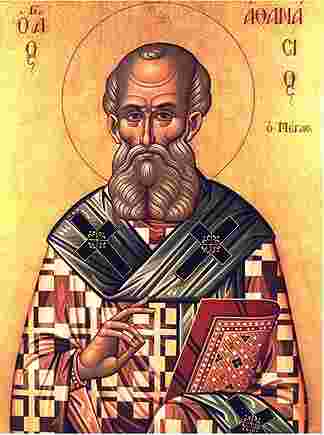
    athanasius

    Originally published March 18, 2016

    Why did Jesus have to die? For years, this puzzled me. I could get on board with the idea that I fell short of God’s perfect standard. But why did Jesus need to die? Couldn’t God have just forgiven me? Like some sort of Spiritual write off?

    One of the best explanations I have ever read for this comes from a fourth century bishop named Athanasius in a work he produced entitled “On the Incarnation.”

    From the beginning, Athanasius provides a treatise on Jesus’ presence in creation, his incarnation as a man, and his necessary death for the reconciliation of humanity.

    Athanasius establishes that Jesus, who created all things, is the same being who renewed the world. In arguing against the Epicureans, the Gnostics, and Plato, Athanasius uses some of his counterarguments in an attempt to further solidify his Christology. For instance, Plato’s idea of God fashioning things from pre-existent matter is used by Athanasius to argue that such a view demotes God from Creator to mere craftsman and that the matter itself was necessarily created by God. From that creation, man was created in a sinless state but had the volition to sin. When mankind fell, it forever tarnished the relationship between man and God. And the sin of man spread throughout all of creation. People began to turn their attention to other things which God had created instead of on the Creator Himself.

    In the second chapter, Athanasius gets into a salvific dilemma about how God can reconcile His glory with man’s sin. “It was impossible; therefore, that God should leave man to be carried off by corruption, because it would be unfitting and unworthy of Himself.” It is not because of any intrinsic value of man, but God’s own nature called for a means of restoration. It will later be argued that to not provide this means would have led to a superfluity of the creation of man in the first place. For man to be created solely for damnation with no hope of salvation would mean that God was ultimately not creating man for Himself. But God could not simply forgive man arbitrarily because this would again have contradicted his perfection as the Lord had already established a prelapsarian injunction which humanity had willingly disobeyed.

    Possible options are speculated as to what God might have done. Mere repentance could not go quite far enough because it wasn’t about merely avoiding a particular sin. It was about being sinful in itself. In doing away with death and corruption, Jesus became a man to conquer those enemies. It couldn’t have been a man who did this because even the most pious men were ultimately sinful. As a result, Jesus was the only means of redemption. The God who had already been intimately involved with creation and the sustenance of the world was also the only means of salvation. While creation itself provided evidence for God’s existence, Athanasius argues that if teleological observations could have had a perfecting quality, that man would not have fallen in the first place. Instead of men recognizing the glory of God through creation itself, in sin, man instead made idols of other elements of creation.

    It could not have been merely Christ coming to earth. He needed to die. To give people reason to believe in Christ’s dominion over creation, and in order to give a reason for a faith that would end the death which was caused by sin, Jesus needed to personally rise from the dead. It couldn’t have been natural. Jesus needed to be witnessed dying, so that his risen state could bring men to faith in God.

    Among his conclusions, Athanasius argues that the transformation which Jesus has had on so many lives is a testimony to the truth of his resurrection. “Does a dead man prick the consciences of men, so that they throw all the traditions of their fathers to the wind?”

    The concluding chapters focus on more in depth refutations of common worldviews. To Judaism, he argues that the Old Testament called for a Messiah, and it called for that Messiah to be martyred. Athanasius next turns his attention to making various apologetic arguments for non-Jewish readers, opposed to believing the gospel.

    At times his Christological claims sound as if written by Paul. At other instances, his matter of fact, street smart logic and gripping analogies seem more modern, perhaps as if they could have been written by C.S. Lewis. I felt like the modern elements seemed most vivid in the apologetic arguments about the transformations in the lives’ of the people who knew Jesus and their willingness to risk everything in proclaiming the truth of his resurrection. At certain points, I found this volume to be laborious. But once the flow of his argument was established, I thought this book seemed much more approachable. Even though the writing presents a long argument, I also felt that Athanasius did a good job, at points, of summarizing the main points that he had made.

    For the time in which it was written, I appreciate the systematized approach to some extremely complicated (but also important) issues. While Athanasius will not convince everyone to his line of thought, I felt that this was a great book in terms of answering the “why” Jesus needed to come. Therein lays the significance of this book. I feel that the “why” question  is so easily taken for granted.

    It’s easy to acknowledge people sin and to say that Jesus needed to die for our sins. But as if in an infantile mentality, I feel it’s so easy to keep reducing the question with “but why?” Why did things have to be as they were? Why couldn’t God simply forgive man? It’s one thing to explain why the incarnation Jesus was an option. With Athanasius, the undertaking was a more structured argument as to why it needed to happen and why it was the only way for reconciliation. In trudging through the difficulties of making the incarnation of Jesus tangible, Athanasius gave the world a true work of brilliance.

    Josh Benner is the associate pastor at Cornerstone Evangelical Free Church in Fergus Falls, Minnesota and has a Master of Divinity from Trinity Evangelical Divinity School. He enjoys writing about faith and culture. He lives with his wife Kari in Minnesota.