Josh Benner

Tag: Christian living

  • The lost art of lament

    photo-1483611703176-31a1e4306d2c.jpeg
    Lament is a topic that is often overlooked in American churches (especially in predominately caucasian churches).
    Lament is very common in the Bible, especially in the Old Testament. We see it as a theme throughout the prophetic books, and the Bible has more books on prophecy than in any other genre. We see it in places like Job, Ruth, and Ecclesiasties.
    Lament is not whining.
    It’s not complaining. It’s not grumbling. Lament is an expression of grief and sorrow. Lament is based in the reality of who God is. Lament is based in a high view of the goodness of God in a fallen world. Grumbling is not based in reality and doubts the goodness of God.
    In the Psalms, lament is the theme of more Psalms than any other subject. And that is the hymnal of the Old Testament!
    We also see lament in…Lamentations. A book literally named after lament.
    We do see elements of lament in the New Testament as well.
    For example, Matthew 5:4 says “blessed are those who mourn for they shall be comforted.” And the mourning that Jesus talks about is mourning sin, grieving the sin that is in the world. Jesus lamented in the garden, when he asked God “if it is possible, let this cup pass from me; nevertheless, not as I will, but as you will” (Matthew 26:39).
    Lament is honest
    With the times where people lament in the Bible, God never rebukes them for lamenting.
    The heart that cries out “how long O Lord” isn’t criticized for asking.
    In the dialogue of our hearts with God, we must always be honest with how we feel.
    Lament applies to struggles we face, times where we feel lonely or betrayed. Times where we have poor health. We can lament other hardships that we face. We can lament our own sins.
    God knows your thoughts and your heart.
    We need to be honest with God.
    We need to be honest about the hurt that we feel. About the distressing nature of sin.
    We need to be honest with God about the struggles we’re experiencing. We need to be honest about the harshness we see in the world around us.
    The temptation can be to keep a stiff upper lip, to remain stoic. To give the outward appearance that we’re fine. And I think that we can be tempted to want to appear strong. But the problem with that is it doesn’t make you weak to hurt. It makes you human.
    Lament is an important aspect of the Christian experience in a fallen world. Blessed are those who mourn, for they shall be comforted.
    Josh Benner is the associate pastor at Cornerstone Evangelical Free Church in Fergus Falls, Minnesota and has a Master of Divinity from Trinity Evangelical Divinity School. He enjoys writing about faith and culture. He lives with his wife Kari in Minnesota.
  • You can’t love God if you don’t love people

    W.H. Margetson

    Originally published December 13, 2016

    James says If you really fulfill the royal law according to the Scripture, “you shall love your neighbor as yourself,” you are doing well” (James 2:8).  points

    Royal Law is an interesting phrase. That’s the only time it’s used in the entire Bible. James follows up mentioning this royal law by saying “you shall love your neighbor as yourself” which seems to be what he’s referring to as the Royal Law.  (more…)

  • Jesus and the Last Supper – more than just a meal

    photo-1520629716099-d147346eb224.jpeg

    Originally published April 13, 2017

    As part of Holy Week, Maundy Thursday is recognized this evening. It was the night in which Jesus ate the Last Supper with his disciples. The time in which Jesus died corresponded with the Jewish holiday of Passover. And the Last Supper was the first night of Passover. An annual dinner for Passover is held, called a Seder, which is the Hebrew word for “order.” In 3,500 years, rabbinical tradition and teaching helped to form the ceremony of the Seder.

    Some of these pieces were traced back to the original Passover. Others came in Jewish history from rabbinical traditions.

    Also, once the Israelites were in the land, and after the temple was built, this impacted Passover traditions. When you had the temple, the lambs were sacrificed at the temple. But what didn’t change was that people could only sacrifice lambs that were perfect.

    I think it’s worth spending so much time in talking about Passover because I think it can help give us a greater context and understanding for the events surrounding the death of Jesus.

    In the gospels, the time of the death of Christ revolves around the Passover. That’s not a coincidence! Jesus would be sacrificed at the time that was associated with sacrifice. Jesus had gone to Jerusalem for Passover. In Jerusalem, the city within the Roman Empire that was the epicenter of Jewish culture, thousands of lambs would have been slaughtered annually. Jewish people would have been coming in from all over the empire.

    We see many traditions of the Seder at the last Supper.

    Some of them are small things. In the gospel accounts, it talks about Jesus reclining at the table (Luke 22:14).

    Jesus wasn’t sitting in a la-z-boy. He was on a couch that he was lying on, that was a Seder tradition. They had been enslaved in Egypt but being able to lie down showed the freedom and security.

    Or when Jesus is alluding to his betrayer, he says in John 13:26, “It is he to whom I will give this morsel of bread when I have dipped it.” So when he had dipped the morsel, he gave it to Judas, the son of Simon Iscariot.

    Again, I know the mental image that most of you probably have when you read this. It’s hard to know precisely where in the Seder this is, but it seems that it’s probably referring to when you take Haroset which is made from apple, nuts, cinnamon. They weren’t eating the Last Supper at an Italian restaurant. They didn’t have a bowl of olive oil in the middle of the table. But all of the elements we see at the Last Supper are part of what you’d see in a traditional Seder.

    As part of the Seder, you’d take the unleavened bread…looks like a cracker. And you’d break the bread.

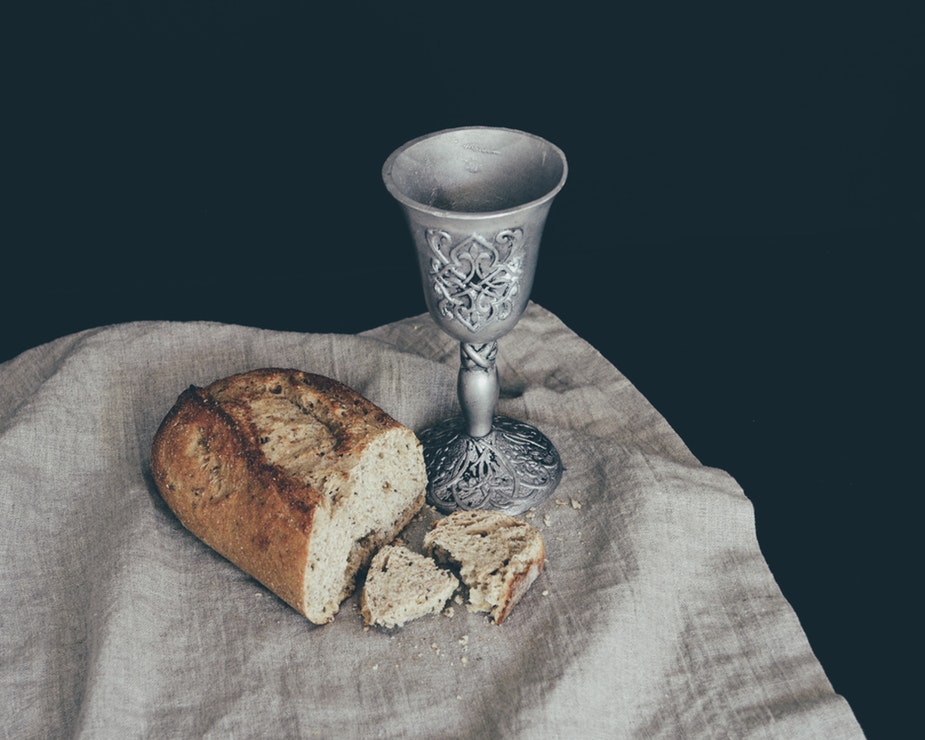
    Luke 22:19, “And he took bread, and when he had given thanks, he broke it and gave it to them, saying, “This is my body, which is given for you. Do this in remembrance of me.”

    For over a thousand years of Seder dinners, bread had been broken. Unleavened bread, just like the Israelite forefathers had eaten before fleeing from Egypt.

    The body of Jesus, given for you, given for your sins. Given for your forgiveness. And he says “do this in remembrance of me.”

    What more fitting words could you say at a Seder? A meal revolving around remembrance, about retelling the story of God saving his people by the blood of the lamb.

    Remembering what God has done. Remembering what Jesus has done. Remembering the sins that he’s redeemed you from. Remembering his body that he gave for you. Remembering his death that he died for you. Remembering the grace that he offers to you. Remembering his gospel.

    Luke 22:20 says, “And likewise the cup after they had eaten, saying, “This cup that is poured out for you is the new covenant in my blood.”

    The Seder dinner involves four glasses of wine. This seems to have been the second or third glass of wine in the meal, although there’s scholarly debate.

    But how profound it is. Wine drank in remembrance of the Passover. Jesus takes the wine, he blesses it, he says it is the new covenant in his blood, at the Seder dinner.

    It clearly points backwards to the blood of the Passover lamb, the blood that was put on the door posts. And it also points forward to the blood of Christ, shed for the forgiveness of sins. The blood of the true lamb.

    At the beginning of the gospel of John, when John the Baptist sees Jesus he says “Behold, the lamb of God who takes away the sin of the world.” Jesus is the true lamb of God. The lamb who took the penalty for sins. The one who was scarified for the salvation of God’s people.

    And by trusting in him and having faith in him, that puts the blood on the doorpost of your heart. On the first Passover, there would not have been a pardon for a person who didn’t put blood on the doorpost. It wasn’t that the blood saved them, God saved them. But to not put the blood on the door was to show that a person didn’t have faith in the Lord, didn’t trust in the Lord.

    When we take the Lord’s Supper, it’s not arbitrary. It’s not just using the random items that were around. It’s all symbolic. It takes symbols important to the first Passover, the first time God had delivered Israel, and it reminds of the new Passover, from the perfect sacrifice for sins.

    The Passover passage in Exodus 12:5 says that the lamb that was used had to be without blemish. Jesus is the ultimate lamb without blemish, a life lived in perfection.

    1 Corinthians 5:7 says “Cleanse out the old leaven that you may be a new lump, as you really are unleavened. For Christ, our Passover Lamb.”

    Josh Benner is the associate pastor at Cornerstone Evangelical Free Church in Fergus Falls, Minnesota and has a Master of Divinity from Trinity Evangelical Divinity School. He enjoys writing about faith and culture. He lives with his wife Kari in Minnesota.

  • A sinner’s guide to repentance

    DSC_0698.JPG

    Originally published March 22, 2017

    Repentance is sincere remorse or regret for an action. Theologically, repentance is associated with the idea of turning away from sin and turning to God.

    James 4:7-10 gives what’s almost like a “how to” guide for repentance. It’s not exhaustive, but he says five things that are important to repentance.

    1. Repentance involve submission to God

    Repentance isn’t just about moralism. It’s about an actual desire for God.

    It’s not “well I’ll just drink less” or “get control my temper better.” It’s not just “don’t do that,” but it’s a turning to God. It’s recognizing that God is greater than your sin, that he is better. That his ways are better. That turning from sin is turning to a better way. (more…)

  • Glimpses of the work of God in the world

    DSC_6621.jpg
    Jesus taught: “Blessed are the pure in heart, for they shall see God.”
    With the promises of the Lord, there’s a sense of the present fulfillment of the promise, but it points to a later and greater fulfillment in heaven.
    So for the present day, we do get a sense of the Lord, we are invited into a relationship with Christ, growing in our knowledge of him, knowing him better.
    There can be times in our lives, seasons of our lives where we find his presence especially strong in our lives. We get glimpses.
    We can appreciate and have a sense of awe for the Lord who created everything when we truly behold his creation, see the beauty of the sunset or stand at the foot of a mountain.
    We have moments when we see people coming to faith in the Lord, born again to the hope of the gospel, and when we see lives transformed, people made new by the power of God’s saving work.
    So in little ways, we get glimpses of God’s glory, of his work in the world.
    But the pure in heart, shall see God.
    The Christian life, is still being lived in a fallen world, we still deal with our own sins and the ramifications of the sins of others. We still get sick and die.
    We shall behold of his glory and holiness in heaven. Not in a glimpse or a flicker of light, but beholding the glory of God, the awesomeness of the Lord for eternity
    In the Old Testament, we are told that a person could not see God the face of God and live.
    God is so glorious, he is so holy, he is so pure, so full of life and light that sinful people cannot behold his glory.

    But the promise of Jesus is an eternal blessing in the presence of the Lord. And for that, we should rejoice. We should enjoy the blessings he has given us today. But to know that they are merely appetizers to the greater feast.

    Josh Benner is the associate pastor at Cornerstone Evangelical Free Church in Fergus Falls, Minnesota and has a Master of Divinity from Trinity Evangelical Divinity School. He enjoys writing about faith and culture. He lives with his wife Kari in Minnesota.