Josh Benner

Tag: Civil Rights

  • The virtue signal of all virtue signals: liberals compare themselves to heroes of all past generations

    Last week, legal scholar and philosopher Robert George had a thought-provoking series of Tweets on how people today would have responded to historical events had they lived through them.  

    George says: 

    “I sometimes ask students what their position on slavery would have been had they been white and living in the South before abolition. Guess what? They all would have been abolitionists! They all would have bravely spoken out against slavery, and worked tirelessly against it. Of course, this is nonsense. Only the tiniest fraction of them, or of any of us, would have spoken up against slavery or lifted a finger to free the slaves. Most of them—and us—would have gone along. Many would have supported the slave system and happily benefited from it.”

    It’s easy to look back at history and assume we would have been righteous. There’s a meme I’ve seen on online that says “If you’ve ever wondered what you’d do during slavery, the Holocaust, or civil rights movement, you’re doing it right now.” 

    Here’s a key difference for the social justice warriors of today. The popular culture supports you. There’s no pressure, or risk, or persecution to protest or be a social media activist. The media supports you, Hollywood supports you, athletes support you, academia supports you, and big corporations support you.  

    People want to compare this to the Civil Rights movement. Many of the protests and sit-ins were unpopular in public opinion from that era. The movement came at a cost. Where’s the cost in sharing a meme?

    To quote again from George, he gives a good ethical test for how we would have truly responded in previous eras: 

    I respond by saying that I will credit their claims if they can show evidence of the following: that in leading their lives today they have stood up for the rights of unpopular victims of injustice whose very humanity is denied, and where they have done so knowing: 

    (1) that it would make them unpopular with their peers, (2) that they would be loathed and ridiculed by powerful, influential individuals and institutions in our society; (3) that they would be abandoned by many of their friends, (4) that they would be called nasty names, and (5) that they would risk being denied valuable professional opportunities as a result of their moral witness. In short, my challenge is to show where they have at risk to themselves and their futures stood up for a cause that is unpopular in elite sectors of our culture today.

    This is an important distinction. When we act like we would have been leading the charge in previous eras, when we want to say that we would have been virtuous in previous eras, we need to consider the context of that time and the cost of our beliefs. Because there’s little real cost in the current climate. For instance, when people want to talk about this as being similar to how they would have responded to the Holocaust consider that during the Holocaust and the Third Reich, almost 80,000 Germans were executed for being part of the resistance. People paid the ultimate price to stand up against Hitler. Where’s the cost in a hashtag?  

    People want to compare this to how they would have responded in the Civil War. 360,000 soldiers died for the Union. That was roughly one percent of the entire U.S. population at the time. Men paid the ultimate price to preserve our nation and end slavery. Where’s the cost in telling people a bunch of books they should read or in watching a documentary?  

    People want to compare this to the Civil Rights movement. Many of the protests and sit-ins were unpopular in public opinion from that era. The movement came at a cost. Where’s the cost in sharing a meme?  

    In the civil rights movement, they protested against actual systemic racism. Today social justice warriors fight against inequality which they say is the result of current systematic racism, and there are people who want to compare the two eras as being moral equivalents. 

    When people want to compare their efforts today to past social movements, it’s showing an ignorance of history and it’s also showing delusions of grandeur. Progressives like to believe that everyone is immoral except for them and that they would have been righteous at all times.  

    We judge people form the past because they don’t adhere to our current standards. And when I say current, I mean that literally. Current as in today because the standards of progressivism are an ever-moving target. There weren’t serious efforts to defund, or dismantle, or destroy the police a year ago. There weren’t major popular efforts to tear down monuments five years ago. There was not a major war on our history ten years ago. But progressives continue to shift their values and they fight a culture war where there is no grace or redemption given to past people who did not perfectly adhere to these standards of today while progressives allow themselves to continue changing what matters and what’s right.

    Thanks for reading! For more posts, don’t forget to like, share, and subscribe!

  • Colorado baker who refused to bake a same-sex wedding cake now has to defend himself for not baking a gender transition cake

    photo-1518566585952-954bb14432d1.jpeg
    Few people can say that they’ve had a case go to the Supreme Court. Jack Phillips can. He’s the Colorado baker who refused to bake a wedding cake for a same sex couple in 2012. The couple took this to the Colorado Civil Rights Commission who ruled in favor of the couple.

    According to the Supreme Court, the case addressed whether Colorado’s public accommodations law “violates the First Amendment as applied to an individual who declines to design and create custom wedding cakes for same-sex wedding celebrations that violate his sincerely held religious beliefs.”

    In a 7-2 ruling, the court ruled in favor of Phillips. (more…)

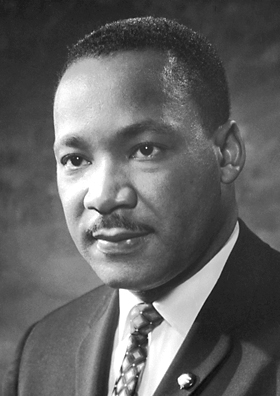
  • MLK’s dream still alive 50 years after his death

    Martin_Luther_King,_Jr..jpg

    Martin Luther King was assassinated 50 years ago today outside his hotel room in Memphis, Tennessee.
    In our age with all of the politics and spin, and counterspin, I find it sad to admit that I feel like I don’t really know anything about this man.
    Obviously I know he was the most prolific leader during the Civil Rights Movement. That he gave one of the greatest speeches in American history (his “I have a dream” speech is right up there with the Gettysburg Address).
    I know that he was murdered. I know that he’s one of the most significant men of the 20th century.
    I think that part of why I feel like I don’t really know much about the man, is that I think we see the good things he stood for, and we like to see those things in ourselves and what we believe. It’s for that reason, I believe, that people from both of our major political parties find things that Dr. King said and reason that he would have been on their side, had he lived.
    The dream still lives 
    Martin Luther King clearly articulated the America that he envisioned.

    It is a dream deeply rooted in the American dream.

    I have a dream that one day this nation will rise up and live out the true meaning of its creed: “We hold these truths to be self-evident: that all men are created equal.”

    I have a dream that one day on the red hills of Georgia the sons of former slaves and the sons of former slave owners will be able to sit down together at the table of brotherhood.

    I have a dream that one day even the state of Mississippi, a state sweltering with the heat of injustice, sweltering with the heat of oppression, will be transformed into an oasis of freedom and justice.

    I have a dream that my four little children will one day live in a nation where they will not be judged by the color of their skin but by the content of their character.

    I have a dream today.

    I have a dream that one day, down in Alabama, with its vicious racists, with its governor having his lips dripping with the words of interposition and nullification; one day right there in Alabama, little black boys and black girls will be able to join hands with little white boys and white girls as sisters and brothers.

    I have a dream today.

    -“I have a dream” speech

    There are many different opinions today of if that dream has been realized.
    We are a nation that is deeply divided.
    Has his dream been realized?
    If you believe that it has, when was it?
    I think we can look back 50 years, 60, 70, 100 yeas ago and see times where that dream most certainly was not a reality for every American.
    Today, we still live in the fallout of the sins of past generations. And as a result, there are generations of minorities who were intentionally enslaved, and then intentionally marginalized and discimriated against. But the subsequent generations have also been born into disadvantaged situations. And it becomes a vicious cycle. If someone is born into poverty, they will also have a lower quality of education, live in areas with higher crime rates, and be more likely to have run ins with the law.
    I believe in the American dream. I believe people can overcome if they work hard and use their talents and abilities to achieve their goals. But I also believe that if someone starts out from a lower position, it’s harder to overcome the obstacles. It’s not impossible, it’s just more of a challenge.

    I’m certainly not the authority on society’s ills. But I don’t think we can kick back, look at Dr. King’s dream and say it has been fully realized. Because there is still work to do. I wasn’t alive 50 years ago. I think it’s fair to say that much progress has been made.

    But just because things aren’t as bad as they used to be doesn’t mean they’re as good as they need to be.

    It’s easier to not do something than to do it. It’s easier to not care than to be challenged. I know I personally have much to learn.

    It’s easy to act like there aren’t still racial issues. But if we deny that there are, when so many in the black community feel that there are, aren’t we essentially confirming that there are in fact issues?

    Racism and prejudice are ugly ideas. I think it can be tempting to want to deny them, or explain them away. I think this is a mistake. The first step is admitting our society still has a problem.

    If two people are married, and one says, “We need to talk, we’ve had some issues, and I’ve been really hurt by some of these things.” And the other person says, “No we don’t, we’re fine,” which of the two do you think is more in touch with reality?

    Every African American I know thinks there are still racial problems in our society. Again, it can be tempting to want to downplay that. But I can’t be condescending to an entire race of people and think they’ve just all got it wrong. I haven’t walked in their shoes and lived their experiences.

    I try to listen, but I can do it better. I try to pray for people and for our nation, but I need to do it more often. I try to know people who are different than me (not just along racial lines).

    The Bible is clear about the sinfulness of our world. And one of the biggest ways how humanity sins is in finding ways to oppress those who are different.

    What are you doing to help make the dream a reality?

    Josh Benner is the associate pastor at Cornerstone Evangelical Free Church in Fergus Falls, Minnesota and has a Master of Divinity from Trinity Evangelical Divinity School. He enjoys writing about faith and culture. He lives with his wife Kari in Minnesota.