Josh Benner

Tag: Evangelism

  • Having an “all things to all people” ministry mindset

    all things to all people.JPG

    In 1 Corinthians 9, the Apostle Paul gives an insight into how he approached ministry. After discussing how he related to Jews, gentiles, and those whom society had looked down upon, Paul sums up how he related to each of these groups by saying that he became “all things to all people.”

    For the Jewish people, they had the Law. In the early church, there was still some uncertainty over which (if any) aspects of the Law people were required to follow.

    Paul was respectful of Jewish customs. He had been born and raised Jewish. And for the sake of building relationships, in certain circles, he would still participate in accordance with various Jewish customs. In Acts 16, Timothy is a young minster who begins doing ministry with Paul. Knowing they would be traveling in heavily Jewish areas, Paul actually has Timothy get circumcised.

    All things to all people. (more…)

  • Can a person truly have faith if their life doesn’t show it?

    photo-1506630525117-569864448381

    Vegans.

    When you’re a vegan, you don’t eat meat or use animal products. Being vegan is a lifestyle.

    Now if I said that I was vegan and invited you over to my place for dinner, and you said what are we having “surt and turt….we’re having some fish and steak” and then I was washing it down with a glass of milk, and my kitchen table was on a bearskin rug, and I was eating the meal with ivory handled silverware while wearing a fur coat, and we were facing my trophy wall that had deer heads….” You might start to think “you’re not vegan.”

    (more…)

  • Doing ministry with an “all things to all people” mindset

    earth

    In 1 Corinthians 9:19-23, the Apostle Paul talks about being “all things to all people.” In the rest of the passage, he talks about different groups with whom he demonstrates this. While that passage is not an exhaustive guide to ministry, it provides significant insights into how to reach people for Jesus.

    Based on studying this passage, and thinking of this in the ministry context of the Bible, I have five reflections over the past few weeks on what it is to be “all things to all people.” (more…)

  • Newly published Reagan letter shows deep faith as he shares gospel with dying father-in-law

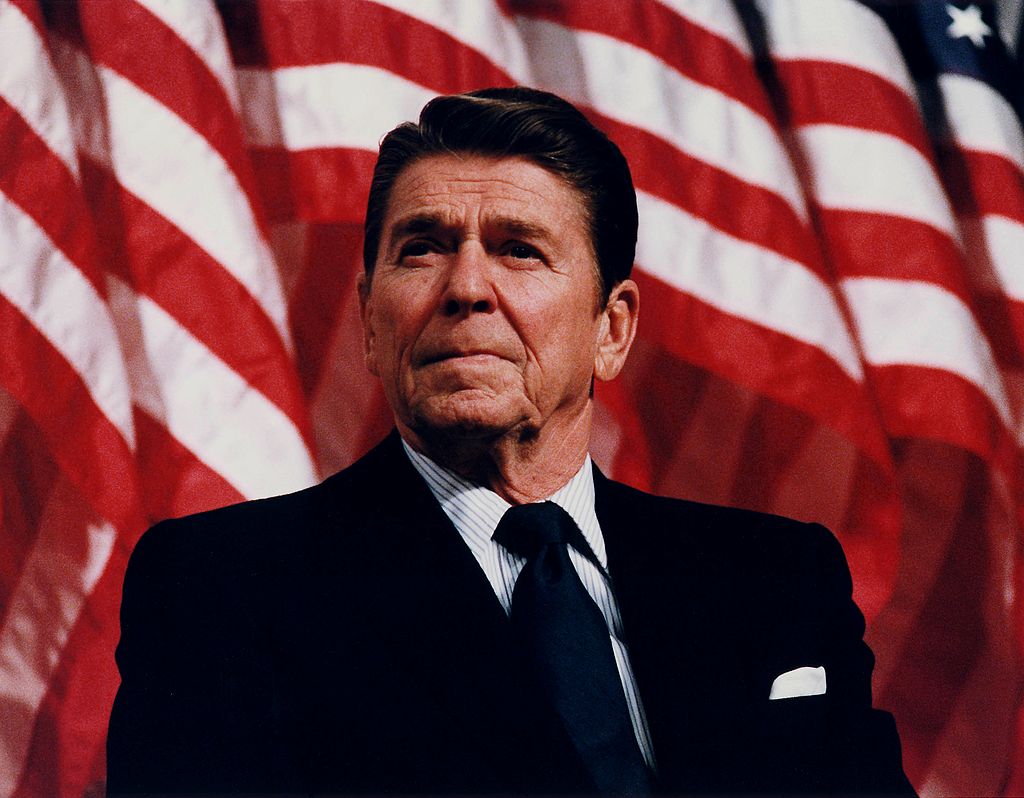
    1024px-President_Reagan_speaking_in_Minneapolis_1982.jpg
    The Washington Post ran a 1982 letter written by former president Ronald Reagan to his dying father-in-law. His father-in-law, Dr. Loyal Davis had not been a religious man, and on the brink of eternity, Reagan felt compelled to stress the importance of faith.

    The most powerful man in the world pointing someone to the most powerful being in the universe.

    The newly published letter was discovered by Washington Post writer Karen Tumulty who was going through a box of Nancy Reagan’s personal effects in researching for a book on the former first lady.

    Reagan’s letter is a work of apologetics where he looks at Jesus as having come in fulfillment of prophesies. Using a similar line of reasoning to C.S. Lewis, Reagan talks of how Jesus either was who he claimed to be or a great con man (which would beg the question of why he would follow a “lie” to the point of dying for it). Reagan talks of the impact that this one man (who had such a short ministry) has had on the rest of the history of the world:

    The miracle is that a young man of 30 yrs. without credentials as a scholar or priest began preaching on street corners. He owned nothing but the clothes on his back & he didn’t travel beyond a circle less than one hundred miles across. He did this for only 3 years and then was executed as a common criminal.

    But for two thousand years he has … had more impact on the world than all the teachers, scientists, emperors, generals and admirals who ever lived, all put together.

    Reagan talks of the importance of faith in Jesus and ends the letter by appealing to his father to put himself in God’s hands.

    I appreciate this letter. Presidents are complicated individuals and Reagan’s faith is a subject of debate. But in this letter, his sincere desire is for his father-in-law to place faith in Jesus. He thought sharing the gospel with a beloved family member was worth doing.

    Thanks for reading! I’d love to hear what you think, and don’t forget to subscribe! 

    Josh Benner is the associate pastor at Cornerstone Evangelical Free Church in Fergus Falls, Minnesota and has a Master of Divinity from Trinity Evangelical Divinity School. He enjoys writing about faith and culture. He lives with his wife Kari in Minnesota.


    Let’s connect!
    Facebook
    Twitter
    Instagram

  • Having an “all things to all people” ministry mindset

    all things to all people.JPG

    Originally published April 6, 2016

    In 1 Corinthians 9, the Apostle Paul gives an insight into how he approached ministry. After discussing how he related to Jews, gentiles, and those whom society had looked down upon, Paul sums up how he related to each of these groups by saying that he became “all things to all people.”

    For the Jewish people, they had the Law. In the early church, there was still some uncertainty over which (if any) aspects of the Law people were required to follow.

    Paul was respectful of Jewish customs. He had been born and raised Jewish. And for the sake of building relationships, in certain circles, he would still participate in accordance with various Jewish customs. In Acts 16, Timothy is a young minster who begins doing ministry with Paul. Knowing they would be traveling in heavily Jewish areas, Paul actually has Timothy get circumcised.

    All things to all people.

    People needed to understand that adherence was not what saved a person. Faith is what saves. But it’s also important to understand that, for Paul, in ministering to Jewish people, the purpose wasn’t to get them to give up every aspect of their former life. Practicing things like circumcision or still eating in accordance with the Jewish dietary restrictions were not things that people needed to give up.

    Paul’s purpose was to preach the gospel, the salvation through faith and the work of Jesus at the cross.

    From Jews to Hindus 

    I was at a missions conference a few weeks ago and one of the presenters was talking about barriers missionaries face in evangelizing Hindus in India. India has a billion people, but is only about 2.3% self-identified as Christian. And those numbers haven’t really changed in the past 50 years, in spite of all of the money and missionary efforts in that country.

    Part of the challenge is that Hindus who convert to Christianity often times make radical changes. Not simply Spiritually, but external changes: things like changing their names, changing how they dress, essentially separating themselves from anything that has to do with Hinduism.

    Many American Christians might think that’s a good thing.

    But is it?

    Think about it like this: you know someone and they start going to a new church. And then they start dressing differently. And then they tell you they’ve changed their name….would you think “well that’s wonderful.”

    Of course not.

    You’d think they had just joined a cult!

    Coming to faith in the gospel of is always a spiritually transforming event. But depending on a person’s background, it can also be a significant social change as well. There can be stigmas in certain circles. It can be at the expense of relationships. While the gospel is worth whatever the cost, it does not need to be at the cost of lifestyle decisions that aren’t matters of sin. It can be easy to have extra-Biblical expectations of what a real Christian should act like or do. We should encourage and exhort people to turn away from sin, but not from things which are morally neutral, things like style of dress, tattoos, piercings, and smoking.

    For the Hindus, with things like the style of dress or their first name, or like the Jews to whom Paul was ministering who still practiced circumcision, these weren’t sin issues. These weren’t things that were inherently wrong for the people to be doing.

    While this passage is not an exhaustive manual on how to do ministry, I do think that it is providing an important bedrock example of how we are to spread the good news of the love and forgiveness of Christ in our world.

    All things to all people.

    We have a God who meets us and loves us where we are. And we are to love other people where they are. It’s not about a person getting things together so that we can find them lovable.

    Josh Benner is the associate pastor at Cornerstone Evangelical Free Church in Fergus Falls, Minnesota and has a Master of Divinity from Trinity Evangelical Divinity School. He enjoys writing about faith and culture. He lives with his wife Kari in Minnesota.