Josh Benner

Tag: Holy Week

  • The American Gospel and the meaning of Easter

    The American Gospel and the meaning of Easter

    Statistically, we know that the vast majority of Americans believe in some form of a higher power. There are relatively few who are atheists. Since people do believe that there is something, and since it’s so easy to think of the majority of Americans as Christians, many simply attach themselves to Christianity.

    But what does it mean? Christianity?

    For so many, we call ourselves Christians but then never pray, or read the Bible, or go to church, or experience fellowship with other believers, or show any actual desire to have a relationship with Jesus. Without these, how can a person be Christian?

    We live in a culture where it is accepted to be a “Christian” so long as we have a faith that is extremely passive, watered down, and without conviction. In the eyes of the world, when we have a faith that actually impacts the way in which we live our lives, we’re labeled as extreme, strange, ignorant, or bigoted. For people who actually have faith, they’re thought of as being “really religious.”

    I argue that to be religious but not really religious is to be religious, not really.

    Contrary to popular opinion, the gospel isn’t that we just need to be a “good person.” To say that this was the basis of the message of Christ is a complete misunderstanding of the New Testament because He never says nor implies that our moral goodness is the thing which will save us. In fact, the point of the gospel is that our own actions cannot save us.

    All of us sin, and our sin separates us from God. But we are saved because of God’s grace alone through faith alone in Christ alone. That is the heart of the gospel. That we need Christ. Some might not like that because it’s exclusive. But the gospel is meant to be inclusive. Jesus died for all who will accept His gift of grace.

    Throughout the history of the church, there have been those who have unfortunately distorted the gospel or misused it. We can point to events like the church’s Crusades or her Spanish Inquisition. In modern times, we hear of abuses within the Catholic Church, and radicals like the Westboro Baptist Church who protest funerals. It’s easy to look to these things and to become disgusted with Christianity.

    But if Christ really died and really rose from the dead, the fact that people distort the message doesn’t change the reality that He came to forgive you of your sins. It’s not the message of the gospel that is the problem. The problem is man’s selfish usage of the gospel.

    But why should we be Christians? In our daily lives, we see people who claim to know God but who are hypocrites…

    That’s the point!

    Man is sinful! We are immoral. We were incapable of morally cleaning ourselves up.

    We needed a savior.

    And a savior came, and died, and rose, and lives.

    Some may argue, if there is a God, why does He allow people to tarnish His message?

    It’s because people aren’t spiritual robots. We are willing, moral beings. And there are people who choose to do morally egregious things in the name of the gospel. But that isn’t a shortcoming of the gospel. Like a shinning light, it clarifies the darkness of our hearts and shows our desperate need for grace.

    Some may want to live as Christians, but feel that they can do a better job on their own, instead of through organized religion. But the idea that you can be a Christian apart from church contradicts the teachings of Christ. Certainly, there are bad churches. But there are also a lot of very good, Christ-centered churches. One bad experience, or years of bad experiences are no excuse for someone whose trying to live as a Christian to ignore church.

    In discussions about religion, I’ve often times said that the gospel is either the most important thing in the universe, or it is completely irrelevant. Jesus was the God who died for our sins, or He wasn’t. If He was, we should worship Him. If not, then He is useless to us. The idea that Jesus might have just been a great moral teacher contradicts Jesus’ own teachings. His message revolved around Him being the savior of the world. If He lied about that, He cannot be a great moral teacher.

    So what do you believe? Where do you stand with Jesus? Was He God or was he just some guy?

    Jesus said “Come to me, all who labor and are heavy laden, and I will give you rest. Take my yoke upon you, and learn from me, for I am gentle and lowly in heart, and you will find rest for you souls.”

    No matter what you’ve done, no matter who you’ve hurt, no matter what addiction is suffocating your life, no matter what dark thoughts you have, it’s nothing so great that the risen Lord cannot forgive you.

    But where to start?

    As I’ve already said, I think it comes down to prayer, studying His word, getting involved in a good church, fellowship with Christians. Jesus said that we are to “Love the Lord your God with all your heart and with all your soul and with all your mind.” If you do that, I believe that God will lead you to truth.

    It’s not a self help message. Belief in the gospel isn’t a promise that you won’t have financial problems, or illnesses, or family issues, or countless other stresses and frustrations. The gospel is that you get God, and no matter what else is happening in this life, His truth will strengthen, and give purpose, and sanctify you.

    Maybe you’ve lived your entire life and said you were a Christian, but you’ve never really had faith. The gift of grace and the offer of salvation is just as real for you today as it is for a person whose never thought about the gospel.

    It’s easy to associate Christianity with a bunch of rules and a list of things that you can’t do anymore. If you truly accept the gift of grace by faith, no sin can separate you from God’s love or from the forgiveness that you have. A true faith in the gospel will also result in a transformed life. Certain things will become less appealing. But acting a certain way and following a particular list of rules is not what makes you a Christian. If it were, you would be earning your salvation which would have made Christ’s rising from the dead pointless!

    However, a person who is a Christian who has faith will have a life that is changed and will naturally live differently. This transformation is what shows that the faith is genuine.

    On the first Good Friday, when Jesus suffered that horrendous death for our sins, the Bible says that two other condemned criminals were also crucified with the Lord:

    39 One of the criminals who were hanged railed at him, saying, “Are you not the Christ? Save yourself and us!” 40 But the other rebuked him, saying, “Do you not fear God, since you are under the same sentence of condemnation? 41 And we indeed justly, for we are receiving the due reward of our deeds; but this man has done nothing wrong.” 42 And he said, “Jesus, remember me when you come into your kingdom.” 43 And he said to him, “Truly, I say to you, today you will be with me in paradise.” 
    -Luke 23:39-42

    Two condemned thieves found themselves condemned with Jesus. Both were guilty. One wanted Christ to work on his terms, the other recognized his guilt, and through faith sought forgiveness.

    All of us our guilty.

    Which thief will you be this Easter weekend?

    Thanks for reading! If you liked this post, please share and subscribe!

    Originally posted April 6, 2012

  • Jesus and the new garden. The Lord arrested

    Jesus and the new garden. The Lord arrested

    Creation is one of the themes of the Gospel of John. Consider the opening chapters of the Bible in the Book of Genesis and its many parallels in the Gospel of John. 

    Genesis 1 begins with: In the beginning, God created the heavens and the earth.

    John 1:1 begins with: In the beginning was the Word, and the Word was with God, and the Word was God

    Genesis 1:3: And God said, “Let there be light,” and there was light. 4 And God saw that the light was good. And God separated the light from the darkness.

    In John, Jesus says “I am the light of the world” (John 8:12). 

    And that: ​​the light has come into the world, and people loved the darkness rather than the light because their works were evil (John 3:19). 

    Genesis 1:26 talks of the creation of man. Then God said, “Let us make man in our image, after our likeness. 

    John 1:4-5 talks of Jesus and says: In him was life, and the life was the light of men. 5 The light shines in the darkness, and the darkness has not overcome it. 

    In Genesis 3:8, after the fall, God walks in his world. 

    And they heard the sound of the Lord God walking in the garden in the cool of the day

    John 1:14 talks of Jesus and says: the Word became flesh and dwelt among us, and we have seen his glory, glory as of the only Son from the Father, full of grace and truth.

    In Genesis 1, God speaks. In John 1, Jesus is called the Word. 

    John’s gospel points back to creation because Jesus brings a new creation. 

    When Nicodemus comes to Jesus in John chapter 3, Jesus tells him he must be born again. 

    At the Last Supper, Jesus talks of the love the disciples are called to have for each other. He calls it a new commandment. Jesus ushers in a new covenant. 

    John who also wrote the book of Revelation depicts the vision of heaven in Revelation 21:5. What’s he call it? It’s new heaven, and a new earth, and a new Jerusalem. And then records Jesus saying “Behold, I am making all things new.” 

    Jesus is making all things new. He’s making a new creation in the world and he’s making a new life in his believers. 

    In John 18, the creation theme is revisited when Jesus is arrested. And it should be no surprise that John calls us back to creation here because as we begin the story of Christ’s death, it will point to the newness of life that he brings. 

    In this passage, we’ll jump into our passage this morning and we’re going to look at five things this morning. And we’ll try to tie it together at the end.

    1. The new Garden

    As we talk about creation, let us recall that Genesis 2:8-9 introduces us to the Garden of Eden: And the Lord God planted a garden in Eden, in the east, and there he put the man whom he had formed. 9 And out of the ground the Lord God made to spring up every tree that is pleasant to the sight and good for food. The tree of life was in the midst of the garden, and the tree of the knowledge of good and evil. 

    Where does John 18 begin? When Jesus had spoken these words, he went out with his disciples across the brook Kidron, where there was a garden, which he and his disciples entered.

    Jesus comes into a garden. The word garden is rare in the New Testament. It’s found only eight times. In the gospels of Matthew, Mark, and Luke, it is used one time each. In each of those instances, it is used in the parable of the mustard seed. 

    In John, it is used five times, all between chapters 18 and 20, and it is found nowhere else in the New Testament. At Easter time, we often refer to the place of Jesus’s arrest as the “Garden of Gethsemane,” but it is never called that in the Bible. 

    John calls it a garden. Matthew and Mark refer to it as Gethsemane. Luke calls it the Mount of Olives. All of those are correct. Gethsemane is on the Mount of Olives, and John chose to call it a garden for theological purposes. Technically, it’s probably more of a tree grove. 

    On the first Easter, when Jesus rises from the dead and Mary is at the tomb, Jesus appears to her, but she doesn’t initially recognize him. 

    John 20:11-15: But Mary stood weeping outside the tomb, and as she wept she stooped to look into the tomb. 12 And she saw two angels in white, sitting where the body of Jesus had lain, one at the head and one at the feet. 13 They said to her, “Woman, why are you weeping?” She said to them, “They have taken away my Lord, and I do not know where they have laid him.” 14 Having said this, she turned around and saw Jesus standing, but she did not know that it was Jesus. 15 Jesus said to her, “Woman, why are you weeping? Whom are you seeking?”

    The risen Jesus says this to Mary. And again, she doesn’t know it’s him. Who does she think it is? 

    John 20:16: Supposing him to be the gardener, she said to him, “Sir, if you have carried him away, tell me where you have laid him, and I will take him away.”

    So the narrative of Jesus’ arrest and the introduction of the risen Lord are book ended by the garden. And the way in which it is pointing back to creation is that in this garden, Jesus is undoing the curse of death which has been brought on by sin. 

    The first garden was a perfect place where humanity brought on death because of sin. In this second garden, a perfect Jesus will bring eternal life because he will suffer the consequences of sin and experience death.

    The first garden was the place where humanity fell. The second garden is the place where Jesus redeems.

    2. A fallen world

    John 18:2-3: Now Judas, who betrayed him, also knew the place, for Jesus often met there with his disciples. 3 So Judas, having procured a band of soldiers and some officers from the chief priests and the Pharisees, went there with lanterns and torches and weapons.

    John reminds us that Judas betrayed Jesus. 

    The last time Judas appeared in this gospel was in chapter 13 at the Last Supper. As that meal wound down, knowing what would happen, Jesus acknowledges that one of the disciples will betray him. The rest of the disciples don’t know who will do this and start asking questions. 

    As the reader, we learn that it’s Judas, but John tells us this was unbeknownst to the other disciples at the time. 

    John 13:27-30, referring to Judas.

    27 Then after he had taken the morsel, Satan entered into him. Jesus said to him, “What you are going to do, do quickly.” 28 Now no one at the table knew why he said this to him. 29 Some thought that, because Judas had the moneybag, Jesus was telling him, “Buy what we need for the feast,” or that he should give something to the poor. 30 So, after receiving the morsel of bread, he immediately went out. And it was night. 

    So Judas is entered into by Satan and makes his exit from the meal. For a moment, I want to return us to the creation theme. In Genesis, in the garden, sin entered the world because Satan spoke to Adam and Eve through a serpent. 

    In this garden, Satan enters a man who will betray Jesus. The story tells us that Judas knew this place where Jesus often met with his disciples. In other words, Jesus has gone to a place where he knows he can be easily found. He is not hiding. As we will see at the end of the passage, and as we’ve seen elsewhere in this gospel, Jesus is fully aware of what must happen.

    Verse 3 says that Judas had procured a band of soldiers. 

    I think it’s easy to imagine that being a handful of soldiers. You watch a movie like “The Passion of the Christ,” and when Jesus is arrested, Judas has like 8, 10 soldiers with him. 

    A band is not meant to merely mean “a group” or “several.” The Greek word used is actually a technical term to refer to a Roman cohort of soldiers, which consisted of about 600 men. 

    Now a cohort would not always have exactly 600 men. But it is a significant group of soldiers. In is not beyond the realm of possibility that a few hundred soldiers were in the arresting party. Certainly more than the handful that we tend to imagine. It is a massive group who have come to arrest Jesus. 

    John also tells us that this group included some other officers from the Pharisees and the chief priests. So it is not the Pharisees and the priests who personally arrest Jesus, but they send their own officers. That is a reference to the temple guards.

    The chief priests were the group who largely made up the Sanhedrin – the Jewish ruling council – who brought charges against Jesus to Pontius Pilate. 

    The fact that you have Jewish officers and Roman guards present is also meant to symbolize the world. That you have Jews and gentiles who are arresting Jesus. That representatives from the world crucified Jesus and all of humanity has sinned against Jesus. 

    John calls Judas the betrayer of Jesus. And he is. But we have all sinned against Jesus. And it is because of our sin, that Jesus has gone to the cross so that we can be forgiven. 

    At the end of verse 3, John mentions that they had torches and weapons. 

    Taken all together, you have this comically large arresting party who has come for Jesus, armed with weapons and torches. Now it is nighttime, but there is certainly irony that they’ve had to bring torches as they come to arrest the light of the world. 

    It might seem strange that so many were in the arresting party, but there had been other times when people had made attempts to arrest Jesus and been unsuccessful. At the time of Passover, it was a time of year where Roman occupied Jerusalem had heightened political tensions. Jesus had become well known. While the Romans and Jews were often at odds, this was an opportunity they had to unite against someone they both hated. So it is not so unreasonable that it would be such a large contingent. 

    Jesus comes forward. Again he is not hiding. While he had escaped the Pharisees and the temple guards in the past, this is now the appointed time for his death, and so he approaches them willingly. 

    3. A worthy savior

    John 18:4: Then Jesus, knowing all that would happen to him, came forward and said to them, “Whom do you seek?”

    John again reminds us that Jesus knew what would happen. It was the divine plan that Jesus would die for the sins of the world.

    He asks “whom do you seek?” 

    Verse 5: They answered him, “Jesus of Nazareth.” Jesus said to them, “I am he.” Judas, who betrayed him, was standing with them.

    John reminds us again of Judas and reminds us again that it is he who betrayed Jesus. In verse 6, the context makes it clear that what Jesus has said and how the audience heard it has the intended force. 

    When Jesus said to them, “I am he,” they drew back and fell to the ground.

    John uses the same Greek form for “I am.” And then says that the people drew back and fell to the ground. In the Bible, especially in the Old Testament, you see these moments where a person encounters God’s glory. And it is always an awesome and terrifying sight. Perhaps the guards didn’t comprehend what they had seen. Perhaps it just didn’t change their hearts. 

    But for at least a moment, in reverence and fear, as the great I am, the Lord Jesus, the eternal Son of God discloses the truth of who he is to this throng of people, they are overwhelmed. The many are no match for the one, except for the fact that Jesus allows himself to be taken by them. 

    In other scenes in this gospel, crowds worship Jesus and want to try to make him a king but he doesn’t allow it. But when this crowded comes to Jesus seeking to take him to a cross, he steps forward. 

    Verses 7-8: So he asked them again, “Whom do you seek?” And they said, “Jesus of Nazareth.” 8 Jesus answered, “I told you that I am he. So, if you seek me, let these men go.”

    Now, the guards had just fallen down. We don’t know, maybe they’re still on the ground. Either way, it is quite the scene when Jesus has made his “I am” statement, they’ve fallen down, and Jesus goes back to the subject at hand. 

    Whom do you seek? 

    They repeat their question that they’re seeking Jesus of Nazareth. When Jesus says I told you I am he, he is again repeating in the Greek “I am.” 

    Jesus again shows his control of the situation when he says:  So, if you seek me, let these men go.”

    Again, remember the scene. You have a vast arresting party that has hunted Jesus down. But the disciples are his close associates, and yet he calls the shots and tells the guards to take Jesus and let the disciples go. 

    That is a picture of the gospel. To borrow an idea from James Hamilton in his commentary on John. Jesus gives himself up so that the disciples can escape the arresting party. And it’s because Jesus gives himself in our place so that we don’t have to face the judgment of an Almighty God for our sins.And on the cross, Jesus takes our place, Jesus bears our guilt, Jesus absorbs the punishment of our sins. So that we can be forgiven. 

    This is affirmed in verse 9: This was to fulfill the word that he had spoken: “Of those whom you gave me I have lost not one.”

    That is a pretty fascinating statement. We see verses in the New Testament when Jesus does things in fulfillment of Old Testament prophecies. But this isn’t the case here. 

    John says that this was to fulfill the word that he had spoken. In other words, it’s Jesus fulfilling his own words. Specifically, it’s a reference to John 17 where Jesus talks of having not lost one of those whom the Lord has given him. 

    And the reason why he has not lost one is because he gives himself up so that they can be released. Again, it’s a picture of the gospel. That’s what this passage is about. The gospel. 

    The gospel is the good news that Jesus saves, that he forgives, that he redeems, that he pays the price, that he releases all who come to him and believe in him. 

    And then in verse 10, he’s interrupted. 

    4. A futile attempt

    Now if you’re familiar with the gospels, you know that one of the disciples has a reputation for being the most outspoken. That one of the disciples has a tendency to act first and think second. 

    If he was at your family dinner for Thanksgiving, he’d be the first person to bring up politics. 

    Peter. 

    Verse 10: Then Simon Peter, having a sword, drew it and struck the high priest’s servant and cut off his right ear. (The servant’s name was Malchus.)

    I think this verse is somewhat comical. 

    Jesus is knocking people down with the power of his words. Jesus is showing his control of the situation. Jesus is the one who commands that the disciples be let go. 

    Hundreds of guards have come with their swords and suddenly Peter is like “Ahhh.” 

    What was Peter trying to do? 

    One thing is clear. Alistair Begg points this out, but either Peter is a terrible swordfighter. Or. Peter is an incredible swordfighter. 

    Was he trying to cut the guys head off or swing for his body and he just got his ear? Then Peter is pretty bad. He almost missed the guy entirely. 

    Now, if he was just trying to cut off the guy’s ear, a pretty small target, and did exactly that, well, Peter is like Wesley in Princess Bride then. He’s incredible. 

    I lean towards Peter being pretty bad. Because I just think about what we know about Peter in the Bible. He had been a fisherman. And then he was a disciple. I just don’t know when he would have had time to acquire really good sword fighting skills. 

    Jesus traveled and ministered with his disciples for three years. I just don’t picture a lot of fencing tournaments between the 12. 

    Also, Bible translations say sword. That’s appropriate, but keep in mind it’s probably not some big King Arhtur type, medieval knight’s sword that we’re envisioning. It’s more likely a dagger or long knife. 

    In that event, we also see an interesting parallel to Jesus. Peter injures a servant of the high priest. Jesus is the true servant and is himself the true high priest who would have his body broken on the cross. Peter had tried to intervene, but it wasn’t necessary. 

    To quote from James Hamilton’s commentary: “If anyone has ever found himself trying to do the right thing for the right cause, only to do the wrong thing in the wrong way, he can identify with what Peter does here.”

    We so often try to take matters into our own hands. 

    But Jesus doesn’t need Peter to defend him. He needs Peter to believe in what must be done. 

    The more I learn about the Bible, the more clear to me it becomes that the world struggles with faith because we struggle dealing with a loss of control. 

    Even professing Christians, so often when you talk to people and really dig down into what they believe, what they believe about God, what they believe about the reason why God loves them, is in their own goodness. 

    And the Bible so clearly and so often tells us that is not so. That we are not good. Jesus did not die for people who were doing fine, and who were pretty good people. He died for people who were helpless without him. We cannot save ourselves, and we cannot help Jesus save us. He saves us because of his life, his power, and his purpose in the world. 

    And that’s what he will tell Peter in the final verse of this passage.

    5. A way to redemption 

    John 18:11: So Jesus said to Peter, “Put your sword into its sheath; shall I not drink the cup that the Father has given me?” 

    Jesus scolds Peter. Jesus willingly gives himself up to death for the sins of the world. Only he’s capable of doing that because only Jesus is without sin. 

    Jesus asks: shall I not drink the cup that the Father has given me?” 

    That points to his death. Now Jesus does not literally drink a cup here. Cup is being used symbolically. But why? 

    Cup

    Keep in mind that the Bible was written in the ancient world. It was a very different society and that they saw the world differently. And for these points, the Dictionary of Biblical Imagery was particularly helpful. 

    They were not concerned with the newest car or newest cell phone. They were not concerned about projects on their houses like new floors or furniture. Just having enough to eat was what drove so much of a person’s labors. 

    Now for us, a cup is not very exciting. You probably have 20 of them at your house.But for weary travelers in the ancient world, it was a cup of water in a new village which conveyed hospitality, friendship and safety. For people sharing a meal together, a cup could be a symbol of fellowship and love.

    A full cup meant that you had enough.In the Bible, it could be associated with blessing.  

    We see these ideas conveyed by the Psalmist in Psalm 23 when he says of the Lord:

    You prepare a table before me in the presence of my enemies; you anoint my head with oil; my cup overflows. 

    And there are similar statements made in other Psalms. 

    And because there is such a positive association, the Bible also uses a cup as a symbol of judgment as well. While cups could contain nourishment, the Old Testament also uses this image to depict drinking in God’s wrath for our sin. 

    Isaiah 51:17: Wake yourself, wake yourself, stand up, O Jerusalem, you who have drunk from the hand of the Lord the cup of his wrath, who have drunk to the dregs the bowl, the cup of staggering. 

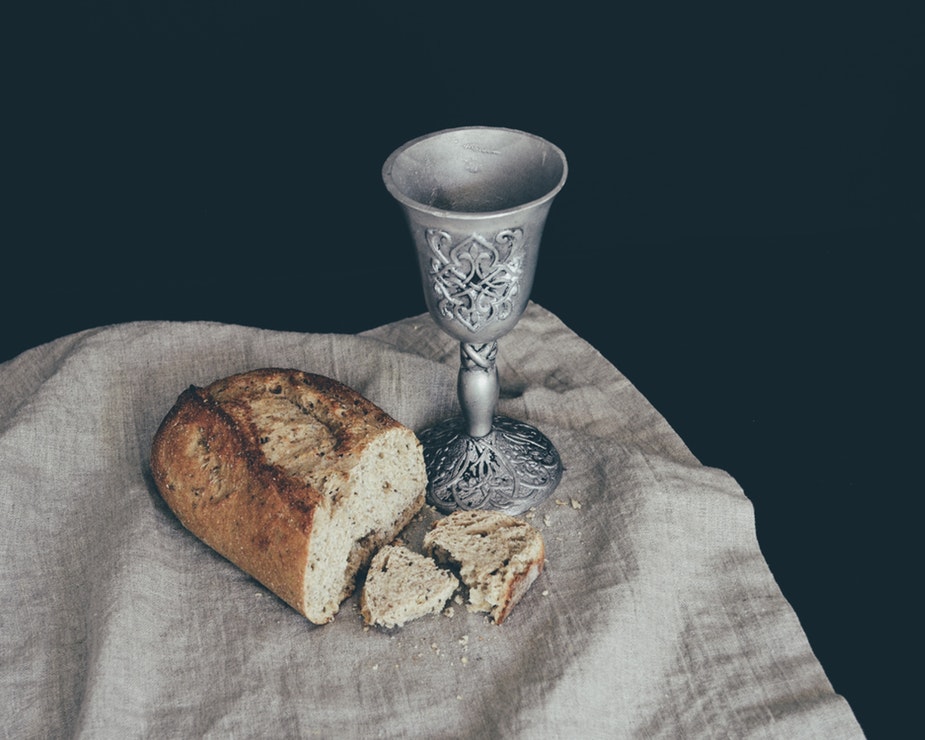
    We see similar statements elsewhere in the prophets. But with Jesus, it is he who willingly takes that cup. At the Last Supper, when Jesus institutes communion, he says: “This cup that is poured out for you is the new covenant in my blood.”

    And so in the end of this passage, it is pointing us to the death of Jesus. He will drink the cup of divine wrath so that we can take the cup of the new covenant. Jesus will taste death so that we can have eternal life. He drinks the cup of God’s wrath so that you don’t have to. 

    This passage is that it is really a microcosm of Genesis story where there’s creation – Jesus returns to the garden. There’s the fall, where a Satan-possessed Judas brings representatives of the whole world to unjustly arrest the Son of God, there’s man’s inability to correct the situation – as we see with Peter’s failed intervention; and there is redemption from a worthy savior who absorbs the wrath of God in our place. 

    In the beginning, God created a garden. In John 18, Jesus is in a new garden so that you can have a new life when you believe in him. That is the gospel. 

    That is the gospel. 

    Thanks for reading! If you liked this post, please share and subscribe.

  • Jesus and the Last Supper. More than just a meal.

    photo-1520629716099-d147346eb224.jpeg

    Originally published April 13, 2017

    As part of Holy Week, Maundy Thursday is recognized this evening. It was the night in which Jesus ate the Last Supper with his disciples. The time in which Jesus died corresponded with the Jewish holiday of Passover. And the Last Supper was the first night of Passover. An annual dinner for Passover is held, called a Seder, which is the Hebrew word for “order.” In 3,500 years, rabbinical tradition and teaching helped to form the ceremony of the Seder.

    Some of these pieces were traced back to the original Passover. Others came in Jewish history from rabbinical traditions.

    Also, once the Israelites were in the land, and after the temple was built, this impacted Passover traditions. When you had the temple, the lambs were sacrificed at the temple. But what didn’t change was that people could only sacrifice lambs that were perfect.

    I think it’s worth spending so much time in talking about Passover because I think it can help give us a greater context and understanding for the events surrounding the death of Jesus.

    In the gospels, the time of the death of Christ revolves around the Passover. That’s not a coincidence! Jesus would be sacrificed at the time that was associated with sacrifice. Jesus had gone to Jerusalem for Passover. In Jerusalem, the city within the Roman Empire that was the epicenter of Jewish culture, thousands of lambs would have been slaughtered annually. Jewish people would have been coming in from all over the empire.

    We see many traditions of the Seder at the last Supper.

    Some of them are small things. In the gospel accounts, it talks about Jesus reclining at the table (Luke 22:14).

    Jesus wasn’t sitting in a la-z-boy. He was on a couch that he was lying on, that was a Seder tradition. They had been enslaved in Egypt but being able to lie down showed the freedom and security.

    Or when Jesus is alluding to his betrayer, he says in John 13:26, “It is he to whom I will give this morsel of bread when I have dipped it.” So when he had dipped the morsel, he gave it to Judas, the son of Simon Iscariot.

    Again, I know the mental image that most of you probably have when you read this. It’s hard to know precisely where in the Seder this is, but it seems that it’s probably referring to when you take Haroset which is made from apple, nuts, cinnamon. They weren’t eating the Last Supper at an Italian restaurant. They didn’t have a bowl of olive oil in the middle of the table. But all of the elements we see at the Last Supper are part of what you’d see in a traditional Seder.

    As part of the Seder, you’d take the unleavened bread…looks like a cracker. And you’d break the bread.

    Luke 22:19, “And he took bread, and when he had given thanks, he broke it and gave it to them, saying, “This is my body, which is given for you. Do this in remembrance of me.”

    For over a thousand years of Seder dinners, bread had been broken. Unleavened bread, just like the Israelite forefathers had eaten before fleeing from Egypt.

    The body of Jesus, given for you, given for your sins. Given for your forgiveness. And he says “do this in remembrance of me.”

    What more fitting words could you say at a Seder? A meal revolving around remembrance, about retelling the story of God saving his people by the blood of the lamb.

    Remembering what God has done. Remembering what Jesus has done. Remembering the sins that he’s redeemed you from. Remembering his body that he gave for you. Remembering his death that he died for you. Remembering the grace that he offers to you. Remembering his gospel.

    Luke 22:20 says, “And likewise the cup after they had eaten, saying, “This cup that is poured out for you is the new covenant in my blood.”

    The Seder dinner involves four glasses of wine. This seems to have been the second or third glass of wine in the meal, although there’s scholarly debate.

    But how profound it is. Wine drank in remembrance of the Passover. Jesus takes the wine, he blesses it, he says it is the new covenant in his blood, at the Seder dinner.

    It clearly points backwards to the blood of the Passover lamb, the blood that was put on the door posts. And it also points forward to the blood of Christ, shed for the forgiveness of sins. The blood of the true lamb.

    At the beginning of the gospel of John, when John the Baptist sees Jesus he says “Behold, the lamb of God who takes away the sin of the world.” Jesus is the true lamb of God. The lamb who took the penalty for sins. The one who was scarified for the salvation of God’s people.

    And by trusting in him and having faith in him, that puts the blood on the doorpost of your heart. On the first Passover, there would not have been a pardon for a person who didn’t put blood on the doorpost. It wasn’t that the blood saved them, God saved them. But to not put the blood on the door was to show that a person didn’t have faith in the Lord, didn’t trust in the Lord.

    When we take the Lord’s Supper, it’s not arbitrary. It’s not just using the random items that were around. It’s all symbolic. It takes symbols important to the first Passover, the first time God had delivered Israel, and it reminds of the new Passover, from the perfect sacrifice for sins.

    The Passover passage in Exodus 12:5 says that the lamb that was used had to be without blemish. Jesus is the ultimate lamb without blemish, a life lived in perfection.

    1 Corinthians 5:7 says “Cleanse out the old leaven that you may be a new lump, as you really are unleavened. For Christ, our Passover Lamb.”

    Thanks for reading! I’d love to hear what you think, and don’t forget to subscribe! 

    Josh Benner  has a Master of Divinity from Trinity Evangelical Divinity School. He has served churches in Minnesota and Illinois. He enjoys writing about faith and culture. He lives with his wife Kari in St. Louis.

  • Jesus and the Last Supper – more than just a meal

    photo-1520629716099-d147346eb224.jpeg

    Originally published April 13, 2017

    As part of Holy Week, Maundy Thursday is recognized this evening. It was the night in which Jesus ate the Last Supper with his disciples. The time in which Jesus died corresponded with the Jewish holiday of Passover. And the Last Supper was the first night of Passover. An annual dinner for Passover is held, called a Seder, which is the Hebrew word for “order.” In 3,500 years, rabbinical tradition and teaching helped to form the ceremony of the Seder.

    Some of these pieces were traced back to the original Passover. Others came in Jewish history from rabbinical traditions.

    Also, once the Israelites were in the land, and after the temple was built, this impacted Passover traditions. When you had the temple, the lambs were sacrificed at the temple. But what didn’t change was that people could only sacrifice lambs that were perfect.

    I think it’s worth spending so much time in talking about Passover because I think it can help give us a greater context and understanding for the events surrounding the death of Jesus.

    In the gospels, the time of the death of Christ revolves around the Passover. That’s not a coincidence! Jesus would be sacrificed at the time that was associated with sacrifice. Jesus had gone to Jerusalem for Passover. In Jerusalem, the city within the Roman Empire that was the epicenter of Jewish culture, thousands of lambs would have been slaughtered annually. Jewish people would have been coming in from all over the empire.

    We see many traditions of the Seder at the last Supper.

    Some of them are small things. In the gospel accounts, it talks about Jesus reclining at the table (Luke 22:14).

    Jesus wasn’t sitting in a la-z-boy. He was on a couch that he was lying on, that was a Seder tradition. They had been enslaved in Egypt but being able to lie down showed the freedom and security.

    Or when Jesus is alluding to his betrayer, he says in John 13:26, “It is he to whom I will give this morsel of bread when I have dipped it.” So when he had dipped the morsel, he gave it to Judas, the son of Simon Iscariot.

    Again, I know the mental image that most of you probably have when you read this. It’s hard to know precisely where in the Seder this is, but it seems that it’s probably referring to when you take Haroset which is made from apple, nuts, cinnamon. They weren’t eating the Last Supper at an Italian restaurant. They didn’t have a bowl of olive oil in the middle of the table. But all of the elements we see at the Last Supper are part of what you’d see in a traditional Seder.

    As part of the Seder, you’d take the unleavened bread…looks like a cracker. And you’d break the bread.

    Luke 22:19, “And he took bread, and when he had given thanks, he broke it and gave it to them, saying, “This is my body, which is given for you. Do this in remembrance of me.”

    For over a thousand years of Seder dinners, bread had been broken. Unleavened bread, just like the Israelite forefathers had eaten before fleeing from Egypt.

    The body of Jesus, given for you, given for your sins. Given for your forgiveness. And he says “do this in remembrance of me.”

    What more fitting words could you say at a Seder? A meal revolving around remembrance, about retelling the story of God saving his people by the blood of the lamb.

    Remembering what God has done. Remembering what Jesus has done. Remembering the sins that he’s redeemed you from. Remembering his body that he gave for you. Remembering his death that he died for you. Remembering the grace that he offers to you. Remembering his gospel.

    Luke 22:20 says, “And likewise the cup after they had eaten, saying, “This cup that is poured out for you is the new covenant in my blood.”

    The Seder dinner involves four glasses of wine. This seems to have been the second or third glass of wine in the meal, although there’s scholarly debate.

    But how profound it is. Wine drank in remembrance of the Passover. Jesus takes the wine, he blesses it, he says it is the new covenant in his blood, at the Seder dinner.

    It clearly points backwards to the blood of the Passover lamb, the blood that was put on the door posts. And it also points forward to the blood of Christ, shed for the forgiveness of sins. The blood of the true lamb.

    At the beginning of the gospel of John, when John the Baptist sees Jesus he says “Behold, the lamb of God who takes away the sin of the world.” Jesus is the true lamb of God. The lamb who took the penalty for sins. The one who was scarified for the salvation of God’s people.

    And by trusting in him and having faith in him, that puts the blood on the doorpost of your heart. On the first Passover, there would not have been a pardon for a person who didn’t put blood on the doorpost. It wasn’t that the blood saved them, God saved them. But to not put the blood on the door was to show that a person didn’t have faith in the Lord, didn’t trust in the Lord.

    When we take the Lord’s Supper, it’s not arbitrary. It’s not just using the random items that were around. It’s all symbolic. It takes symbols important to the first Passover, the first time God had delivered Israel, and it reminds of the new Passover, from the perfect sacrifice for sins.

    The Passover passage in Exodus 12:5 says that the lamb that was used had to be without blemish. Jesus is the ultimate lamb without blemish, a life lived in perfection.

    1 Corinthians 5:7 says “Cleanse out the old leaven that you may be a new lump, as you really are unleavened. For Christ, our Passover Lamb.”

    Josh Benner is the associate pastor at Cornerstone Evangelical Free Church in Fergus Falls, Minnesota and has a Master of Divinity from Trinity Evangelical Divinity School. He enjoys writing about faith and culture. He lives with his wife Kari in Minnesota.

  • Sunday to Friday: “Save us!” to “Crucify!”

    2929336358_1f97bc7308_z
    Photo courtesy of Flickr Creative Commons – Ben Stassen

    Originally published March 20, 2016

    Jesus enters Jerusalem riding on a donkey. It’s a festive scene. Passover week, one of the most significant holidays in the Jewish calendar. Jesus has been preaching throughout the region of Galilee. He has built up quite the following: teaching on the kingdom of heaven and performing miracles.

    And here he enters the holy city, the crowds shouting “Hosanna to the Son of David! Blessed is he who comes in the name of the Lord! Hosanna in the highest!” (Matthew 21:9). Palm branches had become a Jewish symbol of victory and the crowds bring these branches out as they chant. The processional they created was somewhat makeshift, but it had kingly overtones. They’re treating him like someone who was returning to Jerusalem after having conquered an enemy. Ironically, he was coming into Jerusalem to conquer sin. (more…)