Josh Benner

Tag: John 1

  • Why John the Baptist’s purpose is our purpose too. Exploring John 1:29-34

    Why John the Baptist’s purpose is our purpose too. Exploring John 1:29-34

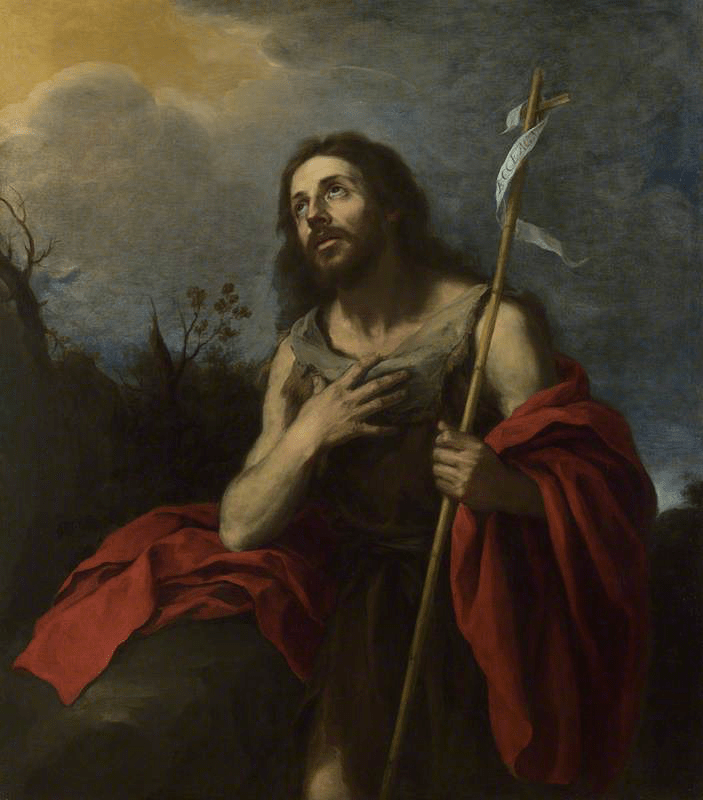
    John the Baptist came to point to Christ, to witness to Christ, to be the bridge between BC and AD. 

    In John 1:29, John the Baptist sees Jesus. 

    The next day he saw Jesus coming toward him, and said, “Behold, the Lamb of God, who takes away the sin of the world!

    It’s very possible that John himself did not realize the full magnitude of what he was even saying when he uttered those words. 

    But it’s impossible for a Christian to miss the meaning. Behold, John commands. Look to Jesus. Look upon the lamb who takes away the sins of the world. A profound theological statement about Jesus and what he did.

    Sacrifice and the lamb

    Jesus is the perfect and spotless lamb who is sacrificed for sins. It’s a theme that we will see throughout John’s Gospel. 

    Many of the Old Testament sacrifices call for a lamb. Isaiah 53 has a passage of the suffering servant and talks of a perfect lamb being led to slaughter. There’s the Passover sacrifice where the Israelites scarified lambs before the Exodus and where it was an annual holy day. 

    And here Jesus is called the Lamb of God. 

    The ultimate and greater sacrifice. He’s the lamb who takes away the sins of the world. It’s not that sin is just written off or no longer matters. Just the opposite. Sin matters a great deal but it is Jesus who takes away sin, takes away the penalty for our sins. 

    He takes away the sins of the world. That’s not saying that he takes away the sins of every individual person. John talks about “the world” several times in his gospel and other writings. It is Jesus who bears the penalty for a fallen humanity and for everyone who believes in him. 

    John the Baptist continues speaking in verse 30: This is he of whom I said, ‘After me comes a man who ranks before me, because he was before me.

    This is similar to verse 15. There John said: ‘He who comes after me ranks before me, because he was before me.’ 

    And what John is doing is looking back at his early prophesy, as pointing to one who was greater than him and he sees Jesus, and he says “this is that man.” John gets at his specific purpose. 

    Verse 31: I myself did not know him, but for this purpose I came baptizing with water, that he might be revealed to Israel.”

    Where John says he did not know Jesus, don’t get too caught up in that. The point isn’t that John the Baptist literally did not know Jesus but that he did not previously know Jesus for who he was: the promised messiah. John was called to baptize so that the savior of the world would be revealed. That’s not primarily about John, it’s about the Lord and the divine plan. 

    John’s call to repentance, John as the voice of one in the wilderness, John as a witness to Jesus, all of this was part of the divine plan for John’s ministry and purpose in the world as the forerunner to Jesus. 

    Verse 32: And John bore witness: “I saw the Spirit descend from heaven like a dove, and it remained on him. 33 I myself did not know him, but he who sent me to baptize with water said to me, ‘He on whom you see the Spirit descend and remain, this is he who baptizes with the Holy Spirit.’ 34 And I have seen and have borne witness that this is the Son of God.”

    This is referring to when Jesus was baptized. 

    All four gospels agree that John was a witness to the Holy Spirit descending on Jesus. The Holy Spirit is another significant theme of the Gospel of John. Jesus promises to give the Holy Spirit to his believers in John chapters 14, 15, and 16. 

    In the Old Testament, there were passages that talked of the Spirit being with God’s anointed one. 

    Isaiah 42:1:

    Behold my servant, whom I uphold,

    my chosen, in whom my soul delights;

    I have put my Spirit upon him;

    he will bring forth justice to the nations.

    There are others, but just to give a sense of it. John sees that moment.  We see Jesus: fully God and fully man having the Spirit descend on him. I used to think “why would Jesus need the Holy Spirit when he’s God? 

    But I was asking the wrong question. “Why wouldn’t Jesus need the Holy Spirit?”

    All three persons of the Trinity are God. All three of them work in perfect unity. They are all equal in eternity, holiness, glory, and power.Again, Jesus is both fully God and fully man, but it is because he is fully man that he needs the Spirit. 

    And just as he enjoyed fellowship with God during this ministry, because Jesus is also fully God, it makes sense that Jesus would likewise enjoy the fellowship of the Spirit during his ministry. 

    John sees this moment. He’s a witness to the Spirit descending upon Jesus. And John says in the text that He on whom you see the Spirit descend and remain, this is he who baptizes with the Holy Spirit.’

    The same Spirit who filled Jesus during his ministry is given to all people because of Jesus’ ministry. The Spirit equips us with gifts, convicts us of sin, sanctifies us to God. 

    Romans 8:16 says that the Spirit bears witness that we are children of God. 

    The Spirit bears witness to those who believe. The one who is least in the kingdom of God is greater than John the Baptist. Because we’re blessed to have more of the story. 

    We have the risen lamb.

    Believe in the lamb. Turn away from sin. Point others to him. 

    Final thought  

    John the Baptist had a ministry to do for a time in history. 

    He was not perfect. He was just a man. He lived a shorter life than Jesus. Much of his life was spent in seclusion.But he was faithful. 

    Yes, we don’t have the ministry that John the Baptist had. 

    He had a once in history ministry. He was the forerunner to Jesus. 

    But just because someone has a different ministry or a different way to serve, that doesn’t mean that the ways you can serve the Lord are insignificant. No one would know who John the Baptist was without Jesus. Jesus is the thing that gives relevance and meaning to his life. 

    But for anyone who’s a follower of Jesus, that’s the case. It’s Jesus who gives meaning. John’s ministry was to point people to Jesus. But that’s the ministry in which every follower of Jesus still shares in. 

    Pointing people to Jesus in word and deed. Following where the Lord leads. Walking in faith. Standing up for the truth of God. 

    Those things are a call which all Christians share. 

    In the Gospel of Luke, Jesus talks of John the Baptist and says: 

    I tell you, among those born of women none is greater than John. Yet the one who is least in the kingdom of God is greater than he” (Luke 7:28).

    No one before John was greater than he. 

    Yet Jesus says that for those who come after, the one who is least in the Kingdom of God is greater. The reason isn’t because we have anything great in ourselves. 

    It’s because we have a fuller picture of who Jesus is and a fuller picture of God’s revelation to the world. 

    John did have a once in history ministry to fulfill but he didn’t live long enough to see the fruition of Jesus’ ministry. He never heard about the resurrection or saw the risen Christ. 

    What are you doing to serve the Lord today? It can be tempting to think that we don’t have what it takes to serve God.It’s not about your own abilities and your own power. John the Baptist was an effective minister without a lot of resources. 

    You don’t have to have a lot of money to serve God faithfully. John the Baptist certainly did not have that. He came from the wilderness. Other gospels tell us that John wore a garment made of camel’s hair. 

    You don’t have to have all of the degrees and credentials. John the Baptist didn’t have that….he came. from. the wilderness. 

    You might think you’re too old. John the Baptist had a ministry that was shorter than Jesus’s. His public ministry was incredibly short lived. You don’t have to have decades of ministry to have a ministry that matters. 

    You just have to follow the Lord, to love the Lord, to serve the Lord. 

    What are you doing to serve the Lord? What are you living for? 

    Thanks for reading! If you liked this piece, please share and subscribe.

  • Not the Christ, not Elijah, not the Prophet. Who is John the Baptist? Studying John 1:19-23

    Not the Christ, not Elijah, not the Prophet. Who is John the Baptist? Studying John 1:19-23

    John the Baptist is one of the most intriguing people we meet in the gospels. He has a unique role in history as being the forerunner to Christ. In John 1, John the Baptist is being questioned about his identity. He helps clarify who he is by clarifying who he isn’t. 

    Verse 19: And this is the testimony of John, when the Jews sent priests and Levites from Jerusalem to ask him, “Who are you?”

    It’s reasonable that they would want to find out who he is. I think it’s important to understand the time in which they lived. For centuries, the Old Testament had pointed forward to one sent from the Lord. 

    People had all sorts of expectations for the type of ministry that this sent one would have. 

    This was fulfilled in Jesus but people didn’t yet know Jesus. So all they had were their expectations and assumptions. What Jesus actually did was not quite what anyone expected. 

    A lot of people expected a great religious teacher. Jesus certainly was that but he was ore than that. But his purpose was to bring freedom not law. 

    A lot of people expected a great king. Jesus is that too, he’s the king of kings. But he did not have the mighty earthly kingdom that people expected. 

    Others expected a great general who would lead Israel to victory and back to a restoration of their land in the face of Roman oppression. Jesus is the one who leads his people to battle evil and leads us to Spiritual victory. 

    And people believed various ideas from those categories. 

    So you suddenly have this man who’s calling people to repent, who’s baptizing. In the other gospels, we see John calling out religious authorities.

    And so people are curious. 

    Maybe he’s connected to the promised savior. Maybe he IS the promised savior. Others might have been skeptical and thought it would lead nowhere. 

    Before Jesus, there had been people who claimed to be the promised savior of the world. 

    Who are you? 

    They ask. 

    The Christ

    John’s first response to the Jewish leaders is given in verse 20: He confessed, and did not deny, but confessed, “I am not the Christ.”

    First thing John confirms. He is not the savior. 

    One thing that’s important to understand. The word “Christ” is not Jesus’ last name. It’s his title. Jesus’ parents were not Joseph and Mary Christ. Jesus is The Christ. 

    Christ comes from the Greek word “Christus” which means “anointed.” It’s the Greek word for the Hebrew word “Messiah.” They both mean the same thing: anointed. 

    The significance of that is that in the Old Testament, various divinely assigned offices such as the king and the high priest would be anointed with oil at the beginning of their term. Some of the Old Testament prophets were also anointed. 

    There are also passages in the Old Testament which were understood as pointing forward to a future deliverer who was anointed. 

    John the Baptist had an important ministry. But he was not the Lord’s anointed, he was not the Lord’s Christ, and so he’s quick to point that out. He’s not the anointed savior. 

    Elijah

    Verse 21: And they asked him, “What then? Are you Elijah?” He said, “I am not.”

    Elijah was a prophet in the Old Testament. Much of his ministry revolved around calling people to faith and proper worship of the Lord. He was obedient to the Lord in his life and ministry. 

    There are several miracles that God does during the time of Elijah’s ministry. Two more things that are noteworthy about Elijah. The Old Testament tells us that God brought Elijah directly to heaven without dying. 

    2 Kings 2:11 

    And as they still went on and talked, behold, chariots of fire and horses of fire separated the two of them. And Elijah went up by a whirlwind into heaven

    Secondly, the book of Malachi, which is the last book found in our Old Testament concludes with these verses from Malachi 4:5:

    5 “Behold, I will send you Elijah the prophet before the great and awesome day of the Lord comes. 6 And he will turn the hearts of fathers to their children and the hearts of children to their fathers, lest I come and strike the land with a decree of utter destruction.”

    So God says that he will send Elijah before the great and awesome day of the Lord. 

    So some expected a literal second coming of Elijah. For those reasons, it’s a pretty reasonable question for the leaders to have asked this of John. But he tells them no. 

    John is not Elijah however it should be noted that John’s ministry is really fulfilling this prophecy about Elijah. John is not a reincarnated version of Elijah or a second coming of Elijah, but he is the one who is sent from the Lord with a divinely given ministry to call people to repentance. 

    But John confirms that he is not Elijah. So they try again: 

    The Prophet

    Are you the Prophet?” And he answered, “No.”

    When they ask John if he’s THE prophet, they’re actually referring to a specific passage. Deuteronomy 18:15 tells Israel about a successor to Moses. This passage also came to be understood as pointing to a grater prophet. 

    Verse 15: “The Lord your God will raise up for you a prophet like me from among you, from your brothers—it is to him you shall listen—

    They wonder if John is this person. In reality, that passage is ultimately pointing forward to Jesus. But once again, John answers the question in the negative. He is not the prophet. 

     So they said to him, “Who are you? We need to give an answer to those who sent us. What do you say about yourself?”

    John isn’t the Christ, he’s not Elijah, he’s not the prophet. 

    So then who is he? 

    He answers that in the following section.

    Who is John?

    Verse 23: He said, “I am the voice of one crying out in the wilderness, ‘Make straight the way of the Lord,’ as the prophet Isaiah said

    They’ve seen who John isn’t. This is who he is. He quotes the text from Isaiah 40. That passage is applied to John in all four gospels. 

    Isaiah 40 is a passage talking of a future time of deliverance for the people of God. It’s an incredibly hopeful passage. It talks of God’s faithfulness to his people in spite of their sin. It talks of God’s restoration. 

    The heart of what this is getting at for John is that his purpose is to call people to repentance and preparation for the coming Messiah. And it was John’s job to point us to that messiah.

    Thanks for reading! If you like this post, please share and subscribe!

  • Who is John the Baptist? Exploring John 1:22-27

    Who is John the Baptist? Exploring John 1:22-27

    One of the most intriguing people we meet in the Gospel of John is a man named John the Baptist. 

    Who is he? 

    He is not the same John who wrote the Gospel of John. They’re two different men. 

    He’s often called John the Baptist. That title is referring to what John did rather than a denominational affiliation. It’s not that we had John the Baptist, Peter the Presbyterian, and Paul the Methodist. 

    John the Baptist is mentioned in all four gospels, and in all of the gospels, he’s introduced prior to the ministry of Jesus. So he’s pretty important. 

    Between the gospels, they give us accounts of both John’s birth and his death. I can’t think of any other New Testament figure besides Jesus where that could be said. 

    We find out in the Gospel of Luke that John’s mom, Elizabeth, is a relative of Mary which means that John the Baptist is related to Jesus. 

    John is a few months older than the Lord. After John the Baptist is born, his father gives a prophecy to his son’s life. 

    Luke 1:76-77:

    76 And you, child, will be called the prophet of the Most High; for you will go before the Lord to prepare his ways, 77 to give knowledge of salvation to his people in the forgiveness of their sins,

    Luke chapter 1 ends with an interesting note about John: 

    Verse 80:

    80 And the child grew and became strong in spirit, and he was in the wilderness until the day of his public appearance to Israel.

    He was in the wilderness until the day of his publican appearance in Israel.

    There’s not a whole lot of elaboration on that. 

    We know nothing about his formative years. He was in the wilderness. Some scholars suggest the possibility that John may have actually be raised within a small community within the wilderness. That’s speculation, but it would make historical sense. 

    John is related to Jesus, but the gospels tell us nothing about how well they may have known each other. It doesn’t seem like they grew up going to a family dinner every week.  When his ministry began, it quickly grew in popularity: 

    Matthew 3:5-6 says: Then Jerusalem and all Judea and all the region about the Jordan were going out to him, 6 and they were baptized by him in the river Jordan, confessing their sins.

    Several years after John’s death, the Apostle Paul is ministering in Ephesus in Acts 19. Ephesus is several hundred miles away from Judea but people talk of the baptism which John practiced, showing that his name and reputation were known throughout the region. 

    John also faced persecution during his life. 

    He was arrested and later executed under the Romans in Matthew 14. John the Baptist is mentioned throughout the first chapter of the Gospel of John. 

    John 1:6-8: There was a man sent from God, whose name was John. 7He came as a witness, to bear witness about the light, that all might believe through him. 8 He was not the light, but came to bear witness about the light.

    That’s the first thing the author tells us about John. He was sent from God. His ministry was not arbitrary. It was not on a whim. It was not something he just chose to do. He was chosen by God. 

    Second thing we find out about him: his purpose. Verse 7 says that he came as a witness to bear witness about the light that all might believe through him. 

    John came into the world to point people to the light of the world. 

    John 1:19-34 talks more about John and his unique ministry as a forerunner to Christ.

    In John 1:22, John the Baptist is being questioned about who he is. In the preceding section, he’s given a series of denials of who he is not. He is not Elijah, he is not the Christ, he is not the prophet. 

     So they said to him, “Who are you? We need to give an answer to those who sent us. What do you say about yourself?”

    So then who is he? 

    While John isn’t answering in the affirmative to any of his questions, that does not mean he’s insignificant. 

    Verse 23: He said, “I am the voice of one crying out in the wilderness, ‘Make straight the way of the Lord,’ as the prophet Isaiah said

    They’ve seen who John isn’t. This is who he is. He quotes the text from Isaiah 40. That passage is applied to John in all four gospels. 

    Isaiah 40 is a passage talking of a future time of deliverance for the people of God. It’s an incredibly hopeful passage. It talks of God’s faithfulness to his people in spite of their sin. It talks of God’s restoration. 

    The heart of what this is getting at for John is that his purpose is to call people to repentance and preparation for the coming Messiah. 

    They ask John about his baptism. 

    25 They asked him, “Then why are you baptizing, if you are neither the Christ, nor Elijah, nor the Prophet?”

    Baptism was instituted in the New Testament for followers of Jesus. But baptism was not a foreign idea prior to that time. 

    In the first century, when non-Jews would convert to Judaism, they would sometimes do something similar to baptism which was meant to be a cleansing ritual to symbolically wash away impurity and sin. 

    A difference with John was that he administered baptism. The leaders question his authority. 

    And he responds by turning the question right back to his purpose in the world. 

    John 1:26-27: 26 John answered them, “I baptize with water, but among you stands one you do not know, 27 even he who comes after me, the strap of whose sandal I am not worthy to untie.”

    John says that it points to someone who’s shoes he’s not worthy to untie. In other words, he’s unworthy of even doing the most menial and humiliating task. John would need a promotion in order to be worthy of untying Jesus’ sandals. 

    John has authority to baptize because it’s been given to him by God but that baptism is meant to point to something greater. 

    Thanks for reading! If you liked this post, please share and subscribe. 

    This post is part of a larger study through the Gospel of John. This specific post is part of a 3 part series on John the Baptist from John 1:19-34

  • Come and you will see. Studying John 1:39-42

    Come and you will see. Studying John 1:39-42

    In John 1:37, Jesus is early in his ministry and two men (who would become two of his disciples) are following him. Jesus asks “What are you seeking?” (John 1:38).

    Considering who’s asking the question (Jesus), that’s a pretty important question that we must all ask ourselves. What are we seeking? What are we looking to Jesus for? What do we do make of Jesus?

    But the two men instead answer his question with a question. 

    And they said to him, “Rabbi” (which means Teacher), where are you staying?” (John 1:39). 

    They don’t answer the question. 

    As they try to follow Jesus, perhaps it’s too difficult to spell out exactly what they’re seeking but they ask where he’s staying in the hopes of being with him and being able to talk to him and be in his presence. 

    He said to them, “Come and you will see” (John 1:39). 

    The response that Jesus gives is so much more than pointing out his lodgings. He’s answering the question the two men didn’t know how to ask. And in being his disciples, and following Jesus, they would have the answer to what they were seeking in the coming years,.  

    Jesus invites them in. He invites them into a relationship. He invites everyone into a relationship, into knowing him. 

    In the immediate context of John 1, Jesus does invite them to stay with him. 

    So they came and saw where he was staying, and they stayed with him that day, for it was about the tenth hour (John 1:39). 

    So they go and spend time with Jesus. The text says that they stayed with him that day for it was about the tenth hour. That’s not saying it was 10 o’clock. In this ancient reckoning of time, it was actually around 4pm. In our timeline, that also brings day 3 to a close. 

    They stay with Jesus. It’s the ancient world. They don’t have cars or lights. They spend the night wherever Jesus is staying. 

    John 1:40 says: 

    One of the two who heard John speak and followed Jesus was Andrew, Simon Peter’s brother.

    We’re given a name of one of these men who follows Jesus. It’s interesting the author only gives us one of their names. We don’t know for sure the identity of the second of the two men. It is a commonly held belief that the other man is none other than the Apostle John who is the author of this gospel. He never mentions his name in the book. 

    But we’re given the name Andrew and we’re told he’s Simon Peter’s brother. 

    Simon Peter, best known as Peter, would become one of the best known of the disciples, a leader within this group, a part of Jesus’ inner circle. And so Andrew is actually identified by his relationship to Peter. They’re brothers. Even though Peter has yet to be mentioned in this gospel, the Apostle John assumed that his audience would be familiar with Peter. 
    Verse 41 we see that Andrew actually evangelizes his brother and tells him about Jesus: He first found his own brother Simon and said to him, “We have found the Messiah” (which means Christ).

  • The ministry of John the Baptist. Studying John 1:23-28

    The ministry of John the Baptist. Studying John 1:23-28

    This post is a continuation of a study of John the Baptist in the Gospel of John. John the Baptist is found in all four gospels and is a figure who was prophesied in the Old Testament and who would come as a forerunner to Jesus. He discusses that divinely given ministry in John 1:23-28. But before we study that passage, it’s helpful to look at the context of the preceding section. 

    19 And this is the testimony of John, when the Jews sent priests and Levites from Jerusalem to ask him, “Who are you?” 20 He confessed, and did not deny, but confessed, “I am not the Christ.” 21 And they asked him, “What then? Are you Elijah?” He said, “I am not.” “Are you the Prophet?” And he answered, “No.” 22 So they said to him, “Who are you? We need to give an answer to those who sent us. What do you say about yourself?”

    -John 1:19-22

    While John isn’t answering in the affirmative to any of his questions, that does not mean he’s insignificant. 

    Verse 23: He said, “I am the voice of one crying out in the wilderness, ‘Make straight the way of the Lord,’ as the prophet Isaiah said

    That text from Isaiah 40 is applied to John in all four of the gospels. Isaiah 40 is a passage talking of a future time of deliverance for the people of God. It’s an incredibly hopeful passage. It talks of God’s faithfulness to his people in spite of their sin. It talks of God’s restoration. 

    The heart of what this is getting at for John is that his purpose is to call people to repentance and preparation for the coming Messiah. They ask John about his baptism. 

    25 They asked him, “Then why are you baptizing, if you are neither the Christ, nor Elijah, nor the Prophet?”

    Baptism was instituted in the New Testament for followers of Jesus. But baptism was not a foreign idea prior to that time. 

    In the first century, when non-Jews would convert to Judaism, they would sometimes do something similar to baptism which was meant to be a cleansing ritual to symbolically wash away impurity and sin. 

    A difference with John was that he administered baptism. The leaders question his authority. Hhe responds by turning the question right back to his purpose in the world. John 1:26-27:

    26 John answered them, “I baptize with water, but among you stands one you do not know, 27 even he who comes after me, the strap of whose sandal I am not worthy to untie.”

    John says that it points to someone who’s shoes he’s not worthy to untie. In other words, he’s unworthy of even doing the most menial and humiliating task. John would need a promotion in order to be worthy of untying Jesus’ sandals. 

    John has authority to baptize because it’s been given to him by God but that baptism is meant to point to something greater. 

    A once in history ministry

    John the Baptist had a ministry to do for a time in history. He was not perfect. He was just a man. He lived a shorter life than Jesus. Much of his life was spent in seclusion. But he was faithful. Yes, we don’t have the ministry that John the Baptist had. He had a once in history ministry. He was the forerunner to Jesus. 

    But just because someone has a different ministry or a different way to serve, that doesn’t mean that the ways you can serve the Lord are insignificant. No one would know who John the Baptist was without Jesus. Jesus is the thing that gives relevance and meaning to his life. 

    But for anyone who’s a follower of Jesus, that’s the case. It’s Jesus who gives meaning. 

    John’s ministry was to point people to Jesus. But that’s the ministry in which every follower of Jesus still shares in. Pointing people to Jesus in word and deed. Following where the Lord leads. Walking in faith. Standing up for the truth of God. 

    Those things are a call which all Christians share. 

    In the Gospel of Luke, Jesus talks of John the Baptist and says: 

    I tell you, among those born of women none is greater than John. Yet the one who is least in the kingdom of God is greater than he” (Luke 7:28).

    No one before John was greater than he. Yet Jesus says that for those who come after, the one who is least in the Kingdom of God is greater. The reason isn’t because we have anything great in ourselves. It’s because we have a fuller picture of who Jesus is and a fuller picture of God’s revelation to the world. 

    John did have a once in history ministry to fulfill but he didn’t live long enough to see the fruition of Jesus’ ministry. He never heard about the resurrection or saw the risen Christ. 

    What are you doing to serve the Lord today? It can be tempting to think that we don’t have what it takes to serve God. It’s not about your own abilities and your own power. John the Baptist was an effective minister without a lot of resources. 

    You don’t have to have a lot of money to serve God faithfully. John the Baptist certainly did not have that. He came from the wilderness. Other gospels tell us that John wore a garment made of camel’s hair. You don’t have to have all of the degrees and credentials. John the Baptist didn’t have that….he came. from. the wilderness. 

    You might think you’re too old. John the Baptist had a ministry that was shorter than Jesus’s. His public ministry was incredibly short lived. You don’t have to have decades of ministry to have a ministry that matters. 

    You just have to follow the Lord, to love the Lord, to serve the Lord. 

    What are you doing to serve the Lord? What are you living for? 

    Thanks for reading! If you liked this post, please share and subscribe!