Josh Benner

Tag: John 3

  • John the Baptist testifies to Jesus. Studying John 3:22-30

    John the Baptist testifies to Jesus. Studying John 3:22-30

    Summary: In John 3:22-30, John the Baptist testifies about the identity of Jesus. 

    The ultimate significance of John the Baptist is that he was the forerunner to Jesus. He comes in fulfillment of Old Testament passages which talk of one who could prepare the way for the Messiah (Malachi 3:1. 

    John’s life was lived to point to Jesus as the promised savior of the world. 

    And that is important to know for this passage because John the Baptist knew who he was, and just as important, he knew who he wasn’t. 

    Setting the scene 

    John 3:22:

    After this Jesus and his disciples went into the Judean countryside, and he remained there with them and was baptizing.

    The section begins “after this” referring to the preceding section. It’s showing that we’re moving in time. 

    Jesus is with his disciples. 

    Here we learn that there was a period in the early ministry of Jesus where Jesus also had a ministry of baptism. This entire event is absent from the other three gospels. 

    In the first century, there was a cleansing ritual which was similar to baptism in which non-Jewish people sometimes partook when they converted to Judaism. But there were key differences between that ceremony and modern baptism. For starters, people would baptize themselves. Whereas when John the Baptist came along, he personally baptized people. John’s baptism was associated with repentance. 

    Jesus would give baptism its fuller meaning at the end of his ministry when he instituted triune baptism, calling upon his disciples to baptize in the name of the father, the Son, and the Holy Spirit (Matthew 28:19. 

    However, at this point in his ministry, there is no reason to think that Jesus was doing a triune baptism, because he had not yet died and rose, nor had he given the Great Commission to his followers. It’s more plausible that this baptism was similar to John’s. 

    Something else which should be noted. In our passage, verse 22 says that Jesus was with his disciples and he remained there with them baptizing. I take that to refer to the disciples of Jesus baptizing people not as Jesus personally baptizing people. 

    Why do I think that? Because the next chapter begins with:  

    Now when Jesus learned that the Pharisees had heard that Jesus was making and baptizing more disciples than John 2(although Jesus himself did not baptize, but only his disciples (John 4:1-2.

    I see no Biblical evidence that Jesus ever personally baptized anyone in water. 

    Moving forward. 

    John 3:23-24:

    23 John also was baptizing at Aenon near Salim, because water was plentiful there, and people were coming and being baptized 24 (for John had not yet been put in prison. 

    Geographically, we don’t know the exact location of Aenon. The text does tell us that there was an abundance of water in this place where they were baptizing. 

    Verse 24 makes the interesting note that John had not yet been put in prison. 

    The author will make no further references to John the Baptist’s imprisonment. It’s mentioned in all four of the gospels. Matthew’s Gospel goes into the most detail when it talks of how John would be beheaded under Herrod. 

    In the event here, John has not yet been imprisoned and that is noteworthy when considering the timeline within Jesus’ ministry. 

    For instance, almost all of Mark’s Gospel is written after the time of John the Baptist’s arrest. 

    Mark 1:14:
    Now after John was arrested, Jesus came into Galilee, proclaiming the gospel of God

    That’s the fourteenth verse of the whole book. 

    Yet at this point in the Gospel of John, John the Baptist has not yet been imprisoned, implying that this event happens prior to the ministry of Jesus beginning in the other gospels. 

    Conflict 

    John 3:25:

    Now a discussion arose between some of John’s disciples and a Jew over purification.

    We don’t know for sure what the discussion was. It’s ultimately secondary to the entire narrative. It’s possible that the discussion or debate came up regarding John’s baptism or contrasting the baptism of John and Jesus or looking at John’s baptism in the light of other Jewish cleansing ceremonies. 

    It does remind us to the fact that John had disciples of his own. We also saw that in chapter 1, and it was a couple of John’s disciples who would be Jesus’ first disciples. 

    John 1:35-37:

    35 The next day again John was standing with two of his disciples, 36 and he looked at Jesus as he walked by and said, “Behold, the Lamb of God!” 37 The two disciples heard him say this, and they followed Jesus.

    So John has a following. Our passage this morning introduces us to the idea that some of John’s disciples are defensive of their teacher. 

    They approach John. The entire focus of the discussion shifts away from purification rituals. 

    And they came to John and said to him, “Rabbi, he who was with you across the Jordan, to whom you bore witness—look, he is baptizing, and all are going to him.”

    In calling John rabbi, we see his disciples are giving him a title of honor. No one else is called rabbi in the gospel of John, aside from Jesus. 

    They refer to Jesus as the one who was with John across the Jordan and acknowledge that it is Jesus to whom John is bearing witness, yet there seems to be some bitterness in their response when they say “look, he is baptizing and all are going to him.” 

    Obviously there is some exaggeration in the report of John’s disciples. All are going to him. . 

    John gives his response in the next four verses. 

    A response 

    John 3:27:

    John answered, “A person cannot receive even one thing unless it is given him from heaven.

    This is an important statement and insight into the sovereignty of God. Everything that we have comes from the Lord. 

    The life you have, the abilities you have, the things you have, the salvation you have. All of it is from the Lord. 

    God made everything and everyone. There is nothing we have created without the tools God has given us.

    The oddity of John 

    John’s disciples see the followers that Jesus has amassed. They don’t realize exactly who Jesus is and why this fruitfulness is something to celebrate. Their focus is clearly misplaced and on how it impacts John and their ministry rather than Jesus coming into the world to fulfill the divine plan through his sinless life, death, and resurrection. All they see are dwindling numbers. They look at Jesus like he’s their competition. 

    On the one hand, you have a first century prophet who is the forerunner to Christ and we’re seeing how their ministries interact with each other. I understand that this is not a specific situation we face. 

    But in the attitude of his disciples, I think it’s actually very relatable to human nature. 

    John’s response is noteworthy because there’s always the temptation to put ourselves on a pedestal, to make much of ourselves, to want others to glorify us. It’s a constant temptation. 

    It’s tempting to ignore where God is leading us, and what he wants of us. 

    It’s easy to be arrogant. We’re arrogant with God all the time. Our world judges his laws and what God decrees as moral. But even as Christians, in our heart of hearts, there are times where we don’t like what God says about something. 

    Numerous Bible commands that we can find reasons to ignore. 

    Or maybe it’s not a moral issue. But there are other ways in which we judge God. We judge why God allows certain things to happen or not to happen. 

    We judge what he’s given us or not given us.  

        Illustration – Mozart 

    One of my favorite films is the movie Amadeus, about the life of Mozart. 

    Early in the movie, you have another composer: Antonio Salieri, and more than anything, he wants to be a great composer. And as a child, he prays to God: 

    “Make me a great composer. Let me celebrate Your glory through music and be celebrated myself. Make me famous through the world, dear God. Make me immortal. After I die, let people speak my name forever with love for what I wrote. In return, I will give You my chastity, my industry, my deepest humility, every hour of my life.”

    But then you meet Mozart and he’s a musical prodigy. Seemingly inexhaustible and effortless talent flows through him. But his character is also vain, crass, condescending, and childish. 

    In a later scene, when Salieri sees he has been totally transcended by the greatness of Mozart, you see the bitterness of Salieri. He burns a crucifix and tells God that they are now enemies. 

    In contrast that example with John the Baptist because it’s so easy to read John’s words here and think we would all be just as humble and submissive to the will of God as John. 

    But we’re so often not. 

    We’re more like the apostles. 

    Matthew 10:35-37:

    35 And James and John, the sons of Zebedee, came up to him and said to him, “Teacher, we want you to do for us whatever we ask of you.” 36 And he said to them, “What do you want me to do for you?” 37 And they said to him, “Grant us to sit, one at your right hand and one at your left, in your glory.”

    They’re jockeying for positions of honor. There’s no humility in that. 

    We see it again. Luke 9:46, a debate begins among the disciples as to which of them was the greatest. And that’s not the last time we see this in the gospels. Luke 22:24, almost the same wording:

    A dispute also arose among them, as to which of them was to be regarded as the greatest. 

    They’re arguing over which disciple is the best one. Luke 22. This event happens right after the Last Supper. They’ve just partook of the most significant meal in human history. Jesus has broken the bread as a symbol of his body which would be broken. He’s taken the cup and poured out the wine as the blood of the new covenant. Jesus would be arrested, crucified, and die in less than 24 hours. 

    And here the disciples are caught up “But which one of is the best? Is it me? It’s probably me.” 

    So it’s easy to just assume we’d be humble and totally submissive to the will of God. But envy is tempting. Status and recognition are powerful idols. 

    John continues speaking. 

    Verse 28:

    You yourselves bear me witness, that I said, ‘I am not the Christ, but I have been sent before him.’

    John is continuing to speak about his purpose in the world. In the first chapter of this gospel, people are trying to figure out who John the Baptist is. 

    He tells them that he is not the Christ (John 1:20). He quickly confirms that he himself is not the long-awaited Messiah. 

    When they finally ask John for an answer as to who he is, John says “I am the voice of one crying out in the wilderness ‘make straight the way of the Lord,” quoting from the Book of Isaiah (John 1:23. 

    As we’ve already said, he is the one who is to come before the ministry of the Lord. And in Jesus beginning his ministry, John is beginning to see his own ministry coming to its fulfillment. 

    John the Baptist lived in this world with the purpose of pointing people to Christ. 

    And in that sense, John the Baptist is no different from anyone who is a believer in Jesus because everyone who knows Jesus and believes in his gospel exists to point to Jesus and to decrease so that he may increase  

    The purpose of your life is to humbly serve the Lord with the gifts he has given you an to point others to Christ by loving God, loving people, living out your faith, and sharing the gospel. 

    The Wedding 

    John is continuing to comment on his role. He makes an analogy to a wedding celebration. 

    John 3:29:

    The one who has the bride is the bridegroom. The friend of the bridegroom, who stands and hears him, rejoices greatly at the bridegroom’s voice. Therefore this joy of mine is now complete.

    John compares himself to a friend of the bridegroom. In other words, a friend of the groom. 

    That’s close to the idea of a best man, but in the first century, in this culture, the best man had a lot of responsibilities. He was somewhat of a coordinator for the wedding. He was an official witness to the wedding. He was often a contributor to the wedding. It was an honored position. 

    I’ve been in several weddings, officiated several weddings, been married. So I feel like I can say this on pretty good authority: the bridal party is pretty pointless in a modern American wedding. It’s pretty much a bunch of people who prove that the bride and groom really do have friends besides each other.  Definitely it’s a way to honor siblings and close friends, obviously they’re there for the bride and groom on the big day. 

    But functionally, they don’t do much. In the first centry, the friend of the bridegroom was a really important role. 

    John’s metaphor is also significant because wedding imagery is used throughout the Bible to describe the relationship of God and people. 

    The true bridegroom

    In the Old Testament, God is often described as the groom and Israel is the bride. God is faithful to Israel in spite of her unfaithfulness to God.  

    In the New Testament, Jesus is the groom and the church is the bride. This is not the first time we’ve seen wedding imagery in the Gospel of John. In chapter 2, Jesus performs his first miracle at a wedding feast when he turns water into wine. The story is meant to point to his own wedding feast, the finalization of his kingdom in the new heaven and the new earth, as is foretold in Revelation 19. The church is the bride of Chrsit at that wedding. 

    While Israel was the unfaithful bride in the Old Testament, in the final inauguration of the wedding supper of the lamb in Revelation, it is a perfect wedding between Christ and his bride, the church. 

    I’m not saying that John the Baptist fully understood all of that when he made this statement. 

    But there is a metaphor we see throughout the gospels in looking at the ministry of Jesus in the world. 

    In the other gospels, there’s a later scene where John’s disciples are actually compared to Jesus and his. Others point to the zealousness of John’s disciples and say in Mark 2:18-19:

    18 Now John’s disciples and the Pharisees were fasting. And people came and said to him, “Why do John’s disciples and the disciples of the Pharisees fast, but your disciples do not fast?” 19 And Jesus said to them, “Can the wedding guests fast while the bridegroom is with them? As long as they have the bridegroom with them, they cannot fast.

    Jesus is pointing to the time of celebration and joy that his ministry ushered into the world. 

    Again, there’s no better metaphor to make for a joyous occasion than a wedding. 

    And so in our passage, John again reminds us that Jesus is the groom and John is the best man. 

    At a wedding, the best man is not the main focus. He’s not the star. He’s not why you’re there. 

    It’s the bride and groom. 

    In that, we again see humility for John. For the best man, he’s not in competition with the groom. The best man has one goal and that is to see the wedding of the bride and groom. 

    Verse 30, John tells his disciples: 

    He must increase, but I must decrease.” 

    It’s not that it’s a good idea that Jesus increase and John decrease. But that Jesus must increase and John must decrease. 

    John is embracing the will of God. He’s not concerned with who’s greater or with his standing. His concern is for the ministry of Christ.  

    Thanks for reading! If you liked this post, please share and subscribe.

  • Jesus and eternal life – studying John 3:16-21

    Jesus and eternal life – studying John 3:16-21

    The result of belief 

    In John 3:16, Jesus says: 

    God so loved the world, that he gave his only Son, that whoever believes in him should not perish but have eternal life.

    One of the things that this verse teaches is that belief in the son is necessary. Our society really struggles with that idea. 

    I know that 75% of Americans identify as Christians but when you talk to people about their beliefs, far too many people seem to think that Jesus is this really good guy and that most of us are pretty good too and we’re going to get the benefit of heaven because we’re good and he’s good and wants to bless us. 

    That’s not the gospel. 

    The gospel is that Jesus is good. You’re not. He died in your place. Believe in him as your Lord. 

    Eternal life is reserved for the one who believes in Jesus.

    John refers to eternal life more than any other writer in the New Testament. We saw it referenced in our passage last week when Jesus was talking about his crucifixion. 

    John 3:14-15:

    And as Moses lifted up the serpent in the wilderness, so must the Son of Man be lifted up, 15 that whoever believes in him may have eternal life. 

    It is through his death and resurrection that we have eternal life. 

    Couple more noteworthy examples of Jesus talking of eternal life. John 5:24: 

    Truly, truly, I say to you, whoever hears my word and believes him who sent me has eternal life. He does not come into judgment, but has passed from death to life. 

    We are spared eternal death when we turn to Jesus. 

    In John 10, Jesus talks of himself as the good shepherd and talks of eternal life when he says: 

    27 My sheep hear my voice, and I know them, and they follow me. 28 I give them eternal life, and they will never perish, and no one will snatch them out of my hand. (John 10:27-28)

    There he is, among other things, talking about the relationship he invites us into. 

    The eternal life which Jesus offers to all who believe in him is both a future promise but a present reality. 

    It’s not that those who believe in Jesus are eligible for eternal life or may get eternal life. 

    But the person who believes and trusts in Jesus as Lord and savior HAS eternal life. 

    And that assurance is there because it is in the work of Christ that the gift of eternal life is given. 

    It’s an eternal promise which also bears present-day results in the life of a believer. 

    That’s actually how the passage ends in verse 21. 

    whoever does what is true comes to the light, so that it may be clearly seen that his works have been carried out in God.” 

    Not sent to condemn

    Continuing to speak about the salvation which comes through Jesus. 

    Verse 17: 

    For God did not send his Son into the world to condemn the world, but in order that the world might be saved through him. 

    Verse 17 is not saying that there is no condemnation ever. It’s saying that condemnation was not the purpose for Jesus coming into the world. 

    Jesus came into the world to bring salvation. And that salvation comes through his life, death, and resurrection. 

    Part of what I love about this passage is how simple it all is. 

    Some passages are difficult to understand and are enhanced by a lot of digging into historical context. Some passages are best explained when comparing them to numerous other Biblical passages. 

    These verses are simple enough to understand just through honestly reading them for what they say. 

    God so loved the world, that he gave his only Son, that whoever believes in him should not perish but have eternal life. 17 For God did not send his Son into the world to condemn the world, but in order that the world might be saved through him. 18 Whoever believes in him is not condemned, but whoever does not believe is condemned already, because he has not believed in the name of the only Son of God.

    What do you believe in? 

    Is it that Jesus is the Son of God and through him and him alone we have eternal life? Or do you believe in something else? Is your faith in Jesus? Or is it in yourself? 

    We’ve seen the love of God. We’ve seen the result of believing in Jesus. 

    We close this passage with a warning of the consequences of unbelief in Jesus.

    The consequences of unbelief

    John 3:18:

    Whoever believes in him is not condemned, but whoever does not believe is condemned already

    We again are reminded of the catalyst for eternal life. Believing in Jesus. No matter what you do, what you say, how you live, none of that gives you standing before a Holy God. 

    It’s believing in Jesus. Whoever does not believe in Jesus is condemned because there is no other way to God. 

    Jesus did not come to bring condemnation, but you are already condemned and dead in your sins without him. 

    That’s your starting point. 

    So we can either turn to Christ and find life or we can reject Jesus and still be dead. 

    If we could earn our way to God, then God would not have needed to send his son. 

    This passage is not saying “believe what you want.” It’s not saying you’re pretty good.

    It’s saying the opposite. John 3:19-20:

    19 And this is the judgment: the light has come into the world, and people loved the darkness rather than the light because their works were evil. 20 For everyone who does wicked things hates the light and does not come to the light, lest his works should be exposed.

    Those two verses sum up the human condition apart from Christ. It confronts us with reality. We are dead apart from Christ. 

    We either believe that or we don’t. We either believe Jesus is the way or we don’t. 

    What do you believe? Jesus is the light, the truth, the goodness, the salvation which has come into the world. And in a dark world, a world of sin and death, Jesus shines. 

    People loved darkness rather than the light. 

    This is why the world needs Jesus. Because we love our sin more than we love the righteousness of God. 

    A lot of sins make us feel good in the moment. 

    Being drunk can feel good at the moment. Looking at things you shouldn’t look at online feels good at the moment. Gossip feels good at the moment. Selfishness and doing whatever you want to do feels good at the moment. 

    A lot of sinful behaviors feel good. Don’t look at me like you don’t look at me like you have no idea what I’m talking about. 

    That’s why the world loves them. The Bible is the realest book that’s ever been written. 

    And in Hebrews 11:25, it talks about the “fleeting pleasures of sin.” 

    It’s not calling sin good. But it is saying that sin is often pleasurable. At least for a season. At least for a little while. If sin didn’t feel good, then the world wouldn’t love it so much. It wouldn’t be a problem. Nobody grudgingly sins. Nobody sins like it’s a chore that you have to do. “Ok, I guess I’ll say this really nasty thing about my coworker.” Nobody has to work at being prideful. 

    No kid had to be taught to sin. It comes naturally. 

    Eve wasn’t tempted with something she thought was bad. It was the promise of knowledge. David didn’t see Bathsheeba and think “oh what an ugly woman.” The world loves sin. 

    Some of those things might be different for different people. But make no mistake. We love sin. Again, please don’t misunderstand. I’m not saying that that’s a good thing.It’s a horrible thing. It’s why we are condemned and separated from God. By the grace of God, there is redemption. 

    But the world hates the light of the gospel, because the light exposes sin. 

    The world is dead in sin. That’s the bad news.

    But there is good news. 

    Borrowing a quote from Kent Hughes in his commentary on John that I’ve slightly modified. 

    God. The greatest being.

    So loved. The greatest act. 

    The world. The greatest company.

    That he gave. The greatest act. 

    His only Son. The greatest gift. 

    That whoever believes. The greatest offer.

    In him. The greatest savior. 

    Shall not perish. The greatest promise.

    But have. The greatest certainty.

    Eternal life. The greatest hope.

    Thanks for reading! If you liked this post, please share and subscribe! 

  • Jesus, Nicodemus, and the bronze serpent. Studying John 3:9-15

    Jesus, Nicodemus, and the bronze serpent. Studying John 3:9-15

    In John 3, Jesus is approached by a pharisee named Nicodemus who is intrigued about his ministry. Jesus controls the conversation and talks to Nicodemus of being born again and born of water and the Spirit. Nicodemus is perplexed by this. 

    Verses 9-10, Nicodemus is still dumbfounded by what Jesus has said. 

    9 Nicodemus said to him, “How can these things be?” 10 Jesus answered him, “Are you the teacher of Israel and yet you do not understand these things?

     Nicodemus is the expert. He should understand what Jesus has said. He should pick up on the Old Testament references to water and the Spirit. It is a grace to the people of God that the Lord gives believers the Spirit. 

    Jesus continues speaking in verse 11. 

    11 Truly, truly, I say to you, we speak of what we know, and bear witness to what we have seen, but you do not receive our testimony. 

    Jesus has come to give a heavenly testimony. He has come to the world to reveal God. 

    12 If I have told you earthly things and you do not believe, how can you believe if I tell you heavenly things? 

    Jesus is the eternal God of creation who has been in heaven. He can therefore speak with authority on what is necessary for admittance into the Kingdom of Heaven. He has revealed to Nicodemus that he must be born again, born of the Spirit. Nicodemus doesn’t even understand that. So how will he understand the heavenly things of God? 

    Sovereign Citizens 

    There’s a small movement in America, perhaps some of you have heard of it: called Sovereign Citizens. Sovereign Citizens are a group of people who question the legitimacy of our government, don’t believe in paying taxes, and don’t believe that they’re accountable to our legal system. 

    I was once watching an episode of Live PD and someone had gotten pulled over. From what I remember, she didn’t have any truly serious violations but had broken a couple of traffic laws and also did not have a valid driver’s license. 

    She kept declaring that she was a sovereign citizen. 

    Kept being difficult. 

    Keeps talking about how she’s a sovereign citizen. 

    Ends up getting arrested. 

    My point with that illustration is that just because a person might say the law doesn’t apply to them doesn’t make it so. Because you still have to suffer the consequences for your actions and choices. 

    When it comes to the faith, people want to invent their own gospel. People want to believe that they’re good enough, that they can get to God on their own. People want to live Godless lives apart from Christ and assume that they will have merit or an inherent worthiness of heavenly blessings. 

    Just because we say “I’m a sovereign citizen” doesn’t make us sovereign. 

    The Lord is sovereign. 

    And Jesus speaks with heavenly authority in this passage. 

    No one has ascended into heaven except he who descended from heaven, the Son of Man.

    In John 3, we see the divine command to be born again, the divine authority by which Jesus can give that command. And in the last two verses of this section, we end with a picture of the gospel. So far, this passage hasn’t really talked about the role of Jesus. 

    It is by the Spirit that we are born again but it is through the work of Christ that we are able to be born again. It is Jesus who has died so we can be redeemed. 

    Remember that Jesus is talking to an expert of the Law and the Old Testament. Jesus is going to make a statement about himself based in an Old Testament event. 

    14 And as Moses lifted up the serpent in the wilderness, so must the Son of Man be lifted up, 15 that whoever believes in him may have eternal life. 

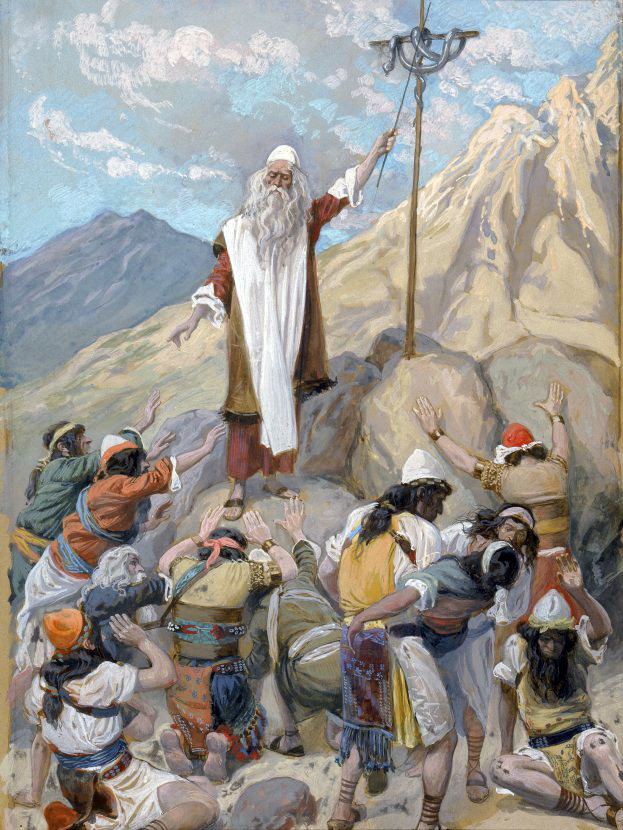
    Jesus is making a reference to the Book of Numbers, 21st chapter. 

    In that chapter, the Israelites have been in their desert wanderings for 40 years. Most of the first generation has died off. Throughout their time in the wilderness, Israel has fallen into sin and grumbling. 

    God has brought them to the edge of the land and they continue to complain. God has sustained them for a generation and they ask why they’ve been brought into the wilderness to die. They’ve been given food but call it loathsome. They’re saying that they hate what God has given them. 

    And as a righteous and divine judgment, God brings a plague of poisonous snakes upon the people. Not just for that, but for a whole history of their rebellion and grumbling. 

    The people turn to Moses and ask Moses to intercede on their behalf. 

    Numbers 21:7: 

    And the people came to Moses and said, “We have sinned, for we have spoken against the Lord and against you. Pray to the Lord, that he take away the serpents from us.” So Moses prayed for the people. 

    God will give Moses instructions on what he must do. 

    8 And the Lord said to Moses, “Make a fiery serpent and set it on a pole, and everyone who is bitten, when he sees it, shall live.” 9 So Moses made a bronze serpent and set it on a pole. And if a serpent bit anyone, he would look at the bronze serpent and live. 

    Jesus looks to this event in the Old Testament and he shows it as pointing to himself. 

    As the bronze serpent was lifted upon the the pole, Jesus also will be lifted up. 

    Five times in the Gospel of John, Jesus refers to being lifted up. It always refers to the crucifixion, where Jesus is literally lifted up on the cross. 

    Again. Keep in mind that so far in this passage, Jesus talked of a need to be born again AND of the role of the Spirit in being born again. 

    But he points to the source of eternal life being Jesus himself who is lifted up. 

    Perhaps it seems like an odd connection that the Lord is making in comparing himself to the serpent of Numbers 21. 

    Several reasons why that story is a good picture of the gospel:

    The bronze serpent and the gospel

    In a person being healed because of looking at the snake, it took what they were doing out of their hands.

    It was entirely the work of God. 

    So too we see this in the gospel. It is not based on us, or how good we are. We are totally helpless to heal ourselves from the disease of sin. It is looking to the cross, to looking at what Jesus has done, to trusting Jesus by faith that we can have salvation. 

    Second. The serpent doesn’t make sense. Why a golden snake? The world is confounded by the gospel and the message of grace, the idea that we can be freely forgiven based on what someone else has done. 

    1 Corinthians 1:18:

    the word of the cross is folly to those who are perishing, but to us who are being saved it is the power of God.

    The world is offended by the message of salvation by grace. 

    We want to save ourselves. We want to see how we measure up and to feel good about how good we are. 

    The gospel is that you cannot earn it. You look to what Jesus has done. 

    Third. The Israelites were grumbling and complaining and blaspheming against God, and yet God saves them. 

    Jesus came into a world where people condemned him, plotted against him, betrayed him, and killed him. 

    While we were yet sinners, Christ died for us (Romans 5:8).

    Fourth. Moses literally lifted up the bronze serpent on a pole. 

    And Jesus was literally lifted up on the cross. 

    Fifth. For the Israelites who were afflicted by the serpent’s bite, life was found by looking to the bronze serpent. For us today, eternal life is found by looking to Jesus. 

    We’re infected with the venom of sin. And it’s a killer. There is nothing we can do on our own to take out that poison. The only antidote is found in looking to Jesus.

    It is he who went to the cross for salvation. 

    In referring to the Numbers passage, Jesus is telling Nicodemus the gospel. It is Christ who will be lifted up for sinners. 

    And to have a heavenly hope, we must believe in what the Lord has done. We believe in Jesus and we are given the Holy Spirit to transform our lives from the inside out. 

    Thanks for reading! If you liked this post, please share and subscribe.
  • Water and Spirit. Studying John 3:1-8

    Water and Spirit. Studying John 3:1-8

    In John 3, Jesus is approached by a leading religious teacher named Nicodemus. Nicodemus had heard of Jesus and his teaching and wanted to learn more. Jesus would tell him that he had to be born again. 

    In John 3:4, Nicodemus says: 

    Nicodemus said to him, “How can a man be born when he is old? Can he enter a second time into his mother’s womb and be born?”

    Water and Spirit

    In John 3:5, Jesus will elaborate further and say to Nicodemus: 

    Jesus answered, “Truly, truly, I say to you, unless one is born of water and the Spirit, he cannot enter the kingdom of God.

    Water and Spirit. 

    Jesus has said unless one is born again, he cannot see the kingdom of God (John 3:3).

    And Unless one is born of water and the Spirit, he cannot enter the kingdom of God. 

    They’re both obviously important in what Jesus is saying about how one can enter the Kingdom of God. 

    But what do they have to do with each other? Because they’re both connected to seeing and entering the kingdom of God. 

    The key to answering that question is found in Ezekiel 36. In that passage, water and Spirit are both present, and it says that the Lord will give the believer a new heart. 

     25 I will sprinkle clean water on you, and you shall be clean from all your uncleannesses, and from all your idols I will cleanse you. 26 And I will give you a new heart, and a new spirit I will put within you. And I will remove the heart of stone from your flesh and give you a heart of flesh. 27 And I will put my Spirit within you, and cause you to walk in my statutes and be careful to obey my rules.

    God giving his Spirit and a new heart. 

    “I will sprinkle clean water on you” 

    “I will give you a new heart and a new spirit I will put within you.” 

    “I will put my Spirit within you”  

    Where Jesus says we must be born again, it is by the Holy Spirit that we are born again. Jesus justifies by his perfect life and by his blood and it is the Holy Spirit who indwells the believer. It’s not up to us to save ourselves.

    The rebirth is through the Holy Spirit. 

    New theological term. This is referred to as baptism of the Holy Spirit. 

    Baptism of the Holy Spirit is different from water baptism. 

    That idea is first mentioned in John’s Gospel in John 1:33 when John the Baptist is speaking of Jesus and says: 

    He on whom you see the Spirit descend and remain, this is he who baptizes with the Holy Spirit.

    All four gospels make this same point. That Jesus brings a filling of the Holy Spirit to such an abundant degree that it is a baptism. 

    It is a privilege which all Christians share, as we see in 1 Corinthians 12:13: For in one Spirit we were all baptized into one body

    This indwelling of the Holy Spirit is foretold in the Ezekiel passage. 

    And Ezekiel isn’t the only passage. Joel 2:28: 

    it shall come to pass afterward,  that I will pour out my Spirit on all flesh

    This initial pouring out of the Spirit happens in Acts 2 at Pentecost. 

    All Christians have the Holy Spirit because all Christians are born again, which is of the Spirit. And all Chrisitans are baptized in the Holy Spirit at the moment they come to faith. 

    There is no way to be a Christian without these events happening in your life.

    Romans 8:9-10 is a great passage which communicates this idea. 

    9 You, however, are not in the flesh but in the Spirit, if in fact the Spirit of God dwells in you. Anyone who does not have the Spirit of Christ does not belong to him. 10 But if Christ is in you, although the body is dead because of sin, the Spirit is life because of righteousness.

    The Spirit sanctifies us, he sets us apart.

    Romans 8:11: If the Spirit of him who raised Jesus from the dead dwells in you, he who raised Christ Jesus from the dead will also give life to your mortal bodies through his Spirit who dwells in you. 

    The Spirit works to transform a believer: 

    2 Corinthians 3:18: we all, with unveiled face, beholding the glory of the Lord, are being transformed into the same image from one degree of glory to another. For this comes from the Lord who is the Spirit. 

    Spiritual life can only come through the Spirit. That’s what Jesus means in our passage when he says in John 3:6: That which is born of the flesh is flesh, and that which is born of the Spirit is spirit.

    The flesh begets worldly sinful life. The Spirit begets Spiritual life, the new life that God promises his people. 

    There are many other things which the Spirit does in the life of a believer. All three persons of the Trinity are active in the gospel. We can’t just look at the love of God without the work of the Christ who died for a sinful world. 

    And we can’t discount the work of the Holy Spirit because without the Holy Spirit, a person does not have faith in the gospel because true faith in the gospel means a person has the Holy Spirit. 

    We must be born again. 

    Titus 3:4-6: 4 But when the goodness and loving kindness of God our Savior appeared, 5 he saved us, not because of works done by us in righteousness, but according to his own mercy, by the washing of regeneration and renewal of the Holy Spirit, 6 whom he poured out on us richly through Jesus Christ our Savior

    Salvation and the Spirit go together. 

    Jesus is the one who died for sins. But we are given new life through the Spirit. A person who truly has faith has the Spirit. 

    And once you have the Spirit, you cannot lose it. In fact, it’s because we need a work of the Holy Spirit that we can have assurance of salvation. Because it is God who works in us through the Spirit. 

    Jesus has said that we must be born of water and Spirit. Returning to our passage in John 3. 

    Is John 3 talking about water baptism? 

    Some take that to refer to water baptism. It seems logical. But there are a few things to keep in mind: Water baptism is not mentioned anywhere else in this passage. The Great Commission and the command to baptize have not yet been given. 

    Just because water is mentioned does not mean that baptism must be in mind. In our next chapter, John 4, Jesus talks of the water he provides and how the one who drinks of it will never thurst. In John 7, Jesus talks of the living water which he supplies and in that Jesus is using water to refer to the Holy Spirit. 

    Jesus criticizes Nicodmeus for not understanding what he’s saying. If he’s referring to water baptism, that rebuke makes little sense. How would Nicodemus be expected to understand the ordinance of water baptism before it had been given to Chrsitians? 

    But it would make sense to expect Nicodemus to understand Ezekiel 36. 

    Baptism IS important, but baptism is an action that is symbolic of your inward faith, a faith where God has poured his Spirit upon his people. Baptism does nothing if you are not ultimately born again. And that’s true regardless of if someone believes in believer’s baptism or infant baptism. The baptism must ultimately be accompanied by faith. 

    Given his study of the Bible, given the promises of God giving his spirit, given the Ezekiel 36 promise of a new heart, for all of these reasons, for Nicodemus, it should not be a logical leap that a new birth, a new life would be necessary in truly coming to faith in God.

    We often miss this point too.

    The Bible constantly talks of the necessity of faith, the Bible constantly talks of our sin. Throughout the gospels, we see constant references to Jesus’ death for our sin.

    And yet we so often face the temptation to think our standing before God is based on ourselves.

    Verses 7 and 8, Jesus says: 7 Do not marvel that I said to you, ‘You must be born again.’  8 The wind blows where it wishes, and you hear its sound, but you do not know where it comes from or where it goes. So it is with everyone who is born of the Spirit.” 

    Jesus gives an illustration based on the weather. 

    Jesus was telling this to people before modern meteorology. 

    But even still, to the average person, we don’t really know how the wind works, or what causes its changes. Yet we feel it, we see the impact it has, we hear it. 

    Jesus says “so it is with everyone who is born of the Spirit.”  

    The point is that there is evidence of the work of the Spirit in the life of a believer. We don’t always understand how the spirit works but his work in the life of a believer is evident. 

    And I again refer us back to Ezekiel 36:27:

    I will put my Spirit within you, and cause you to walk in my statutes and be careful to obey my rules.

    Israel was given the law and continued to sin. In the new covenant, God gives his Holy Spirit and it is by his Spirit that we are enabled to follow his laws.

    God works within his own people enabling us to do the will of God. That is a tremendous grace which God gives to the world. 

    That’s not to say that you will never sin again. That’s not to say you will never struggle again. At the moment you come to faith, you are justified before God by the justifying work of Christ. You’re forgiven in an instant, indwelled with the Holy Spirit. But the rest of life is meant to be a journey of growing in faith and holiness. 

    You must be born again

    Have you been born again? Has your life been changed by the gospel? 

    God does a heart transplant whenever someone comes to faith. He gives a new heart. Do you have joy in the Lord? Love for God? Are there areas where you’ve seen fruit in your life?

    Do you have confidence in God’s goodness and his promises? Do you have a greater appreciation for the weight of your own sin? Do you feel like your life has been oriented around God?

    Being born again results a life that is transformed because it is not about our strength to live in a Godly manner but God works in us.

    So that is the command which Jesus has given. That for a person to enter the kingdom of heaven, being born again is necessary. Again, it’s not just my opinion on the subject. 

    Thanks for reading! If you liked this post, please share and subscribe!

  • New life in Jesus – Studying John 3:4-6

    New life in Jesus – Studying John 3:4-6

    In John 3, Jesus is approached under the cover of night by a leader among the Jews, a Pharisee named Nicodemus. Just as a reminder, the Pharisees were people who were highly respected within the Jewish community.  Nicodemus would have been a man of stature in his community.

    The Pharisees were devout in their lifestyle, their love for the word of God, their study of God’s word. For a man like Nicodemus, he would have had the first five books of the Bible memorized. He was an expert in the law of God.

    He would have always been at church, always at Sunday school, always at the Sunday night study, always at the potluck. A stand up guy. 

    And he comes to Jesus and says to him “Rabbi, we know that you are a teacher come from God” (John 3:1) and as Nicodemus talks to Jesus, he talks about the signs Jesus has done. Nicodemus says in verse 2: “no one can do these signs that you do unless God is with him.” 

    With a guy like Nicodemus, it would be easy to never question his salvation. Clearly he was walking with God. 

    Nicodemus receives Jesus command to be born again with confusion. Again, Nicodemus is a teacher. He knows God’s word. He’s very moral. And Jesus stops him dead in his tracks: Unless one is born again, he cannot enter the kingdom of God.

    John 3:4:

    Nicodemus said to him, “How can a man be born when he is old? Can he enter a second time into his mother’s womb and be born?”

    Nicodemus is either totally dumbfounded by what Jesus says or he’s giving a bit of a sarcastic response, but he responds to Jesus referring only to the physical process of birth. 

    Verse 5-6:

    5 Jesus answered, “Truly, truly, I say to you, unless one is born of water and the Spirit, he cannot enter the kingdom of God. 6 That which is born of the flesh is flesh, and that which is born of the Spirit is spirit. 

    Again, we’ll talk about this more next week, but regeneration, being born again is a work of the Holy Spirit and Jesus touches upon that in these verses. 

    It is a Spiritual rebirth. And it’s because regeneration is spiritual that it necessitates a life that is changed and transformed by the gospel. Because it’s not us who change ourselves. It’s the Spirit in us. 

    The gospel is meant to change your life. 

    We just assume that a person who goes to church is a Chrisitan. You’re not if you haven’t been born again. Not if you haven’t truly turned from sin and turned to Jesus. 

    So I ask again: what do you actually believe? Have you trusted in Jesus as your Lord and savior? Have you confessed him to be the Lord? Have you turned away from sin? He didn’t die to keep us the same. Not when we’re given the Holy Spirit. We’re born again. We are a new creation. And that means a changed life. Has your life changed because of Jesus? 

    Be honest. 

    Has it really? 

    Or are you going through the motions? Saying the right things because you need to toe the company line but without really believing what you’re saying? 

    He makes us new. 

    The Bible says that if anyone is in Christ, he is a new creation. The old has passed away; behold the new has come (2 Corinthians 5:17). 

    It’s not just about saying “well I don’t want to go to hell. Sure I’m a Christian.” It’s having an actual faith that Jesus is the way. That Jesus is your savior. It’s not about believing that you’re basically the key to your own salvation but Jesus is some formality. 

    It’s that there is no other way apart from Christ and falling at his feet in thankfulness for his mercy. 

    Have you surrendered your life to Christ? If he’s not your Lord is he really your savior? Is Jesus the Lord of your life? 

    Philippians 2:12 says to work out your salvation with fear and trembling. And that puts our focus on the cross, and what Jesus has done for us. Do you believe that you’re a sinner? It’s hard to accept Christ as your savior if you don’t believe you’re a sinner. It’s hard to trust in Jesus as your savior if you don’t believe you have anything to be saved from. 

    Too often in our culture, we like to emphasize the love of God without wanting to ever even talk about the justice of God. God is love. But he is also just. And there is a price to be paid for our sins. Do you believe that? Or do you find yourself thinking that you’re actually not that bad, that your sins really aren’t such a big deal, but you believe that there is a God and say you’re a Christian but you don’t belong to Christ? 

    Unless one is born again, he cannot see the kingdom of God. 

    For a person who is walking in faith, let us thank God for the work of regeneration that he has done in your life. But for the person who knows in your heart of hearts that you don’t really believe. Stop trusting yourself and your own goodness for your salvation. 

    Have you been born again? 

    You don’t have to be a master of theology. You don’t have to figure it all out. You don’t have to have all of the answers before coming to Jesus. It’s about trusting in him. You can come to Jesus this moment. And trust in him. To say, “Lord, not my will but your will be done.”  

    The Bible says salvation is in no one else, for there is no other name under heaven given among men by which we must be saved (Acts 4:12). 

    And it also says all who call upon the name of the Lord will be saved (Romans 10:13). Coming to Jesus in faith. And when we do that, the grace and forgiveness that Jesus extends is sufficient. 

    Thanks for reading! If you liked this post, please. share and subscribe!