Josh Benner

Tag: liberal

  • United Church of Christ clergy holds service to bless Planned Parenthood

    A group of United Church of Christ (UCC) clergy traveled to a Planned Parenthood clinic in Milwaukee to have a special service of blessing and solidarity.

    The United Church of Christ is among the most progressive mainline denominations. They’re celebrating Planned Parenthood and what they stand for. From a news release on the UCC website, they say quote a minister who attended the event and said “This is not about reproductive rights. This is about controlling women. This is not about saving lives. It’s about controlling women. It is not about children. It is about controlling women. If it were about children, we would have the same amount of energy at the border right now. If it was about children, we wouldn’t have children being hungry at night.” 

    This is a caricature.

    800px-United_Church_of_Christ_emblem.svg

    Not about saving lives? Not about children? Hundreds of thousands of babies are aborted every year in this country. And you have a church standing arm and arm with Planned Parenthood. This is the fallacy that the pro abortion movement likes to commit which is that if you don’t have a plan to actively fix every evil and injustice in society, that you therefore can’t be pro-choice. This is nonsense. Millions of Christians all over the country care about those who are going hungry. Christians support missions and local food banks. Christians disproportionately adopt and foster.

    It’s shameful that people representing a church denomination would conduct themselves in this way and support the termination of the lives of the unborn. It’s disappointing, but given how far the UCC has gone, it’s not surprising.

    Thanks for reading! I’d love to hear what you think, and don’t forget to subscribe!

    Josh Benner has a Master of Divinity from Trinity Evangelical Divinity School. He has served churches in Minnesota and Illinois. He enjoys writing about faith and culture. He lives with his wife Kari in St. Louis.


  • What’s the greatest danger to the American church?

    photo-1476455479340-25ee0cee09bf.jpeg
    There are 300,000 churches in America.
    There are many wonderful churches that boldly proclaim the gospel and faithfully teach the Bible every week. There is no perfect church in the world, because every church is full of members who are imperfect people.
    I think that the biggest issue the American church faces today is related to truth and love.
    Love that undermines truth and truth that doesn’t practice love. I’ll briefly explain what that means.
    Love that undermines truth 
    Love is important. The greatest command in scripture is to love God and to love people. God is love.
    But some churches can emphasize love to the point where it undermines truth.
    For instance, there is a temptation in some Christian circles to consider the love of God and reason that: “since God is love, his love extends to all people, whether or not they believe in God and whether or not they want or accept his love.”
    God is love. But that is just taking a slice of the character of God and acting as if that’s the whole pie. God is love. But he is also just, and righteous, and holy. He judges, he has wrath towards sin. God has all of those qualities at all times.
    God is love. But the idea of love is not only exclusive to what our culture defines love as.
    We tend to value acceptance and tolerance as what it is to love. And it’s true that God meets us where we are, but Jesus doesn’t save us to keep us the same. God is a perfecting God. We sin. We sin so much that we needed a savior, and the gospel is not a message that teaches us that we’re ok and we should just keep doing what we’re doing. We need to live for God and pursue him.
    Making love purely about acceptance and tolerance is not the full Biblical scope of what love is. And so it undermines the truth of scripture. And it runs the danger of undermining the inerrancy of scripture (taking the Bible as practical wisdom rather than the infallible word of God). And this view runs the risk of undermining the gospel itself.
    Assuming that love and  demand for justice are mutually exclusive.

    I observe this being the great risk in more liberal denominations.

    Truth that doesn’t practice love

    I think this is more of a danger in conservative and evangelical circles. We place a high value on the scripture and theology. And well we should because both of those are hugely important.

    But we can get so preoccupied with having the right answer that we lose sight of actually living out what we know. This is very similar to the failure of the Pharisees in the gospels. They were very well studied and trained in theology, but they missed the heart of the message.

    It can be easy to know the right answer but it’s difficult to live it out in practice.

    Truth and love. It comes down to belief and practice. We need both.

    Originally published May 9, 2018 under the title “What’s the greatest danger to the church?”

    Thanks for reading! I’d love to hear what you think, and don’t forget to subscribe!

    Josh Benner has a Master of Divinity from Trinity Evangelical Divinity School. He has served churches in Minnesota and Illinois. He enjoys writing about faith and culture. He lives with his wife Kari in St. Louis.

     

  • Progressive Christian writer Rachel Held Evans dies at 37

    Rachel_Held_Evans
    Photo courtesy of Wikimedia Commons.

    Popular and controversial progressive Christian blogger Rachel Held Evans died on Saturday. In mid-April, Evans had a severe reaction to antibiotics while battling the flu. Originally, she took a lighthearted response to the situation, joking on Twitter that she was going to fall behind on Game of Thrones. But a few days later, Evans began experiencing seizures and was put into a medically induced coma. As Evans was in the process of being brought out of the coma, her health took a turn for the worse on Thursday and she died Saturday morning. (more…)

  • Methodist court affirms LGBT legislation

    brand

    In February, the United Methodist Church (UMC) voted to keep its traditional marriage stance. Last week, the UMC judicial council affirmed several of the measures which had been approved. The judicial council is the high court of the UMC. From their website, it says that they determine “the constitutionality of acts or proposed acts of the General, Jurisdictional, Central, and Annual Conferences.”

    The result of the February vote was that the UMC would not ordain openly LGBT clergy, nor would they perform same-sex wedding ceremonies. This is something which some regions within the UMC were allowing as the American Methodist churches became more progressive. (more…)

  • Tim Keller argues that Christians don’t fit into the two-party system – he’s right

    Timothy_Keller
    Photo courtesy of Wikimedia Commons @Frank Licorice

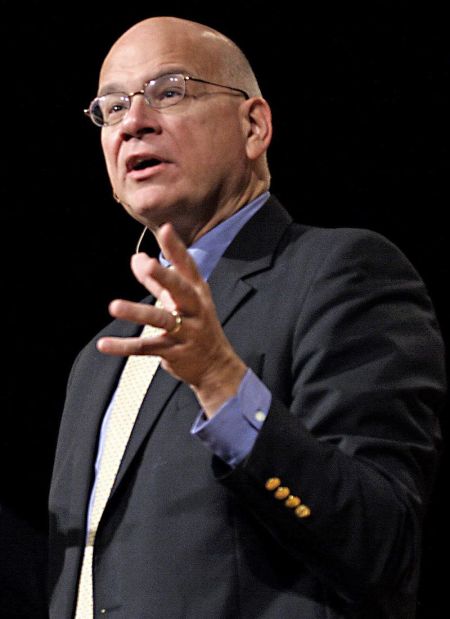
    Pastor and theologian Tim Keller had an op-ed in the New York Times last week entitled “How do Christians fit into the two-party system? They don’t.”

    In the piece, Keller outlines the complexity of the situation for Americans in the political arena. Keller argues (and I agree) that neither political party perfectly encompasses Christian teaching. This can be a challenging view for people because the temptation can be to look at whatever their party is and think “THIS is where real Christians belong. Honestly, I don’t even know if a person can be a Christian and vote for the other side.”

    The conservative platform certainly has elements which more closely align with Christianity including traditional marriage values and a pro-life stance.

    It is problematic that the democratic party holds to unbiblical beliefs on these issues.

    But they’re not entirely wrong and the republican platform is also not perfectly aligned with Biblical teaching. For instance, the Bible does have much to say about care for the poor, those who society looks down upon, and aliens. Now there is room for disagreement on the extent to which social welfare programs should go, but it’s a conversation where there is often greater empathy on the left side of the political aisle.

    Both parties have major flaws. One of the unfortunate issues in our society is that we’re losing the ability to see anything good or any redeeming qualities in the political party we oppose.

    That’s why I like Keller’s article (and he’s said similar things elsewhere). Because Christians are doing life in a fallen world and that fallenness most certainly carries over into political philosophies.

    Some have opted to go a third route which is to remove oneself from the political process. But even being apolitical is to be political. Not taking a stance on major moral evils is taking a stance.

    I’ve been saying for a long time that political values are a common  idol in our society. Politics matter. But they’re not the end all, be all. And politics are not our hope for a better world. The gospel is.

    Again, the point isn’t to totally withdraw from politics. But I think we need to keep our priorities straight. And for Christians, the objective is not to politically conquer our enemies but to love and serve, to spread the gospel and make disciples. And for those who politically disagree, I think we must be respectful and humble. Another key point that Keller makes is that if we get too concerned about prioritizing political beliefs and giving them gospel importance, we are then adding requirements to the gospel. And that’s wrong.

    At the end of his piece, Keller says:

    The Gospel gives us the resources to love people who reject both our beliefs and us personally. Christians should think of how God rescued them. He did it not by taking power but by coming to earth, losing glory and power, serving and dying on a cross. How did Jesus save? Not with a sword but with nails in his hands.

    Thanks for reading! I’d love to hear what you think, and don’t forget to subscribe! 

    Josh Benner is the associate pastor at Cornerstone Evangelical Free Church in Fergus Falls, Minnesota and has a Master of Divinity from Trinity Evangelical Divinity School. He enjoys writing about faith and culture. He lives with his wife Kari in Minnesota.

    Let’s connect!
    Facebook
    Twitter
    Instagram