Josh Benner

Tag: Luke

  • Why do Matthew and Luke give two different genealogies for Jesus

    Why do Matthew and Luke give two different genealogies for Jesus

    The gospels of Matthew and Luke both give genealogies for Jesus. 

    But they’re different. 

    Not just a little different. 

    From David to Joseph, they’re almost entirely different. Only two names are found in both genealogies in that time period. The genealogies are much more similar from Abraham to David. Matthew has an extra name. That’s not so unusual. Ancient genealogies are not always exhaustive. So person A can be referred to as the father of person B but it might actually be his grandfather or great grandfather, etc. 

    When you get to David, the genealogies diverge in two different directions. 

    Matthew’s genealogy goes from David to Solomon and through Solomon’s line. 

    Luke’s genealogy goes from David to another of his sons, Nathan, and Nathan’s line. 

    Both list Zerubbabel and both list Shealtiel and that is where the commonalities begin and end. 

    But why? 

    There are all sorts of theories. 

    And I’ll be honest. Any solution to this problem is purely speculative. 

    THEORY 1 – JOSEPH’S LINE AND MARY’S LINE

    One of the oldest theories which goes back to the early church is the suggestion that they’re giving genealogies for both Joseph and for Mary. 

    Simple. 

    That’s possible but it shouldn’t be assumed, most importantly because the text never tells us that. 

    It would be highly unusual to give a woman’s genealogy in ancient times. Although as one scholar pointed out, a virgin birth is also highly unusual. 

    THEORY 2 – A ROYAL LINE AND A LEGAL LINE

    Perhaps one of the genealogies is royal and one is legal. 

    This is ultimately where I land and what I believe is the most like scenario. 

    What’s that mean? 

    So Matthew’s genealogy goes from David to Solomon to Rehoboam to Abidjan, etc. 

    That is the Israelite monarchy of the Old Testament. They’re the kings.

    Those people can be found in Old Testament genealogies. 

    Matthew gives the kings. Luke does not. 

    But both go through David. 

    So one suggestion is that Jesus is in the line of David, but while the royal line goes from David through Solomon, Jesus isn’t part of the Solomonic line. 

    Is that to say that Jesus is not a legitimate royal?

    It’s not saying that. 

    Perhaps the direct royal line had died off and Joseph was next in line. 

    So in that, Matthew could be giving the line of the monarchy which ends up at Joseph. 

    Even if not, Jesus is the divinely appointed Davidic King. We see several instances in the Old Testament where God makes a choice which goes against birth order. Judah was not the oldest of the 12 tribes. Jacob was younger than Esau. Abel was favored over Cain. 

    Certainly we should not think that either of the gospel writers were just arbitrarily listing names. Luke’s genealogy is interesting because it goes another route off of the Davidic line. Luke is very meticulous and detail oriented in his gospel. He knew the Old Testament. Why did he do that? 

    I think he did it because it was true. That was the line. 

    That does not mean Matthew’s genealogy is wrong. 

    Again, the theory that I think makes the most sense is that Matthew is giving the kings. Keep in mind that the monarchy ends long before Jesus. There are people living in the world today who are descendants of monarchies that are no longer in power. 

    And from the line of the kings, Matthew is pointing to Jesus as the final and ultimate king. That also goes with the kingship theme in this gospel. 

    There are other theories. 

    OTHER THEORIES

    Maybe it’s as simple as Matthew and Luke showing that Joseph himself was related to David from both sides of his family. 

    Maybe Joseph’s parents died and he was adopted and it’s giving the lines of his blood family and his adoptive family. 

    Jesus was adopted by Joseph. Maybe Joseph too had been adopted. 

    And there are other theories. 

    Maybe Joseph’s mom was a widow and his dad had a half brother who married the mother to give Joseph’s father a legal heir and the gospels are giving that genealogy and the genealogy of his biological father. 

    Again, it’s not a new thing that Matthew and Luke have different genealogies. Theologians and scholars have been wrestling with this throughout church history. We have church theologians commenting on this in the third century, but I think it’s safe to say that the question goes back further than that. 

    AN IMPORTANT LESSON ABOUT THE BIBLE

    But here are a couple things to keep in mind. 

    Because sometimes skeptics will point to these different genealogies as a known on the historicity of the Bible. 

    People like to sometimes make it seem like way back in the early history of the church, like they edited the Bible. But the Bible gives us two different genealogies for Jesus and throughout the history of the church, both were left in the gospels because they were original to the books. 

    And that should mean something. 

    It’s a powerful reminder of the efforts throughout the history of the church to preserve the Biblical text and not be editors. But letting the text speak for itself. 

    The Bible is the word of God. 

    All scripture is God breathed (2 Timothy 3:16). 

    Hebrews 4:12 says: 

    the word of God is living and active, sharper than any two-edged sword

    The Word of God does not need to be explained away. 

    Thomas Jefferson was famous for producing his own “bible” where he cut out the parts he disagreed with. That’s not how you treat the Word of God. 

    Matthew and Luke gave those two genealogies, as we have them. 

    And they’re both God’s word. 

    For the skeptics and those who want to use this against the historicity of the Bible or even for the Christian who’s uncomfortable with the discrepancy, that needn’t be so. Just because we don’t know exactly why the genealogies are different does not imply that a solution doesn’t exist. 

    Again, there are no shortage of plausible theories. 

    We just don’t know exactly which one it is. 

    Thanks for reading! If you like, please share, comment and subscribe! 
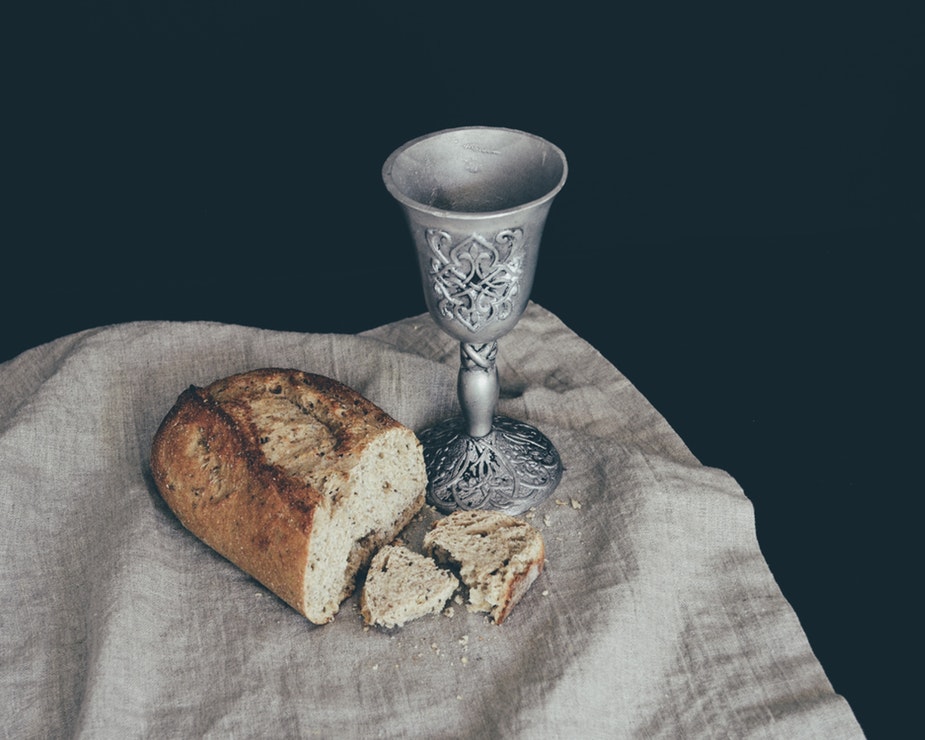
  • Jesus and the Last Supper. More than just a meal.

    photo-1520629716099-d147346eb224.jpeg

    Originally published April 13, 2017

    As part of Holy Week, Maundy Thursday is recognized this evening. It was the night in which Jesus ate the Last Supper with his disciples. The time in which Jesus died corresponded with the Jewish holiday of Passover. And the Last Supper was the first night of Passover. An annual dinner for Passover is held, called a Seder, which is the Hebrew word for “order.” In 3,500 years, rabbinical tradition and teaching helped to form the ceremony of the Seder.

    Some of these pieces were traced back to the original Passover. Others came in Jewish history from rabbinical traditions.

    Also, once the Israelites were in the land, and after the temple was built, this impacted Passover traditions. When you had the temple, the lambs were sacrificed at the temple. But what didn’t change was that people could only sacrifice lambs that were perfect.

    I think it’s worth spending so much time in talking about Passover because I think it can help give us a greater context and understanding for the events surrounding the death of Jesus.

    In the gospels, the time of the death of Christ revolves around the Passover. That’s not a coincidence! Jesus would be sacrificed at the time that was associated with sacrifice. Jesus had gone to Jerusalem for Passover. In Jerusalem, the city within the Roman Empire that was the epicenter of Jewish culture, thousands of lambs would have been slaughtered annually. Jewish people would have been coming in from all over the empire.

    We see many traditions of the Seder at the last Supper.

    Some of them are small things. In the gospel accounts, it talks about Jesus reclining at the table (Luke 22:14).

    Jesus wasn’t sitting in a la-z-boy. He was on a couch that he was lying on, that was a Seder tradition. They had been enslaved in Egypt but being able to lie down showed the freedom and security.

    Or when Jesus is alluding to his betrayer, he says in John 13:26, “It is he to whom I will give this morsel of bread when I have dipped it.” So when he had dipped the morsel, he gave it to Judas, the son of Simon Iscariot.

    Again, I know the mental image that most of you probably have when you read this. It’s hard to know precisely where in the Seder this is, but it seems that it’s probably referring to when you take Haroset which is made from apple, nuts, cinnamon. They weren’t eating the Last Supper at an Italian restaurant. They didn’t have a bowl of olive oil in the middle of the table. But all of the elements we see at the Last Supper are part of what you’d see in a traditional Seder.

    As part of the Seder, you’d take the unleavened bread…looks like a cracker. And you’d break the bread.

    Luke 22:19, “And he took bread, and when he had given thanks, he broke it and gave it to them, saying, “This is my body, which is given for you. Do this in remembrance of me.”

    For over a thousand years of Seder dinners, bread had been broken. Unleavened bread, just like the Israelite forefathers had eaten before fleeing from Egypt.

    The body of Jesus, given for you, given for your sins. Given for your forgiveness. And he says “do this in remembrance of me.”

    What more fitting words could you say at a Seder? A meal revolving around remembrance, about retelling the story of God saving his people by the blood of the lamb.

    Remembering what God has done. Remembering what Jesus has done. Remembering the sins that he’s redeemed you from. Remembering his body that he gave for you. Remembering his death that he died for you. Remembering the grace that he offers to you. Remembering his gospel.

    Luke 22:20 says, “And likewise the cup after they had eaten, saying, “This cup that is poured out for you is the new covenant in my blood.”

    The Seder dinner involves four glasses of wine. This seems to have been the second or third glass of wine in the meal, although there’s scholarly debate.

    But how profound it is. Wine drank in remembrance of the Passover. Jesus takes the wine, he blesses it, he says it is the new covenant in his blood, at the Seder dinner.

    It clearly points backwards to the blood of the Passover lamb, the blood that was put on the door posts. And it also points forward to the blood of Christ, shed for the forgiveness of sins. The blood of the true lamb.

    At the beginning of the gospel of John, when John the Baptist sees Jesus he says “Behold, the lamb of God who takes away the sin of the world.” Jesus is the true lamb of God. The lamb who took the penalty for sins. The one who was scarified for the salvation of God’s people.

    And by trusting in him and having faith in him, that puts the blood on the doorpost of your heart. On the first Passover, there would not have been a pardon for a person who didn’t put blood on the doorpost. It wasn’t that the blood saved them, God saved them. But to not put the blood on the door was to show that a person didn’t have faith in the Lord, didn’t trust in the Lord.

    When we take the Lord’s Supper, it’s not arbitrary. It’s not just using the random items that were around. It’s all symbolic. It takes symbols important to the first Passover, the first time God had delivered Israel, and it reminds of the new Passover, from the perfect sacrifice for sins.

    The Passover passage in Exodus 12:5 says that the lamb that was used had to be without blemish. Jesus is the ultimate lamb without blemish, a life lived in perfection.

    1 Corinthians 5:7 says “Cleanse out the old leaven that you may be a new lump, as you really are unleavened. For Christ, our Passover Lamb.”

    Thanks for reading! I’d love to hear what you think, and don’t forget to subscribe! 

    Josh Benner  has a Master of Divinity from Trinity Evangelical Divinity School. He has served churches in Minnesota and Illinois. He enjoys writing about faith and culture. He lives with his wife Kari in St. Louis.

  • Mary too? Professor argues Mary carried Jesus without consent

    Came across a story this morning about a recent Tweet from a college professor at the University of Minnesota Mankato.
    Eric Sprankle talked about the virgin birth of Jesus and said: “The virgin birth story is about an all-knowing, all-powrful deity impregnating a human teen. There is no definition of consent that would include that scenario. Happy Holidays.”

    “There is no definition of consent that would include that scenario?”

    First of all, he’s entirely missing the point. Second of all, he’s wrong. In the Gospel of Luke, Mary actually does say “I am the servant of the Lord; let it be to me according to your word” (Luke 1:38).

    People have brought that up. But that doesn’t count, according to Dr. Sprankle who says, “The Biblical god regularly punished disobedience. The power difference (deith vs mortal) and the potential for violence for saying “no” negates her “yes.”

    Seriously?

    Christians believe that before the conception of Jesus, an angel of God appeared to Mary and told her that she had been chosen for this once in human history task of being able to carry the Lord.

    And this professor is essentially arguing that because of a power imbalance, she didn’t really have a choice?

    His Tweets are incoherent. In the first one, he says that God is all-powerful and all-knowing (both of which are true). But then he argues against the divine plan of an all-knowing God in choosing Mary to give birth to Jesus. She wasn’t chosen at random.

    And God is all-powerful. Men are not all-knowing nor are we all-powerful. We are unworthy of God. We are created for God. There is a power imbalance. We are not equal to God. And when I say the Tweets are incoherent, I mean that it’s incoherent to say that God is all-knowing and then to question his wisdom of morality and his plans.

    Sprankle’s definition of consent is so radical and limited that even giving consent doesn’t count. It’s intellectually dishonest. It’s referring to a once-in-human-history event. Also, this has nothing to do with sexual consent anyway!

    But if you continue to read in the gospel account, Mary continues to be perfectly happy with this situation.

    “My soul magnifies the Lord,
     and my spirit rejoices in God my Savior,
    for he has looked on the humble estate of his servant.
    For behold, from now on all generations will call me blessed;

    -Luke 1:46-48

    She didn’t give consent? Mary seems pretty ok with the arrangement. And it was through this act that the savior of the world came into the world to save the world from sin.

    One day we will all be held to account for our lives and actions. And there won’t be equality with God then either. God is awesomely powerful, righteous, and holy. We are not. We are sinful. We are so sinful that the only way we could be redeemed was for God to come into the world. The birth of Christ shows us that from beginning to end, Jesus had a divine ministry. Jesus came into a world that was so sinful that the world killed him. He did that so we could be forgiven. We are sinful and cannot make ourselves right with God. But Jesus came so that we could be with God. Not because we deserved it. Not because we are God’s peers. But out of his goodness and grace.

    Jesus did that to save sinners. Even sinners who mock the gospel and the righteousness of God. But we must repent of our sins and turn to Christ and trust in the life that he promises.

    Thanks for reading! I’d love to hear what you think, and don’t forget to subscribe! 

    Josh Benner is the associate pastor at Cornerstone Evangelical Free Church in Fergus Falls, Minnesota and has a Master of Divinity from Trinity Evangelical Divinity School. He enjoys writing about faith and culture. He lives with his wife Kari in Minnesota.

    Let’s connect!
    Facebook
    Twitter
    Instagram

  • Jesus and the Last Supper – more than just a meal

    photo-1520629716099-d147346eb224.jpeg

    Originally published April 13, 2017

    As part of Holy Week, Maundy Thursday is recognized this evening. It was the night in which Jesus ate the Last Supper with his disciples. The time in which Jesus died corresponded with the Jewish holiday of Passover. And the Last Supper was the first night of Passover. An annual dinner for Passover is held, called a Seder, which is the Hebrew word for “order.” In 3,500 years, rabbinical tradition and teaching helped to form the ceremony of the Seder.

    Some of these pieces were traced back to the original Passover. Others came in Jewish history from rabbinical traditions.

    Also, once the Israelites were in the land, and after the temple was built, this impacted Passover traditions. When you had the temple, the lambs were sacrificed at the temple. But what didn’t change was that people could only sacrifice lambs that were perfect.

    I think it’s worth spending so much time in talking about Passover because I think it can help give us a greater context and understanding for the events surrounding the death of Jesus.

    In the gospels, the time of the death of Christ revolves around the Passover. That’s not a coincidence! Jesus would be sacrificed at the time that was associated with sacrifice. Jesus had gone to Jerusalem for Passover. In Jerusalem, the city within the Roman Empire that was the epicenter of Jewish culture, thousands of lambs would have been slaughtered annually. Jewish people would have been coming in from all over the empire.

    We see many traditions of the Seder at the last Supper.

    Some of them are small things. In the gospel accounts, it talks about Jesus reclining at the table (Luke 22:14).

    Jesus wasn’t sitting in a la-z-boy. He was on a couch that he was lying on, that was a Seder tradition. They had been enslaved in Egypt but being able to lie down showed the freedom and security.

    Or when Jesus is alluding to his betrayer, he says in John 13:26, “It is he to whom I will give this morsel of bread when I have dipped it.” So when he had dipped the morsel, he gave it to Judas, the son of Simon Iscariot.

    Again, I know the mental image that most of you probably have when you read this. It’s hard to know precisely where in the Seder this is, but it seems that it’s probably referring to when you take Haroset which is made from apple, nuts, cinnamon. They weren’t eating the Last Supper at an Italian restaurant. They didn’t have a bowl of olive oil in the middle of the table. But all of the elements we see at the Last Supper are part of what you’d see in a traditional Seder.

    As part of the Seder, you’d take the unleavened bread…looks like a cracker. And you’d break the bread.

    Luke 22:19, “And he took bread, and when he had given thanks, he broke it and gave it to them, saying, “This is my body, which is given for you. Do this in remembrance of me.”

    For over a thousand years of Seder dinners, bread had been broken. Unleavened bread, just like the Israelite forefathers had eaten before fleeing from Egypt.

    The body of Jesus, given for you, given for your sins. Given for your forgiveness. And he says “do this in remembrance of me.”

    What more fitting words could you say at a Seder? A meal revolving around remembrance, about retelling the story of God saving his people by the blood of the lamb.

    Remembering what God has done. Remembering what Jesus has done. Remembering the sins that he’s redeemed you from. Remembering his body that he gave for you. Remembering his death that he died for you. Remembering the grace that he offers to you. Remembering his gospel.

    Luke 22:20 says, “And likewise the cup after they had eaten, saying, “This cup that is poured out for you is the new covenant in my blood.”

    The Seder dinner involves four glasses of wine. This seems to have been the second or third glass of wine in the meal, although there’s scholarly debate.

    But how profound it is. Wine drank in remembrance of the Passover. Jesus takes the wine, he blesses it, he says it is the new covenant in his blood, at the Seder dinner.

    It clearly points backwards to the blood of the Passover lamb, the blood that was put on the door posts. And it also points forward to the blood of Christ, shed for the forgiveness of sins. The blood of the true lamb.

    At the beginning of the gospel of John, when John the Baptist sees Jesus he says “Behold, the lamb of God who takes away the sin of the world.” Jesus is the true lamb of God. The lamb who took the penalty for sins. The one who was scarified for the salvation of God’s people.

    And by trusting in him and having faith in him, that puts the blood on the doorpost of your heart. On the first Passover, there would not have been a pardon for a person who didn’t put blood on the doorpost. It wasn’t that the blood saved them, God saved them. But to not put the blood on the door was to show that a person didn’t have faith in the Lord, didn’t trust in the Lord.

    When we take the Lord’s Supper, it’s not arbitrary. It’s not just using the random items that were around. It’s all symbolic. It takes symbols important to the first Passover, the first time God had delivered Israel, and it reminds of the new Passover, from the perfect sacrifice for sins.

    The Passover passage in Exodus 12:5 says that the lamb that was used had to be without blemish. Jesus is the ultimate lamb without blemish, a life lived in perfection.

    1 Corinthians 5:7 says “Cleanse out the old leaven that you may be a new lump, as you really are unleavened. For Christ, our Passover Lamb.”

    Josh Benner is the associate pastor at Cornerstone Evangelical Free Church in Fergus Falls, Minnesota and has a Master of Divinity from Trinity Evangelical Divinity School. He enjoys writing about faith and culture. He lives with his wife Kari in Minnesota.

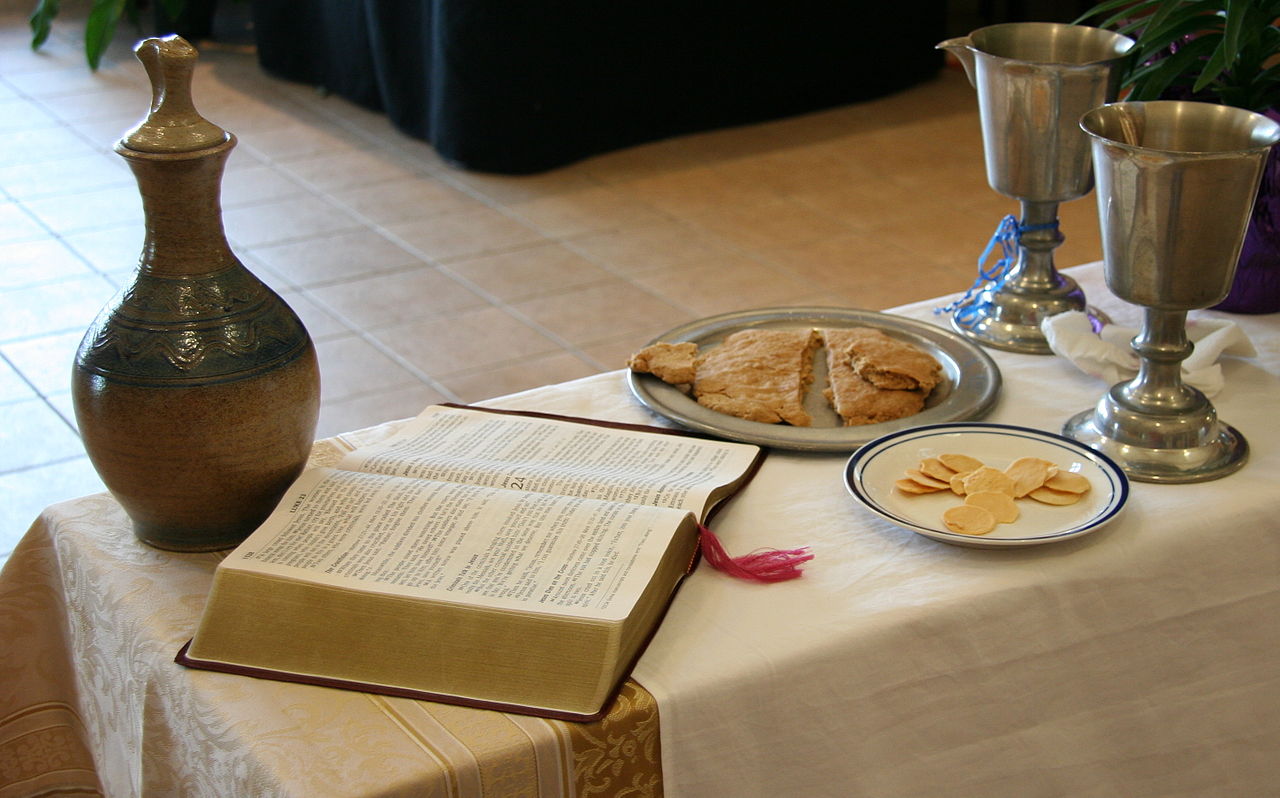
  • Jesus and the Last Supper: more than just a meal

    1280px-EucharistELCA.JPG

    As part of Holy Week, Maundy Thursday is recognized this evening. It was the night in which Jesus ate the Last Supper with his disciples. The time in which Jesus died corresponded with the Jewish holiday of Passover. And the Last Supper was the first night of Passover. An annual dinner for Passover is held, called a Seder, which is the Hebrew word for “order.” In 3,500 years, rabbinical tradition and teaching helped to form the ceremony of the Seder.

    Some of these pieces were traced back to the original Passover. Others came in Jewish history from rabbinical traditions. (more…)