Josh Benner

Tag: Noah

  • Noah, his sons, and shame. Studying Genesis 9:18-29

    Noah, his sons, and shame. Studying Genesis 9:18-29

    After the covenant which the Lord makes with Noah, we see a scandal involving Noah and his three sons at the end of Genesis 9. 

    The story is introduced by reminding the reader of the Sons of Noah. They will come up again in the genealogies of Genesis 10.

    Genesis 9:18: 

    18 The sons of Noah who went forth from the ark were Shem, Ham, and Japheth. (Ham was the father of Canaan.) 

    The verse mentions the Canaanites, the tribe who will be an adversary of the Israelites for many generations. They’re introduced here but will be talked about at the end of this section and into chapter 10. This is also the first mention of the Caanaites in the Bible. 

    Genesis 9:19: 

     19 These three were the sons of Noah, and from these the people of the whole earth were dispersed. 

    As Adam was the progenitor of the human race, from Noah and his sons, we will see a newly constituted humanity after the flood. This is continuing with the themes of creation and new creation in Noah’s story 

    Genesis 9:20-21: 

    20 Noah began to be a man of the soil, and he planted a vineyard. 21 He drank of the wine and became drunk and lay uncovered in his tent.

    Noah is the only person in the Bible referred to as “a man of the soil.” 

    As Adam was given charge to work and keep the garden in creation, we see Noah keeping with the family business of working the vineyard. As an interesting side note, there are ancient mythologies which attribute the creation of wine to the gods, such as the Egyptian myth of Osiris or the Greek myth of Dionysus. The Bible points to wine as being cultivated by humanity. 

    The text says that Noah became drunk. It’s interesting to wonder if he knew the effects of the wine since cultivation of grapes was new. Noah might have survived being in the ark through the great flood, but a little bit the wine is too much for him. 

    The text mentions that he lay uncovered in his tent. 

    Genesis 9:22: 

    22 And Ham, the father of Canaan, saw the nakedness of his father and told his two brothers outside.

    For the second time in the passage, Canaan is referred to. 

    Verses 22 and 23 are a bit cryptic as to what exactly is happening. Throughout the generations, there have been various interpretations as to the extent of Ham’s sin against Noah. Some have thought that there was some sort of sexual sin involved agaisnt Noah or his wife. The text does talk about how Ham “saw” Noah and this language is sometimes referred to in the Bible as referring to sexual activity but it also just as likely refers to simply seeing something and that word alone cannot lead to the conclusion that Ham physically did something against Noah. 

    Another theory is that Ham castrated Noah. That may seem like a big leap in interpretations, and it is not the view that I hold. Part of the reasoning for this interpretation is that Noah has only three sons but cursed Ham’s fourth son (Canaan) and that Noah curses Ham’s fourth son because he was prevented from having a fourth son. 

    It’s impossible to know exactly the sin issue from what’s provided in the text, but I hold to the view that Ham dishonored Noah in a vulnerable time and then told his brothers about this and the heart behind that is why his actions were so grievous. 

    Genesis 9:23: 

    23 Then Shem and Japheth took a garment, laid it on both their shoulders, and walked backward and covered the nakedness of their father. Their faces were turned backward, and they did not see their father’s nakedness.

    As Ham dishonored Noah, we see the other two sons covering up his nakedness. They walk in backwards to prevent seeing the nakedness of their father and bringing further shame. 

    In the following verses, Noah awakens and realizes what has happened. 

    Genesis 9:24-25: 

    24 When Noah awoke from his wine and knew what his youngest son had done to him, 25 he said, 

    “Cursed be Canaan; 

    a servant of servants shall he be to his brothers.” 

    Canaan is mentioned for the third time in the passage. Noah does not bring a curse upon Ham but upon his son. It is unclear as to why this happened. Canaan does in fact become a major rival of Israel in the Old Testament so the curse does prove to be true. 

    Is Canaan being unfairly punished? It’s another complication textual matter. The point of the curse is that it’s pointing to the offspring of Ham which is why it’s a curse given to Canaan. 

    There’s blessing and also curses as Noah calls for blessings on his other two sons. 

    Genesis 9:26-27: 

    26 He also said, 

    “Blessed be the Lord, the God of Shem; 

    and let Canaan be his servant. 

    27 May God enlarge Japheth, 

    and let him dwell in the tents of Shem, 

    and let Canaan be his servant.” 

    The chapter ends, and the life of Noah ends in verses 28-29: 28 After the flood Noah lived 350 years. 29 All the days of Noah were 950 years, and he died. 

    Parallels to Adam

    As has already been mentioned, Adam planted a garden and Noah planted a vineyard. 

    As there is a curse on humanity after the fall into sin, there is a curse (Gen. 9:25) as a result of dishonoring Noah. Both stories involve the shame of nakedness. Both stories lead to familial strife. 

    With the first sin, they eat the fruit of the tree in the midst of the garden. With the sin against Noah, Noah is witnessed within his tent. Eve sees the fruit looks good for food. Ham sees the nakedness of his father (Shem and Japheth do not). 

    In this story, we see the continuation of human sin after the flood. 

    Thanks for reading! If you liked this post, please share and subscribe! 
  • The Noahic Covenant. Studying Genesis 8:20-9:17

    The Noahic Covenant. Studying Genesis 8:20-9:17

    God formally establishes a covenant with Noah. 

    In Genesis 6:18 we see the word covenant used for the first time in the Bible. 

    I will establish my covenant with you, and you shall come into the ark, you, your sons, your wife, and your sons’ wives with you. 

    Between Genesis 6 and Genesis 9, a lot has happened. God has flooded the earth, he’s killed all people and inhabitants of the earth, save for Noah, his family, and the animals on the ark. 

    We see more covenant language at the end of Genesis 8. After the flood, Noah builds an altar to the Lord in Genesis 8:20. Sacrifice is an important aspect of Biblical covenants. And it is here where Noah is able to make sacrifices in a newly cleansed creation after the flood. 

    Genesis 8:20: 

    20 Then Noah built an altar to the Lord and took some of every clean animal and some of every clean bird and offered burnt offerings on the altar

    The altar Noah builds is the first time we see an altar mentioned in the Book of Genesis. The altars represent locations where man could make sacrifices to the Lord and it prefigures the later temple which is also an important aspect of covenantal theology. 

    Abraham, Isaac, and Jacob would all build altars at times of great significance in Genesis. With the Mosaic covenant, there would be the tabernacle which was the portable structure which symbolized God’s presence with the Israelites and the place where the sacrifices were made. In 2 Samuel 7, when David is told to construct the temple, the thing to which the tabernacle was pointing, God also makes a promise to him in another covenant where the Lord promised a Son from David’s line who would have a kingdom that would never end. 

    2 Samuel 7:12-13: 

     When your days are fulfilled and you lie down with your fathers, I will raise up your offspring after you, who shall come from your body, and I will establish his kingdom. 13 He shall build a house for my name, and I will establish the throne of his kingdom forever

    And in Christ, we see the true temple, the true presence of God with the people where the true sacrifice is made who establishes a new covenant in his own blood and with his own body. 

    Luke 22:19-20: 

    19 And he took bread, and when he had given thanks, he broke it and gave it to them, saying, “This is my body, which is given for you. Do this in remembrance of me.” 20 And likewise the cup after they had eaten, saying, “This cup that is poured out for you is the new covenant in my blood


    Back in Genesis 8, Noah builds the altar to make the sacrifices. 

    We see the Lord make a promise. He will restate it in chapter 9, but it’s the same thing the Lord will promise in his covenant with Noah. 

    Genesis 8:21-22:

    21 And when the Lord smelled the pleasing aroma, the Lord said in his heart, “I will never again curse the ground because of man, for the intention of man’s heart is evil from his youth. Neither will I ever again strike down every living creature as I have done. 22 While the earth remains, seedtime and harvest, cold and heat, summer and winter, day and night, shall not cease.” 

    Coming into chapter 9, we see all sorts of language both of covenant and creation. God has spared Noah, his family, and the animals on the ark because he is making a new creation through them. As in creation, when the Lord gives the mandate to Adam and Eve to be fruitful and multiply, he will give that same command to Noah and his family. 

    Genesis 9:1: 

    And God blessed Noah and his sons and said to them, “Be fruitful and multiply and fill the earth.

    But while there are creation themes, this world after the creation is not perfect. There is animosity within the creation itself. Genesis 9:2-3:

     2 The fear of you and the dread of you shall be upon every beast of the earth and upon every bird of the heavens, upon everything that creeps on the ground and all the fish of the sea. Into your hand they are delivered.  3 Every moving thing that lives shall be food for you. And as I gave you the green plants, I give you everything.

    While man can eat meat, there are still stipulations on how we can eat it. The lifeblood of the animal is something which is sacred, as is the life of our fellow man. For any who unjustly takes the life of another, the just penalty for that is death. As man is created in the image of God, so man has inherent value and worth. 

    Genesis 9:5-6: 

     for your lifeblood I will require a reckoning: from every beast I will require it and from man. From his fellow man I will require a reckoning for the life of man. 

    6 “Whoever sheds the blood of man, 

    by man shall his blood be shed, 

    for God made man in his own image. 

    In Genesis 9:7, we see the repetition of the command for humanity to be fruitful and multiply. Once again, the language harkens back to creation. 

    While the passage has already been steeped in the language and ideas of covenants, it is verse 8 when the Lord formally ratifies his covenant. 

    It’s striking in itself that God makes a covenant with a humanity that he knows is sinful and that he knows will continue to sin. 

    The Noahic Covenant

    Genesis 9:8-10:

    8 Then God said to Noah and to his sons with him, 9 “Behold, I establish my covenant with you and your offspring after you, 10 and with every living creature that is with you, the birds, the livestock, and every beast of the earth with you, as many as came out of the ark; it is for every beast of the earth.

    God’s covenant doesn’t begin by focusing on the sinfulness of man. This covenant is universal. As Noah, his family, and the animals who come off the boat represent all of the life on earth, the covenant promise is made to all of them and applies to all of mankind and to all of the animal kingdom. 

    It is the only covenant in the Bible that does this. Where it’s universal and applies to everyone and every living creature in the world. 

    Later covenants will have more specific application. Abraham’s covenant is a promise for a people who will come from Abraham. The Mosaic covenant is given to Israel. The New Covenant is given to the faithful in Christ. 

    The Noahic covenant applies to all, regardless if someone knows and honors the Lord, regardless if someone considers themselves to be part of this covenant. 

    So first, we see to whom the covenant applies. Next, we see what the covenant promises. 

    Covenant promises

    Genesis 9:11: 

    11 I establish my covenant with you, that never again shall all flesh be cut off by the waters of the flood, and never again shall there be a flood to destroy the earth

    The Lord will never again destroy the earth. 

    But what’s amazing is that he could. 

    Again, it is purely out of his grace that he makes the promise to a sinful humanity that he won’t do this again. The only thing that God is bound by is his own character and righteousness. We can’t stop him from doing whatever he wants. 

    The covenant is made by God based in the character of God. The text continues to use possessive language. The Lord keeps calling it my covenant. I will establish my covenant with you. 

    It’s not like humanity can negotiate with God. All that we have is from him. 

    The flood will be a unique event in human history. That’s not to say that local floods can’t happen. But God will never repeat the flood that he brought as his great judgment on the world. Again, not that the world doesn’t deserve that but because God is gracious and has promised not to. 

    It can be easy to be frustrated with the state of our world. So much sin. So much darkness. Wars, killings, violents, drugs. 

    The flood reminds us that God once did away with all of creation save for one family and a set of each of the animals. As Thomas Schreiner notes in his biblical theology of covenants, that the flood reminds us that the fundamental nature of humanity hasn’t changed. 

    Noah’s covenant does show God’s grace to humanity but it does not bring salvation in itself. It instead points to the preservation of humanity and the continuation of the world. Based on other covenants and promises, we know that this will continue until Christ returns. And the ultimate hope of the world is to be remade once again as a new heaven, a new earth, and a new creation at the end of the age. 

    Covenant sign

    In addition to his promise, the Lord also makes a covenant sign. 

    Genesis 9:12-13:

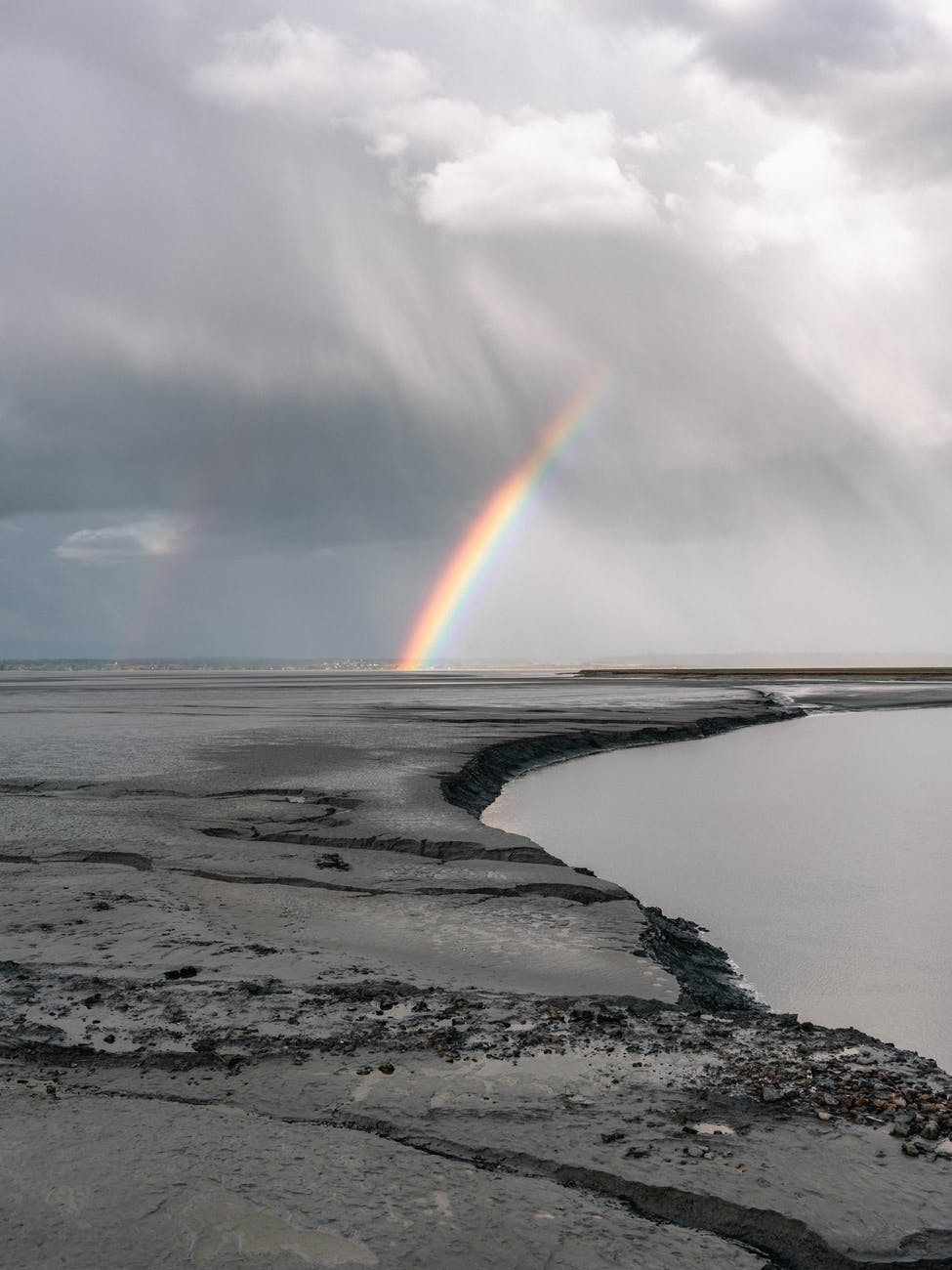
    12 And God said, “This is the sign of the covenant that I make between me and you and every living creature that is with you, for all future generations: 13 I have set my bow in the cloud, and it shall be a sign of the covenant between me and the earth.

    The rainbow is a sign of God’s covenant. Other covenants will have signs of their own. With Abraham, the sign of the covenant is circumcision. With the new covenant, communion would be a sign of that covenant which Christ instituted. 

    From th foreboding clouds of a thunderstorm, we can see a rainbow. 

    In a dark world, we still have a good God who is faithful. 

    Genesis 9:14-15, the Lord restates his promise not to flood the earth. 

    14 When I bring clouds over the earth and the bow is seen in the clouds, 15 I will remember my covenant that is between me and you and every living creature of all flesh. And the waters shall never again become a flood to destroy all flesh.

    Thanks for reading! If you liked this post, please share and subscribe! 

  • Life after the flood. Studying Genesis 8:1-13

    In Genesis 8, after the flood, God causes the waters to subside. It is a passage which points us to the gospel. 

    Genesis 8:1: 

    But God remembered Noah and all the beasts and all the livestock that were with him in the ark. And God made a wind blow over the earth, and the waters subsided. 

    As God remembers Noah, it is covenant language. God hadn’t forgotten Noah but when God “remembers,” in the Old Testament it is a precursor to divine action. As God makes a wind blow over the earth, we see God undoing the flood. 

    Genesis 8:2: 

    2 The fountains of the deep and the windows of the heavens were closed, the rain from the heavens was restrained

    From chaos, God is bringing restoration. 

    The most wonderful time of the year

    Genesis 8:4 says: 

    and in the seventh month, on the seventeenth day of the month, the ark came to rest on the mountains of Ararat.

    Genesis 8 says that the boat came to a rest in the seventh month. In the Jewish calendar, the seventh month is the most important month of the year as numerous feasts would be at this time of year including the Day of Atonement, the Feast of Trumpets, and the Feast of Tabernacles (Leviticus 23:23-36). 

    For the birds

    A raven and a dove play a prominent role in investigating the earth after the flood waters subside. 

    Genesis 8:6-7 says: 

    6 At the end of forty days Noah opened the window of the ark that he had made 7 and sent forth a raven. It went to and fro until the waters were dried up from the earth.

    Rabbinic tradition held that the raven was released first because it was not a bird fit for food (Lev 11:15; Deut 14:14) nor suitable for sacrifice.  

    Regarding the release of the raven, Kenneth Matthews says: “Its departure from the ark signified that the impurities of the past had been removed and the creation of the new world had a fresh start.”

    Unlike the raven, the dove was an animal which would be suitable in the sacrificial system (Lev 1:14; 5:7; 14:22). The first time Noah releases the dove, the waters are still too high and the dove returns. 

    Genesis 8:8-9: 

     8 Then he sent forth a dove from him, to see if the waters had subsided from the face of the ground. 9 But the dove found no place to set her foot, and she returned to him to the ark, for the waters were still on the face of the whole earth. So he put out his hand and took her and brought her into the ark with him.

    In Genesis 8:10-11, Noah releases the dove a second time: 

    10 He waited another seven days, and again he sent forth the dove out of the ark. 11 And the dove came back to him in the evening, and behold, in her mouth was a freshly plucked olive leaf. So Noah knew that the waters had subsided from the earth. 

    The dove returning with an olive leaf was a symbol of life. 

    In the Old Testament, when kings, priests, and some of the prophets were anointed, it was with olive oil. 

    The oil was not significant in itself, but it was significant as a symbol of the presence of the Spirit of God. 

    1 Samuel 16:13 says: 

    13 Then Samuel took the horn of oil and anointed him in the midst of his brothers. And the Spirit of the Lord rushed upon David from that day forward. And Samuel rose up and went to Ramah. 

    We also see a connection of a dove and the Holy Sprit at the baptism of Jesus. 

    Mark 1:10 says: 

    when he came up out of the water, immediately he saw the heavens being torn open and the Spirit descending on him like a dove.

    In Christian art, the Holy Spirit is therefore symbolized as a dove. 

    Back in Genesis, Noah sends out a third dove. 

    Genesis 8:12 says: 

    12 Then he waited another seven days and sent forth the dove, and she did not return to him anymore. 

    The dove doesn’t return because the land has dried out. 

    13 In the six hundred and first year, in the first month, the first day of the month, the waters were dried from off the earth. And Noah removed the covering of the ark and looked, and behold, the face of the ground was dry (Genesis 8:13).

  • Creation and uncreation – The flood and Genesis 7

    Creation and uncreation – The flood and Genesis 7

    Perhaps the best known story in the Bible of God’s judgment is the story of Noah’s Ark. 

    At the beginning of the story, Genesis talks of a world that has fallen further and further into sin and that the Lord saves one man (Noah) and his family from the destruction that was to come.

    Another significant theme in the story is that it is an undoing of creation. 

    Undoing creation

    In the Noah story, when the flood itself is brought forth by the Lord, Genesis 7:11-12 records: 

    11 In the six hundredth year of Noah’s life, in the second month, on the seventeenth day of the month, on that day all the fountains of the great deep burst forth, and the windows of the heavens were opened. 12 And rain fell upon the earth forty days and forty nights. 

    In Genesis 1, we see the second and third day of creation. 

    Day 2

    Genesis 1:6-8

    6 And God said, “Let there be an expanse in the midst of the waters, and let it separate the waters from the waters.” 7 And God made the expanse and separated the waters that were under the expanse from the waters that were above the expanse. And it was so. 8 And God called the expanse Heaven. And there was evening and there was morning, the second day. 

    Day 3

    Genesis 1:9-10: 

    9 And God said, “Let the waters under the heavens be gathered together into one place, and let the dry land appear.” And it was so. 10 God called the dry land Earth, and the waters that were gathered together he called Seas. And God saw that it was good. 

    In those days, we see God separate the waters and create the expanse between earth and sky. In the flood, the heavens are opened up and the rains come down and flood the earth. The Lord takes away the dry ground as he floods the earth. 

    The parallels don’t end there. 

    Noah and his family are saved along with sets of every animal. 

    Genesis 7:13-15: 

     13 On the very same day Noah and his sons, Shem and Ham and Japheth, and Noah’s wife and the three wives of his sons with them entered the ark, 14 they and every beast, according to its kind, and all the livestock according to their kinds, and every creeping thing that creeps on the earth, according to its kind, and every bird, according to its kind, every winged creature. 15 They went into the ark with Noah, two and two of all flesh in which there was the breath of life. 

    You have man and beast entering the ark. You also have married people going into the ark. It’s noteworthy that in ancient times when polgyammy was commonplace, that we see people in monogamous marriages entering the ark, especially when considering that marriage itself is part of God’s creation. 

    Amid the darkness and chaos of the flood, we do see a glimmer of hope as the Lord personally takes care of this family. Genesis 7:16 says: And those that entered, male and female of all flesh, went in as God had commanded him. And the Lord shut him in. 

    Noah is a symbol for Adam. He and his family and the animals are symbols of creation, preserved to be part of a new creation after the flood. 

    Genesis 7:17-19:

    17 The flood continued forty days on the earth. The waters increased and bore up the ark, and it rose high above the earth. 18 The waters prevailed and increased greatly on the earth, and the ark floated on the face of the waters. 19 And the waters prevailed so mightily on the earth that all the high mountains under the whole heaven were covered.

    Once again, tis is language which continues to point back to the first days of Genesis and God’s subduing of the waters. At the beginning of Genesis, The earth was without form and void, and darkness was over the face of the deep. And the Spirit of God was hovering over the face of the waters (Genesis 1:2),  but in the flood, the Lord allows the waters to come and overtake the whole earth. 

    Days 5 and 6

    In creation days 5 and 6, we see God bringing forth life. First animal life and then culminating in the creation of man. 

    Aside from those who are on the ark, they die in the flood. 

    Genesis 7:21-23:

     21 And all flesh died that moved on the earth, birds, livestock, beasts, all swarming creatures that swarm on the earth, and all mankind. 22 Everything on the dry land in whose nostrils was the breath of life died. 23 He blotted out every living thing that was on the face of the ground, man and animals and creeping things and birds of the heavens. They were blotted out from the earth. Only Noah was left, and those who were with him in the ark. 

    Thanks for reading! If you liked this post, please share and subscribe! 

  • Noah and the flood. Studying Genesis 6:1-12

    Noah and the flood. Studying Genesis 6:1-12

    Noah’s Ark is one of the most well known stories in the entire Bible. In modern times, it’s a controversial story where skeptics deny that it ever actually happened. Many Christians doubt this story and instead treat it as mythology. 

    I can certainly appreciate that the story seems fantastical and hard to believe. But so does the story about Jesus dying and being resurrected. So does the idea of a virgin woman becoming pregnant. Those stories are essential elements of the Christian faith. What’s more, for people who do believe that it’s a true story, there are still many questions which remain. Was the flood global or was the flood “the world” as people would have known it in ancient times? If the flood was not worldwide, were there still people alive in the world? Would a loving God truly flood his own planet? 

    These are thoughtful questions. In this post, I want to acknowledge that there are many different views of this story, but it is my goal to write about Noah and the Ark in a way which is faithful to how it is represented in the Bible. 

    By the time we come to Genesis 6, the world is already fallen and we’ve seen an increase in sin within the world. 

    Chapter 6 begins by describing the grim circumstances of the world. 

    Genesis 6:5-6 says: 

    5 The Lord saw that the wickedness of man was great in the earth, and that every intention of the thoughts of his heart was only evil continually. 6 And the Lord regretted that he had made man on the earth, and it grieved him to his heart.

    I’ve heard Genesis 6:6 described as the saddest verse in the Bible. God regretted the creation of man and was grieved. This points us to the personal nature of God and how sin is an offense to a holy God. That God had made a good world and that humanity has corrupted that due to sin. 

    But before God had created man, he knew this would happen. God is all knowing. It didn’t surprise God what had happened. Nevertheless, it grieved the Lord. And so the Lord will bring a judgment on the world. 

    Genesis 6:7: 

     7 So the Lord said, “I will blot out man whom I have created from the face of the land, man and animals and creeping things and birds of the heavens, for I am sorry that I have made them.”

    Undoing creation

    This is not God flying into a rage or being arbitrary. It is a just judgment from a morally perfect God towards a sinful world. We also see these verses as an undoing of creation. In creation, God makes a world that’s good. In this passage, we see a world that is corrupted. In creation, God creates and sees that it is good. Before the flood, God sees the wickedness of the world. In creation, God makes dry land. In the flood, God takes it away. In creation, God hovers over the waters. With the flood, God will unleash the power of the rains. 

    But in the face of so much sin, there’s one hopeful note through a man named Noah: 

    But Noah found favor in the eyes of the Lord (Genesis 6:8). 

    The Lord will be gracious to Noah and to his family, in spite of the sinfulness that is in the world. 

    Genesis 6:9 further describes Noah: 

    9 These are the generations of Noah. Noah was a righteous man, blameless in his generation. Noah walked with God. 

    When the passage says that Noah was “righteous” and “blameless,” that does not mean that Noah was without sin. But it does point to Noah having a faith in the Lord. In Genesis 15:6, we will learn that Abraham believed in the Lord and it was counted to him as righteousness. Is it reading too much into things to think that this isn’t at the heart of the righteousness of Noah? 

    It’s something that could be debated but that’s how I take this verse. It is pointing to the grace of God. Noah doesn’t deserve this favor in the eyes of the Lord, but because he has faith and is walking with God, the Lord is gracious to him. 

    Genesis 6:10 reminds us of the three sons of Noah. They are important to the story because they will join Noah in this new humanity after the flood. 

    A corrupt world

    While Genesis 6:8-10 is hopeful and optimistic, beginning in verse 11, the passage takes us back to the harsh reality of a sinful world. 

    Genesis 6:11-12 says: 

    11 Now the earth was corrupt in God’s sight, and the earth was filled with violence. 12 And God saw the earth, and behold, it was corrupt, for all flesh had corrupted their way on the earth. 

    Once again, this language reminds us of creation. 

    Genesis 6 says now the earth was corrupt. 

    Genesis 1:2 says: 2 The earth was without form and void

    Genesis 6 says that God saw the earth and, and behold, it was corrupt.

    Genesis 1:4 says: God saw that the light was good

    In his commentary of Genesis, John Sailhamer describes the following section and says “It seems clear from the way the author begins the account that the main purpose of the story of the Flood is not to show why God sent a flood but rather to show why God saved Noah.” 

    It’s easy to look around the world today and to be frustrated and disheartened by the sin that is all around us. Wars, human trafficking, exploitation, murder, crime, societal breakdowns. It’s appropriate to be grieved by these realities. But we should not be surprised by them. Because these issues are not new. Sin is not new. 

    Sometimes we like to look back on past generations as if they were this golden age of superior morals. But people are people and sin is sin and the world is fallen. It can so often be so easy to look back on past times with rose colored glasses. As our world has gotten more technological, it can also be easy to have more awareness of specific types of sin happening in the world. Before the flood, God sees the incredible sinfulness of the world. 

    The fact that God judges sin is something that humanity doesn’t like. We like to lift ourselves up, we like to think we’re good. We like to think that people can be good enough on their own. But the Bible teaches that all sin and fall short of the glory of God (Romans 3:23). The penalty for sin is death (Romans 6:23). And a righteous God is justified for bringing judgment. 

    But God is also gracious and merciful. In this passage, we see both. We see judgment and mercy.

    Thanks for reading! 

    If you liked this post, please share and subscribe! 

    For further reading: 

     John H. Sailhamer, “Genesis,” in The Expositor’s Bible Commentary: Genesis, Exodus, Leviticus, Numbers, ed. Frank E. Gaebelein, vol. 2 (Grand Rapids, MI: Zondervan Publishing House, 1990).