Josh Benner

Tag: NYT

  • NYT suggests evangelicalism needs to be more liberal to save itself

    NYT suggests evangelicalism needs to be more liberal to save itself

    David Brooks had a piece in the New York Times under the headline: “The Dissenters Trying to Save Evangelicalism From Itself.”

    Brooks talks of the divide within evangelicalism. Early in the article, Brooks suggests: “There have been three big issues that have profoundly divided them: the white evangelical embrace of Donald Trump, sex abuse scandals in evangelical churches and parachurch organizations, and attitudes about race relations, especially after the killing of George Floyd.”

    I’ve read this same basic piece several times in the last couple years in trying to diagnose the problems with evangelicalism in America. 

    Brooks interviews a familiar cast of characters. Russell Moore and Beth Moore (no relation to each other) who were recently popular figures in evangelical circles but have become critics of the movement. He interviews Kristin Kobes Du Mez, the author of “Jesus and John Wayne,” which is a one-sided rant against evangelicalism which only looks at the bad and overlooks any redeeming qualities in the movement. He mentions Tim Dalrymple, the president of Christianity Today who said Trump should have been removed from office.

    There’s a lot fo discourse on the problems of evangelicalism but I feel like I never see similar critiques of liberal and progressive Christianity. These articles get preoccupied with evangelical support of Trump, and that always gets framed as if it’s some obvious scourge on the gospel. 

    My question is: what in the world is so good about liberalism? What are they doing right now to benefit our country? These articles want to criticize churches for being too conservative. As if there are not thousands of churches in America that are liberal, that support values that are not Biblical values such as the LGBT movement and abortion. Liberal churches who undermine the Bible. Those churches get a pass. 

    It’s the churches who support Trump and who are not woke social justice warriors who are the problem. Basically the problem with evangelicals is that they’re not liberals. And if they embrace liberal ideologies, then they’ll be doing the Lord’s work.

    Conservative evangelicalism is an easy target because our culture institutions are increasingly liberal. The mainstream media, Hollywood, big business, big tech, pro sports, the federal government, higher education, public education, healthcare, and on and on. It’s ok to be liberal. It’s not ok to be conservative. 

    And the focus needs to be that evangelicals don’t have a big enough tent. Brooks has the audacity to frame it as if evangelicals are not welcoming enough to other points of view. Is a conservative welcome in a progressive church? Is a belief in traditional marriage, traditional gender roles, the inherency of the Bible welcome in a progressive church? 

    There are problems with evangelicalism. There are far too many powerful people in influential ministries who are corrupt and who have no accountability. That’s an issue. Brooks mentions the scandal involving Ravi Zacharias and a scandal involving Willow Creek Church. I’ve written about both. They were terrible. I’ve written about Jerry Falwell, Jr, and James MacDonald, and the Southern Baptist Convention sexual assualt scandal.

    I think too many evangelical churches have done a poor job about teaching the Bible and focus on easy to listen to messages and appealing to cultural trends and having watered down youth ministries that are not teaching kids the Bible. Again, there are problems in evangelicalism.

    There are churches and pastors who might call themselves “evangelical” with whom I would greatly disagree. But evangelicalism is a broad movement. I think we should call out people when they’re in the wrong. But I don’t think that American evangelicalism has the inherent problems that progressivism poses to the church. Progressive churches fall right in line with that ideology. I see that as the bigger threat on our culture and on the gospel.

    Thanks for reading. If you liked this post, please share and subscribe.

  • New York Times blames churches for being “major source” of Covid cases

    The New York Times ran an article today under the headline: “Churches Were Eager to Reopen. Now They Are a Major Source of Coronavirus Cases.”

    If you had just read the headline, that sounds like a pretty severe indictment. The article goes on to say that more than 650 cases of Coronavirus have been linked to churches. Not 650 a day. There were 60,000 cases today. Not 650 this week, or since Memorial Day. But 650 cases since the beginning of Coronavirus.

    More than 3 million Americans have been diagnosed with the virus.

    It’s misleading to say that around .02 percent of cases being linked to churches means that churches are a “major source.”

    The anti-intellectual contortions the mainstream media has done over the past few weeks is truly incredible. CNN, NBC, Forbes, the Associated Press, and numerous other news sources have all argued that attending protest rallied did not lead to increased numbers of cases. But if you want to go to church, or a beach, that’s a major contributor. States like New York that had tremendous loss of life did a wonderful job of handling the virus. States like Florida and Texas who are seeing large increases in cases are reckless and their governors are to blame.

    It’s all political.

    The Times article says: “Weeks after President Trump demanded that America’s shuttered houses of worship be allowed to reopen, new outbreaks of the coronavirus are surging through churches across the country where services have resumed.”

    And that’s really the heart of the piece. President Trump had pushed for governors to lift restrictions on churches and now a few cases can be linked to churches, so the Times can go after Trump and also publish propaganda about churches being a “major source” of the spread of the virus.

    Thanks for reading! Please comment, like, and subscribe.

  • Two sides to the story: Matt Chandler receives criticism for handling of sexual abuse.

    Matt Chandler. Photo from YouTube

    Monday, the New York Times ran an article titled “Her evangelical megachurch was her world. Then her daughter said she was molested by a minister.”

    The story talks about the Village Church, a megachurch in Dallas, Texas and the home church of Matt Chandler, one of the most popular and dynamic pastors in the contemporary Evangelical movement.

    The story chronicles a former church member named Christi Bragg whose daughter was sexually assaulted at a church sponsored retreat in 2012. The New York Times piece gives accounts of how the Village Church responded to the allegations.

    The article gives the impression that the church did very little to help the family and glossed over a crime while only carrying about protecting their own interests as a church. (more…)

  • Media treats being pro-life and pro capital punishment as moral paradox

    800px-Governor_Kay_E._Ivey_Official_Portrait_Updated
    Alabama governor Kay Ivey 

    On Wednesday, Alabama passed the most restrictive abortion law in America. On the same day, Alabama also executed a man who was a participant in a grizzly quadruple murder in 1997.

    It was interesting seeing how those two stories are being taken together in the media. The New York Times ran an article titled “a day after banning abortions, Alabama executes a murderer.” The LA times ran a headline that said, “Alabama’s antiabortion governor urges respect for life, will oversee 7th execution.”

    I’ve hard this argument before levied against those who are pro life but also support the death penalty, as if it’s some sort of moral inconsistency. For the life of me, I don’t understand why this position should have to be defended.

    It’s really quite simple. I believe a baby should be allowed to live. I believe a quadruple murderer should not.

    I think that a person who supports abortion and opposes capital punishment is the one who needs to answer for that stance. Because it treats a murderer as being more deserving of life than a baby.

    Some people oppose both abortion and capital punishment. I respect that view. There are a number of thoughtful arguments that can be made on that subject, and at least it has consistency to a moral principle.

    I hold my view because I believe that life is precious. Every human is created in the image of God and is worthy of dignity. The most fundamental right that humanity has is the right to life (because all other rights presuppose a right to the life through with other rights are exercised.) And so I believe that a baby has the right to be born and to live.

    If a person deprives someone else of their right to life, that is so wicked, so grotesque, so heinous of a thing to do that in the process of depriving someone of that right, the assailant has forfeited their right to life.

    I don’t expect everyone to agree with my view, but that’s how I look at the issue.

    As a Christian, the Old Testament certainly allows for capital punishment. Genesis 9:6 is a good example of this: “Whoever sheds the blood of man, by man shall his blood be shed, for God made man in his own image.”

    Thanks for reading! I’d love to hear what you think, and don’t forget to subscribe! 

    Josh Benner  has a Master of Divinity from Trinity Evangelical Divinity School. He has served churches in Minnesota and Illinois. He enjoys writing about faith and culture. He lives with his wife Kari in St. Louis.

  • Tim Keller argues that Christians don’t fit into the two-party system – he’s right

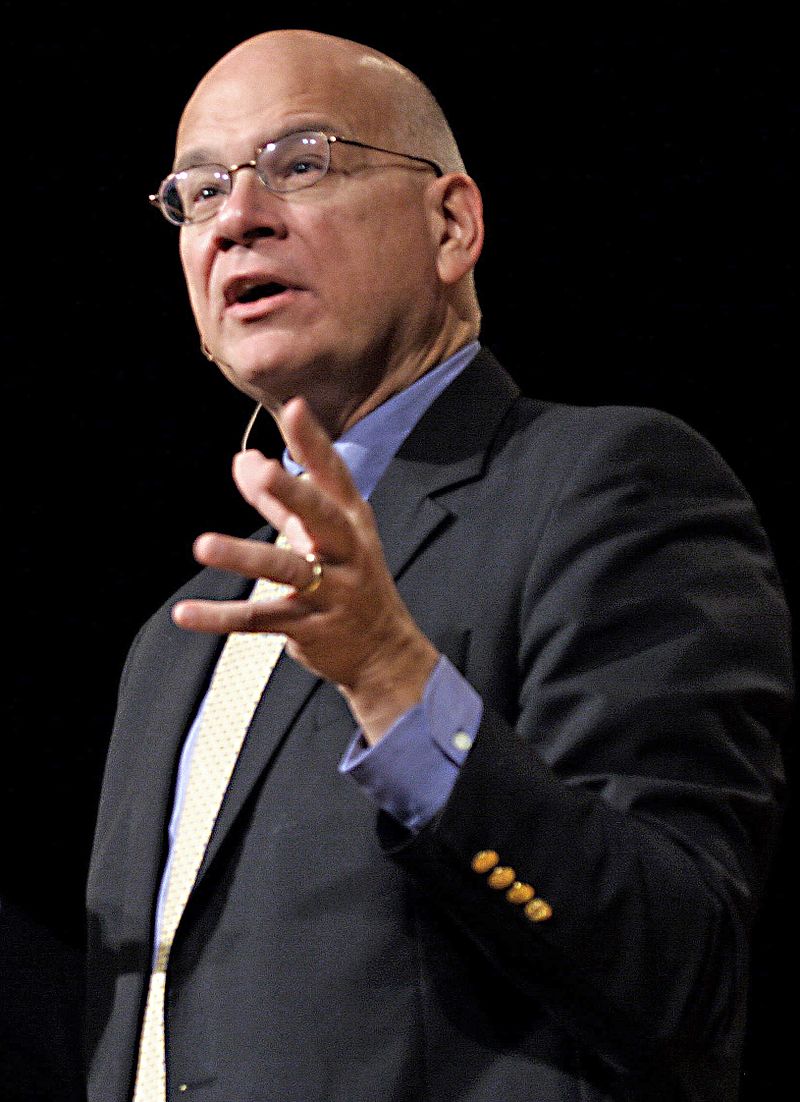
    Timothy_Keller
    Photo courtesy of Wikimedia Commons @Frank Licorice

    Pastor and theologian Tim Keller had an op-ed in the New York Times last week entitled “How do Christians fit into the two-party system? They don’t.”

    In the piece, Keller outlines the complexity of the situation for Americans in the political arena. Keller argues (and I agree) that neither political party perfectly encompasses Christian teaching. This can be a challenging view for people because the temptation can be to look at whatever their party is and think “THIS is where real Christians belong. Honestly, I don’t even know if a person can be a Christian and vote for the other side.”

    The conservative platform certainly has elements which more closely align with Christianity including traditional marriage values and a pro-life stance.

    It is problematic that the democratic party holds to unbiblical beliefs on these issues.

    But they’re not entirely wrong and the republican platform is also not perfectly aligned with Biblical teaching. For instance, the Bible does have much to say about care for the poor, those who society looks down upon, and aliens. Now there is room for disagreement on the extent to which social welfare programs should go, but it’s a conversation where there is often greater empathy on the left side of the political aisle.

    Both parties have major flaws. One of the unfortunate issues in our society is that we’re losing the ability to see anything good or any redeeming qualities in the political party we oppose.

    That’s why I like Keller’s article (and he’s said similar things elsewhere). Because Christians are doing life in a fallen world and that fallenness most certainly carries over into political philosophies.

    Some have opted to go a third route which is to remove oneself from the political process. But even being apolitical is to be political. Not taking a stance on major moral evils is taking a stance.

    I’ve been saying for a long time that political values are a common  idol in our society. Politics matter. But they’re not the end all, be all. And politics are not our hope for a better world. The gospel is.

    Again, the point isn’t to totally withdraw from politics. But I think we need to keep our priorities straight. And for Christians, the objective is not to politically conquer our enemies but to love and serve, to spread the gospel and make disciples. And for those who politically disagree, I think we must be respectful and humble. Another key point that Keller makes is that if we get too concerned about prioritizing political beliefs and giving them gospel importance, we are then adding requirements to the gospel. And that’s wrong.

    At the end of his piece, Keller says:

    The Gospel gives us the resources to love people who reject both our beliefs and us personally. Christians should think of how God rescued them. He did it not by taking power but by coming to earth, losing glory and power, serving and dying on a cross. How did Jesus save? Not with a sword but with nails in his hands.

    Thanks for reading! I’d love to hear what you think, and don’t forget to subscribe! 

    Josh Benner is the associate pastor at Cornerstone Evangelical Free Church in Fergus Falls, Minnesota and has a Master of Divinity from Trinity Evangelical Divinity School. He enjoys writing about faith and culture. He lives with his wife Kari in Minnesota.

    Let’s connect!
    Facebook
    Twitter
    Instagram