Josh Benner

Tag: passion

  • Finding your passion – what if that’s the wrong starting place?

    photo-1519389950473-47ba0277781c.jpeg
    My generation grew up with the VCR. We were able to watch the same Disney movies over and over and over again. We saw the fairytales and the happily ever after. I’m not a psychologist, but I sometimes wonder if that was imprinted in our psyche as if we have a soul mate, one specific person who we’re supposed to find.

    But we don’t. It’s unrealistic to think that there’s one person who’s just going to totally complete and fulfill you. It’s a blessing to find someone. But they’re not God.

    I hear people talk about “the one.”

    I think many millennials do the same thing with their occupations. I hear people say things like “I just don’t know what I’m supposed to do,” or they talk as if there’s some mystical job that would be totally perfect and fulfilling for them…if. they. could. just. find. it.

    And that they can’t truly be fulfilled, and happy, and living with meaning until they do.

    I read a fantastic piece on the Gospel Coalition yesterday from Missy Wallace and she also notices this trend as people try to “find their passion.”

    There can be dangers to this.

    Even great jobs have elements that aren’t enjoyable. Even if we get paid to do something we enjoy, sometimes it changes the dynamic when we’re doing something because we have to and not because we enjoy it.

    It’s still work. Quoting from Wallace’s Gospel Coalition piece:

    Scripture reveals that even though God created us to take dominion and create productive flourishing, all work includes toil, regardless of its alignment with our interest and giftings. In secular verbiage, “work” is called “work” because it is “work.” The only people I’ve ever met who claim they “never worked a day in their lives” are ones reflecting back on their careers—and perhaps forgetting the difficulties the way a mother forgets the pain of labor. But those in the trenches, no matter how “called” they feel or how much they adore their work, almost always admit to its challenges and brokenness.

    I’m not saying that people shouldn’t want to find things they enjoy and are passionate about. I feel blessed to be able to do something I love. As a pastor, I get to meet with people and be there during some of the most important moments in their lives, I also get to spend a lot of time studying and reflecting on the Bible and theology.

    I love it. Most of the time.

    I an be easy to glamorize what others do. Even people who have glamorous jobs have to work like crazy to maintain what they’ve built. Even star athletes have to spend hours and hours destroying themselves in practice and training. To be good at anything takes a lot of time, effort, and energy.

    But another important point of the equation is that you can grow to love a job. And that’s another concern that I have. If we get too caught up trying to find something that we absolutely love, I think we can be too quick to write off things that we liked and could have loved. Angela Duckworth talks about this in her book “Grit.”

    Duckworth argues that our passions are developed more than they’re discovered.

    I think we largely get that backwards.

    As we work in a job or industry and grow in knowledge and have greater understanding and proficiency and more appreciation for the nuances and variety, we can grow to enjoy a job more and more.

    For Christians, our meaning does not come from our job, it comes from our God. We can serve him in whatever profession where we are working. We are called to do everything for his glory. We can glorify God in how we relate with coworkers and customers. And we glorify God by virtue of working hard. Work is something that man was created to do and it is good to work hard.

    We are also called upon to provide for ourselves and for our families.

    If you’re doing those things but it’s a job that doesn’t bring you overwhelming excitement and joy by itself, have you somehow failed?

    Thanks for reading! I’d love to hear what you think, and don’t forget to subscribe! 

    Josh Benner is the associate pastor at Cornerstone Evangelical Free Church in Fergus Falls, Minnesota and has a Master of Divinity from Trinity Evangelical Divinity School. He enjoys writing about faith and culture. He lives with his wife Kari in Minnesota.

    Let’s connect!
    Facebook
    Twitter
    Instagram

  • Murderers, mobs, dictators and the gospel

    9517872289_14185be968_z

    Originally posted March 7, 2016

    In the gospel of Matthew, when Jesus was before the ruling Jewish council, he made a reference to his divine status. To the ruling council, this was taken as blasphemy. Within Rome, they didn’t have the authority to execute Jesus for his action, so they took him to Pontius Pilate, who was the governor of Judea

    Pilate questions Jesus: “Are you the King of the Jews?” Jesus said, “You have said so.” But when he was accused by the chief priests and elders, he gave no answer. Then Pilate said to him, “Do you not hear how many things they testify against you?” But he gave him no answer, not even to a single charge, so that the governor was greatly amazed. (Matthew 27:11-14). (more…)

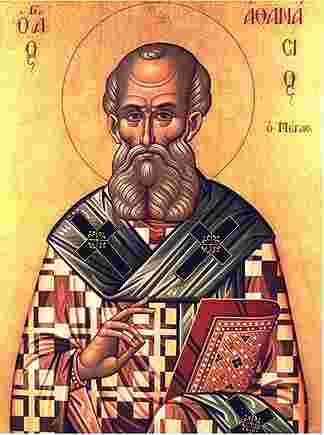
  • 4th century theology of Athanasius still fresh today.

    athanasius

    Originally published March 18, 2016

    Why did Jesus have to die? For years, this puzzled me. I could get on board with the idea that I fell short of God’s perfect standard. But why did Jesus need to die? Couldn’t God have just forgiven me? Like some sort of Spiritual write off?

    One of the best explanations I have ever read for this comes from a fourth century bishop named Athanasius in a work he produced entitled “On the Incarnation.”

    From the beginning, Athanasius provides a treatise on Jesus’ presence in creation, his incarnation as a man, and his necessary death for the reconciliation of humanity.

    Athanasius establishes that Jesus, who created all things, is the same being who renewed the world. In arguing against the Epicureans, the Gnostics, and Plato, Athanasius uses some of his counterarguments in an attempt to further solidify his Christology. For instance, Plato’s idea of God fashioning things from pre-existent matter is used by Athanasius to argue that such a view demotes God from Creator to mere craftsman and that the matter itself was necessarily created by God. From that creation, man was created in a sinless state but had the volition to sin. When mankind fell, it forever tarnished the relationship between man and God. And the sin of man spread throughout all of creation. People began to turn their attention to other things which God had created instead of on the Creator Himself.

    In the second chapter, Athanasius gets into a salvific dilemma about how God can reconcile His glory with man’s sin. “It was impossible; therefore, that God should leave man to be carried off by corruption, because it would be unfitting and unworthy of Himself.” It is not because of any intrinsic value of man, but God’s own nature called for a means of restoration. It will later be argued that to not provide this means would have led to a superfluity of the creation of man in the first place. For man to be created solely for damnation with no hope of salvation would mean that God was ultimately not creating man for Himself. But God could not simply forgive man arbitrarily because this would again have contradicted his perfection as the Lord had already established a prelapsarian injunction which humanity had willingly disobeyed.

    Possible options are speculated as to what God might have done. Mere repentance could not go quite far enough because it wasn’t about merely avoiding a particular sin. It was about being sinful in itself. In doing away with death and corruption, Jesus became a man to conquer those enemies. It couldn’t have been a man who did this because even the most pious men were ultimately sinful. As a result, Jesus was the only means of redemption. The God who had already been intimately involved with creation and the sustenance of the world was also the only means of salvation. While creation itself provided evidence for God’s existence, Athanasius argues that if teleological observations could have had a perfecting quality, that man would not have fallen in the first place. Instead of men recognizing the glory of God through creation itself, in sin, man instead made idols of other elements of creation.

    It could not have been merely Christ coming to earth. He needed to die. To give people reason to believe in Christ’s dominion over creation, and in order to give a reason for a faith that would end the death which was caused by sin, Jesus needed to personally rise from the dead. It couldn’t have been natural. Jesus needed to be witnessed dying, so that his risen state could bring men to faith in God.

    Among his conclusions, Athanasius argues that the transformation which Jesus has had on so many lives is a testimony to the truth of his resurrection. “Does a dead man prick the consciences of men, so that they throw all the traditions of their fathers to the wind?”

    The concluding chapters focus on more in depth refutations of common worldviews. To Judaism, he argues that the Old Testament called for a Messiah, and it called for that Messiah to be martyred. Athanasius next turns his attention to making various apologetic arguments for non-Jewish readers, opposed to believing the gospel.

    At times his Christological claims sound as if written by Paul. At other instances, his matter of fact, street smart logic and gripping analogies seem more modern, perhaps as if they could have been written by C.S. Lewis. I felt like the modern elements seemed most vivid in the apologetic arguments about the transformations in the lives’ of the people who knew Jesus and their willingness to risk everything in proclaiming the truth of his resurrection. At certain points, I found this volume to be laborious. But once the flow of his argument was established, I thought this book seemed much more approachable. Even though the writing presents a long argument, I also felt that Athanasius did a good job, at points, of summarizing the main points that he had made.

    For the time in which it was written, I appreciate the systematized approach to some extremely complicated (but also important) issues. While Athanasius will not convince everyone to his line of thought, I felt that this was a great book in terms of answering the “why” Jesus needed to come. Therein lays the significance of this book. I feel that the “why” question  is so easily taken for granted.

    It’s easy to acknowledge people sin and to say that Jesus needed to die for our sins. But as if in an infantile mentality, I feel it’s so easy to keep reducing the question with “but why?” Why did things have to be as they were? Why couldn’t God simply forgive man? It’s one thing to explain why the incarnation Jesus was an option. With Athanasius, the undertaking was a more structured argument as to why it needed to happen and why it was the only way for reconciliation. In trudging through the difficulties of making the incarnation of Jesus tangible, Athanasius gave the world a true work of brilliance.

    Josh Benner is the associate pastor at Cornerstone Evangelical Free Church in Fergus Falls, Minnesota and has a Master of Divinity from Trinity Evangelical Divinity School. He enjoys writing about faith and culture. He lives with his wife Kari in Minnesota.

  • The cross of Christ shows us the cost of sin

    pexels-photo-208315.jpeg
    We have a sinfully low view of sin.
    We cannot overestimate the weight of sin when we see the cost of sin on the cross.
    None of us lives up even to our own moral standards. Do you ever get mad and you regret it? Ever yell at someone and wish you hadn’t? Ever look at something and feel shame for it? Ever tell a lie or bend the truth and wish you could have it back? Ever manipulate people to get your own way? Ever do something where you know deep down it’s not what you should have done?
    Of course you have.
    We don’t live up to our own standards.
    And if we can’t do that, how on earth do we live up to the standards of a holy God? We don’t and we can’t. We have nothing to go to God with on our own and say “you have to accept me. You have to love me. You have to let me into heaven.” On what grounds? We sin.
    And it’s not just “well nobody is perfect.” But that we sin. We rebel against God. In our thoughts, in our hearts, in our actions, in our inactions.
    Our view of sin is so low that we think we can master it on our own. Our view of sin is so low that we think we can do enough good to outweigh our sin.
    Then why the cross at all? Why did Jesus die?
    The world likes to judge God. Likes to say what he should do if he really were loving. That he’d just wipe the slate clean. That that would be love.
    We like to tell God what love is. Because we have a sinfully low view of sin.
    Because the reality is that God SHOWS US what love is. On the cross. That’s what love is. Greater love has no one than this, that someone lay down his life for his friend (John 15:13). Jesus shows us what love is when he lays down his life for you. When he endures the penalty of your sin for you. When he bears the wrath of God for you.
    And again that’s a message that many find offensive. That many hate. But that again shows our sinfulness when we try to judge God. We try to tell the God who made us what really would be just or holy or good.
    We can’t earn God but he freely gives himself. On the cross. We might debate sin. Just how big of a deal it really is. Just how much it really matters. But Jesus shows us how big of a deal sin is on the cross. He shows us how imperfect we are on the cross, how sinful we are on the cross. Because he bears the weight of our sins.
    We have a sinfully low view of sin.
    We cannot overestimate the weight of sin when we look at the price Jesus paid for sin. Jesus didn’t die for you because your sins weren’t that bad. He did it because of the holiness of God and our inability to live up to that. But rather than to just have us languish with no hope, he gave us hope. On the cross.
    Jesus is God. And because he’s God, he was a worthy sacrifice for our sins. For all of eternity, Jesus is God.
    God came into the world. The word became flesh and dwelled among us (John 1:14). Born of a virgin at his incarnation, Jesus is fully man. And because he’s fully man, he is like us in our human nature. He lived the holy life we could not. The sinless life we could not. And he died for you.
    Jesus goes to the cross and in going to the cross, he doesn’t simply die for us. He’s tortured for us. It’s not like our day and age where methods of execution are designed to be relatively painless. Crucifixion was designed to humiliate and maximize the torture and pain.
    It was designed to prolong suffering. After being flogged to within an inch of your life, a person would have to carry the top part of the cross beam, which weighed upwards of 125 pounds to the place of his or her death.
    Nails would have been driven through the wrists and feet. Just imagine the agony of that. And the cross beam would be hoisted up with the condemned person attached.
    Struggling to breath, their body sagging down on the weight of their legs. Then pushing up somewhat to get more oxygen. And repeating this horrid cycle until a person died from asphyxiation or exposure to the elements.
    But there we have God on earth. Dying in the most agonizing way. The most humiliating way. In a public way. But it was for the sins of the world. It was so we could be forgiven. Because as he was nailed to the cross, so was our sin.
     We have a sinfully low view of sin.
    That that was the price to be paid for it. God on earth dying for it. But he did it willingly. Not because he had to. But because of his love for you. That’s what love is.
    Jesus never leaves us, he never forsakes us. His disciples let him down. Three times they fell asleep in the garden. Three times Peter denies Jesus. Judas leads the party who arrests Jesus. Judas walked with the Lord for three years. And betrayed him.
    Jesus is brought before the Jewish ruling council. They’re not out for the truth, they’re trying to find any charges that will stick. They take his words out of context and bring him before Pilate, saying he should be crucified. 
    Pilate is an earthly authority, the governor. Pilate knows he can find no fault in Jesus. He sees the innocence of Jesus.
    Pilate symbolically tries to cleanse himself: he took water and washed his hands before the crowd, saying, “I am innocent of this man’s blood; see to it yourselves.”
    In the face of intense pressure, Pilate can’t bring himself to do the right thing.
    He offers up an option. Pilate has a custom of annually releasing one prisoner. There is Barabbas who is a killer and an instigator of insurrection. Or they can have Jesus who is totally innocent. And they select Barabbas.
    The Roman guards later mock Jesus. They make a crown of thorns, they hand him a reed as a makeshift scepter, they put a robe on him. They bow down and say “Hail, king of the Jews.” But again they play into the irony. Because Jesus IS the king. He’s the king of kings.
    While he’s on the cross, the mocking continues. Jesus is crucified with two men who are guilty. And they too join in the mocking. The guilty mocking an innocent man. Dying people mocking the Lord. Crucified men who can’t even show humility for another man who is dying the same gruesome death.
    The priests, scribes, and elders continue mocking Jesus, beginning in 27:42, “he saved others; he cannot save himself. He is the King of Israel; let him come down now from the cross, and we will believe in him.”
    It’s because Jesus didn’t come down from the cross that we CAN believe in him. Because Jesus died on that cross that day.
    The mocking continues in 27:43 “he trusts in God, let God deliver him now, if he desires him.” Again they miss the point. God did not spare his son so that he could spare you.
    The followers of Jesus, the betrayer of Jesus, the ruling Jewish authorities, the ruling Roman authorities. All contributing in various ways to Jesus’ death.
    This isn’t the isolated failing of one person. It’s not a lone wolf assassin who takes out Jesus. If that had been the case, maybe we could chalk it up to one bad egg.
    But in the passion narrative, it’s everyone. Everyone’s failures and sins lead to the cross. But even in spite of that, God is working it for his own glory.
    In spite of that, God had planned throughout all eternity to actually use that evil and wickedness for our salvation. Because even though it was sin and evil that brought Jesus to the cross, it’s because Jesus went to the cross that he was able to die to sin for all who believe in him. 
    We see the sinfulness of humanity in Christ’s passion. We can’t downplay the sinfulness of humanity when Jesus came into our world and we killed him. The righteous and holy God who made the world came into the world and we crucified him. We can’t downplay the severity of our sinfulness with that one.
    The most atrocious way that humanity has ever conceived of to end a person’s life, crucifixion is what is used against the righteous savior of the world.
    But in spite of all of that, we again see the grace of the Lord on the cross.
    Because Jesus bore infinite wrath for sin. There is infinite grace when we turn to him. There is no sin he is unable to forgive. It’s not that he died and can forgive every sin, but he can’t forgive that one, or this one, or what you did, or what you’re struggling with.
    Infinite wrath because of our sin. But infinite mercy on the cross because of his grace.

    Thanks for reading! I’d love to hear what you think, and don’t forget to subscribe! 

    Josh Benner  has a Master of Divinity from Trinity Evangelical Divinity School. He has served churches in Minnesota and Illinois. He enjoys writing about faith and culture. He lives with his wife Kari in St. Louis.

  • Couldn’t God just forgive us? Why was the cross necessary?

    photo-1414018895695-96fe3f0d0765.jpeg

    A person might look at the crucifixion, look at what the Lord did on the cross, and wonder “Why was that the only way? Why was that necessary? Couldn’t God simply forgive us?”
    No.
    This is an idea I’ve heard from Tim Keller before, and it’s an important idea on having a theology of forgiveness.
    In any meaningful way a person has ever wronged you and you’ve forgiven them, when you forgive, you then bear a burden. You bear a burden for the way they originally sinned against you, and whatever you lost in the process: opportunity, time, happiness, money. Whatever it was. You were wronged and lost something. And when you forgive, you bear a cost a second time because you are relinquishing an opportunity to get even, to inflict vengeance upon them.
    And the worse the wrong is, the harder it is to forgive. The more costly the forgiveness, because it’s a greater debt that you’re forgiving. Not to say that people shouldn’t have consequences when they’ve committed crimes or acted violently. But even in those situations, we are called to be forgiving.
    But forgiveness is not as simple as just ignoring a wrong done.
    If someone destroys something you own, you can make them pay for it. That’s often what happens. Or perhaps you and the person can both pay for part of what was destroyed. Or you can personally pay for it. You can bear that cost yourself.
    My point is that in either event, someone has to pay. Forgiveness is not a write-off that where the wrong disappears and is forgotten about. Someone has to pay the price for what was broken.
    So with our sin against God, how does God approach forgiveness? All of the wrongs and injustices in the world. All of the wrongs and sins in our own lives, in our hearts, our actions.
    We could have never paid that price. We could never have done enough to earn our forgiveness. There was no hope.
    But on the cross, we see that Jesus himself bore the cost for us.
    That was the cost of forgiveness. The horrible death he died, the injustice that he faced. All of that shows us the cost of our sin.
    At the cross, we see the love of God.
    God shows his love for us in that while we were still sinners, Christ died for us. Since, therefore, we have now been justified by his blood, much more shall we be saved by him from the wrath of God. For if while we were enemies we were reconciled to God by the death of his Son, much more, now that we are reconciled, shall we be saved by his life.
    -Romans 5:8-10
    Because Jesus bore infinite wrath for sin. There is infinite grace when we turn to him. There is no sin he is unable to forgive. It’s not that he died and can forgive every sin, but he can’t forgive that one, or this one, or what you did, or what you’re struggling with.
    Infinite wrath because of our sin. But infinite mercy on the cross because of his grace.
    If you’re not a Christian, you need to know that Jesus paid for sins on the cross. Jesus showed that he is the way to God. Jesus died so that we could have a relationships with him. He promises eternal life for everyone who comes to him.
    All you have to do is believe in that. The Bible says that faith is credited to you as righteousness.
    “Everyone who calls on the name of the Lord will be saved.” (Romans 10:13)
    The Bible teaches that “there is salvation in no one else, for there is no other name under heaven given among men by which we must be saved.” (Acts 4:12).
    And the proof of that is on the cross. Many other places where people look for salvation, where people look for life.  None of those things will give you life. On the cross, Jesus died so that you could have life.
    You can’t earn God. The cross shows us that. If we could earn it, we wouldn’t have needed Jesus to die.
    2 Timothy 2:5-6 says:
    There is one God, and there is one mediator between God and men, the man Christ Jesus,6 who gave himself as a ransom for all, which is the testimony given at the proper time
    Jesus said “I am the way and the truth, and the life, no one comes to the father except through me (John 14:6).
    The validation for these things, what testifies to the salvation and ope that is found in Jesus…is the cross.
    Because he died on the first Good Friday. But he rose on Sunday. God has authority over life and death. God has authority over how to be made right with him.
    And while we didn’t deserve it, the good news of the gospel is that he made a way.
    Josh Benner is the associate pastor at Cornerstone Evangelical Free Church in Fergus Falls, Minnesota and has a Master of Divinity from Trinity Evangelical Divinity School. He enjoys writing about faith and culture. He lives with his wife Kari in Minnesota.