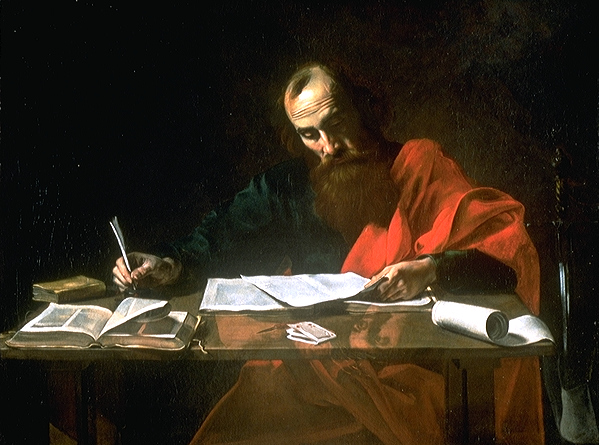
Acts chronicles events in the early church. But something else very interesting that we see from Acts is that there are places where we see Paul’s introduction to certain regions to which he would later write the letters which comprise so much of the New Testament. We see it with Galatia in chapters 13 and 14. We see it with Philippi in Acts 16, to name a couple.
Galatia was a province in Rome. It’s in the central part of modern day Turkey.
And Paul was traveling to cities in this Galatian region during his first missionary journey
This post is part of a series looking at Paul’s missionary journeys in Galatia.
Paul arrives in Galatia
In Acts 13:13 and 14, where we see them first arrive in the Galatian province:
13 Now Paul and his companions set sail from Paphos and came to Perga in Pamphylia. And John left them and returned to Jerusalem, 14 but they went on from Perga and came to Antioch in Pisidia.
The text says Paul and his companions.
Earlier in chapter 13, it had mentioned that Paul had been traveling with Barnabas and men named Simeon, Lycius, and Manaen. Later on, they were joined by the Apostle Mark (known in this passage as John).
John Mark has left the group to go to Jerusalem.
Next, the verses talk about the route. They leave from Paphos.That’s on the island of Cyprus. They sail by boat to Perga which is in Pamphylia, which is also in the Galatian province. We’re not sure how long they stayed there or what type of ministry they might have engaged in. It gets mentioned in passing.
Next, they would have taken the Roman roads to get from Perga to Antioch.
And it is there where this book talks about Paul’s missionary activities in the Galatian region. Now we’re getting more into the meat of the story.
Second part of verse 14:
And on the Sabbath day they went into the synagogue and sat down.
So Paul had been Jewish and converted to Christianity. In the Book of Acts, we see a tactic he often employed was beginning in a new city at the synagogue. Because Paul was ethnically and culturally Jewish, he understood Jewish society and customs.
Verse 15:
15 After the reading from the Law and the Prophets, the rulers of the synagogue sent a message to them, saying, “Brothers, if you have any word of encouragement for the people, say it.”
So he’s at the synagogue service. They’re doing their scripture readings and the Rabbi allows Paul to have the floor. This was often practiced in Jewish synagogues where if a traveling Rabbi or teacher was in attendance, that he would give a message.
We see Jesus do this multiple times during his ministry.Paul does the same thing here.
Paul preaches in Galatia
Paul will utilize the opportunity to talk about the Old Testament and how it points to a Son of David who would be the savior of Israel.
But first, he talks about the Exodus in verse 17-20.
In four verses, Paul covers 450 years of Israelite history. Giving a broad thumbnail sketch of their forefathers.
The God of this people Israel chose our fathers and made the people great during their stay in the land of Egypt, and with uplifted arm he led them out of it. 18 And for about forty years he put up with them in the wilderness. 19 And after destroying seven nations in the land of Canaan, he gave them their land as an inheritance. 20 All this took about 450 years.
Paul stresses that the Israelites had been chosen by God and that it was the Lord himself who had miraculously brought them out of Egypt and led them through their time in the wilderness in pursuit of the Promised Land.
The audience knows exactly what Paul is talking about.
It would be like if I were telling you about the founding fathers and how they debated and agreed upon they Declaration of Independence in 1776. You know what I’m talking about. It’s at the core of our history.
Next, Paul talks about how Israel had a monarchy established. The first king of Israel was Saul and that ends up going poorly as Saul was not a Godly king but his reign paved the way for one who would be.
Starting in verse 22, Paul talks about David and this matters because this is where Paul will change his tone and transition into talking about the gospel.
For the audience, they’re right there with him so far. He’s preaching to the choir.
Verse 22:
22 And when he had removed him, he raised up David to be their king, of whom he testified and said, ‘I have found in David the son of Jesse a man after my heart, who will do all my will.’
Paul arrives at David. The man after God’s heart. And in our passage, Paul says to this synagogue in Galatia:
23 Of this man’s offspring God has brought to Israel a Savior, Jesus, as he promised.
There was a prophecy in 2 Samuel 7:12-14 about a future offspring from the line of David who would establish an eternal kingdom.
12 When your days are fulfilled and you lie down with your fathers, I will raise up your offspring after you, who shall come from your body, and I will establish his kingdom. 13 He shall build a house for my name, and I will establish the throne of his kingdom forever. 14 I will be to him a father, and he shall be to me a son.
Paul is telling this audience that Jesus is the promised Son of David. Continuing in our passage. Paul speaks personally to the audience.
Verses 26:
26 “Brothers, sons of the family of Abraham, and those among you who fear God, to us has been sent the message of this salvation.
He calls them his brothers.
He calls them sons of the family of Abraham.
He is pointing to the shared heritage that Jews and Christians both have through Abraham.
For both Jews and Christians, Abraham is the patriarch of the faith.
He is the one through whom the Lord had made his covenant promises of land, offspring, and blessing.
But through Christ, we see the greatest fulfillment of the promises to Abraham. He is the one who brings true and eternal blessings. He is the the true offspring of Abraham through whom the nations of the world would be blessed. And he is the one who brings his people to the true promised land: the new heaven, and the new earth, and the new Jerusalem.
Abraham was the Father of Israel. The father of Isaac, who was the father of Jacob, whose line led to David and ultimately to Jesus.
Abraham matters for all of those reasons but he also matters because of his faith. In Genesis, when God made his promises, Abraham believed and that belief, that faith, that trust in God was what was counted to Abraham as righteousness.
In the New Testament, in Galatians and in other writings, the faith of Abraham will be pointed to as an example for Christians as the basis for our justification before God. It is a matter of trusting in Jesus, believing in his gospel, knowing that he is Lord and savior and that by that faith, God justifies us.
In our passage, we have Abraham, revered among the Jewish people, and Paul is saying that as the people of Abraham: to us has been sent the message of this salvation.
A lesson in evangelism
We see something important in this passage. I can’t stress this enough but Paul is speaking to these Galatians on terms they’ll understand.
They might not know who Jesus is or why he matters. So Paul starts by talking about what he knows they’ll know and showing how that points to Jesus.
I can’t help but wonder if this disconnect has caused part of the challenge with evangelism in our society today. That we assume people know more than they do about Jesus.
Even for a person who goes to church, they might not know the gospel. Not all churches preach the gospel.
I’ve mentioned before that surveys have been done and more Americans can list off more ingredients on a McDonald’s Big Mac than commandments in the Ten Commandments.
I read a survey this year where people answered in response to their readership of the Bible. Just 11% of respondents said they read the Bible everyday.
Half read from their Bibles once or twice a year…or less.
We can’t assume people know the Bible and we can’t assume people know the gospel. That’s part of why personal evangelism is so important. Sharing the gospel with people. Sharing Jesus with people.
And it’s gotten worse for younger generations. And that becomes a viscous cycle. Because the previous generations did not teach their kids the Bible and now they don’t know the Word of God. And you cannot teach what you do not know and so the problem gets worse.
Paul at the Areopagus
In Acts 17, Paul is speaking in Athens to a totally different group of people and he has a totally different approach to sharing the gospel.
There instead of talking to Jewish people, he’s talking to Greeks who believed in a pantheon of gods.
Paul doesn’t lay into them, he doesn’t yell at them, he doesn’t just say “you’re wrong, I’m right.” He explains to them.
Acts 17:22-23:
22 So Paul, standing in the midst of the Areopagus, said: “Men of Athens, I perceive that in every way you are very religious. 23 For as I passed along and observed the objects of your worship, I found also an altar with this inscription: ‘To the unknown god.’ What therefore you worship as unknown, this I proclaim to you.
He actually commands the people for being very religious.
He makes light of the fact that the people were so religious and believed in so many gods that they even had an altar to an unknown god in case they missed one.
I don’t have time to unpack the entire section but Paul will talk to this audience of the transcendence of God, how God is the creator of all things and Paul will point to the Lord as a God who judges and the savior he has sent who has risen from the dead.
In 17:32-34, we see the response to Paul’s message:
32 Now when they heard of the resurrection of the dead, some mocked. But others said, “We will hear you again about this.” 33 So Paul went out from their midst. 34 But some men joined him and believed
So once again, we see Paul beginning with where his audience is and then skillfully leading the conversation to the resurrection of Jesus and to the gospel.
Thanks for reading! If you liked this post, please share and subscribe.