Josh Benner

Tag: Protestant

  • Reformation Day: the day that changed the future of the Church

    nbcM9a9TyrfWdcpD9mEKqirF

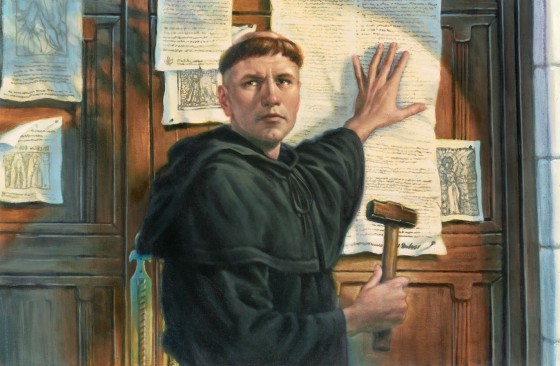
    505 years ago today, the history of the church, of Europe, and of the western world were forever changed in the town of Wittenberg Germany. Martin Luther wrote his 95 theses, a list of grievances against corrupt and unbiblical practices within the Catholic Church. The impact of this event continues to ripple throughout the Christian world.

    Luther was not the first person to call for reform in the church.

    Other movements perhaps had followings but didn’t have political support. Luther had that. Which afforded him a certain level of personal safety, though his martyrdom seemed inevitable at times. Another key difference between Luther and influential reformers who preceded him was the invention of the printing press. This allowed a mass volume of pamphlets to be produced. Luther was also likely helped by the fact that other reformation movements spread elsewhere in Europe during this time. Amid church abuses, Europe was at a tipping point. And while Luther was not the first to call for reform, it was his ministry that most significantly tipped the Reformation movement over the edge.

    Less than 20 years later in England, Henry VIII broke away from the Catholic Church and started he Church of England in 1534. Reforms were also happening in Switzerland, most notably, the city of Geneva, eventually under the leadership of John Calvin. The Anabaptist movement sprung up who favorited believer’s baptism over infant baptism. These groups were not always in agreement, and some of them had severe conflicts with each other, but they were all in agreement that all was not well within the Church, and that there were changes which were necessary.

    Against Church traditions that had become entrenched in Europe, the reformers did not think that they were doing something new, but rather were taking the Church back to its Biblical foundations.

    By the sale of indulgences, it was believed that people could pay a price to have sins removed from themselves or for people for whom they had purchased the indulgences. But the issue with this was that the Catholic Church was overstepping its bounds on what saved a person. The Church was not the arbiter of what brings salvation, it is God’s grace alone received through faith alone in Christ alone. The gospel is not man’s gospel (Galatians 1:11).

    The Catholic Church believes and believed that the seven sacraments impart grace by nature of being sacraments. While the Mass was in Latin and could not be understood by all people, the justification for this was that the sacraments still inherently imparted grace to a person, regardless of if they could understand. But this undermined faith. That’s not to say that Catholics (then and now) never value faith. But it can be easy to focus on sacraments and works apart from faith.

    Interestingly the sacrament of confession was one which caused great angst for Martin Luther. Beginning as a devout Catholic and constantly aware of his own sinfulness, Luther lived in an ever-present awareness the this life did not live up to God’s standards of holiness. He had no assurance of salvation and lived in an exhausting cycle of constant confession. Luther would confess multiple times a day, sometimes for hours at a time, as he tried to remember every sin he committed, every hint of pridefulness, everything he should have done but hadn’t.

    One verse that Luther had despised in the scriptures was “the righteous shall live by faith” which is found multiple times in the Bible (Romans 1:17; Galatians 3:11; Habakuk 2:4).

    But Luther knew he wasn’t righteous.

    In his conversion story, Luther said:

     “I hated that word “righteousness of God,” which, according to the use and custom of all the teachers. I had been taught to understand philosophically regarding the formal or active righteousness, as they called it, with which God is righteous and punishes the unrighteous sinner.

    Though I lived as a monk without reproach, I felt that I was a sinner before God with an extremely disturbed conscience. I could not believe that he was placated by my satisfaction. I did not love, yes, I hated the righteous God who punishes sinners, and secretly, if not blasphemously, certainly murmuring greatly, I was angry with God.”

    But Luther would eventually be struck by the verse which had brought him such distress. The gospel was not about living up to the righteousness of God. It was about living for God in faith. And for Luther, that changed everything.

    “At last, by the mercy of God, meditating day and night, I gave heed to the context of the words, namely, “In it the righteousness of God is revealed, as it is written, ‘He who through faith is righteous shall live.’” There I began to understand that the righteousness of God is that by which the righteous lives by a gift of God, namely by faith. And this is the meaning: the righteousness of God is revealed by the gospel, namely, the passive righteousness with which merciful God justifies us by faith, as it is written, “He who through faith isrighteous shall live.” Here I felt that I was altogether born again and hadentered paradise itself through open gates.”

    Faith is a gift from God and that people are declared righteous by God as a result of faith in the gospel.

    We are justified by faith. This became a hallmark of Luther’s theology. And it became invaluable to Protestantism. We are justified by faith, not by faith and works. Not through faith and Church. Not by faith and any of the sacraments (though baptism and the Lord’s Supper are things which all Christians ought to do and are commanded to do).

    A critique of this view and an unfortunate consequence is that many take the “faith alone” view to mean that disingenuous faith is enough, just giving some vague assent to a gospel a person doesn’t really believe in. That wasn’t what Luther believed.

    At the beginning of his 95 Theses, the first theses talks about how all of life is repentance. Faith is an all-encompassing reality and driving force of life. Living by faith in the Gospel of Jesus Christ. That we cannot earn salvation of our own merit but that it is entirely by grace alone through faith alone in Christ alone.

    Happy Reformation Day!

    This post was originally published October 31, 2017 as “500 years of reformation.” 

    Thanks for reading! I’d love to hear what you think, and don’t forget to subscribe! 
  • Reformation Day – the day that changed the future of the Church

    nbcM9a9TyrfWdcpD9mEKqirF

    502 years ago today, the history of the church, of Europe, and of the western world were forever changed in the town of Wittenberg Germany. Martin Luther wrote his 95 theses, a list of grievances against corrupt and unbiblical practices within the Catholic Church. The impact of this event continues to ripple throughout the Christian world.

    Luther was not the first person to call for reform in the church. (more…)

  • Presbyterian Church in America adopts Nashville Statement

    Presbyterian_Church_in_America_logo.svg.png
    This week, the General Assembly of the Presbyterian Church in America (PCA) voted to endorse the Nashville Statement. The Nashville Statement is a series of affirmations regarding traditional Biblical views of sexuality and gender and was created by the Council on Biblical Manhood and Womanhood.

    To give a sense of what the Nashville Statement discusses:

    WE AFFIRM that God has designed marriage to be a covenantal, sexual, procreative, lifelong union of one man and one woman, as husband and wife, and is meant to signify the covenant love between Christ and his bride the church.

    WE DENY that God has designed marriage to be a homosexual, polygamous, or polyamorous relationship. We also deny that marriage is a mere human contract rather than a covenant made before God. (more…)

  • The Doctrine of the Trinity in the Bible

    photo-1505778489066-159c5f4a6c0f.jpeg
    While the Bible might not mention the word “trinity,” the concept is Biblical and cannot be so easily dismissed. For almost 2,000, years this doctrine has been considered orthodox within the Church, including within the Roman Catholic and Eastern Orthodox Churches as well as Reformed, Lutheran, Anglican, Baptist and most Pentecostal churches.

    The greatest minds in the history of the Christian Church have affirmed the doctrine of the Trinity. Furthermore, the doctrine is not only standardly held within orthodox Christendom, it is also a necessary doctrine. Historically and in the contemporary era, when church bodies undermine the Trinity, it is sowing the seeds of heresy.

    I think the first step in understanding the Doctrine of the Trinity is understanding that it is Biblical.

    Wayne Grudem summarizes the Biblical teaching on the Trinity in three propositions:

    1. God is three persons.
    2. Each person is fully God.
    3. There is one God.

    At first glance, these look to be contradictory. But from the early church until today, these three propositions have been affirmed. In fact, they must be affirmed because each of these propositions has strong Biblical attestation.

    With the three scriptural statements, in arguing that God is three persons, the point is that there is distinction between the persons of the Trinity. The Father is not the Son, the Son is not the Spirit, and the Spirit is not the Father. The opening verse of John affirms both that Jesus was with God and that the Jesus was God in the beginning (John 1:1), and by virtue of the Son accompanying the Father, it shows that the two are distinct.

    Another important piece of evidence showing the distinctiveness within the Trinity is when Jesus prays to God the Father throughout the gospels (Mark 1:35; Matt. 14:23; Luke 6:12, 23:34; John 11:41-42). Some have argued that this is a distinction between Christ’s two natures, such as his humanity praying to his divinity. However the matter is complicated to an even greater degree when factoring in the Holy Spirit. At the beginning of the ministry of Jesus, all three persons of the Trinity are present. Jesus is baptized in Mark 1:10, the Holy Spirit descends on him, and a voice from heaven addresses Jesus as the beloved son (Mark 1:11).

    There are also verses which talk about the Spirit working with the Father and the Son (Matt. 28:19; 1 Cor. 12:4-5; 2 Cor. 13:14; Eph. 4:4-6; 1 Pet. 1:2).

    The second proposition affirmed by scripture is that each person of the Trinity is fully God. There is rich Biblical support as to the divinity of Christ as the second person of the Trinity. Jesus is worshipped as God. He talks of being one with the Father, proclaiming his divinity (John 10:30). Jesus also calls God his Father, which the Apostle John says was putting himself on the same level with God the Father (John 5:18).

    Jesus talks of his existence prior to the incarnation and before Abraham (John 8:58). The works of Jesus witness to his divine nature (John 10:25-26). Jesus is the image of God (Col. 1:15). Jesus tells Phillip that those who have seen him have seen the Father (John 14:9). Jesus is called the “radiance of the glory of God and the exact imprint of his nature (Heb. 1:3). When Thomas encounters the risen Lord and is able to see the pierced hands and side of Jesus, he exclaims “My Lord, and my God!” (John 20:28). In the context of Thomas making this proclamation, it is approved of by Jesus and agreed to by John as a climax of his gospel (John 20:20-31). After his resurrection in the gospel of Matthew, Jesus is seen as being worthy of worship by the disciples (Matt. 28:9, 17). Jesus is worshipped at his ascension at the end of Luke (Luke 24:52). 1 Corinthians 8:6 speaks to monotheism while also calling Jesus the Lord. While the term “Lord” does not inherently speak to divinity, the verse further elaborates that it is through Jesus that all things and all people exist.

    A significant support as to the divinity of Jesus is his ultimate victory over death on the first Easter. In the gospels, Jesus had already shown control over life and death by raising people from the dead (Luke 7:11-15p John 11:1-44), but it is only Jesus who was raised and never experienced the second death.

    While being worshipped as God, Jesus does not deflect this worship. The Bible affirms that angels are not worthy of worship (Heb. 1:6). The Apostle Paul deflects a cult of personality within the Corinthian Church (1 Cor. 3:4-6). When Jesus heals a man born blind, the man worships Him (John 9:38).  As has been mentioned, there are other instances in which Jesus is worshipped. For Jesus to not be God and to not forsake the worship of himself would be blasphemous. In Jesus coming to fulfill the Old Testament, he is also pointed to as being divine. In the prophecy of Isaiah 9:6-7, when talking of the child who will be born, it says he will have the name “Mighty God.” New Testament writers ascribe divine qualities to Jesus, as noted by John Feinberg. Jesus is immutable (Heb. 13:8); omniscient (John 2:24-25); holy (Luke 1:35); and he exists in aseity (John 5:26).

    A further point to the divinity of Christ is that he forgave sins on multiple occasions, something that can only be done by God (Luke 5:20, 7:48). Paul also affirms that we have redemption and forgiveness through Jesus (Col. 1:14). Based on the Bible, and with a belief in the inerrancy of scripture, the divinity of Christ is clear.

    In understanding the divinity of the Holy Spirit, two of the primary functions of the Holy Spirit in the Christian Church are to indwell and regenerate believers. Feinberg notes two theological implications which would result if the Holy Spirit were not fully God: “If the Holy Spirit is a lesser God or not God at all, how can we be sure that he can do any of these things?”

    Furthermore, if the Holy Spirit is not fully God, and indwells believers, it seems difficult to have ultimate assurance that the sanctification of the Spirit would necessarily be approved of or in accordance with the will of God the Father.

    Divine qualities are ascribed to the Spirit by Paul in 2 Corinthians 2:10-11, talking of the Spirit searching the depths of God, and then rhetorically asking “for what person knows a man’s thoughts except the spirit of the man which is in him? So also no one comprehends the thoughts of God except the Spirit of God.” Michael Horton gives a treatment where he notes passages which ascribe various qualities of deity to the Spirit. The Spirit is omnipresent (Psalm 139:7-10); omniscient (Isa. 40:13-14); regenerative (John 3:5-6; Titus 3:5) and is given “divine homage” (Matt. 28:19; Rom. 9:1; 2 Cor. 13:14).

    The third proposition given by Grudem that is essential to formulating the doctrine of the Trinity is that there is one God (Deut. 6:4-6). With the Shema, while it teaches that there is one God, it can also be argued that it is making a statement to God’s unity and integrity as one being. The fact that there is one God does not change in the New Testament and is affirmed by Paul (1 Tim. 2:5; Rom. 3:30). More importantly, the Biblical teaching on one God is also stated by Jesus. When asked what the greatest commandment is, the first part of his response refers back to the Shema (Mark 12:29-30).

    On numerous occasions in the Old Testament, when the Israelites turn to idols, they are mocked because these pagan deities are unable to intercede or act on their behalf (Isa. 46:5-7; Jer. 10:5, 14-16, 14:22; Hos. 15:8). The reason is simple: it is because the pagan gods do not exist! There is only one God.

    It has been argued that the doctrine of the Trinity comes from nowhere in the New Testament. But is this true? Within Christianity, Jesus is the ultimate hermeneutic through which to interpret the Old Testament. Jesus talks of a true understanding of the Old Testament necessarily pointing to him (John 5:45-47). In the Sermon on the Mount, Jesus talks of his coming in fulfillment of the Law (Matt. 5:17-20) and Jesus interprets moral issues with authority (Matt. 5:21-48). The synoptic gospels all attest to Jesus teaching as one with authority (Matt.7:28-29; Mark 1:22; Luke 4:31-32).

    Glimpses of the Son and the Holy Spirit can be seen in the Old Testament, going back to the beginning of the Bible and prior to the beginning of time. The Spirit is present in creation, with the Spirit hovering over the face of the primordial waters (Gen. 1:2).

    At the end of Genesis 1, God proclaims “let us make man in our own image, after our likeness.” (Gen. 1:26). This is a passage that would not necessarily be interpreted as Trinitarian in isolation. Various interpretations fall short of Unitarian interpretations. One is that it is God and the heavenly hosts who are speaking, but this view is problematic for two reasons. The heavenly hosts do not create, only God creates ex nihilo. The second problem with this view is that man is not created in the image of angels. Man is created in the image of God (Gen. 1:27). Another interpretation is the royal we, the idea that God is referring to himself in the second person while ultimately referring to him in his Unitarian sense. This view would be plausible if the royal we were utilized elsewhere in the Old Testament, but given the obscurity of such grammatical constructions, this interpretation should not be favored. While the plurality in Genesis 1:26 does not necessarily prove it is Trinitarian, the verse is assuredly not Unitarian.

    Several books in the New Testament talk about the work of Jesus in creation. In part, these sections help to clarify Genesis 1. In the Christ Hymn of Colossians 1, it talks of Christ’s preeminence. The passage informs the reader that “by him all things were created” (Col. 1:16). Hebrews 1 talks of the majesty of Christ and shows his dissimilarity from the angels, because he is greater than the angels. In that passage, it talks of Jesus laying the foundation of the earth from the beginning, and says the heavens are the work of his hands (Heb. 1:16). One of the most significant passages with respect to Jesus’ role in creation is the beginning of the gospel of John. In that section, John writes that Jesus was in the beginning and that all things were made through Jesus, and that nothing has been made without being made by him (John 1:3). Jesus is specifically depicted as an actor in creation.

    Based on all of these points, it is again affirmed that the doctrine of the Trinity is Biblical. Christianity is a monotheistic faith. There is one God who is three persons. Each of the three persons are distinct from each other and each of the three is fully divine.

    Thanks for reading! I’d love to hear what you think, and don’t forget to subscribe! 

    Josh Benner is the associate pastor at Cornerstone Evangelical Free Church in Fergus Falls, Minnesota and has a Master of Divinity from Trinity Evangelical Divinity School. He enjoys writing about faith and culture. He lives with his wife Kari in Minnesota.

    Let’s connect!
    Facebook
    Twitter
    Instagram

  • The biggest mistake liberal Christians make

    photo-1506924477166-bee04952553a.jpeg

    A few weeks ago, the Episcopal diocese in America voted to remove gender pronouns for God in updated versions of their Book of Common Prayer.

    I think many in our world believe in a gospel of “you’re ok.”

    I’ve been thinking a lot lately about liberal Christianity.

    They place a strong emphasis on love. And love is obviously important. The greatest commandment that Jesus gives is to love God and to love our neighbor. Not just to love our neighbor, but to love our neighbors as we love ourselves.

    But here’s where liberal Christians get it wrong.

    They emphasize love to the exclusion of other aspects of God.

    God is love. But he is not only love. God is also holy. God is also wise. God is also just and a judge.

    And when we hold up love as the only aspect of God that matters, it will ultimately lead to affirming that which is blasphemous.

    The gospel is not there to tell us that we’re all ok. Actually, it’s the opposite of that message. We are not called to love sin. Nowhere in the Bible is sin seen as a good thing. The Bible teaches that all of humanity is sinful. In fact, we are so sinful that the only way that we could be reconciled to God was for God to bear the cost of our sin. Jesus did that on the cross.

    God shows his love for us in that while we were still sinners, Christ died for us (Romans 5:8).

    Greater love has no one than this, that someone lay down his life for his friends (John 15:13).

    Absolutely, we see the love of God in the gospel. But we also see his justice. Sin has an eternal penalty apart from Christ. And while he went to the cross to show his love, it also shows the cost of sin. Let us not take sin lightly.

    When we try to decide what is good apart from God’s moral law, it ends up becoming merely the opinions of men. As the common refrain in the Bible’s book of judges goes: “In those days there was no king in Israel. Everyone did what was right in his own eyes (Judges 21:25).”

    God is love but he is also wise. And just as we can’t pick and choose who to love (we are called to love everyone, to want what’s best for everyone, to have concern for people) we also cannot pick and choose which aspects of God’s wisdom and morality we want to like. It’s all true.

    In the Beatitudes, Jesus teaches: blessed are those who hunger and thirst for righteousness, for they shall be satisfied.

    Blessedness is not in pursing worldly goals, it’s not in “following your truth,” it’s not in doing what makes you happy. It’s having a desire for the righteousness of the righteous and holy God who created the universe.

    And because God loves us, he doesn’t desire for us to be kept the same when we come to him. It’s not a difference of opinion between us and God in regards to sin. It’s truth and falsity.

    jrb