Josh Benner

Tag: words

  • The danger of bad Biblical teaching

    The danger of bad Biblical teaching

    Not many of you should become teachers, my brothers, for you know that we who teach will be judged with greater strictness. 
    -James 3:1

    Words matter.

    We can use words to bless, words to harm, words to boast, words to give instruction, and words to deceive. Through words we can tell a person that we love them, or that we hate them. Through words we can compliment or tear a person down.

    When the Prophet Isaiah had a heavenly vision of the throne room of God, and beheld the holiness of God, he said in Isaiah 6:5: “Woe is me! For I am lost; for I am a man of unclean lips, and I dwell in the midst of a people of unclean lips; for my eyes have seen the King, the Lord of hosts!”

    Words were part of the original sin. In the garden, the serpent, twisting God’s words: “Did God actually say, ‘You shall not eat of any tree in the garden’?”

    God had never said that. He said they could eat of any tree except for the tree of the knowledge of good and evil.

    “We may eat of the fruit of the trees in the garden,but God said, ‘You shall not eat of the fruit of the tree that is in the midst of the garden, neither shall you touch it, lest you die” (Genesis 3:2-3).

    Eve also gets it wrong. God had never said they couldn’t touch the tree. Twisting God’s words. Further provoked into sin by the devil In Genesis 3:4-5, “You will not surely die. For God knows that when you eat of it your eyes will be opened, and you will be like God, knowing good and evil.”

    When Adam and Eve are confronted with their sin, they use words to blame in Genesis 3:12, “The woman whom you gave to be with me, she gave me fruit of the tree, and I ate.”

    Words matter.

    In the first part of James 3, James zeroes in on teachers. He gives a warning to teachers that they will be judged with greater strictness. The reason why carries into verse 2 that we all sin in many ways, but one of the ways common to us all is that we stumble and sin in what we say.

    There is danger in bad Biblical teaching. It can lead people astray. It can teach people falsities, because the God who is revealed in scripture is the eternal, immortal, wise God. He’s the King of the universe, the creator of all things, he spoke the universe into being.

    There’s not a canvas where we are painting and where we can make something look however we want it to look.

    God is God. He has revealed himself in his scripture, his nature, his holiness. And so sound teaching about God matters. Teaching truth about God matters. Understanding God -in terms of how he has revealed himself in the Bible – matters.

    And not all churches do that. And not all teachers do that.

    Not many should be teachers because teaching necessarily involves words. Teaching about God’s word, teaching about God’s gospel necessarily involves words and language, and in talking, it makes it easy to say things that are untrue.

    We can’t be fast and loose with God’s gospel. We can’t make God who we want God to be if that’s not true about how God reveals himself in scripture.

    Unbiblical teachings that resort more to our feelings than to truth.

    Doesn’t God just want me to be happy? Not at the expense of sin!

    Words matter. How we approach the word of God matters. Like the serpent in the garden, twisting the very words of God.

    So it is true that there is a warning given to those who teach. And anyone who does teach from the word of God should question his motives, should be humble before God, and prayerful about the text. It should be taken seriously.

    We should be careful in our approach to God’s word.

    But regardless of if someone is a teacher or not, all of us should still use discernment in listening to what our teachers say. In listening to that which is in accordance with scripture. Of being fed by sound Biblical preaching. And that’s true here, and thats’ true if you ever move to a new community. And that’s true of any teacher who you might watch on tv or who you might podcast. We should be discerning with the Bible teachers we listen to.

    Originally published August 2, 2018

    Thanks for reading! Make sure to subscribe!
  • Political correctness shows why we need the gospel

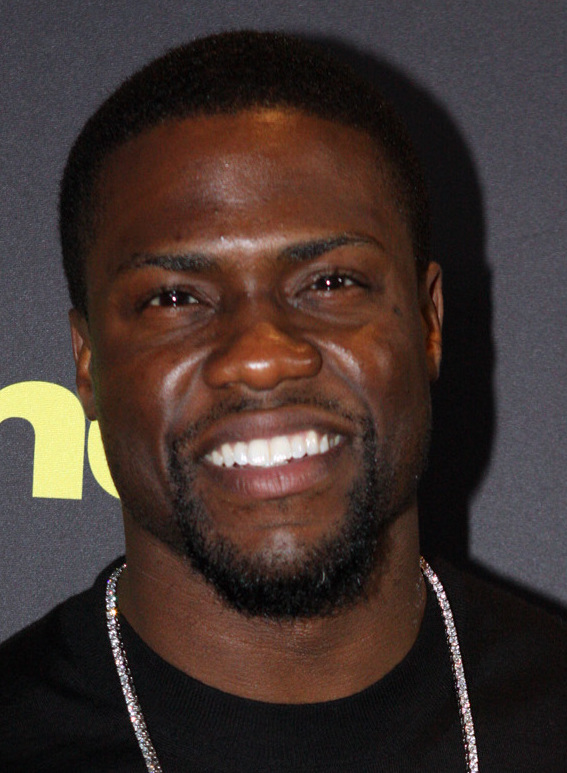
    Kevin_Hart_2014_(cropped)_(cropped).jpg
    Comedian Kevin Hart. Photo courtesy of Wikimedia Commons.

    Last week, it was announced that Kevin Hart would host the Academy Awards in February. But then some Tweets were unearthed that used the word “gay” in a negative light. The Tweets were several years old, but as a result of the backlash, Hart withdrew from hosting the awards show two days later.

    I notice several theological themes in our current social discourse.

    Law 

    With modern political correctness, there are a dizzying amount of rules. And there is no consideration given to historical context or accepted norms. The rules are treated as universally binding. In June, an award named after famed writer Laura Ingalls Wilder was changed due to the fact that Wilder used terms for Native Americans that were common in her time and vernacular.

    The modern PC movement reminds me of the Pharisees in the gospels. The Old Testament had laws, but then the Pharisees added laws on top of laws. So many rules and laws that it became impossible to follow. It was crushing. Jesus railed against the pharisees for placing crippling burdens upon people. Constantly changing language. (more…)

  • Roseanne, the NFL and hypocrisy

    Roseanne_Logo.svg

    Roseanne Barr made an offensive comment about former Obama Administration official Valerie Jarrett. Shortly after, ABC announced they have cancelled the show Roseanne.

    That the show was canceled is not shocking. People don’t like offensive and racially charged comments (nor should we).

    It’s interesting reading Tweets and comments about the cancellation. Many draw a parallel between Barr’s comments and how some will defend her and say the show shouldn’t be canceled. But some of those same people are fine with the NFL banning players kneeling during the National Anthem. This is pointed to as being hypocritical.

    The irony is that the hypocrisy can run on both sides. To think that the players should be able to kneel without consequences yet to think Roseanne should be cancelled is also somewhat hypocritical.

    Because in both instances, it shows us that we cannot always say or do whatever we want without that having ramifications on our professional lives.

    As a society, there are things we don’t like. We don’t like racist comments. We don’t generally like unpatriotic behaviors. People can say whatever they want. People can take whatever political stance they want to make. But that doesn’t mean that there aren’t ever consequences.

    Neither ABC nor the NFL owes it to Roseanne Barr or the players to promote ideals that go against what they stand for.

    Some will disagree with that. “It’s not the same. Players are making a reasonable protest and Roseanne make a comment that can’t be defended.” While we should all be able to agree that what Roseanne said was wrong, millions of people find kneeling during the national anthem just as offensive (if not more offensive) than one woman’s comment.

    Roseanne already had a target on her for various other political comments and comments seen as being racially insensitive. It was wrong to make the comment that she made about Jarrett. It’s not shocking that ABC cancelled the show.

    But it is an unfortunate situation. It’s unfortunate that in a politically charged country where division is high, we had a throwback sitcom that people of various views enjoyed from a time when there were not such heightened political sensitivities. The new Roseanne had the goal of a show where a family who was divided politically and who was navigating the 21st century could still come together in love. That’s a message that we don’t often hear in the media. Because of an unnecessary comment, it’s a voice that will now go silent.

    And the political divide widens.

    But I want to take our attention back to the double standards we so often have. If we are ok with either Roseanne being cancelled or with NFL players being forbidden from kneeling, than we must also accept the other can happen too. Because both are examples that freedom of speech is not freedom from consequences of that speech.

    We must all remember the power of our words and actions. The Apostle James said: “The tongue is a small member, yet it boasts of great things. How great a forest is set ablaze by such a small fire!” (James 3:5). We’re blessed to live in a nation with the First Amendment. It’s a wonderful thing. But let us not assume that words are free of consequences, or that they don’t matter greatly. 

    Josh Benner is the associate pastor at Cornerstone Evangelical Free Church in Fergus Falls, Minnesota and has a Master of Divinity from Trinity Evangelical Divinity School. He enjoys writing about faith and culture. He lives with his wife Kari in Minnesota.

  • The destructive force of our words

    wood-cube-abc-cube-letters-48898.jpeg

    Originally published as “Only you can prevent forest fires: the destructive force of our words.” Originally published, February 20, 2017

    I was in Florida several years ago and Florida was having wildfires. Some areas were evacuating. If a person smoked a cigarette, they were told that they couldn’t throw it on the ground or it would start a fire.

    Something so small, such a small amount of smoke, could start a huge fire.

    With our words, the tongue, a relatively small part of the body, can be hugely destructive if a person isn’t careful.

    James uses fires as an illustration for the destruction that our words can cause. “How great a forest is set ablaze by such a small fire!” (James 3:5).  (more…)

  • Only you can prevent forest fires: the destructive force of our words 


    I was in Florida several years ago and Florida was having wildfires. Some areas were evacuating. If a person smoked a cigarette, they were told that they couldn’t throw it on the ground or it would start a fire. 

    Something so small, such a small amount of smoke, could start a huge fire. 

    With our words, the tongue, a relatively small part of the body, can be hugely destructive if a person isn’t careful. 

    James uses fires as an illustration for the destruction that our words can cause. “How great a forest is set ablaze by such a small fire!” (James 3:5).  (more…)