Josh Benner

Author: the Josh Benner Blog

  • Robert Kennedy’s speech the night of Martin Luther King’s assassination

    On this night, 50 years ago, Dr. Martin Luther King, Jr. was assassinated in Memphis, Tennessee.

    That evening, while campaigning for president, Robert F. Kennedy was scheduled to give a speech in Indianapolis. He was warned by law enforcement to cancel the event due to fear of riots.

    Kennedy wrote a few notes down. When he got up to speak, he informed the crowd of what happened. You can hear the shock in the crowd when he informed them of King’s death.

    It’s an amazingly eloquent and optimistic speech. Kennedy shows tremendous leadership as he offers words of comfort.

    Tragically, 63 days later, Robert F. Kennedy would meet the same fate by an assassin’s bullet.

    What we need in the United States is not division; what we need in the United States is not hatred; what we need in the United States is not violence and lawlessness, but is love and wisdom, and compassion toward one another, feeling of justice toward those who still suffer within our country, whether they be white or whether they be black.

    We can do well in this country. We will have difficult times. We’ve had difficult times in the past. And we will-we will have difficult times in the future. It is not the end of violence; it is not the end of lawlessness; and it’s not the end of disorder.

    -Robert F. Kennedy

    Josh Benner is the associate pastor at Cornerstone Evangelical Free Church in Fergus Falls, Minnesota and has a Master of Divinity from Trinity Evangelical Divinity School. He enjoys writing about faith and culture. He lives with his wife Kari in Minnesota.
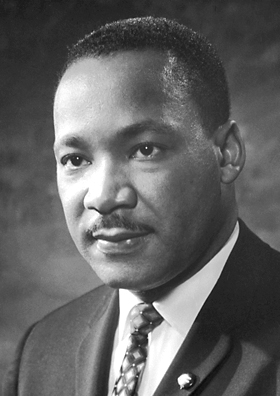


  • MLK’s dream still alive 50 years after his death

    Martin_Luther_King,_Jr..jpg

    Martin Luther King was assassinated 50 years ago today outside his hotel room in Memphis, Tennessee.
    In our age with all of the politics and spin, and counterspin, I find it sad to admit that I feel like I don’t really know anything about this man.
    Obviously I know he was the most prolific leader during the Civil Rights Movement. That he gave one of the greatest speeches in American history (his “I have a dream” speech is right up there with the Gettysburg Address).
    I know that he was murdered. I know that he’s one of the most significant men of the 20th century.
    I think that part of why I feel like I don’t really know much about the man, is that I think we see the good things he stood for, and we like to see those things in ourselves and what we believe. It’s for that reason, I believe, that people from both of our major political parties find things that Dr. King said and reason that he would have been on their side, had he lived.
    The dream still lives 
    Martin Luther King clearly articulated the America that he envisioned.

    It is a dream deeply rooted in the American dream.

    I have a dream that one day this nation will rise up and live out the true meaning of its creed: “We hold these truths to be self-evident: that all men are created equal.”

    I have a dream that one day on the red hills of Georgia the sons of former slaves and the sons of former slave owners will be able to sit down together at the table of brotherhood.

    I have a dream that one day even the state of Mississippi, a state sweltering with the heat of injustice, sweltering with the heat of oppression, will be transformed into an oasis of freedom and justice.

    I have a dream that my four little children will one day live in a nation where they will not be judged by the color of their skin but by the content of their character.

    I have a dream today.

    I have a dream that one day, down in Alabama, with its vicious racists, with its governor having his lips dripping with the words of interposition and nullification; one day right there in Alabama, little black boys and black girls will be able to join hands with little white boys and white girls as sisters and brothers.

    I have a dream today.

    -“I have a dream” speech

    There are many different opinions today of if that dream has been realized.
    We are a nation that is deeply divided.
    Has his dream been realized?
    If you believe that it has, when was it?
    I think we can look back 50 years, 60, 70, 100 yeas ago and see times where that dream most certainly was not a reality for every American.
    Today, we still live in the fallout of the sins of past generations. And as a result, there are generations of minorities who were intentionally enslaved, and then intentionally marginalized and discimriated against. But the subsequent generations have also been born into disadvantaged situations. And it becomes a vicious cycle. If someone is born into poverty, they will also have a lower quality of education, live in areas with higher crime rates, and be more likely to have run ins with the law.
    I believe in the American dream. I believe people can overcome if they work hard and use their talents and abilities to achieve their goals. But I also believe that if someone starts out from a lower position, it’s harder to overcome the obstacles. It’s not impossible, it’s just more of a challenge.

    I’m certainly not the authority on society’s ills. But I don’t think we can kick back, look at Dr. King’s dream and say it has been fully realized. Because there is still work to do. I wasn’t alive 50 years ago. I think it’s fair to say that much progress has been made.

    But just because things aren’t as bad as they used to be doesn’t mean they’re as good as they need to be.

    It’s easier to not do something than to do it. It’s easier to not care than to be challenged. I know I personally have much to learn.

    It’s easy to act like there aren’t still racial issues. But if we deny that there are, when so many in the black community feel that there are, aren’t we essentially confirming that there are in fact issues?

    Racism and prejudice are ugly ideas. I think it can be tempting to want to deny them, or explain them away. I think this is a mistake. The first step is admitting our society still has a problem.

    If two people are married, and one says, “We need to talk, we’ve had some issues, and I’ve been really hurt by some of these things.” And the other person says, “No we don’t, we’re fine,” which of the two do you think is more in touch with reality?

    Every African American I know thinks there are still racial problems in our society. Again, it can be tempting to want to downplay that. But I can’t be condescending to an entire race of people and think they’ve just all got it wrong. I haven’t walked in their shoes and lived their experiences.

    I try to listen, but I can do it better. I try to pray for people and for our nation, but I need to do it more often. I try to know people who are different than me (not just along racial lines).

    The Bible is clear about the sinfulness of our world. And one of the biggest ways how humanity sins is in finding ways to oppress those who are different.

    What are you doing to help make the dream a reality?

    Josh Benner is the associate pastor at Cornerstone Evangelical Free Church in Fergus Falls, Minnesota and has a Master of Divinity from Trinity Evangelical Divinity School. He enjoys writing about faith and culture. He lives with his wife Kari in Minnesota.

  • You can’t love God if you don’t love people

    W.H. Margetson

    Originally published December 13, 2016

    James says If you really fulfill the royal law according to the Scripture, “you shall love your neighbor as yourself,” you are doing well” (James 2:8).  points

    Royal Law is an interesting phrase. That’s the only time it’s used in the entire Bible. James follows up mentioning this royal law by saying “you shall love your neighbor as yourself” which seems to be what he’s referring to as the Royal Law.  (more…)

  • Couldn’t God just forgive us? Why was the cross necessary?

    photo-1414018895695-96fe3f0d0765.jpeg

    A person might look at the crucifixion, look at what the Lord did on the cross, and wonder “Why was that the only way? Why was that necessary? Couldn’t God simply forgive us?”
    No.
    This is an idea I’ve heard from Tim Keller before, and it’s an important idea on having a theology of forgiveness.
    In any meaningful way a person has ever wronged you and you’ve forgiven them, when you forgive, you then bear a burden. You bear a burden for the way they originally sinned against you, and whatever you lost in the process: opportunity, time, happiness, money. Whatever it was. You were wronged and lost something. And when you forgive, you bear a cost a second time because you are relinquishing an opportunity to get even, to inflict vengeance upon them.
    And the worse the wrong is, the harder it is to forgive. The more costly the forgiveness, because it’s a greater debt that you’re forgiving. Not to say that people shouldn’t have consequences when they’ve committed crimes or acted violently. But even in those situations, we are called to be forgiving.
    But forgiveness is not as simple as just ignoring a wrong done.
    If someone destroys something you own, you can make them pay for it. That’s often what happens. Or perhaps you and the person can both pay for part of what was destroyed. Or you can personally pay for it. You can bear that cost yourself.
    My point is that in either event, someone has to pay. Forgiveness is not a write-off that where the wrong disappears and is forgotten about. Someone has to pay the price for what was broken.
    So with our sin against God, how does God approach forgiveness? All of the wrongs and injustices in the world. All of the wrongs and sins in our own lives, in our hearts, our actions.
    We could have never paid that price. We could never have done enough to earn our forgiveness. There was no hope.
    But on the cross, we see that Jesus himself bore the cost for us.
    That was the cost of forgiveness. The horrible death he died, the injustice that he faced. All of that shows us the cost of our sin.
    At the cross, we see the love of God.
    God shows his love for us in that while we were still sinners, Christ died for us. Since, therefore, we have now been justified by his blood, much more shall we be saved by him from the wrath of God. For if while we were enemies we were reconciled to God by the death of his Son, much more, now that we are reconciled, shall we be saved by his life.
    -Romans 5:8-10
    Because Jesus bore infinite wrath for sin. There is infinite grace when we turn to him. There is no sin he is unable to forgive. It’s not that he died and can forgive every sin, but he can’t forgive that one, or this one, or what you did, or what you’re struggling with.
    Infinite wrath because of our sin. But infinite mercy on the cross because of his grace.
    If you’re not a Christian, you need to know that Jesus paid for sins on the cross. Jesus showed that he is the way to God. Jesus died so that we could have a relationships with him. He promises eternal life for everyone who comes to him.
    All you have to do is believe in that. The Bible says that faith is credited to you as righteousness.
    “Everyone who calls on the name of the Lord will be saved.” (Romans 10:13)
    The Bible teaches that “there is salvation in no one else, for there is no other name under heaven given among men by which we must be saved.” (Acts 4:12).
    And the proof of that is on the cross. Many other places where people look for salvation, where people look for life.  None of those things will give you life. On the cross, Jesus died so that you could have life.
    You can’t earn God. The cross shows us that. If we could earn it, we wouldn’t have needed Jesus to die.
    2 Timothy 2:5-6 says:
    There is one God, and there is one mediator between God and men, the man Christ Jesus,6 who gave himself as a ransom for all, which is the testimony given at the proper time
    Jesus said “I am the way and the truth, and the life, no one comes to the father except through me (John 14:6).
    The validation for these things, what testifies to the salvation and ope that is found in Jesus…is the cross.
    Because he died on the first Good Friday. But he rose on Sunday. God has authority over life and death. God has authority over how to be made right with him.
    And while we didn’t deserve it, the good news of the gospel is that he made a way.
    Josh Benner is the associate pastor at Cornerstone Evangelical Free Church in Fergus Falls, Minnesota and has a Master of Divinity from Trinity Evangelical Divinity School. He enjoys writing about faith and culture. He lives with his wife Kari in Minnesota.
  • The American Gospel and the meaning of Easter

    Photo Courtesy of Flickr Creative Commons

    Originally posted April 6, 2012

    Statistically, we know that the vast majority of Americans believe in some form of a higher power. There are relatively few who are atheists. Since people do believe that there is something, and since it’s so easy to think of the majority of Americans as Christians, many simply attach themselves to Christianity.

    But what does it mean? Christianity?

    For so many, we call ourselves Christians but then never pray, or read the Bible, or go to church, or experience fellowship with other believers, or show any actual desire to have a relationship with Jesus. Without these, how can a person be Christian?

    (more…)