Josh Benner

Author: the Josh Benner Blog

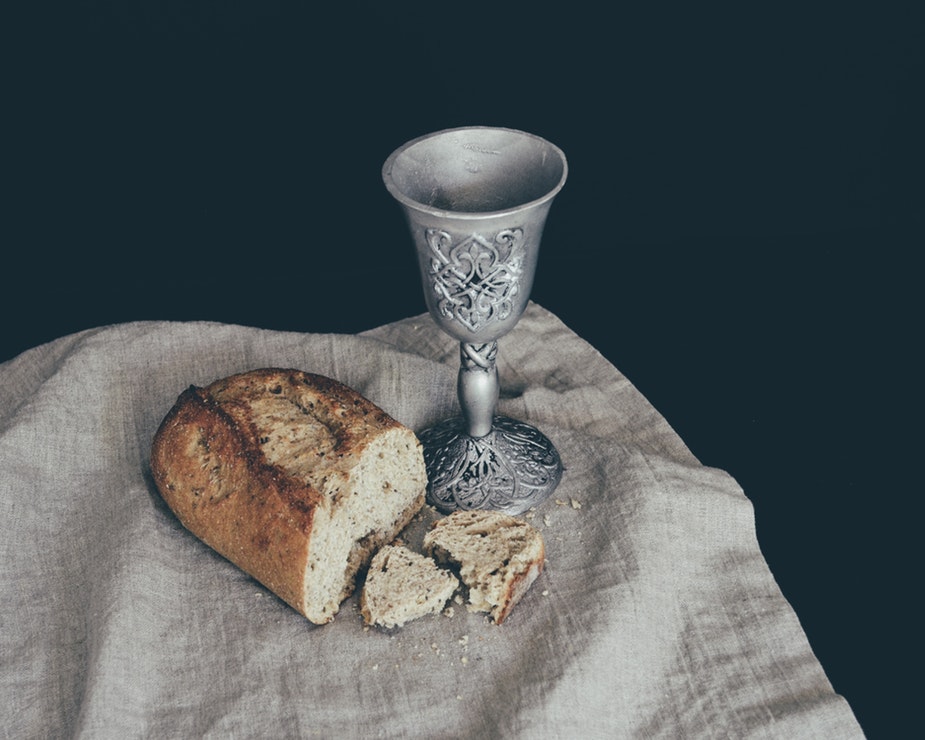
  • Jesus and the Last Supper – more than just a meal

    photo-1520629716099-d147346eb224.jpeg

    Originally published April 13, 2017

    As part of Holy Week, Maundy Thursday is recognized this evening. It was the night in which Jesus ate the Last Supper with his disciples. The time in which Jesus died corresponded with the Jewish holiday of Passover. And the Last Supper was the first night of Passover. An annual dinner for Passover is held, called a Seder, which is the Hebrew word for “order.” In 3,500 years, rabbinical tradition and teaching helped to form the ceremony of the Seder.

    Some of these pieces were traced back to the original Passover. Others came in Jewish history from rabbinical traditions.

    Also, once the Israelites were in the land, and after the temple was built, this impacted Passover traditions. When you had the temple, the lambs were sacrificed at the temple. But what didn’t change was that people could only sacrifice lambs that were perfect.

    I think it’s worth spending so much time in talking about Passover because I think it can help give us a greater context and understanding for the events surrounding the death of Jesus.

    In the gospels, the time of the death of Christ revolves around the Passover. That’s not a coincidence! Jesus would be sacrificed at the time that was associated with sacrifice. Jesus had gone to Jerusalem for Passover. In Jerusalem, the city within the Roman Empire that was the epicenter of Jewish culture, thousands of lambs would have been slaughtered annually. Jewish people would have been coming in from all over the empire.

    We see many traditions of the Seder at the last Supper.

    Some of them are small things. In the gospel accounts, it talks about Jesus reclining at the table (Luke 22:14).

    Jesus wasn’t sitting in a la-z-boy. He was on a couch that he was lying on, that was a Seder tradition. They had been enslaved in Egypt but being able to lie down showed the freedom and security.

    Or when Jesus is alluding to his betrayer, he says in John 13:26, “It is he to whom I will give this morsel of bread when I have dipped it.” So when he had dipped the morsel, he gave it to Judas, the son of Simon Iscariot.

    Again, I know the mental image that most of you probably have when you read this. It’s hard to know precisely where in the Seder this is, but it seems that it’s probably referring to when you take Haroset which is made from apple, nuts, cinnamon. They weren’t eating the Last Supper at an Italian restaurant. They didn’t have a bowl of olive oil in the middle of the table. But all of the elements we see at the Last Supper are part of what you’d see in a traditional Seder.

    As part of the Seder, you’d take the unleavened bread…looks like a cracker. And you’d break the bread.

    Luke 22:19, “And he took bread, and when he had given thanks, he broke it and gave it to them, saying, “This is my body, which is given for you. Do this in remembrance of me.”

    For over a thousand years of Seder dinners, bread had been broken. Unleavened bread, just like the Israelite forefathers had eaten before fleeing from Egypt.

    The body of Jesus, given for you, given for your sins. Given for your forgiveness. And he says “do this in remembrance of me.”

    What more fitting words could you say at a Seder? A meal revolving around remembrance, about retelling the story of God saving his people by the blood of the lamb.

    Remembering what God has done. Remembering what Jesus has done. Remembering the sins that he’s redeemed you from. Remembering his body that he gave for you. Remembering his death that he died for you. Remembering the grace that he offers to you. Remembering his gospel.

    Luke 22:20 says, “And likewise the cup after they had eaten, saying, “This cup that is poured out for you is the new covenant in my blood.”

    The Seder dinner involves four glasses of wine. This seems to have been the second or third glass of wine in the meal, although there’s scholarly debate.

    But how profound it is. Wine drank in remembrance of the Passover. Jesus takes the wine, he blesses it, he says it is the new covenant in his blood, at the Seder dinner.

    It clearly points backwards to the blood of the Passover lamb, the blood that was put on the door posts. And it also points forward to the blood of Christ, shed for the forgiveness of sins. The blood of the true lamb.

    At the beginning of the gospel of John, when John the Baptist sees Jesus he says “Behold, the lamb of God who takes away the sin of the world.” Jesus is the true lamb of God. The lamb who took the penalty for sins. The one who was scarified for the salvation of God’s people.

    And by trusting in him and having faith in him, that puts the blood on the doorpost of your heart. On the first Passover, there would not have been a pardon for a person who didn’t put blood on the doorpost. It wasn’t that the blood saved them, God saved them. But to not put the blood on the door was to show that a person didn’t have faith in the Lord, didn’t trust in the Lord.

    When we take the Lord’s Supper, it’s not arbitrary. It’s not just using the random items that were around. It’s all symbolic. It takes symbols important to the first Passover, the first time God had delivered Israel, and it reminds of the new Passover, from the perfect sacrifice for sins.

    The Passover passage in Exodus 12:5 says that the lamb that was used had to be without blemish. Jesus is the ultimate lamb without blemish, a life lived in perfection.

    1 Corinthians 5:7 says “Cleanse out the old leaven that you may be a new lump, as you really are unleavened. For Christ, our Passover Lamb.”

    Josh Benner is the associate pastor at Cornerstone Evangelical Free Church in Fergus Falls, Minnesota and has a Master of Divinity from Trinity Evangelical Divinity School. He enjoys writing about faith and culture. He lives with his wife Kari in Minnesota.


  • Life lessons from baseball


    pexels-photo-773063

    Tomorrow is opening day of the 2018 Major League Baseball season. Between opening day and the end of the season in early November, more than 2,430 games will be played.

    Baseball’s regular season is the longest in American professional sports, nearly doubling the 82 games NBA and NHL seasons.

    I think about the baseball games that are blowouts. The 10, 12, 14 run wins. When a team gets behind by a huge margin in baseball, it’s very rare for them to comeback and win. And the later in the game a team is down by a big run-differential, the less likely they are to comeback. If you get to the bottom of the 9th down by double-digit runs, the incidence of a comeback is virtually unheard of.

    In a baseball game, you can go out on Thursday, and your team can get crushed. Starting pitcher might not have good stuff bats aren’t connecting, errors. It can be a horrible day, a 12 run loss.

    But the beauty of baseball is that, no matter what happened on Thursday, Friday is a new opportunity to go out and to succeed. No matter how badly you lost yesterday, it doesn’t matter with how you can do today.

    Life is the same way. We can have a really bad day. We can feel totally defeated. But tomorrow is always a new day.

    That metaphor works both ways. If you were the team who dominated on Thursday, you still have to go out and play well on Friday.

    Josh Benner is the associate pastor at Cornerstone Evangelical Free Church in Fergus Falls, Minnesota and has a Master of Divinity from Trinity Evangelical Divinity School. He enjoys writing about faith and culture. He lives with his wife Kari in Minnesota.
  • Roseanne reboot tackles America’s political divide with hilarity

    Roseanne_Logo.svg

    As a kid, when I found out that I was going to have a baby sister, I wanted my parents to name her “Roseanne.” The new Roseanne reboot premiered on ABC this evening.
    I really enjoyed it. Very clever writing, laugh out loud funny.  A throwback and a nostalgic comedy brought into the modern times.
    Even thought I watched the original run of the series, I was too young to appreciate the aspects of Roseanne that were pushing cultural boundaries.
    One of the things that the new series is emphasizing is the political divide in America, often within families. Roseanne and Dan are republican, Trump supporters. Roseanne’s sister Jackie is a democrat. I thought the writing was fair to both sides.
    Roseanne Barr said in an interview with the New York Times:
    “I just wanted to have that dialogue about families torn apart by the election and their political differences of opinion and how we handle it. I thought that this was an important thing to say at this time.”
    As politics are divisive within society, they can also be very destructive within families.
    Reading comments from people on Facebook, it’s interesting how some won’t even watch the show because of political disagreement with Roseanne. It’s a sad irony that proves the point. Some can’t bear to watch a show unless it is total agreement with their views.
    I don’t think the point is that people should agree with everything on the show. You’re not going to agree with every character’s views or values. But it’s trying to depict a family that, as dysfunctional as they are, does love each other and who’s trying to navigate through life in these trying times. And so the show isn’t afraid to tackle the major issues.
    Disagreement with family and friends can be gritty and frustrating. Some choose to be divisive in the face of disagreement. As a society, we cannot allow ourselves to continually be divided and torn apart.
    The show is a mirror. It’s a reflection of how life in America is, for better or for worse.
    Josh Benner is the associate pastor at Cornerstone Evangelical Free Church in Fergus Falls, Minnesota and has a Master of Divinity from Trinity Evangelical Divinity School. He enjoys writing about faith and culture. He lives with his wife Kari in Minnesota.
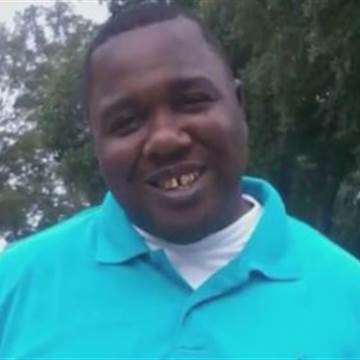
  • No charges filed in Alton Sterling death

    alton-sterling_53a480b9c5015962d541aa27796f0494.nbcnews-fp-360-360

    Of the many deaths we have footage of where police have used deadly force, there’s few that appear as egregious as the 2016 killing of Alton Sterling in Baton Rouge, Louisiana.

    In the video, the officers have him held down. They’re on top of him. Sterling allegedly reached for his pocked (he was armed at the time). From the video, it’s hard to see if he was reaching for a weapon. He appears to be immobilized. But what’s not hard to see is an officer on top of him, with Sterling pinned to the ground repeatedly shooting him

    The State of Louisiana announced today that they are not going to charge the officers who were involved in Sterling’s death.

    As with so many of these other cases, no one is going to be held accountable.

    I think it’s important to acknowledge that this event was a tragedy. That the officers were trigger happy. That this death was unnecessary and senseless.

    I think it is important to look at cases like this and other incidents where African American men were killed by police officers and where no one was ever held to account, where no one was ever sent to prison, and to stop trying to save face or find justifications, or attack the character of the victim but to look at these situations and to have empathy for the anger and frustration that African Americans have over these events. It should be an anger and frustration which everyone has.

    For many in this country, it’s not even a surprise that this is the outcome. And when groups of people can count on justice not being served, it’s a sad day for America.

    When these shootings happen, and there’s an outcry, there’s so often this call to “get the facts, let’s get it sorted out.” But after that happens, it is so common for nothing to materialize legally.

    Police have an extremely difficult job. No one would argue that. And the vast majority are wonderful public servants. But there are times when people go too far and when they do not act appropriately. A system cannot be just if those who enforce justice can act unjustly.

    Josh Benner is the associate pastor at Cornerstone Evangelical Free Church in Fergus Falls, Minnesota and has a Master of Divinity from Trinity Evangelical Divinity School. He enjoys writing about faith and culture. He lives with his wife Kari in Minnesota.

  • The easiest part of the gospel we forget

    photo-1508528075895-be7a6cabd37a.jpeg

    Love.

    In Evangelical circles, we, righty, have a high view of scripture and studying God’s word. That’s important.

    But I sometimes feel like it can be so easy to get caught up in having proper theology we forget the most practical application OF the theology. Love for God and love for people.

    If I have prophetic powers, and understand all mysteries and all knowledge, and if I have all faith, so as to remove mountains, but have not love, I am nothing.

    -1 Corinthians 13:2

    I think for Christians, some excel at theology and the intellectual pursuits. Others re more focused on showing grace, compassion, and love to people but perhaps don’t care as much about theology.

    Both are valuable.

    It’s a message I have to remind myself. It’s easy for me to study these things. And certainly in studying these things, we are exposing ourselves to Godly wisdom.

    But it can also be easy to get bogged down in the theology to the point of losing sight of simply living lives of love.

    What’s your strength in those areas? May you work on cultivating your weaknesses in these areas.

    Josh Benner is the associate pastor at Cornerstone Evangelical Free Church in Fergus Falls, Minnesota and has a Master of Divinity from Trinity Evangelical Divinity School. He enjoys writing about faith and culture. He lives with his wife Kari in Minnesota.