Author: the Josh Benner Blog
-
Feels like it was yesterday: 9/11 through the years
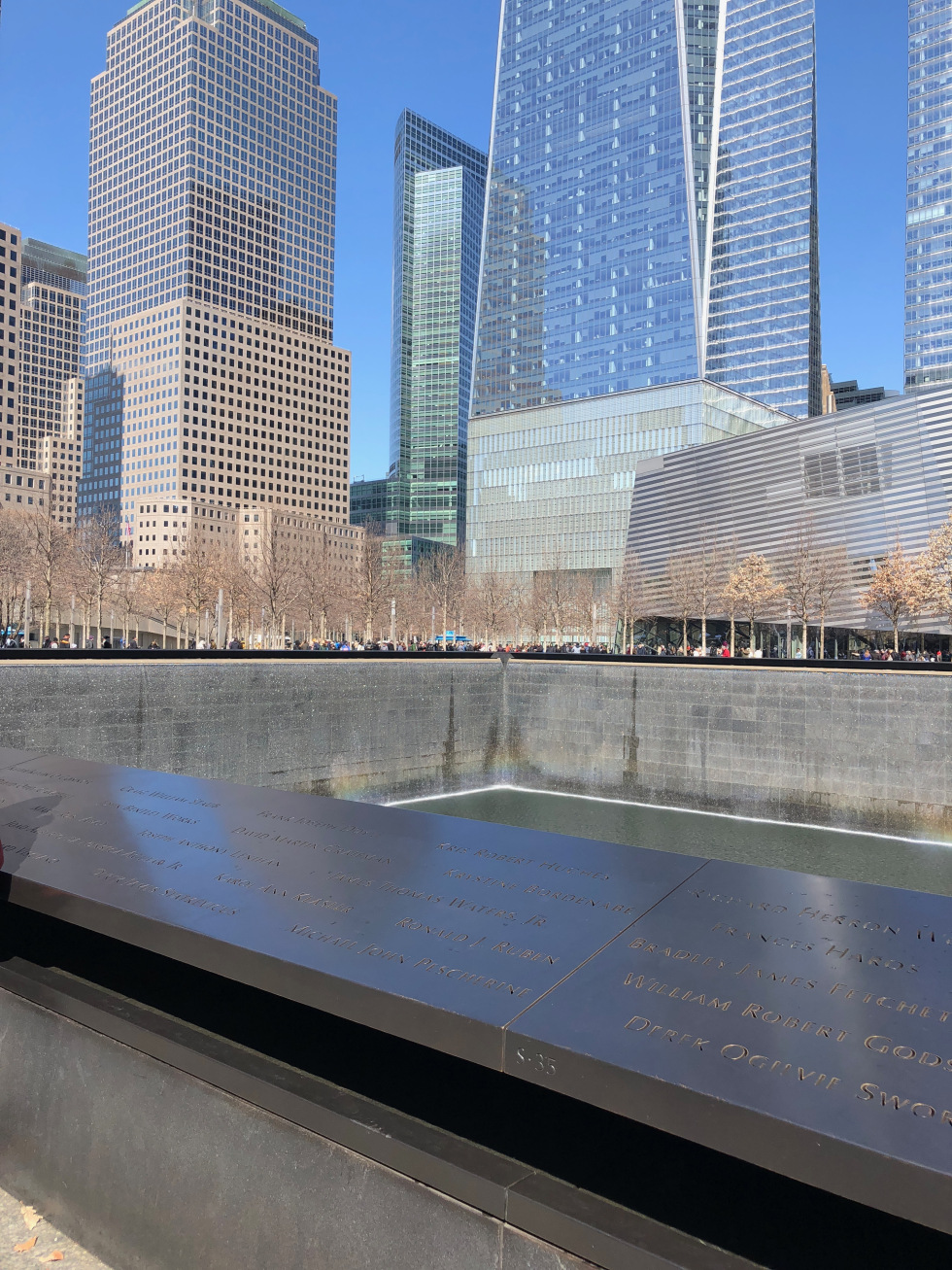
There aren’t very many days in your life where you know at the time that life is never going to be the same. Everyone knew that on 9/11.
I’ve thought a lot lately about this day and what the younger generation will understand about 9/11. I remember it like it was yesterday, and so it’s crazy for me to consider that kids in school weren’t even born when this event happened. This monumental day that was a paradigm shift in American history is just that to kids, history. They learn about that day from what people tell them and from the same documentaries I watch.
If you weren’t alive that day, and watch documentaries about 9/11, I think it’s hard to appreciate the chaos of September 11th. There’s a sense of fatalism in the documentaries. They almost always begin by contrasting the beauty of that morning against the pandemonium that was soon to burst forth.In the weeks and months after the attacks, it impacted every aspect of our society: sports were a rallying ground for patriotism. Many popular songs were written about that day and playing on the radio. New laws were enacted. Entirely new federal agencies were created. There was an ever present thought of if and when another attack would happen. The whole country was on high alert, arguably for the next 2-3 years.
As I watch documenaries, the quality of the videos seems a little more dated, the outfits people are wearing seem a little more 90s.When the North Tower was struck, no Americans knew that the South Tower was going to be hit 17 minutes later. No one had any idea that other planes were in the process of being highjacked and that other sites were also being targeted.
As the towers had smoke pouring out, the average person had no idea that they were going to collapse. From the time the North Tower was struck, three other planes crashed and both towers fell in 102 minutes.
A couple years ago, I had the opportunity to visit the National September 11 Memorial and Museum. It’s a special place. One of the rooms (and one of the few parts of the museum where they ask people not to take photos) features photographs of all of the victims of the attacks. Just a huge room with thousands of photos of people. It’s crazy to think that each of those photos is a person who meant something to a lot of people. They were people’s spouses, people’s parents, siblings, children, grandchildren, best friends.
All of them taken away because of evil and hatred. For many of the victims, the memorial also serves as their final resting place. From the intense fire, and from the incredible weight of the towers collapsing, and given the high numbers of casualties, remains could be hard to positively identify in the aftermath. Roughly 40 percent of victims have never been identified. The museum has a morgue where the unidentified remains are housed.
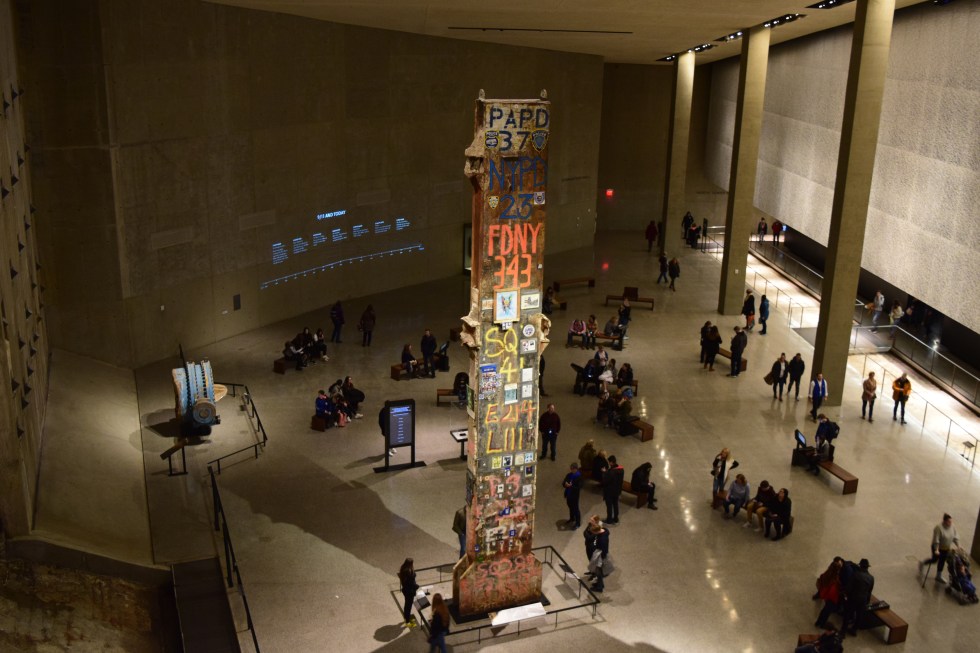
It’s still unfathomable to me. Thousands of people just living their lives, having no idea that they were about to become casualties on the front lines of a war in which they had no idea they were enlisted. The horror that people experienced above impact zones on the towers and on our airplanes. The first responders who risked their lives (and the many who gave their lives) on that day to help others.. For those people, I never forget.
It’s still unbelievable to me. There’s nothing else like it.
I think of the people in conference rooms and riding elevators who were dead without ever knowing there was even an attack. I think of the people who jumped from the towers. They were in such a horrible situation that jumping was the lesser of two evils. That still shocks me.
Originallly published September 11, 2018
-
9/10: the eve of infamy

Photo courtesy of Flickr Creative Commons. As I write these words, the stresses of everyday life come to mind. I think of how busy I am between work and my other commitments. I’m so often short-sighted and allow myself to get frustrated. It’s getting late and I jot some thoughts down before going to sleep. On this night, my thoughts are on the past and with people I’ve never met. Twenty one years ago tonight, thousands of Americans went to bed, unaware that it was the eve of their last day on earth.
For me, that’s surreal. Monday was an ordinary start to the work week. In the evening, people played with their kids, and watched Monday Night Football, and kissed their spouses goodnight. They prepared to go on flights for work, or vacation, or just to make it home. They thought about what bill needed to be paid and the home repair which needed to be completed. They went to sleep like it was any other night and woke up to a beautiful Tuesday morning.
As people sat in their offices in the North Tower of the World Trade Center, perhaps some of them looked outward with puzzlement to the low flying aircraft as it flew closer. And closer. And in an instant, the passengers on the plane and the employees on several floors of the World Trade Center were incinerated at the front lines of a war in which they had never enlisted.
For me, and for where I am in my life, 21 years might as well be a thousand years ago. It seems like everything in my life is different today than it was on September 11, 2001. But the events of that day come back vividly and I remember as if it were yesterday.
I was a 15 year old high school sophomore sitting in a third period geometry class, taking my first quiz of the school year when our principal announced that a plane had crashed into the World Trade Center. I assumed it was an accident but a guy in my class muttered “terrorism.” We continued taking our quizzes, and before the period had ended, the principal again took to the PA system to announce that a second plane had hit the other tower.
Throughout the rest of that morning, I remember the confusion. In fourth period, I had chemistry. The principal announced that one of the towers had collapsed. My teacher turned on the news.
Fifth period was my lunch. Other information had trickled in. Rumors and speculation ran strong. Sixth period was journalism. Along with several other classes, our teachers led us to the school library where we continued to watch the news coverage. By this point, both towers had collapsed and we saw the chaos in Manhattan as the debris cloud enveloped the Trade Center Plaza. If the world were ending, I assume it would look a bit like that scene from New York.
We still had football practice that afternoon. I remember seeing images on TV of radical Islamic groups cheering and celebrating the attack and how helpless I felt. It seemed like life would never be the same. In many ways, it has’t. I know I’m not alone. For so many of us, 9/11 made an indelible mark on our lives. We changed that day.
In my tenth grade geometry class, as the principal announced that the World Trade Center had been struck, a young man in my math class first heard of the attack at the same time as me. I would later find out that September 11 was a seminal event in his decision to join the army. Shortly before Christmas in 2006, that fine young man lost his life for the cause of defending America and freedom. It would be impossible for me to think back to 9/11 without thinking of him. As I think of him in my recollections, it is difficult for me not to be fatalistic.
For so many more Americans who have served, their stories are similar to his. I consider it to be part of the enduring American Spirit. With burning towers, Americans ran into them; in the aftermath of the attack, Americans volunteered to take up the cause and risk their own lives, and thousands still continue to take up that cause.
 A great people has been moved to defend a great nation. Terrorist
attacks can shake the foundations of our biggest buildings, but they
cannot touch the foundation of America. These acts shattered steel, but
they cannot dent the steel of American resolve. America was targeted for
attack because we're the brightest beacon for freedom and opportunity in
the world. And no one will keep that light from shining.
    Today our Nation saw evil, the very worst of human nature. And we
responded with the best of America, with the daring of our
rescueworkers, with the caring for strangers and neighbors who came to
give blood and help in any way they could.
-George W. Bush, September 11, 2001
May God continue to bless the Republic.
Originally published on September 10, 2012
Thanks for reading! I’d love to hear what you think, and don’t forget to subscribe!
-
Healing on the Sabbath. John 5:1-9
John 5 begins with a miraculous healing from Jesus.
Jesus travels to Jerusalem for one of the Jewish feasts. In other words, it’s one of the Jewish holy days. We don’t know exactly which one. John talks a lot about the feasts in this gospel. He mentions three Passovers, mentions the feast of booths, among others. The fact that he does not specify in this instance might be that the specific feast is not theologically significant to this event.
Verse 2 begins to tell us about a specific place to which he travels within Jerusalem.
Now there is in Jerusalem by the Sheep Gate a pool, in Aramaic called Bethesda, which has five roofed colonnades.
Verse 3 gives us the likely reason for why Jesus is there.
In these lay a multitude of invalids—blind, lame, and paralyzed.
So there are people who have various physical ailments and who regularly go to this pool.
From the context of the passage, it seems that they did this because they thought the pool itself was a place of physical healing.
The problem with this is that it is God alone who brings healing.
So that being said. I think it’s helpful to look at verse 3 and then continue it into verse 5.
3 In these lay a multitude of invalids—blind, lame, and paralyzed. 5 One man was there who had been an invalid for thirty-eight years.
So lots of people who suffered from various disabilities would go to this pool. In verse 5, we’re introduced to a man who has been an “invalid,” as the text says, for 38 years.
Think about that for just a moment.
38 years, in a time that was before modern medicine.
We don’t know all of the ailments he might have had, but among them, as we will learn in this passage, he was unable to walk. 38 years of suffering. The average life expectancy in this period was about 35.
Verse 6, he encounters Jesus.
6 When Jesus saw him lying there and knew that he had already been there a long time, he said to him, “Do you want to be healed?
Jesus sees the man lying by the pool. There are others there. He doesn’t seek Jesus out, but Jesus seeks this man out.
Why?
We’re never told. It’s the divine initiative. It’s providence.
The text says that Jesus knew he had been there a long time, which is reminding us of the supernatural knowledge Jesus has as God.
And then he asks the man “do you want to be healed?”
An interesting question
It’s interesting to consider the first two sign Jesus has performed. When he turns water into wine, his mother comes to him. In John 4, it was the Roman official who came to Jesus and asked him to heal his son. But in this event, the man does not come to Jesus.
It is Jesus who comes to him.
That’s one of several reasons why this event is significant in this gospel and it’s making a theological point.
God heals whom he will. And it is not always because of great faith that he heals a person. Everyday there are people who God heals, God blesses in a multitude of different ways where they didn’t ask for it, they aren’t looking to God. It’s simply because of God’s own goodness, grace, and providence.
Verse 7, the man responds:
7 The sick man answered him, “Sir, I have no one to put me into the pool when the water is stirred up, and while I am going another steps down before me.”
This guy thinks that being at this pool is his hope of healing.
He’s superstitious.
It’s not the pool that heals, it’s not being the first one in the pool that offers the promise of healing. It is ironic that he looks to the water as if it’s some mystical force of healing, when he’s in the presence of Jesus.
They’re in Jerusalem, the holy city. They’re near the temple, the sacred site which represented the presence of God on earth. And he’s focused on getting into a pool.
The point isn’t to fault this man for having the desire to be healed. Everyone who’s afflicted wants that.
But he’s looking to the wrong place.
Illustration – faith healing
It’s a point I made a few weeks ago, but our society and our world is drawn to people who claim to be faith healers and superstition.
In the early days of the Coronavirus epidemic, disgraced televangelist Jim Bakker was selling a silver substance which he claimed could cure a person of the virus. Peter Popoff who was another disgraced televangelist in the 80s continues to offer miracle spring water.
There are people who pray to statues or believe that praying in a specific place will carry unique favor with God.
Those are not Christian values.
Christianity is not a faith of superstition. It’s a faith that’s rooted in the almighty God of creation. God knows all. He is sovereign. Praying in special ways, or special places, or with special objects is not the basis by which God suddenly will hear us.
It’s idolatry.
But Jesus shows him grace anyway.
8 Jesus said to him, “Get up, take up your bed, and walk.” 9 And at once the man was healed, and he took up his bed and walked.
As we’ve seen other times in this gospel, John is very matter of fact in his reporting of Jesus’ miracle.
Jesus tells him to pick up his bed. I’m sure the term “bed” is pretty generous here. It’s not like he had a sleep number mattress out by the lake. It was likely a very thin and dingy mat that he was using.
So that’s our first scene. The miracle which Jesus has performed for this man.
It’s another display of the power that Jesus has as God on earth, but it’s also important to this gospel because of what happens in the aftermath of this miracle.
Thanks for reading! If you liked this post, please share and subscribe.
-

Evangelism as a way of life
Jesus calls all of his followers to make disciples, to follow the Great Commission, to share the good news of the gospel. To those with whom we share the gospel, there will be some who will want nothing to do with it but there will also be those who are drawn to the message.
We can’t assume that people know the gospel. And that’s always been true. There has always been the need for personal evangelism.
But our society used to have more of a church culture where it was easier to assume that a person was at least familiar with the gospel. That there was some common ground. That people were churched.
The struggle of evangelism
I think that’s at least part of the reason why personal evangelism has become such a struggle. Because for a long time, people didn’t think it was necessary. It’s not that churches would overtly say that evangelism was unnecessary.
But when one perceives the society as largely already being Christian, then the need for personal evangelism seems less pressing.
Sure, it might be needed in other countries where they don’t have the gospel. Missions were important. But did we truly look at our own household, our own workplace, our own community as our own mission field?
Undoubtedly, some did. I’m not saying no one shared the gospel. But what I’m saying is that America had become so saturated in Christendom that we lost a culture of evangelization. Perhaps we never had it.
Our society is becoming less religious. And Bible believing churches are now dealing with the fallout of a society where evangelism was not emphasized in the past and where evangelism skills were not taught.
Again, I’m speaking in broad generalities. It’s not like no one has practiced evangelism. And some churches did a better job than others with outreach. But overall, evangelistic efforts lagged.
The industry of evangelical Christianity
Over the last 30 years as we’ve seen declines in the church in America, we were also seeing a greater industry of Christianity.
Entire TV networks dedicated to televangelists, an explosion in book publishing, popular Christian music, Christian movies, Christian conference, Chrisitan celebrities. There was a rising megachurch movement.
The emphasis with these things was often in being “practical.” Tips on raising good kids, tips on dating and finding a good spouse, tips on marriage and having a good marriage, tips on finances.
Many churches became a place to hear a self-help message rather than the message of Jesus who calls his followers to die to self.
Again, it’s not that all churches became this way but those churches became the popular churches and it influenced other churches.
Sermons that lost their theological weight. Music that was emotive, self-centered and shallow. Youth groups that were more concerned with entertaining kids than teaching them about Jesus.
In the Bible, Jesus calls us to count the cost before following him. Jesus also tells us to take up our cross and follow him, but this was replaced by a prosperity Jesus who asked little of us.
It took more of an inward focus rather than living in the world as a disciple and a herald of the gospel message.
The practical Christianity industry did not necessarily focus on preaching the gospel, let alone sharing it with others.
And so we have a command of Jesus and many well-meaning Christians aren’t equipped and don’t know how to follow it.
Why do people share the gospel?
Motivations to evangelize
Two reasons comes to mind. And they’re not mutually exclusive. One is a sense of obligation. That’s a fine reason to share the gospel. It is, after all, a command of Christ.
But there’s a second reason that’s also important and that is because you have such a love for God and a knowledge of the grace of Christ and see such beauty in the gospel of his grace that you want to share that with others.
Obligation, you can force yourself to do. And that can work. I have no doubt many people have been led to Jesus by those who were faithful to share the message but who, in that moment, didn’t really want to. And we should praise the Lord for those who are faithful.
You can force yourself to do something from obligation.
You cannot force yourself to have a genuine love for the gospel and a passion for making Jesus known. That can only come as the result of a love for Jesus and a life that is centered around Jesus.
Walking with Jesus
Towards the end of the Book of Galatians, Paul will talk of walking in step with the Spirit so that we will not gratify the desires of the flesh (Galatians 5:16).
Paul talks about the fruit that the Holy Spirit produces. Love, joy, peace, patience, kindness, goodness, faithfulness, gentleness, self-control.
We don’t create that ourselves. It is a supernatural work of the Spirit.
In 2 Corinthians 3:18, Paul talks about the transformative effect of looking to God.
we all, with unveiled face, beholding the glory of the Lord, are being transformed into the same image from one degree of glory to another. For this comes from the Lord who is the Spirit.
Looking to God, knowing the truth of God, serving God, praying to God, having a constant God-centered mind is transformational.
In the Sermon on the Mount, Jesus talks of the person who is blessed by living as kingdom people in the world. I won’t read them all but among them, Jesus says;
6 “Blessed are those who hunger and thirst for righteousness, for they shall be satisfied.
7 “Blessed are the merciful, for they shall receive mercy.
8 “Blessed are the pure in heart, for they shall see God.
And on and on. The Psalmist says taste and see that the Lord is good (Psalm 34:8).
As Christians, we need to live a life where you can be the kind of people who love Jesus so much that you want to share him with others.
If you look at evangelism as merely an obligation, then maybe you’ll talk to people about Jesus sometimes. But to evangelize out of love must come from living for Jesus as a way of life.
Is your faith something that you just sort of attach onto your life and ultimately doing what you want to do? Or is it what drives you?
Thanks for reading! If you liked this post, please share and subscribe!

