
Josh Benner

Author: the Josh Benner Blog

  • Creation and uncreation – The flood and Genesis 7

    Creation and uncreation – The flood and Genesis 7

    Perhaps the best known story in the Bible of God’s judgment is the story of Noah’s Ark. 

    At the beginning of the story, Genesis talks of a world that has fallen further and further into sin and that the Lord saves one man (Noah) and his family from the destruction that was to come.

    Another significant theme in the story is that it is an undoing of creation. 

    Undoing creation

    In the Noah story, when the flood itself is brought forth by the Lord, Genesis 7:11-12 records: 

    11 In the six hundredth year of Noah’s life, in the second month, on the seventeenth day of the month, on that day all the fountains of the great deep burst forth, and the windows of the heavens were opened. 12 And rain fell upon the earth forty days and forty nights. 

    In Genesis 1, we see the second and third day of creation. 

    Day 2

    Genesis 1:6-8

    6 And God said, “Let there be an expanse in the midst of the waters, and let it separate the waters from the waters.” 7 And God made the expanse and separated the waters that were under the expanse from the waters that were above the expanse. And it was so. 8 And God called the expanse Heaven. And there was evening and there was morning, the second day. 

    Day 3

    Genesis 1:9-10: 

    9 And God said, “Let the waters under the heavens be gathered together into one place, and let the dry land appear.” And it was so. 10 God called the dry land Earth, and the waters that were gathered together he called Seas. And God saw that it was good. 

    In those days, we see God separate the waters and create the expanse between earth and sky. In the flood, the heavens are opened up and the rains come down and flood the earth. The Lord takes away the dry ground as he floods the earth. 

    The parallels don’t end there. 

    Noah and his family are saved along with sets of every animal. 

    Genesis 7:13-15: 

     13 On the very same day Noah and his sons, Shem and Ham and Japheth, and Noah’s wife and the three wives of his sons with them entered the ark, 14 they and every beast, according to its kind, and all the livestock according to their kinds, and every creeping thing that creeps on the earth, according to its kind, and every bird, according to its kind, every winged creature. 15 They went into the ark with Noah, two and two of all flesh in which there was the breath of life. 

    You have man and beast entering the ark. You also have married people going into the ark. It’s noteworthy that in ancient times when polgyammy was commonplace, that we see people in monogamous marriages entering the ark, especially when considering that marriage itself is part of God’s creation. 

    Amid the darkness and chaos of the flood, we do see a glimmer of hope as the Lord personally takes care of this family. Genesis 7:16 says: And those that entered, male and female of all flesh, went in as God had commanded him. And the Lord shut him in. 

    Noah is a symbol for Adam. He and his family and the animals are symbols of creation, preserved to be part of a new creation after the flood. 

    Genesis 7:17-19:

    17 The flood continued forty days on the earth. The waters increased and bore up the ark, and it rose high above the earth. 18 The waters prevailed and increased greatly on the earth, and the ark floated on the face of the waters. 19 And the waters prevailed so mightily on the earth that all the high mountains under the whole heaven were covered.

    Once again, tis is language which continues to point back to the first days of Genesis and God’s subduing of the waters. At the beginning of Genesis, The earth was without form and void, and darkness was over the face of the deep. And the Spirit of God was hovering over the face of the waters (Genesis 1:2),  but in the flood, the Lord allows the waters to come and overtake the whole earth. 

    Days 5 and 6

    In creation days 5 and 6, we see God bringing forth life. First animal life and then culminating in the creation of man. 

    Aside from those who are on the ark, they die in the flood. 

    Genesis 7:21-23:

     21 And all flesh died that moved on the earth, birds, livestock, beasts, all swarming creatures that swarm on the earth, and all mankind. 22 Everything on the dry land in whose nostrils was the breath of life died. 23 He blotted out every living thing that was on the face of the ground, man and animals and creeping things and birds of the heavens. They were blotted out from the earth. Only Noah was left, and those who were with him in the ark. 

    Thanks for reading! If you liked this post, please share and subscribe! 

  • Sermon: The Ten Commandments – Exodus 20:1-17

    Sermon: The Ten Commandments – Exodus 20:1-17

    It’s one of the best known passages of the entire Bible. The Ten Commandments. They form the basis for Judeo-Christian morality and God’s covenant with Moses. But we so often don’t do a good job of following these commands. That points us to our situation as sinful people but the good news of the gospel is that there is grace through Jesus Christ.

    Sermon manuscript

  • The Warren Harding error

    The Warren Harding error

    The Warren Harding Effect 

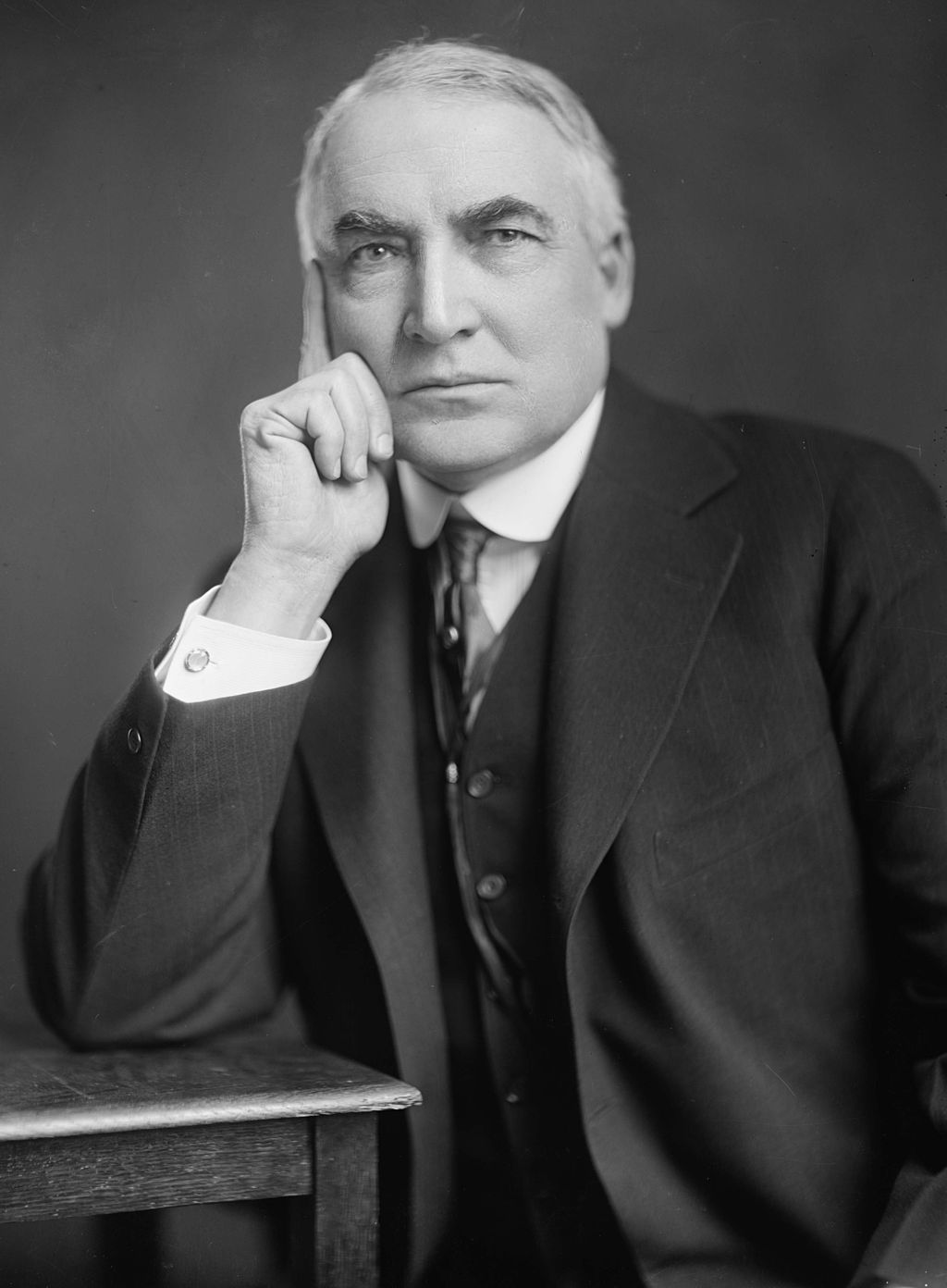
    In his book Blink, author Malcolm Gladwell tells this story of an influential political figure from Ohio meeting a young politician named Warren Harding and being so impressed by the look and temperament of the young Harding that he instantly thought that the state senator had potential to one day be president. 

    The year was 1899. 

    As Gladwell describes him, Harding was tall and handsome. He had broad shoulders and a naturally bronze complexion and as he aged, he became more distinguished looking. He had a rich and resonant speaking voice. 

    He looked presidential. 

    On March 4, 1921, that same man, Warren G. Harding would become America’s 29th president. 

    It did not go particularly well. 

    If you look up rankings of best and worst presidents in American history, Harding is almost always in the bottom handful. He wasn’t particularly intelligent. When he was a U.S. Senator, he was absent for debates on two of the most important political issues of his time: prohibition and women’s voting. 

    He had a scandal-ridden administration for the two years that he was president before dying of a stroke in 1923. 

    He had the look of a president. But he didn’t have the intelligence, moral conviction, or leadership skills to actually be a good president. 

    In 1 Samuel 10, Saul will become Israel’s first king. In chapter 9[], we were introduced to Saul. He was a man from relative obscurity, from the tribe of Benjamin who had gone in search of his father’s lost donkeys but through his search, he found the Prophet Samuel. 

    Now Samuel had a prophetic revelation the day before that he was going to meet and anoint the future king of Israel. 

    And then he meets Saul. The future king. Meanwhile Saul doesn’t even know who Samuel is when he meets him. 

    The king who hides

    Saul is chosen to be king. 1 Samuel 10:21: 

    But when they sought him, he could not be found.

    22 So they inquired again of the Lord, “Is there a man still to come?” and the Lord said, “Behold, he has hidden himself among the baggage.”

    It foreshadows things which were to come and the poor skills as a leader which Saul would display. Saul was fearful and tried to run from his calling. 

    Anointed, another heart, chosen, signs to confirm that he was chosen and prepared and yet he hides. 

    The Warren Harding Effect

    Verses 23-24:

    23 Then they ran and took him from there. And when he stood among the people, he was taller than any of the people from his shoulders upward. 24 And Samuel said to all the people, “Do you see him whom the Lord has chosen? There is none like him among all the people.” And all the people shouted, “Long live the king!” 

    So the people see this king who had just been hiding from them. The king that they wanted. And they see that Saul is taller than any of them. When we were first introduced to Saul in chapter 9,  the text mentions that Saul was very handsome. 

    This is how we meet Saul in the Bible. 

    1 Samuel 9:1-2:

    There was a man of Benjamin whose name was Kish, the son of Abiel, son of Zeror, son of Becorath, son of Aphiah, a Benjaminite, a man of wealth. 2 And he had a son whose name was Saul, a handsome young man. There was not a man among the people of Israel more handsome than he. From his shoulders upward he was taller than any of the people. 

    They don’t see a coward who had tried to hide but they see a tall handsome man and they respond by saying “long live the king.” 

    The first king of Israel was not a George Washington. The first king of Israel was a Warren G Harding. They had wanted a king so they could be like all the other nations, and they got a man who LOOKED like a king. 

    They got a man who was tall but he wasn’t a leader. They got a man who was handsome but he wasn’t holy. 

    He was the king the people wanted, but what the people wanted would prove to be unwise. 

  • Jesus and the heavenly harvest. The Church’s work. Studying John 4:35-42

    Jesus and the heavenly harvest. The Church’s work. Studying John 4:35-42

    A time to harvest 

    Once again, Jesus uses a metaphor to point to a spiritual reality. 

    Verse 35: 

    Do you not say, ‘There are yet four months, then comes the harvest’? 

    Obviously in farming, there’s a gap between sowing, when you plant seeds, and when you harvest the crops. You don’t plant seeds today with the expectation that you’ll be able to harvest them tomorrow. It takes time.

    But Jesus is telling his disciples that he has planted his truth with the Samaritan woman and that a harvest among the Samaritan people awaits. 

    That they are at the time of a harvest. A harvest of salvation as people come to Jesus. 

    Continuing in verse 35. Jesus says: 

    Look, I tell you, lift up your eyes, and see that the fields are white for harvest. 

    In John 4:30, when the Samaritan woman was telling her countrymen about Jesus and that verse said that the people went out of the town and were coming for him. 

    Here, Jesus tells his his disciples “lift up your eyes, and see that the fields are white for harvest.” 

    Some scholars believe that as Jesus is saying that, they’re literally seeing Samaritan people approaching to learn more about this Israelite teacher and who he is. We don’t know that for sure. But regardless, Jesus is making the point that they’re in the midst of a people where they are ready to reap a harvest. That the news about Jesus is going to bear a harvest among the people. 

    The harvest for today 

    There will be opportunities through all of the uncertainties and difficulties of this season to be light, to serve God by serving others, and to share the good news of the gospel. 

    Because in a time of uncertainty, people look for a foundation. In times of questions, people look for answers. In times of crisis, people look for hope. As Christians, what are we going to do with this time? 

    Look around. Look at our community. 

    Life up your eyes and see the fields are white for harvest. 

    It is a time of harvest. A time of revival. A time to reach people for Christ. 

    Verse 36:

    Already the one who reaps is receiving wages and gathering fruit for eternal life, so that sower and reaper may rejoice together

    The verse is a little ambiguous. Who’s the reaper and who’s the sower? 

    Who’s the one who planted here? Is it Jesus? Is it the prophets of the Old Testament? Is it John the Baptist? Is it the Samaritan woman? 

    It could be that it’s intentionally ambiguous. That the matter of significance is not who does what, but that a Messianic age of gospel harvest has been brought forth by Jesus. The Word of God has been planted and there will be others who reap the harvest of salvation. 

    All of it is for God, to the glory of God, and for the salvation of souls through the power of the gospel. 

    The sower and reaper rejoice together. They are co-laborers in the mission of God. 

    37 For here the saying holds true, ‘One sows and another reaps.’ 

    Some sow the word of the gospel. Others reap the harvest. Some preach the word, and some lead people to Christ. And those roles can work vice versa. 

    Evangelism 

    When people share the gospel with a friend, or family worker, or coworker, or person on the street, generally, a person does not come to faith in the gospel through just one conversation. 

    So sometimes we’re the ones who sow, who plant the seed. Who share the gospel and the salvation which comes through Jesus. 

    But sometimes the harvest doesn’t come for weeks, months, years, sometimes it never comes with a certain person. 

    But we sow the word. Hopefully we do it often. 

    But sometimes it’s someone else, another friend, a pastor, someone else who helps lead a person to Christ. They’ve reaped that harvest. 

    The credit isn’t what matters. The service to God is what matters. And our hope is to be part of both parts of the process.

    Reaping and sowing. 


    Jesus says: 

    38 I sent you to reap that for which you did not labor. Others have labored, and you have entered into their labor.”

    When Jesus tells the disciples to reap for which they did not labor, they’re about to be part of a harvest with these Samaritan people, even though they had not personally planted the word. But they were there to help harvest the souls. 

    Both aspects of ministry, evangelism, and making disciples matter. Again, the credit isn’t what matters. It’s faithfully continually sharing the Word of God and making disciples which matters. 

    A personal savior

    We see the fruit of this one woman reaching out to people in her Samaritan community. 

    39 Many Samaritans from that town believed in him because of the woman’s testimony, “He told me all that I ever did.” 40 So when the Samaritans came to him, they asked him to stay with them, and he stayed there two days

    The text says many Samaritans believed. Centuries of ethinic and theological animosity had existed between the Jews and the Samaritans. And yet, here we see the Samaritans coming to Jesus. 

    Verse 40 says: 

     they asked him to stay with them, and he stayed there two days

    And the harvest continued. 

    41 And many more believed because of his word.

     42 They said to the woman, “It is no longer because of what you said that we believe, for we have heard for ourselves, and we know that this is indeed the Savior of the world.”

    That’s not a putdown to the Samaritan woman. Our purpose is to make Jesus known and to point people to him, not to be out for our own glory. It wasn’t just hearing about Jesus which led people to Christ, but it was coming to know Jesus. 

    It was experiencing Jesus.I think we too often get too formulaic when talking about salvation. Just say this prayer, just say these things and you’ll be saved. Let us not make evangelism impersonal, but to make our sharing of the good news of Christ introducing people to a personal savior. For the Samaritan people, they had the awesome opportunity to approach Jesus physically. 

    But we also have the awesome opportunity to look to him, look to his life, and know the full story. That when the Samaritan woman asked “can this be the Christ?” The rest of his life, his death, and his resurrection confirms that he is. 

    Jesus is who he says he is. He is the light of the world. He is the one who existed before Abraham. He is the one who has gone to prepare a place for us, who has sent a helper for us. He is the one whose body was broken and blood were shed for sin. He is the one who said “it is finished.”

    Thanks for reading! If you liked this post, please share and subscribe! 
  • Noah and the flood. Studying Genesis 6:1-12

    Noah and the flood. Studying Genesis 6:1-12

    Noah’s Ark is one of the most well known stories in the entire Bible. In modern times, it’s a controversial story where skeptics deny that it ever actually happened. Many Christians doubt this story and instead treat it as mythology. 

    I can certainly appreciate that the story seems fantastical and hard to believe. But so does the story about Jesus dying and being resurrected. So does the idea of a virgin woman becoming pregnant. Those stories are essential elements of the Christian faith. What’s more, for people who do believe that it’s a true story, there are still many questions which remain. Was the flood global or was the flood “the world” as people would have known it in ancient times? If the flood was not worldwide, were there still people alive in the world? Would a loving God truly flood his own planet? 

    These are thoughtful questions. In this post, I want to acknowledge that there are many different views of this story, but it is my goal to write about Noah and the Ark in a way which is faithful to how it is represented in the Bible. 

    By the time we come to Genesis 6, the world is already fallen and we’ve seen an increase in sin within the world. 

    Chapter 6 begins by describing the grim circumstances of the world. 

    Genesis 6:5-6 says: 

    5 The Lord saw that the wickedness of man was great in the earth, and that every intention of the thoughts of his heart was only evil continually. 6 And the Lord regretted that he had made man on the earth, and it grieved him to his heart.

    I’ve heard Genesis 6:6 described as the saddest verse in the Bible. God regretted the creation of man and was grieved. This points us to the personal nature of God and how sin is an offense to a holy God. That God had made a good world and that humanity has corrupted that due to sin. 

    But before God had created man, he knew this would happen. God is all knowing. It didn’t surprise God what had happened. Nevertheless, it grieved the Lord. And so the Lord will bring a judgment on the world. 

    Genesis 6:7: 

     7 So the Lord said, “I will blot out man whom I have created from the face of the land, man and animals and creeping things and birds of the heavens, for I am sorry that I have made them.”

    Undoing creation

    This is not God flying into a rage or being arbitrary. It is a just judgment from a morally perfect God towards a sinful world. We also see these verses as an undoing of creation. In creation, God makes a world that’s good. In this passage, we see a world that is corrupted. In creation, God creates and sees that it is good. Before the flood, God sees the wickedness of the world. In creation, God makes dry land. In the flood, God takes it away. In creation, God hovers over the waters. With the flood, God will unleash the power of the rains. 

    But in the face of so much sin, there’s one hopeful note through a man named Noah: 

    But Noah found favor in the eyes of the Lord (Genesis 6:8). 

    The Lord will be gracious to Noah and to his family, in spite of the sinfulness that is in the world. 

    Genesis 6:9 further describes Noah: 

    9 These are the generations of Noah. Noah was a righteous man, blameless in his generation. Noah walked with God. 

    When the passage says that Noah was “righteous” and “blameless,” that does not mean that Noah was without sin. But it does point to Noah having a faith in the Lord. In Genesis 15:6, we will learn that Abraham believed in the Lord and it was counted to him as righteousness. Is it reading too much into things to think that this isn’t at the heart of the righteousness of Noah? 

    It’s something that could be debated but that’s how I take this verse. It is pointing to the grace of God. Noah doesn’t deserve this favor in the eyes of the Lord, but because he has faith and is walking with God, the Lord is gracious to him. 

    Genesis 6:10 reminds us of the three sons of Noah. They are important to the story because they will join Noah in this new humanity after the flood. 

    A corrupt world

    While Genesis 6:8-10 is hopeful and optimistic, beginning in verse 11, the passage takes us back to the harsh reality of a sinful world. 

    Genesis 6:11-12 says: 

    11 Now the earth was corrupt in God’s sight, and the earth was filled with violence. 12 And God saw the earth, and behold, it was corrupt, for all flesh had corrupted their way on the earth. 

    Once again, this language reminds us of creation. 

    Genesis 6 says now the earth was corrupt. 

    Genesis 1:2 says: 2 The earth was without form and void

    Genesis 6 says that God saw the earth and, and behold, it was corrupt.

    Genesis 1:4 says: God saw that the light was good

    In his commentary of Genesis, John Sailhamer describes the following section and says “It seems clear from the way the author begins the account that the main purpose of the story of the Flood is not to show why God sent a flood but rather to show why God saved Noah.” 

    It’s easy to look around the world today and to be frustrated and disheartened by the sin that is all around us. Wars, human trafficking, exploitation, murder, crime, societal breakdowns. It’s appropriate to be grieved by these realities. But we should not be surprised by them. Because these issues are not new. Sin is not new. 

    Sometimes we like to look back on past generations as if they were this golden age of superior morals. But people are people and sin is sin and the world is fallen. It can so often be so easy to look back on past times with rose colored glasses. As our world has gotten more technological, it can also be easy to have more awareness of specific types of sin happening in the world. Before the flood, God sees the incredible sinfulness of the world. 

    The fact that God judges sin is something that humanity doesn’t like. We like to lift ourselves up, we like to think we’re good. We like to think that people can be good enough on their own. But the Bible teaches that all sin and fall short of the glory of God (Romans 3:23). The penalty for sin is death (Romans 6:23). And a righteous God is justified for bringing judgment. 

    But God is also gracious and merciful. In this passage, we see both. We see judgment and mercy.

    Thanks for reading! 

    If you liked this post, please share and subscribe! 

    For further reading: 

     John H. Sailhamer, “Genesis,” in The Expositor’s Bible Commentary: Genesis, Exodus, Leviticus, Numbers, ed. Frank E. Gaebelein, vol. 2 (Grand Rapids, MI: Zondervan Publishing House, 1990).