Josh Benner

Author: the Josh Benner Blog

  • The broken person and the Mission of God. Studying John 4:27-29

    The broken person and the Mission of God. Studying John 4:27-29

    An unlikely missionary 

    At the beginning of John 4,  Jesus meets a Samaritan woman at a well. The Samaritans were a minority ethnic group who were half-Jewish. In the first century, there was a lot of animosity between the Samaritans and the Jewish people. Samaritans had some theological differences and given their ethnic differences, these fueled the division between the two groups. 

    The Samaritan woman meets Jesus at a well and they start to talk. 

    The woman has had five husbands and was living with a man who was not her husband. So she’s already part of a group who’s looked down upon, and she’s also had her sins exposed. Jesus tells her of the living water that he provides. He tells her of true worship of God. 

    As the preceding section winds down, John records Jesus speaking to the woman. 

    24 God is spirit, and those who worship him must worship in spirit and truth.” 25 The woman said to him, “I know that Messiah is coming (he who is called Christ). When he comes, he will tell us all things.” 26 Jesus said to her, “I who speak to you am he.” 

    An incredible conversation. 

    Verse 27 suddenly changes the direction. 

    Just then.

    Just then his disciples came back.

    Earlier in the story, we learned that the disciples had left Jesus to go and find food. It’s the reason why Jesus had been alone when he met the Samaritan woman. 

    They marveled that he was talking with a woman, but no one said, “What do you seek?” or, “Why are you talking with her?”

    The disciples want to question Jesus for talking to this woman. Out of respect for Jesus, they keep their mouths shut but they’re wondering “why are you talking with her?” 

    The disciples are not perfect. We see this time and again in the gospels. 

    We see examples of their pride, at times we see them lack faith, and we see here that they are not above prejudice. And they see Jesus talking with this woman. They don’t question it, but they’re thinking about it. 

    Probably giving her strange looks. 

    It was the culture at the time. There was a lot of prejudice against women. 

    There are rabbinic sayings which go back to the first century and talk of interactions between men and women. Some of these sayings are extremely misogynistic towards women. 

    There’s a rabinnic teaching against a man even talking to a woman in public, even his own wife. 

    There were rabinnic teachings which discouraged teaching women to read. 

    I’m not saying that those views were universal to every Jewish person in the first century. But they were within the social consciousness. Every generation has its own areas of sin, and misogyny was a common area of sin in the first century and sadly at many other times. 

    But the Samaritan woman, like everyone else, needs Jesus. She needs to know his love, needs to know his grace. 

    So the disciples didn’t publicly question Jesus, but not because they didn’t want to. 

    The text says that they marveled that Jesus was talking to a woman. Let alone a Samaritan woman. 

    John 4:28:

    So the woman left her water jar and went away into town and said to the people, 

    John notes that the woman leaves her jar. It’s interesting that this detail is mentioned. 

    Throughout our study of John’s gospel, we’ve seen this theme of newness, new creation, Jesus as replacing the Old Covenant with the New Covenant. 

    I believe that the detail of her leaving the water jar is mentioned because it’s symbolic of the fact that this woman is leaving behind the cares and concerns of her own nourishment to serve the purposes of Christ in the world. 

    She had come to the well for water, but she’s leaving it having learned about the living water which Jesus provides. 

    So we have this Samaritan woman, who’s had five husbands and who’s living with a man who’s not her husband, someone looked down upon in society, she goes into the town and starts telling people about Jesus. 

    Verse 29: 

    “Come, see a man who told me all that I ever did. Can this be the Christ?”

    Jesus has revealed himself to be a prophetic figure who has a knowledge of her life that’s supernatural. He’s claimed to be the Christ, and so she rhetorically asks the people “can this be the Christ?”

    It’s very powerful to consider that this woman from this marginalized Samaritan group is the first recorded person in this gospel to tell people about Jesus in northern Israel. 

    This story should be encouraging to all of us from the standpoint that God also uses broken and sinful people to serve him, to share his gospel and to tell the world about Jesus. 

    No one is ever too broken to know the love of Christ. 

    And no one is ever too sinful, as this woman was. No one is ever too lowly to share Jesus and be used by God to serve God. 

    Serving the mission of God is not just for the spiritual varsity team, but God has ways for all of his people to serve him. 

    And God desires for all of his people to serve him. To be light, to share the gospel, to serve others. To serve God’s mission of the world of being disciples who make disciples. 

    God uses broken people to do his work, and he can use you. No matter where you’re from, no matter what you’ve done. If you’ve wasted time, if you’ve spent years not serving God, it’s not too late. 

    God can use you. Not because of who we are, but because of who God is. And to his glory, he uses broken people to serve his purposes. 

    Thanks for reading! If you liked this post, please share and subscribe!

  • The Church – being part of something bigger than yourself

    photo-1519491050282-cf00c82424b4.jpeg

    An astounding 16 million soldiers, sailors and Marines served America in the Second World War.

    And while most of our focus on World War II is on the military and combat, within the United States, there was an effort to support the war unlike anything our nation had seen or has seen since.

    With millions going overseas, Americans at home took up new jobs.

    Coming out of the Great Depression, unemployment dried up, reaching an all time low in 1944.

    The war effort affected virtually every facet of American life. Companies shifted their manufacturing efforts to supporting the war and supplying the military. Maytag went from making washing machines to making parts for airplanes. Firestone Tires made artillery shells and aluminum containers for food transport.

    Products like sugar, butter, bacon, and cheese were rationed. As were penicillin and other medicines, along with rubber and certain types of metals. Materials for clothing such as silk and nylon were needed for uniforms. Everything went to supporting a cause that was so much bigger than any one person.

    And everyone’s contributions mattered.

    To help pay for the war, the government sold war bonds. Over 85 million Americans purchased war bonds to help fund the effort. To put that in perspective, that was more than half of the entire United States population at the time.

    An incredible effort.

    The church has a mission 

    As Christians, we too are called to be part of a cause that is far bigger than any of us, but where everyone has a role, where everyone has a job to do, where everyone has a way to serve.

    The mission of God on earth.

    And that mission is to spread the gospel. To make disciples. To build up the church. To love one another.

    It’s not a passive request in scripture, nor is it a good suggestion, but something which God commands from all of his people.

    If you’re a person who has placed faith in Jesus, this applies to you.

    As the Apostle Paul said in Galatians 2:20:

    I have been crucified with Christ. It is no longer I who live, but Christ who lives in me. And the life I now live in the flesh I live by faith in the Son of God, who loved me and gave himself for me.

    You belong to Jesus when you place your faith in him.

    And part of the purpose of the Christian life is one that is lived in service of God for the mission of God in the world.

    You were made to have an impact 

    Do you ever feel like you were made for something great?

    Do you ever feel like you were meant to have an impact?

     You are made for more, you are made to do great things, you are born to have an impact in the world.

    An impact for Jesus.

    We can try to build our own kingdoms, we can try to collect our own toys, we can try to control and manipulate the circumstances in our lives to make us feel secure.

    We can do those things.

    But we were made to serve the mission of Christ in the world.

    And that includes sharing the gospel, making disciples, making Jesus known, growing together as His Church, and serving God.

    As a church, every person in the church is called to use the ways God has gifted and equipped them for the purpose of serving God and building up the church.

    That’s why we’re here.

    Writing to the Church in Corinth, the Apostle Paul said:

    Now there are varieties of gifts, but the same Spirit; and there are varieties of service, but the same Lord; and there are varieties of activities, but it is the same God who empowers them all in everyone. To each is given the manifestation of the Spirit for the common good. 

    Maybe you’ve never really thought about that.

    But all Christians are given Spiritual gifts.

    Doesn’t matter how well you know the Bible.

    It doesn’t matter how long you’ve been a Christian. There’s no probationary period before you can God.

    It doesn’t matter how smart you are, or how outgoing you are, or how many people you know.

    It doesn’t matter how talented you think you are.

    If you’re a Christian, God has given you gifts to serve him and build up his church.

    Don’t fall into the trap of thinking you have nothing to offer.

    I think that’s the reason why some people don’t serve.

    It’s nonsense.

    Because everyone here has much to offer. Much to contribute.

    It can be easy to see a really talented pastor, a really gifted musician, someone who’s really outgoing, and to feel insecure about what you have to offer.

    But the unsung heroes are the backbone of congregations, people faithfully and humbly serving. Books get written about generals, but the real work is done by soldiers.

    Originally posted May 13, 2019

    Thanks for reading! If you liked this post, please share and subscribe!

  • Chosen to be king. Studying 1 Samuel 10:1-10

    Chosen to be king. Studying 1 Samuel 10:1-10

    In 1 Samuel 9, we are introduced to a man from relative obscurity named Saul. But we quickly learn that he was set aside for a very special task. He would be the First King of Israel. That’s a pretty incredible piece of news for a person to be told and so chapter 10 begins with the Prophet Saul anointing Samuel and then giving him further instructions to prepare him to become king. 

    Saul anointed as king

    Verse 1: 

    Then Samuel took a flask of oil and poured it on his head and kissed him and said, “Has not the Lord anointed you to be prince over his people Israel? And you shall reign over the people of the Lord and you will save them from the hand of their surrounding enemies. And this shall be the sign to you that the Lord has anointed you to be prince over his heritage.

    Samuel anoints Saul in a private ceremony. 

    As always, anointing in the Old Testament is something done at the beginning of the ministry of a prophet or a priest, and now of a future king. It is meant to set someone aside for a divine task. 

    Saul is not yet king. And interestingly, just as we saw in chapter 9, this verse does not use the word king. It uses the word prince. This is another reminder that even though Israel will have a human ruler, God is still the king. 

    Saul will rule as God’s emissary in the land. 

    The people’s demand for a king

    As a reminder, though this will come up at the end of the chapter, the reason why Israel is getting a king is because they had asked for one. In 1 Samuel 8[], the Israelites had been in various struggles and wars. Samuel’s sons were not as godly as he was and the people did not want them to be in power and so the people demanded a king. 

    In that same chapter, the Lord warned the Israelites about how badly it would go for them. 

    More men will have to serve in the army, more taxes, more of their goods will have to be given up in service of the king.

    But the people still want a king anyway. 

    1 Samuel 8:19-20:

    No! But there shall be a king over us, 20 that we also may be like all the nations, and that our king may judge us and go out before us and fight our battles.”

    They want a king because they think it’ll make life easier, even though they’re told it will actually make their lives much, much harder. 

    It’s especially interesting that one of the reasons why they want a king is so that they can be like all of the other nations, when God had chosen Israel and redeemed them from slavery in Egypt preciseisly so that they would not be like all the other nations. 

    Leviticus 20:26: 

    You shall be holy to me, for I the Lord am holy and have separated you from the peoples, that you should be mine.

    So you have a sinful nation who were trying to usurp God and who were graciously warned and yet still wanted a king anyway.

    Sometimes God gives us what we want. But in the process, we learn that what we wanted really wasn’t good. 

    Sometimes God’s “yes” is a judgment. Is that because God is unloving? No. But man is sinful and some of us seem to only learn lessons the hard way! 

    Romans 1:28 says: 

    since they did not see fit to acknowledge God, God gave them up to a debased mind to do what ought not to be done.

    God is the king Israel needs but he’ll give them Saul, the king they deserve. 

    Saul prepared to be king

    Now let’s take a step back and look at this all from Saul’s perspective. 

    That is quite the series of events. In chapter 9, he’d simply gone out looking for some lost donkeys and now he finds out that he’s going to be king! 

    What would you think if you were Saul? 

    I’ll just speak for myself. I’m a pretty skeptical person. There are lots of things I hear that I question. I think I’d have a hard time believing that a prophet picked me out from obscurity and that it was my destiny to be the king of a nation that’s never even had a king. 

    Three signs

    So to prove that it’s all true, the Prophet Samuel gives Saul three signs or prophecies which will happen which are meant to validate that he really has been anointed to be the king. 

    First, his lost donkeys will be found. 

    Verse 2:

    2 When you depart from me today, you will meet two men by Rachel’s tomb in the territory of Benjamin at Zelzah, and they will say to you, ‘The donkeys that you went to seek are found, and now your father has ceased to care about the donkeys and is anxious about you, saying, “What shall I do about my son?” 

    Part of what this sign is also doing is tying up loose ends from Saul’s prior life. It is showing a completion of his former life as a farmer and things that will not be his responsibility when he is king.

    We see the second sign. People will give Saul bread. 

    Verses 3-4: 

    3 Then you shall go on from there farther and come to the oak of Tabor. Three men going up to God at Bethel will meet you there, one carrying three young goats, another carrying three loaves of bread, and another carrying a skin of wine. 4 And they will greet you and give you two loaves of bread, which you shall accept from their hand.

    The New Bible Commentary is helpful on this verse. 

    There was a shrine at Bethel and the bread was meant to be given to the priests. So these aren’t just ordinary loaves of bread. They’re for a special purpose but when the people give the bread to Saul, it’s a reminder that he too has been set aside for a special purpose. 

    We see the third sign. 

    Verses 5-7:

    5 After that you shall come to Gibeath-elohim, where there is a garrison of the Philistines. And there, as soon as you come to the city, you will meet a group of prophets coming down from the high place with harp, tambourine, flute, and lyre before them, prophesying. 6 Then the Spirit of the Lord will rush upon you, and you will prophesy with them and be turned into another man. 7 Now when these signs meet you, do what your hand finds to do, for God is with you.

    This sign points to Saul having the necessary skills to govern. 

    Borrowing again from the New Bible Dictionary, “Once these signs had been fulfilled, Saul could have full confidence to act as king, because God would clearly be with him.”

    At this point, Samuel is still telling Saul what will happen.

    Next, he tells Saul what to do after these things happen. 

    Verses 8:

     8 Then go down before me to Gilgal. And behold, I am coming down to you to offer burnt offerings and to sacrifice peace offerings. Seven days you shall wait, until I come to you and show you what you shall do.” 

    So after the signs Saul will then spend seven days in the city of Gilgal and wait for Samuel. Gilgal was a city in the Benjaminite territory. Saul was a Benjaminte. 

    Gilgal was also the place where Joshua built the first monument to the Lord after the Israelites had crossed the Jordan and entered into the Promised Land in Joshua 4:20. 

    Verse 9:

    9 When he turned his back to leave Samuel, God gave him another heart. And all these signs came to pass that day. 

    This is probably the most hotly debated verse in this entire chapter. What does it mean that Saul was given another heart? Is that a metaphor for conversion or being born again? 

    Given that this event happens prior to the New Covenant, I don’t assume that it refers to regeneration. And given the way Saul’s life plays out, we don’t see much in the way of fruit or a life dedicated to God. 

    But in being given another heart, it points to Saul being equipped with what was needed to where he could have been a good king. 

    It’s also important that these verse mention that all of the signs that Samuel had mentioned came to pass. 

    Continuing in our passage. 

    Verse 10: 

    10 When they came to Gibeah, behold, a group of prophets met him, and the Spirit of God rushed upon him, and he prophesied among them.

    The signs come to pass because Saul truly has been chosen by God to be the King of Israel. He’s chosen, he’s anointed, he’s been given the signs as confirmation. And at the end of chapter 10, he will officially become the first king of Israel. 

    Thanks for reading! If you liked this post, please share and subscribe! 
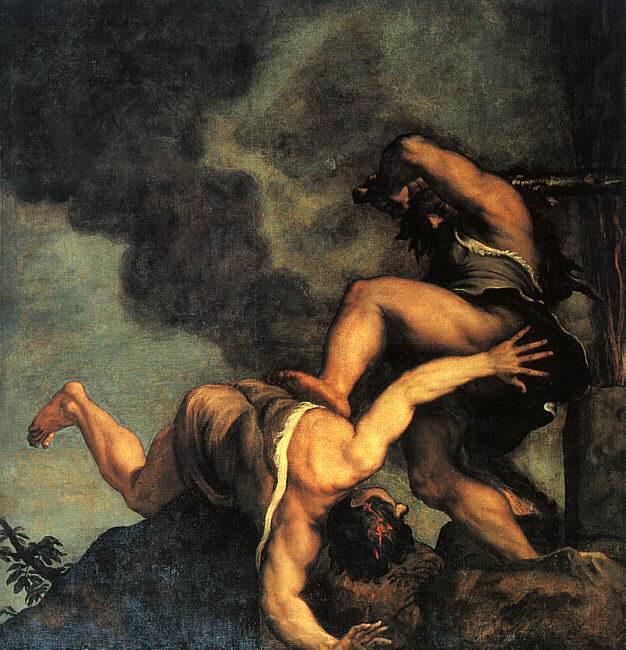
  • Cain and Abel. Studying Genesis 4

    Cain and Abel. Studying Genesis 4

    In Genesis 3, we dramatically see the fall of humanity into sin. 

    While death is the ultimate judgment for a sinful world, Adam and Eve do not die immediately. Genesis 4 begins with the continuation of the human race. As Eve has children, it is also a reminder of God’s promise that a child of the woman would crush the head of serpent (Genesis 3:15). 

    Genesis 4:1-2:

    Now Adam knew Eve his wife, and she conceived and bore Cain, saying, “I have gotten a man with the help of the Lord.” 2 And again, she bore his brother Abel. Now Abel was a keeper of sheep, and Cain a worker of the ground. 

    We see the first brothers: Cain and Abel. It will become the first of several sibling rivalries in the Book of Genesis. Cain and Abel, Isaac and Ishmael, Jacob and Esau, Joseph and his brothers. 

    From their introduction in Genesis, we see that the two are different, even down to their occupations. One is a sheep herd, the other is a farmer. It’s not a commentary on one of those jobs being superior to the other. But the brothers are different. 

    In verses 3-5, we see the sacrifice which would spark a bitter and tragic disagreement between the two brothers. 

    3 In the course of time Cain brought to the Lord an offering of the fruit of the ground, 4 and Abel also brought of the firstborn of his flock and of their fat portions. And the Lord had regard for Abel and his offering, 5 but for Cain and his offering he had no regard. So Cain was very angry, and his face fell.

    Sacrifice becomes a significant theme throughout the rest of the Bible. 

    Here we see two sacrifices made to God. One is acceptable. One is not. 

    The NIV Study Bible describes sacrifice and says: ​​”Generally speaking, Israelites presented sacrifices for one of three reasons: to praise and thank the Lord, to emphasize their requests to the Lord, and to atone for sin and impurity.”

    To our modern sensibilities, the idea of sacrifices might seem archaic and backwards. Sacrifices point us to the holiness of God and that there are appropriate ways to approach a holy God. Atoning sacrifices point us to the costliness of sin. Sacrifices were an opportunity to trust God’s provision as people would sacrifice things which were costly (God required a person’s best animals), and to make that sacrifice and to trust that God would still provide what was needed. 

    Sacrifices also point us to the ultimate and perfect sacrifice when Jesus gave himself for our sins. 

    The author of Hebrews talks of Jesus as the ultimate sacrifice. when Christ had offered for all time a single sacrifice for sins, he sat down at the right hand of God (Hebrews 10:12). 

    Cain and Abel make sacrifices. That raises a lot of questions. Were they told to make sacrifices? If so, that’s never recorded. Did they take it upon themselves to make sacrifices? Had Adam made sacrifices? Where did the idea come from? The Bible doesn’t answer any of these questions. Perhaps it’s part of human nature. We prize and value sacrifices for that which we think is worthy. 

    Cain and Abel both make sacrifices. 

    As has already been mentioned, the Lord accepts Abel’s but not Cain’s sacrifice. 

    But the issue with this passage is not the sacrifices themselves, it’s the heart of Cain. 

    Cain brought to the Lord an offering of the fruit of the ground, 4 and Abel also brought of the firstborn of his flock and of their fat portions.

    Cain and Abel each bring sacrifices which are related to their vocations. Cain the farmer brings some of the fruit of the ground while Abel the sheep herd brings the firstborn of his flock. 

    In later Old Testament laws, God would require the firstfruits of what was produced and the firstborn of teh animals to be sacrificed (cf Exodus 13:2; 23:16). 

    This language will also be applied to Jesus in the New Testament. In the Christ hymn of Colossians 1, Jesus is referred to as the firstborn of all creation (Colossians 1:15). 

    There was a greater heart behind the sacrifice of Abel as he brought God his best. In bringing the fat portions, those were the prized cuts of the animal. 

    As I’ve mentioned, the issue is the heart of Cain, not the sacrifice itself because when the Lord had no regard for Cain’s sacrifice, Cain became better.

    Verses 6:

    6 The Lord said to Cain, “Why are you angry, and why has your face fallen? 

    Just like with Adam and Eve in the garden, God begins with a question. 

    More and more, I appreciate the value of the right question.

    God tells Cain what he must do. 

    Genesis 4:7: 

    If you do well, will you not be accepted? And if you do not do well, sin is crouching at the door. Its desire is contrary to you, but you must rule over it.” 

    This is the first time in the Bible that sin is named. It is personified as something that is powerful. On a similar train of thought, Paul would describe the power of sin in Romans 7. 

    Romans 7:15-20:

    15 For I do not understand my own actions. For I do not do what I want, but I do the very thing I hate. 16 Now if I do what I do not want, I agree with the law, that it is good. 17 So now it is no longer I who do it, but sin that dwells within me. 18 For I know that nothing good dwells in me, that is, in my flesh. For I have the desire to do what is right, but not the ability to carry it out. 19 For I do not do the good I want, but the evil I do not want is what I keep on doing. 20 Now if I do what I do not want, it is no longer I who do it, but sin that dwells within me. 

    Instead of dealing with sin, we see Cain against his brother. 

    Cain murders Abel

    Genesis 4:8:

    8 Cain spoke to Abel his brother. And when they were in the field, Cain rose up against his brother Abel and killed him.

    Instead of listening to God, Cain has swung hard the other way. 

    In the first sin, humanity ate the forbidden fruit of the tree of the knowledge of good and evil, and now man is killing man. Cain kills his brother. Man has taken the life of another image bearer. 

    Genesis 4:9, The Lord asks Cain: 

    9 Then the Lord said to Cain, “Where is Abel your brother?” He said, “I do not know; am I my brother’s keeper?” 

    Once again, God comes to Cain with a question. Cain is invited to confess but instead attempts to deflect. He acts as though Abel’s whereabouts are not his responsibility. But he’s the one who has taken the life of his brother! 

    Adam fesses up to his sin, but Cain misdirects and misleads in his attempt to cover up his sin. 

    We see no remorse from Cain for his sin. 

    But God knows. 

    Kenneth Matthews notes that Abel’s blood convicts the sinner, but we will see that the blood of Christ redeems the sinner. 

    Genesis 4:10-12:

    And the Lord said, “What have you done? The voice of your brother’s blood is crying to me from the ground. 11 And now you are cursed from the ground, which has opened its mouth to receive your brother’s blood from your hand. 12 When you work the ground, it shall no longer yield to you its strength. You shall be a fugitive and a wanderer on the earth.”

    When Adam and Eve sinned, the ground was cursed. When Cain sins, we will see that he himself is cursed because of his sin against his brother. 

    In Genesis 4:13-15, we continue to see the heart of Cain:  13 Cain said to the Lord, “My punishment is greater than I can bear.14 Behold, you have driven me today away from the ground, and from your face I shall be hidden. I shall be a fugitive and a wanderer on the earth, and whoever finds me will kill me.” 15 Then the Lord said to him, “Not so! If anyone kills Cain, vengeance shall be taken on him sevenfold.” And the Lord put a mark on Cain, lest any who found him should attack him. 

    Cain’s sin brings alienation both from the land, from people, and from the Lord. We see his concern for vulnerability. Ironic considering he’s just murdered his brother! But just because Cain has killed Abel does not mean that anyone can arbitrarily kill Cain.  

    Genealogy

    Genesis 4 ends by introducing what will become another significant theme in the Book of Genesis. The genealogy from Adam, to Abraham, Isaac, Jacob, and beyond. 

    Cain’s genealogy is first introduced before the passage ends by returning to Adam and Eve and a new son they have. Seth. The line of Adam will continue, but through Seth. 

    25 And Adam knew his wife again, and she bore a son and called his name Seth, for she said, “God has appointed for me another offspring instead of Abel, for Cain killed him.” 26 To Seth also a son was born, and he called his name Enosh. At that time people began to call upon the name of the Lord (Genesis 4:25-26). 

    Thanks for reading! If you liked this post, please share and subscribe! 

  • Sermon: The Rise of Saul – 1 Samuel 11:1-15

    In this passage, we see the high point of the reign of King Saul and the Israelites have the king that they had hoped for and all is well. At least for a little while. But this passage isn’t primarily about Saul, nor is it primarily about a battle between the Israelites and the Ammonites, but it’s about the God who saved his people and preserved the Promised Land.

    Sermon manuscript