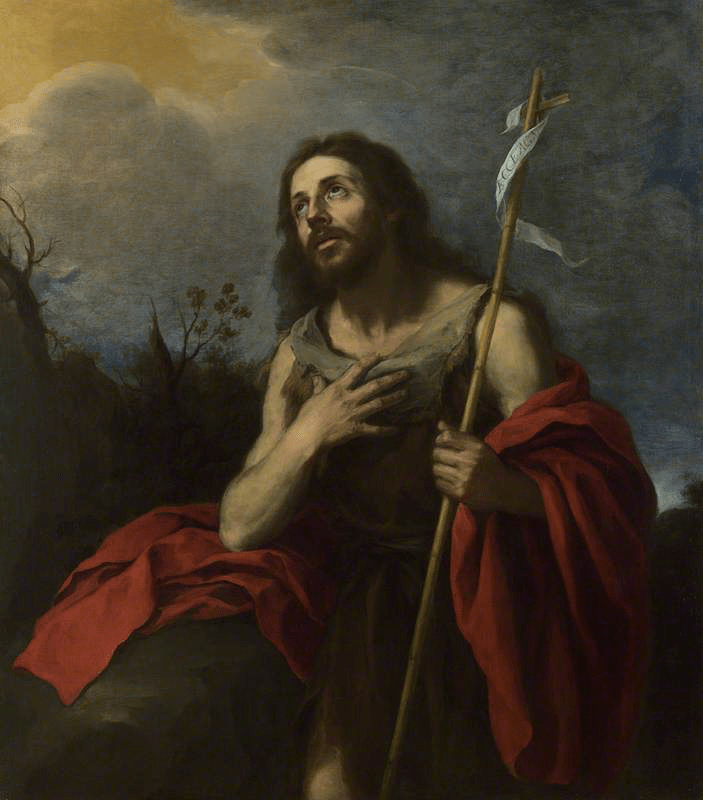
John the Baptist is one of the most intriguing people we meet in the gospels. He has a unique role in history as being the forerunner to Christ. In John 1, John the Baptist is being questioned about his identity. He helps clarify who he is by clarifying who he isn’t.
Verse 19: And this is the testimony of John, when the Jews sent priests and Levites from Jerusalem to ask him, “Who are you?”
It’s reasonable that they would want to find out who he is. I think it’s important to understand the time in which they lived. For centuries, the Old Testament had pointed forward to one sent from the Lord.
People had all sorts of expectations for the type of ministry that this sent one would have.
This was fulfilled in Jesus but people didn’t yet know Jesus. So all they had were their expectations and assumptions. What Jesus actually did was not quite what anyone expected.
A lot of people expected a great religious teacher. Jesus certainly was that but he was ore than that. But his purpose was to bring freedom not law.
A lot of people expected a great king. Jesus is that too, he’s the king of kings. But he did not have the mighty earthly kingdom that people expected.
Others expected a great general who would lead Israel to victory and back to a restoration of their land in the face of Roman oppression. Jesus is the one who leads his people to battle evil and leads us to Spiritual victory.
And people believed various ideas from those categories.
So you suddenly have this man who’s calling people to repent, who’s baptizing. In the other gospels, we see John calling out religious authorities.
And so people are curious.
Maybe he’s connected to the promised savior. Maybe he IS the promised savior. Others might have been skeptical and thought it would lead nowhere.
Before Jesus, there had been people who claimed to be the promised savior of the world.
Who are you?
They ask.
The Christ
John’s first response to the Jewish leaders is given in verse 20: He confessed, and did not deny, but confessed, “I am not the Christ.”
First thing John confirms. He is not the savior.
One thing that’s important to understand. The word “Christ” is not Jesus’ last name. It’s his title. Jesus’ parents were not Joseph and Mary Christ. Jesus is The Christ.
Christ comes from the Greek word “Christus” which means “anointed.” It’s the Greek word for the Hebrew word “Messiah.” They both mean the same thing: anointed.
The significance of that is that in the Old Testament, various divinely assigned offices such as the king and the high priest would be anointed with oil at the beginning of their term. Some of the Old Testament prophets were also anointed.
There are also passages in the Old Testament which were understood as pointing forward to a future deliverer who was anointed.
John the Baptist had an important ministry. But he was not the Lord’s anointed, he was not the Lord’s Christ, and so he’s quick to point that out. He’s not the anointed savior.
Elijah
Verse 21: And they asked him, “What then? Are you Elijah?” He said, “I am not.”
Elijah was a prophet in the Old Testament. Much of his ministry revolved around calling people to faith and proper worship of the Lord. He was obedient to the Lord in his life and ministry.
There are several miracles that God does during the time of Elijah’s ministry. Two more things that are noteworthy about Elijah. The Old Testament tells us that God brought Elijah directly to heaven without dying.
2 Kings 2:11
And as they still went on and talked, behold, chariots of fire and horses of fire separated the two of them. And Elijah went up by a whirlwind into heaven
Secondly, the book of Malachi, which is the last book found in our Old Testament concludes with these verses from Malachi 4:5:
5 “Behold, I will send you Elijah the prophet before the great and awesome day of the Lord comes. 6 And he will turn the hearts of fathers to their children and the hearts of children to their fathers, lest I come and strike the land with a decree of utter destruction.”
So God says that he will send Elijah before the great and awesome day of the Lord.
So some expected a literal second coming of Elijah. For those reasons, it’s a pretty reasonable question for the leaders to have asked this of John. But he tells them no.
John is not Elijah however it should be noted that John’s ministry is really fulfilling this prophecy about Elijah. John is not a reincarnated version of Elijah or a second coming of Elijah, but he is the one who is sent from the Lord with a divinely given ministry to call people to repentance.
But John confirms that he is not Elijah. So they try again:
The Prophet
Are you the Prophet?” And he answered, “No.”
When they ask John if he’s THE prophet, they’re actually referring to a specific passage. Deuteronomy 18:15 tells Israel about a successor to Moses. This passage also came to be understood as pointing to a grater prophet.
Verse 15: “The Lord your God will raise up for you a prophet like me from among you, from your brothers—it is to him you shall listen—
They wonder if John is this person. In reality, that passage is ultimately pointing forward to Jesus. But once again, John answers the question in the negative. He is not the prophet.
So they said to him, “Who are you? We need to give an answer to those who sent us. What do you say about yourself?”
John isn’t the Christ, he’s not Elijah, he’s not the prophet.
So then who is he?
He answers that in the following section.
Who is John?
Verse 23:He said, “I am the voice of one crying out in the wilderness, ‘Make straight the way of the Lord,’ as the prophet Isaiah said
They’ve seen who John isn’t. This is who he is. He quotes the text from Isaiah 40. That passage is applied to John in all four gospels.
Isaiah 40 is a passage talking of a future time of deliverance for the people of God. It’s an incredibly hopeful passage. It talks of God’s faithfulness to his people in spite of their sin. It talks of God’s restoration.
The heart of what this is getting at for John is that his purpose is to call people to repentance and preparation for the coming Messiah. And it was John’s job to point us to that messiah.
Thanks for reading! If you like this post, please share and subscribe!
One of the most intriguing people we meet in the Gospel of John is a man named John the Baptist.
Who is he?
He is not the same John who wrote the Gospel of John. They’re two different men.
He’s often called John the Baptist. That title is referring to what John did rather than a denominational affiliation. It’s not that we had John the Baptist, Peter the Presbyterian, and Paul the Methodist.
John the Baptist is mentioned in all four gospels, and in all of the gospels, he’s introduced prior to the ministry of Jesus. So he’s pretty important.
Between the gospels, they give us accounts of both John’s birth and his death. I can’t think of any other New Testament figure besides Jesus where that could be said.
We find out in the Gospel of Luke that John’s mom, Elizabeth, is a relative of Mary which means that John the Baptist is related to Jesus.
John is a few months older than the Lord. After John the Baptist is born, his father gives a prophecy to his son’s life.
Luke 1:76-77:
76 And you, child, will be called the prophet of the Most High; for you will go before the Lord to prepare his ways,77 to give knowledge of salvation to his peoplein the forgiveness of their sins,
Luke chapter 1 ends with an interesting note about John:
Verse 80:
80 And the child grew and became strong in spirit, and he was in the wilderness until the day of his public appearance to Israel.
He was in the wilderness until the day of his publican appearance in Israel.
There’s not a whole lot of elaboration on that.
We know nothing about his formative years. He was in the wilderness. Some scholars suggest the possibility that John may have actually be raised within a small community within the wilderness. That’s speculation, but it would make historical sense.
John is related to Jesus, but the gospels tell us nothing about how well they may have known each other. It doesn’t seem like they grew up going to a family dinner every week. When his ministry began, it quickly grew in popularity:
Matthew 3:5-6 says: Then Jerusalem and all Judea and all the region about the Jordan were going out to him, 6 and they were baptized by him in the river Jordan, confessing their sins.
Several years after John’s death, the Apostle Paul is ministering in Ephesus in Acts 19. Ephesus is several hundred miles away from Judea but people talk of the baptism which John practiced, showing that his name and reputation were known throughout the region.
John also faced persecution during his life.
He was arrested and later executed under the Romans in Matthew 14. John the Baptist is mentioned throughout the first chapter of the Gospel of John.
John 1:6-8: There was a man sent from God, whose name was John. 7He came as a witness, to bear witness about the light, that all might believe through him. 8 He was not the light, but came to bear witness about the light.
That’s the first thing the author tells us about John. He was sent from God. His ministry was not arbitrary. It was not on a whim. It was not something he just chose to do. He was chosen by God.
Second thing we find out about him: his purpose. Verse 7 says that he came as a witness to bear witness about the light that all might believe through him.
John came into the world to point people to the light of the world.
John 1:19-34 talks more about John and his unique ministry as a forerunner to Christ.
In John 1:22, John the Baptist is being questioned about who he is. In the preceding section, he’s given a series of denials of who he is not. He is not Elijah, he is not the Christ, he is not the prophet.
So they said to him, “Who are you? We need to give an answer to those who sent us. What do you say about yourself?”
So then who is he?
While John isn’t answering in the affirmative to any of his questions, that does not mean he’s insignificant.
Verse 23:He said, “I am the voice of one crying out in the wilderness, ‘Make straight the way of the Lord,’ as the prophet Isaiah said
They’ve seen who John isn’t. This is who he is. He quotes the text from Isaiah 40. That passage is applied to John in all four gospels.
Isaiah 40 is a passage talking of a future time of deliverance for the people of God. It’s an incredibly hopeful passage. It talks of God’s faithfulness to his people in spite of their sin. It talks of God’s restoration.
The heart of what this is getting at for John is that his purpose is to call people to repentance and preparation for the coming Messiah.
They ask John about his baptism.
25 They asked him, “Then why are you baptizing, if you are neither the Christ, nor Elijah, nor the Prophet?”
Baptism was instituted in the New Testament for followers of Jesus. But baptism was not a foreign idea prior to that time.
In the first century, when non-Jews would convert to Judaism, they would sometimes do something similar to baptism which was meant to be a cleansing ritual to symbolically wash away impurity and sin.
A difference with John was that he administered baptism. The leaders question his authority.
And he responds by turning the question right back to his purpose in the world.
John 1:26-27: 26 John answered them, “I baptize with water, but among you stands one you do not know, 27 even he who comes after me, the strap of whose sandal I am not worthy to untie.”
John says that it points to someone who’s shoes he’s not worthy to untie. In other words, he’s unworthy of even doing the most menial and humiliating task. John would need a promotion in order to be worthy of untying Jesus’ sandals.
John has authority to baptize because it’s been given to him by God but that baptism is meant to point to something greater.
Thanks for reading! If you liked this post, please share and subscribe.
This post is part of a larger study through the Gospel of John. This specific post is part of a 3 part series on John the Baptist from John 1:19-34
In this passage, we see a clash of world views as Pharaoh is commanded to release the Israelites. When he refuses, the first of the ten plagues befalls Egypt. Pharaoh was viewed as a quasi-divine person in Egypt, but we see he’s no match for the Lord, nor are the Egyptian pantheon a match for the Lord’s plagues which shows his dominion over nature and over life and death.
Sermon manuscript
And the Lord said to Moses, “See, I have made you like God to Pharaoh, and your brother Aaron shall be your prophet. 2 You shall speak all that I command you, and your brother Aaron shall tell Pharaoh to let the people of Israel go out of his land. 3 But I will harden Pharaoh’s heart, and though I multiply my signs and wonders in the land of Egypt, 4 Pharaoh will not listen to you. Then I will lay my hand on Egypt and bring my hosts, my people the children of Israel, out of the land of Egypt by great acts of judgment.
5 The Egyptians shall know that I am the Lord, when I stretch out my hand against Egypt and bring out the people of Israel from among them.” 6 Moses and Aaron did so; they did just as the Lord commanded them. 7 Now Moses was eighty years old, and Aaron eighty-three years old, when they spoke to Pharaoh.
8 Then the Lord said to Moses and Aaron, 9 “When Pharaoh says to you, ‘Prove yourselves by working a miracle,’ then you shall say to Aaron, ‘Take your staff and cast it down before Pharaoh, that it may become a serpent.’ ” 10 So Moses and Aaron went to Pharaoh and did just as the Lord commanded. Aaron cast down his staff before Pharaoh and his servants, and it became a serpent.
11 Then Pharaoh summoned the wise men and the sorcerers, and they, the magicians of Egypt, also did the same by their secret arts. 12 For each man cast down his staff, and they became serpents. But Aaron’s staff swallowed up their staffs. 13 Still Pharaoh’s heart was hardened, and he would not listen to them, as the Lord had said.
14 Then the Lord said to Moses, “Pharaoh’s heart is hardened; he refuses to let the people go. 15 Go to Pharaoh in the morning, as he is going out to the water. Stand on the bank of the Nile to meet him, and take in your hand the staff that turned into a serpent. 16 And you shall say to him, ‘The Lord, the God of the Hebrews, sent me to you, saying, “Let my people go, that they may serve me in the wilderness.” But so far, you have not obeyed. 17 Thus says the Lord, “By this you shall know that I am the Lord: behold, with the staff that is in my hand I will strike the water that is in the Nile, and it shall turn into blood.
18 The fish in the Nile shall die, and the Nile will stink, and the Egyptians will grow weary of drinking water from the Nile.” ’ ” 19 And the Lord said to Moses, “Say to Aaron, ‘Take your staff and stretch out your hand over the waters of Egypt, over their rivers, their canals, and their ponds, and all their pools of water, so that they may become blood, and there shall be blood throughout all the land of Egypt, even in vessels of wood and in vessels of stone.’ ”
20 Moses and Aaron did as the Lord commanded. In the sight of Pharaoh and in the sight of his servants he lifted up the staff and struck the water in the Nile, and all the water in the Nile turned into blood. 21 And the fish in the Nile died, and the Nile stank, so that the Egyptians could not drink water from the Nile. There was blood throughout all the land of Egypt. 22 But the magicians of Egypt did the same by their secret arts. So Pharaoh’s heart remained hardened, and he would not listen to them, as the Lord had said. 23 Pharaoh turned and went into his house, and he did not take even this to heart. 24 And all the Egyptians dug along the Nile for water to drink, for they could not drink the water of the Nile.
Prayer
14 Let the words of my mouth and the meditation of my heart
be acceptable in your sight,
O Lord, my rock and my redeemer.
Introduction – series context
We’re continuing in Exodus this morning. Once again, taking a break from the Gospel of John for a few weeks.
Last week, we began our study and talked about the opening chapters of Exodus. That the Israelites were enslaved in Egypt but with a rapidly growing population, the Egyptians had made attempts to kill off the Israelite males.
He had attempted this through genocice and killing of males. Then Pharaoh had ordered males to be thrown into the river and drowned.
Barbaric.
We see the birth of Moses and his eventual calling to lead the Israelites out of Egypt.
I give all of that background just as a reminder of where we’ve been.
Today we come to some of the best known events in the Bible.
The plagues of Exodus when Pharaoh is repeatedly told to release the Israelites.
And when he refuses, God brings divine judgment.
The Nile river turned to blood.
A plague of frogs.
A plague of gnats.
A plague of flies.
The death of livestock.
A plague of boils.
A plague of hail.
A plague of locusts.
Darkness.
Death.
It’s interesting to consider the plagues of Exodus.
Because I look back at the last year and a half, and I can’t be the only one who at times looked at everything going on in our nation and around the world and felt like we were actually LIVING through the Biblical plagues.
Plagues of 2020
Starting last year, in March, we had Covid turn our whole society upside down.
Then we ran out of toilet paper.
None of us probably ever thought that would be an issue we’d have to deal with, but deal with it we did.
Then in May, there were stories about murder hornets in the Pacific Northwest.
Murder hornets!
Throughout the summer, there were riots and civil unrest.
More shortages. Everything from coins, to cleaning supplies, to bicycles.
Shipping delays. Total disruption of supply chains.
Wildfires.
I read that last year was the worst year for wildfires in recorded U.S. history. Five of the six worst wildfires to hit California since 1932 happened last year.
Disease, murder hornets, civil unrest, wildfires, no toilet paper.
Last summer, there was a plague of locusts in Africa. Did you know that?
Billions of locusts. Tremendous destruction to crops.
That’s something about the Biblical plagues to understand. When it talks of things like plagues of locusts or infestations of frogs, those are real things. Those are things that cause issues in parts of the world.
More shortages.
Now we have labor shortages.
Economic fallout.
Inflation.
More product shortages. Building materials, microchips, and beef are all through the roof.
And on, and on, and on.
We’re surviving. But it’s amazing how these changes can so drastically impact life for so many.
Bridge
So with that, we return to Exodus this morning and we’re going to look at three scenes.
Pharaoh’s opposition to God.
God’s warning to Pharaoh.
God’s judgment on Egypt.
The main idea of this passage is that opposition to God will never work.
Pharaoh’s opposition to God
In Exodus 4, after God had called upon Moses to lead the Israelites out of Egypt, the Lord shows Moses two miracles.
He turns the shepherd’s staff of Moses into a serpent and he gives Moses leprosy and then heals him.
The Lord tells Moses to show these signs to Pharaoh, but in Exodus 4:21, the Lord says:
“When you go back to Egypt, see that you do before Pharaoh all the miracles that I have put in your power. But I will harden his heart, so that he will not let the people go.
I point this out because this will become a common idea throughout the Exodus plagues, and it’s found for the first time here.
The hardening of Pharaoh’s heart.
Between Exodus 4 and Exodus 14, the idea of Pharaoh’s heart being hardened is mentioned 19 times.
Most of those instances are God as the active agent who is hardening the heart of Pharaoh, such as what we see here in this current verse.
What does that mean?
To harden one’s heart?
Does that mean that God is causing Pharaoh to resist him? Is God causing him to sin?
No.
God never causes us to sin.
Something that’s important to understand from the outset is throughout these passages, there is a clash of world views and a clash of religions in Exodus.
The Egyptians believed in a pantheon of gods. Gods of the river, the weather, livestock, the sun, the sky. And in the plagues, you have the Lord God showing that their false gods are all powerless against the Lord.
In these passages, you’ll have a clash between Pharaoh, who was thought to be a quasi-divine person vs the Lord. Spoiler alert: the Lord wins.
And you also have a conflict of the religious views of the Israelites and the Egyptians.
In Egyptian religion, they believed that when a person died, the heart was weighed. Sin added weight to the heart. There are hieroglyphics which show the heart being weighed compared to the weight of a feather.
A person’s admittance to the Egyptian idea of heaven depended on their own goodness. That’s what most religions ultimately believe.
Old Testament scholar Douglas Stuart is very helpful on this point.
Since the Pharaoh was such a revered figure in Egypt, they viewed him as being a morally pure. And that’s something that is very different from how we view our leaders.
Look at most presidents throughout our history. We generally don’t look to them as our exemplars of morality.
But with the Pharaoh who was a king and also a religious figure, they did.
And so the hardening of Pharaoh’s heart is a judgment.
Again, the Egyptians thought that the gods weighed the heart, judged the heart.
The fact that the Lord can harden the heart shows his power over Pharaoh.
This also showed – quoting Douglas Stuart now – “that Yahweh had done what the Egyptians thought the “gods” would usually do—weigh the heart and decide whether its owner was worthy of eternal life or not.”
The weighing of Pharaoh’s heart is a matter of showing the sin and rebellion of Pharaoh.
Ultimately the choice to refuse God is one that Pharaoh continually makes in these passages.
And as a result of that, his heart is hardened. Weight is added to his heart as he continues to sin.
We’re still building up to the first plague.
At the beginning of chapter 5, Moses asks Pharaoh to allow the Israelites to go into the wilderness for a religious pilgrimage. .
Moses and Aaron went and said to Pharaoh, “Thus says the Lord, the God of Israel, ‘Let my people go, that they may hold a feast to me in the wilderness.’ ” 2 But Pharaoh said, “Who is the Lord, that I should obey his voice and let Israel go? I do not know the Lord, and moreover, I will not let Israel go.”
We see Pharaoh’s hubris before the Lord.
And as I mentioned a moment ago, we’ll see him trying to go toe to toe with the Lord.
Who is the Lord?
Last week, we pointed out that the book of Exodus never tells us which Pharaoh this is.
So he asks Who is the Lord?
But the Bible leaves us questioning who is Pharaoh?
He doesn’t listen. He continues to make life miserable for the Israelites. In chapter 6, Moses is again told to confront Pharaoh.
Exodus 6:10 into verse 12:
So the Lord said to Moses, 11 “Go in, tell Pharaoh king of Egypt to let the people of Israel go out of his land.” 12 But Moses said to the Lord, “Behold, the people of Israel have not listened to me. How then shall Pharaoh listen to me
As we saw last week, Moses continues to explain why he’s not the man for the job.
At the beginning of chapter 7, the Lord gives Moses and his brother Aaron their marching orders.
Exodus 7:2-4:
2 You shall speak all that I command you, and your brother Aaron shall tell Pharaoh to let the people of Israel go out of his land. 3 But I will harden Pharaoh’s heart, and though I multiply my signs and wonders in the land of Egypt, 4 Pharaoh will not listen to you. Then I will lay my hand on Egypt and bring my hosts, my people the children of Israel, out of the land of Egypt by great acts of judgment. 5 The Egyptians shall know that I am the Lord, when I stretch out my hand against Egypt and bring out the people of Israel from among them.
In summary:
The Lord says he will give the words to speak.
Pharaoh’s heart will be hardened.
The Lord will show greater signs and wonders.
Pharaoh will not listen.
God will bring judgement
God will bring his people out of Egypt.
With that, we come to our second scene for today.
2. God’s warning to Pharaoh
Verses 8-9:
8 Then the Lord said to Moses and Aaron, 9 “When Pharaoh says to you, ‘Prove yourselves by working a miracle,’ then you shall say to Aaron, ‘Take your staff and cast it down before Pharaoh, that it may become a serpent.’ ”
As a reminder, this was a miracle that the Lord had shown Moses in chapter 4.
A shepherd’s staff was a common possession in ancient times. They were used to aid in walking, they could be used for protection, they could be used for helping to tend to livestock.
So a pretty ordinary object for the time period.
But the Lord will work through this ordinary object for an extraordinary purpose.
Verse 10:
10 So Moses and Aaron went to Pharaoh and did just as the Lord commanded. Aaron cast down his staff before Pharaoh and his servants, and it became a serpent.
So Moses does this sign to display the power of the God whom he serves.
But then verse 11 tells us:
Then Pharaoh summoned the wise men and the sorcerers, and they, the magicians of Egypt, also did the same by their secret arts.
Pharaoh’s people do the same thing.
The verse calls them wise men and sorcerers.
They seem to be people who may have had some sort of priestly function.
So when the word magician is used, it’s not like Penn and Teller are doing this.
The passage does not tell us how they replicate turning their staffs into serpents.
Perhaps it’s simple trickery.
Perhaps it’s demonic.
The text doesn’t tell us.
But if there’s any confusion about the Pharaoh’s wise men one-upping this miracle, verse 12 says:
12 For each man cast down his staff, and they became serpents. But Aaron’s staff swallowed up their staffs.
So when they threw their staffs to the ground, and those staffs also became serpents, Aaron’s serpent ate there’s.
And so Pharaoh is unmoved.
Verse 13:
Still Pharaoh’s heart was hardened, and he would not listen to them, as the Lord had said.
A sinful heart can always find reasons to ignore the Lord.
He’d been warned by God’s word. He’d been shown a divine sign.
And he said “No.”
Pharaoh had seen evidence for God working but refused to listen because he chose instead to trust in his wise men.
When we don’t want to trust in the Lord, we can always find a reason.
I think of all of the evidence we have for God, evidence for the resurrection, reasons to believe in God, and still so many say no.
Why?
Not because there is a lack of evidence, but people don’t believe in God because they don’t want to.
Validation – going our own way
Romans 1:18-20 says:
the wrath of God is revealed from heaven against all ungodliness and unrighteousness of men, who by their unrighteousness suppress the truth. 19 For what can be known about God is plain to them, because God has shown it to them. 20 For his invisible attributes, namely, his eternal power and divine nature, have been clearly perceived, ever since the creation of the world, in the things that have been made. So they are without excuse.
There’s evidence for God.
God reveals himself to the world.
Psalm 19:1:
1 The heavens declare the glory of God,
and the sky above proclaims his handiwork.
For Pharaoh, he looks at what his wise men had just done and uses that as a justification to ignore the Lord.
Today, I fear that this is what science has become.
I’m not anti-science. And there are many scientists who are strong believers.
But there are also many people in our society who look to science and since they feel they can’t observe or measure God, scientifically, then they shouldn’t believe in him. And what that’s doing is quite literally putting faith in science and its putting your eternal hope in science.
Which as someone who studied philosophy in college, I’ve always found this mentality to be self destructive. Because the idea that all truth is scientific is itself not a scientific idea. It’s a philosophical idea.
The methodology by which things are judged as being scientifically verified is also philosophical. Science cannot create its own scientific method.
And so for science to stand, it needs something outside of itself to give it its structure.
I get that there are people who are very scientifically minded. I appreciate that.
And again, I’m not anti-science. Scientific discoveries have helped revolutionize the modern world.
But we shouldn’t blindly place our faith in it.
Romans 1:24-25 says:
God gave them up in the lusts of their hearts to impurity, to the dishonoring of their bodies among themselves, 25 because they exchanged the truth about God for a lie and worshiped and served the creature rather than the Creator, who is blessed forever! Amen.
Pharaoh was called upon to release the Israelites. He refused.
God will not compromise.
So you have Pharaoh, the anti-God who tries to stand down the Lord God.
In Jesus, we see the one who truly is fully man and fully God. We see the one who truly does have a pure heart. We see the one who truly is righteous.
And he invites us to believe in him. He invites sinful people to be forgiven in him.
And for that, he will also not compromise.
God’s judgment – the first plague
Starting in verse 14:
14 Then the Lord said to Moses, “Pharaoh’s heart is hardened; he refuses to let the people go. 15 Go to Pharaoh in the morning, as he is going out to the water. Stand on the bank of the Nile to meet him, and take in your hand the staff that turned into a serpent.
Moses is called to given Pharaoh a forewarning of this judgment.
That will not happen with all ten of the plagues.
Where verse 15 tells Moses to go to Pharaoh in the morning as he is going into the water, either Pharaoh had a habit of swimming in the river, or bathing in the river. Either way, that’s the palace where Moses is told to meet him. Pharaoh will be a first hand witness to this judgment.
Moses is to take the same staff that had been turned into a serpent and to use that staff to touch the water. Now it’s not that the staff had power in itself. It was the Lord who was powerful and who will work this miracle.
Verse 17:
Thus says the Lord, “By this you shall know that I am the Lord: behold, with the staff that is in my hand I will strike the water that is in the Nile, and it shall turn into blood.
This is what the first plague will be.
The NIle will be turned into blood.
A few things to note about the Nile river.
It’s the longest river in the world.
Unlike rivers in this part of America which flow from north to south, the Nile flows from south to north.
In this period of history, the river would flood annually, usually in September and October as waters from further down the river in Africa and would flow down the river and cause floods in Egypt. Now we usually think of flooding as a bad thing, but it was essential to the Egyptians in a desert that sees very low rainfall.
Now it’s a fitting place for the first plague because hitting the Nile was hitting the lifeblood – no pun intended – of Egyptian society. It was necessary for their drinking water, necessary for their agriculture.
It’s also fitting to the story that the Nile is the site of the first plague. Earlier in Exodus, we’d seen Pharaoh attempt to punish the Egyptians by ordering that their male babies be placed into the river, as a horrific act of genocide.
But here that river will be what God uses to bring judgment on Egypt.
Something else to consider. I alluded to this earlier, but there were also Egyptian gods associated with the Nile.
Hapi was the Egyptian god of the flood. There were annual floods of the Nile which helped bring essential water to the soil.
Another mythological Egyptian deity associated with the Nile was Osiris, the god of the afterlife. The Egyptians also associated him with the river and the annual flood of the river became associated with life and death. The flooding of the river was associated with the resurrection of Osiris.
Something that I find interesting is that some scholars believe that this first plague occurred during the flood period.
We don’t know that for a fact, but if that was when this water into blood happened, at a time associated with the resurrection of Osiris, it would certainly be a very striking and unsettling sight for the Egyptians to see the Nile running red at a time associated with the deity whom they believed had power over life and death.
Pharaoh continues to be warned about what will happen to this river. Verse 18:
18 The fish in the Nile shall die, and the Nile will stink, and the Egyptians will grow weary of drinking water from the Nile.” ’ ”
Dead fish, rotting dead fish, and undrinkable water.
Again, there are legitimate questions about what exactly happens to the water.
There are many places where Exodus doesn’t always give us all of the details we would like.
But the main point is that this is something that the Lord miraculously causes to happen. With all of the plagues, that’s the most important thing. That the Lord is almighty and he is the cause.
Something else to note. While the Nile is really an important symbol of Egyptian life and livelihood. This first plague is ultimately going to be a nuisance for the Egyptians. Future plagues will be far more severe.
Continuing with the narrative.
19 And the Lord said to Moses, “Say to Aaron, ‘Take your staff and stretch out your hand over the waters of Egypt, over their rivers, their canals, and their ponds, and all their pools of water, so that they may become blood, and there shall be blood throughout all the land of Egypt, even in vessels of wood and in vessels of stone.’ ”
The verse says: their rivers, their canals, and their ponds, and all their pools of water
The point that seems to be making is that it’s not just the Nile’s waters which are impacted. It has a far reaching ecological impact. The river and where it flows.
there shall be blood throughout all the land of Egypt, even in vessels of wood and in vessels of stone.’ ”
That verse has more than one plausible interpretation. The major interpretations all get at the idea that this is talking of the far reaching consequences of the blood.
Verse 20, after all of the warnings and what has been foretold, we finally see the first plague set into motion:
20 Moses and Aaron did as the Lord commanded. In the sight of Pharaoh and in the sight of his servants he lifted up the staff and struck the water in the Nile, and all the water in the Nile turned into blood. 21 And the fish in the Nile died, and the Nile stank, so that the Egyptians could not drink water from the Nile. There was blood throughout all the land of Egypt.
The river has been turned to blood.
Now there is question about if it’s literal blood. And if so, what type of blood? Human blood? Animal blood?
Could it be some sort of microorganism which turns the water red?
There can be algae blooms which turn water red.
Could it be turned red from some sort of rocky sediment?
Again, we don’t get all of the details.
Does it teach Pharaoh a lesson?
In verse 22, we see another twist in the story though.
22 But the magicians of Egypt did the same by their secret arts. So Pharaoh’s heart remained hardened, and he would not listen to them, as the Lord had said. 23 Pharaoh turned and went into his house, and he did not take even this to heart.
As we’d seen with the serpent, the Pharaoh’s wise men are also able to turn water to blood some how. By their secret arts. And again, we don’t know exactly how.
It is interesting that they too could do the same thing, yet what they could not do was fix it.
And while they may have been able to turn some of the water to blood, it was certainly not as far reaching as what the Lord did.
Pharaoh had witnessed this miracle. He’d seen the destruction that had come from it.
But he still would not relent.
24 And all the Egyptians dug along the Nile for water to drink, for they could not drink the water of the Nile.
The Egyptian people couldn’t use the Nile for drinking water so they had to dig for ground water.
So there was some potable drinking water.
So again, it is dramatic, it is significant, but it is ultimately a major inconvenience to the people.
It should have caught Pharaoh’s attention.
It should have caused Pharaoh to change and to listen to God, but it didn’t.
A lot more pain and misery will await him in the coming events of Exodus.
And there is a lot of misery in life when we avoid God.
No, he might not reign down plagues on us.
Conclusion
But he is truth. He is our creator. He is our Lord.
And the only way to live a life of true fulfillment, of true joy, of true peace is in him.
Does that mean all of those things will come easily when we say a prayer or get baptized? No.
Because there’s still sin in our life and in the world.
But without God, we can not have those things.
Does that mean that life will suddenly become easy at the snap of your fingers? No. There are challenges and difficulties. But you won’t be alone. You’ll have God.
Does that mean that everything you want God will give you? No. But God gives us what we need. And he gives us himself. Jesus literally gave himself on the cross. He literally gave up his life so that we could have life.
God calls us to trust, he calls us to believe.
And still so many turn their backs on him, find reasons why they can’t believe in him. It doesn’t work because it’s not living in accordance of what we were made for and who we were made for.
Quoting C.S. Lewis:
God made us: invented us as a man invents an engine. A car is made to run on petrol, and it would not run properly on anything else. Now God designed the human machine to run on Himself. He Himself is the fuel our spirits were designed to burn, or the food our spirits were designed to feed on. There is no other. That is why it is just no good asking God to make us happy in our own way without bothering about religion. God cannot give us a happiness and peace apart from Himself, because it is not there.”
True fulfillment cannot come apart from God, because to find fulfillment in anything else would be to find it in something that is less than God. When we aim for less than God, there is discontent because there is something bigger, something greater that we need.
Something that God has made cannot be the source of where we find fulfillment, where we find true joy, where we find true peace.
True life cannot come apart from the true source of life.
And so we’re called upon to trust in the Lord. And to trust in his son, Jesus Christ
It was a reality show that would feature leaders within companies, such as founders, CEO’s, vice presidents, or other executives going undercover within their own companies.
The show featured leaders for companies like Subway, True Value, Build-a-Bear, and even the Chicago Cubs.
Throughout a week, they would spend a day in various entry level positions within the company. They would work alongside typical employees. They would get a sense of the work they were doing.
But for the employees, they would be working with the most powerful person in the company and they had no idea.
It’s not that the undercover boss was their boss, he was everyone’s boss. He was their boss’s boss’ boss’s boss.
And they had no idea.
Sometimes they’d complain about corporate policies or explain ways to work around the rules, not knowing who they were talking to.
They were with the head of the company and didn’t even know it.
I think of Jesus coming into the world and I’m reminded of a similar irony in that people were interacting with the God of the universe and were mostly oblivious to that fact.
The Gospel of John says: He was in the world, and the world was made through him, yet the world did not know him. He came to his own, and his own people did not receive him (John 1:10).
Then verse 14 takes it to a more relational and personal level.
And the Word became flesh and dwelt among us.
That may be one of my top ten favorite verses in all of the Bible.
The God who created the world came into the world to save the world. The eternal God of creation became flesh and blood, skin and bone. Jesus’ divinity matters but so does his humanity.
It is because of his divine nature that he has the power to withstand and to bear the weight of sin. Our sin is an affront to God and no mere mortal is capable of redeeming himself before a Holy God, let alone redeeming humanity.
But it also matters that Jesus is human because it is humanity that has sinned. And in being fully man, Jesus is like us in our humanity. Jesus entered sinful humanity, though he himself is without sin.
His sinlessness matters because it took a sinless, perfect, and righteous sacrifice to pay for sins.
His humanity and divinity make Jesus a worthy sacrifice and atonement for sinful people.
The Word became flesh. God became man.
Colossians 1:19 says: For in him all the fullness of God was pleased to dwell
God dwelling with us
The glory of God came to earth through the Lord Jesus. There’s one word in particular in this verse that brings it to a climactic point in this passage.
Dwelt.
The English doesn’t truly convey the meaning of what’s being said here.
Let’s take a step back.
In the Old Testament, people originally exist in perfect fellowship with God. That’s what Eden was. It was a holy place. A perfect place. A sinless place.
Because of sin, fellowship with God was tarnished. The unencumbered closeness to God was lost due to sin.
We were no longer holy.
But the story doesn’t end there. Throughout the Old Testament, we see God bringing redemption to his people.
God makes a covenant with Abraham. We see God’s continued faithfulness to his covenant.
Fast forward. The Israelites were held in captivity in Egypt. After God had miraculously freed them, and while the Israelites were wandering in the desert, God gave them instructions for a structure called the tabernacle. The tabernacle was a tent that the Israelites were to travel with and it was a symbol for God’s presence with his people.
Sometimes it’s called the tabernacle. Sometimes it’s called the tent of meeting.
Exodus 40:34-35: Then the cloud covered the tent of meeting, and the glory of the Lord filled the tabernacle. 35 And Moses was not able to enter the tent of meeting because the cloud settled on it, and the glory of the Lord filled the tabernacle.
Exodus spells out very specific instructions on how the tabernacle was to be built, what types of items would be placed inside the tabernacle, etc.
The instructions are so specific because it is a sacred and holy place. Again, it represented the very presence of God in the world. But this was pointing forward to something greater.
The temple.
When the Israelites entered the land, part of their purpose was in constructing the temple. As the tabernacle had been portable, the temple was meant to be permanent.
The overarching purposes were still the same. Most notably, it was where God met his people in the word. It was his presence in the world.
The temple was the place where sacrifices were made. For the priests, there were specific instructions on what they had to do to prepare to enter into the Temple It was a sacred place.
As with the tabernacle, not just anyone could go into the temple. The priest couldn’t just go into the temple any arbitrary way they wanted.
It was a holy place. The temple was completed during the reign of Solomon
1 Kings 8:10-11 says: And when the priests came out of the Holy Place, a cloud filled the house of the Lord, so that the priests could not stand to minister because of the cloud, for the glory of the Lord filled the house of the Lord.
In both places, when the presence of the Lord comes into the temple, people can’t even stand in it because the presence is so glorious.
The temple is hugely important in the Old Testament. Building the temple is important. The specific instructions for the temple are important. But this points forward to an even greater temple. To an even greater example of God’s presence with his people.
The word became flesh
And that is the significance of John 1:14.
“The Word became flesh and dwelt among us, and we have seen his glory.”
The word translated as “dwelt” more literally means that Jesus tabernacled among us, that Jesus pitched a tent among us. It’s the same word for tabernacle that was used centuries before Christ when the Old Testament was translated from Hebrew to Greek.
Jesus is the tabernacle. He is the greater temple. He is the presence of God with his people because Jesus IS God with his people.
So it’s not simply saying that Jesus dwelt among us. But rather: in Jesus, we see God became flesh and tabernacled with his people.
Instead of a tent or a building, we have a person, we have God himself.
The greater tabernacle, the greater temple. And he’s greater because he’s everything these places were meant to represent. It was only the priests who could go into the tabernacle and the temple.
A priest serves as a mediator between man and God. Jesus is the greater priest. It is he who restores our relationship with God. These man made structures were where sacrifices were offered.
Jesus himself is the sacrifice.
And as I’ve said, the tabernacle and the temple represent the presence of God with his people. Jesus is God himself who has come to his people. The word became flesh and dwelt among us.
The Word made his dwelling among us. He pitched a tent among us. He tabernacled among us.
The God who created the world came into the world to save the world.
There was no other way for a sinful people to be reconciled to the Lord than through God himself coming into the world. But because of his love for us. Because of his goodness. Because of his grace…
The Word became flesh and dwelt among us. The creator entered creation.
In his commentary on John, the late New Testament Grant Osborne says of this verse “In my opinion, this is the single greatest sentence ever written in the history of human language, the deepest theological statement ever written. No finite human being could ever enter the realm of God and join his family. It could only come to pass if God himself were to enter the realm of humanity.”
The Word became flesh. God became one of us so we could be with him.
He is a personal God. It doesn’t get more personal than Jesus entering his creation.
Sometimes it can be tempting to doubt if God really knows what we’re going through when we’re struggling. It can be tempting to wonder if God really cares.
He knows. He knows what it’s like to live in a sinful world. He knows what it’s like to have people oppose him and not like him. He knows what it’s like to be hated for no reason. He knows what it’s like to be slandered. He knows what it’s like to cry. He knows what it’s like to be let down. He knows what it’s like to be betrayed. He knows what it’s like to suffer and feel pain. He knows what it’s like to face injustice.
He knows.
It can be be easy to focus on Christ’s glory and divinity to the point where we forget his humanity.
But we see his humanity in this passage. The Word became flesh and dwelt among us.
Thanks for reading! If you liked this post, please like and subscribe!
In one of his stand-up specials, the comedian Jim Gaffigan talks about camping. In the monologue, Gaffigan mentions that his wife enjoys camping and says that it’s a tradition in her family.
But he points out that it used to be a tradition in everyone’s family before we invented the house.
He asks “If it’s so great outside, then why are all the bugs trying to get in my house?”
During the bit, Gaffigan describes himself as being “indoorsie.”
Full disclosure.
I don’t enjoy camping. I don’t understand leaving the comfort of home, of a bed, of air conditioning, of indoor plumbing, of restful sleep. I’m not judging you if you like camping.
But it’s interesting to consider leaving my house to go into the woods.
And I think about that and I think of what Jesus left to come into the world.
Jesus left heaven to come into the world.
I like my home.
But that’s not heaven.
Jesus left the most perfect and spectacular place in creation to come into our world.
He left a sinless place to come into a fallen world. He left a place of perfect beauty for a world that has gray skies and thunderstorms. He left a place of adoration for a world where he faced condemnation.
1. A righteous God
In the opening verses of John 1, it’s establishing the divinity of Jesus.
Jesus is eternal. He exists in fellowship with God. He is God. He made everything.
But as this passage continues, it will also point to the righteousness of Christ.
Verse 4: In him was life, and the life was the light of men.
Life is found in Jesus. This is true both in terms of all physical life but it is also true of eternal life that comes through Jesus.
All life is in him.
And we’re told that his life is the light of men. Verse 5 says: The light shines in the darkness, and the darkness has not overcome it.
Jesus was and is the true light.
The light of Christ shines in a dark and sinful world. Verse 9 says The true light, which gives light to everyone, was coming into the world.
In this metaphor, light is good because it is light which provides illumination, truth, and enlightenment.
John 8:12, Jesus says: I am the light of the world. Whoever follows me will not walk in darkness, but will have the light of life
Jesus will talk at greater length of light in darkness in John 3. The Lord contrasts light and darkness with good and evil specifically.
He’ll talk of himself as the light that is in the world and people who love the darkness of sin more than the light of God.
the light has come into the world, and people loved the darkness rather than the light because their works were evil.For everyone who does wicked things hates the light and does not come to the light, lest his works should be exposed.But whoever does what is true comes to the light, so that it may be clearly seen that his works have been carried out in God.”
Light and darkness is an almost universally recognized metaphor for good and evil.
The light is associated with the goodness, and righteousness, and truth of God.
John 12:46, Jesus says:
I have come into the world as light, so that whoever believes in me may not remain in darkness.
Jesus associates life through following him because he is the light. He is righteous and holy.
Numerous texts in the New Testament speak to Christ’s sinlessness.
2. A blind humanity
So far, we’ve been talking about the divinity and righteousness of Jesus.
He is sinless. He is the light of the world.
But the world is both sinful and blind to Christ.
John 1:10-11 says: He was in the world, and the world was made through him, yet the world did not know him. He came to his own, and his own people did not receive him.
The God who created the world was not recognized by his world.
The only appropriate response to the Lord entering into creation would be to bow down and worship him, to behold his glory, to listen to his teaching, to bask in the glow of his light.
But the world was so sinful that that was not what happened. He was despised and rejected. His teachings led many to hate him. And his teachings still do that.
The world is often offended by the very words of God on earth. The world hates the gospel.
1 Corinthians 1:18 says: For the word of the cross is folly to those who are perishing, but to us who are being saved it is the power of God
People dislike the exclusivity of Jesus. They dislike that they have to turn to him for salvation. People dislike his moral teachings which expose our sin. The world loves its darkness, and when the light of Christ shines on our darkness, many reject the light.
everyone who does wicked things hates the light
Our passage says that the world did not know him.
The world did not know what they had.
John 1:10 says He was in the world, and the world was made through him, yet the world did not know him. He came to his own, and his own people did not receive him (John 1:10).
Jesus came to his world. It was his creation. And the world did not know him, the world did not respond to him as it should have, the world did not worship him.
And it’s doubly ironic by the fact that Jesus came to the world that he made in order to die to save a world that was sinful.
How sinful?
So sinful that the world didn’t even accept our own creator when he came into the world.
Many did not recognize Jesus for who he was.
3. A worthy savior
John 1:10-11 focuses on the world and its failure to receive Jesus.
But that’s not the case for everyone. In John 1:12-13, the Apostle writes: But to all who did receive him, who believed in his name, he gave the right to become children of God, 13 who were born, not of blood nor of the will of the flesh nor of the will of man, but of God.
Jesus is God. He is the light of the world. His world has largely rejected him, even though the world desperately needs him.
But there are those who receive and believe in the message. That is the good news of the gospel. Notice that it doesn’t say opportunity. It doesn’t say chance.
If you believe in Jesus, because of his tremendous goodness and grace, he gives you the right to become a child of God.
It has nothing to do with human goodness but our salvation is entirely by the will of God.
Of Jesus, John has already said “he was in the world” and that “he came to his own” and that the light was coming into the world.
Thanks for reading! If you liked this post, please share and subscribe. This post is the third in a series looking through the Gospel of John. For more posts in this series, please click here.