Josh Benner

Author: the Josh Benner Blog

  • From Abraham to David. Studying the genealogy of Jesus

    From Abraham to David. Studying the genealogy of Jesus

    The book of the genealogy of Jesus Christ, the son of David, the son of Abraham. 2 Abraham was the father of Isaac, and Isaac the father of Jacob, and Jacob the father of Judah and his brothers, 3 and Judah the father of Perez and Zerah by Tamar, and Perez the father of Hezron, and Hezron the father of Ram, 4 and Ram the father of Amminadab, and Amminadab the father of Nahshon, and Nahshon the father of Salmon, 5 and Salmon the father of Boaz by Rahab, and Boaz the father of Obed by Ruth, and Obed the father of Jesse, 6 and Jesse the father of David the king. 
    -Matthew 1:1-6

    It’s so easy to skip over. 

    Matthew’s gospel begins with the genealogy of Jesus. 

    To most people, it’s just a list of names, but it’s so much more than that. They’re chapters in God’s work of redemption through time in fulfilling his promises to Abraham, David, and all of Israel. 

    If you understand the genealogy, it’s actually not boring at all. 

    It’s fitting that Matthew’s genealogy begins with Abraham. 

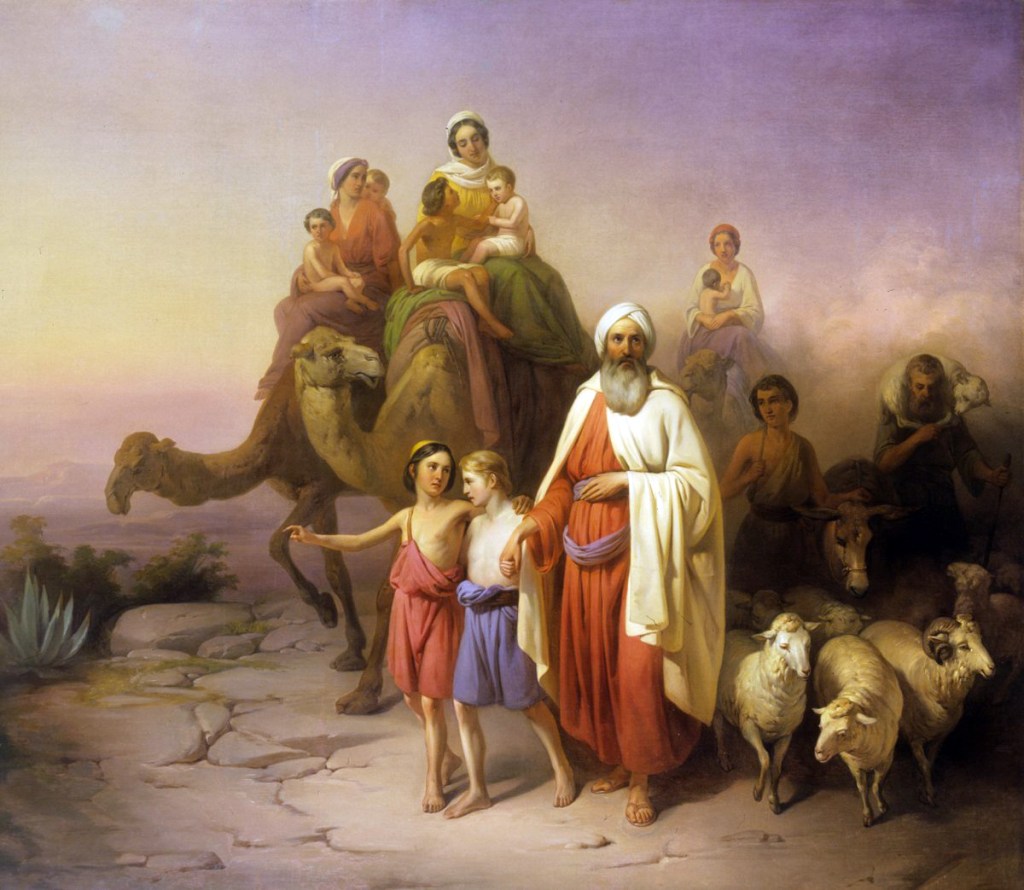
    He’s the progenitor of God’s people, the Israelties. He’s the one through whom the Lord makes his covenant promises. 

    Abraham was the father of Isaac. 

    Isaac is the son who is promised to Abraham and Sarah. He was supernaturally brought about in this couple who were well advanced in years and had never before been able to have children. 

    The line goes from Abraham, to Isaac, to Jacob. 

    This is the line that we see in Genesis. 

    The text mentions Judah and his brothers. This seems to be done to give special attention to the brothers of Judah who are the ancestors of the 12 tribes of Israel. But Biblically, Judah is the most significant because it is he who carries on the royal blood line which leads to Jesus. 

    Now in Genesis, we see a lot of attention given to Abraham, and God’s call upon his life. We see stories of Isaac, and him finding a wife. We stories of Jacob and his brother Esau and the rivalry they had between each other. 

    And there are also stories about Judah, but he’s far overshadowed in Genesis by his brother Joseph. 

    Why is that? 

    Why does Joseph get more attention than Judah when it’s Judah who’s in the line that leads to Jesus? 

    The story of Joseph

    In the Book of Genesis, Joseph is the favored son of Jacob and his brothers hate him for this. This leads into an epic story where his brothers plot against the life of Joseph and he’s sold into Egyptain slavery. But though divine intervention, Joseph will work his way up and gain favor in Pharaoh’s eyes. Joseph has a God given ability to interpret dreams and prophecies a terrible famine which will come. He’s put in charge of preparing Egypt for the famine. When it happens, the Israelites are hard hit. They come to Egypt seeking help and Joseph is able to intervene and to save his family, save the Israelites, and save Judah. 

    Joseph’s story is given so much attention because it saves Judah which continues the family line. 

    I also highlight that because these people in the line start getting a little less attention in the Old Testament. They’re there, they’re mentioned, but they’re somewhat in the background of bigger events. 

    We don’t see the line as prominently throughout the Exodus saga. But they’re there. 

    And God is still working. 

    God is working in the quiet times

    Sometimes the Lord is quietly at work. But he’s no less at work in those times. God is faithful to this line throughout centuries. Working through time and space to bring forth his promised son from this line, the Lord Jesus. 

    God is working today. At some times in our lives, we might see it more clearly than others. At some times in church history, it might seem more apparent. But God is no less at work. 

    God is as intimately connected and at work in our world today as he was these many centuries ago. 

    He’s the God of Abraham, Isaac, and Jacob. He’s the God of David. And he’s the God of today. 

    We continue. Verse 3 mentions Judah as the father of Perez and Zerah by Tamar. 

    Now Tamar is noteworthy because she’s a woman. She’s the first of four women mentioned in this genealogy. 

    The four mothers of Jesus

    So let’s talk about these women in the genealogy. The four mothers of Jesus. 

    Tamar, Rahab, Ruth, and Bathsheeba. 

    You have Ruth, who might be the most morally spotless and unimpeachable woman in the Old Testament. Her first husband died and then she married a distant relative of his and had a son. 

    But then you have Tamar who tricked her father-in-law into sleeping with her and conceived a child by him after her husband died. She disguised herself as a prostitute and sold herself to Judah. A link in the line of Jesus conceived through deception and trickery. 

    Rahab had been a prostitute. 

    Bathsheeba had an affair with King David and David later had her husband, Uriah, sent to the front lines and killed in battle so that he could marry her. The first child they conceived died, but Solomon was another son. But the relationship was forged in adultery and murder. 

    And these are the people in the line that leads to Jesus. 

    Something else that’s noteworthy. One of the commonalities between the four women is that none of them are Israelites. 

    Tamar and Rahab are Canaanites. 

    Ruth is a Moabite. 

    Bathsheeba is a Hittite. 

    And so part of what these four women are doing from the opening of this gospel is showing us that Jesus is for the whole world. 

    Borrowing an idea from Tim Keller. 

    This line gives us kings and prostitutes. Men and women. Jews and gentiles. Saints and sinners. 

    But God works through all of them to bring Jesus into the world. 

    Thanks for reading! If you liked, please share and subscribe! 

  • The four women in the genealogy of Jesus

    The four women in the genealogy of Jesus

    The Gospel of Matthew begins with a genealogy for Jesus. One of the unique features of the genealogy is that it lists four women. 

    Tamar, Rahab, Ruth, and Bathsheeba. 

    This is rare in ancient genealogies (though not unheard of). 

    But it’s interesting that Matthew chooses the four whom he chooses. While these women are fairly prominent, they’re not THE MOST prominent women in the Bible. No mention of Sarah, the wife of Abraham through whom the promise of a son was fulfilled. No mention of Rebekah, the wife of Isaac and mother of Jacob. No mention of Rachel, the beloved wife of Jacob. 

    So let’s talk about these women in the genealogy. The four mothers of Jesus. 

    For starters, it’s a pretty diverse group. 

    You have Ruth, who might be the most morally spotless and unimpeachable woman in the Old Testament. Her first husband died and then she married a distant relative of his and had a son. 

    But then you have Tamar who tricked her father-in-law into sleeping with her and conceived a child by him after her husband died. She disguised herself as a prostitute and sold herself to Judah. A link in the line of Jesus conceived through deception and trickery. 

    Rahab had been a prostitute. 

    Bathsheeba had an affair with King David and David later had her husband, Uriah, sent to the front lines and killed in battle so that he could marry her. The first child they conceived died, but Solomon was another son. But the relationship was forged in adultery and murder. 

    And these are the people in the line that leads to Jesus. 

    Something else that’s noteworthy. 

    One of the commonalities between the four women is that none of them are Israelites. 

    Tamar and Rahab are Canaanites. Ruth is a Moabite. Bathsheeba is a Hittite. 

    And so part of what these four women are doing from the opening of this gospel is showing us that Jesus is for the whole world. This line that leads to Jesus is a picture of the world. 

    But God works through all of these women to bring Jesus into the world. 

    That’s something that’s important for us to remember about the gospel in our own lives and in our interactions with others. That the gospel is for everyone. That no one is too far gone to be redeemed by the love of God. 

    We can look to a person’s past and act like that defines them. We can look to a person’s past and act like that’s who they are. We can look at a person’s sins and act like they will never overcome them. 

    But as Christians, we cannot think that way. We cannot be so cynical. Because we have the good news of the gospel. 

    And that message does change lives. And it does redeem. 

    And we must remember that in our own lives when we’re struggling. That we have a good God who is at work. We must remember that in our interactions with others. That someone who doesn’t know Jesus, someone who doesn’t even want to know Jesus is never so far gone. And we might sometimes be in a person’s life to share the good news with them. To love them. To encourage them. To help them. 

    For more information, visit the Genealogy of Jesus.

    Thanks for reading! If you liked it, please share and subscribe! 

  • Sermon: The Genealogy of Jesus – Matthew 1:2-17

    Sermon: The Genealogy of Jesus – Matthew 1:2-17

    It’s an easy section in the Bible to skip over. The genealogy of Jesus at the beginning of Matthew. 42 names from Abraham to Jesus. It’s not a list meant to be skipped. It’s a picture of the history of God’s people in leading to the savior of the world benign born. It points us to the gospel, to the mission of God, to the power of God, and to the promises of God.

  • Why do Matthew and Luke give two different genealogies for Jesus?

    Why do Matthew and Luke give two different genealogies for Jesus?

    The gospels of Matthew and Luke both give genealogies for Jesus. 

    But they’re different. 

    Not just a little different. 

    From David to Joseph, they’re almost entirely different. Only two names are found in both genealogies in that time period. The genealogies are much more similar from Abraham to David. Matthew has an extra name. That’s not so unusual. Ancient genealogies are not always exhaustive. So person A can be referred to as the father of person B but it might actually be his grandfather or great grandfather, etc. 

    When you get to David, the genealogies diverge in two different directions. 

    Matthew’s genealogy goes from David to Solomon and through Solomon’s line. 

    Luke’s genealogy goes from David to another of his sons, Nathan, and Nathan’s line. 

    Both list Zerubbabel and both list Shealtiel and that is where the commonalities begin and end. 

    But why? 

    There are all sorts of theories. 

    And I’ll be honest. Any solution to this problem is purely speculative. 

    Theory 1 – Joseph’s line and Mary’s line

    One of the oldest theories which goes back to the early church is the suggestion that they’re giving genealogies for both Joseph and for Mary. 

    Simple. 

    That’s possible but it shouldn’t be assumed, most importantly because the text never tells us that. 

    It would be highly unusual to give a woman’s genealogy in ancient times. Although as one scholar pointed out, a virgin birth is also highly unusual. 

    Theory 2 – A royal line and a legal line

    Perhaps one of the genealogies is royal and one is legal. 

    This is ultimately where I land and what I believe is the most like scenario. 

    What’s that mean? 

    So Matthew’s genealogy goes from David to Solomon to Rehoboam to Abidjan, etc. 

    That is the Israelite monarchy of the Old Testament. They’re the kings.

    Those people can be found in Old Testament genealogies. 

    Matthew gives the kings. Luke does not. 

    But both go through David. 

    So one suggestion is that Jesus is in the line of David, but while the royal line goes from David through Solomon, Jesus isn’t part of the Solomonic line. 

    Is that to say that Jesus is not a legitimate royal?

    It’s not saying that. 

    Perhaps the direct royal line had died off and Joseph was next in line. 

    So in that, Matthew could be giving the line of the monarchy which ends up at Joseph. 

    Even if not, Jesus is the divinely appointed Davidic King. We see several instances in the Old Testament where God makes a choice which goes against birth order. Judah was not the oldest of the 12 tribes. Jacob was younger than Esau. Abel was favored over Cain. 

    Certainly we should not think that either of the gospel writers were just arbitrarily listing names. Luke’s genealogy is interesting because it goes another route off of the Davidic line. Luke is very meticulous and detail oriented in his gospel. He knew the Old Testament. Why did he do that? 

    I think he did it because it was true. That was the line. 

    That does not mean Matthew’s genealogy is wrong. 

    Again, the theory that I think makes the most sense is that Matthew is giving the kings. Keep in mind that the monarchy ends long before Jesus. There are people living in the world today who are descendants of monarchies that are no longer in power. 

    And from the line of the kings, Matthew is pointing to Jesus as the final and ultimate king. That also goes with the kingship theme in this gospel. 

    There are other theories. 

    Other theories

    Maybe it’s as simple as Matthew and Luke showing that Joseph himself was related to David from both sides of his family. 

    Maybe Joseph’s parents died and he was adopted and it’s giving the lines of his blood family and his adoptive family. 

    Jesus was adopted by Joseph. Maybe Joseph too had been adopted. 

    And there are other theories. 

    Maybe Joseph’s mom was a widow and his dad had a half brother who married the mother to give Joseph’s father a legal heir and the gospels are giving that genealogy and the genealogy of his biological father. 

    Again, it’s not a new thing that Matthew and Luke have different genealogies. Theologians and scholars have been wrestling with this throughout church history. We have church theologians commenting on this in the third century, but I think it’s safe to say that the question goes back further than that. 

    An important lesson about the Bible

    But here are a couple things to keep in mind. 

    Because sometimes skeptics will point to these different genealogies as a known on the historicity of the Bible. 

    People like to sometimes make it seem like way back in the early history of the church, like they edited the Bible. But the Bible gives us two different genealogies for Jesus and throughout the history of the church, both were left in the gospels because they were original to the books. 

    And that should mean something. 

    It’s a powerful reminder of the efforts throughout the history of the church to preserve the Biblical text and not be editors. But letting the text speak for itself. 

    The Bible is the word of God. 

    All scripture is God breathed (2 Timothy 3:16). 

    Hebrews 4:12 says: 

    the word of God is living and active, sharper than any two-edged sword

    The Word of God does not need to be explained away. 

    Thomas Jefferson was famous for producing his own “bible” where he cut out the parts he disagreed with. That’s not how you treat the Word of God. 

    Matthew and Luke gave those two genealogies, as we have them. 

    And they’re both God’s word. 

    For the skeptics and those who want to use this against the historicity of the Bible or even for the Christian who’s uncomfortable with the discrepancy, that needn’t be so. Just because we don’t know exactly why the genealogies are different does not imply that a solution doesn’t exist. 

    Again, there are no shortage of plausible theories. 

    We just don’t know exactly which one it is. 

    Thanks for reading! If you like, please share, comment and subscribe! 

  • Tim Keller announces stage IV pancreatic cancer

    Tim Keller announces stage IV pancreatic cancer

    I have Stage IV pancreatic cancer. But it is endlessly comforting to have a God who is both infinitely more wise and more loving than I am. He has plenty of good reasons for everything he does and allows that I cannot know, and therein is my hope and strength.Please pray! I know having a God who is beyond our comprehension (esp regarding evil and suffering) is more of a spiritual strength than it is an intellectual problem.
    -Tim Keller

    Pastor Tim Keller shared on social media that his 2020 pancreatic cancer diagnosis has progressed.

    Keller is one of the most popular pastors in America. He founded Redeemer Presbyterian Church in Manhattan in 1989. Keller was an intellectual who could speak of the loftiness of God in a way that engaged thoughtful Christians but also used practical applications and references to the New Yorker and scholarly studies to appeal to the intellectual unbeliever.

    Keller also helped found The Gospel Coalition and has authored several popular books which include “The Reason for God” which answer skeptical questions about the Christian faith. He’s also become a popular speaker at theology conferences. 

    Keller is 71 years old and retired from Redeemer in 2017.

    On a personal note, few people have influenced my preaching and study of the Bible the way Keller has. I think of classic sermons he’s preached on the prodigal son, the fruit of the Spirit, and Jesus turning water into wine. Each of those sermons was a master class in preaching. I’ve been awed by his thoughtfulness. In a world where there’s so much snark and cynicism, Keller has always brought a gentleness. When I saw the update on his cancer this morning, it felt like I had received this bad news about a member of my own family. I love Tim Keller, and I’m thankful for the ways the Lord has used him in my life and in the lives of so many others.