Josh Benner

Category: Christian living

  • Having an “all things to all people” ministry mindset

    all things to all people.JPG

    Originally published April 6, 2016

    In 1 Corinthians 9, the Apostle Paul gives an insight into how he approached ministry. After discussing how he related to Jews, gentiles, and those whom society had looked down upon, Paul sums up how he related to each of these groups by saying that he became “all things to all people.”

    For the Jewish people, they had the Law. In the early church, there was still some uncertainty over which (if any) aspects of the Law people were required to follow.

    Paul was respectful of Jewish customs. He had been born and raised Jewish. And for the sake of building relationships, in certain circles, he would still participate in accordance with various Jewish customs. In Acts 16, Timothy is a young minster who begins doing ministry with Paul. Knowing they would be traveling in heavily Jewish areas, Paul actually has Timothy get circumcised.

    All things to all people.

    People needed to understand that adherence was not what saved a person. Faith is what saves. But it’s also important to understand that, for Paul, in ministering to Jewish people, the purpose wasn’t to get them to give up every aspect of their former life. Practicing things like circumcision or still eating in accordance with the Jewish dietary restrictions were not things that people needed to give up.

    Paul’s purpose was to preach the gospel, the salvation through faith and the work of Jesus at the cross.

    From Jews to Hindus 

    I was at a missions conference a few weeks ago and one of the presenters was talking about barriers missionaries face in evangelizing Hindus in India. India has a billion people, but is only about 2.3% self-identified as Christian. And those numbers haven’t really changed in the past 50 years, in spite of all of the money and missionary efforts in that country.

    Part of the challenge is that Hindus who convert to Christianity often times make radical changes. Not simply Spiritually, but external changes: things like changing their names, changing how they dress, essentially separating themselves from anything that has to do with Hinduism.

    Many American Christians might think that’s a good thing.

    But is it?

    Think about it like this: you know someone and they start going to a new church. And then they start dressing differently. And then they tell you they’ve changed their name….would you think “well that’s wonderful.”

    Of course not.

    You’d think they had just joined a cult!

    Coming to faith in the gospel of is always a spiritually transforming event. But depending on a person’s background, it can also be a significant social change as well. There can be stigmas in certain circles. It can be at the expense of relationships. While the gospel is worth whatever the cost, it does not need to be at the cost of lifestyle decisions that aren’t matters of sin. It can be easy to have extra-Biblical expectations of what a real Christian should act like or do. We should encourage and exhort people to turn away from sin, but not from things which are morally neutral, things like style of dress, tattoos, piercings, and smoking.

    For the Hindus, with things like the style of dress or their first name, or like the Jews to whom Paul was ministering who still practiced circumcision, these weren’t sin issues. These weren’t things that were inherently wrong for the people to be doing.

    While this passage is not an exhaustive manual on how to do ministry, I do think that it is providing an important bedrock example of how we are to spread the good news of the love and forgiveness of Christ in our world.

    All things to all people.

    We have a God who meets us and loves us where we are. And we are to love other people where they are. It’s not about a person getting things together so that we can find them lovable.

    Josh Benner is the associate pastor at Cornerstone Evangelical Free Church in Fergus Falls, Minnesota and has a Master of Divinity from Trinity Evangelical Divinity School. He enjoys writing about faith and culture. He lives with his wife Kari in Minnesota.
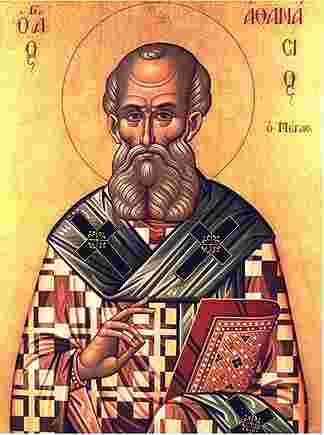
  • 4th century theology of Athanasius still fresh today.

    athanasius

    Originally published March 18, 2016

    Why did Jesus have to die? For years, this puzzled me. I could get on board with the idea that I fell short of God’s perfect standard. But why did Jesus need to die? Couldn’t God have just forgiven me? Like some sort of Spiritual write off?

    One of the best explanations I have ever read for this comes from a fourth century bishop named Athanasius in a work he produced entitled “On the Incarnation.”

    From the beginning, Athanasius provides a treatise on Jesus’ presence in creation, his incarnation as a man, and his necessary death for the reconciliation of humanity.

    Athanasius establishes that Jesus, who created all things, is the same being who renewed the world. In arguing against the Epicureans, the Gnostics, and Plato, Athanasius uses some of his counterarguments in an attempt to further solidify his Christology. For instance, Plato’s idea of God fashioning things from pre-existent matter is used by Athanasius to argue that such a view demotes God from Creator to mere craftsman and that the matter itself was necessarily created by God. From that creation, man was created in a sinless state but had the volition to sin. When mankind fell, it forever tarnished the relationship between man and God. And the sin of man spread throughout all of creation. People began to turn their attention to other things which God had created instead of on the Creator Himself.

    In the second chapter, Athanasius gets into a salvific dilemma about how God can reconcile His glory with man’s sin. “It was impossible; therefore, that God should leave man to be carried off by corruption, because it would be unfitting and unworthy of Himself.” It is not because of any intrinsic value of man, but God’s own nature called for a means of restoration. It will later be argued that to not provide this means would have led to a superfluity of the creation of man in the first place. For man to be created solely for damnation with no hope of salvation would mean that God was ultimately not creating man for Himself. But God could not simply forgive man arbitrarily because this would again have contradicted his perfection as the Lord had already established a prelapsarian injunction which humanity had willingly disobeyed.

    Possible options are speculated as to what God might have done. Mere repentance could not go quite far enough because it wasn’t about merely avoiding a particular sin. It was about being sinful in itself. In doing away with death and corruption, Jesus became a man to conquer those enemies. It couldn’t have been a man who did this because even the most pious men were ultimately sinful. As a result, Jesus was the only means of redemption. The God who had already been intimately involved with creation and the sustenance of the world was also the only means of salvation. While creation itself provided evidence for God’s existence, Athanasius argues that if teleological observations could have had a perfecting quality, that man would not have fallen in the first place. Instead of men recognizing the glory of God through creation itself, in sin, man instead made idols of other elements of creation.

    It could not have been merely Christ coming to earth. He needed to die. To give people reason to believe in Christ’s dominion over creation, and in order to give a reason for a faith that would end the death which was caused by sin, Jesus needed to personally rise from the dead. It couldn’t have been natural. Jesus needed to be witnessed dying, so that his risen state could bring men to faith in God.

    Among his conclusions, Athanasius argues that the transformation which Jesus has had on so many lives is a testimony to the truth of his resurrection. “Does a dead man prick the consciences of men, so that they throw all the traditions of their fathers to the wind?”

    The concluding chapters focus on more in depth refutations of common worldviews. To Judaism, he argues that the Old Testament called for a Messiah, and it called for that Messiah to be martyred. Athanasius next turns his attention to making various apologetic arguments for non-Jewish readers, opposed to believing the gospel.

    At times his Christological claims sound as if written by Paul. At other instances, his matter of fact, street smart logic and gripping analogies seem more modern, perhaps as if they could have been written by C.S. Lewis. I felt like the modern elements seemed most vivid in the apologetic arguments about the transformations in the lives’ of the people who knew Jesus and their willingness to risk everything in proclaiming the truth of his resurrection. At certain points, I found this volume to be laborious. But once the flow of his argument was established, I thought this book seemed much more approachable. Even though the writing presents a long argument, I also felt that Athanasius did a good job, at points, of summarizing the main points that he had made.

    For the time in which it was written, I appreciate the systematized approach to some extremely complicated (but also important) issues. While Athanasius will not convince everyone to his line of thought, I felt that this was a great book in terms of answering the “why” Jesus needed to come. Therein lays the significance of this book. I feel that the “why” question  is so easily taken for granted.

    It’s easy to acknowledge people sin and to say that Jesus needed to die for our sins. But as if in an infantile mentality, I feel it’s so easy to keep reducing the question with “but why?” Why did things have to be as they were? Why couldn’t God simply forgive man? It’s one thing to explain why the incarnation Jesus was an option. With Athanasius, the undertaking was a more structured argument as to why it needed to happen and why it was the only way for reconciliation. In trudging through the difficulties of making the incarnation of Jesus tangible, Athanasius gave the world a true work of brilliance.

    Josh Benner is the associate pastor at Cornerstone Evangelical Free Church in Fergus Falls, Minnesota and has a Master of Divinity from Trinity Evangelical Divinity School. He enjoys writing about faith and culture. He lives with his wife Kari in Minnesota.

  • The gospel in the exodus journey

    photo-1520440718111-45fe694b330a.jpeg

    The exodus journey is the seminal event of the Old Testament. It’s the story of God miraculously delivering the Israelites from slavery for the purpose of bringing them to the promised land.
    The Old Testament constantly calls upon the Israelites to remember what God had done.
    For Christians today, there are a number of parallels between the exodus and the gospel.
    The Israelites were in slavery in Egypt. We were enslaved to sin and Christ redeemed us.
    During the wanderings in the desert, the Israelites complain and rebel. For Christians,  we continue to struggle and rebel.
    God redeemed Israel to bring them to the Promised Land. And Jesus is bringing us into a land too. To a new heaven, a new earth, and a new Jerusalem.
    Both the exodus and the new covenant of the gospel are commemorated with meals. The passover meal was celebrated annually, as a reminder for God’s deliverance in the exodus event and for him sparing the Israelites. With the gospel, we celebrate the Lord’ Supper, communion which is a reminder of Jesus body that was broken for our sin and his blood that was shed for our sin.
    Exodus was in fulfillment of the promises of God to Abraham for land and to Moses for deliverance from slavery. The gospel is fulfillment of God’s promise of providing a Messiah, a king from the Davidic line, a perfect and spotless lamb to be sacrificed.
    In both stories, we see victory in a place where it appeared to be defeat. Israel was caught between the Egyptian army and the sea. It seemed there was no way out. In the gospel, Jesus died on the cross, where it looked like that was the end of Jesus’ ministry. In both stories, what appeared to be the end was just the beginning.
    It was entirely the work of God in freeing his people from slavery in Egypt. And the gospel is entirely the work of the Lord in redeeming us from the penalty of sin.
    Both events are undeniable, indisputable, irrefutable, unimpeachable proof of God’s love. God loved Israel. And God loves you. God so loved the world that he gave his one and only son that whoever believes in him shall not perish but have enteral life (John 3:16). God shows his love that while we were still sinners, Christ died for us (Romans 5:8).
    This event, Israel was constantly called to remember. Because it showed God’s love, it showed his goodness, it showed that he was for his people.
    We see that in the gospel.
    We sin, we have struggles, we have baggage. And everyday, we have opportunities to sin, to respond without faith, to question the goodness of God.
    But instead what we must do is to remember his goodness through the gospel. To remember that Jesus saved us, that he redeemed us.
    To remember that God delivers his people from slavery to freedom. For Christians, because of what Jesus did on the cross, that we have the promise of eternal life. We serve a good God.

    Josh Benner is the associate pastor at Cornerstone Evangelical Free Church in Fergus Falls, Minnesota and has a Master of Divinity from Trinity Evangelical Divinity School. He enjoys writing about faith and culture. He lives with his wife Kari in Minnesota.

  • You’re (probably) misquoting Philippians 4:13 – and why it matters

    photo-1478829797160-c6f45d1447f6.jpeg

    I can do all things through him who strengthens me.
    -Philippians 4:13
    According to Bible Gateway, Philippians 4:13 is the second most popular verse in the New Testament, only behind John 3:16.
    It’s a verse memorized and beloved by many.
    But for as popular as this verse is, it’s also often misunderstood and taken out of context.
    The context of the passage must always influence how we interpret it.
    And what’s the context?
    Paul has just said, in verse 12 that he knows the secret of how to be content in both good and bad circumstances. And it is in the light of that that he says these glorious words. The secret to being content: “I can do all things through him who strengthens me.”
    I did some searches online of people quoting this verse.
    Instagram, popular photo sharing sight, people have quoted this verse over 56,000 times. The most common references I saw were people quoting it in regards to some sort of exercise or fitness goal. I saw others quote Philippians 4:13 after winning beauty pageants or graduating from college.
    Some people, to my surprise, used it in reference to their diet: “Pre workout meal coming up. Healthy creamy chicken with mushroom and sundries tomatoes + brown rice” Philippians 4:13.
    I think this verse almost always gets quoted in conversation with some sort of goal.
    “This is what I want to do. And it’s me and Jesus.” I’m going to win that pageant, I’m going to run that marathon, I’m going to get that promotion because I can do all things through Him who strengthens me.”
    And certainly, Jesus is the God of everything in our lives. It’s GOOD to look at everything we do through the lens of walking with Christ.
    But Philippians 4:13 has nothing to do with accomplishing your personal goals.
    Philippians 4:13 is a verse that’s not about us. It’s about Jesus.
    The verse is not about the power of positive thinking, that you can accomplish your goals with Jesus. It’s not saying that you can overcome hurdles because of Jesus. It’s not telling you that you can do anything you set your mind to because of Jesus.
    Those things might all be true also.
    But that’s not what this verse is saying.
    The verse isn’t saying you can accomplish your dreams, it’s saying that you can survive your nightmares.
    And again, I know that goes against the popular keychain, coffee mug, t-shirt, poster interpretation of this verse.
    My point isn’t to ruin a verse for you that you might love. It’s to point you to the glorious Lord Jesus.
    Because our life is more than personal goals. It’s that when we have been run over, conquered, defeated, everything is going against us, that we can be content and walking in joy because of knowing Jesus.
    And that’s something else I notice when I look at people quoting Philippians 4:13. It’s always when something really good is happening in someone’s life.
    I don’t see people saying “I can do all things through him who strengthens me” when they’ve just lost a job. When they can’t afford to pay utilities.
    Philippians 4:13 is just as true in the bad times as it is in the good times.
    Because our contentment and joy and satisfaction need to always be found in Christ.
    This verse isn’t just calling us to be cheerleaders for God when we’ve finally gotten to the top of the mountain. But to always be praising the glorious God who invites us into life when we are at the bottom of the valley.
    But how do we do at embracing the reality of it?
    The secret of contentment in good times and in bad is knowing that you can do all things through Christ who strengthens you.
    When things really do get tough, when there is total upheaval and uncertainty, are you still able to walk confidently in faith knowing “I can do all things through Him who strengthens me?”
    In America, things are so comfortable for us, you have people living their lives thinking that they don’t need God. That they’re fine on their own. But what about when you’ve lost everything? What about you’re at your lowest?
    What about when you’re going through the worst experience of your life? In those moments, do you turn your back on God. Do you get mad at God? “Why would he do this to me?” Or do you walk with God? Do you rely on God more fully? Do you trust in Him more deeply?
    I can do all things through Him who strengthens me.
    Are you still able to say that when the going gets tough?

    Josh Benner is the associate pastor at Cornerstone Evangelical Free Church in Fergus Falls, Minnesota and has a Master of Divinity from Trinity Evangelical Divinity School. He enjoys writing about faith and culture. He lives with his wife Kari in Minnesota.

  • 8 signs of a maturing Christian

    photo-1507720708252-1ddeb1dbff34.jpeg

    For a person who believes in the gospel, Jesus did not save us from our sin to keep us the same. Salvation happens in an instant by means of faith. But for the rest of life, a person is on a Spiritual journey. The Bible calls for us to walk and live Godly lives, to grow and mature in our faith.

    In our society, we have ma

    But what does that look like? Here are some of the really significant examples that come to mind through the Bible.

    This list is most definitely not exhaustive.

    1. A maturing Christian is committed to love for God and people.
      A maturing Christian follows the Greatest Commandment. As a result, he loves God and loves people (Lev. 19:18; Deut. 6:5; Matt. 22:36 – 40; Mark 12:28 – 31). He loves the Lord with all of his heart, soul, mind, and strength. Further as part of loving God, for a maturing Christian, faith is supreme over everything else in life (Matt. 10:38, 13:45-46). Along with the idea of loving God, a maturing Christian also loves people. It goes hand in hand with the Greatest Commandment, in regards to loving God. It is impossible to truly love God without loving people (Matt. 22:37-40). He shows love to other Christians and grace to non-Christians. He is not prideful, but recognizes shortcomings and the grace of God in his own life (Matt. 28:19; 2 Tim. 4:2). For non-believers, the maturing Christian is more concerned with a desire for the lost to know Jesus and become his disciples than in judging. The maturing Christian is flexible in ministry and evangelism. He’s not afraid to put in the time in to building relationships. He meets people where they are in life (Acts 17:16-34). He also relates to people as individuals (1 Cor. 9:19-23). A maturing Christian recognizes that Jesus is the way, the truth, and the life (John 14:6). Because of this, the maturing Christian has a desire to see others come to know Christ, because a person’s eternal future depends on faith in the gospel. He knows that God has ordained the means through which the gospel is spread to be through his word and through the proclamation of the gospel.
    2. A maturing Christian pursues God daily.
      A daily pursuit of God fosters transformation and growth. While a person is justified once and for all at the moment of conversion, the process of maturing and growing in faith is continual. Means through which a believer grows include prayer, the study of scripture, and fellowship with believers, and obedience to God. Christians also mature through various trials they face in life (James 1:2-4; Romans 5:1-5). A maturing Christian understands that testing from God and discipline from God are part of the Christian life (Deut. 8; Heb. 12). While we don’t have to like the challenges in and of themselves, a maturing Christian knows that God is sovereign, God is providential, God is good, and that all things will ultimately work for good (Rom. 8:28). Through tests, the result for the maturing Christian will ultimately be growth and increased dependence in God and love for God.
    3. A maturing Christian views it as a divine mandate to make disciples.
      In making disciples of all nations, Christians recognize the command of Christ to go out into the world baptizing and telling people the gospel (Matt. 28:16 – 20). Making disciples is more than evangelism (although evangelism is a part of this process). Making disciples is working with converts and helping to challenge and encourage them in their walk with Christ to an even greater love for Jesus, His Church, and people (Prov. 27:17).
    4. A maturing Christian obeys
      The Bible has much to say about God’s moral will for our lives (Exodus 20:1-17; Deut. 6:4-6; Matt. 5-7). As the maturing Christian grows in the knowledge of the word of God through the Bible, the proclamation of the word, and through Christian community, a cognitive dissonance is created where a person knows what they ought to do and has opportunities to either obey or sin.
    5. A maturing Christian repents.
      While a person is forgiven from sins at the moment they come to faith in the Lord Jesus, people still do commit sins in reality (Rom. 7). Christians are called to confess sins and to repent (Matt. 3:8, 4:17; Luke 17:3; 1 John 1:9). Repentance is turning away from sin and turning to God. A maturing Christian recognizes that how she lives matters, and that God has a moral will for how Christians ought to conduct their lives. In having a high value of the weight of sin, a maturing Christian is enabled to have a greater love for the grace of gospel.
    6. A maturing Christian uses his Spiritual gifts to serve in the Church.
      A maturing Christian understands that the purpose for involvement in a church is not merely how it benefits himself but how God can use the gifts which He has given the believer to serve and build up the Church (Rom. 12:6 – 8; 1 Cor. 12:8 – 10, 28; Eph. 4:11). He uses his gifts in building up the body of Christ (1 Cor. 12:12-31) and understands that he is part of the priesthood of all believers. He also considers himself to be a minster of God, regardless of vocation (1 Tim. 2:5; 1 Peter 2:5-9; Hebrews 3:1).
    7. A maturing Christian is sensitive to the commands of God in loving those marginalized by society.
      Believers are called to love those society looks down upon (Matt. 25:31 – 46; Luke 10:25-37). This is from a recognition of the restoration that Jesus ushered in during his earthly ministry (Luke 4:18-21). The Bible also repeatedly talks about loving widows and orphans (Jas. 1:27). The maturing Christian is called to remember those society forgets.
    8. A maturing Christian bears fruit.
      Followers of Jesus will be known to the world by the good fruit that they bear (Matt. 7:16-20). Depending on if a person has faith or not, a person can grow good or bad fruit (Matt. 3:10, 12:33). Bearing fruit is a direct result of fellowship with the Lord Jesus (John 15:4-5). The maturing Christian brings glory to God when fruit is produced in life (John 15:8). Believers are chosen to become more like Christ and a natural product of this is the bearing of fruit (John 15:16). People who are not in relationship with the Lord are incapable of producing good fruit (Luke 6:43-44). The sinful desires are opposed to the Spirit, which produces fruit (Gal. 5:17, 19-21). The life that is led in accordance with the work of the Holy Spirit results in the bearing of the fruit of the Spirit (Gal. 5:22-23).

    Josh Benner is the associate pastor at Cornerstone Evangelical Free Church in Fergus Falls, Minnesota and has a Master of Divinity from Trinity Evangelical Divinity School. He enjoys writing about faith and culture. He lives with his wife Kari in Minnesota.