
Josh Benner

Category: Commentary

  • President Trump meets with Kim Jong-un: let’s see what happens

    1024px-Kim_and_Trump_shaking_hands_at_the_red_carpet_during_the_DPRK–USA_Singapore_Summit.jpg

    Yesterday, President Trump met with North Korean leader Kim Jong-un.
    Some are mocking this, others are celebrating it as a great political and diplomatic victory.
    At this point, it’s too early to tell of any longterm success in this meeting. Regardless of what Kim Jong-un has agreed to, the North Korean leadership has a history of not living up to agreements that they make.
    Time will tell.
    But regardless of a person’s politics, regardless of if someone likes or dislikes President Trump, we should all hope and pray that this meeting will lead to diplomatic success. For the sake of the North Korean people who are suffering under an iron fisted tyranny, for the security of the region, and for the overall safety of the world, we should all want this meeting to lead to good results.
    The welfare of the Korean people who are kept in abject poverty, who are fed propaganda and not food, who are kept in Soviet style gulags by the tens of thousands, needs to improve. And we need to see North Korea finally honor their commitments to dismantle their nuclear program. If those things don’t happen, the photo op, the political goodwill, it’s all meaningless.
    If this meeting doesn’t help lead to significant change, the photos will be infamous of a sitting president and a dictator. Sound bites of the president complimenting Kim for his leadership will forever be to Trump’s mockery.
    As others have pointed out, there is no middle ground in this deal. It will be a success or a total failure.
    Time will tell. Prayers for North Korea.


    Josh Benner
    is the associate pastor at Cornerstone Evangelical Free Church in Fergus Falls, Minnesota and has a Master of Divinity from Trinity Evangelical Divinity School. He enjoys writing about faith and culture. He lives with his wife Kari in Minnesota.


  • Law and grace in Les Miserables

    LesMisLogoOriginally published October 8, 2015

    I am a huge fan of the musical Les Miserables. I saw it on Broadway when I was 11, and I thought it was just about the most amazing thing ever.  (more…)

  • The meaning of life and the suicide rate in America

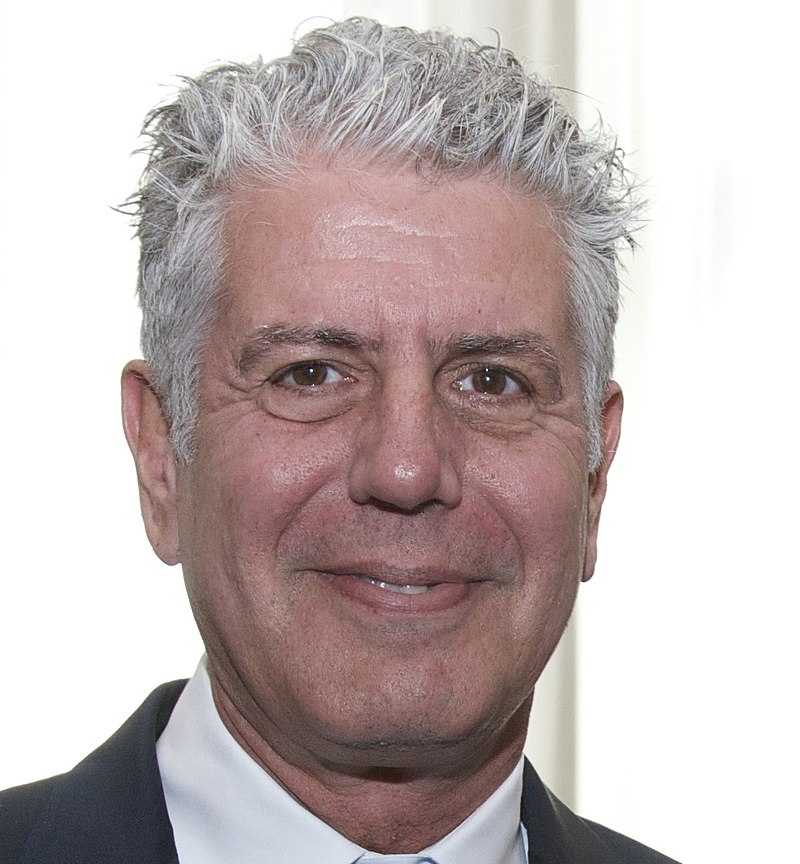
    800px-Anthony_Bourdain_2014_(cropped).jpg
    Photo courtesy of Wikimedia Commons

    This week, two celebrities committed suicide. Designer Kate Speed took her life on Tuesday. This morning, we learned that celebrity chef Anthony Bourdain took his life in France.

    It’s a tragic thing when a person is in despair to the point where that is seen as the only resort. If you happen to be reading this and you’re currently dealing with suicidal thoughts, call the National Suicide Prevention Lifeline at 1800-273-8255 or visit their website at suicidepreventionlifeline.org.

    Suicide has many complicated factors. Mental illness and depression often times play a role. There has been a lot of discussion about mental illness in this country in recent years. As well there should be.

    Suicide is a sensitive issue. There were over 44,000 suicides in America in 2016. Tens of thousands more each year, impacting hundreds of thousands of families, spouses, children, and friends.

    Whenever there’s a high profile suicide, I read articles. And I see the comments that people make. People will talk about mental illness and depression (again, both very real and significant issues). But I feel that some people can be overly fatalistic about suicide. Like there was no other way that things could have turned out. Like there was nothing that could have been done. Like a person was so imprisoned to mental illness that they were beyond helping.

    I reject that idea.

    There is always hope. There are always people who care. There is always a reason to live.

    It’s a mental illness and it can impact judgment.  But the complex factors of suicide are deeper than only mental illness and depression. It’s also cultural. Suicide rates are not equal from one society to another. Rates fluctuate over time.

    There’s often a copycat element to these tragedies. Where one person commits suicide and another also makes that choice. Suicide doesn’t equally impact every group within society (another reason why I reject that it’s only about mental illness and a person has no mental faculties in getting help). In America, caucasians commit suicide at more than twice the rate of African Americans (despite having lower rates of depression).

    It’s a complicated issue.

    When people look at it purely as a result of mental illness, I think that undermines the morality of the issue. It is a moral issue because it impacts families and society. It’s immoral. And I feel like many in our society are afraid to acknowledge that.

    Rates have unfortunately increased in the United States. Rates are also going up in many other industrialized countries. It is a concern that as societies get more secular, they lose objective meaning in life. Some existentialists look at meaning as something someone can decide for themselves. But other philosophers took this to the opposite end of the spectrum and looked at life as futile.

    The only true source of meaning in life is found in God. He has created the world and made humanity and he’s made us with the purpose of knowing him and worshipping him.

    No matter what you’re going through, what you’re struggling with, God has a purpose for you and wants you to trust in him and to know him. Your life has meaning and Jesus showed that at the cross when he died to save sinful people. He died so that we could live.

    Viktor Frankl, who survived the Holocaust wrote: “Those who have a ‘why’ to live, can bear with almost any ‘how’.”

    Josh Benner is the associate pastor at Cornerstone Evangelical Free Church in Fergus Falls, Minnesota and has a Master of Divinity from Trinity Evangelical Divinity School. He enjoys writing about faith and culture. He lives with his wife Kari in Minnesota.
  • D-Day teaches us about faithful service

    1024px-Into_the_Jaws_of_Death_23-0455M_edit.jpg
    What do baseball hall of famer Yogi Berra, legendary actor Henry Fonda, “Catcher in the Rye” author J.D. Salinger, Obi-Wan Kenobi (Alec Guiness), and Scottie from the original Star Trek (James Doohan) have in common? All were part of the Normandy invasion.
    74 years ago today, Allied forces invaded Normandy, France which had been occupied by the Germans.
    156,115 men from the United States, Britain, and 11 other countries landed in Normandy during D-Day. More than 4,000 lost their lives. It was, and is – and hopefully always will be – the largest amphibious assault ever undertaken.
    The D-Day victory was crucial for the Allied Powers and helped set the stage for eventual victory in Europe. The invasion was so crucial because it it gave the Allied Forces a good access point into continental Europe.
    It’s interesting to think about the famous men who had roles in the Normandy invasion. None of them are famous because of Normandy. And unless you’re a huge World War II buff or have a relative who served in that battle, you probably struggle to name anyone who fought at Normandy.
    We live in such a “look at me” culture.
    But doing great things is not always about the recognition.
    Today there are too many people who want glory for its own sake. Not because they necessarily want to do something great but because they want to be thought of as great. There are people who want to be famous for its own sake.
    But there are also many who are doing great things. There are doctors who are making new discoveries which impact our health. They’ll never be household names. There are teachers whose names we’ll never hear but who are making differences in the lives of students and impacting students who will impact others and the ripples of that service will be felt in the next generation and in the generation after that. There are innovators who are working to change the world.
    Some of these people we obviously will hear about.
    But many we won’t.
    When kids play backyard football, no one ever pretends to be an offensive linemen. It’s all about being the quarterback, running back, or wide receiver. But to win, you need the whole team. And everyone matters to the team.
    I think about this in the church as well. We all have ways to serve. We all have ways how God has gifted us for the sake of building up his church. But everyone has a unique way to fit in. As the Apostle Paul draws an analogy to the human body, everyone in the Church is a part of the body. And the stakes are eternal as we work to spread the gospel, to make disciples, and to challenge, love, and encourage one another.
    How are you using the ways how God has gifted you today?
    Josh Benner is the associate pastor at Cornerstone Evangelical Free Church in Fergus Falls, Minnesota and has a Master of Divinity from Trinity Evangelical Divinity School. He enjoys writing about faith and culture. He lives with his wife Kari in Minnesota.
  • Grumbling: when we forget God’s goodness

    photo-1473580044384-7ba9967e16a0.jpeg
    In the Book of Exodus, God had worked in mighty ways for the Israelites. He had brought a series of plagues against the Egyptians. He dramatically parted the waters of the Red Sea. Once the Israelites were in the desert, God continued to lead. But through a series of uncertain events, the Israelites continued to respond by grumbling.

    They ran low on water. Israel grumbled. God provided water. They didn’t have food. Israel grumbled. God provided food. After all that the Lord had done, the people should have trusted that God would provide.

    But their struggle is one that we too can have. In spite of all of the ways how God has provided for us, blessed us, sustained us, in a time of adversity, it can be easy to fall into grumbling and doubt.

    But this isn’t God’s desire for us. He wants us to live in faith.

    We can be so quick to forget what God has done, how he’s blessed us.
    Forgetting can lead to unbelief and faithlessness.
    Let us actively remember the blessings of the Lord in our lives.
    We forget about his past blessings and forget about his future promises.
    And so we grumble.
    God is the Lord of our past, present, and future.
    God has promise all of his children a wonderful and glorious future.
    And between now and then, he has not abandoned us in the desert.
    God is God of your life today.
    If you’ve placed faith in Jesus, you know that you’re a sinner, saved by grace, and know that Jesus saved you, you have that to thank God for.
    Ad that’s the most important thing of all.
    He redeemed you. He saved you from the penalty of sin. To remember that the Lord is good. The Israelites lose sight of that.
    To remember that God made everything and that everything belongs to him.
    You’re here today. Which means that God has provided for you up to this point in your life. For some of us, it might not have always been easy.
    There might have been times of real hardship.
    But we’ve made it to this moment.
    It’s easy to forget.
    For some of us, when a blessing gets answered, we might celebrate for a moment, but it can be easy to just move on to the next thing to stress about.
    And we can go through so much of our lives grumbling, complaining to God, feeling like he hasn’t given us enough.
    For the Israelites, they’ve seen God act in mighty ways, but then they go right back to worrying.
    The Israelites face difficult situations. And they choose to grumble instead of trust.
    Part of the root of a grumbling heart is one that loses sight of the sovereignty of God.
    I mentioned earlier that it was God who had led Israel to their circumstance between the Egyptians and the sea. It was no accident.
    It was God who was leading the Israelites in the desert. It’s so easy to lose sight of the divine hand of God at work in our lives. Israel did. In our passages, they actually don’t even grumble directly to God. They actually grumble to Moses and his brother Aaron.
    As if it was their fault.
    Nothing happens outside of the sovereign will of God.
    And while they might have directed their complaints to Moses and Aaron, the real displeasure of the people was with God.
    God is God of all circumstances.
    Job 12:10 refers to God and says:
    In his hand is the life of every living thing
    and the breath of all mankind.
    Grumbling is a lack of trust in God. Grumbling is feeling like God hasn’t give us enough. It’s a sense that perhaps God isn’t good.
    Grumbling is turning away from God. It’s complaining to others, it’s ignoring the goodness of God, and is not rooted in the truth of the character of the Lord.
    We don’t like the unknown.
    Israel didn’t know how they’d get water, they didn’t know how they’d get food. And even with the promises and presence of God, they didn’t know how it was all going to work out.
    At a certain point, you need to walk by faith and not by sight (2 Corinthians 5:7).
    I think we sometimes look at the Old Testament. We see the things God did there and think “well yeah, it’d be easy to believe back then.” But people still often struggled, even when seeing incredible signs and miracles that the Lord was doing.
    Because it’s not constant wonderment and awe. We live in the real world and it’s really imperfect.
    But when we don’t know what’s going to happen, when we don’t see the clearest path of how we’re going to get to a destination, let me challenge you today.
    Instead of doubting or being a catastrophist, instead look to God and see how he’s going to work.
    Do you have a situation in your life right now? That’s causing you stress? That’s robbing you of joy? That’s distracting you from God and where you’re tempted to grumble?
    Let me challenge you in that situation to consider that the same God who’s blessed your life, the same Lord who came into the world and died so that you be reconciled to him, the same God who has made you eternal and glorious promises is also your God for today.

    Josh Benner is the associate pastor at Cornerstone Evangelical Free Church in Fergus Falls, Minnesota and has a Master of Divinity from Trinity Evangelical Divinity School. He enjoys writing about faith and culture. He lives with his wife Kari in Minnesota.