Josh Benner

Category: Commentary

  • Glimpses of the work of God in the world

    DSC_6621.jpg
    Jesus taught: “Blessed are the pure in heart, for they shall see God.”
    With the promises of the Lord, there’s a sense of the present fulfillment of the promise, but it points to a later and greater fulfillment in heaven.
    So for the present day, we do get a sense of the Lord, we are invited into a relationship with Christ, growing in our knowledge of him, knowing him better.
    There can be times in our lives, seasons of our lives where we find his presence especially strong in our lives. We get glimpses.
    We can appreciate and have a sense of awe for the Lord who created everything when we truly behold his creation, see the beauty of the sunset or stand at the foot of a mountain.
    We have moments when we see people coming to faith in the Lord, born again to the hope of the gospel, and when we see lives transformed, people made new by the power of God’s saving work.
    So in little ways, we get glimpses of God’s glory, of his work in the world.
    But the pure in heart, shall see God.
    The Christian life, is still being lived in a fallen world, we still deal with our own sins and the ramifications of the sins of others. We still get sick and die.
    We shall behold of his glory and holiness in heaven. Not in a glimpse or a flicker of light, but beholding the glory of God, the awesomeness of the Lord for eternity
    In the Old Testament, we are told that a person could not see God the face of God and live.
    God is so glorious, he is so holy, he is so pure, so full of life and light that sinful people cannot behold his glory.

    But the promise of Jesus is an eternal blessing in the presence of the Lord. And for that, we should rejoice. We should enjoy the blessings he has given us today. But to know that they are merely appetizers to the greater feast.

    Josh Benner is the associate pastor at Cornerstone Evangelical Free Church in Fergus Falls, Minnesota and has a Master of Divinity from Trinity Evangelical Divinity School. He enjoys writing about faith and culture. He lives with his wife Kari in Minnesota.

  • Pro-life: compromise vs practicality

    ap,550x550,16x12,1,transparent,t.u2
    Matt Walsh wrote an interesting piece for the DailyWire today. He was comparing the gun rights advocates to the pro-life movement.
    Walsh argues that the pro-life movement could learn from the gun rights advocates.
    The gun rights movement has a different attitude. They won’t give an inch. Ever. At all. They treat even the most mild gun restriction as a tyrannical assault on our way of life. They won’t agree that any gun should be banned. They won’t allow for any exceptions. They aren’t just in favor of gun rights. They are radically, absolutely, unequivocally in favor of gun rights. They are extremists about guns. And I don’t say that pejoratively. We ought to be extreme in our defense of our principles. Every gun rights advocate ought to be an extreme advocate. Every pro-lifer ought to be an extreme pro-lifer. That is the lesson here, I think.
    -Matt Walsh
    I normally agree with Matt Walsh but I think there’s a major flaw in his reasoning.
    Walsh argues that the gun rights advocates don’t budge, don’t give an inch, and that the pro life crowd celebrates seemingly small wins. But the gun advocates have the constitution on their side. Pro life advocates don’t (in fact, the supreme court precedent is against them).
    So the gun advocates are on top of a hill and defending their territory.
    The pro life crowd is on offense, trying to advance the agenda.
    The analogy is really rather that the gun rights advocates are similar to the pro-choice movement in that the pro-choice side also fights tooth and nail and doesn’t like to give an inch.
    Walsh criticizes the pro-life movement for being too quick to compromise. What’s the alternative? Especially when there is such vehement opposition? It’s not like a pro-life bill gets passed and the pro-choice advocates sit back and do nothing. States have passed laws requiring abortion clinics to educate women on alternative options. There’s a 2015 law in California which forces pro-life advocacy centers to post information about abortion. The battle rages on.
    You have to do things one step at a time. And so conservative state legislatures pass laws that help.  Walsh seems to call that “compromise,” but it’s utilitarian, it’s doing what you can today to save the unborn. Will it save them all? Sadly, no.
    Just because you can’t save everyone doesn’t mean you should give up at trying to save anyone in the pursuit of saving everyone. You do what you can.
    The pro-life side should most certainly not compromise or flinch from the value of all human lives, and having a deserve to protect the unborn. It should not compromise from the reality that life begins at conception. It should not compromise that abortion is wrong, because it is taking a life. And the pro-life side should continue beating the drum and fighting for new laws.

    Josh Benner is the associate pastor at Cornerstone Evangelical Free Church in Fergus Falls, Minnesota and has a Master of Divinity from Trinity Evangelical Divinity School. He enjoys writing about faith and culture. He lives with his wife Kari in Minnesota.

  • Wisdom is as wisdom does

    Originally published March 8, 2017

    There are two ways to go. The way of the wise and the way of the fool. This is based off of the wisdom tradition of the Old Testament. Which often talks about these two roads.

    In James 3:13, he asks a rhetorical question, “Who is wise in understanding among you?”

    Who’s wise?

    James has much to say about wisdom.

    There’s a difference between wisdom and knowledge. Knowledge is knowing facts. Wisdom is living out a life that is applying what God has revealed.

    Knowledge is knowing that you have brownie mix in the pantry. Wisdom is making brownies.

    Since wisdom isn’t just knowing things but living according to what God has made known, it follows that if a person really is wise, they should live a life that validates what they believe. James says, “Let them show it by their good life, by deeds done in the humility that comes from wisdom” (3:13).

    In the context of the Bible, wisdom begins with a fear of the Lord.

    The book of Proverbs says that the fear of the Lord is the beginning of knowledge. And that fools despise wisdom and instruction (Proverbs 1:7).

    There are two ways to go. The way of the wise and the way of the foolish.

    Fear of the Lord leads to knowledge, which leads to humility before the Lord.

    Fear of the Lord is reverence for the Lord, for his power and might. Fear of the Lord is fear of the wrath that can come as a result of rejecting him. Fear of the Lord is the knowledge that we don’t deserve him on our own. That it is only because God is good that we have hope. Without the work of Christ on the cross, there would be no hope. The knowledge that Jesus died a death he didn’t have to die but he did it because he loved us. That he didn’t die to save righteous people, but he came to save sinful people.

    And realizing that is the beginning of wisdom. Proverbs 9:10 says, “The fear of the Lord is the beginning of wisdom, and the knowledge of the Holy One is insight.”

    And along with having a fear of God is coming to him in humility.

    In Mere Christianity, CS Lewis said, “As long as you are proud you cannot know God. A proud man is always looking down on thing and people: and, of course, as long as you are looking down you cannot see something that is above you.”

    So we validate our faith by living out our faith. We show that we are wise by living a life that reflects our wisdom.

    We sometimes get too far into thinking that different opinions are all valid when it comes to faith.

    Now, certainly we should be loving to all people, regardless of what they believe. Certainly we live in a society where we have to function and coexist with different people who have different view in regards to faith.

    And that’s important for life.

    But that doesn’t mean all views are equally valid.

    But our society likes to think that’s true of God. That that’s how God is.

    But that isn’t reality. It is God who created us. God who created the heavens and the earth. God who rules and reigns. It is God who is sovereign over all creation. And it is we who are ultimately accountable to him alone. It is not the other way around.

    We like to judge God. We like to say how God should be.

    But all of this shows the vanity of the human heart. It shows the idolatry of the human heart. We try to make ourselves God. We try to make ourselves the judge. Too many people ignore the things that God has said. Too many people ignore the things that Jesus has said “I am the way and the truth and the life, no one comes to the father except through me.”

    We have an opinion about God that we like, and then we decide that’s just how God is. But sometimes we say things that have no Biblical basis.

    So a person doesn’t like the idea that God would judge, so they just decide that’s not how God is.

    People ignore the Bible and make arguments based on emotion or preference as opposed to what God has revealed about himself.

    Is that fear of the Lord? Is that humility with God?

    People want the good things with Jesus but they try to undermine that he alone is the way. That his blood alone cleanses sin. That his death alone paid the price.

    There are two ways in the Bible. The way of wisdom and the way of foolishness. When we try to make boxes and explain why God has to fit into that box, we’re keeping ourselves from God.

    We don’t get to invent God. The beginning of wisdom is the fear of the Lord. And in fearing the Lord, it is recognizing that God is God, and that God is the almighty creator and King of the Universe.

    True wisdom is showing humility, and at the foot of the cross, there’s no room for arrogance. In seeing what Jesus has done, in seeing his work, in seeing the death he died for the forgiveness of our sins. To see the tremendous cost of sin, the cost that Jesus paid for us, the death he endured for us. To see the life that he’s invited us to. To see the awesome holiness of God.

    To see where God is bringing us, the place he has prepared for us, the new heavens and the new earth he is making. That we are unworthy on our own. And it’s not that we can make ourselves worthy but this infinitely glorious home that God has prepared, that it is entirely because of the love of God, the goodness of God, the grace of God.

    Josh Benner is the associate pastor at Cornerstone Evangelical Free Church in Fergus Falls, Minnesota and has a Master of Divinity from Trinity Evangelical Divinity School. He enjoys writing about faith and culture. He lives with his wife Kari in Minnesota.

  • Thousands sign petition for national holiday in honor of Billy Graham

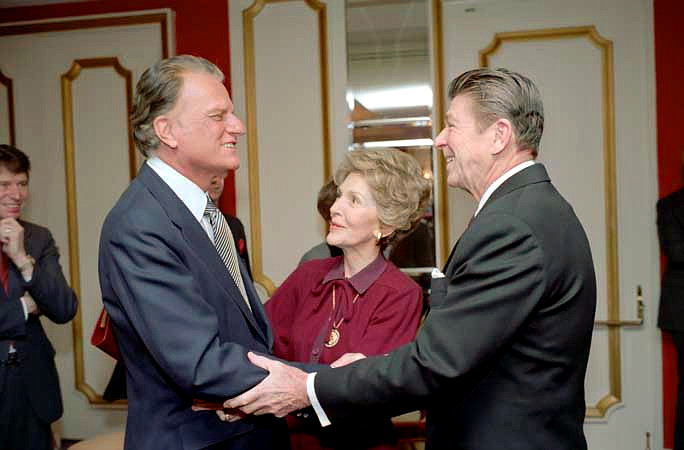
    Reagans_with_Billy_Graham.jpg

    There’s an online petition that’s gathered thousands of signatures in favor of doing just that. The petition currently has over 71,000 signatures and the numbers are surging.

    Billy Graham’s ministry and life revolved around pointing people to Jesus.

    It was a man telling the world about someone greater than he.

    So the idea of having a holiday named after Graham doesn’t honor his legacy. It goes against what he stood for. It’s too aggrandizing.

    From reading comments on change.org, many people talk about Graham’s impact (indisputable) and have this sense of Graham “deserving” this honor.

    If you want to honor Billy Graham and what he stood for, tell someone about Jesus.

    The petition says:

    Lets get a National Holiday for Billy Graham!! Mr. Graham preached the Gospel to more people in live audiences than anyone else in history—nearly 215 million people in more than 185 countries and territories—through various meetings, including Mission World and Global Mission. Hundreds of millions more have been reached through television, video, film, and webcasts. Mr. Graham’s counsel was sought by presidents, and his appeal in both the secular and religious arenas is evidenced by the wide range of groups that have honored him, including numerous honorary doctorates from many institutions in the U.S. and abroad. Help us with our cause of setting a national holiday to remember this great man.

    Undoubtedly, many non-Christians oppose this arguing “separation of church and state.” And to their point, I think it’s highly unlikely that this holiday would come to fruition.

    But even for Christians, we should not be concerned with lionizing mere men.

    Josh Benner is the associate pastor at Cornerstone Evangelical Free Church in Fergus Falls, Minnesota and has a Master of Divinity from Trinity Evangelical Divinity School. He enjoys writing about faith and culture. He lives with his wife Kari in Minnesota.
  • The science of timing and how to maximize your day

    41Z0sxEkUBL._SX329_BO1,204,203,200_

    I’m finishing up the new book “When: the scientific secrets of perfect timing” by Daniel H. Pink. Pink writes on management and behavioral science.
    Everyone knows that timing is everything. But we don’t know much about timing itself. Our lives are a never-ending stream of “when” decisions: when to start a business, schedule a class, get serious about a person. Yet we make those decisions based on intuition and guesswork.
    Timing, it’s often assumed, is an art. In When: The Scientific Secrets of Perfect Timing, Pink shows that timing is really a science.
    This book was helpful for me. Since getting married last year, I’ve spent a lot of time evaluating my schedule and how I utilize time.
    How do we maximize our time?
    We all have times of the day that are more optimal for us to get work done. From “When” and numerous other books I’ve read on the subject, it is essential for people who work in fields that take a lot of mental energy to allow their minds time to recharge.
    To some, that might seem lazy.
    But it’s really just human nature. We have a finite amount of physical and mental energy.
    Pink talks in the book about how it used to be a badge of honor for people who worked long hours and sacrificed sleep to work. But how, often times, the quality of the work struggles when people do that.
    We aren’t robots who can just devote endless hours to accomplishing tasks.
    What is more likely to happen is that our minds start to wander and drift and we have time that is spent pretending to work, or looking like we’re working but actually accomplishing very little. In reality, people spend a lot of time socializing, texting, playing on their phones, looking online.
    In one study (not mentioned in this book), 1,989 British office workers were found to spend just less than three hours a day actually working.
    This is a reality of what happens.
    So my interest is in maximizing efficiency in that.
    And that’s where I found “When” helpful, because part of what this book did was analyze the rhythms of the day. It’s important to structure the day where we are working on what’s important at our optimal times of productivity.
    Many (not all) adults are able to hit the ground running in the morning. As the morning goes on, closer to lunch time, that mental productivity can wane. In the middle of the afternoon, around 2:30, our productivity hits another low.
    For many people, we hit a rut approximately seven hours after waking up.
     And the peaks and valleys of the day have real consequences. Citing numerous studies, in the late morning and mid-afternoon lulls, there is a statistical increase in medical errors during surgery; people who are up for parole have a higher chance of being denied; test scores go down for students.
    So with this knowledge and applying it to life, it might be a waste of prime mental real estate to start the day off by doing a relatively mindless task like checking emails.
    The book also talks of the importance of rest. But not just any rest but productive rest. Pink argues that checking text messages on a break can actually be counterproductive. We do many things that aren’t productive but which also aren’t conducive to rest and recharging. And perhaps the lack of rest also perpetuates the problem of a lack of productivity.
    Work hard, play hard.
    I thought the book was well-written, well researched, practical. I’d recommend it.
    Josh Benner is the associate pastor at Cornerstone Evangelical Free Church in Fergus Falls, Minnesota and has a Master of Divinity from Trinity Evangelical Divinity School. He enjoys writing about faith and culture. He lives with his wife Kari in Minnesota.