Josh Benner

Category: Commentary

  • People missed the significance of the first Christmas – but how do you respond to Jesus this Christmas?

    People missed the significance of the first Christmas – but how do you respond to Jesus this Christmas?

    There are two kinds of important days. 

    There are the important days that we know are important at the time. And there are the important days when we only know of their significance with hindsight. 

    A couple weeks ago, we had the anniversary of an important day in American history when we remembered the 80th anniversary of the Pearl Harbor attacks on December 7, 1941. 

    Other important days in American history. 

    November 22, 1963, the day President Kennedy died. 

    September 11, 2001.

    You knew those were historic days at the time. 

    And that’s also true in our personal lives. 

    There are some days that you know are monumental days at the time. 

    The day you get married. The day kids are born. 

    But as we begin in our passage this morning, I want to talk for a moment about the days that matter but that we don’t know matter until after the fact. 

    On June 28, 1914, the heir to the throne of Austria-Hungary was killed. It was a story at the time, but to observers, it seemed like a regional matter that wouldn’t extend much past Eastern Europe. In reality that event was the spark that led to the outbreak of World War I, the most destructive war the world had ever seen at that time.

    The days that matter that you don’t know matter. 

    The first time you ever heard of Covid-19 in China, you probably never imagined that it was going to turn our world upside down. 

    Think about the day the lightbulb was invented. The world was going to change but most people had no idea.

    It’s always a fascinating thought to me. That such significant days can be days when you don’t know it at the time. 

    I think of one of the most significant days in my life. February 20, 2017. It was on that day that I talked to a girl on eharmony.com who I thought looked cute. I had no idea at the time, but that was the first day I ever talked to my wife. 

    Think about the day a famous person was born. No one knows it at the time. A future president, or leading actor, or star athlete could be in the process of being born this very morning and we wouldn’t know it. 

    And I think of that with the events surrounding the first Christmas Eve. 

    Human history was about to forever change. 

    For people who lived in Bethlehem on that first Christmas Eve, their little town was about to be center stage to events that we’d be talking about 2,000 years later, events that were so significant that time itself is calculated by its proximity to them. 

    And for the average person living in Bethlehem on that first Christmas Eve, they would have had no idea. 

    Think about that. 

    Song – While you were sleeping

    One of my favorite newer Christmas songs of the last several years comes from the Christian band Casting Crowns. The song is titled “While you were sleeping.” 

    And the song considers this world-changing event. Christ coming into the world, and how it happened on – for many people – just any other ordinary night. 

    The song says: 

    O Bethlehem, what you have missed while you were sleeping

    For God became a man

    And stepped into your world today

    O Bethlehem, you will go down in history

    As a city with no room for its King

    While you were sleeping

    While you were sleeping

    The world kept turning. On that first Christmas and over the coming weeks and months, people continued to live their lives. 

    For the average person living at the time, that seems to be the most likely response at the advent of Christ. Unawareness. Obliviousness. 

    But there were some who had heard about the birth of Jesus. You have wise men who sought this newborn baby out. You have King Herod who heard the news but who was not overjoyed at the prospect of another king living in his territory. And you have Herod’s priests and scribes, those who were most learned in the Old Testament, yet who would miss the significance of the moment.  

    The first Christmas, many didn’t realize what had happened. But since that first Christmas, the rest of history has been turned upside down. 

    It was easy to be blissfully unaware of Jesus as a baby. But what do you do with him as a man? What do you do with him as a teacher? What do you do with him as a prophet? What do you do with him as a savior? What do you do with him as Lod? 

    Some will continue to ignore him, some will continue to miss the significance of who he is, some will continue to actively oppose him. 

    But will you come to him and worship him?

    It might have been easy to dismiss a baby, but that baby grew and became the savior of the world. That baby went to the cross. That tomb was empty on the third day. 

    What do you do with all of that? 

    Will you continue to overlook the significance of Jesus and who he is? 

    Or will you come to him and worship him as Lord? 

    People ignored and overlooked the significance on the first Christmas but what are you doing with Jesus this Christmas? 

    He invites you to come to him, to know him. 

    Thanks for reading! If you liked it, please share and subscribe!

  • Jesus is Immanuel. Studying Matthew 1:21-25

    Jesus is Immanuel. Studying Matthew 1:21-25

    In Matthew chapter 1, Mary and Joseph are both told some amazing news. Mary is going to have a child who has been miraculously conceived through the Holy Spirit. 

    In verse 21, Joseph is told:

    She will bear a son, and you shall call his name Jesus, for he will save his people from their sins.”

    The name Jesus means the Lord’s salvation. 

    Jesus has a special name that points to his ministry in the world. 

    Joseph would not get to choose the name for this adopted son. The name was given.

    In verses 22-23, Matthew says:  All this took place to fulfill what the Lord had spoken by the prophet: 

    23 “Behold, the virgin shall conceive and bear a son, 

    and they shall call his name Immanuel” 

    Background for the Immanuel prophecy

    This is a reference to Isaiah 7:14. 

    It’s the eighth century B.C. Israel is a divided kingdom. 

    The Davidic Monarchy rules Judah, the southern kingdom. The king is a man named Ahaz. He’s not a good king. 

    Now the regional superpower of that day is Assyria and they pose a threat. 

    Syria and the Northern Kingdom of Israel try to form an alliance against Assyria and want Ahaz in the southern kingdom to join. 

    King Ahaaz is given a divine promise that they will prevail and he’s told by God to ask for a sign. 

    Ahaz refuses this divine command, but he refuses because he doesn’t trust the Lord and will try to go his own way. Instead of trusting the Lord, he will pay off the Assyrians not to attack them but will give them the gold and silver of the temple for protection. 

    So the Lord tells Ahaz to ask a sign. Ahaz refuses. 

    But he’s given a sign anyway. 


    Isaiah 7:13-14:

    ​​13 And he said, “Hear then, O house of David! Is it too little for you to weary men, that you weary my God also? 14 Therefore the Lord himself will give you a sign. Behold, the virgin shall conceive and bear a son, and shall call his name Immanuel.

    Immanuel in Isaiah

    I take the prophecy as having a double fulfillment. In other words, it was fulfilled in the 8th century B.C. and it was fulfilled again in Christ. 

    For its first fulfillment, the Immanuel prophecy is given in Isaiah 7. In Isaiah 8, the Prophet Isaiah’s wife has a baby. The baby’s name is Maher-shalal-hash-baz. In Hebrew, that means “quick to plunder, swift to spoil.” 

    And it’s a judgment against Syria and the Northern Kingdom of Israel and looks to their impending destruction. 

    Isaiah’s son represents Immanuel in the Old Testament. Immanuel is less a first name and more a title. There’s no one in the whole Bible with the name Immanuel. But it’s what it represents that matters. The name Immanuel, as Matthew tells us, means “God with us.” 

    God was with Ahaz and the southern tribes, despite their unfaithfulness. The southern kingdom would face their judgment a century later, but God preserved the monarchy.

    So that’s the first fulfillment and what it meant in the days of Ahaz. 

    But it also points forward to a greater Immanuel to come. It clearly points forward to the future because in Isaiah 9, the prophet points to a great king who will have a never ending kingdom. 

    It points to a child who would be born and rule on the throne of David. 


    Isaiah 9:6-7: 

    6 For to us a child is born, to us a son is given; 

    and the government shall be upon his shoulder, 

    and his name shall be called 

    Wonderful Counselor, Mighty God, 

    Everlasting Father, Prince of Peace. 

    7 Of the increase of his government and of peace 

    there will be no end, 

    on the throne of David and over his kingdom, 

    to establish it and to uphold it 

    with justice and with righteousness 

    from this time forth and forevermore. 

    The zeal of the Lord of hosts will do this. 

    This is fulfilled by the second Immanuel. 

    Immanuel in Matthew

    22 All this took place to fulfill what the Lord had spoken by the prophet: 23 “Behold, the virgin shall conceive and bear a son, and they shall call his name Immanuel” 

    Matthew shows that Isaiah is pointing to Jesus. 

    Jesus is Immanuel. Jesus is God with us, literally. God came into the world. That is why he’s the greater Immanuel, because Jesus IS God with us. 

    And the sign that authenticates his incarnation into the world is that he was born of a virgin. 

    Word study – Almah

    Now in Isaiah, in Hebrew, the word used for virgin is the word almah. 

    Almah in Hebrew does not specifically mean virgin in the same way that we use that term in English. In English, it refers to being sexually chaste. In Hebrew, it refers more specifically to a young woman. 

    So would the average person in the 8th century have thought that this was referring to a virgin birth? 

    Probably not. But here’s what’s interesting. When the Hebrew Bible was translated into Greek, which was a couple centuries before Jesus, when they translated almah, they actually did use the Greek word for virgin. 

    So to someone who had a Greek Old Testament, their reading would have said that a virgin would conceive and bear a son and his name was to be Immanuel. So you have the Isaiah prophecy given eight centuries before Jesus. You have the Greek translation as “virgin” a couple centuries before Jesus. 

    Matthew quoting the Greek translation of the Hebrew. And he’s saying that all along, the passage was ultimately pointing to a virgin birth of the true Immanuel. 

    So Jesus represents the Immanuel prophecy of the Old Testament, but his name is to not be Immanuel, but to be Jesus. 

    We come to the final two verses of the passage. The angel of the Lord has told Joseph not to fear taking Mary as his wife. 

    Joseph and Mary

    Verses 24-25:

    24 When Joseph woke from sleep, he did as the angel of the Lord commanded him: he took his wife, 25 but knew her not until she had given birth to a son. And he called his name Jesus.

    Joseph is obedient to the Lord.

    We see his faithfulness to God. Joseph, the Son of David, takes Mary who is pregnant with the Christ child to be his wife. 

    At the end of the passage, it says that when the Lord was born, Joseph did name him Jesus, as he had been commanded to do. 

    So we see in these last verses that Jesus comes as Immanuel, but he’s given the name Jesus. 

    And in those two names, we see who Jesus is and what Jesus does. 

    He is Immanuel. He is God with us. 

    And he is Jesus. He is the Lord’s salvation. 

    He’s God with us in that he invites us to be with him. He’s the Lord’s salvation that he saves us from our sins. He’s God with us in that he came into our world. He’s the Lord’s salvation in that he was rejected by our world. 

    But in his rejection, he died sinless so that the sinful could have their sins forgiven. The message of Christmas is meaningless without the message of the cross. Because it’s not just a quaint and cozy story. But Christmas invites us to remember Immanuel, the God who came into our world to bring the Lord’s salvation. And the Christ who brought the Lord’s salvation in dying so that we could have life. 

  • Sermon: Two kings and some wise men – Matthew 2:1-11

    Sermon: Two kings and some wise men – Matthew 2:1-11

    The wise men come to Herod in seeking the King of the Jews. It’s so much woven into the Christmas story that it can be easy to overlook how bizarre the scene is, but the first people who seek out the newborn Jesus are pagan astrologers. There are different responses to this king. Some will seek him out, others will overlook him, and some will seek to destroy him. How do you respond?

  • Just because it’s God’s will doesn’t mean it’s always easy

    Just because it’s God’s will doesn’t mean it’s always easy

    In the Gospel of Matthew, when Joseph finds out that Mary is supernaturally pregnant, his initial plan is to divorce her quietly. But an angel appears to him and tells him to take Mary as his wife and that he is not to fear.

    It’s easier said than done. In marrying Mary, Joseph would have risked social rejected and judgment.

    Fear not  

    We don’t know a ton about the life of Joseph after Jesus was born. 

    But the gospels give us a few snapshots, and it was hard. In Luke’s narrative, when Jesus was born, there was no room for them. 

    In Matthew 2, when Jesus was just a baby, King Herod had heard about this child who was born who was said to be the King of Israel and he had all of the young males in Bethlehem killed. 

    The family was forced to leave Judea and go into hiding in Egypt. So we see an inhospitable world, danger, exile. 

    Hardships. 

    Church tradition holds that Joseph was already deceased by the time that Jesus began his public ministry. 

    Joseph is told to fear not. 

    Because he was following the will of God. 

    But again, that doesn’t mean that following the Lord will be easy. 

    The disciples followed the Lord. But they had lives of difficulty and persecution, ultimately leading to the martyrdom of all but one of them. 

    We celebrated Thanksgiving just a few weeks ago. I always think about the Pilgrims who came to this country in the 17th century. 

    They came here in order to live out their faith. And they probably never could have imagined it at the time but they set forth a legacy which has extended into America to this day. The rich religious history that we have in this nation. 

    Was it wrong of them to come? Was it a bad idea to come? 

    No. 

    But half of them died by that next winter. They had lives of hardship. 

    I think of the great missionaries over the centuries. 

    People who were serving a purpose greater than themselves. But the centuries of missionaries who have faced persecution and death for that calling. 

    I read about the great missionaries. The work they did, the challenges and hardships they faced. 

    Father Damien was a priest who served a leper colony in modern day Hawaii. He served people who were the outcasts of society. He contracted leprosy himself in 1885. But he continued to serve until he died of the disease four years later. 

    Maria Taylor was the wife of Hudson Taylor, perhaps the most well known missionary of the 19th century. He ministered in China. Maria herself had been the daughter of missionaries. Born in Asia, her parens both died when she was ten years old. 

    She was sent to England to be taken care of by family but married Hudson Taylor when she was 16. In China, they faced opposition, persecution, and financial hardships. Of the nine children she birthed, only four reached adulthood. She died of cholera when she was just 33. 

    That’s so often not what today picture as the Christian life.

    Sacrifice, difficulty, hardship. Why would anyone want that? 

    Because of the great God we serve. Because of the great savior we have in Christ. Because of the great cost that he paid for our forgiveness. 

    God gives grace. 

    His power is perfected in our weakness. 

    God sanctifies us through our difficulty. As we serve the Lord through challenges, and walk with him, it is also an opportunity to grow with him. 

    It makes no sense in the eyes of the world. 

    But God is the only thing that truly matters. And if all we have is God, that is all we need. Again in the eyes of the world, that is laughable. It’s worthy of mockery. 

    Why would a good God allow his most sincere followers to suffer so greatly? 

    It’s a byproduct of doing ministry in a world that is fallen. 

    We have a savior who can identify. Jesus went to the cross. He suffered. 

    Everything that’s truly worthwhile and worth doing involves hardship and suffering. 

    Marriage is a great blessing. 

    Marriage has its difficulties. It’s difficult seasons. Difficult conflicts. 

    But its’s worth it. 

    Having kids is a great blessing. But it’s hard. 

    Now no one forces you to get married. No one forces you to have kids. 

    You choose those things, even though they’re difficult. 

    I think of those great missionaries. They had difficult lives. But still they chose that life. They could have walked away. They could have left the mission field. At the first sign of danger or death, they could have given it all up. 

    But things that are worth doing are hard. 

    I’m fascinated by the Navy SEALS. I’ve read several books by SEALS. They talk about their training. And one of the really interesting observations I’ve heard them make when they talk about the difficulties of their training. 

    Hell week, they call it. They’re up for basically five straight days with just a few hours of sleep. Near constant physical endurance challenges. 

    That’s what it takes to be elite. 

    And it is completely optional. 

    I’ve heard accounts form SEALS in that training where they bring up that they’re colder than they’ve ever been, more tired than they’ve ever been, and they realize that they’re going through something that they’ve chosen to go through. 

    They can quit at anytime. Instructors won’t beg them to stay. No one is making them go there. 

    All of those challenges bring their own blessings, in spite of the hardship. 

    And truly living for God, in spite of the difficulties brings the blessings of knowing God and growing with God and living to the glory of God. 

    It’s not always easy. 

    But it is always worth it. 

    God is not always leading us to what’s easy. But he is always leading us to what’s right. 

    And so Joseph is told to fear not. 

    Not because it’s easy. But to fear not because of who is God is and who our God is. 

  • Joseph and the virgin birth. Studying Matthew 1

    Joseph and the virgin birth. Studying Matthew 1

    19 And her husband Joseph, being a just man and unwilling to put her to shame, resolved to divorce her quietly. 20 But as he considered these things, behold, an angel of the Lord appeared to him in a dream, saying, “Joseph, son of David, do not fear to take Mary as your wife, for that which is conceived in her is from the Holy Spirit. 21 She will bear a son, and you shall call his name Jesus, for he will save his people from their sins.”
    -Matthew 1:19-21

    With Mary pregnant, Joseph faced a dilemma. What does he do? 

    They lived in a small town. Inevitably Mary was going to start to show. 

    I live in a small town. Word gets around. 

    And so a pregnant Mary would make it appear as though either Mary had been unfaithful to Joseph, or that Mary and Joseph together had violated the betrothal custom and conceived a child together. Which wasn’t true. 

    Now in our day, we live in a society with very relaxed sexual mores, to our detriment. But that was not the sensibility of first century Galilee. Jewish teaching at the time essentially forbade marrying someone to whom you were betrothed who had been unfaithful. 

    So take all of verse 19 together. 

     19 And her husband Joseph, being a just man and unwilling to put her to shame, resolved to divorce her quietly. 

    I think that’s honorable. 

    Joseph did not want to cause a huge public embarrassment for Mary. He didn’t want to make a spectacle. He didn’t want to humiliate Mary. 

    A just man

    But he was a just man. What does that mean? 

    In this context, it meant that he could not ignore her apparent sexual sin. Because he was a faithful Jew who adhered to the law and teachings of the Old Testament. 

    So Joseph initially does not see it as an option to marry Mary. But he doesn’t want to shame her either, so he just wants to try to make the breaking of the betrothal as painless as possible for both of them. 

    Quick side note. 

    Sometimes people will note that Mary’s apparent adultery would have been a capital offense and she faced stoning. 

    That is partially correct. It’s true that death was the penalty for adultery in the Old Testament, but by the first century and under Roman Rule, it seems that this would have been uncommon in practice. Even when the Jewish leaders sought to crucify Jesus, they had to take their request before the local Roman government. 

    They couldn’t just do it on their own. 

    Back to Joseph. There appears to be a sensible course of action until Joseph is greeted with the most unexpected news. 

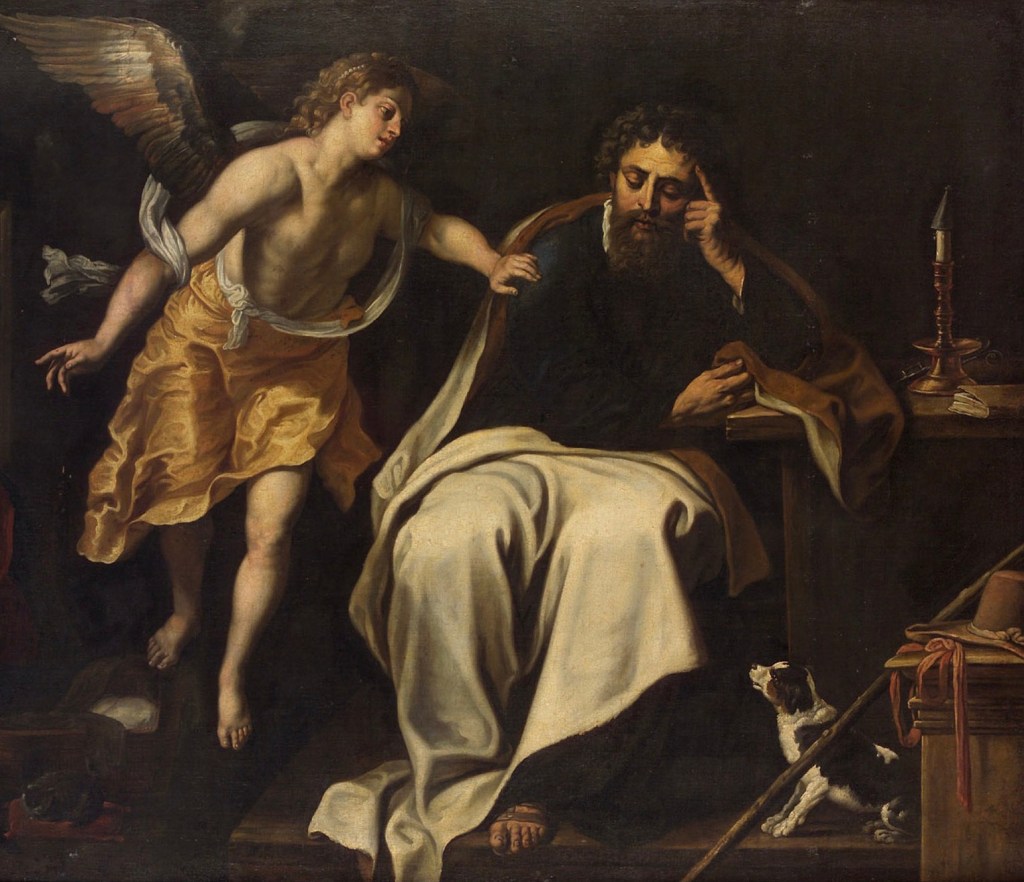
    An angelic messenger appears to Joseph in a dream. 

    Verse 20:  But as he considered these things, behold, an angel of the Lord appeared to him in a dream, saying, “Joseph, son of David, do not fear to take Mary as your wife, for that which is conceived in her is from the Holy Spirit.

    Sometimes the Lord can quickly change our plans. As Matthew’s gospel heralds the news of the Christ coming into the world, he records several angelic encounters, specifically in dreams. 

    Angelic encounters in the Bible are often these glorious, terrifying, awe-inspiring events. But in Matthew, the angelic visitations are always merely to communicate a divine message and that is all that Matthew focuses on. 

    The angel identifies Joseph as the Son of David. That will be the only place in this gospel that anyone other than Jesus is called the Son of David. 

    It also reminds us of the significance of Joseph’s lineage in the incarnation. Because it is Joseph who is the descendant of David. 

    Luke 1:27 says that Joseph was of the House of David. It is through Joseph that Jesus is connected to David. And Joseph is told not to fear taking Mary as his wife. 

    The reason he needs to be told not to fear is that the religious and social expectation would be that Joseph would not take Mary as his wife. 

    For the town gossips in Nazareth, the explanation that Mary is pregnant with a child that has been conceived via divine conception is not exactly the easiest story to believe. So to marry Mary is to also have to deal with the social ostracism of marrying an apparent adulteress. 

    But Joseph is told not to fear.

    Thanks for reading! If you liked, please share and subscribe!