Josh Benner

Category: devotional

  • All things were made through him. Studying John 1:3

    All things were made through him. Studying John 1:3

     All things were made through him, and without him was not any thing made that was made.
    -John 1:3

    John 1:3 is speaking to the divinity of Jesus. All things were made through him. All means all. 

    The ground, the trees, the sand of the beaches, the stars in the sky, the air we breathe, the materials we use to build things, all of it was made by Jesus. 

    He made every person. Each of us has billions of cells in our bodies. Incredible complexity and structure just within our own bodies. 

    The universe is incredibly big. 

    Size of the universe

    So the distance between the earth and the sun is 93 million miles. 

    If that distance was represented by the width of one sheet of paper, the distance of our entire galaxy would be a stack of papers 453 miles high. 

    One stack of papers a mile high is about 15 million sheets of paper. 

    Times 453 miles. 

    With each sheet of paper representing 93 million miles. 

    And that’s just our galaxy. 

    There are one hundred billion galaxies. 

    If you could have an atlas of every galaxy in the entire universe and each page represented an entire galaxy, and if you spent just one second on every page and continually turned pages in the atlas, it would take you more than 31,000 years to flip all the way through the atlas. 

    The universe is incredibly, unfathomably big. There are more stars in the sky than there are grains of sand in all the beaches of the world. Yet there are more trees on earth than there are stars in our one galaxy. 

    And that’s just looking at the amazing size of of our universe. 

    There is amazing creation within our world. 

    New species of animals are still being discovered. 

    Did you know that? And they’re not all insects or really small animals. Since 2000, there have been new species of primates discovered. We don’t even yet know everything on our own planet. 

    Jesus the creator

    Yet Jesus made it all. 

    There are other passages in the New Testament which speak to this fact. 

    Colossians 1:16: For by him all things were created, in heaven and on earth, visible and invisible, whether thrones or dominions or rulers or authorities—all things were created through him and for him.

    We see this language as well in the opening chapter of the Book of Hebrews. Hebrews 1:10 referring to Jesus says: You, Lord, laid the foundation of the earth in the beginning, and the heavens are the work of your hands;

     Jesus is the creator. He made everything. And John states it both ways. He made everything.

    And also there’s nothing that he didn’t make. 

    All things were made through him, and without him was not any thing made that was made.

    He’s a mighty God. It’s a lofty passage. It’s a confrontational passage. You affirm these truths or you don’t. 

    Our society often likes to treat Jesus as something you can take or leave. Gravity isn’t something that you can take or leave. Arithmetic isn’t something that you can take or leave. Breathing isn’t something that you can take or leave. 

    Jesus isn’t something you can just take or leave. Jesus isn’t just a nice person or a nice idea. He’s the Lord of creation. Many cherry pick certain teachings. Others treat him as a great teacher or a great religious leader. 

    Jesus isn’t one good teacher among other great teachers. He’s God. 

    The sages of other major religious traditions were born. Buddha wasn’t there in the beginning. Mohammad wasn’t there in the beginning. 

    But in the beginning was the Word. 

    There have been great leaders in the world who have influenced nations and movements. Abraham Lincoln, Martin Luther King, Gandhi. Some like to just act like Jesus was a wise peace maker who came with a good message. 

    Jesus isn’t simply a great man. Jesus gave life to all of these people. And that’s not true the other way around. Any person, any thing who has ever lived or existed, lived and existed because Jesus created it or gave them life. 

    Thanks for reading! If you liked, please share and subscribe. This article is part of a series studying the Gospel of John. 

  • In the beginning was the Word. Studying John 1:1-2

    In the beginning was the Word. Studying John 1:1-2

    In the beginning was the Word, and the Word was with God, and the Word was God.
    -John 1:1

    It’s interesting in comparing the beginning of John’s gospel to the beginnings of the other three.  

    Mark’s gospel begins with the ministry of John the Baptist as the one who points to Christ.  

    Luke’s gospel goes back further with the birth of John the Baptist and the birth of Jesus.  

    Matthew’s gospel goes back further still to the family line of Jesus and takes us back to Abraham, back to the beginning of God’s covenant with his people.  

    John’s gospel goes back even further, back to the very beginning, back to eternity.  

    It’s the same way in which the Bible opens up, the first words in Genesis are: in the beginning, God created the heavens and the earth.  (Genesis 1:1)

    John starts with: in the beginning was the Word.  

    Now, it’s interesting that John says “the word.” 

    He doesn’t say “in the beginning was Jesus” or “in the beginning was the Christ” or “in the beginning was the Lord” but “in the beginning was the Word.”  

    But, in the beginning was the Word. 

    Why use the word Word? 

    Borrowing an idea from D.A. Carson in his commentary on John.  

    From the beginning of the Bible, we see references to God’s word. God is a talking God. He speaks in Genesis. “Let there be light,” and the text says “and it was so.” 

    God calls things into being by the power of his word, and what he calls into existence exists.  

    Psalm 33:6 says: By the word of the Lord the heavens were made, and by the breath of his mouth all their host.

    God’s word is attached to deliverance.

    We see God’s word in his covenants and promises. Genesis 15:1: After these things the word of the Lord came to Abram in a vision: “Fear not, Abram, I am your shield; your reward shall be very great.”

    The word of the Lord is mentioned numerous times in the Bible with respect to divine revelation given to prophets. Both Jeremiah and Ezekiel say “the word of the Lord came to me.” 

    The Word of the Lord is seen as a key to truth and enlightenment.  

    Psalm 119:105: Your word is a lamp to my feet and a light to my path.

    And we could go on and on and on.  There is power in the word of God. 

    Given that in the Old Testament, God’s word is tied to creation, salvation, healing, and deliverance, the incarnation of Jesus is God’s greatest and most spectacular form of expression to the world. The Word is an appropriate title for Jesus because it is through this Word that we have ultimate truth, eternal life, future hope, assurance of God’s promises, and God’s greatest revelation of himself to the world.  

    And we learn from our passage this morning that this Word was in the beginning.  

    This Word is not some abstract idea or force. This Word exists. 

    “And the Word was with God, and the Word was God.” 

    But just to sum up what verse 1 is saying is that Jesus is eternal, he has always existed in fellowship with God, and that he himself IS God. That’s really the major theme of John’s Gospel. Jesus is the Lord.  

    Thanks for reading! If you liked, please comment and subscribe! 

    This post is part of a series in studying the Gospel of John. Recommended resources:  Carson, D. A. (1991). The Gospel according to John (pp. 113–117). Leicester, England; Grand Rapids, MI: Inter-Varsity Press; W.B.

  • Sermon – Still: Psalm 46

    2020 has been a year of tumultuous situations. Psalm 46 calls us to trust in God, regardless of what we face. God is depicted as a refuge and a warrior going before his people into battle, before reminding us of God’s greatest promise: the he will be with us.

  • Prayer day reminds us of persecution Christians face around the world

    Photo Courtesy of Unsplash.

    Today is the International Day of Prayer for the Persecuted Church. We’ve seen crackdowns on Christianity (and other religions) in China. A recent report detailed testimonies of the atrocities against Christians in North Korea. Nigeria, which is fairly evenly split between Christians and Muslims has seen increasing hostility towards Christian in certain regions of that country. And in recent weeks in France, we’ve seen attacks against Christians. In the city of Nice, three people were stabbed to death this week.

    According to Open Doors:

    • Over 260 million Christians living in places where they experience high levels of persecution
    • 2,983 Christians killed for their faith
    • 9,488 churches and other Christian buildings attacked
    • 3,711 believers detained without trial, arrested, sentenced or imprisoned

    The reality of persecution should not surprise Christians. The New Testament repeatedly talks of the inevitable opposition for those who follow Christ. In 2 Timothy 3:12, the Apostle Paul says: Indeed, all who desire to live a godly life in Christ Jesus will be persecuted.

    In the Sermon on the Mount, Jesus said: Blessed are those who are persecuted for righteousness’ sake, for theirs is the kingdom of heaven (Matthew 5:10).

    And there are numerous other scriptures that could be referenced. The gospel is offensive to the world because it confronts people with their sin. It’s offensive to the world because it points to one way to heaven. It’s offensive because it takes man’s own goodness out of the equation for what justifies a person before God.

    In America, we’re blessed to enjoy a rich history of faith and constitutional protections. But we should regularly pray for those who are persecuted for their faith.

    I also think it’s important in America to appreciate the religious freedoms that we have. As we’re in the final days before the presidential election, I do see fears from some Evangelical Christians about persecution or limitations on churches if Joe Biden is elected president. While I appreciate that there are things Joe Biden supports which are totally against Christianity, I think doomsday fears of the purge on American Christianity are also an overreach.

    Yes, Christians should always be attentive of what’s happening and vigilant to preserve and protect our rights. But I also think it’s important to remember the people who truly suffer for their faith, and who’s lives are truly endangered for following the Lord Jesus.

    Prayer
    Lord, on this international day of prayer for the persecuted church, we pray for those who are persecuted for the cause of Christ. Just this week, there were attacks on churches in France. Persecution is on the rise in many parts of the world. Lord, we pray for those who worship you at a great cost to themselves, their families, their livelihoods, and their lives. Lord, may you be near to them. Lord may those people never been far from our hearts and minds. Lord, in spite of man’s attempts to thwart your gospel, we pray for the work of pastors and evangelists in these hostile places. May the word go forth. May the truth be preached. May the message of Christ crucified be proclaimed and believed. In Jesus’ name, amen.

  • Understanding the gospel in Yom Kippur

    Understanding the gospel in Yom Kippur

    Originally published September 29, 2017 under the title “A priest, two goats, and salvation”

    Yom Kippur is this weekend.

    For observant Jews all over the world, this evening, the Day of Atonement (Yom Kippur in Hebrew) is celebrated. The Day of Atonement is the most holy of days in the Jewish calendar. It’s an annual picture of forgiveness that people could have. While Christians don’t celebrate this day, it’s one worth studying because everything about it points to Christ and the gospel.

    Atonement refers to God’s work of dealing with our sin. Because of sin, the relationship between man and God has been broken.

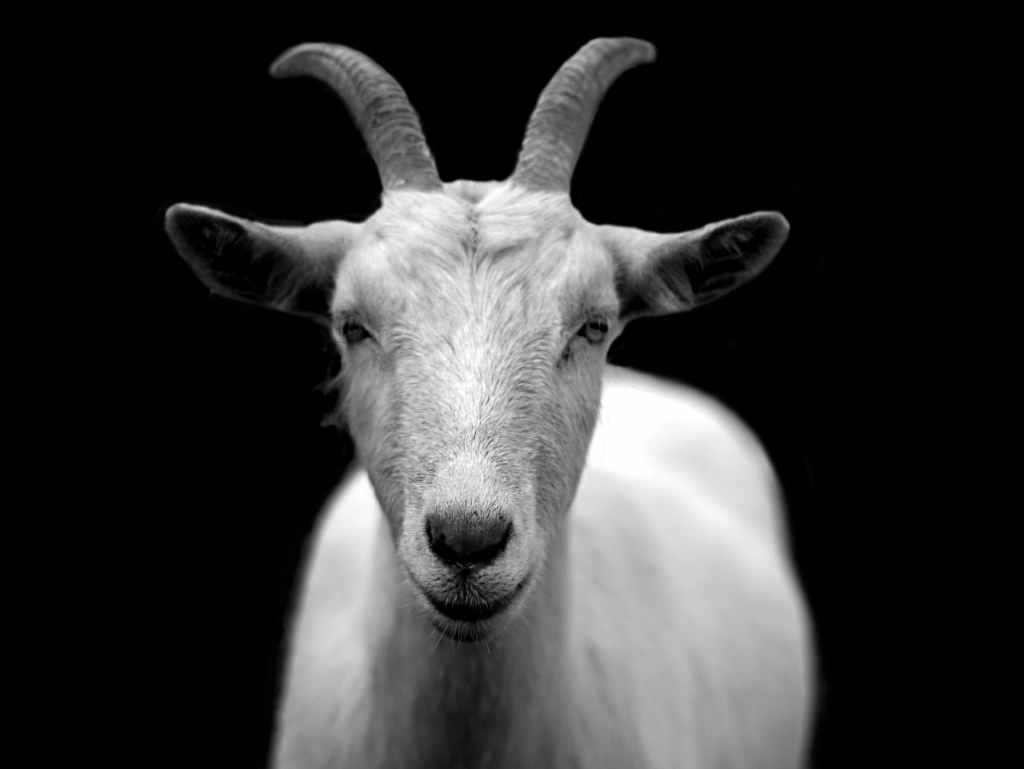
    Three significant elements of this day are the high priest, who would make the sacrifices, the goat that he would sacrifice, and a second goat who was set free.

    1. Cleansing of the priest

    When these commands were given, the Israelites are in their desert wanderings. So where do you worship while you’re on this long journey in the desert?

    Well you bring the place to worship with you!

    And so the Israelites traveled with the Tabernacle, which was a tent.

    Now only a priest could go inside the Tabernacle. It was a holy place. And as we’ve said, the holiness of God demands reverence.

    Within the Tabernacle, there was an inner sanctum called the Holy of Holies or the Most Holy Place, and only the High Priest could go in there. And he did it once a year, on behalf of the Israelites. The Day of Atonement.

    Before entering, he had to offer a bull for a sin offering and a ram for a burnt offering to atone for his sins and those of his family. Because the priest was sinful too

    As part of the priest’s preparation for entering the Most Holy Place, the presence of God, was that he had to put on special linen garments. Everything about entering into God’s presence was meant to be holy, set apart, different from everyday life.

    Like we’ve already said, everything in this passage points us to Christ.

    You have the high priest who had to cleanse himself before entering the temple.

    But in the gospels, we see that Jesus is the true High Priest.

    And Jesus doesn’t need to purify himself, or atone for his own sin to enter the presence of the Lord because he is the perfect High Priest.

    Hebrew 7:26 says, “it was indeed fitting that we should have such a high priest, holy, innocent, unstained, separated from sinners, and exalted above the heavens.”

    Keep in mind the purification rituals needed for the priest. The Holiness that was required to enter the presence of the Lord.

    While the Day of Atonement was just one day out of the year, there were animal sacrifices. But because Jesus is holy and righteous, he doesn’t need to purify himself to enter the presence of God. He’s God on earth.

    Hebrews 7:26 says, “it was indeed fitting that we should have such a high priest, holy, innocent, unstained, separated from sinners, and exalted above the heavens.”

    Hebrews 7:27 offers another comment on the priestly system.  “He has no need, like those high priests, to offer sacrifices daily, first for his own sins and then for those of the people, since he did this once for all when he offered up himself.”

    The perfect High Priest and it is only because of Christ’s perfection that we are enabled to enter into the presence of God. He is the one who is our representative before God.

    And on the Day of Atonement, one of the last things the high priest would do before going into the holy of holies was that he would take two goats.

    2. The atonement by the goat 

    The sacrifices the priest has thus far made is for himself.

    Leviticus 16:15 says, “Then he shall kill the goat of the sin offering that is for the people and bring its blood inside the veil and do with its blood as he did with the blood of the bull, sprinkling it over the mercy seat and in front of the mercy seat.”

    Blood is sprinkled in the Most Holy Place and this is what the sacrifice is meant to do to atone for sins, to cover up our sins. The sacrifice of the goat was meant to symbolically bear the sins of the people.

    Leviticus 16:16 says, “Thus he shall make atonement for the Holy Place, because of the uncleannesses of the people of Israel and because of their transgressions, all their sins.”

    All of their transgressions and sins. All of their intentional defiance to God.

    Because of the sacrifice of this goat, it was a powerfully symbolic way for atonement, for a restored relationship with the Lord. For sins being covered by the blood of the goat.

    Today, we have the gospel. We have Jesus. But before Christ, this would have been an incredibly powerful symbol for the sins of the people being atoned for.

    We see that the sacrifices then point us to the greater sacrifice today. That Jesus is the priest but he is also the sacrifice. Because while a goat could not atone for our sins, and while a goat’s blood could not cover up our sins, Christ’s could. He was the worthy sacrifice.

    I know to the world, the idea of an animal sacrifice to atone for our sins seems arctic, seems backwards.

    But it was merely a shadow. Because our forgiveness could never have been truly paid for by the life of some animal.

    It’s not that the sacrifice of that goat actually was the reason why God forgave the people. It was a heart that came to God in faith and recognized the cost of sin that mattered. Just like today.

    Hebrews 10:4 says, “it is impossible for the blood of bulls and goats to take away sins.”

    They were never intended to take away sins. It is only the blood of Christ which can do that.

    And atones for our sins. He covers up our sins. His blood washes away our sins.

    The first goat on the Day of Atonement was sacrificed for sins.

    But the second goat wasn’t slaughtered.

    And the attention turns to that goat in verse 20.

    3. The other goat 

    20 “AND WHEN HE HAS MADE AN END OF ATONING FOR THE HOLY PLACE AND THE TENT OF MEETING AND THE ALTAR, HE SHALL PRESENT THE LIVE GOAT.

    21 AND AARON SHALL LAY BOTH HIS HANDS ON THE HEAD OF THE LIVE GOAT, AND CONFESS OVER IT ALL THE INIQUITIES OF THE PEOPLE OF ISRAEL, AND ALL THEIR TRANSGRESSIONS, ALL THEIR SINS. AND HE SHALL PUT THEM ON THE HEAD OF THE GOAT AND SEND IT AWAY INTO THE WILDERNESS BY THE HAND OF A MAN WHO IS IN READINESS. 22 THE GOAT SHALL BEAR ALL THEIR INIQUITIES ON ITSELF TO A REMOTE AREA, AND HE SHALL LET THE GOAT GO FREE IN THE WILDERNESS.

    -LEVITICUS 16:20-22

    So our sin is associated with the second goat too. Both hands placed on this goat. It was symbolically transferring sin to that goat. The first goat died and his blood was a symbol of our sins being covered. The second goat is the result of our atonement. It was a symbol for sin being taken away.

    Sin totally removed when you trust in God.

    What a reminder as that goat is set free. That we are set free from sin because of God’s grace.

    If you’re someone who ever struggles to believe that God could forgive you. If you’ve done something really bad in your past, or if you have an area that you’re struggling with today and you feel like God wouldn’t love you, couldn’t forgive you. If there’s ever any lingering worry about that, our sins are taken away because of Christ.

    They are totally removed, like the second goat, sent away, never to be heard from again.

    We don’t deserve it but that’s how God atones for our sins. He forgives us of our sins. He removes our sins and our relationship with him can be restored.

    Because of the work of Christ, because of the grace that God offers to all who accept him, you don’t have to feel that way. Your sins are forgiven. But not only are they forgiven, they’re totally removed, they’re taken away.

    Not because we’re so good but because Christ is that good.

    Both in the Old Testament and today, what mattered was faith. Trusting in the Lord. Recognizing that we don’t live up on our own. That we aren’t holy. We aren’t worthy.

    But when we trust in Christ, he makes us worthy, he makes us holy.

    The forgiveness of our sins has a cost we cannot pay.

    It’s fascinating as I think of all of the ceremonialism in the Old Testament Law. Everything was done for reasons. All of the exact and meticulous detail under which the tabernacle was built. All of the specific instructions given to the priests, the very specific laws regarding sacrifice, the specific ways in which to approach God. The cleansing that needed to be done, the atonement for sin.

    It’s teaching us the holiness of God. A holiness we don’t have, that we can’t live up to. But we are welcomed into the presence of the Lord because of Christ.

    For God to forgive us, the Lord paid the price. And he does that for anyone who comes to him by faith. Let this passage be a reminder that there is a cost for sin. A tremendous cost for sin.

    Thanks for reading! I’d love to hear what you think, and don’t forget to subscribe!