Josh Benner

Category: society

  • Political correctness shows why we need the gospel

    Kevin_Hart_2014_(cropped)_(cropped).jpg
    Comedian Kevin Hart. Photo courtesy of Wikimedia Commons.

    Last week, it was announced that Kevin Hart would host the Academy Awards in February. But then some Tweets were unearthed that used the word “gay” in a negative light. The Tweets were several years old, but as a result of the backlash, Hart withdrew from hosting the awards show two days later.

    I notice several theological themes in our current social discourse.

    Law 

    With modern political correctness, there are a dizzying amount of rules. And there is no consideration given to historical context or accepted norms. The rules are treated as universally binding. In June, an award named after famed writer Laura Ingalls Wilder was changed due to the fact that Wilder used terms for Native Americans that were common in her time and vernacular.

    The modern PC movement reminds me of the Pharisees in the gospels. The Old Testament had laws, but then the Pharisees added laws on top of laws. So many rules and laws that it became impossible to follow. It was crushing. Jesus railed against the pharisees for placing crippling burdens upon people. Constantly changing language. (more…)

  • Mary too? Professor argues Mary carried Jesus without consent

    Came across a story this morning about a recent Tweet from a college professor at the University of Minnesota Mankato.

    Eric Sprankle talked about the virgin birth of Jesus and said: “The virgin birth story is about an all-knowing, all-powrful deity impregnating a human teen. There is no definition of consent that would include that scenario. Happy Holidays.”

    “There is no definition of consent that would include that scenario?”

    First of all, he’s entirely missing the point. Second of all, he’s wrong. In the Gospel of Luke, Mary actually does say “I am the servant of the Lord; let it be to me according to your word” (Luke 1:38).

    People have brought that up. But that doesn’t count, according to Dr. Sprankle who says, “The Biblical god regularly punished disobedience. The power difference (deith vs mortal) and the potential for violence for saying “no” negates her “yes.”

    Seriously?

    Christians believe that before the conception of Jesus, an angel of God appeared to Mary and told her that she had been chosen for this once in human history task of being able to carry the Lord.

    And this professor is essentially arguing that because of a power imbalance, she didn’t really have a choice?

    His Tweets are incoherent. In the first one, he says that God is all-powerful and all-knowing (both of which are true). But then he argues against the divine plan of an all-knowing God in choosing Mary to give birth to Jesus. She wasn’t chosen at random.

    And God is all-powerful. Men are not all-knowing nor are we all-powerful. We are unworthy of God. We are created for God. There is a power imbalance. We are not equal to God. And when I say the Tweets are incoherent, I mean that it’s incoherent to say that God is all-knowing and then to question his wisdom of morality and his plans.

    Sprankle’s definition of consent is so radical and limited that even giving consent doesn’t count. It’s intellectually dishonest. It’s referring to a once-in-human-history event. Also, this has nothing to do with sexual consent anyway!

    But if you continue to read in the gospel account, Mary continues to be perfectly happy with this situation.

    “My soul magnifies the Lord,
     and my spirit rejoices in God my Savior,
    for he has looked on the humble estate of his servant.
    For behold, from now on all generations will call me blessed;

    -Luke 1:46-48

    She didn’t give consent? Mary seems pretty ok with the arrangement. And it was through this act that the savior of the world came into the world to save the world from sin.

    One day we will all be held to account for our lives and actions. And there won’t be equality with God then either. God is awesomely powerful, righteous, and holy. We are not. We are sinful. We are so sinful that the only way we could be redeemed was for God to come into the world. The birth of Christ shows us that from beginning to end, Jesus had a divine ministry. Jesus came into a world that was so sinful that the world killed him. He did that so we could be forgiven. We are sinful and cannot make ourselves right with God. But Jesus came so that we could be with God. Not because we deserved it. Not because we are God’s peers. But out of his goodness and grace.

    Jesus did that to save sinners. Even sinners who mock the gospel and the righteousness of God. But we must repent of our sins and turn to Christ and trust in the life that he promises.

    Thanks for reading! I’d love to hear what you think, and don’t forget to subscribe! 

    Josh Benner is the associate pastor at Cornerstone Evangelical Free Church in Fergus Falls, Minnesota and has a Master of Divinity from Trinity Evangelical Divinity School. He enjoys writing about faith and culture. He lives with his wife Kari in Minnesota.

    Let’s connect!
    Facebook
    Twitter
    Instagram

  • Lauren Daigle catches heat for punting on LGBT question

    Lauren_Daigle_leading_at_NPM_TLR,_2015
    Lauren Daigle’s new album “Look Up Child” has been incredibly poplar. It’s been a #1 album on Christian charts but the incredibly talented singer has also been achieving mainstream success with her album reaching as high as third on the Billboard Top 200, a rarity for a religious album. She’s even appeared on the Tonight Show, Ellen, and Dancing with the Stars.

    On a recent interview with Domenick Nati, Daigle was asked if she believed homosexuality was a sin. The singer responded: “You know, I can’t honestly answer on that…too many people that I love (that) are homosexuals.”

    Within Evangelical circles, Daigle has been heavily criticized this week.

    She did have an opportunity to publicly defend the sanctity of marriage.

    But I can also appreciate that it was a difficult situation to be in. Because it’s an issue where it’s hard to disagree and not be viewed as hateful or bigoted. It’s an issue that warrants individual conversations rather than broad commentary.

    I do think she could have handled that question better than she did, but she was basically put in a no-win situation.

    I know many Christians would disagree with me.

    But I think we can make a mistake of weighing homosexuality ahead of other areas of sin, as if it’s preeminent. We can put it on a pedestal.

    Don’t misunderstand me. I do believe it’s a sin.

    And if you’ve ever listened to my preaching, I don’t think I’m someone who would be accused of taking sin lightly.

    All sin and fall short of the glory of God (Romans 3:23). All are equally dead in sin apart form Christ. The gospel is not saving someone to heterosexuality but it is saving people to Jesus. The gospel is not “get straight and then get saved,” it’s to come to Jesus where you are. The starting point of the gospel is not to try to change a person’s orientation. It’s to love people unconditionally, and invite them into a relationship with Jesus.

    The Bible is clear that marriage is between one man and one woman. The Bible is clear that the only framework by which a sexual union can be morally engaged in is through marriage. The Bible is clear that anything outside of that is sin.

    But someone want people beating their chest in the public arena on this issue.

    It’s true that in the Old Testament, there were prophets who warned Israel of divine wrath and judgment. In the New Testament, Paul called out those who were distracting people from the gospel. Jesus railed against the sinfulness of the moral teachers. But these were groups within the Jewish religious communities.

    I’m not arguing for cultural relativism. God is righteous and God has a righteous standard to approach him: Jesus. My point is that in the Bible, within the faith community, because it was a faith community, there was a common and agreed upon standard to which to hold people accountable and question people for disregarding.

    God’s moral will is still righteous, and holy, and good. And immorality should be addressed. But in the context of desiring to build relationships, does calling out everyone’s individual sins need to be the starting point? Or is the issue not about one particular sin but a sinful nature and a life that is sinful and opposed to God apart from Christ?

    The disease for all of humanity is sin and the cure is the gospel of Jesus Christ.

    I have no doubt that she does have relationships with people who are homosexual that she genuinely loves. It’s a complicated subject. It’s a hard balance to maintain relationships and to hold to fundamental Biblical truths which many dislike. Because those relationships are important. And publicly coming out with a hard line position against homosexuality could be harmful to relationships. She’s a singer not a theologian.

    I can appreciate not wanting to alienate a lot of people (not just in terms of record sales and popularity), but also not wanting to turn people away from a message.

    Much of our society has made up its mind on this subject and so a traditional Biblical view will make a person seem hateful and homophobic. The idea that you can “love the sinner, not the sin” has been rejected by much of the culture.

    However we love the sinner, not the sin in all sorts of other areas of life. Why is there no room to love people while morally disagreeing on this issue?

    I know some are extremely critical of Daigle. I don’t see what that really accomplishes. Frankly, the vast majority of people will never be in the position she’s in with the platform she has. I’ve heard people say that she’s not even a Christian based on her response. That seems a bit heavy handed. The Apostle Peter denied even knowing Jesus on Maundy Thursday.

    The starting point needs to be the gospel.

    Since she was asked, I do have criticism that she basically avoided the question. If she doesn’t have an opinion on that issue, she needs to study the clear Biblical teachings on the matter. If she does think it’s wrong but didn’t want to say it, she should have more backbone than that.

    Thanks for reading! I’d love to hear what you think, and don’t forget to subscribe! 

    Josh Benner is the associate pastor at Cornerstone Evangelical Free Church in Fergus Falls, Minnesota and has a Master of Divinity from Trinity Evangelical Divinity School. He enjoys writing about faith and culture. He lives with his wife Kari in Minnesota.

    Let’s connect!
    Facebook
    Twitter
    Instagram


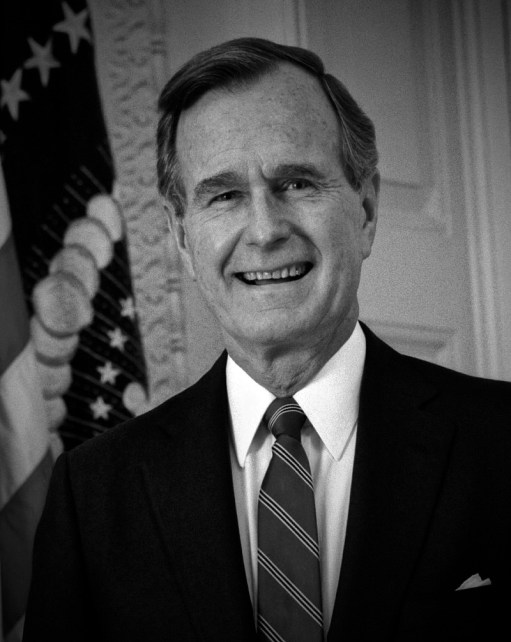
  • Remembering our 41st president: George H.W. Bush

    800px-George_H._W._Bush_crop 2.jpg
    I do not mistrust the future. I do not fear what is ahead. For our problems are large, but our heart is larger. Our challenges are great, but our will is greater.
    -George H.W. Bush

    It’s a National Day of Mourning as America’s 41st president is laid to rest.

    Anyone who knows me knows that the presidency has always fascinated me. Regardless of what we might think about a particular president, we spend years seeing them in the news. They sign legislation that impacts future generations. They make court appointments that influence legal decisions for years to come. They make decisions on foreign policy that impact America’s relations with other nations. I do think the presidency should be respected. It’s often been said that one of the greatest strengths of the American political system is the peaceful transition of power when one presidency ends and another begins.

    He was elected president in 1988, after spending two terms as vice president under Ronald Reagan. That was the first time a sitting vice president had been elected president in over 150 years when Martin Van Buren was elected president in 1836. Like George H.W. Bush, Van Buren was also a one-term president.

    It’s perhaps a blessing and a curse to be in that situation: people who didn’t like your predecessor won’t like you. There’s a shadow over your administration from your predecessor. People who liked that person might judge you when compared to them, and since it was their popularity that may have helped you, it’s hard to go up.

    At the same time, you want to be your own president. None of this is to undermine the accomplishments of our 41st president. Even before becoming president, Bush had already had an illustrious career.

    He enlisted in the navy on his 18th birthday and served as a fighter pilot in World War II. After the war, he moved to Texas and became an oil tycoon. He entered politics in the 60s, being elected to the House of Representatives from Texas in 1967. In 1971, he became the United States ambassador to the United Nations. In 1973, he became the chairman of the Republican National Committee. He was a liaison to China. Bush ran for president in 1980. When the republican nomination was unwinnnable, eventual winner Ronald Reagan brought Bush onto the the ticket where Bush served as vice president from 1981-1989.

    As president, George Bush saw the Berlin Wall come down in 1989 and Germany was reunified in 1990. He was president when he Soviet Union dissolved in 1991.

    He signed the Americans with Disabilities Act which made discrimination illegal in employment, public accommodations, and transportation. He signed the Clean Air Act in 1990. He was Commander-in-Chief during the Persian Gulf War. He appointed Clarence Thomas to the Supreme Court. He helped negotiate the North American Free Trade Agreement, which Bill Clinton later signed into law. He passed a civil rights bill, a farm bill, and a crime bill.

    President Bush had promised “read my lips, no new taxes” when running for president. But deficits made tax increases inevitable during his tenure. That and third party candidate Ross Perot were contributing factors to his defeat by Bill Clinton in 1992.

    An American hero, a public servant, a leader of the free world.

    Thanks for reading! I’d love to hear what you think, and don’t forget to subscribe! 

    Josh Benner is the associate pastor at Cornerstone Evangelical Free Church in Fergus Falls, Minnesota and has a Master of Divinity from Trinity Evangelical Divinity School. He enjoys writing about faith and culture. He lives with his wife Kari in Minnesota.

    Let’s connect!
    Facebook
    Twitter
    Instagram


  • The true test of love

    amazing-animal-beautiful-beautifull.jpg
    Everyone loves love.

    But not everyone agrees on what love is.

    Much of society associates love with tolerance and acceptance.

    And while we can agree that love is good, truly having love for people is challenging. Yes, it’s easy to love family and good friends. Jesus addresses that in the Gospel of Luke: “If you love those who love you, what credit is that to you? Even sinners love those who love them. And if you do good to those who are good to you, what credit is that to you? Even sinners do that (Luke 6:32-33).” 

    The Bible shows us what love is on the cross. “God demonstrates his own love for us in this: While we were still sinners, Christ died for us (Romans 5:8).”

    In 1 John 3:16-17, the Apostle John says:

    By this we know love, that he laid down his life for us, and we ought to lay down our lives for the brothers. But if anyone has the world’s goods and sees his brother in need, yet closes his heart against him, how does God’s love abide in him?

    -1 John 3:16-17

    It’s easy to agree with that. It’s easy to see the virtue in that.

    But what an incredibly difficult picture of love that is. I don’t think that it exclusively means dying (the second half of the passage talks about helping those in need, which assumes someone is alive to do that).

    Being apathetic to what people do, and calling that love, is easy.

    Just saying you love people is easy.

    Actually loving people is hard. Actually serving people is hard.

    And perhaps the truest test of love is how we treat those who are hardest for us to love. Again, it’s easy to love those who are nice to us. It’s easy to love those we like.

    But we’re sinful. And we all have those who are harder for us to love. Who is it who is hard for you to love? Maybe it’s someone who believes differently politically. Maybe those of another religion. Maybe it’s those who are rich or those who are poor and on the bottom of society’s rungs. Maybe it’s criminals or those who battle an addiction or have a mental disorder. Maybe it’s more than one of these groups.

    Again, it’s easy, in theory, to agree that we should love everyone.

    But whoever it is who’s the hardest for you to love is who you need to love. It’s a message that makes no sense to the world. And it’s a message that Jesus died to bring to the world.

    Thanks for reading! I’d love to hear what you think, and don’t forget to subscribe! 

    Josh Benner is the associate pastor at Cornerstone Evangelical Free Church in Fergus Falls, Minnesota and has a Master of Divinity from Trinity Evangelical Divinity School. He enjoys writing about faith and culture. He lives with his wife Kari in Minnesota.

    Let’s connect!
    Facebook
    Twitter
    Instagram